NWS Nieuws & Achtergronden
Discussieer hier diepgaander over de actualiteiten.



Enfin, de lang verwachte bailout van Fannie en Freddie lijkt enigszins gestalte te krijgen.
quote:U.S. Rescue Seen at Hand for 2 Mortgage Giants
Senior officials from the Bush administration and the Federal Reserve on Friday called in top executives of Fannie Mae and Freddie Mac, the mortgage finance giants, and told them that the government was preparing to place the two companies under federal control, officials and company executives briefed on the discussions said.
The plan, which would place the companies into a conservatorship, was outlined in separate meetings with the chief executives at the office of the companies’ new regulator. The executives were told that, under the plan, they and their boards would be replaced and shareholders would be virtually wiped out, but that the companies would be able to continue functioning with the government generally standing behind their debt, people briefed on the discussions said.
It is not possible to calculate the cost of any government bailout, but the huge potential liabilities of the companies could cost taxpayers tens of billions of dollars and make any rescue among the largest in the nation’s history.
The drastic effort follows the bailout this year of Bear Stearns, the investment bank, as government officials continue to grapple with how to stem the credit crisis and housing crisis that have hobbled the economy. With Bear Stearns, the government provided guarantees, and the bulk of its assets were transferred to JPMorgan Chase, leaving shareholders with a nominal amount.
Under a conservatorship, the common and preferred shares of Fannie and Freddie would be reduced to little or nothing, and any losses on mortgages they own or guarantee could be paid by taxpayers. Shareholders have already lost billions of dollars as the stocks have plunged more than 80 percent this year.
A conservatorship would operate much like a pre-packaged bankruptcy, similar to what smaller companies use to clean up their books and then emerge with stronger balance sheets. It would allow for uninterrupted operation of the companies, crucial players in the diminished mortgage market, where they are now responsible for nearly 70 percent of new loans.
The executives were told that the government had been planning to announce the decision as early as Sunday, before the Asian markets reopen, the officials said.
For months, administration officials have grappled with the steady erosion of the books of the two mortgage finance giants. A fierce behind-the-scenes debate among policy makers has been waged over whether to seize the companies or let them work out their problems. Even after the companies are put under government control, debates will continue over whether they should be independent and how they should operate over the long term.
The declines in the housing and financial markets apparently forced the administration’s hand. With foreign governments increasingly skittish about holding billions of dollars in securities issued by the companies, no sign that their losses will abate any time soon, and the inability of the companies to raise new capital, the administration apparently decided it would be better to act now rather than closer to the presidential election in two months.
Just five weeks ago, President Bush signed a law to give the administration the authority to inject billions of dollars into the companies through investments or loans. In proposing the legislation, Treasury Secretary Henry M. Paulson Jr. said that he had no plan to provide loans or investments, and that merely giving the government the authority to backstop the companies would provide a strong shot of confidence to the markets. But the thin capital reserves that have kept the two companies afloat have continued to erode as the housing market has steadily declined and the number of foreclosures has soared.
As their problems have deepened — and the marketplace has come to expect some sort of government rescue — both companies have found it difficult to raise new capital to absorb future losses. In recent weeks, Mr. Paulson has been reaching out to foreign governments that hold billions of dollars of Fannie and Freddie securities to reassure them that the United States stands behind the companies.
In issuing their quarterly financial statements last month, the two companies reported huge losses and predicted that home prices would fall more than previously projected.
The debt securities the companies issue to finance their operations are widely owned by mutual funds, pension funds, foreign governments and big companies.
Officials said the participants at the meetings included Mr. Paulson, Ben S. Bernanke, the chairman of the Fed, and James Lockhart, the head of both the old and new agency that regulates the companies. The companies were represented by Daniel H. Mudd, the chief executive of Fannie Mae, and Richard F. Syron, chief executive of Freddie Mac. Also participating was H. Rodgin Cohen, the chairman of the law firm Sullivan & Cromwell, who was representing Fannie.
Officials and executives briefed on the meetings said that Mr. Mudd and Mr. Syron were told that they would have to leave the companies.
Spokesmen at the two companies did not return telephone calls seeking comment.
The meetings reflected the reality that senior administration officials did not believe they could wait for some kind of financial tipping point, as happened with Bear Stearns, which was saved from insolvency in March by government intervention after its stock plummeted and lenders withheld their capital.
Instead, Mr. Paulson has struggled to navigate through potentially conflicting goals — stabilizing the financial markets, making mortgages more widely available in a tightening credit environment, and protecting taxpayers from possibly enormous losses.
Publicly, administration officials have tried to bolster the companies because the nation’s mortgage system relies on their continued ability to purchase mortgages from commercial lenders and pull the housing markets out of their slump.
But privately, senior officials have been critical of top executives at the companies, particularly Freddie Mac. They have raised concerns about major risks to taxpayers of a bailout of companies whose executives have received huge compensation packages. Mr. Syron, for instance, collected more than $38 million in compensation since he joined the company in 2003.
Although Mr. Syron promised regulators earlier this year that he would raise $5.5 billion from investors, he has failed to make good on that promise — even as Fannie Mae raised more than $7 billion. Mr. Syron was slated to step down from the chief executive position last year, but that was delayed when his appointed successor, Eugene McQuade, chose to leave the company.
With the possible removal of the top management and the board, it is no longer clear who would appoint new management.
Mr. Paulson had hoped that merely having the authority to bail out the two companies, which Congress provided in its recent housing bill, would be enough to calm the markets, but if anything anxiety has been increasing. The clearest measure of that anxiety has been the gradually widening spread between interest rates on Fannie- or Freddie-backed mortgage securities and rates for Treasury securities, making home mortgages more expensive. The stock prices of the companies have also plunged.
After stock markets closed on Friday, the shares of Fannie and Freddie plummeted. Fannie was trading around $5.50, down from $70 a year ago. Freddie was trading at about $4, down from about $65 a year ago.
With Fannie and Freddie guaranteeing $5 trillion in mortgage-backed securities, and a big share of those held by central banks and investors around the world, Mr. Paulson appears to have decided that the stakes are too high to take chances.
The Treasury Department is required by the new law to obtain agreement from the boards of Fannie and Freddie for a capital infusion. The exception is if the companies’ regulator, Mr. Lockhart, determines that the companies are insolvent or deeply undercapitalized it could take the companies over anyway.
Charles Calomiris, a professor of economics at Columbia Business School, said delaying a rescue would only increase the risks and costs.
“The last thing you want to do is give a distressed borrower more time, because when people are in distress they tend to take a lot of risks,” he said. “You don’t want zombie institutions floating around with time on their hands.”


Met zulke hoge verplichte verkoop cijfers , en achterstanden is het ook wel te verklaren dat die 2 verstrekkers gered moeten worden.quote:HUIZENCRISIS VS WOEKERT VOORT
Toename gedwongen huizenverkopen
5 september 2008, 17:36 uur | FD.nl
Het aantal gedwongen huizenverkopen in de Verenigde Staten is in het tweede kwartaal verder gestegen. Dat maakte de vereniging van Amerikaanse hypotheekbanken (MBA) vrijdag bekend.
'Het totaal aantal gedwongen verkopen stijgt nog steeds, omdat de situatie in de hardst geraakte staten steeds erger wordt', aldus MBA-hoofdeconoom Jay Brinkmann.
Verplichte huisverkoop groeit snel in de VS 14 augustus 2008
JPMorgan ziet nog geen einde aan de crisis 13 augustus 2008
Paulson: 'Huizenmarkt VS blijft zwak' 11 augustus 2008
Lees ook het dossier Kredietcrisis
Het toegenomen aantal gedwongen huizenverkopen in Florida en Californië overschaduwde volgens Brinkmann een afname in de staten Texas, Massachusetts en Maryland.
Achterstallige betalingen
Volgens de hypotheekbanken was in het tweede kwartaal 2,75 % van de Amerikaanse hypotheekleningen betrokken in een proces tot gedwongen verkoop. In het eerste kwartaal was dat 2,5 %. Bij ruim 6 % van de hypotheken was sprake van achterstallige betalingen. Dat is het hoogste percentage sinds het begin van de metingen in 1979.


Als die twee FM omvallen dan krijgt onze ouwe APG / ABP ook een zware dreunquote:Op zaterdag 6 september 2008 09:23 schreef Basp1 het volgende:
[..]
Met zulke hoge verplichte verkoop cijfers , en achterstanden is het ook wel te verklaren dat die 2 verstrekkers gered moeten worden.
Een paar jaar geleden heeft de SP daar zelfs nog kamervragen over gesteldquote:Op zaterdag 6 september 2008 11:05 schreef henkway het volgende:
[..]
Als die twee FM omvallen dan krijgt onze ouwe APG / ABP ook een zware dreun

Iedereen meed Fannie Mae toen al als de pest (vanwege de boekhoud fraudes) maar het ABP had grote posities daarin. Toen ging Jan Marijnissen kamervragen stellen of dat nu wel verstandig was.
"If you want to make God laugh, tell him about your plans"
Mijn reisverslagen
Mijn reisverslagen
Het is toch wat met die kritische linksenquote:Op zaterdag 6 september 2008 11:10 schreef SeLang het volgende:
[..]
Een paar jaar geleden heeft de SP daar zelfs nog kamervragen over gesteld
Iedereen meed Fannie Mae toen al als de pest (vanwege de boekhoud fraudes) maar het ABP had grote posities daarin. Toen ging Jan Marijnissen kamervragen stellen of dat nu wel verstandig was.

En wat waren de rechtse standaard antwoorden op die vragen.
waren LPF'ersquote:Op zaterdag 6 september 2008 11:26 schreef Basp1 het volgende:
[..]
Het is toch wat met die kritische linksen
En wat waren de rechtse standaard antwoorden op die vragen.
quote:Vragen van de leden Van As en
Hermans (beiden LPF) aan de
staatssecretaris van Sociale Zaken en
Werkgelegenheid over risicovolle
beleggingen van het ABP.
1
Bent u bekend met het artikel
van Willem Middelkoop,
financieel/economisch redacteur van
RTL-Z, waarin hijschrij ft over
mogelijk zeer risicovolle beleggingen
van het ABP ter waarde van meer dan
8 miljard euro (12% van de
obligatieportefeuille) in de producten
van Fannie Mae en Freddie Mac in de
VS?1
2
Bent u bekend met het artikel in de
Financial Times dat er mogelijk 25
miljard aan verliezen in de boeken
van bovengenoemde bedrijven zijn
verwerkt?
3
Bent u bekend met de
waarschuwingen van de Amerikaanse
minister van Financiën, John Snow,
Alan Greenspan en William Poole van
de Federal Reserve en Gregory
Mankiw van de Council of Economic
Advisers aangaande de financiële
situatie bijeerder genoemde
instellingen? Zo ja, wat vindt hij
hiervan?
4
Bent u bekend met het feit dat de
Federal Reserve oproept om
kredietlijnen ter waarde van 2.25
miljard van de overheid naar Fannie
Mae en Freddie Mac te stoppen?
Verandert dit mogelijk iets aan de
risico’s die het ABP loopt?
5
Bent u bekend met het feit dat de
PGGM beleggingen in Fannie Mae en
Freddie Mac juist heeft afgebouwd?
6
Is er een verklaring waarom het ABP
haar posities in de twee bedrijven
juist heeft vergroot?
7
Zijn er bij u nog meer Nederlandse
pensioenfondsen bekend die in
Fannie Mae en Freddie Mac
beleggen?
8
Wat is uw reactie op bovengenoemde
problematiek en wat denkt u te gaan
doen aan deze situatie, wanneer
mogelijk de pensioenen van vele
Nederlanders onnodig gevaar lopen?
Antwoord
Antwoord van staatssecretaris Rutte
(Sociale Zaken en Werkgelegenheid).
(Ontvangen 17 juni 2004)
1
Ja.
2
Ja.
3
Nee.
4
Nee. Het beleggingsbeleid van het
ABP en van enig ander
pensioenfonds behoort niet tot de
verantwoordelijkheid van de overheid
en wordt dus ook niet door de
overheid gevolgd. Het is mijdan ook
niet bekend welke beleggingsrisico’s
het ABP loopt.
5
Nee. Het beleggingsbeleid van het
PGGM en van enig ander
pensioenfonds behoort niet tot de
verantwoordelijkheid van de overheid
en wordt dus ook niet door de
overheid gevolgd.
6, 7 en 8
De overheid is niet verantwoordelijk
voor het beleggingsbeleid van de
Nederlandse pensioenfondsen. De
overheid heeft dan ook geen inzicht
in de beleggingsportefeuilles van de
pensioenfondsen. Het staat de
pensioenfondsen vrijzelf hun
beleggingsbeleid te bepalen en de
beleggingsportefeuille samen te
stellen. De eis die de wetgever stelt is
dat de beleggingen op een solide
wijze geschieden. De Pensioen en
Verzekeringskamer (PVK) ziet daar op
toe. De toezichthouder beoordeelt
onder meer of er sprake is van een
voldoende spreiding van de
beleggingsrisico, of het
beleggingsbeleid past bijde situatie
van het fonds en of het fonds prudent
bezig is. De toezichthouder heeft de
middelen om indien nodig een
pensioenfonds te corrigeren. De PVK
opereert onafhankelijk van de
overheid en de overheid kan zich niet
bemoeien met het individuele
toezicht op pensioenfondsen.
Tot slot heb ik te uwer informatie als
bijlage bijgevoegd de informatie van
het ABP die dit fonds op haar website
heeft staan over de beleggingen in
Fannie Mae en Freddie Mac.
Life sucks
http://www.blikopdebeurs.com/weblog1/pivot/entry.php?id=95quote:BREAKING NEWS -- 'Ingreep Fannie en Freddie nabij'
Zaterdag 06 September 2008 at 2:13 pm
De Amerikaanse overheid staat op het punt om hypotheekreuzen Fannie Mae en Freddie Mac onder staatscontrole te plaatsen. Dat meldt The Washington Post. Beide CEO’s worden ontslagen en de bedrijven krijgen miljarden dollars.
Dat filmpje is een jaar oudquote:Op zaterdag 6 september 2008 13:50 schreef henkway het volgende:
"If you want to make God laugh, tell him about your plans"
Mijn reisverslagen
Mijn reisverslagen
quote:Weer een Amerikaanse bank failliet
In de VS heeft de Silver State Bank zijn deuren moeten sluiten. Het is de elfde Amerikaanse bank die de dupe is van de kredietcrisis. De bank heeft 17 vestigingen in Arizona en Nevada. In de raad van bestuur van de Silver State Bank zat tot voor kort een zoon van presidentskandidaat John McCain. Andrew McCain legde zijn functie in juli neer.
Heb een leuke toepasselijke video geplaatst: 'Take A Load Off Fannie' ;-)
http://www.blikopdebeurs.com/weblog1/pivot/entry.php?id=95
http://www.blikopdebeurs.com/weblog1/pivot/entry.php?id=95

quote:Government takes over control of Freddie, Fannie
The U.S. Treasury Dept. said Sunday it is placing troubled mortgage giants Freddie Mac and Fannie Mae under conservatorship by the Federal Housing Finance Agency. Under the plan, the FHFA will assume the power of the board, and the two firms' cheif executives will resign after a transitional period. Treasury Secretary Henry Paulson said: "Based on what we have learned about these institutions over the last four weeks ... and given the condition of financial markets today, I concluded that it would not have been in the best interest of the taxpayers for Treasury to simply make an equity investment" rather than take over the firms outright.

*snif*quote:

me man zn pensioenfonds!
Your mind don't know how you're taking all the shit you see
Dont believe anyone but most of all dont believe me
God damn right it's a beautiful day Uh-huh
Dont believe anyone but most of all dont believe me
God damn right it's a beautiful day Uh-huh
Hoewel dit wel erg links klinkt: ik ben voorstander van nationalisatie van instituten die 'niet mogen omvallen'.
Tot nu toe is het in de USA zo dat de belastingbetaler de risicos loopt terwijl de private sector profiteert als het eventueel goedkomt. (zie Bear Stearns: als alles goedkomt dan heeft JP Morgan de deal van de eeuw gedaan, maar als het fout gaat is de rekening voor de belastingbetaler).
In de UK hebben ze het beter gedaan: Northern Rock is genationalseerd, dus mocht het ooit goedkomen dan is de winst in elk geval ook voor de schatkist.
Tot nu toe is het in de USA zo dat de belastingbetaler de risicos loopt terwijl de private sector profiteert als het eventueel goedkomt. (zie Bear Stearns: als alles goedkomt dan heeft JP Morgan de deal van de eeuw gedaan, maar als het fout gaat is de rekening voor de belastingbetaler).
In de UK hebben ze het beter gedaan: Northern Rock is genationalseerd, dus mocht het ooit goedkomen dan is de winst in elk geval ook voor de schatkist.
"If you want to make God laugh, tell him about your plans"
Mijn reisverslagen
Mijn reisverslagen

Maar dat is nu net het grote verschil tussen de VS en de meeste Europese landen. In de VS regeert het geld. In Europa regeert het verstand vaker.quote:Op zondag 7 september 2008 18:16 schreef SeLang het volgende:
Hoewel dit wel erg links klinkt: ik ben voorstander van nationalisatie van instituten die 'niet mogen omvallen'.
Tot nu toe is het in de USA zo dat de belastingbetaler de risicos loopt terwijl de private sector profiteert als het eventueel goedkomt. (zie Bear Stearns: als alles goedkomt dan heeft JP Morgan de deal van de eeuw gedaan, maar als het fout gaat is de rekening voor de belastingbetaler).
In de UK hebben ze het beter gedaan: Northern Rock is genationalseerd, dus mocht het ooit goedkomen dan is de winst in elk geval ook voor de schatkist.
Dat is juist goed, en één van de redenen waarom er nu wordt ingegrepen.quote:
Fannie en Freddy garanderen de CDO's waarin persioenfondsen hebben belegd. Als de Amerikaanse overheid zou accepteren dat die garanties zomaar zouden wegvallen dan zou iedereen Amerikaanse obligaties als de pest gaan mijden en dan was de ramp niet te overzien. Daarom lag deze stap ook geheel in de verwachting.
Beleggers in de aandelen Fannie en Freddy die zijn wel waarschijnlijk wel hun geld kwijt (zoals het hoort), al heb ik nog niet de details gezien dus ik weet het niet zeker.
"If you want to make God laugh, tell him about your plans"
Mijn reisverslagen
Mijn reisverslagen
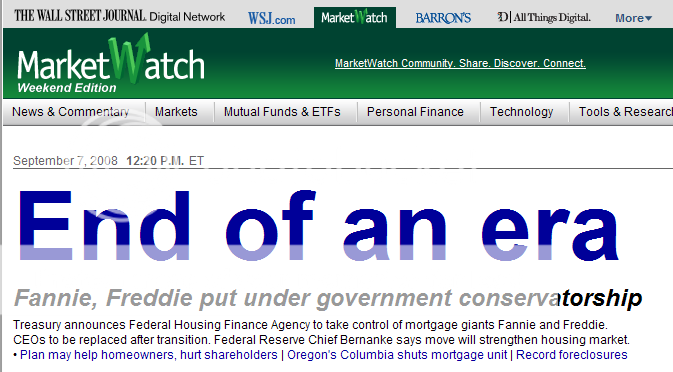
mooi screenshot, deze dag is in feite het financiele 911quote:Op zondag 7 september 2008 18:24 schreef ItaloDancer het volgende:
[ afbeelding ]
Alle details op www.marketwatch.com

Communisme onder Bush, wie had dat ooit gedacht...
President Camacho
TV series: Boardwalk Empire | Burn Notice | Dexter | Game of Thrones | Impractical Jokers | Luther | Sherlock | Sons of Anarchy
TV series: Boardwalk Empire | Burn Notice | Dexter | Game of Thrones | Impractical Jokers | Luther | Sherlock | Sons of Anarchy
Paar jaar terug hadden ze ook wat gekloot met SEC filings.
Iig, in feite waren ze allang genationaliseerd, kijk maar naar de yield op hun senior securities. Maargoed, nu zal Congress er pas echt op duiken en de moral hazard in het systeem weer met een paar maten vergroten, ze leren het nooit. Ook jammer dat ze Bush hebben tegengewerkt de afgelopen jaren om Fannie en Freddie te verkleinen.
Iig, in feite waren ze allang genationaliseerd, kijk maar naar de yield op hun senior securities. Maargoed, nu zal Congress er pas echt op duiken en de moral hazard in het systeem weer met een paar maten vergroten, ze leren het nooit. Ook jammer dat ze Bush hebben tegengewerkt de afgelopen jaren om Fannie en Freddie te verkleinen.
Morgen beurzen op rood, met name de Belgische met hun bankenzwaartepunt.
Dollar zal weer dalen, olie omhoog en grondstoffen ook weer omhoog. Fine by me!
Dollar zal weer dalen, olie omhoog en grondstoffen ook weer omhoog. Fine by me!

Terecht! Het is de schuld van Washington dat er minder SUVs en andere middeleeuwse auto's worden verkocht.quote:Op zondag 7 september 2008 21:31 schreef pberends het volgende:
Autoproducenten vragen Washington om hulp
For great justice!
POLL: Fannie en Freddie 'bailout' goed nieuws of slecht nieuws?
http://www.blikopdebeurs.com/weblog1/
Zelf ben ik er nog niet helemaal uit ;-)
http://www.blikopdebeurs.com/weblog1/
Zelf ben ik er nog niet helemaal uit ;-)
Één ding weet ik wel: als ze failliet waren gegaan was er NIEMAND blij geweest. DIt was de enige optie. Je kan dit onmogelijk alleen vanuit een beurs-perspectief bekijken.
For great justice!

Nu maar hopen dat ze de boel schoonvegen bij Fannie en Freddie. Wat een corrupte zooi daar.
Bron: National Review (August 18, 2008)
Inside Job
How Fannie and Freddie got away with it
STEPHEN SPRUIELL
For months, President Bush stood by his veto threat. While members of Congress argued over how big the housing bailout should be, the Bush administration took the position that such a bailout was unnecessary and would serve only to reward reckless lenders and borrowers who gambled on home prices during the housing boom and lost. The president’s hand was strengthened when Portfolio magazine revealed that several of the housing bailout’s key sponsors had taken loans at preferential rates from Countrywide Financial, a major beneficiary of the bill.
Then, suddenly, everything changed. Fannie Mae and Freddie Mac, the government-sponsored enterprises (GSEs) tasked with supplying liquidity to the mortgage market, saw their stock prices drop by half over the course of a single week of frantic selling in mid-July. Investors panicked at the thought that the troubled companies would lose their access to cheap credit, which would leave them unable to pay back the trillions of dollars they owe on mortgages and mortgage-backed securities.
Eager to calm the markets and stave off a potentially catastrophic collapse, Treasury secretary Hank Paulson asked Congress for the authority to effectuate a bailout of Fannie and Freddie, making explicit what many investors had long considered the GSEs’ implicit government backing. The Democratic leadership in Congress cleverly packaged Paulson’s new powers with the broader housing-market bailout Bush had previously opposed. With his own Treasury secretary urging him to support the measure, Bush abandoned his veto threat and decided to sign a bill that essentially doubled the U.S. public debt overnight.
“It was like a bad weekend in Vegas,” one wag said of Bush’s luck. “One minute he’s up, and the next he’s looking around like, ‘Where’d all the money go?’” Conservatives who cheered Bush’s anti-bailout stance are certainly sharing that sense of bewilderment today. To its credit, the Bush administration has consistently called for tighter regulation of the GSEs. Ironically, the housing bill provides it, but at the cost of giving the bloated and teetering GSEs a blank check to cover their past failures. Fannie and Freddie critics are exasperated; even when the GSEs lose, they win.
The government created Fannie Mae during the Great Depression as part of the New Deal. At its inception, the agency was given the task of buying and securing mortgage debt, thus freeing banks to clear mortgages off their books and make more loans. In 1968, Congress decided to take Fannie’s debt off its books by privatizing the company, but Fannie retained its government charter. In 1970, Congress chartered a second company, Freddie Mac, so that Fannie wouldn’t have a monopoly over the secondary mortgage market.
Since that time, Fannie and Freddie have doubled the amount of mortgage debt on their books every five years — from $15 billion in 1970 to nearly $5 trillion today. This astonishing rate of growth was powered by the market’s assumption that the government would stand behind Fannie and Freddie if the companies got into trouble. The government’s “implicit guarantee” allowed Fannie and Freddie to borrow money at interest rates just slightly higher than the low rates the U.S. Treasury enjoys. With access to cheap credit and low regulatory capital requirements, Fannie and Freddie leveraged themselves to the gills and grew huge. Now that the mortgage market has turned sour, rising defaults have left the giants hovering near the brink of insolvency.
Fannie and Freddie’s extraordinary lobbying efforts have enabled them to retain their government benefits while evading restraints that would have prevented such a foolish concentration of risk. The companies spent more than $200 million on lobbying and campaign contributions over the past ten years, ranking them at the top among mortgage-industry givers. They hired well-connected Washington players as executives and lavished them with multi-million-dollar compensation packages. Fannie Mae opened up “Partnership Offices” in various congressional districts, helping members appear deeply involved in affordable-housing issues.
The GSEs’ political activities were not limited to lobbying members of Congress. Affordable-housing non-profit groups that criticized Fannie and Freddie dropped their complaints after receiving sizable charitable contributions. Some Wall Street banks chafed at being essentially locked out of the secondary mortgage market, but they kept their concerns quiet over fears that they would lose profitable work selling Fannie and Freddie’s mortgage-backed securities. Fannie and Freddie’s influence on outside groups helped them gain influence inside Congress: Affordable-housing advocates like Democratic congressman Barney Frank of Massachusetts and investor-friendly Democrats like Sen. Chris Dodd of Connecticut and Sen. Chuck Schumer of New York are among Fannie and Freddie’s staunchest defenders.
Those whom Fannie and Freddie couldn’t influence through generosity quickly found themselves on the receiving end of some nasty smears. In his 2002 book Government-Sponsored Enterprises: Mercantilist Companies in the Modern World, Thomas H. Stanton relates the story of former Treasury undersecretary Gary Gensler. In 2000, Gensler testified in support of legislation that would have eliminated the GSEs’ line of credit at the Treasury Department (the very line that Paulson successfully sought to expand). When the GSEs’ borrowing costs ticked up slightly in response to Gensler’s remarks, a Fannie Mae spokesman accused him of depriving more than 200,000 families of the chance to own a home.
Though Fannie Mae would later apologize and retract the outrageous claim, the GSEs have used this tactic numerous times against other critics. When members of Congress voice concerns about the GSEs, their constituents soon start getting letters from Fannie and Freddie warning them that their representative is trying to make mortgages more expensive. This is exactly what happened to Rep. Paul Ryan, a Republican from Wisconsin, according to a recent Wall Street Journal article in which editorial-page editor Paul Gigot, a longtime critic of the GSEs, pronounced Fannie and Freddie “unique in their thuggery.”
Fannie and Freddie’s ethical line-skirting doesn’t always go unnoticed; in 2006, illegal fundraising activities earned Freddie Mac $3.8 million in fines from the Federal Election Commission. And accounting scandals uncovered at both GSEs in 2004 led to over $10 billion in financial restatements and the resignation of top executives at both companies. But even though Fannie and Freddie’s regulator, the Office of Federal Housing Enterprise Oversight, constrained their activities to some degree in the wake of the scandals, Fannie and Freddie’s congressional enablers stalled major legislation that would have created a new regulator for the GSEs with the power to take over the companies and force them to shrink their ballooning portfolios. From the GSEs’ point of view, that was $3.8 million well spent.
The mortgage-market blow-up — and Fannie and Freddie’s subsequent near-death experience — finally convinced Congress that the GSEs needed a tougher regulator, and one of the few silver linings in the abysmal housing bill is that it creates one. The new Federal Housing Finance Agency would have the power to put Fannie and Freddie into a federal receivership if it finds that the companies are not adequately capitalized. A government takeover with an eye toward downsizing, breaking up, and selling off the GSEs might be the best option for U.S. taxpayers, who now find themselves on the hook for what could turn out to be hundreds of billions of dollars. Breaking up and fully privatizing the GSEs would at least spare taxpayers from future bailouts.
The fear among critics of the GSEs is that even with a tougher regulator, Fannie and Freddie will be able to convert their outsize lobbying abilities into congressional pressure on their regulator to leave them alone. Shortly after Paulson announced his bailout plan, Sen. Jim DeMint, a Republican from South Carolina, pointed out that if Fannie and Freddie were to receive explicit taxpayer backing, then the companies should be treated like any other federal entity and banned from lobbying the federal government.
DeMint proposed an amendment to this effect, but Senate majority leader Harry Reid refused to allow a vote. What’s more, a Reid staffer sent an e-mail to a lobbyist listserv warning K Street of DeMint’s attempt to ban Fannie and Freddie from lobbying — and offering assurances that Reid would be moving to block DeMint’s amendment. This e-mail was bound to get someone’s attention; Fannie and Freddie have retained at least 42 lobbying firms this year alone.
Reid won his cloture vote on the bill, ending debate, but that still left DeMint with 30 hours to stymie the bill’s progress. “We said, ‘Look, everyone can go home if [Reid would] just promise to schedule a vote on Fannie and Freddie lobbying at a later date,’” a DeMint spokesman said. “But they wouldn’t even give us that.” DeMint kept everyone there for a rare Saturday session, when the bill finally passed 72–13.
President Bush, who once opposed most of the bill’s provisions, decided to sign it, citing the creation of a strong new regulator for Fannie and Freddie as evidence that, in essence, the GSEs’ party is over. Meanwhile, Fannie and Freddie were sending politicians a very different signal in the form of invitations to a pair of lavish galas they plan to throw at luxurious hotels in Denver and Minneapolis during this year’s political conventions. It appears the GSEs will spare no expense to wine and dine the powerbrokers who will ultimately decide whether they can continue to operate a business model under which the profits are private, but the risk is socialized.
Why did DeMint risk angering all of his colleagues over this one amendment? Why wouldn’t Reid back down? And where were DeMint’s fellow Republicans? The answer to all of these questions is that Fannie and Freddie’s extraordinary lobbying efforts have won them powerful allies in Congress and enabled them to evade meaningful oversight for decades. The ease with which these allies were able to thwart DeMint’s attempt to rein in Fannie and Freddie perfectly illustrates why he was right to insist that their empire of influence be dismantled.
Bron: National Review (August 18, 2008)
Inside Job
How Fannie and Freddie got away with it
STEPHEN SPRUIELL
For months, President Bush stood by his veto threat. While members of Congress argued over how big the housing bailout should be, the Bush administration took the position that such a bailout was unnecessary and would serve only to reward reckless lenders and borrowers who gambled on home prices during the housing boom and lost. The president’s hand was strengthened when Portfolio magazine revealed that several of the housing bailout’s key sponsors had taken loans at preferential rates from Countrywide Financial, a major beneficiary of the bill.
Then, suddenly, everything changed. Fannie Mae and Freddie Mac, the government-sponsored enterprises (GSEs) tasked with supplying liquidity to the mortgage market, saw their stock prices drop by half over the course of a single week of frantic selling in mid-July. Investors panicked at the thought that the troubled companies would lose their access to cheap credit, which would leave them unable to pay back the trillions of dollars they owe on mortgages and mortgage-backed securities.
Eager to calm the markets and stave off a potentially catastrophic collapse, Treasury secretary Hank Paulson asked Congress for the authority to effectuate a bailout of Fannie and Freddie, making explicit what many investors had long considered the GSEs’ implicit government backing. The Democratic leadership in Congress cleverly packaged Paulson’s new powers with the broader housing-market bailout Bush had previously opposed. With his own Treasury secretary urging him to support the measure, Bush abandoned his veto threat and decided to sign a bill that essentially doubled the U.S. public debt overnight.
“It was like a bad weekend in Vegas,” one wag said of Bush’s luck. “One minute he’s up, and the next he’s looking around like, ‘Where’d all the money go?’” Conservatives who cheered Bush’s anti-bailout stance are certainly sharing that sense of bewilderment today. To its credit, the Bush administration has consistently called for tighter regulation of the GSEs. Ironically, the housing bill provides it, but at the cost of giving the bloated and teetering GSEs a blank check to cover their past failures. Fannie and Freddie critics are exasperated; even when the GSEs lose, they win.
The government created Fannie Mae during the Great Depression as part of the New Deal. At its inception, the agency was given the task of buying and securing mortgage debt, thus freeing banks to clear mortgages off their books and make more loans. In 1968, Congress decided to take Fannie’s debt off its books by privatizing the company, but Fannie retained its government charter. In 1970, Congress chartered a second company, Freddie Mac, so that Fannie wouldn’t have a monopoly over the secondary mortgage market.
Since that time, Fannie and Freddie have doubled the amount of mortgage debt on their books every five years — from $15 billion in 1970 to nearly $5 trillion today. This astonishing rate of growth was powered by the market’s assumption that the government would stand behind Fannie and Freddie if the companies got into trouble. The government’s “implicit guarantee” allowed Fannie and Freddie to borrow money at interest rates just slightly higher than the low rates the U.S. Treasury enjoys. With access to cheap credit and low regulatory capital requirements, Fannie and Freddie leveraged themselves to the gills and grew huge. Now that the mortgage market has turned sour, rising defaults have left the giants hovering near the brink of insolvency.
Fannie and Freddie’s extraordinary lobbying efforts have enabled them to retain their government benefits while evading restraints that would have prevented such a foolish concentration of risk. The companies spent more than $200 million on lobbying and campaign contributions over the past ten years, ranking them at the top among mortgage-industry givers. They hired well-connected Washington players as executives and lavished them with multi-million-dollar compensation packages. Fannie Mae opened up “Partnership Offices” in various congressional districts, helping members appear deeply involved in affordable-housing issues.
The GSEs’ political activities were not limited to lobbying members of Congress. Affordable-housing non-profit groups that criticized Fannie and Freddie dropped their complaints after receiving sizable charitable contributions. Some Wall Street banks chafed at being essentially locked out of the secondary mortgage market, but they kept their concerns quiet over fears that they would lose profitable work selling Fannie and Freddie’s mortgage-backed securities. Fannie and Freddie’s influence on outside groups helped them gain influence inside Congress: Affordable-housing advocates like Democratic congressman Barney Frank of Massachusetts and investor-friendly Democrats like Sen. Chris Dodd of Connecticut and Sen. Chuck Schumer of New York are among Fannie and Freddie’s staunchest defenders.
Those whom Fannie and Freddie couldn’t influence through generosity quickly found themselves on the receiving end of some nasty smears. In his 2002 book Government-Sponsored Enterprises: Mercantilist Companies in the Modern World, Thomas H. Stanton relates the story of former Treasury undersecretary Gary Gensler. In 2000, Gensler testified in support of legislation that would have eliminated the GSEs’ line of credit at the Treasury Department (the very line that Paulson successfully sought to expand). When the GSEs’ borrowing costs ticked up slightly in response to Gensler’s remarks, a Fannie Mae spokesman accused him of depriving more than 200,000 families of the chance to own a home.
Though Fannie Mae would later apologize and retract the outrageous claim, the GSEs have used this tactic numerous times against other critics. When members of Congress voice concerns about the GSEs, their constituents soon start getting letters from Fannie and Freddie warning them that their representative is trying to make mortgages more expensive. This is exactly what happened to Rep. Paul Ryan, a Republican from Wisconsin, according to a recent Wall Street Journal article in which editorial-page editor Paul Gigot, a longtime critic of the GSEs, pronounced Fannie and Freddie “unique in their thuggery.”
Fannie and Freddie’s ethical line-skirting doesn’t always go unnoticed; in 2006, illegal fundraising activities earned Freddie Mac $3.8 million in fines from the Federal Election Commission. And accounting scandals uncovered at both GSEs in 2004 led to over $10 billion in financial restatements and the resignation of top executives at both companies. But even though Fannie and Freddie’s regulator, the Office of Federal Housing Enterprise Oversight, constrained their activities to some degree in the wake of the scandals, Fannie and Freddie’s congressional enablers stalled major legislation that would have created a new regulator for the GSEs with the power to take over the companies and force them to shrink their ballooning portfolios. From the GSEs’ point of view, that was $3.8 million well spent.
The mortgage-market blow-up — and Fannie and Freddie’s subsequent near-death experience — finally convinced Congress that the GSEs needed a tougher regulator, and one of the few silver linings in the abysmal housing bill is that it creates one. The new Federal Housing Finance Agency would have the power to put Fannie and Freddie into a federal receivership if it finds that the companies are not adequately capitalized. A government takeover with an eye toward downsizing, breaking up, and selling off the GSEs might be the best option for U.S. taxpayers, who now find themselves on the hook for what could turn out to be hundreds of billions of dollars. Breaking up and fully privatizing the GSEs would at least spare taxpayers from future bailouts.
The fear among critics of the GSEs is that even with a tougher regulator, Fannie and Freddie will be able to convert their outsize lobbying abilities into congressional pressure on their regulator to leave them alone. Shortly after Paulson announced his bailout plan, Sen. Jim DeMint, a Republican from South Carolina, pointed out that if Fannie and Freddie were to receive explicit taxpayer backing, then the companies should be treated like any other federal entity and banned from lobbying the federal government.
DeMint proposed an amendment to this effect, but Senate majority leader Harry Reid refused to allow a vote. What’s more, a Reid staffer sent an e-mail to a lobbyist listserv warning K Street of DeMint’s attempt to ban Fannie and Freddie from lobbying — and offering assurances that Reid would be moving to block DeMint’s amendment. This e-mail was bound to get someone’s attention; Fannie and Freddie have retained at least 42 lobbying firms this year alone.
Reid won his cloture vote on the bill, ending debate, but that still left DeMint with 30 hours to stymie the bill’s progress. “We said, ‘Look, everyone can go home if [Reid would] just promise to schedule a vote on Fannie and Freddie lobbying at a later date,’” a DeMint spokesman said. “But they wouldn’t even give us that.” DeMint kept everyone there for a rare Saturday session, when the bill finally passed 72–13.
President Bush, who once opposed most of the bill’s provisions, decided to sign it, citing the creation of a strong new regulator for Fannie and Freddie as evidence that, in essence, the GSEs’ party is over. Meanwhile, Fannie and Freddie were sending politicians a very different signal in the form of invitations to a pair of lavish galas they plan to throw at luxurious hotels in Denver and Minneapolis during this year’s political conventions. It appears the GSEs will spare no expense to wine and dine the powerbrokers who will ultimately decide whether they can continue to operate a business model under which the profits are private, but the risk is socialized.
Why did DeMint risk angering all of his colleagues over this one amendment? Why wouldn’t Reid back down? And where were DeMint’s fellow Republicans? The answer to all of these questions is that Fannie and Freddie’s extraordinary lobbying efforts have won them powerful allies in Congress and enabled them to evade meaningful oversight for decades. The ease with which these allies were able to thwart DeMint’s attempt to rein in Fannie and Freddie perfectly illustrates why he was right to insist that their empire of influence be dismantled.
Good intentions and tender feelings may do credit to those who possess them, but they often lead to ineffective — or positively destructive — policies ... Kevin D. Williamson
Vreemde gedachtegang inderdaad. Die bedrijven willen zo min mogelijk belasting betalen, maar als zij innovatie negeren als een stel domme idioten, moet opeens de overheid ze helpen.quote:Op zondag 7 september 2008 21:36 schreef Q. het volgende:
[..]
Terecht! Het is de schuld van Washington dat er minder SUVs en andere middeleeuwse auto's worden verkocht.
President Camacho
TV series: Boardwalk Empire | Burn Notice | Dexter | Game of Thrones | Impractical Jokers | Luther | Sherlock | Sons of Anarchy
TV series: Boardwalk Empire | Burn Notice | Dexter | Game of Thrones | Impractical Jokers | Luther | Sherlock | Sons of Anarchy
Nieuw bestuur erin. Nieuwe policy. Nieuw kapitaal erin. En de walk-away's aanpakken (of er idd geen andere oplossing was).

Staat goed op zijn CVquote:On Bernanke's second day before Congress, this time in front of Rep. Barney Frank's House Financial Services Committee, the Fed chairman said the troubled Fannie Mae and Freddie Mac were adequately capitalized, and were in no danger of failing.
Ik denk een opluchtingsrally. Weer een stukje zekerheid is er nu dat niet de hele boel instort en er nu ook fundament is voor goede hypotheek papieren.quote:Op zondag 7 september 2008 20:11 schreef henkway het volgende:
hoe gaat dat uitwerken op de AEX?? ach onbekend is positief he??
Mooi draadje op IEX: http://www.iex.nl/forum/topic.asp?forum=23&topic=1174335
quote:Illuminati schreef:
Tja, ik vind het altijd vervelend Jos Koets te moeten tegenspreken, maar ga dit nu wel doen.
In de USA wordt het misschien lastiger om een hypotheek te krijgen, maar dat is verdomme terecht. Niet iedere yokel zou een huis moeten kunnen kopen.
De banken die hypotheken in de USA originaten moeten die kunnen funden anders staat de boel stil (zoals nu deels).
Wat de overheid bereikt is dat GOEDE hypotheken kunnen worden geherfinancierd via F&F en dat F&F goed schuildpapier gaan uitgeven. En dat dit een liquide markt wordt, een soort vliegwiel.
Het belangrijkste probleem was namelijk dat ook goede debiteuren geen hypo meer konden krijgen de laatste tijd (tegen normale condities).
Op deze manier worden de normale banken enabled goeie hypo's te schrijven en worden mensen die geen hypo kunnen betalen (en die dat voorheen ook niet hadden moeten mogen)weer tot huur gedwongen (goed voor de voorraad trouwens).
Effect op banken en rente in Nederland ? nulkommanada, hooguit positief. Een markt is een vliegwiel en zodra de amerikaanse markt beter gaat lopen, gaan wij er minder last van hebben.
Macro gezien zal de US rente wat gaan stijgen, maar niet direct. Wellicht gaat Trichet dan niet verlagen. Maar als ik nu de dollar bekijk (alweer aan het aantrekken, nu 1,4253, verwacht men eerder een rentedaling in Europa dan in de USA.
Dus deposito rente ? Liquiditeit blijft nog een issue, dus blijven die 5+% deals wel bestaan vooralsnog. De banken zelf worden hier niet solider door.
Godfather Bodybuilding topic reeks
Uit dat stukje van Lyrebird
quote:Since that time, Fannie and Freddie have doubled the amount of mortgage debt on their books every five years — from $15 billion in 1970 to nearly $5 trillion today. This astonishing rate of growth was powered by the market’s assumption that the government would stand behind Fannie and Freddie if the companies got into trouble.

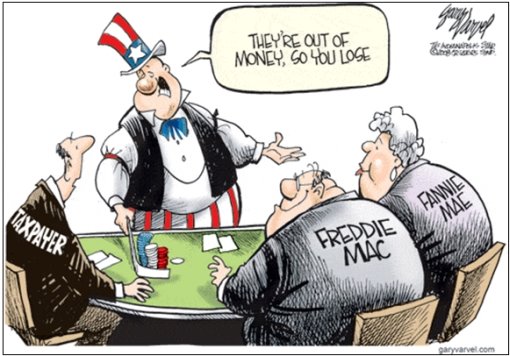
En de overheid, dacht ach als de banken die schulden doorzetten naar buitenlandse banken dan is er geen probleem , zolang de schulden doorgezet worden, mogelijk is daar ook briefwisseling over??quote:Op zondag 7 september 2008 23:16 schreef ItaloDancer het volgende:
Uit dat stukje van Lyrebird
[..]
[ afbeelding ]
De hamvraag blijft wel...... waar komt dat geld vandaan om het nieuwe fundament te storten (FM^2).
Dat zal zeker effect hebben, wat nu opeens is de huizencrisis niet opgelost.... zelfs verre van.
Dat zal zeker effect hebben, wat nu opeens is de huizencrisis niet opgelost.... zelfs verre van.
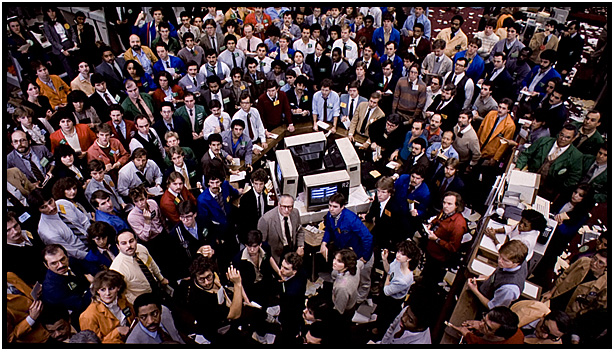
Ik ga ook bij Washington om geld vragen, ik vloog enkele dagen geleden in een Boeing vliegtuig en kwam 5 minuten te laat aan. Dat wil ik wel graag gecompenseerd hebben.
"Privatize Profits, Socialize Losses"
...en we noemen het kapitalisme.
Het Amerikaanse systeem loopt op zijn laatste benen heb ik het idee. Consumeren om het overeind te houden wordt steeds moeilijker. Het makkelijke crediet is allemaal opgebruikt, de leningen rijzen de pan uit en alle noodgrepen wakkeren inflatie aan.
...en we noemen het kapitalisme.
Het Amerikaanse systeem loopt op zijn laatste benen heb ik het idee. Consumeren om het overeind te houden wordt steeds moeilijker. Het makkelijke crediet is allemaal opgebruikt, de leningen rijzen de pan uit en alle noodgrepen wakkeren inflatie aan.
quote:Op maandag 8 september 2008 06:21 schreef NorthernStar het volgende:
"Privatize Profits, Socialize Losses"
...en we noemen het kapitalisme.
Het Amerikaanse systeem loopt op zijn laatste benen heb ik het idee. Consumeren om het overeind te houden wordt steeds moeilijker. Het makkelijke crediet is allemaal opgebruikt, de leningen rijzen de pan uit en alle noodgrepen wakkeren inflatie aan.
Babylon will fall

*****Kraak........
Ik geloof dat de basisprincipes van het kapitalisme inmiddels afgeschaft zijn in de USA. Toch jammer dat Joseph McCarthy dood is, die had er vast wel iets over te zeggen gehad.quote:Op zondag 7 september 2008 22:16 schreef pberends het volgende:
[..]
Vreemde gedachtegang inderdaad. Die bedrijven willen zo min mogelijk belasting betalen, maar als zij innovatie negeren als een stel domme idioten, moet opeens de overheid ze helpen.
For great justice!

Dat gebeurde gisteravond en vanochtend in eerste instantie ook. Maar nu stijgt het weer.quote:Op zondag 7 september 2008 20:59 schreef alex4allofyou het volgende:
Dollar zal weer dalen
Echt vreemd

Schoolvoorbeeld van moral hazard.quote:Op zondag 7 september 2008 23:16 schreef ItaloDancer het volgende:
Uit dat stukje van Lyrebird
[..]
[ afbeelding ]
kan niet anders, het kapitalisme is ff knockout, gebeurde in Japan ook in 1980quote:Op maandag 8 september 2008 09:08 schreef Q. het volgende:
[..]
Ik geloof dat de basisprincipes van het kapitalisme inmiddels afgeschaft zijn in de USA. Toch jammer dat Joseph McCarthy dood is, die had er vast wel iets over te zeggen gehad.
Nu moeten nog steeds de schulden van de US citizens afbetaald worden, anders zullen er nog heel veel creditcardmaatschappijen omvallen en die gaat de overheid niet overnemen, en GM motors ook niet dus de problemen worden alleen maar groter denk ik.
AEX blijft wat achter met 3,8%, Parijs staat al op 5%, Londen op 5,5% (de future dan, de aandelen doen het niet vanwege een storing ), België (Dexia en Fortis) op 6%.
Duitsland 3,5%.
), België (Dexia en Fortis) op 6%.Duitsland 3,5%.
Al sinds FDR (en wat eerder) valt de VS niet echt meer kapitalistisch te noemen, maar vergeleken met veel andere landen zijn ze het nog wel behoorlijk.
quote:Beurscommentaar Kees de Kort
08 09 2008 | Het beurscommentaar op de radiozender BNR Nieuwsradio wordt dagelijks verzorgd door Kees de Kort, macro-analist bij AFS Capital Management in Amsterdam. Op deze pagina een samenvatting van zijn persoonlijke visie op de gebeurtenissen van de beursdag.
-Het gaat vanmorgen op de Europese aandelenmarkten natuurlijk maar om een ding: het ingrijpen van de Amerikaanse overheid in de hypothekenmarkt waar om een volkomen crisis te voorkomen het bestaan van Fannie Mae en Freddie Mac gegarandeerd werd. En die actie wordt door de beleggers gezien als zo'n goed nieuws dat alle indices nu een procentje of vier!! hoger noteren. Bedenk wel dat hier alleen iets aan de gevolgen van de kredietcrisis voor een beperkte groep beleggers wordt gedaan en echt helemaal niets aan de oorzaak: de alsmaar verder oplopende betalingsachterstanden op alle mogelijke leningen.
-De realiteit is natuurlijk dat de problemen op de Amerikaanse huizenmarkt blijkbaar zo groot zijn geworden dat er een volkomen crisis dreigde. Een andere realiteit is dat de kredietcrisis vanaf nu waarschijnlijk ernstiger gaat worden, net zoals de problemen voor alle financials exclusief Fannie Mae en Freddie Mac. ??????????
-Fannie en Freddie zijn aan de rand van de afgrond geraakt door teveel en te creatief uit te lenen. Om de verliezen voor de belastingbetalers niet nog hoger te laten oplopen gaat daar dus hoogstwaarschijnlijk verandering in komen. Er gaan eerder minder dan meer leningen verstrekt worden met in ieder geval strengere voorwaarden waardoor de huizenprijzen ook eerder verder gaan dalen dan herstellen.
-Hierdoor gaan de betalingsachterstanden eerder toe- dan afnemen waardoor de verliezen bij alle andere financials ook eerder gaan toe- dan afnemen. Wat de gevolgen gaan zijn voor het weer verder oplaaien van de twijfels over de toekomstige afboekingen van de financials voor het mogelijk binnenhalen van nieuw vermogen, mag u zelf bedenken. Onze voorspelling: de komende maanden gaat er geen $$ in die financials geinvesteerd worden.
-Oftewel; er is een crisis voorkomen, maar het enthousiasme zegt alleen maar iets over het collectieve extreem korte termijn-denken wat nu de markten bepaald

Die dollarkoers klopt geen flikker meer van... die had allang op 1.70 moeten staan.quote:Op maandag 8 september 2008 11:27 schreef X. het volgende:
[..]
Dat gebeurde gisteravond en vanochtend in eerste instantie ook. Maar nu stijgt het weer.
Echt vreemd
President Camacho
TV series: Boardwalk Empire | Burn Notice | Dexter | Game of Thrones | Impractical Jokers | Luther | Sherlock | Sons of Anarchy
TV series: Boardwalk Empire | Burn Notice | Dexter | Game of Thrones | Impractical Jokers | Luther | Sherlock | Sons of Anarchy
Ik vind het altijd prettiger om naar hem te luisterenquote:

Elke dag rond 12:15 (en hh geloof ik om 13:45) op BNR.
Op dit moment:
Koers Fannie Mae: 1.32 -82.39%
Koers Freddie Mac: 1.48 -70.98%

Koers Fannie Mae: 1.32 -82.39%
Koers Freddie Mac: 1.48 -70.98%
"If you want to make God laugh, tell him about your plans"
Mijn reisverslagen
Mijn reisverslagen

Sorry.quote:Op maandag 8 september 2008 13:55 schreef ItaloDancer het volgende:
Af en toe gaat ie wel een beetje TE populair doen zoals vandaagdesondanks wel amusant.

*****Kraak........
Fannie Mae Cut To Sell From Buy By Citigroupquote:Op maandag 8 september 2008 15:42 schreef SeLang het volgende:
Op dit moment:
Koers Fannie Mae: 1.32 -82.39%
Koers Freddie Mac: 1.48 -70.98%
Je weet het, de gemiddelde analyst doet het slechter dan de marktquote:Op maandag 8 september 2008 15:54 schreef ItaloDancer het volgende:
[..]
Fannie Mae Cut To Sell From Buy By Citigroup
"If you want to make God laugh, tell him about your plans"
Mijn reisverslagen
Mijn reisverslagen
Ik begreep al niet waarom de AEX ineens 4% in de plus stond, en nu ik de reden hoor begrijp ik er nog minder van. Is men echt zo opportunistisch om meteen te gaan kopen wanneer de amerikaanse overheid besluit om weer voor miljarden het schip in te gaan? Iedereen ziet toch dat de crisis alleen maar langer en dieper wordt zo.quote:Oftewel; er is een crisis voorkomen, maar het enthousiasme zegt alleen maar iets over het collectieve extreem korte termijn-denken wat nu de markten bepaald
"I can accept failure. I can not accept not trying."
inderdaad, maar toch gaan we ff omhoog, het is nu zeker dat het een puinhoop is en zekerheid is ook wat waardquote:Op maandag 8 september 2008 16:51 schreef Schadenfreude het volgende:
[..]
Ik begreep al niet waarom de AEX ineens 4% in de plus stond, en nu ik de reden hoor begrijp ik er nog minder van. Is men echt zo opportunistisch om meteen te gaan kopen wanneer de amerikaanse overheid besluit om weer voor miljarden het schip in te gaan? Iedereen ziet toch dat de crisis alleen maar langer en dieper wordt zo.
Hoezo?quote:Op maandag 8 september 2008 15:43 schreef ItaloDancer het volgende:
Hopelijk klapt de handel een procentje (of twee) in voor half 6
putjes gekocht om 9 uurquote:
weggedaan op 398. Prima, al zat er wellicht meer in als je ziet dat ze in Amerika nu alles aan het weggegeven zijn maar ja daar moet je niet meer naar kijken.

Hier kun je op wachten.
http://finance.google.com/finance?q=NYSE%3ALEH
-15 %, want zij zijn de volgende.
http://finance.google.com/finance?q=NYSE%3ALEH
-15 %, want zij zijn de volgende.
Het geld voor bailouts begint een beetje op te rakenquote:Op maandag 8 september 2008 18:41 schreef Drugshond het volgende:
Hier kun je op wachten.
http://finance.google.com/finance?q=NYSE%3ALEH
-15 %, want zij zijn de volgende.
"If you want to make God laugh, tell him about your plans"
Mijn reisverslagen
Mijn reisverslagen
"op" ?quote:Op maandag 8 september 2008 18:58 schreef SeLang het volgende:
[..]
Het geld voor bailouts begint een beetje op te raken
Waarom zakken die hypotheekverstrekkers met 80%?
Zou dat reddingsplan er juist niet voor moeten zorgen dat de aandelen stijgen? Waren de verliezen nog niet ingecalculeerd?
Zou dat reddingsplan er juist niet voor moeten zorgen dat de aandelen stijgen? Waren de verliezen nog niet ingecalculeerd?
President Camacho
TV series: Boardwalk Empire | Burn Notice | Dexter | Game of Thrones | Impractical Jokers | Luther | Sherlock | Sons of Anarchy
TV series: Boardwalk Empire | Burn Notice | Dexter | Game of Thrones | Impractical Jokers | Luther | Sherlock | Sons of Anarchy
,,,
President Camacho
TV series: Boardwalk Empire | Burn Notice | Dexter | Game of Thrones | Impractical Jokers | Luther | Sherlock | Sons of Anarchy
TV series: Boardwalk Empire | Burn Notice | Dexter | Game of Thrones | Impractical Jokers | Luther | Sherlock | Sons of Anarchy
President Camacho
TV series: Boardwalk Empire | Burn Notice | Dexter | Game of Thrones | Impractical Jokers | Luther | Sherlock | Sons of Anarchy
TV series: Boardwalk Empire | Burn Notice | Dexter | Game of Thrones | Impractical Jokers | Luther | Sherlock | Sons of Anarchy
Het bedrijf is straks geen eigendom meer van de aandeelhouders maar van de staat (grotendeels iig)quote:Op maandag 8 september 2008 19:02 schreef pberends het volgende:
Waarom zakken die hypotheekverstrekkers met 80%?
Zou dat reddingsplan er juist niet voor moeten zorgen dat de aandelen stijgen? Waren de verliezen nog niet ingecalculeerd?
"If you want to make God laugh, tell him about your plans"
Mijn reisverslagen
Mijn reisverslagen
Grappig om te zien dat er massaal aandelen gedumpt worden van bedrijven die toch al in nood zaten.
http://finance.google.com/finance?q=NYSE%3AWM
Eerst een opleving... en whopaaa weg ermee.
http://finance.google.com/finance?q=NYSE%3AWM
Eerst een opleving... en whopaaa weg ermee.
Wat ik niet begrijp. Waarom wordt de dollar sterker als dit soort maatregelen getroffen moeten worden? of heeft de dalende olieprijs hier ook mee te maken?
De dollar wordt sterker in die zin dat het heel systeem niet omvalt.quote:Op maandag 8 september 2008 19:42 schreef ktnxbye het volgende:
Wat ik niet begrijp. Waarom wordt de dollar sterker als dit soort maatregelen getroffen moeten worden? of heeft de dalende olieprijs hier ook mee te maken?
Verder maakt de maatregel de dollar zwakker omdat de rotte appels maar blijven voortbestaan.
President Camacho
TV series: Boardwalk Empire | Burn Notice | Dexter | Game of Thrones | Impractical Jokers | Luther | Sherlock | Sons of Anarchy
TV series: Boardwalk Empire | Burn Notice | Dexter | Game of Thrones | Impractical Jokers | Luther | Sherlock | Sons of Anarchy
Ik heb hem toch echt van ruim 1,50 dollar naar 1,42 zien zakken de laatste weken, om nog maar niet te spreken van de 1,60 dollar waar de euro een paar maand geleden op stond.quote:Op maandag 8 september 2008 19:56 schreef pberends het volgende:
Verder maakt de maatregel de dollar zwakker omdat de rotte appels maar blijven voortbestaan.
Mijn mening over de Fannie en Freddie bailout in een nieuwe column
http://www.blikopdebeurs.com/weblog1/pivot/entry.php?id=96quote:Opluchting, maar geen euforie
Maandag 08 September 2008 at 9:03 pm
Europese beurzen zijn flink hoger geëindigd, maar leverden een deel van de winst in. De 'bailout' van Fannie Mae en Freddie Mac geeft tijdelijk lucht op de Amerikaanse huizenmarkt, de fundamentele problemen zijn echter niet opgelost.
Volgens mij kun je redelijk zeker zijn dat het een gecoordineerde actie was van oa. Europa en Azie. Een zwakke dollar is erg slecht voor de export en hij was nu wel heel erg zwak. Plus dat grondstofprijzen ondertussen, mede als gevolg van de zwakke dollar, torenhoog werden.quote:Op maandag 8 september 2008 20:12 schreef ktnxbye het volgende:
[..]
Ik heb hem toch echt van ruim 1,50 dollar naar 1,42 zien zakken de laatste weken, om nog maar niet te spreken van de 1,60 dollar waar de euro een paar maand geleden op stond.
Het werkt maar het is allemaal kunstmatig en voor de korte termijn.quote:"Then in mid-July, it all changed. Overnight," says Byron, echoing Chuck's thoughts, above. "There was no big announcement from the Federal Reserve or the European central bank. Nobody said 'We're tanking the Euro.' But it's pretty clear that they decided that enough was enough. The falling dollar and rising Euro was killing exports from European countries. It was putting Germany and France into recession.
"So the central banks of the world started buying dollars. The U.S. buck strengthened. Oil fell from $145 into the $115 range. And even the Russian invasion of Georgia, or Hurricane Gustav, could not cause oil to rise.
The Rise in the Dollar Doesn’t Have Everyone Convincedquote:The dollar is rising? This too shall pass.
"Our friends at Strategic Investment warn that there is an even bigger property bust on the horizon - in commercial property. The bust could be worse for banks, stocks and the U.S. economy as a whole than the current residential debacle...an almost unbelievable notion."
De Amerikaanse dollar heeft maandag het hoogste niveau in 11 maanden bereikt ten opzichte van de euro.
De stijging was ingegeven door de Amerikaanse reddingsoperatie voor de twee grootste hypotheekverstrekkers Fannie Mae en Freddie Mac.
De euro bereikte een niveau van 1,4118 dollar, het laagste niveau sinds 10 oktober 2007. Vrijdag noteerde de Europese munt nog 1,4260 dollar. De dollar steeg maandag ook ten opzichte van de yen.
Opmars
Sinds halverwege juli is de dollar bezig aan een opmars ten opzichte van de euro, na een lange periode van dalingen. Slechte berichten over de Europese economie en meevallende berichten uit de Verenigde Staten zijn hiervan de belangrijkste oorzaken.
http://www.nu.nl/news/173(...)u_in_11_maanden.html
De stijging was ingegeven door de Amerikaanse reddingsoperatie voor de twee grootste hypotheekverstrekkers Fannie Mae en Freddie Mac.
De euro bereikte een niveau van 1,4118 dollar, het laagste niveau sinds 10 oktober 2007. Vrijdag noteerde de Europese munt nog 1,4260 dollar. De dollar steeg maandag ook ten opzichte van de yen.
Opmars
Sinds halverwege juli is de dollar bezig aan een opmars ten opzichte van de euro, na een lange periode van dalingen. Slechte berichten over de Europese economie en meevallende berichten uit de Verenigde Staten zijn hiervan de belangrijkste oorzaken.
http://www.nu.nl/news/173(...)u_in_11_maanden.html
lol, een zwarte dag voor mij persoonlijk, het is lang geleden dat ik zoveel geld verbraste en dat alleen maar door het feit dat mn orders vertraagd er door kwamen vanochtend, tievus zooi grr.
En dat op een dag dat bijna alles steeg, de ironie
En dat op een dag dat bijna alles steeg, de ironie
People once tried to make Chuck Norris toilet paper. He said no because Chuck Norris takes crap from NOBODY!!!!
Megan Fox makes my balls look like vannilla ice cream.
Megan Fox makes my balls look like vannilla ice cream.
De dollar zal nog wel zakken.
Als de cijfers van werkgelegenheid en financiële malaise blijven aanhouden gaan speculanten het zoeken in een mogelijke renteverlaging van de FED. Met als gevolg dat de dollar weer onderuit zakt.
En die kans is redelijk groot aanwezig. Omdat het effect van belastingverlagingen en hulpprogramma's een beetje op zijn einde loopt. En de echte cijfers weer doen spreken.
Als de cijfers van werkgelegenheid en financiële malaise blijven aanhouden gaan speculanten het zoeken in een mogelijke renteverlaging van de FED. Met als gevolg dat de dollar weer onderuit zakt.
En die kans is redelijk groot aanwezig. Omdat het effect van belastingverlagingen en hulpprogramma's een beetje op zijn einde loopt. En de echte cijfers weer doen spreken.
Een renteverlaging is niet aan de orde. Gelukkig maar. Slechte cijfers zorgen er wel voor dat ze de rente niet kunnen/zullen verhogen.
Your mind don't know how you're taking all the shit you see
Dont believe anyone but most of all dont believe me
God damn right it's a beautiful day Uh-huh
Dont believe anyone but most of all dont believe me
God damn right it's a beautiful day Uh-huh
quote:Lehman Shares Fall After Talks With Korean Bank End
Sept. 9 (Bloomberg) -- Lehman Brothers Holdings Inc. fell 35 percent in New York trading after talks about a capital infusion from Korea Development Bank ended. The Wall Street firm is continuing to negotiate with other potential investors, a person briefed on the matter said.
The Korean bank is one of several companies that Lehman, the fourth-largest U.S. securities firm, has been in discussions with in recent weeks, said the person, who declined to name the other potential bidders.
Lehman, based in New York, has been seeking to raise capital and shed devalued real estate assets after $8.2 billion in writedowns and credit losses in the past year. Korean regulators told the development bank it would be ``inappropriate'' to pursue a Lehman acquisition. Nomura Holdings Inc., Japan's biggest investment bank, may join bidders seeking a stake in Lehman, Nomura President Kenichi Watanabe told the Yomiuri newspaper last week.
Lehman shares, the worst performers on the 11-company Amex Securities Broker/Dealer Index this year, fell $5.05 to $9.10 at 11:18 a.m. in New York Stock Exchange composite trading.
Dow Jones News Service reported earlier today that the chairman of Korea's financial regulator had said talks with Lehman had ended. The Financial Services Commission denied its chairman, Jun Kwang Woo, made such remarks. Korea Development Bank Chief Executive Officer Min Euoo Sung declined to comment on the progress of talks when questioned at a banking seminar in Seoul.
Lehman spokesman Mark Lane and Korean Development Bank spokesman Cho Hyun Eek also declined to comment on talks with potential investors.
Third Quarter
Lehman CEO Richard Fuld and President Bart McDade are preparing to announce third-quarter financial results next week along with the outcome of their negotiations to sell assets and obtain cash infusions from outside investors.
The announcement will include ``key strategic initiatives,'' Lehman said in a statement yesterday, without elaborating. The firm will reveal how much of its mortgage portfolio was reduced during the quarter and how it's replacing the capital depleted by losses on those assets, according to people familiar with the matter.
The firm has been in talks Kohlberg Kravis Roberts & Co., Carlyle Group and other private-equity firms interested in buying its asset-management unit. Lehman is mulling all options and hasn't concluded any of the discussions yet, the person familiar with the matter said. Fuld will decide in the next 10 days how best to raise capital, the person said.
Fuld, 62, shuffled the top ranks of his firm for the third time in four months over the weekend. Jeremy M. Isaacs, head of Lehman's international operations, and Andrew Morton, the fixed- income chief, are leaving.
Fuld replaced his associate of 30 years, Joseph Gregory, in June, naming McDade president as the firm was racking up a $2.8 billion second-quarter loss from the collapse of the mortgage market.
Zei ik dat niet eerderquote:Op dinsdag 9 september 2008 22:02 schreef ItaloDancer het volgende:
Boem
Lehman -45%
Washington Mutual -20%
Dow -2,4%
S&P -3,4%
Crude @ 102 $

Dan moet de US Government de andere banken ook maar overnemen, en alle huizen opkopen en GM opkopen en alle creditcardmaatschappijen.quote:Op dinsdag 9 september 2008 22:02 schreef ItaloDancer het volgende:
Boem
Lehman -45%
Washington Mutual -20%
Dow -2,4%
S&P -3,4%
Crude @ 102 $
En nog een keer iedereen 1000 dollar geven, om uit te geven bij Wallmart, en 10 keer een Dollarmenu bij de Mac

quote:Bankers Stare into the Abyss
Christopher Grey and his partners pursue opportunities in distressed real estate.
Man looks in the abyss, there's nothing staring back at him. At that moment, man finds his character. And that is what keeps him out of the abyss.
- Lou Mannheim, Wall Street, 1987
The last year has not been kind to bankers. Many of them probably feel like the whole world has turned against them. Regulators and auditors are crawling all over them. They are facing massive write downs in their portfolios. Loan defaults and foreclosures are rising at an unprecedented rate. They are forced to go begging investors all over the world for more equity capital just to survive.
By some estimates, such as those of noted economist Nouriel Roubini of NYU’s Stern School of Business, banks may face over $1 trillion of losses and write downs from this credit crisis and as many as 1,000 US banks will fail. Nobody knows how severe this banking crisis will be or when it will end, and there are those who say it will be resolved a lot more quickly and less painfully than expected. Regardless of what happens in the future, what can lenders and borrowers learn from this crisis so that we don’t find ourselves in this mess again for a long time?
There is a lot of blame to go around. The Federal Reserve failed to properly regulate the banking system and kept interest rates way too low for way too long to avoid being criticized for the recession that was caused by the previous stock market bubble of the late 1990’s. Lenders became originators and salesmen and threw out the underwriting process because they believed there would always be a greater fool to buy even the worst loan and remove it from their balance sheet. Borrowers believed asset prices would rise forever and didn’t want to be left behind while everyone else was getting rich by borrowing as much as possible to speculate. Nobody cared that it was a bubble. Everyone just wanted to get theirs.
There is a common theme to all of this. Everyone throughout the financial system was suffering from a simple lack of character. Although there were excesses in Europe and all around the world, by far the worst excesses in this credit bubble were here in America. We need to ask ourselves why this happened here so much worse than everywhere else. On this topic, the head of the Swiss central bank said recently, “What is going on in the American economy is unbelievable and shameful.” What is he talking about?
I think he was talking about our financial system, which for too many years has excessively rewarded extreme risk taking, especially on Wall Street, and has failed to sufficiently punish recklessness, incompetence, and even outright dishonesty. In fact, on too many occasions, bad behavior has gone completely unpunished or even rewarded. A great example of this recently has been the enormously lavish severance packages given to Wall Street CEOs who completely destroyed the balance sheets and possibly the entire futures of their respective companies.
What does it say about the character of a financial system that pays someone $150 million for destroying a company that he was hired to lead?
With this kind of example being set in the corporate boardrooms and on Wall Street, is it any surprise that so many Americans, even those who can afford it, see no reason to continue making their mortgage payments if they no longer have equity in their homes? This credit crisis in America, at its most basic level, is a crisis of character in this country, and character begins at the top. Alan Greenspan’s and Ben Bernanke’s refusal to accept responsibility for their obvious and horrendous failures of regulatory oversight and interest rate determination has trickled down to Wall Street and Main Street CEOs who gorge themselves on generous pay packages even as their companies sink into oblivion. That same lack of character has trickled down to bankers who see no reason to honestly underwrite loans or to take responsibility for their mistakes and honestly mark assets down to current market value. Borrowers, similarly lacking in character, frequently will not even consider trying to pay back a loan unless doing so in their own best interests. The basic concepts of responsible regulation, compensation, lending, and borrowing were largely thrown out the window for many years and this credit crisis is the inevitable and disastrous result of that reckless process.
How can we reverse this process and get our financial system back on track? Some people think government bail outs are the answer. While there is no doubt that the government must offer some assistance to save Fannie Mae and Freddie Mac and stabilize the system, this is not the answer to our problems. I believe the real answer and antidote to future crises like this is for some people at the top of our financial system to start setting an example for everyone else and take some responsibility for their mistakes.
Here are a few of specific suggestions that I think would be very helpful and send the right message to the country. Alan Greenspan should make a public apology and donate all of his book proceeds and speaking fees to a charity that helps families who have lost their homes in foreclosure. Ben Bernanke should immediately resign and recommend that Paul Volcker, the last successful Fed Chairman, take over his job. Stan O’Neal and Chuck Prince should return all of their severance packages to the shareholders of Merrill Lynch and Citibank. Dick Fuld, the CEO of Lehman Brothers, and Kerry Killinger, the CEO of Washington Mutual, should resign and accept no severance. I am not saying that any of these individuals are bad people. I do not know any of them personally, and I will give all of them the benefit of assuming that they are all wonderful people. However, I think they are all very high profile examples of people who made horrible errors in judgment and have failed to take responsibility for those errors. We cannot begin to heal our financial system until people at the top start setting an example for the rest of us. How can we ask a struggling family to keep making their mortgage payments instead of walking away if the people at the top who created the system that caused this mess do not take responsibility for what they did?
Bankers are staring into the abyss. Will they find their character? I hope so.
Bah. Zit sinds maandag stevig long hopende op een rally.quote:Op dinsdag 9 september 2008 22:02 schreef ItaloDancer het volgende:
Boem
Lehman -45%
Washington Mutual -20%
Dow -2,4%
S&P -3,4%
Crude @ 102 $
Laten we afspreken dat gewoon deze week Lehman omflikkerd, de FED de rente 2% omhoog gooit en dat de banken samen nog eens 750 miljard afschrijven dan kunnen we volgende week maandag met een schone lei beginnen weer eens een langere periode up gaan.

Godfather Bodybuilding topic reeks
als de rente 2% omhoog gaat dan kunnen we de andere US hypotheken ook wel afschrijvenquote:Op dinsdag 9 september 2008 22:44 schreef Mr.J het volgende:
[..]
Bah. Zit sinds maandag stevig long hopende op een rally.
Laten we afspreken dat gewoon deze week Lehman omflikkerd, de FED de rente 2% omhoog gooit en dat de banken samen nog eens 750 miljard afschrijven dan kunnen we volgende week maandag met een schone lei beginnen weer eens een langere periode up gaan.
Ja ok, maar dan wel deze week dus. Beginnen we maandag met een Dow van 8000 en een AEX van 280.
Godfather Bodybuilding topic reeks
je zal nog een keer een DOW van 3000 zienquote:Op dinsdag 9 september 2008 23:06 schreef Mr.J het volgende:
Ja ok, maar dan wel deze week dus. Beginnen we maandag met een Dow van 8000 en een AEX van 280.
2010 dan gaan we weer up
Is Lehman's niet gewoon te groot om nu gewoon onder te laten gaan? Als dit zo doorgaat is straks de hele banksector in de VS genationaliseerd.quote:

quote:Op zondag 7 september 2008 18:24 schreef ItaloDancer het volgende:
[ afbeelding ]
En wat is er opeens gebeurd met vrije markt werking, kapatilisme en de overheid moet zich niet bemoeien met private bedrijven?quote:Op zondag 7 september 2008 21:31 schreef pberends het volgende:
Autoproducenten vragen Washington om hulp
Al die principes overboord als het met al die grote jongens slecht gaat en hun verlies afwimpelen op de belastingcenten die, vooral in de USA, door de bevolking en middenstand wordt opgehoest. 
En gaat de overheid van de USA zich nu ook echt bemoeien met de organisaties of wordt dit uiteindelijk enkel miljarden pompen in die bedrijven, waarna ze gewoon hun gang weer gaan? Zou me niks verbazen namelijk.
Putting the Fun back into Fundamentally Wrong since 1975.
"Yes, of course, I knew you would volunteer, Mr. Feynman, but I was wondering if there would be anybody else."
"Yes, of course, I knew you would volunteer, Mr. Feynman, but I was wondering if there would be anybody else."
