NWS Nieuws & Achtergronden
Discussieer hier diepgaander over de actualiteiten.



Rusland stapt nu echt uit het ISS programma? Wat blijft er dan nog over wat betreft hun ruimtevaart industrie? Astronauten hoeven (gelukkig trouwens) sinds kort ook niet meer met Rusland naar het ISS.
Opgeblazen gevoel of winderigheid? Zo opgelost met Rennie!


Ik stop gelijk met belasting betalen.quote:Op zaterdag 30 april 2022 17:41 schreef superniger het volgende:
[..]
Wij kopen voor 1 miljard per dag Russische gas.
Werkt voor de UNHCR meen ik, denk dat dat de voornaamste reden is.quote:
OH NOES!!1*&@^!!*@!!@$*^!!!!!!!!
Zal wel kinderen meenemen, stuk of 20.quote:
Tomb Raider gaat Putin slopen.
[ twitter ]
Vakman pur sang


"Biden’s Dangerous New Ukraine Endgame: No Endgame
With his strategy to “weaken” Russia, the U.S. president may be turning the Ukraine war into a global one."
With his strategy to “weaken” Russia, the U.S. president may be turning the Ukraine war into a global one."
https://foreignpolicy.com(...)e-war-biden-endgame/quote:“It’s one thing to pursue a policy of weakening Putin, quite another to say it out loud. We have to find a way for Putin to achieve a political solution, so perhaps it is not wise to state this,” said one senior European diplomat, speaking on condition of anonymity.
I am not omniscient, but I know a lot.
- Goethe, “Faust”
- Goethe, “Faust”

Wilde deze net gaan posten.quote:Op zaterdag 30 april 2022 18:02 schreef capricia het volgende:
"Biden’s Dangerous New Ukraine Endgame: No Endgame
With his strategy to “weaken” Russia, the U.S. president may be turning the Ukraine war into a global one."
[..]
https://foreignpolicy.com(...)e-war-biden-endgame/
Is maar een partij die er een globale oorlog van maakt dus niet Biden de schuld geven.quote:
"Biden’s Dangerous New Ukraine Endgame: No Endgame
With his strategy to “weaken” Russia, the U.S. president may be turning the Ukraine war into a global one."
[..]
https://foreignpolicy.com(...)e-war-biden-endgame/
Dimitri Dienstplichtigov en zijn kameraden zijn verkrachters.quote:
[..]
Eens. Dmitri Dienstplichtigov is ook gewoon een mens met een moeder, familie of gezin.
En vergeet zijn vriendjes Sergej Soldatov en Kamil Kanonnenvoerovishvili niet.
Liefst zo weinig mogelijk slachtoffers. Civiel en militair. Oorlog is ruk.
Geen medelijden mee.

Je bepaalt zelf hoe je reageertquote:
[..]
Is maar een partij die er een globale oorlog van maakt dus niet Biden de schuld geven.

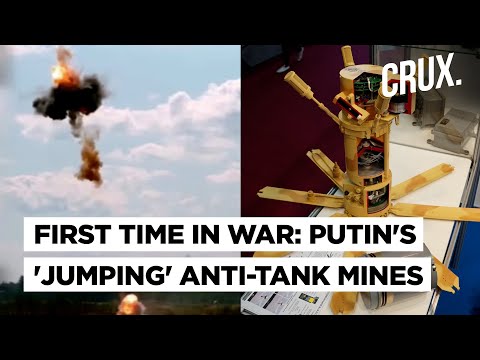
Rusland gebruikt een hightech antitank mijn die via seismische en audio-sensoren een tank detecteert, 35m de lucht in 'springt' en daarna een top attack op een tank doet
https://www.telegraaf.nl/(...)kt-tanks-van-bovenaf
De PTKM-1R gebruikt akoustische en seismische sensoren om voertuigen in de omgeving te lokaliseren. Dan wordt de explosieve lading van zo'n 3 kilo ongeveer 30 meter de lucht in geslingerd, terwijl infrarood sensoren de grond afzoeken. Is de tank gevonden, dan wordt een projectiel afgevuurd dat in staat moet zijn om door zo'n 7 centimeter staal door te dringen. De hele operatie duurt slechts een paar seconden.
https://www.telegraaf.nl/(...)kt-tanks-van-bovenaf
De PTKM-1R gebruikt akoustische en seismische sensoren om voertuigen in de omgeving te lokaliseren. Dan wordt de explosieve lading van zo'n 3 kilo ongeveer 30 meter de lucht in geslingerd, terwijl infrarood sensoren de grond afzoeken. Is de tank gevonden, dan wordt een projectiel afgevuurd dat in staat moet zijn om door zo'n 7 centimeter staal door te dringen. De hele operatie duurt slechts een paar seconden.
Dat is de standaarddoctrine bij landen met grote kernwapenarsenalen. Bij het uiteenvallen of instabiel worden van Rusland is het namelijk mogelijk dat er kernwapens aan derde partijen verkocht worden, bijvoorbeeld terroristen.quote:
Die tijdlijn van Rob de Wijk weer. Het westen dit, het westen dat. Verzwakking van Rusland mag geen doel zijn…
Echt, wat zit daar toch achter joh.
Ceterum censeo Turciam delendam esse.
https://www.telegraaf.nl/(...)gen-ik-schrok-onwijs
===============================================================
Deze Nederlanders staan op de Russische lijst met buitenlandse huurlingen: ’Ik schrok onwijs’
===============================================================
Nederlanders die meevechten met Oekraïne zijn volop in beeld bij de Russen. Er circuleert een namenlijst met gegevens van negen vermeende strijders. De Nederlandse ex-militair Joyce wordt in Rusland bovendien bedreigd met vervolging: „Elke oorlogsmisdadiger krijgt z’n verdiende loon.”
„Rechercheurs proberen een huurlinge uit Nederland te vinden die voor geld misdaden heeft gepleegd tegen Russischtalige burgers”, beweert de presentator van het Poetingezinde programma. „De voorzitter van de onderzoekscommissie Aleksandr Bastrykin heeft bevolen om de handelingen in Oekraïne te onderzoeken van de 40-jarige Nederlandse Joyce [achternaam]. Volgens de commissie is de moeder van drie kinderen naar Oekraïne afgereisd om tegen een stevig honorarium te vechten aan de kant van Kiev.”
De presentator stelt dat het volgens het Russische recht strafbaar is om je als huurling aan te melden. „Het onderzoekscomité heeft opdracht gegeven om alle mogelijk middelen in te zetten om uit te vinden waar deze huurling zich bevindt en het documenteren van alle feiten van haar strafbare activiteiten.”
Joyce ging naar Oekraïne maar kwam niet aan vechten toe. Na een Russische raketaanval keerde ze terug naar Nederland. Ze reageert geschokt dat ze op tv als enige bij naam wordt genoemd. Anders dan wat R24 beweert heeft ze ’geen euro ontvangen’ in Oekraïne. „Ik was daar niet voor het geld. Er is totaal niks van waar. Dit zijn puur leugens en die worden als propaganda gebruikt. Helaas kan ik er niets aan veranderen.”
’Ik schrok onwijs’
Donderdag maakte een pro-Russische Telegramgroep een lijst openbaar met 700 namen van buitenlandse strijders, compleet met geboortedatum en paspoortnummer. Er staan ook zeven Nederlanders bij - Joyce ontbreekt in de tabel. Tenminste een van de zeven is geen strijder maar een journalist.
Tenminste vijf anderen op de lijst zijn wel naar het Oekraïne geweest om te vechten. De meesten zijn weer terug. Zoals Adnane uit Amsterdam. „Ik schrok onwijs toen ik hoorde dat mijn gegevens op de lijst staan en dat Joyce op televisie is geweest. Ik weet niet wat dat gaat doen in het buitenland. En je hoort dat de Russische geheime dienst in het buitenland tot veel in staat is.”
Adnane is terug in Nederland nadat hij in de buurt van Kiev strijd heeft geleverd. „Nadat ik op de schietbaan had laten zien wat ik kon, ben ik ingedeeld bij een groep van ervaren ex-militairen. We krijgen snel wapens en vertrokken naar Irpin dat bijna omsingeld was. Daar hebben we een offensief gevoerd en de Russen trokken zich terug. France24 heeft ons daar nog gefilmd. Daarna kreeg je de mogelijkheid om weg te gaan en ik heb daar gebruik van gemaakt. Het was nog kielekiele, want twee minuten nadat wij vertrokken is er een raketaanval geweest, daar is een Amerikaanse journalist bij omgekomen. Ik ben blij dat ik heelhuids thuis ben. Ik dacht erover om terug te gaan, tot die lijst werd gepubliceerd.”
Tekst gaat verder onder de foto.
Ook Rick staat vermeld in de uitgelekte tabel. Hij meldde zich begin maart aan bij het Oekraïense vreemdelingenlegioen. Op 13 maart liep hij inwendige bloedingen op bij Russische raketaanvallen op de militaire basis Yavoriv. Na operatie in het militaire ziekenhuis keerde hij terug naar Nederland voor verdere behandeling. Inmiddels zit hij opnieuw aan het front. Hij heeft de lijst met namen gezien. „Ik schrik hier niet van, ben ook niet bang. Ik vind het wel apart, want ik heb behalve bij de grenscontrole nergens mijn gegevens afgegeven.”
Rick is sinds donderdag weer in Oekraïne. „Onze nieuwe locatie is geheim. Ik heb diensten hervat als kapitein van het nieuwe legioen als logistiek leidinggevende.” Rick meldt dat hij twee anderen op de lijst kent, en die zouden naar Nederland zijn teruggekeerd. Dirk, nummer twee op de lijst, zit ook aan het front.
Bij het Oekraïense leger zijn buitenlandse strijders nog altijd welkom. Maar de toelatingseisen zijn wel aangescherpt. Want, zo benadrukt het wervingsbureau op zijn website: ’het is hier de hel op aarde’.
Militair toerisme
„Onze vijand is het zuivere kwaad - Russen respecteren geen regels en wetten” , zo benadrukken de rekruteerders. „Dit is geen plaats voor militair toerisme. Het is ook geen plek om wat extra skills op te doen - we hebben geen tijd om mensen op te leiden die er niet klaar voor zijn. Er zijn veel trieste verhalen over buitenlandse legionairs die totaal onvoorbereid zijn op de oorlogsrealiteit.”
Aspirant-strijders moeten dus vragen beantwoorden als ’Ben je bereid om uren onder artillerievuur te liggen? Om gevangen genomen te worden met grote kans op marteling? Om te slapen in de wilde natuur bij temperaturen onder het vriespunt, zonder douche en normaal eten, omringd door een vijandige, één-op-één strijd voor je leven?’ En: „Als de Oekraïense oorlogsrealiteit anders blijkt dan Hollywoodfilms, ren je dan niet na een week weg?”
Toetreden tot het Oekraïense leger is op sommige punten wel eenvoudiger gemaakt, zeggen twee Nederlanders die gesprekken hebben gevoerd met rekruteerders. Er is geen visum meer nodig en wie bijtekent, zit er niet meer voor onbepaalde tijd aan vast. Op een aantrekkelijk vormgegeven website staat een kant-en-klaar zevenstappenplan naar een plek in het Internationaal Verdedigingslegioen van Oekraïne: ’nu is de tijd om te handelen!’
Tekst gaat verder onder de foto.
Hendrik, niet zijn echte naam, kreeg te horen dat buitenlandse militairen meer keuze krijgen in wapens. Een Nederlandse militair hoeft dus niet met een kalasjnikov te schieten waarmee hij nooit heeft getraind. Soldaten moeten hun eigen kleding, scherfvest en helm meenemen.
„Je moet wel echt kunnen aantonen dat je gevechtservaring hebt”, zegt Hendrik. „Je moet twee referenties opgeven die telefonisch bereikbaar zijn om te bevestigen dat jij inderdaad hebt gevochten. Anders hebben ze niets aan je.”
President Zelenski riep buitenlanders kort na de invasie op om mee te vechten. Het „in vreemde krijgsdienst treden” is -behalve voor actief dienende militairen- in Nederland niet strafbaar, stelde het kabinet eerder. „Tenzij er sprake is van het in dienst treden van de krijgsmacht van een land waarmee Nederland in oorlog is of op het punt staat in oorlog te raken.”
Er moet meer helderheid komen rond mensen die willen meevechten in Oekraïne, vindt veiligheidsdeskundige Michiel de Weger. „Buitenlandse Zaken zou een lijst moeten publiceren voor welke regeringen of oppositiebewegingen je als Nederlandse vrijwilliger zonder vervolging mag vechten. Ben je militair, dan moet je natuurlijk eerst ontslag nemen. En maak ook duidelijk waar bijvoorbeeld een arts of brandweerman humanitair werk mag doen, mogelijk zelfs betaald door Buitenlandse Zaken. Nederland zou net als in de VS een ’Vredeskorps’ kunnen opzetten. Laten we vooral ook zoveel mogelijk proberen te voorkomen dat we, zoals nu, niet goed weten wie waar heen gaat.”
===============================================================
Deze Nederlanders staan op de Russische lijst met buitenlandse huurlingen: ’Ik schrok onwijs’
===============================================================
Nederlanders die meevechten met Oekraïne zijn volop in beeld bij de Russen. Er circuleert een namenlijst met gegevens van negen vermeende strijders. De Nederlandse ex-militair Joyce wordt in Rusland bovendien bedreigd met vervolging: „Elke oorlogsmisdadiger krijgt z’n verdiende loon.”
„Rechercheurs proberen een huurlinge uit Nederland te vinden die voor geld misdaden heeft gepleegd tegen Russischtalige burgers”, beweert de presentator van het Poetingezinde programma. „De voorzitter van de onderzoekscommissie Aleksandr Bastrykin heeft bevolen om de handelingen in Oekraïne te onderzoeken van de 40-jarige Nederlandse Joyce [achternaam]. Volgens de commissie is de moeder van drie kinderen naar Oekraïne afgereisd om tegen een stevig honorarium te vechten aan de kant van Kiev.”
De presentator stelt dat het volgens het Russische recht strafbaar is om je als huurling aan te melden. „Het onderzoekscomité heeft opdracht gegeven om alle mogelijk middelen in te zetten om uit te vinden waar deze huurling zich bevindt en het documenteren van alle feiten van haar strafbare activiteiten.”
Joyce ging naar Oekraïne maar kwam niet aan vechten toe. Na een Russische raketaanval keerde ze terug naar Nederland. Ze reageert geschokt dat ze op tv als enige bij naam wordt genoemd. Anders dan wat R24 beweert heeft ze ’geen euro ontvangen’ in Oekraïne. „Ik was daar niet voor het geld. Er is totaal niks van waar. Dit zijn puur leugens en die worden als propaganda gebruikt. Helaas kan ik er niets aan veranderen.”
’Ik schrok onwijs’
Donderdag maakte een pro-Russische Telegramgroep een lijst openbaar met 700 namen van buitenlandse strijders, compleet met geboortedatum en paspoortnummer. Er staan ook zeven Nederlanders bij - Joyce ontbreekt in de tabel. Tenminste een van de zeven is geen strijder maar een journalist.
Tenminste vijf anderen op de lijst zijn wel naar het Oekraïne geweest om te vechten. De meesten zijn weer terug. Zoals Adnane uit Amsterdam. „Ik schrok onwijs toen ik hoorde dat mijn gegevens op de lijst staan en dat Joyce op televisie is geweest. Ik weet niet wat dat gaat doen in het buitenland. En je hoort dat de Russische geheime dienst in het buitenland tot veel in staat is.”
Adnane is terug in Nederland nadat hij in de buurt van Kiev strijd heeft geleverd. „Nadat ik op de schietbaan had laten zien wat ik kon, ben ik ingedeeld bij een groep van ervaren ex-militairen. We krijgen snel wapens en vertrokken naar Irpin dat bijna omsingeld was. Daar hebben we een offensief gevoerd en de Russen trokken zich terug. France24 heeft ons daar nog gefilmd. Daarna kreeg je de mogelijkheid om weg te gaan en ik heb daar gebruik van gemaakt. Het was nog kielekiele, want twee minuten nadat wij vertrokken is er een raketaanval geweest, daar is een Amerikaanse journalist bij omgekomen. Ik ben blij dat ik heelhuids thuis ben. Ik dacht erover om terug te gaan, tot die lijst werd gepubliceerd.”
Tekst gaat verder onder de foto.
Ook Rick staat vermeld in de uitgelekte tabel. Hij meldde zich begin maart aan bij het Oekraïense vreemdelingenlegioen. Op 13 maart liep hij inwendige bloedingen op bij Russische raketaanvallen op de militaire basis Yavoriv. Na operatie in het militaire ziekenhuis keerde hij terug naar Nederland voor verdere behandeling. Inmiddels zit hij opnieuw aan het front. Hij heeft de lijst met namen gezien. „Ik schrik hier niet van, ben ook niet bang. Ik vind het wel apart, want ik heb behalve bij de grenscontrole nergens mijn gegevens afgegeven.”
Rick is sinds donderdag weer in Oekraïne. „Onze nieuwe locatie is geheim. Ik heb diensten hervat als kapitein van het nieuwe legioen als logistiek leidinggevende.” Rick meldt dat hij twee anderen op de lijst kent, en die zouden naar Nederland zijn teruggekeerd. Dirk, nummer twee op de lijst, zit ook aan het front.
Bij het Oekraïense leger zijn buitenlandse strijders nog altijd welkom. Maar de toelatingseisen zijn wel aangescherpt. Want, zo benadrukt het wervingsbureau op zijn website: ’het is hier de hel op aarde’.
Militair toerisme
„Onze vijand is het zuivere kwaad - Russen respecteren geen regels en wetten” , zo benadrukken de rekruteerders. „Dit is geen plaats voor militair toerisme. Het is ook geen plek om wat extra skills op te doen - we hebben geen tijd om mensen op te leiden die er niet klaar voor zijn. Er zijn veel trieste verhalen over buitenlandse legionairs die totaal onvoorbereid zijn op de oorlogsrealiteit.”
Aspirant-strijders moeten dus vragen beantwoorden als ’Ben je bereid om uren onder artillerievuur te liggen? Om gevangen genomen te worden met grote kans op marteling? Om te slapen in de wilde natuur bij temperaturen onder het vriespunt, zonder douche en normaal eten, omringd door een vijandige, één-op-één strijd voor je leven?’ En: „Als de Oekraïense oorlogsrealiteit anders blijkt dan Hollywoodfilms, ren je dan niet na een week weg?”
Toetreden tot het Oekraïense leger is op sommige punten wel eenvoudiger gemaakt, zeggen twee Nederlanders die gesprekken hebben gevoerd met rekruteerders. Er is geen visum meer nodig en wie bijtekent, zit er niet meer voor onbepaalde tijd aan vast. Op een aantrekkelijk vormgegeven website staat een kant-en-klaar zevenstappenplan naar een plek in het Internationaal Verdedigingslegioen van Oekraïne: ’nu is de tijd om te handelen!’
Tekst gaat verder onder de foto.
Hendrik, niet zijn echte naam, kreeg te horen dat buitenlandse militairen meer keuze krijgen in wapens. Een Nederlandse militair hoeft dus niet met een kalasjnikov te schieten waarmee hij nooit heeft getraind. Soldaten moeten hun eigen kleding, scherfvest en helm meenemen.
„Je moet wel echt kunnen aantonen dat je gevechtservaring hebt”, zegt Hendrik. „Je moet twee referenties opgeven die telefonisch bereikbaar zijn om te bevestigen dat jij inderdaad hebt gevochten. Anders hebben ze niets aan je.”
President Zelenski riep buitenlanders kort na de invasie op om mee te vechten. Het „in vreemde krijgsdienst treden” is -behalve voor actief dienende militairen- in Nederland niet strafbaar, stelde het kabinet eerder. „Tenzij er sprake is van het in dienst treden van de krijgsmacht van een land waarmee Nederland in oorlog is of op het punt staat in oorlog te raken.”
Er moet meer helderheid komen rond mensen die willen meevechten in Oekraïne, vindt veiligheidsdeskundige Michiel de Weger. „Buitenlandse Zaken zou een lijst moeten publiceren voor welke regeringen of oppositiebewegingen je als Nederlandse vrijwilliger zonder vervolging mag vechten. Ben je militair, dan moet je natuurlijk eerst ontslag nemen. En maak ook duidelijk waar bijvoorbeeld een arts of brandweerman humanitair werk mag doen, mogelijk zelfs betaald door Buitenlandse Zaken. Nederland zou net als in de VS een ’Vredeskorps’ kunnen opzetten. Laten we vooral ook zoveel mogelijk proberen te voorkomen dat we, zoals nu, niet goed weten wie waar heen gaat.”

Ja, wat verwachten jullie dan...quote:
https://www.telegraaf.nl/(...)gen-ik-schrok-onwijs
Deze Nederlanders staan op de Russische lijst met buitenlandse huurlingen: 'Ik schrok onwijs'
Tenminste vijf anderen op de lijst zijn wel naar het Oekraïne geweest om te vechten. De meesten zijn weer terug. Zoals Adnane uit Amsterdam. „Ik schrok onwijs toen ik hoorde dat mijn gegevens op de lijst staan en dat Joyce op televisie is geweest. Ik weet niet wat dat gaat doen in het buitenland. En je hoort dat de Russische geheime dienst in het buitenland tot veel in staat is.”

Een beetje naief die kant opgaan om te vechten voor "de goede zaak" om er vervolgens achter te komen dat de tegenpartij er anders over denkt...

Rabobankquote:Op zaterdag 30 april 2022 17:22 schreef Aether het volgende:
[..]
https://www.dontfundwar.com/directory

ING

Steun het Kiva Fok! team!
http://www.kiva.org/team/fok
http://www.kiva.org/team/fok
Ik heb verder geen reet met Ingo "ik was er bij (treinkaping), oh nee toch niet" Piepers... Maar ik post hem toch maar.
quote:Assessing the Risk of Nuclear War: We Don't Have a Clue
Putin regularly threatens with the use of nuclear weapons if an existential threat arises to Russia.
His remarks show that arms supplies to Ukraine by the US/NATO and attacks on targets in Russia could constitute such existential threats.
These threats are extensively discussed and evaluated in the media.
The superficiality and sometimes absurdity of those analyzes strike me, all kinds of non-sensical claims are made, but not substantiated.
The reason that this philosophizing about the nuclear risk is so vague is that politicians and military leaders are ultimately unable to say much meaningful about it. The humiliating reality is that we really don't have a clue.
In this article I will discuss this issue in more detail based on several 'statements' that I make about this:
1. The probability of Putin deploying nuclear weapons cannot be estimated in practical terms, that is impossible. But the likelihood of such a deployment is real: from Putin's perspective, such a deployment may be rational.
When assessing threats, soldiers make a distinction between capabilities (which Russia has) and intentions (which Putin seems to have), i.e. the willingness to deploy them.
I deliberately use the word probability and not risk. That is a matter of definition. With probability it is about likelihood; with risk it is about the 'combination' of probability and its consequences.
The probability of Putin deploying a nuclear weapon may be limited, but the consequences will be very serious, and the risk should therefore be assessed as high (just because of the consequences).
What Putin decides (his willingness to deploy nuclear weapons; I assume that he has a decisive vote) depends on several factors, which we have no insight into, such as: Putin's estimates of the risks associated with such a deployment (e.g. yes/no nuclear retaliation); the actual definition of existential threats to Russia/Putin; the influence of other 'forces' on the decision; the course of the war; the (power) position of Putin in Russia, but also, for example, the psychological 'condition' of Putin himself.
There can be endless speculation about this, which is interesting, but at best only provides limited certainty or useful insight.
To dismiss the probability by arguing that it is merely Putin's rhetoric is a dangerous assumption. Our limited imagination and our own views (in this case about the use of nuclear weapons) are not a useful reference.
2. The consequences of the deployment of a nuclear weapon by Russia are very serious and is definitely a major game changer.
When it comes to the consequences of this, it is important to specify those consequences in more detail.
It is important to distinguish, among other things, between the type of nuclear weapon (tactical or strategic), the location of deployment (in Ukraine, whether or not on a military and/or civilian target, on a target that lies in the NATO treaty area, etc. etc.), the yield (explosive power), the number of casualties (military and/or civil casualties), the type of delivery system (a missile, grenade, mine, ICBM, SLBM, etc.), but also the weather conditions (for example, the wind direction/force largely determines which area will be contaminated with nuclear fallout, the mushroom cloud will end up somewhere).
Two extremes: (1) the deployment of a strategic nuclear weapon, with a high yield on a civilian target (Washington), and (2) the deployment of a 'small' tactical nuclear missile in an uninhabited area, as a demonstration of Putin's willingness to escalate, and an attempt to intimidate (e.g. to discourage arms transfers and attacks on Russian territory).
Russian nuclear doctrine provides for such a 'defensive' deployment option; Russia considers tactical nuclear war (more) manageable.
To get a better idea where we are talking about, the explosion of a large amount of ammonium nitrate stored at the Port of Beirut in the capital city of Lebanon in 2020 had the power of a small nuclear explosion (see photo below and video). This video shows the explosion of a strategic nuclear weapon.
If that 'small' explosion takes place in an uninhabited area (or in the Black Sea for example), you could say that it is not that bad. However, that is not the point of this deployment. The point is that with such a deployment the nuclear threshold has been crossed, and then the war takes on a completely different perspective. Further nuclear escalation is then a realistic possibility.
Both Russia and the US still have a significant arsenal when it comes to those weapons (I'm leaving out the capabilities of France and the UK, so as not to unnecessarily complicate the discussion), inclusive capabilities to escalate to the highest level, in which case there is talk of MAD (here is (also) meant Mutual Assured Destruction).
What this war also shows is that escalation, certainly in the initial phase of the conflict (which can take a long time), takes place 'automatically'. At least one side often has a reason for deploying heavier or more weapons or increasing the geographic scope of the war. In this war, both sides have the conventional capabilities to do so. Because it concerns great powers, that willingness is also great, because there is a lot at stake for them.
Such an escalation 'logic' also applies to the deployment of nuclear weapons. An additional problem is that precisely those decisions (whether to escalate with nuclear weapons) are taken under increasing time pressure in those circumstances, because certain nuclear weapons/systems quickly reach their target. Then no more analysis and evaluation take place, but decision protocols take over.
In short, regardless of what nuclear weapon is initially deployed, the consequences, partly because of the escalation risk, are very great.
So the risk (defined as a combination of probability and consequences) is high even with a small probability. This is a reason not to dismiss these threats simply as rhetoric and boasting, that would be naive and irresponsible.
There is sometimes talk of military science, which suggests a certain logic and competences, but when it comes to the situation now and this issue, it is mostly guess work.
It should also be noted that the situation is now completely different from that during the Cold War, in which risks were still not properly assessed, but could be estimated better. What also makes the situation more dangerous is that it is now (since 1991) a multipolar world, with more players (such as China and the UK, who want to manifest themselves). This complicates risk analyzes (also for Putin) and produces 'unexpected' behavior. On the one hand, this can lead to reticence, but also to overreactions.
3. The US/NATO may well be surprised by a nuclear deployment by Russia.
The US monitors the activities of Russia's nuclear forces on a daily basis. They are under a magnifying glass. Among other things, the readiness of nuclear facilities, movements of units and their state of readiness are examined. So far there seems to be no notable activity. However, this concerns strategic nuclear capabilities, not tactical ones. A tactical nuclear missile or mine, for example, can certainly be transported unseen. They are small ones that fit in a delivery van.
In summary, it can therefore be stated that the possibility of the deployment of a nuclear weapon by Russia is possible, can occur unseen when it comes to a tactical nuclear weapon, and can serve a rational purpose for Russia.
The fact that Putin is willing and able to do so cannot be ruled out. The probability of such a deployment may not be great (we hope), but this cannot be determined, but the risks associated with such a deployment, defined as "probability x consequences" are indeed.
We are now in uncharted waters, without an accurate map and a reliable compass (ill-informed and ill-advised politicians?). There has never been a direct confrontation between nuclear states, and there are many unknowns.
It is an illusion - and a misrepresentation - if politicians and military leaders give the impression that this issue is under control. That is certainly not the case. The problem is also that the US/NATO has no strategy and no clear picture of the end-state they are aiming for. This also makes a sound risk analysis impossible.
When it comes to this war, it's too much based on US/NATO opportunism. That is not acceptable. When it comes to the approach to a solution (which is not even defined), this is usually done based on a trial-and-error approach. This situation does not lend itself to such an ill-considered approach, obviously.
We know - and must assume - that arms supplies to Ukraine, economic sanctions (certainly in the long run) and attacks on Russian territory can (or will) pose an existential threat to Putin. We also know that this could result in the deployment of a nuclear weapon by Russia, and that there are great risks involved.
The US/NATO approach now is that we actually ignore this risk. Initial reticence (which was also not properly calibrated) has given way to a certain bravado from the US and NATO, it seems.
Hoping for the best is not a strategy.
How intangible and not very concrete the nuclear risks are, it is possible to say something about the (major) risks. Of course, you want to avoid risks, but if that is not possible, they must at least be managed based on realistic assessments. Giving in to nuclear blackmail is not an option, then we will end up in a bully world, still with nuclear risks.
When it comes to this issue, the "good" news is that for a devastating nuclear war, you need two sides. The solution may lie in the 'refusal' of the US (and NATO) to respond with a nuclear counterattack to a nuclear deployment by Russia. This means that the US must show great restraint and ignore Putin's nuclear attack in that sense (an 'automatic' nuclear response was protocol during the Cold War). Restraint seems like the best approach.
When Russia increased the readiness of its nuclear forces in February, the US has not responded with similar measures (which was protocol during the Cold War). The US has also suspended a test launch of a ballistic missile. Those are sensible measures.
Moreover, the US/NATO has a large conventional advantage, and tactical nuclear weapons are not necessary to subjugate/defeat Russia in a war. That conventional dominance can be exploited. The estimate also seems realistic that China will distance itself from Russia if that country deploys a nuclear weapon. Putin's disqualification is then complete.
These deliberations show that there is much more to say and discuss about the risks of nuclear war. We should not deceive ourselves into thinking or claiming that risks can be properly estimated or ignored.
How to deal with that nuclear threat is an extremely important - and tricky - discussion. There are many dilemmas.
The solution seems to lie in a high degree of nuclear restraint from the US, and to use Putin's energy and strength against him. A principle from judo. Then Putin should understand.
Dit soort uitspraken moet je uit Russische bron wel met een korrel zout nemen.quote:
Is de tank gevonden, dan wordt een projectiel afgevuurd dat in staat moet zijn om door zo'n 7 centimeter staal door te dringen. De hele operatie duurt slechts een paar seconden.
Overigens:quote:
"Biden’s Dangerous New Ukraine Endgame: No Endgame
With his strategy to “weaken” Russia, the U.S. president may be turning the Ukraine war into a global one."
[..]
https://foreignpolicy.com(...)e-war-biden-endgame/
Rob de Wijk, dus het zal wel weer los gaan hier straks...
Klopt, net als alle berichtgeving...quote:
Dit soort uitspraken moet je uit Russische bron wel met een korrel zout nemen.
Dank!!quote:
Dat is ook helemaal geen verkeerde mening.

Vind het opmerkelijk dat we zo weinig bezig zijn met wat er op het wereldtoneel gebeurt aan escalatie. Een kernoorlog komt steeds dichterbij en het lijkt maar weinig mensen te interesseren.
I am not omniscient, but I know a lot.
- Goethe, “Faust”
- Goethe, “Faust”
En hoe zou ik dat moeten destilleren uit een verhaal over een mijn, Frits.quote:
Oké.
Ik bedoelde dat de speciale operatie in een ruk en een scheet over zou zijn, Frits.
De gewone man is niet heel boeiend maar dat de overheid er niets mee lijkt te doen is zorgwekkend. Waar blijven de noodplannen, de bevolking vertellen wat te doen?quote:
[..]
Dank!!
Dat is ook helemaal geen verkeerde mening.
Vind het opmerkelijk dat we zo weinig bezig zijn met wat er op het wereldtoneel gebeurt aan escalatie. Een kernoorlog komt steeds dichterbij en het lijkt maar weinig mensen te interesseren.
Niemand weet hoe een kernoorlog zich zal ontwikkelen. Nu lijkt het erop dat er helemaal geen plan is om het voortbestaan van de Staat in een of andere vorm veilig te stellen. Alsof ze zich al hebben neergegeld bij ene totale vernietiging als het zover komt.
Omdat het vetgedrukte stukje het woord operatie bevat en een daaraan gehangen tijdspanne, en dan heb je dus in de context van Russische militaire zaken een basis voor een (matige) garp.quote:
[..]
En hoe zou ik dat moeten destilleren uit een verhaal over een mijn, Frits.
