POL Politiek
Discussies en diepgaande gesprekken over de politiek in de breedste zin van het woord kun je hier voeren.



In de praktijk is Singapore geen democratie.quote:Op woensdag 9 maart 2016 10:47 schreef SpecialK het volgende:
Singapore is een democratie toch?
En communistisch China was niet welvarend. Althans, de inwoners niet. Pas sinds China zich een meer kapitalistische mix-economie is aan gaan meten lijkt de koopkracht van de burgerij vooruit te gaan.
En China ook niet. Wel kapitalistisch inderdaad, je kan er als burger bijv. gewoon zelf een bedrijfje beginnen.
En dat is dus het interessante, dat kapitalisme dus niet alleen onder democratie kan werken, lijkt het.
[ Bericht 6% gewijzigd door #ANONIEM op 09-03-2016 17:49:42 ]


quote:The Elite's Comforting Myth: We Had to Screw Rich Country Workers to Help the World's Poor
Roger Cohen gave us yet another example of touching hand-wringing from elite types about the plight of the working class in rich countries. The gist of the piece is that in Europe and the U.S. we have seen growing support for candidates outside of the mainstream on both the left and the right. Cohen acknowledges that there is a real basis for their rejection of the mainstream: they have seen decades of stagnating wages. However, Cohen tells us the plus side of this story, we have seen huge improvements in living standards among the poor in the developing world.
In Cohen's story, the economic difficulties of these relatively privileged workers is justified by the enormous gains they allowed those who are truly poor. The only problem is that these workers are now looking to these extreme candidates. Cohen effectively calls for a more generous welfare state to head off this turn to extremism, saying that we may have to restrain "liberty" (he means the market) in order to protect it.
This is a touching and self-serving story. The idea is that elite types like Cohen were winners in the global economy. That's just the way it is. Cohen is smart and hard working, that's why he and his friends did well. Their doing well also went along with the globalization process that produced enormous gains for the world's poor. But now he recognizes the problems of the working class in rich countries, so he says he and his rich friends need to toss them some crumbs so they don't become fascists.
And what rough beast, its hour come round at last,
Slouches towards Bethlehem to be born?
Slouches towards Bethlehem to be born?

Dat was toch al sinds het ontstaan van het kapitalisme bekend?quote:Op woensdag 9 maart 2016 17:47 schreef Igen het volgende:
En dat is dus het interessante, dat kapitalisme dus niet alleen onder democratie kan werken, lijkt het.
For every complex problem there is an answer that is clear, simple, and wrong.
--
Mijn meningen zijn gewoon feiten. Ik heb gelijk en anderen hebben ongelijk - TB / Ryon
--
Mijn meningen zijn gewoon feiten. Ik heb gelijk en anderen hebben ongelijk - TB / Ryon

Over pessimistisch gesproken:quote:Op woensdag 9 maart 2016 10:55 schreef TomLuny het volgende:
Gooi je tegenwoordig een rotje op parkeerterrein van moskee of azc dan luidt de aanklacht terreur.
ach ,,,, wat een onrecht toch weer ....zo mag je niet eens meer mensen bang maken en op de vlucht jagen...
[ Bericht 2% gewijzigd door Bluesdude op 11-04-2016 15:55:35 ]
quote:
Dat dusquote:Instead of producing goods for people in rich countries, people in poor countries would produce goods and services for their own populations. This should have allowed for even more rapid gains in living standards.
Niks mis met Daf.
Lekker je eigen spullen maken hoef je het ook niet de hele wereldbol rond te slepen.
Dat mocht toch al niet dus dat is het probleem niet.quote:
Over pessimistisch gesproken:
ach ,,,, wat een onrecht toch weer ....zo mag je niet eens meer mensen bang maken en op de vlucht jagen...
Wat ik meer als probleem zie is dat de noemer 'terror' misbruikt wordt in allerlei zaken.
- edit: ik heb genoeg gewaarschuwd, probeer eens ontopic te blijven en niet allerlei dingen erbij te halen die weinig met de OP te maken hebben
[ Bericht 10% gewijzigd door Reya op 13-04-2016 07:19:00 ]
shift-knop defekt
Zozo, de bron van al onze problemen..
quote:Neoliberalism – the ideology at the root of all our problems
Financial meltdown, environmental disaster and even the rise of Donald Trump – neoliberalism has played its part in them all. Why has the left failed to come up with an alternative?
Imagine if the people of the Soviet Union had never heard of communism. The ideology that dominates our lives has, for most of us, no name. Mention it in conversation and you’ll be rewarded with a shrug. Even if your listeners have heard the term before, they will struggle to define it. Neoliberalism: do you know what it is?
Its anonymity is both a symptom and cause of its power. It has played a major role in a remarkable variety of crises: the financial meltdown of 2007‑8, the offshoring of wealth and power, of which the Panama Papers offer us merely a glimpse, the slow collapse of public health and education, resurgent child poverty, the epidemic of loneliness, the collapse of ecosystems, the rise of Donald Trump. But we respond to these crises as if they emerge in isolation, apparently unaware that they have all been either catalysed or exacerbated by the same coherent philosophy; a philosophy that has – or had – a name. What greater power can there be than to operate namelessly?
So pervasive has neoliberalism become that we seldom even recognise it as an ideology. We appear to accept the proposition that this utopian, millenarian faith describes a neutral force; a kind of biological law, like Darwin’s theory of evolution. But the philosophy arose as a conscious attempt to reshape human life and shift the locus of power.
And what rough beast, its hour come round at last,
Slouches towards Bethlehem to be born?
Slouches towards Bethlehem to be born?
Neoliberalen werken een model uit waarin de groep geen rol mag spelen. Alle genoemde problemen vloeien daar logisch uit voort.quote:
Zozo, de bron van al onze problemen..
[..]
The view from nowhere.
Dat artikel veronderstelt dat het inherent aan de vrije markt is dat externe effecten niet worden geïnternaliseerd. Dat is een generaliserende aanname waarmee de gewenste uitkomst van te voren al vastligt. Het is niet meer dan een stroman-drogredenering.quote:
Zozo, de bron van al onze problemen..
[..]
Het bevat ook regelrechte leugens:
Vervoer per trein is niet kostendekkend, laat staan dat er na aftrek van de genoemde kosten nog geld voor graaiende kapitalisten overblijft. Sowieso betaalt de Engelse overheid sinds de privatisering meer subsidie dan voorheen én reizen meer mensen met de trein dan voorheen. Ik zou niet weten hoe je dat vanuit een links perspectief als slecht kan zien, tenzij je een principiële communist bent.quote:When you pay an inflated price for a train ticket, only part of the fare compensates the operators for the money they spend on fuel, wages, rolling stock and other outlays. The rest reflects the fact that they have you over a barrel.
Maar zo wordt het niet geframed. De grote lijn wordt in de media vaak genegeerd, één duur treinkaartje wordt eruit gepikt om te demonstreren dat het liberale en kapitalistische systeem in z'n geheel niet deugt.
En daar wordt nauwelijks tegengas tegen gegeven. In twee opzichten niet. Die scherpe kantjes worden niet weggevijld omdat dat niet nodig is omdat "het systeem" als alternatiefloos wordt gezien. Maar tegelijk benadrukt niemand dat "het systeem" behalve die scherpe kantjes heus wel z'n voordelen heeft, omdat het momenteel de-facto alternatiefloos is en dus niet zichtbaar is dat een ander systeem op de grote lijn slechter presteert.
[ Bericht 27% gewijzigd door #ANONIEM op 15-04-2016 19:14:56 ]
Alle externe effecten internaliseren is het streven naar marktvolledigheid. Dat maakt de genoemde problemen erger. Internaliseren kan alleen tot een verbetering leiden door een verbreding van het ideologische raamwerk.quote:
[..]
Dat artikel veronderstelt dat het inherent aan de vrije markt is dat externe effecten niet worden geïnternaliseerd. Dat is een generaliserende aanname waarmee de gewenste uitkomst van te voren al vastligt. Het is niet meer dan een stroman-drogredenering.
The view from nowhere.
Nee, dat maakt ze minder erg.quote:
[..]
Alle externe effecten internaliseren is het streven naar marktvolledigheid. Dat maakt de genoemde problemen erger.
http://www.flassbeck-econ(...)-the-decline-part-1/
http://www.flassbeck-econ(...)s-in-decline-part-2/
[ Bericht 33% gewijzigd door #ANONIEM op 15-05-2016 11:40:38 ]
http://www.flassbeck-econ(...)s-in-decline-part-2/
[ Bericht 33% gewijzigd door #ANONIEM op 15-05-2016 11:40:38 ]
http://www.eurofound.euro(...)line-in-job-autonomy
Dit plaatst de juichverhalen over toegenomen zzpers wel in perspectief.
Het komt uiteindelijk neer op machtsuitbreiding door de economische elite. ZZP constructies en minder autonomie in het werk passen in dat verhaal.
Dit plaatst de juichverhalen over toegenomen zzpers wel in perspectief.
Het komt uiteindelijk neer op machtsuitbreiding door de economische elite. ZZP constructies en minder autonomie in het werk passen in dat verhaal.
Linkse gekkies bij 't IMF 
Neoliberalism: Oversold?
[ Bericht 2% gewijzigd door Perrin op 27-05-2016 13:50:14 ]
Bijbehorende PDF:quote:FT via Google: IMF economists put ‘neoliberalism’ under the spotlight
First came capital controls. Then came inequality and fiscal austerity. But is the International Monetary Fund throwing darts at an even broader area of economic orthodoxy?
In a piece published on Thursday in its flagship magazine, three of the IMF’s top economists take on the “neoliberal agenda” of which critics have long accused the IMF of being a leading practitioner.
Headlined “Neoliberalism: Oversold?”, the article is more a reflection of the vigorous debates under way inside the IMF than an official takedown of the free market policies the fund has long advocated. Its release also comes in the same week in which David Lipton, the fund’s number two, argued for the merits of free trade and globalisation to be sold more forcefully in a political climate where many candidates and voters are treating the IMF’s traditional call for more open economies with protectionist disdain.
But even the use of the term “neoliberalism” is provocative. It is normally used by critics of the free market economics advocated by Friedrich Hayek and Milton Friedman. A more common usage would be that of this week’s “Socialist Worker” newspaper: “The IMF uses debt as a weapon to force vicious neoliberal reforms onto elected governments.”
The new IMF work examines two specific elements of the so-called neoliberal agenda: capital account liberalisation, or removing barriers to the flows of capital; and fiscal consolidation, or what is now more commonly called austerity.
“There is much to cheer in the neoliberal agenda,” its authors write. “However, there are aspects of the neoliberal agenda that have not delivered as expected” and their work had led to “disquieting conclusions” including that they resulted in increased inequality that undermined economic growth.
Neoliberalism: Oversold?
[ Bericht 2% gewijzigd door Perrin op 27-05-2016 13:50:14 ]
And what rough beast, its hour come round at last,
Slouches towards Bethlehem to be born?
Slouches towards Bethlehem to be born?
Gekscherend, omdat ze juist altijd extreme voorvechters van het 'neoliberalisme' zijn geweest.. Ze zien nu opeens wat nadelen. (en nemen ineens zelf de term 'neoliberalisme' in de mond)quote:
And what rough beast, its hour come round at last,
Slouches towards Bethlehem to be born?
Slouches towards Bethlehem to be born?
Volgens mij is dat ergens in het ergst van de Griekenlandcrisis gebeurd. Van de ene op de andere dag is het IMF ineens van bezuinigen en hervormen 180 graden gedraaid naar schuldenkwijtschelding en overheidsuitgaven. Het gekke vind ik dat niemand er groots iets over heeft gezegd in de media, dat het IMF plotseling ineens iets totaal anders is gaan zeggen.quote:
[..]
Gekscherend, omdat ze juist altijd extreme voorvechters van het 'neoliberalisme' zijn geweest.. Ze zien nu opeens wat nadelen. (en nemen ineens zelf de term 'neoliberalisme' in de mond)

Ze zaten er dan ook jarenlang naast met hun 'lijntje gaat vanaf nu echt omhoog'-prognoses.quote:
[..]
Volgens mij is dat ergens in het ergst van de Griekenlandcrisis gebeurd. Van de ene op de andere dag is het IMF ineens van bezuinigen en hervormen 180 graden gedraaid naar schuldenkwijtschelding en overheidsuitgaven. Het gekke vind ik dat niemand er groots iets over heeft gezegd in de media, dat het IMF plotseling ineens iets totaal anders is gaan zeggen.
And what rough beast, its hour come round at last,
Slouches towards Bethlehem to be born?
Slouches towards Bethlehem to be born?

Nog steeds wel rijkelijk laat, natuurlijk.quote:
[..]
Volgens mij is dat ergens in het ergst van de Griekenlandcrisis gebeurd. Van de ene op de andere dag is het IMF ineens van bezuinigen en hervormen 180 graden gedraaid naar schuldenkwijtschelding en overheidsuitgaven. Het gekke vind ik dat niemand er groots iets over heeft gezegd in de media, dat het IMF plotseling ineens iets totaal anders is gaan zeggen.
Heb je je teveel laten leiden door dit soort autoriteiten? Als zij gaan draaien, is dat pas laat in het spel. Vaak pas als de wal het schip aan het keren is. Conventionele / realistische mensen worden altijd verrast, als de waarheid ineens niet meer de waarheid is.quote:
[..]
Volgens mij is dat ergens in het ergst van de Griekenlandcrisis gebeurd. Van de ene op de andere dag is het IMF ineens van bezuinigen en hervormen 180 graden gedraaid naar schuldenkwijtschelding en overheidsuitgaven. Het gekke vind ik dat niemand er groots iets over heeft gezegd in de media, dat het IMF plotseling ineens iets totaal anders is gaan zeggen.
[ Bericht 0% gewijzigd door deelnemer op 27-05-2016 18:43:19 ]
The view from nowhere.
Waarom gelijk in de persoonlijke aanval?quote:
[..]
Heb je je teveel laten laten door dit soort autoriteiten? Als zij gaan draaien, is dat pas laat in het spel. Vaak pas als de wal het schip aan het keren is. Conventionele / realistische mensen worden altijd verrast, als de waarheid ineens niet meer de waarheid is.
Zo'n enorme draai geeft aan dat er helemaal geen waarheid is en dat je dus elke bewering met een korreltje zout moet nemen. Het interessante is dat dat niet gebeurt, dat de geloofwaardigheid van het IMF niet in twijfel is getrokken en dat degenen bij wie de nieuwe stellingen van het IMF in het straatje passen er weer net zo hard achteraan hollen als mensen met een andere mening voorheen.
De draai naar het 'neoliberalisme' is pas gemaakt in de jaren 70. Door het IMF.quote:
[..]
Gekscherend, omdat ze juist altijd extreme voorvechters van het 'neoliberalisme' zijn geweest.. Ze zien nu opeens wat nadelen. (en nemen ineens zelf de term 'neoliberalisme' in de mond)
Het is trouwens interessant dat deze term ook echt sinds de jaren 40 al bestaat. Maar dat is toen gekaapt door 'tegenstanders' - een draai aan gegeven - waardoor de 'voorstanders' gingen zeggen "neoliberalisme bestaat niet". Friedrich Hayek stond in de jaren 40 en 50 letterlijk bekend als een neoliberaal (dat is geen onzin). Naast andere typeringen zoals 'ordoliberaal' enzovoorts. Grappig genoeg werd het bestaan ervan pas ontkend toen het de dominante ideologie begon te worden. In 2013 gaf de Teldersstichting (VVD) nog een boekje uit waarin werd gezegd dat het nooit heeft bestaan, anders dan een scheldwoord.
http://www.ort.edu.uy/fac(...)/neoliberalism68.pdfquote:This was the same Alexander Rüstow who invented the term 'neoliberalism,' who
popularised it first among his German colleagues, and who eventually even
managed to have an international group of liberal thinkers, including the
liberal/libertarian icons of Ludwig von Mises and Friedrich August von Hayek,
agree on this new term to describe their intellectual movement.
http://folk.uio.no/daget/neoliberalism.pdfquote:The first book-length work we have been able to discover, employing the term
,,neoliberalism" in its title, is Jacques Cros" doctoral thesis, "Le ?néo-libéralisme' et la
révision du libéralisme" (Cros 1950). To Cros, neoliberalism is the political ideology which
resulted from a few efforts at reinvigorating classical liberalism in the period immediately
before and during World War II, by political theorists such as Wilhelm Röpke (1944; 1945)
and Friedrich von Hayek (1944; Hayek et al. 1935). Cros" main argument is, basically, that
these ,,neoliberals" have sought to redefine liberalism by reverting to a more right-wing or
laissez-faire stance on economic policy issues, compared to the modern, egalitarian
liberalism of Beveridge and Keynes. Cros generally applaud these ,,neoliberals" for speaking
out against totalitarianism at a time when only few people did so, especially among
intellectuals. He remains sceptical, however, to their central thesis, common to most classical
liberals, that individual liberty depends on there being a free-market economy, where the
state has voluntarily given up its ability to control the economy for the good of society as a
whole, or the interests of its own citizens.
Dit is waarschijnlijk de beste en meest neutrale
http://people.bu.edu/tboas/neoliberalism.pdf
[ Bericht 28% gewijzigd door #ANONIEM op 27-05-2016 19:07:24 ]
Ik vind je af en toe te stellig ten gunste van de status quo. Bijvoorbeeld in het OP van dit topic, zoals:quote:
Het is juist dat wat 30 jaar lang het politieke hoofdthema is geweest. Die zucht naar materiële welvaart, domineert alles en drukt ook veel weg. Bijvoorbeeld vragen over de verdeling van beslissingsbevoegdheden. Dicteert de overheid wat de ideologische waarheid is, welke thema's relevant zijn, waar je voor of tegen hoort te zijn? Daar lijkt het wel op. Als het gaat om beslissingsbevoegdheden is de ongelijkheid veel groter, dan als je kijkt naar inkomen of vermogen. Is het geen nadeel als je voortdurend wordt gemanipuleerd?quote:Kortom, waar is in Nederland de liberaal, die aandacht ervoor heeft hoe overheidsbeleid voor accumulatie van kapitaal kan zorgen én ervoor kan zorgen dat het rendement daarop ook daadwerkelijk bij de burger belandt?
Klopt. Maar dan zou je alle instituties in twijfel moeten trekken, want niemand kent 'de waarheid'.quote:Zo'n enorme draai geeft aan dat er helemaal geen waarheid is en dat je dus elke bewering met een korreltje zout moet nemen. Het interessante is dat dat niet gebeurt, dat de geloofwaardigheid van het IMF niet in twijfel is getrokken en dat degenen bij wie de nieuwe stellingen van het IMF in het straatje passen er weer net zo hard achteraan hollen als mensen met een andere mening voorheen.
'De waarheid' die de afgelopen 30 jaar is uitgerold, had natuurlijk ook nadelen. Dat zijn dan tevens het soort nadelen, waarvoor mensen die het treffen geen gehoor vinden. Een dubbel nadeel dus.
Het is verstandig daar zelf voor te corrigeren. Mensen die alleen te melden hebben, wat je geacht wordt te vinden, kun je rustig laten lullen. Mensen met het soort van problemen, waarvan je kunt verwachten dat ze nul op hun rekest krijgen, gegeven de ideologische waarheid, verdienen juist aandacht. Maar die krijgen juist de drammers van de ideologie op hun nek, drammers die proberen om ze 'de waarheid' te laten erkennen.
Ook in opleidingen en functies / banen wordt vaak lippendienst bewezen aan de geldende ideologische waarheden. Voor veel mensen zijn dit echter ook de plekken waar ze boven het alledaagse uitstijgen en professionaliseren. Daarin eenmaal het nodige bereikt, laten ze zich niets meer wijsmaken als rechtgeaarde professionals. Ze vinden niet zomaar wat, maar hebben ervoor geleerd enzo. Maar daarin zit ook veel van de ideologische waarheid verwerkt. Naar mijn ervaring denken alleen mensen met serieuze problemen echt na, de rest vindt dat teveel werk.
[ Bericht 0% gewijzigd door deelnemer op 28-05-2016 02:57:16 ]
The view from nowhere.
Dat is een kritiek op het huidige status-quo.quote:
[..]
Ik vind je af en toe te stellig ten gunste van de status quo. Bijvoorbeeld in het OP van dit topic, zoals:
[..]
Nee, mijn stelling is nou net dat de afgelopen 30 jaar juist niet het hoofdthema is geweest, maar juist in de 30 jaar daarvoor.quote:Het is juist dat wat 30 jaar lang het politieke hoofdthema is geweest.
Nee, daar lijkt het niet op.quote:Die zucht naar materiële welvaart, domineert alles en drukt ook veel weg. Bijvoorbeeld vragen over de verdeling van beslissingsbevoegdheden. Dicteert de overheid wat de ideologische waarheid is, welke thema's relevant zijn, waar je voor of tegen hoort te zijn? Daar lijkt het wel op.
Dat betwijfel ik ten zeerste.quote:Als het gaat om beslissingsbevoegdheden is de ongelijkheid veel groter, dan als je kijkt naar inkomen of vermogen.
Wie is hier nou stellig?quote:[..]
Klopt. Maar dan zou je alle instituties in twijfel moeten trekken, want niemand kent 'de waarheid'.
'De waarheid' die de afgelopen 30 jaar is uitgerold, had natuurlijk ook nadelen. Dat zijn dan tevens het soort nadelen, waarvoor mensen die het treffen geen gehoor vinden. Een dubbel nadeel dus.
Volgens mij heb je niet door dat je daar zelf het hardste mee bezig bent. Je kritiek over dat de politieke elite niet luistert naar de gewone man is hartstikke mainstream tegenwoordig. Net zoals hetgeen het IMF nu verkondigt. Het is geen kritisch out-of-the-box-denken om nu mee te lullen met neoliberalisme-kritiek.quote:Het is verstandig daar zelf voor te corrigeren. Mensen die alleen te melden hebben, wat je geacht wordt te vinden, kun je rustig laten lullen.


Als je geen problemen hebt hoef je ook nergens over na te denken, want dan gaat het toch goed? Pas als de boel klapt moet er geëvalueerd worden, of aan her-ijking gedaan, er moet worden bezonnen, beraden of bespiegeld, ge-her-orienteerd, heroverwogen, en er moet vooral veel geher-reflecteerd worden.quote:
Naar mijn ervaring denken alleen mensen met serieuze problemen echt na, de rest vindt dat teveel werk.
Maar er moet vooral niet gezegd worden dat je fout zat en er een zooitje van gemaakt hebt. Of dat je het expres hebt verkloot omdat je een egoïstische klootzak bent.
Free Assange! Hack the Planet
[b]Op dinsdag 6 januari 2009 19:59 schreef Papierversnipperaar het volgende:[/b]
De gevolgen van de argumenten van de anti-rook maffia
[b]Op dinsdag 6 januari 2009 19:59 schreef Papierversnipperaar het volgende:[/b]
De gevolgen van de argumenten van de anti-rook maffia
Ik doe dat ongeveer vanaf 2003. Vrij laat eigenlijk. Ik doe dat niet om out-of-the-box te denken maar om mijn eigen leven te kunnen verklaren, zonder de ideologische onzin.quote:
Volgens mij heb je niet door dat je daar zelf het hardste mee bezig bent. Je kritiek over dat de politieke elite niet luistert naar de gewone man is hartstikke mainstream tegenwoordig. Net zoals hetgeen het IMF nu verkondigt. Het is geen kritisch out-of-the-box-denken om nu mee te lullen met neoliberalisme-kritiek.
The view from nowhere.
Zoals Marike Stellinga in haar column in het NRC dit weekeinde. Volgens haar noemt het IMF haar eigen beleid nu neoliberaal en eenzijdig, niet omdat dit zo is, maar om de bestaande weerstand tegen het IMF te omzeilen. Volgens Marike is het IMF juist altijd heel genuanceerd en is de term neoliberaal onzinnig. Waarom? Omdat het IMF wel degelijk kanttekeningen plaatst bij de flexibilisering van de arbeidsmarkt en rol van flitskapitaal in economische crisissen. Ook pleit het IMF voor een schuldkwijtschelding voor Griekenland.quote:
[..]
Als je geen problemen hebt hoef je ook nergens over na te denken, want dan gaat het toch goed? Pas als de boel klapt moet er geëvalueerd worden, of aan her-ijking gedaan, er moet worden bezonnen, beraden of bespiegeld, ge-her-orienteerd, heroverwogen, en er moet vooral veel geher-reflecteerd worden.
Maar er moet vooral niet gezegd worden dat je fout zat en er een zooitje van gemaakt hebt. Of dat je het expres hebt verkloot omdat je een egoïstische klootzak bent.
En het klopt dat het IMF soepeler is dan rechts Nederland. Rechts Nederland heeft schijt aan al die nuanceringen, en vindt ook het oordeel van het IMF over de HRA gelul. Maar dat hoeft verder niet te worden genoemd. Alleen belangrijk is dat weer eens duidelijk is gemaakt dat de critici van dit rechtse beleid de populisten zijn.
Of Tom-Jan Meeus in zijn column (Haagse invloeden) over uitvergrote ego's en zielloze zelfzucht. Volgens hem hebben de gevestigde grote partijen een troefkaart in handen, omdat zij staan voor nuance. Maar zij hebben juist decennia lang een radicale individualisering uitgedragen.
Ik zou wensen dat een verantwoordelijke groep in de samenleving de moeite nam om, mbt het neoliberalisme, eens uit te zoeken hoe de politieke kaste zo'n politieke agenda drijft. Zodat we op basis daarvan er een maatschappelijk debat over kunnen voeren. De politiek zelf is daarvoor te onbetrouwbaar (en dat is waarschijnlijk een ego kwestie).
[ Bericht 2% gewijzigd door deelnemer op 29-05-2016 10:28:11 ]
The view from nowhere.
Onderschat de doortraptheid van de elite niet. Zij vinden bijvoorbeeld de scheidslijn langs 'culturele' lijnen wel best. Dat leidt af van het grote bankencomplot, het suiker- en voedselcomplot (waardoor mensen tegelijkertijd agressief en dociel worden) enzovoorts. Een beetje zoals Pechtold en Wilders een wederzijds winnende dans opvoeren.quote:
[..]
Als je geen problemen hebt hoef je ook nergens over na te denken, want dan gaat het toch goed?
quote:As an antidote to the hysterical reaction of many liberal-minded Europeans, Fennema’s insights into the origins of the Wilders phenomenon are valuable. In the interview for this article, Fennema argued that that we are seeing today no less than the collapse of post-war social democracy, as it was established in the Netherlands after the second world war. In the corporatist bargain between business and labour, the old business elite maintained control of the economy but, in exchange, gave up control of the cultural establishment (schools, universities etc). This deal was in keeping with the social democratic hope that society could be changed through culture, and through education in particular.
In the aftermath of 1968, the New Left overtook the Dutch labour movement. Beginning with the social revolution of the 1960s, and given a political voice through the events of 1968 and movement against the Vietnam war, the New Left espoused a relativistic, cosmopolitan worldview of which multiculturalism is perhaps the most concrete manifestation. Fennema himself left the Dutch Labour Party (PvdA) in the 1970s, in reaction to what he saw as the ethereal elitism of the New Left, and joined the Communist Party, a more “down to earth” option available at the time. He left the party in the 1980s, publicly recanting his leftwing past in a manner that endeared him to much of the Dutch political right, including Wilders’ mentor, Bolkestein.
In Fennema’s analysis, the answer to the Wilders riddle lies in the collapse of the corporatist bargain. The old business establishment no longer holds the reins of a de-industrialised neoliberal economy. Power now lies in services and in finance rather than in old-fashioned manufacturing. Those now in control of the economy, a younger generation of nouveau riche entrepreneurs and financiers, no longer respect the social pact of past decades and chafe at the values so cherished by the 1968 New Left. As in other countries, from France to the US, the political legacy of the soixante-huitards is under attack.
What is most curious is that these culture wars should dominate political debate at a time when jobs, wages and state welfare are all under threat in the new “age of austerity”. As budget cuts are being pushed through European parliaments, people on the whole accept with fatalism the need for painful belt-tightening. Even in France and Spain, where acceptance is not won and street protests are largest, the move towards fiscal austerity proceeds apace. As political parties coalesce over the need to cut public spending, debate still rages over whether or not to ban the headscarf or the burqa. Just when you would expect the battle to be fought in the economic field, culture wars are raging across Europe.
[ Bericht 0% gewijzigd door #ANONIEM op 29-05-2016 10:38:59 ]
Dat klopt. Ook in de klimaatdiscussie bijvoorbeeld.quote:
En het klopt dat het IMF soepeler is dan rechts Nederland. Rechts Nederland heeft schijt aan al die nuanceringen, en vindt ook het oordeel van het IMF over de HRA gelul. Maar dat hoeft verder niet te worden genoemd.
http://www.trouw.nl/tr/nl(...)roordeeld-KNMI.dhtml
Waar ze net zoals bij de rooklobby en voedsellobby een dubieuze rol spelen
Zo lijkt de PVV het B-merk van de VVD (zoals sommige bedrijven een A merk verkopen onder hun eigen naam en een B merk onder een andere naam; zoals sommige Fokkers klonen hebben).quote:
Onderschat de doortraptheid van de elite niet. Zij vinden bijvoorbeeld de scheidslijn langs 'culturele' lijnen wel best.
Zo lijkt de PvdA al heel lang geen partijleider te hebben die de gewone arbeiders vertegenwoordigd. Wouter Boss leek meer een infiltrant die de partij van binnenuit op een VVD koers zette (dik met Zalm). De vakbond lijkt gered door de werkgevers, via Jetta Kleinsma en Ton Heerts, zodat het polderoverleg kan doorgaan. Enkele decennia lang zag je nergens echte vertegenwoordigers van de gewone man, of een echt publiek debat. Alleen bij de SP, die dan ook voortdurend in de media gekleineerd werd. Bij het NRC hopen ze dat Aboutaleb de nieuwe partijleider van de PvdA wordt (tevens burgemeester van de stad waar wij experimenteren met het fascisme). Ook weer een atypische vertegenwoordiger voor de arbeidsklasse.
Ik stel voor dat de VVD zijn partijleider vernieuwd en ik vind Agnes Kant eigenlijk wel een geschikte kandidaat. Van partij wisselen is tegenwoordig niet zo'n punt meer toch. Kan de VVD zijn ideologische veren afschudden, wat realistischer worden en de solidariteit met zijn medemens omarmen. Of Ewald Engelen:
Ondertussen is het liberalisme in Nederland niet alleen pessimistisch gestemd (zie TT). Zo is er in Amsterdam het startup fest. De bling bling van economische ontwikkeling. Puur populisme, vergelijkbaar niveau met woekerpolissen, winstverdriedubbelaars, HRA propagandisten, goudboeren etc ...quote:Op zondag 29 mei 2016 12:20 schreef Ryon het volgende:
Ewald Engelen. De man die naar eigen zeggen monddood is gemaakt door de elite maar toch elke keer weer een podium krijgt. Een echte kruisridder, een strijder van de goede strijd.
Bij de EU is het niet anders. Die gaan alle grensoverschrijdende problemen oplossen. Wat als ze meer problemen veroorzaken dan oplossen? In dat geval krijgt de burger er nooit meer zijn vinger achter, want dat is praktisch geen haalbare kaart. Is dat een probleem? Nee, want zij gaan alleen alle problemen oplossen. Een populistisch antwoord? Yep.
De ISDS bepaling in het TTIP verdrag is ook zo'n gooi naar ongecontroleerde macht. Het verdrag blijft ook nog eens 30 jaar geldig na opzegging (hoezo dwang, het is juist de heerlijke vrijheid en dat maakt ons blij). Marike Stellinga moest erkennen dat de inschatting van economische voordelen onder economen wijdt uiteen loopt, maar faalde op te merken dat het verdrag vooral een politiek doel heeft.
Opvallend is ook dat rechts Nederland zich afzet tegen de overheid, en deze ziet als hun tegenpool. Terwijl de overheid in de markt de verlossing ziet. Zo is de EU pro-bedrijfsleven, marktwerking, individualisering en flexibilisering. Maar de ideologie die ze daarmee omarmen, stelt dat er geen intersubjectief vergelijk mogelijk is, terwijl de EU zichzelf beschouwd als een gemeenschap van gedeelde waarden.
Kortom, er lijkt voortdurend maar 1 partij aan het woord.
[ Bericht 7% gewijzigd door deelnemer op 29-05-2016 13:47:38 ]
The view from nowhere.
Gewoon, de leefbaren die eens laten zien hoe het echt moet. Dat komt neer op een disciplinering van de bevolking onder het motto: regel is regel.quote:
Deelnemer, wat is precies dat experiment in Rotterdam?
[ Bericht 7% gewijzigd door deelnemer op 29-05-2016 22:27:35 ]
The view from nowhere.
IMF heeft op teentjes getrapt..quote:FT via Google: The International Monetary Fund should stick to its knitting and tackle the decline in productivity
As an all-purpose insult, “neoliberalism” has lost any meaning it might once have had. Whether it is a supposed sin of commission, such as privatisation; one of omission, such as allowing a bankrupt company to close; or just an outcome with some losers, neoliberalism has become the catch-all criticism of unthinking radicals who lack the skills of empirical argument.
The greatest insult of all, however, is that to our intelligence when august international institutions hitch their wagon to these noisy criticisms. This sorry spectacle befell the International Monetary Fund last week when it published an article in its flagship magazine questioning its own neoliberal tendencies and concluding that “instead of delivering growth, some neoliberal policies have increased inequality, in turn jeopardising durable expansion”.
And what rough beast, its hour come round at last,
Slouches towards Bethlehem to be born?
Slouches towards Bethlehem to be born?
Mens, ga toch koken!quote:

Geweldig

Free Assange! Hack the Planet
[b]Op dinsdag 6 januari 2009 19:59 schreef Papierversnipperaar het volgende:[/b]
De gevolgen van de argumenten van de anti-rook maffia
[b]Op dinsdag 6 januari 2009 19:59 schreef Papierversnipperaar het volgende:[/b]
De gevolgen van de argumenten van de anti-rook maffia
Waarom? Vind je dat daar ook al belastinggeld naartoe gesmeten moet blijven worden?quote:
Slechte zaak dat Holland Casino (ook) wordt geprivatiseerd
a man convinced against his will is of the same opinion still
Ik vind dat het geen Italië moet worden.quote:
[..]
Waarom? Vind je dat daar ook al belastinggeld naartoe gesmeten moet blijven worden?
Maar in feite is de maffia natuurlijk een Libertarisch experiment
Whehe, true.quote:
[..]
Ik vind dat het geen Italië moet worden.
Maar in feite is de maffia natuurlijk een Libertarisch experiment
De maffia is natuurlijk het equivalent van de staat.quote:
[..]
Ik vind dat het geen Italië moet worden.
Maar in feite is de maffia natuurlijk een Libertarisch experiment
a man convinced against his will is of the same opinion still
Het is een PDAquote:
[..]
De maffia is natuurlijk het equivalent van de staat.
Wat jij doet is steeds hetzelfde retorische truukje
De opbouw van de mafia en de werkwijze is identiek aan zoals de staat werkt. Weerleg dat maar.quote:
[..]
Het is een PDA
Wat jij doet is steeds hetzelfde retorische truukje
a man convinced against his will is of the same opinion still
De opbouw van de mafia en de werkwijze is identiek aan zoals het bedrijfsleven werkt. Weerleg dat maar.quote:
[..]
De opbouw van de mafia en de werkwijze is identiek aan zoals de staat werkt. Weerleg dat maar.
The view from nowhere.
Het bedrijfsleven drijgt niet met geweld. Vraagt ook geen verplichte bijdrage om je veiligheid te garanderen. De maffia en de staat draaien beide op verplichte winkelnering onder dreiging van geweld.quote:
[..]
De opbouw van de mafia en de werkwijze is identiek aan zoals het bedrijfsleven werkt. Weerleg dat maar.
a man convinced against his will is of the same opinion still
Het bedrijfsleven vormt kartels (werkgeversorganisaties) en leunen op de overheid voor de handhaving van regels (medeplichtig). Zonder democratische overheid nemen ze deze taken over, en wordt het de maffia.quote:
[..]
Het bedrijfsleven drijgt niet met geweld. Vraagt ook geen verplichte bijdrage om je veiligheid te garanderen. De maffia en de staat draaien beide op verplichte winkelnering onder dreiging van geweld.
The view from nowhere.
Nigeria, Papoa...quote:
[..]
Het bedrijfsleven vormt kartels (werkgeversorganisaties) en leunen op de overheid voor de handhaving van regels (medeplichtig). Zonder democratische overheid nemen ze deze taken over, en wordt het de maffia.

Ongefundeerde aanname.quote:
[..]
Het bedrijfsleven vormt kartels (werkgeversorganisaties) en leunen op de overheid voor de handhaving van regels (medeplichtig). Zonder democratische overheid nemen ze deze taken over, en wordt het de maffia.
a man convinced against his will is of the same opinion still

Als jij een grootgrondbezetter was dan zou jij ook je grond-hurende klanten tevreden willen houden door de bedrijven die zich manifesteren op jouw bloedeigen grond regels op te leggen als je dacht dat dit jouw klanten tevreden zou houden.quote:
 Op
Op Jouw grond, jouw regels... Als die bedrijven het niet leuk vinden rotten ze maar naar een andere grootgrondbezitter.
Health In Harmony is een non-profitorganisatie die regenwoudgemeenschappen helpt met gezondheidszorg en duurzame inkomens in ruil voor bosbescherming, en zo tegelijk klimaatverandering en armoede aanpakt. - https://www.healthinharmony.org/
Ontopic:
http://www.volkskrant.nl/(...)-banen-weg~a4312683/
Ondertussen echter... (NL geen uitzondering)
https://www.theguardian.c(...)t-worth-since-crisis
Geënsceneerde crisissen zijn soms net een zegen
[ Bericht 0% gewijzigd door #ANONIEM op 03-06-2016 19:31:23 ]
http://www.volkskrant.nl/(...)-banen-weg~a4312683/
Ondertussen echter... (NL geen uitzondering)
https://www.theguardian.c(...)t-worth-since-crisis
Geënsceneerde crisissen zijn soms net een zegen
[ Bericht 0% gewijzigd door #ANONIEM op 03-06-2016 19:31:23 ]

Huh?quote:
And if you listen very hard
The tune will come to you at last
When all are one and one is all
To be a rock and not to roll
The tune will come to you at last
When all are one and one is all
To be a rock and not to roll
Uhuh.
And if you listen very hard
The tune will come to you at last
When all are one and one is all
To be a rock and not to roll
The tune will come to you at last
When all are one and one is all
To be a rock and not to roll

Misschien is het bezitten van grond wel helemaal niet zo'n goed idee.quote:
[..]
Als jij een grootgrondbezetter was dan zou jij ook je grond-hurende klanten tevreden willen houden door de bedrijven die zich manifesteren op jouw bloedeigen grond regels op te leggen als je dacht dat dit jouw klanten tevreden zou houden.
Jouw grond, jouw regels... Als die bedrijven het niet leuk vinden rotten ze maar naar een andere grootgrondbezitter.
a man convinced against his will is of the same opinion still
Wat is dit nou weer voor communistenpraat.quote:Op zaterdag 4 juni 2016 07:42 schreef Paper_Tiger het volgende:
[..]
Misschien is het bezitten van grond wel helemaal niet zo'n goed idee.
Health In Harmony is een non-profitorganisatie die regenwoudgemeenschappen helpt met gezondheidszorg en duurzame inkomens in ruil voor bosbescherming, en zo tegelijk klimaatverandering en armoede aanpakt. - https://www.healthinharmony.org/
Het zou een mooie manier zijn om een collectieve pot te maken. De aarde bestond al voordat er mensen kwamen. Hoe kan dat iemandsrigendom zijn. We delen die plek met al wat leeft. Het is duidelijk dat mensen een plek nodig hebben voor zichzelf. Stel 300 m2. Dat gebruik is gratis. Gebruik je meer ruimte dan betaal je aan de collectieve pot. Gebruik je minder dan krijg je geld toe. Opstallen zijn altijd eigendom. Die heb je immers zelf gebouwd of laten bouwen. Dat is een product van jezelf. Derhalve eigendom.quote:
[..]
Wat is dit nou weer voor communistenpraat.
Uit de grondopbrengsten betalen we leger, politie en rechtspraak. De rest laten we over aan de markt.
a man convinced against his will is of the same opinion still
Een Engels (FourFourTwo - één van de besten) preview magazine over euro2016 had een aantal pagina's over Nederland zijn afwezigheid. Een stukje daaruit:
Past wel in dit draadje.
[ Bericht 5% gewijzigd door #ANONIEM op 04-06-2016 17:32:05 ]

Past wel in dit draadje.
[ Bericht 5% gewijzigd door #ANONIEM op 04-06-2016 17:32:05 ]
Omg wat een verzuurd artikel. "Oh jee, jonge mensen voelen zich meer verbonden met hun ouders dan eerdere generaties, maar gaan minder vaak naar de kerk en hebben relatief veel zelfvertrouwen. Wat een vuile narcisten! Ach gut, en als je ze 'narcisten' noemt dan vinden ze dat nog niet leuk ook, blijkt uit wetenschappelijk onderzoek!" Riiiight.quote:
http://www.livescience.co(...)re-narcissistic.html

Als ze zich in de kritiek zouden herkennen dan zijn het geen narcisten meerquote:
[..]
Omg wat een verzuurd artikel. "Oh jee, jonge mensen voelen zich meer verbonden met hun ouders dan eerdere generaties, maar gaan minder vaak naar de kerk en hebben relatief veel zelfvertrouwen. Wat een vuile narcisten! Ach gut, en als je ze 'narcisten' noemt dan vinden ze dat nog niet leuk ook, blijkt uit wetenschappelijk onderzoek!" Riiiight.
 Het is aan narcisten eigen om het niet te zien. De moderne arbeidsverbanden maken mensen ook vanzelf narcistischer en kortzichtiger.
In Nederland zijn het de jongere generaties die rechtser en individualistischer stemmen dan ooit.
Ooit was de Christen Democratie niet weg te denken en was het linkse blok goed voor minimaal 60 zetels. Van beiden is niets meer over.
http://www.kennislink.nl/publicaties/je-bent-wat-je-stemtquote:VVD
De stereotype VVD-er is nog vaker een man, die goed verdient (76% van de VVD-ers verdient bovenmodaal). De VVD-er is erg tevreden met zichzelf: zijn zelfvertrouwen is het hoogst van alle kiezers en hij scoort ook hoog op narcisme. Hij vindt dat hij recht heeft op bepaalde privileges en een bijzondere behandeling. Hij voelt zich over het algemeen gelukkig en heeft weinig negatieve emoties. Dit geluk haalt hij, meer dan elke andere kiezer, uit materiële zaken en minder dan anderen uit spirituele. Hij wordt niet ongelukkig van maatschappelijke problemen of wereldleed.
PVV is het B-merk van de VVD.
http://mondediplo.com/blogs/dutch-culture-warsquote:n the interview for this article, Fennema argued that that we are seeing today no less than the collapse of post-war social democracy, as it was established in the Netherlands after the second world war. In the corporatist bargain between business and labour, the old business elite maintained control of the economy but, in exchange, gave up control of the cultural establishment (schools, universities etc). This deal was in keeping with the social democratic hope that society could be changed through culture, and through education in particular.
In the aftermath of 1968, the New Left overtook the Dutch labour movement. Beginning with the social revolution of the 1960s, and given a political voice through the events of 1968 and movement against the Vietnam war, the New Left espoused a relativistic, cosmopolitan worldview of which multiculturalism is perhaps the most concrete manifestation. Fennema himself left the Dutch Labour Party (PvdA) in the 1970s, in reaction to what he saw as the ethereal elitism of the New Left, and joined the Communist Party, a more “down to earth” option available at the time. He left the party in the 1980s, publicly recanting his leftwing past in a manner that endeared him to much of the Dutch political right, including Wilders’ mentor, Bolkestein.
In Fennema’s analysis, the answer to the Wilders riddle lies in the collapse of the corporatist bargain. The old business establishment no longer holds the reins of a de-industrialised neoliberal economy. Power now lies in services and in finance rather than in old-fashioned manufacturing. Those now in control of the economy, a younger generation of nouveau riche entrepreneurs and financiers, no longer respect the social pact of past decades and chafe at the values so cherished by the 1968 New Left. As in other countries, from France to the US, the political legacy of the soixante-huitards is under attack.
What is most curious is that these culture wars should dominate political debate at a time when jobs, wages and state welfare are all under threat in the new “age of austerity”. As budget cuts are being pushed through European parliaments, people on the whole accept with fatalism the need for painful belt-tightening. Even in France and Spain, where acceptance is not won and street protests are largest, the move towards fiscal austerity proceeds apace. As political parties coalesce over the need to cut public spending, debate still rages over whether or not to ban the headscarf or the burqa. Just when you would expect the battle to be fought in the economic field, culture wars are raging across Europe.
Is the popular outburst of anti-immigrant and anti-Muslim sentiment the complement to the new fatalism over the economy? If so, the current Dutch coalition maps perfectly onto this new kind of populist technocracy. Mark Rutte, VVD leader and prime minister in the current coalition, is the embodiment of the technocratic leader. Wilders, his coalition partner, is the populist. Far from being the exception, this curious Dutch coalition deal perhaps reveals a deeper truth about the contemporary state of European politics.
http://www.volkskrant.nl/(...)-banen-weg~a4312683/quote:Hij verwacht niet dat de trend snel zal keren. 'Je ziet dit nu eenmaal in alle landen gebeuren, als gevolg van de mondialisering, het wegvallen van banen in het middensegment en de tanende macht van vakbonden.'
Negatieve spiraal
Dat heeft nadelen, zo erkende Swank. Een daarvan is dat de krimp van de middengroepen leidt tot minder koopkracht, waardoor de economie in een negatieve spiraal kan raken. Nu al leidt de groeiende flexibele schil tot daling van de lonen. De arbeidsinkomensquote in Nederland vermindert ten faveure van de winsten. De Nederlandsche Bank is daarom voorstander van hogere lonen. 'Niet van ongedifferentieerde loonsverhogingen. Maar in bepaalde sectoren kan er zeker loon bij.' Swank was terughoudend met het noemen van specifieke sectoren, maar suggereerde dat er loonruimte was in de zakelijke dienstverlening.
[ Bericht 0% gewijzigd door #ANONIEM op 07-06-2016 08:47:44 ]
Met deze redenering is de beschuldiging van narcisme niet-falsificeerbaar, en daarmee dus onzinnig en geen verdere discussie waardig.quote:
[..]
Als ze zich in de kritiek zouden herkennen dan zijn het geen narcisten meer
[ Bericht 1% gewijzigd door #ANONIEM op 07-06-2016 11:45:10 ]
Dat optimisme uit de jaren 90 kwam door mooiweer berichten. Oftewel propaganda. Dat is nu ook. Maar ze kunnen het moeilijker verkopen. Rutte is daarnaast gewoon een klootzak. Niks rechts van een midden. Dat midden voorkomen is de grens van huichelarij waar hij op balanceert tov. het publiek. En zoals je stelt, liberalisme bestaat hier gewoonweg niet.
Natuurlijk is het wel te falsifiëren. Als je maar de juiste indicatoren gebruikt en niet de fout maakt om een 'jong vs oud' vergelijking gelijk te stellen aan 'jongeren zijn [...] dan ooit'.quote:
[..]
Met deze redenering is de beschuldiging van narcisme niet-falsificeerbaar, en daarmee dus onzinnig en geen verdere discussie waardig.
Dit truukje weerquote:
[..]
Omg wat een verzuurd artikel. "Oh jee, jonge mensen voelen zich meer verbonden met hun ouders dan eerdere generaties, maar gaan minder vaak naar de kerk en hebben relatief veel zelfvertrouwen. Wat een vuile narcisten! Ach gut, en als je ze 'narcisten' noemt dan vinden ze dat nog niet leuk ook, blijkt uit wetenschappelijk onderzoek!" Riiiight.
 .
."Why is [...] bad? Income equality!!!!"
Doorzichtig als wat.
And if you listen very hard
The tune will come to you at last
When all are one and one is all
To be a rock and not to roll
The tune will come to you at last
When all are one and one is all
To be a rock and not to roll
Ongelijkheid in inkomen en vermogen (wat resulteert in een informatiepositie en macht) is wel degelijk een belangrijke drijfveer achter veel problemen.quote:
[..]
Dit truukje weer
"Why is [...] bad? Income equality!!!!"
Doorzichtig als wat.
http://www.psychologicals(...)emic-dishonesty.html
Natuurlijk is het dan weer wel zo dat zelfs het extreem ongelijke Amerika nog héél erg communistisch aan voelt in vergelijking met Afrika, Zuid Amerika en grote delen van Azië.
De fout zit dieper:quote:
[..]
Dit truukje weer
"Why is [...] bad? Income equality!!!!"
Doorzichtig als wat.
samenleving ≠ individuen + prijsmechanisme
Deze fout institutionaliseren, door wet en regelgeving erop te baseren, creeert problemen zoals:
- de ontmanteling van democratie en solidariteit
- een individualistische levensstijl en competitie
- een grote ongelijkheid in rijkdom en macht
- de arrogantie van de macht
- een timocratie
De illusie van de marktideologie is dat macht daarin geen rol zou spelen. Alle machtsmisbruik wordt op het bordje van de overheid geschoven, zodat het lijkt alsof mensen zonder een overheid geen machtsspel zouden spelen.
Het is echter omgekeerd. Problemen met macht leidt tot de roep om inspraak / democratie. Dat maakt een machtspositie tot een maatschappelijke rol, die je alleen verdient als je deze gebruikt tbv het algemeen belang. Zo wordt het machtsprobleem erkent en getemd. Het wordt omgesmeed tot een cirkel, waarin niemand onaantastbaar boven de rest staat. Het temmen vereist het bewaken van de democratie dmv een goed functionerend publiek debat, een vrije pers, vrijheid van vereniging, en een rechtsstaat. Het prijsmechanisme wordt daarin een middel, niet het alomvattende kader.
De ontmanteling van de democratie, door deze te vervangen door het prijsmechanisme, leidt tot een herintroductie van klassieke machtsverhoudingen. Dat wordt voor niemand leuk. Prediker merkt op:
quote:Dit alles heb ik gezien en ik richtte mijn aandacht op alle daden, die onder de zon geschiede ten tijde dat de ene mens macht heeft over de ander tot diens onheil. (...) Indien gij onderdrukking van de arme en schending van recht en gerechtigheid opmerkt in het gewest, verbaast u daarover niet, want de ene hooggeplaatste loert op de ander en weer hogere loeren op hen. (...) Het woord van een koning is machtig en wie zal hem zeggen: Wat doet gij? (...) Wederom aanschouwde ik alle onderdrukking die onder de zon geschied, en zie: tranen der onderdrukten, en zij hadden geen trooster; maar aan de zijde van hun onderdrukkers was macht, en ook zij hadden geen trooster.
Wie geld liefheeft, wordt door geld niet verzadigd. Al het zwoegen van de mens is voor zijn mond en toch wordt de begeerte niet gevuld. (...) Beter is het zien der ogen dan het najagen van begeerte. (...) Ook zag ik dat al het zwoegen, alsook bekwaamheid in het werk, louter naijver is van de een op de ander. (...) Beter is een handvol rust dan beide vuisten vol zwoegen en najagen van wind. (...) Wijsheid beschermd evenals het geld, maar het is een voordeel te weten: wijsheid doet haar bezitters leven (...) De wijsheid van een mens doet zijn aangezicht lichten, zodat de hardheid daarvan verandert.
[ Bericht 0% gewijzigd door deelnemer op 08-06-2016 11:32:27 ]
The view from nowhere.

quote:Voters deserve responsible nationalism not reflex globalism
It is clear after the Brexit vote and Donald Trump’s victory in the Republican presidential primaries that voters are revolting against the relatively open economic policies that have been the norm in the US and Britain since the second world war.
Populist opposition to international integration is on the rise in much of continental Europe and has always been the norm in Latin America. The question now is what should be the guiding principles of international economic policy? How should those of us — who believe that the vastly better performance of the global system after the second world war than after the first world war is largely due to more enlightened economic policies — make our case?
The mainstream approach starts with a combination of rational argument and inflated rhetoric about the economic consequences of international integration. Studies are produced about the jobs created by trade agreements, the benefits of immigration and the costs of restrictions. In most cases the overall economic merits are clear. But there is a kind of Gresham’s Law of advocacy whereby bolder claims drive out more prudent ones. Over time this has caught up with the advocates of integration.
While there is a strong case that the US is better off than it would have been if the North American Free Trade Agreement had been rejected, the most extravagant predicted benefits have not materialised. And it is fair to say that claims that China’s accession to the World Trade Organisation would propel political liberalisation have not been borne out. The willingness of people to be intimidated by experts into supporting cosmopolitan outcomes appears for the moment to have been exhausted.
And what rough beast, its hour come round at last,
Slouches towards Bethlehem to be born?
Slouches towards Bethlehem to be born?
quote:
quote:“Brexit means Brexit – and we’re going to make a success of it. It will be the responsibility of everyone sitting around the cabinet table to make Brexit work for Britain,” she said ahead of the meeting.
“And it will also be their duty to deliver success on behalf of everyone in the UK, not just the privileged few. That is why social justice will be at the heart of my government.
“So we will not allow the country to be defined by Brexit; but instead build the education, skills and social mobility to allow everyone to prosper from the opportunities of leaving the EU.”
Free Assange! Hack the Planet
[b]Op dinsdag 6 januari 2009 19:59 schreef Papierversnipperaar het volgende:[/b]
De gevolgen van de argumenten van de anti-rook maffia
[b]Op dinsdag 6 januari 2009 19:59 schreef Papierversnipperaar het volgende:[/b]
De gevolgen van de argumenten van de anti-rook maffia
Het gaat verder dan alleen het overdrijven van de voordelen van het beoogde beleid.quote:
The mainstream approach starts with a combination of rational argument and inflated rhetoric about the economic consequences of international integration. Studies are produced about the jobs created by trade agreements, the benefits of immigration and the costs of restrictions. In most cases the overall economic merits are clear. But there is a kind of Gresham’s Law of advocacy whereby bolder claims drive out more prudent ones. Over time this has caught up with the advocates of integration.
Er was ook blindheid voor machtsspel en ideologische oorlogvoering. Je kon niet fanatisch of agressief genoeg zijn, als het ging om het neerzetten en implementeren van de marktideologie. Je kon zelfs in het geniep overgaan tot uitbuiting en intimidatie, als je maar een maatpak aanhad. Je kon problemen die mensen aankaarten gewoon negeren, als een simplistische ideologische slogan het rechtvaardigde. Je hoefde niet meer na te denken, als je maar een zin kon produceren met het woord 'markt' erin. Alles was gewoon tof, als je maar pro-markt was.
Het begon in de jaren 80 al gelijk met propaganda rond extreme politiek ideologische standpunten (radicaal egoistisch, radicaal individualistisch, radicaal opportunistisch, radicaal consequentialistisch). Het ging niet alleen om het gevoerde beleid, maar er moest zo nodig een totaal visie worden doorgedramd over het juiste mens- en wereldbeeld. Alsof globalisering betekent dat iedere leidinggevende een ongekend filosofisch genie is, die de wereld volledig heeft doorgrond. Men had niet wat prudente ideeen over een open economische beleid, maar men had een hele bijbel over de ideologische waarheid, hitste de bevolking op tot een zwaar moralisme, gericht tegen iedereen die niet meeging of kon.
De backlash heeft veel te maken met de effectiviteit van propaganda, die de opstapelende nadelen voor (en ondermijning van) veel mensen verhulde. Het laat zien dat propaganda prima werkt op de korte termijn, omdat de bevolking gewoon niet kan weten wat er allemaal gebeurd. Zo creeer je een politieke bubbel die veel lijkt op een economische bubbel. De propaganda was te informatieloos om het nog te kunnen begrijpen als normaal beleid. Het lijkt, naar de facade kijkend, meer op een machtsovername door een onbekende kliek achter de facade, die zich alle (economische) macht toe-eigend. De verzwakking van de positie van de gewone man als werknemer en als burger is enorm.
[ Bericht 1% gewijzigd door deelnemer op 20-07-2016 07:51:39 ]
The view from nowhere.
Past hier ook wel.
https://www.ftm.nl/artike(...)-in-zorg-is-verdeeld
https://www.ftm.nl/artike(...)el-geen-groot-succes
Prima samenvatting
https://www.ftm.nl/artike(...)-in-zorg-is-verdeeld
https://www.ftm.nl/artike(...)el-geen-groot-succes
Prima samenvatting
Helemaal mee eens vooral ditquote:
Past hier ook wel.
https://www.ftm.nl/artike(...)-in-zorg-is-verdeeld
https://www.ftm.nl/artike(...)el-geen-groot-succes
Prima samenvatting
quote:Verrassend genoeg deed dat ongeregelde, vanzelf zo gegroeide systeem het op zich prima. Dat concludeerde althans het Sociaal Cultureel Planbureau jaren later, rond de eeuwwisseling, in de uitgave25 jaar sturing in de gezondheidszorg: van verstatelijking naar ondernemerschap. De prestaties wat betreft kwaliteit en toegankelijkheid van zorg, de kosten en de algehele staat van de volksgezondheid waren naar internationale maatstaven uitstekend.
a man convinced against his will is of the same opinion still


Dit is niet perse slecht trouwens, tenzij het gevoerde overheidsbeleid een ravage elders heeft veroorzaakt.


Hoe is dat berekend? Ik vind 9.1% erg hoog.quote:
[ afbeelding ]
Dit is niet perse slecht trouwens, tenzij het gevoerde overheidsbeleid een ravage elders heeft veroorzaakt.
TS, Je begrijpt statistiek niet. Kijk eens naar die oost europese landen in groen, die zijn in de periode die de stat dekt verdubbeld tot verdrievoudigd in hun economie.quote:
Zo, ik open ook maar eens een topic.
Ik ben opgegroeid na de val van de muur.
Mijn indruk van mijn jeugd is eentje van optimisme. Economisch ging het goed. De geschiedenis had bewezen dat democratie, rechtsstaat en kapitalisme onlosmakelijk met elkaar verbonden waren en voor vrede én welvaart voor iedereen zorgden, meer dan andere politieke en maatschappelijke systemen. Bovendien was het IJzeren Gordijn verdwenen. Europa zou weer één worden en met de uitrol van democratie, rechtsstaat en kapitalisme naar Oost-Europa zou daar een inhaalslag komen waardoor die landen net zo welvarend als wij zouden gaan worden.
Tegenwoordig lijkt dat optimisme wat weggeëbt te zijn. Om verschillende redenen.
- Landen zoals Singapore en China hebben laten zien dat het ook mogelijk is om kapitalistische welvaart te verkrijgen zonder democratie en zonder een overdaad aan burgerlijke vrijheden
- De inhaaljacht van Oost-Europa is min of meer gestopt. Zeker sinds de economische crisis. Zie bijv. deze grafiek:
[ afbeelding ]
Bron: Eurostat, eigen berekening
In de 25 jaar sinds de val van de Muur lijkt ten oosten daarvan nauwelijks accumulatie van kapitaal te hebben plaatsgevonden. Je vindt er vooral kleine bedrijven of dependances van grote buitenlandse multinationals, maar zelf hebben ze nauwelijks eigen grote bedrijven (1, 2). Sinds de economische crisis lijkt het erop dat de buitenlandse investeringen in dat laatste een beetje zijn teruggevallen en dat de Oost-Europese landen het niet lukt om op eigen kracht verder te komen. Zelfs in Duitsland zie je dat effect intern: blijkbaar (1. 2) is daar alleen tussen 1990 en 1995 sprake geweest van een inhaaljacht in het oosten, en zijn de verhoudingen sindsdien stabiel en wordt ook niet verwacht dat het verschil tussen oost en west in de komende 25 jaar kleiner zal gaan worden. Er is ook nauwelijks een beursgenoteerd bedrijf te vinden dat niet in West- maar in Oost-Duitsland gevestigd is.
- Het bewijs stapelt zich ook op (1, 2) dat een laissez-faire openstellen van de markten van armere landen, en bijbehorende fenomenen zoals 'foreign direct investment', helemaal niet zomaar zo'n land vooruit helpen. Actief en goed bestuur in een land is fundamenteel; vrijhandel en FDI is slechts nuttig als bouwwerk op dat fundament.
- Last but not least: Nederland voert een waardeloos flutbeleid. Nederland heeft nou al een jaar of 15 een premier die rechts van het midden zit. Maar zoals je in de grafiek hierboven kan zien, komt er niet meer geld in de portemonnee van de gewone man. Als 'rechts' het bedrijfsleven zou stimuleren, dan vindt er i.i.g. duidelijk geen 'trickle-down' effect plaats.
Als je zo naar de topics hier op Fok! kijkt, dan ontstaat daaruit een nogal pessimistische sfeer. Maar dat is ook wel een beetje ten onrechte. Als je kijkt naar topics zoals "Heeft links de strijdlust verloren" en over het neoliberalisme, maar ook over de klachten over de EU en in de topics over Wilders enz.enz. dan wordt volgens mij het antwoord op de verkeerde plek gezocht. Dan wordt er een tegenstelling tussen nationalistisch-links en corporatistisch-neoliberaal-rechts van gemaakt.
Maar dat zijn toch niet de enige posities die er zijn? Zoals je ziet is de situatie in Nederland nogal uitzonderlijk. In landen zoals Zweden en Duitsland is de portemonnee van de burger intussen alweer duidelijk beter gevuld dan voor de crisis. En het succes van landen zoals China en Singapore komt ook niet voort uit een van die twee posities. De vooruitgang daar komt bij uitstek voort uit internationale handel en internationale investeringen. Maar dan niet als doel op zich, maar als hulpmiddel in het eigen, actieve, doelgerichte economische beleid.
Kortom, waar is in Nederland de liberaal, die aandacht ervoor heeft hoe overheidsbeleid voor accumulatie van kapitaal kan zorgen én ervoor kan zorgen dat het rendement daarop ook daadwerkelijk bij de burger belandt?
In Baden-Badener Badeseen kann man Baden-Badener baden sehen.
Hij heeft natuurlijk gewoonweg gelijk. Het is niet de schuld van de rijken dat de armen arm zijn. Dat is in 100% van de gevallen een politieke keuze.quote:
a man convinced against his will is of the same opinion still
Ik ook. Misschien zijn de private pensioenen en het huizenbezit erbij opgeteld. Natuurlijk is dat beide slechts schijnbezit; beiden zijn onder controle van de banken, welke indien nodig straffeloos tot kadaster fraude over gaan.quote:Op zondag 24 juli 2016 12:21 schreef Terecht het volgende:
[..]
Hoe is dat berekend? Ik vind 9.1% erg hoog.
[ Bericht 1% gewijzigd door #ANONIEM op 24-07-2016 20:21:35 ]
Dat leek me ook, zit waarschijnlijk veel bakstenen en papieren waarde in verwerkt. Maar zelfs dan vind ik het percentage erg hoog. Tegenover een stapel bakstenen staat immers een hypotheek. Het enige wat ik kan verzinnen is dat de Nederlandse ouderen tot de rijkste ter wereld behoren (hypotheek afgelost, en genietend van een ruim pensioen).quote:
[..]
Ik ook. Misschien zijn de private pensioenen en de huizen erbij opgeteld. Natuurlijk is dat beide slechts schijnbezit; beiden zijn onder controle van de banken, welke indien nodig tot kadaster fraude over gaan.
Nou ja, er zit 1200+ miljard in de pensioenpotten (op papier althans). Waar hogere inkomens natuurlijk nog eens een grotere aanspraak op maken dan lagere inkomens. Sterker nog, het CPB heeft berekend dat tegenwoordig 25% van de premie die een lager inkomen in legt, naar de hogere inkomens vloeit (zoiets heeft er altijd wel in gezeten maar de lagere inkomens kregen daar ook wat voor terug - een individueel pensioen opbouwen is normaal gesproken voor hen onbetaalbaar o.a. door volatiliteit in inkomen).quote:
[..]
Dat leek me ook, zit waarschijnlijk veel bakstenen en papieren waarde in verwerkt. Maar zelfs dan vind ik het percentage erg hoog. Tegenover een stapel bakstenen staat immers een hypotheek. Het enige wat ik kan verzinnen is dat de Nederlandse ouderen tot de rijkste ter wereld behoren (hypotheek afgelost, en genietend van een ruim pensioen).
Dus op huishoudniveau kom je op papier nog tot een aardig bedrag als je tot de hogere inkomens behoort. Natuurlijk is het nog maar de vraag in hoeverre dat harde garanties zijn. In de pensioenbesturen zijn de meerderheid van stemmen sowieso voor de werkgevers en de al reeds gepensioneerden.
Dit lijkt me iig een realistischer getal:

Dat komt vooral door westerse investeringen en overnames. Dan stijgen de inkomens wel, maar de kapitaalaccumulatie vindt in een ander land plaats. Als je de internationale betalingsbalans erbij pakt dan zie je het nog duidelijker. Sinds de economische crisis is die voor de meeste Oost-Europese landen van sterk negatief naar licht positief veranderd (m.a.w. in een licht exportoverschot veranderd). Dat kan toch eigenlijk alleen maar betekenen dat een flinke hoeveelheid buitenlandse investeringen is weggevallen. Het betekent ook dat die investeringen geen weggegooid geld zijn geweest (zoals in Griekenland), maar aan de grafiek die je daar citeert kun je zien dat die landen sindsdien, zonder buitenlandse investeringen, nauwelijks nog vooruit komen.quote:
[..]
TS, Je begrijpt statistiek niet. Kijk eens naar die oost europese landen in groen, die zijn in de periode die de stat dekt verdubbeld tot verdrievoudigd in hun economie.
Beschaafd land, dat liberale Australië
https://newmatilda.com/20(...)is-actually-shocked/
(daarmee bedoel ik dat het vaak tezamen met uk, vs e.d. als een sociaal-economisch zeer liberaal land wordt gezien, de anglosphere)
[ Bericht 2% gewijzigd door #ANONIEM op 27-07-2016 20:10:58 ]
https://newmatilda.com/20(...)is-actually-shocked/
(daarmee bedoel ik dat het vaak tezamen met uk, vs e.d. als een sociaal-economisch zeer liberaal land wordt gezien, de anglosphere)
[ Bericht 2% gewijzigd door #ANONIEM op 27-07-2016 20:10:58 ]

http://www.ft.com/cms/s/0(...)a.html#axzz4KjVsStobquote:Putting a number on global inequality is long overdue
Branko Milanovic
This should be one of the metrics we use to gauge the state of the world, writes Branko Milanovic
In his opening speech to the G20 meeting in Hangzhou at the beginning of September, the Chinese president Xi Jinping came up with an interesting number: 0.7.
Referring to the standard measure of inequality, Mr Xi said: “The world’s Gini coefficient has reached around 0.7, higher than the recognised alarm level which stands at 0.6. This is something we must pay great attention to.”
In his speech, Mr Xi emphasised China’s massive contribution to the reduction in global poverty. Had he wanted also to highlight its role in reducing global inequality, he could have pointed out that, up to 2000, it was only China’s high growth rates that kept global inequality from rising. Since then global inequality has been in decline for the first time since the Industrial Revolution, thanks to continued high growth in Asia. And all of this has happened despite increasing inequality within China.
Focusing on this number, as Mr Xi did, is to treat the world as a single unit. While inequality measures for individual countries have been used for the past 70 years and are a frequent topic of conversation among policymakers, global numbers are hardly ever mentioned.
This is not just that they have simply been ignored. Rather, for many years there were significant obstacles in calculating them because we lacked the requisite data (household surveys and countries’ price levels). But even when such calculations became possible (the first, using household surveys alone, was done in 1999), it took a long time for them to be accepted by the economics profession and then by the public.
One reason for this is the abstract nature of such calculations. While for national statistics and inequality measures, there is at least a national government that citizens can blame for high inequality, there is no comparable body globally. There is no one to whom we can entrust the job of caring about global inequality.
Another reason why the idea of measuring global inequality might have been ignored is because it implicitly promotes a brand of cosmopolitanism in which every individual in the world counts equally.
Since reducing global inequality depends mostly on poor countries’ growth rates being higher than those of rich countries, it entails a convergence in living standards. It also implies increased aid to poor (and especially populous) nations. Finally, it calls for the reduction of internal (that is, national) inequalities in large countries such as China, the US, India, Russia and Brazil.
It is hardly surprising, therefore, that such a concept has found scant resonance among the richest and most powerful countries around the globe, or among international organisations such as the World Bank and the International Monetary Fund.
Recently, however, things have begun to change. The World Bank has introduced an inequality metric, albeit at the national level. It is now committed to the promotion of “shared prosperity” and tracks income growth among the bottom 40 per cent of national populations. But the bank has yet to make the reduction of global inequality one of its formal objectives, even though this may be said to be the logical counterpart to its goal of eradicating global poverty by 2030.
With Mr Xi’s introduction of the Gini number in the international arena, one may hope that the reduction in income and wealth inequality among all citizens of the world could become not only an object of curiosity, but a genuine political goal.
It will never be, absent a global government whose emergence is not on the horizon, as significant a subject of political debate as national inequalities are and will continue to be. But it should certainly be included among the metrics we use to monitor the state of the world.
The writer is author of ‘Global Inequality: A New Approach for the Age of Globalization’
Beetje jammer wel dat de FT er niet bij zegt dat deze man jarenlang voor de Wereldbank heeft gewerkt.
Daaronder staan een aantal interessante reacties trouwens. Ik licht er een aantal uit:
Dit is inderdaad een interessante valkuil. Het verplaatsen van belastingen naar 'consumptie' (ipv dalende belastingen op ondernemingen en arbeid) vergroot de ongelijkheid. Het werkt denivellerend, want het is de facto een vlaktaks. Maar in de statistieken gebeurt precies het omgekeerde: het verkleint de ongelijkheid. Het is zó gewiekst, dat je bijna opzet vermoed.... Serieus, denk daar over na! Ongelijkheid wordt letterlijk witgewassen!quote:"While inequality measures for individual countries have been used for the past 70 years and are a frequent topic of conversation among policymakers, global numbers are hardly ever mentioned."
Unfortunately, however, many national inequality measures and, hence, global inequality measures still are invalid and should not be trusted.
To my knowledge, the largest measurement error occurs for countries with a VAT. Measured household income includes entitlement income and taxes paid on income and wealth but not taxes paid on consumption (the VAT). It follows that measured household income inequality is smaller than real inequality. Almost surely, this error is very large.
In short, real European inequality, and hence global inequality, are far larger than they seem to be.
quote:Inequality is a real and important problem. But there are two problems with this article.
First, the relevant statistics are so deeply flawed in many developing countries that they come close to being useless for serious statistical work. (President Xi, by the way, has a nerve talking about statistics.)
Second, one can hardly take staff of the World Bank seriously on this topic. They travel endlessly in business class around the world and, after arriving in a poor country, stay in the most expensive hotels in town. Within Washington DC, they complain about their salaries and allowances despite the fact that these conditions are already very generous indeed (and for most staff, tax free).
quote:Two points. First, I agree with what you say -- that inequality is a crucial metric. I happen to strongly agree with this. But I was making a different point: that it is immensely hard, given existing statistics, to make much sense of the data we are getting from developing countries. Perhaps we should all try harder. But most statistics from developing countries (not just ones relating to income issues) are very weak. There are opportunity costs to focusing on inequality statistics. There is a huge measurement problem here. At the very least, we need to acknowledge it.
Second, I don't agree that my second point is irrelevant. The World Bank constantly claims to be a leader. Leaders (to be effective) should lead in deeds as well as in words. The World Bank shows no leadership at all in deeds in this area. None. In fact, it is a profoundly unequal institution. By it's own actions, it undermines some of its own key messages. This is hardly an irrelevant matter for a global insitution.
quote:I applaud a shift from focussing on country inequality to global. Seemingly overlooked in the article however is that one of the most powerful forces reducing global inequality has been migration. The irony is that the roughly one billion people living in a country other than where they were born are much better off than their compatriots who remained behind and yet often find themselves at the bottom of the income distribution in developed nations. This drives up the Gini coefficient of the country but drives the global Gini coefficient down. Global justice trumps local justice in my book as human dignity knows no borders. Sadly today's politics is reversing this historical trend.
quote:Yours is one of the most honest, coherent and defensible arguments I have read in this debate. I absolutely and completely disagree with you, but I understand and respect your argument - and I am not being sarcastic.
I think the damage done to our societies by non-Western immigration is substantial, growing and bound to end in a very ugly way. I also think it is much better to work towards fixing poor countries by growing their economies at a faster clip than ours (and the onus is on them to fix their own societies). That this can be done without huge emigration has been shown many times in history (South Korea and China as recent examples). Done correctly it takes a generation or so.
But I wish more people like you had the courage of their convictions to lay out the morally consistent argument that 'global justice trumps local justice', as you write. This is really the debate we need to have: How much harm should we inflict upon ourselves in order to help others, often from extremely hostile cultures? That's the political debate we should have rather than the 'head in the sand' debate we are currently having where immigration is by definition good. It isn't. It is good for the immigrants, and it is good for the 1% and in some cases good for businesses - but it is extremely harmful to especially our own lower social classes, and it is hugely detrimental with regard to the cohesiveness of our societies. Just look at Germany which went from peaceful and harmonious to divisive and acrimonious in less than one year. And the old Germany is never coming back
Arguing, as you do, that this is a price worth paying, is what this debate should be about.
quote:In the 1970s we had the lowest levels of inequality in history in the developed world.
This is what most East European, South American and Russia hoped for as the old order disappeared.
What we all got was economic liberalism that drives inequality.
Thatcher and Reagan started the revolution in the 1980s and inequality immediately started to rise.
It was bought to these other nations that were hoping for the old, gentler capitalism. The new capitalism bought massive inequality with widespread and brutal poverty.
Small state, raw capitalism is not new, it was how capitalism started in the 19th Century.
A few at the top were fabulously wealthy and the majority lived in poverty and squalor.
We used to have first world and third world nations.
The first world nations used some redistribution to improve the standard of living for those lower down the scale to create a modern civilised society.
The third world nations had very rich people and very poor people and paid no attention to creating a civilised society where there was some redistribution to improve the standard of living for those lower down the scale.
We took away the things that differentiated first world nations and third world nations and soon all the first world nations started to resemble third world nations as the middle class began to disappear.
We aimed for a system that drives inequality, I suppose inequality figures will help monitor its success.
The more inequality, the more economically liberal the country and the world.
quote:If only China had discovered Keynesian Capitalism rather than this rather silly new version that doesn’t create any demand.
Chinese consumption is impacted by high inequality, low wages and no welfare state.
Western savings rates have approached zero due to the welfare state safety net.
Western consumers can spend nearly everything they earn.
China has high savings rates because there is almost no welfare state and they need to save for a rainy day.
The wealthy Chinese are out blowing top end property bubbles in major cities around the world, leaving a legacy of dark towers of unoccupied, investment property.
This does nothing for China.
Using the old economics .......
High taxes on the wealthy to provide a welfare state for those lower down the scale would have boosted China's economy.
Re-distribution would have kept the wealth within China and boosted consumption.
Free public services to maximise spending into the economy.
Higher wages and lower profits following Adam Smith’s observation:
"But the rate of profit does not, like rent and wages, rise with the prosperity and fall with the declension of the society. On the contrary, it is naturally low in rich and high in poor countries, and it is always highest in the countries which are going fastest to ruin."
The nation’s hard work generated wealth, that was fed to the few, that then took it abroad.
Great!
With the new economics, the prosperity of China’s boom has been passed onto the global elite outside China.
It has further inflated global asset bubbles in top end property, fine art and classic cars.
As the boom fades the Chinese workers return to their farms and the world has some more oligarchs looking for new places to feed.
It was the welfare state safety net that allowed people to spend nearly all their income.
As it disappears people need to save more and policy makers worry about the global saving glut.
Policy makers never get the hang of joined up thinking.
quote:A good and timely piece that coheres with the world-wide growing interest in the need for a new mode of growth. That would be a mode that does more than just further enrich and empower already rich and powerful elites (at the cost of the many others). I would offer just one qualification. This article is predicated on global inequality. If we are to get the managers of the 'advanced' economies to take the precepts of 'inclusive growth' seriously that requires them to also address the gross (and deepening) inequalities within their own economies. That's why I and a number of Fellows in the Scottish region of the RSA (Royal Society for the encouragement of Arts, Manufactures and Commerce) have established a network on the theme of inclusive growth. Within the UK we need to better understand and address the complexity of the many stands of the 'inclusive' in inclusive growth - for example: regional economy disparities; inter-generational fairness; effectively progressive and redistributive taxation; an education system that enforces and even celebrates elitism and social divisiveness... etc. etc.
[ Bericht 3% gewijzigd door #ANONIEM op 19-09-2016 22:08:59 ]

Heerlijk artikel in de Neoliberal Street Journal!
[ Bericht 0% gewijzigd door #ANONIEM op 16-10-2016 10:34:47 ]
http://www.wsj.com/articl(...)r-anymore-1476458742quote:Why the Economy Doesn’t Roar Anymore
The long boom after World War II left Americans with unrealistic expectations, but there’s no going back to that unusual Golden Age
By MARC LEVINSON
Updated Oct. 14, 2016 12:40 p.m. ET
The U.S. presidential candidates have made the usual pile of promises, none more predictable than their pledge to make the U.S. economy grow faster. With the economy struggling to expand at 2% a year, they would have us believe that 3%, 4% or even 5% growth is within reach.
But of all the promises uttered by Donald Trump and Hillary Clinton over the course of this disheartening campaign, none will be tougher to keep. Whoever sits in the Oval Office next year will swiftly find that faster productivity growth—the key to faster economic growth—isn’t something a president can decree. It might be wiser to accept the truth: The U.S. economy isn’t behaving badly. It is just being ordinary.
Historically, boom times are the exception, not the norm. That isn’t true just in America. Over the past two centuries, per capita incomes in all advanced economies, from Sweden to Japan, have grown at compound rates of around 1.5% to 2% a year. Some memorable years were much better, of course, and many forgettable years were much worse. But these distinctly non-euphoric averages mean that most of the time, over the long sweep of history, people’s incomes typically take about 40 years to double.
That is still significant progress. Looking back over an 80-year lifespan, a typical person in a wealthy country would have seen his or her annual income quadruple. But looking from one year to the next, the improvements in living standards that come from higher incomes are glacial. The data may show that life is getting better, but average families feel no reason to break out the champagne.
Today, that is no longer good enough. Americans expect the economy to be buoyant, not boring. Yet this expectation is shaped not by prosaic economic realities but by a most unusual period in history: the quarter-century that began in the ashes of World War II, when the world economy performed better than at any time before or since.
The victory of the Allies in 1945 was followed by economic chaos. In 1946, France’s farms could produce only 60% as much as they did before the war; many of Germany’s remaining factories were carted off to the Soviet Union as wartime reparations; and anger over price and wage controls—imposed during the war to stanch inflation and channel resources into critical industries—brought strikes across Europe, North America and Japan. Japan and most European countries couldn’t import coal for power plants and grain to feed their people. The future looked bleak.
And then, in the first half of 1948, the fever broke. In January, U.S. officials administering occupied Japan announced a new policy, the “reverse course,” which emphasized rebuilding the economy rather than exacting reparations. In April, President Harry Truman signed the Marshall Plan. In June, U.S., British and French military authorities in occupied Germany proclaimed a new currency, the deutsche mark, ending the Soviet Union’s efforts to cripple the German economy.
During the same months, the Soviets lowered the Iron Curtain across Europe, destroying democracy in Czechoslovakia and risking nuclear war by blocking road access from western Germany to Berlin. By literally fencing themselves off and thereby limiting their ability to interfere with the Western economies’ resurgence, the Soviets and their captive allies made it easier for the rest of the world to grow.
It did more than just grow. It leapt. The quarter-century from 1948 to 1973 was the most striking stretch of economic advance in human history. In the span of a single generation, hundreds of millions of people were lifted from penury to unimagined riches.
At the start of this extraordinary time, 2 million mules still plowed furrows on U.S. farms, Spanish homemakers needed ration books to buy olive oil, and in Tokyo, an average of three people had to cook, eat, relax and sleep in an area the size of a parking space. Within a few years, tens of millions of families had bought their own homes, high-school education had become universal, and a raft of government social programs had created an unprecedented sense of financial security.
People who had thought themselves condemned to be sharecroppers in the Alabama Cotton Belt or day laborers in the boot heel of Italy found opportunities they could never have imagined. The French called this period les trente glorieuses, the 30 glorious years. Germans spoke of the Wirtschaftswunder, the economic miracle, while the Japanese, more modestly, referred to “the era of high economic growth.” In the English-speaking countries, it has more commonly been called the Golden Age.
The Golden Age was the first sustained period of economic growth in most countries since the 1920s. But it was built on far more than just pent-up demand and the stimulus of the postwar baby boom. Unprecedented productivity growth around the world made the Golden Age possible. In the 25 years that ended in 1973, the amount produced in an hour of work roughly doubled in the U.S. and Canada, tripled in Europe and quintupled in Japan.
Many factors played a role in this achievement. The workforce everywhere became vastly more educated. As millions of laborers shifted from tending sheep and hoeing potatoes to working in factories and construction sites, they could create far more economic value. New motorways boosted productivity in the transportation sector by letting truck drivers cover longer distances with larger vehicles. Faster ground transportation made it practical, in turn, for farms and factories to expand to sell not just locally but regionally or nationally, abandoning craft methods in favor of machinery that could produce more goods at lower cost. Six rounds of tariff reductions brought a massive increase in cross-border trade, putting even stronger competitive pressure on manufacturers to become more efficient.
Above all, technological innovation helped to create new products and offered better ways for workers to do their jobs. To take but one example: In the late 1940s, telephones were still rare and costly in Europe and Japan, but by the early 1970s, they were ubiquitous.
Economic performances that at first seemed miraculous were soon seen as normal. The boom went on year after year. Australia, Austria, Denmark, Finland, Germany, Italy, Japan, Norway, Sweden—all enjoyed a quarter-century with only the briefest of economic doldrums.
Unemployment, for all practical purposes, was nonexistent. Economic volatility seemed to have been consigned to the dustbin of history. And with experts such as Walter Heller, the head of the Council of Economic Advisers under Presidents Kennedy and Johnson, and Karl Schiller, the West German economy minister from 1966 to 1972, telling the public that wise government management had made recession a thing of the past, there was every reason to expect the good times to continue.
And then, on Oct. 6, 1973, Egypt and Syria attacked Israel, setting off the Yom Kippur War. Arab members of the Organization of the Petroleum Exporting Countries showed their support by doubling the price of oil and cutting off exports to the Netherlands, Portugal, the U.S. and others.
The 1973 oil crisis meant more than just gasoline lines and lowered thermostats. It shocked the world economy. Politicians everywhere responded by putting energy high on their agendas. In the U.S., the crusade for “energy independence” led to energy efficiency standards, the creation of the Strategic Petroleum Reserve, large government investments in solar power and nuclear fusion, and price deregulation. But it wasn’t the price of gasoline that brought the long run of global prosperity to an end. It just diverted attention from a more fundamental problem: Productivity growth had slowed sharply.
The consequences of the productivity bust were severe. Full employment vanished. It would be 24 years before the U.S. unemployment rate would again reach the low levels of late 1973, and the infinitesimal unemployment rates in France, Germany and Japan would never be reached again. Through the rest of the 20th century, the jobless rate in 28 wealthy economies would average nearly 7%.
According to the late British economist Angus Maddison, the world’s overall economic growth rate dropped from 4.9% a year from 1951 through 1973 to an average of just 3.1% for the balance of the century. Economic growth slowed even more swiftly in the wealthy economies. Incomes merely crept ahead, and families’ sense of stability vanished as weak economic growth undermined the financial underpinnings of the welfare state.
Government leaders in the 1970s knew, or thought they knew, how to use traditional methods of economic management—adjusting interest rates, taxes and government spending—to restore an economy to health. But when it came to finding a fix for declining productivity growth, their toolbox was embarrassingly empty.
With economic planners and central bankers unable to steady their economies, voters turned sharply to the right. After elections in 1976, Sweden’s Social Democrats found themselves out of office for the first time since the Great Depression. Conservative politicians such as Margaret Thatcher in the U.K., Ronald Reagan in the U.S. and Helmut Kohl in West Germany swept into power, promising that freer markets and smaller government would reverse the decline, spur productivity and restore rapid growth.
But these leaders’ policies—deregulation, privatization, lower tax rates, balanced budgets and rigid rules for monetary policy—proved no more successful at boosting productivity than the statist policies that had preceded them. Some insist that the conservative revolution stimulated an economic renaissance, but the facts say otherwise: Great Britain’s productivity grew far more slowly under Thatcher’s rule than during the miserable 1970s, and Reagan’s supply-side tax cuts brought no productivity improvement at all. Even the few countries that seemed to buck the trend of sluggish productivity growth in the 1970s and 1980s, notably Japan, did so only temporarily. A few years later, they found themselves mired in the same productivity slump as everyone else.
What explains the global downshift in productivity growth? Some of the factors are obvious. Once tens of millions of workers had moved from the farm to the city, they could not do so again. After the drive for universal education in the 1950s and ’60s made it possible for almost everyone in wealthy countries to attend high school and for many to go to university, further improvements in education levels were marginal. Projects to widen and extend expressways didn’t deliver nearly the productivity pop of the initial construction of those roads.
But there is more to the story. Productivity, in historical context, grows in fits and starts. Innovation surely has something to do with it, but we have precious little idea how to stimulate innovation—and no way at all to predict which innovations will lead to higher productivity.
Moreover, the timetable cannot be foreseen. Thomas Edison began wiring lower Manhattan for electric light in 1882, but electrification didn’t have a notable effect on productivity in U.S. factories until the 1920s. Computers were developed during World War II and widely used in business by the 1970s, but as late as 1987, the economist Robert Solow could quip, “You can see the computer age everywhere but in the productivity statistics.”
It is tempting to think that we know how to do better, that there is some secret sauce that governments can ladle out to make economies grow faster than the norm. But despite glib talk about “pro-growth” economic policies, productivity growth is something over which governments have very little control. Rapid productivity growth has occurred in countries with low tax rates but also in nations where tax rates were sky-high. Slashing government regulations has unleashed productivity growth at some times and places but undermined it at others. The claim that freer markets and smaller governments are always better for productivity than a larger, more powerful state is not one that can be verified by the data.
Here is the lesson: What some economists now call “secular stagnation” might better be termed “ordinary performance.” Most of the time, in most economies, incomes increase slowly, and living standards rise bit by bit. The extraordinary experience of the Golden Age left us with the unfortunate legacy of unrealistic expectations about our governments’ ability to deliver jobs, pay raises and steady growth.
Ever since the Golden Age vanished amid the gasoline lines of 1973, political leaders in every wealthy country have insisted that the right policies will bring back those heady days. Voters who have been trained to expect that their leaders can deliver something more than ordinary are likely to find reality disappointing.


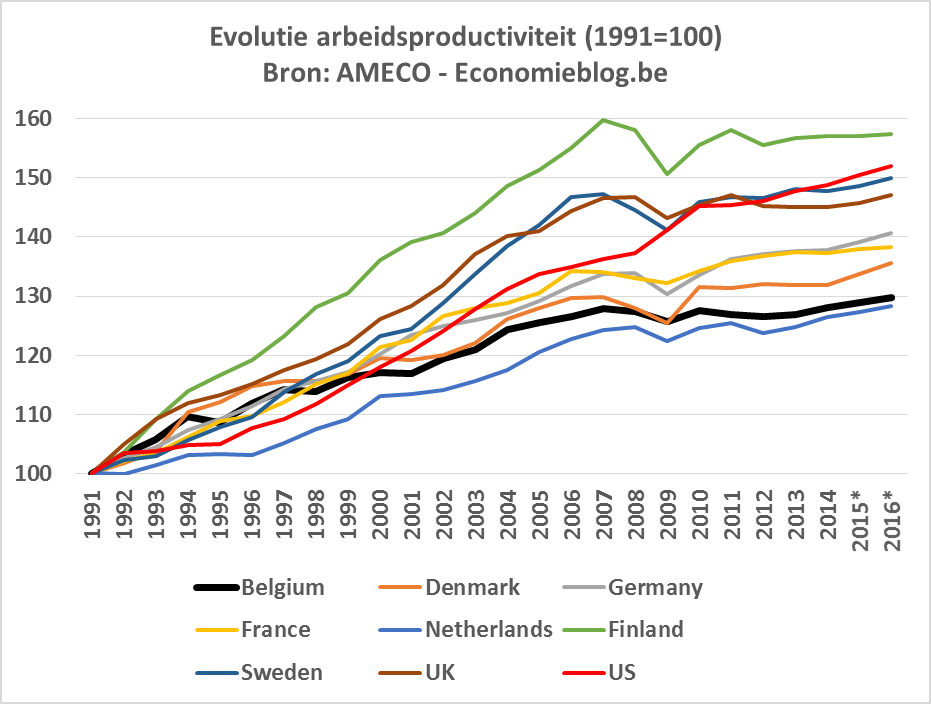
[ Bericht 0% gewijzigd door #ANONIEM op 16-10-2016 10:34:47 ]
Over het industriebeleid van de Britten, en de accentveranderingen:
http://www.prospectmagazi(...)l-policy-thatcherite
Ik heb zo maar het gevoel dat ze daar een stuk professioneler zijn dan het gestuntel en naive amateurisme in Nederland (bijv. het afschermen tegen afluisterpraktijken en beveiligen van kritieke kennis). Maar dat is slechts een gevoel.

http://www.prospectmagazi(...)l-policy-thatcherite
Ik heb zo maar het gevoel dat ze daar een stuk professioneler zijn dan het gestuntel en naive amateurisme in Nederland (bijv. het afschermen tegen afluisterpraktijken en beveiligen van kritieke kennis). Maar dat is slechts een gevoel.
Mooi artikel idd. Is in lijn met Piketty's stelling dat de periode in de 20e eeuw waarin economische groei hoger was dan rendement op vermogen een afwijking van de historische norm is geweest. Daar heeft de WSJ zich met hand en tand tegen verzet.quote:Op zondag 16 oktober 2016 10:33 schreef Klopkoek het volgende:
Heerlijk artikel in de Neoliberal Street Journal!
[..]
http://www.wsj.com/articl(...)r-anymore-1476458742
[ afbeelding ]
[ afbeelding ]
Mooi artikel inderdaad. We moeten dus gewoon tevreden zijn met wat we hebben en niet altijd maar hongeren naar meer.quote:
Over het industriebeleid van de Britten, en de accentveranderingen:
[ afbeelding ]
http://www.prospectmagazi(...)l-policy-thatcherite
Ik heb zo maar het gevoel dat ze daar een stuk professioneler zijn dan het gestuntel en naive amateurisme in Nederland (bijv. het afschermen tegen afluisterpraktijken en beveiligen van kritieke kennis). Maar dat is slechts een gevoel.
a man convinced against his will is of the same opinion still
Wat is de oorzaak van de hogere vermogensgroei als de economische groei stil staat?quote:
[..]
Mooi artikel idd. Is in lijn met Piketty's stelling dat de periode in de 20e eeuw waarin economische groei hoger was dan rendement op vermogen een afwijking van de historische norm is geweest. Daar heeft de WSJ zich met hand en tand tegen verzet.
Schulden.quote:
[..]
Wat is de oorzaak van de hogere vermogensgroei als de economische groei stil staat?
Free Assange! Hack the Planet
[b]Op dinsdag 6 januari 2009 19:59 schreef Papierversnipperaar het volgende:[/b]
De gevolgen van de argumenten van de anti-rook maffia
[b]Op dinsdag 6 januari 2009 19:59 schreef Papierversnipperaar het volgende:[/b]
De gevolgen van de argumenten van de anti-rook maffia
Ja, het geld bijprinten en QE betekent aan de andere kant van de balans een schuld voor de gewone man.quote:
Of zie ik wat over het hoofd?
Als er geen productie tegenover staat ontstaat het geld uit niets. Dat is dan een hypotheek op een mogelijke toekomst. Valt die toekomst anders uit, krijg je een crisis.quote:
[..]
Ja, het geld bijprinten en QE betekent aan de andere kant van de balans een schuld voor de gewone man.
Of zie ik wat over het hoofd?
Free Assange! Hack the Planet
[b]Op dinsdag 6 januari 2009 19:59 schreef Papierversnipperaar het volgende:[/b]
De gevolgen van de argumenten van de anti-rook maffia
[b]Op dinsdag 6 januari 2009 19:59 schreef Papierversnipperaar het volgende:[/b]
De gevolgen van de argumenten van de anti-rook maffia
Ze kopen waardepapieren op, die ze daarmee uit de markt halen. Daardoor komt er meer geld in de economie.quote:
[..]
Ja, het geld bijprinten en QE betekent aan de andere kant van de balans een schuld voor de gewone man.
Of zie ik wat over het hoofd?
The view from nowhere.
En wie wordt daar beter van vraag je je af...quote:
[..]
Ze kopen waardepapieren op, die ze daarmee uit de markt halen. Daardoor komt er meer geld in de economie.
Dat weet ik niet. Het is niet per se een omgekeerd evenredige relatie. Wel is het zo dat vermogensbezitters maar een deel van hun rendement op vermogen hoeven te herinvesteren om hun aandeel in de welvaart te kunnen vergroten.quote:
[..]
Wat is de oorzaak van de hogere vermogensgroei als de economische groei stil staat?
https://ruggedegalitarian(...)-driving-inequality/
Stel je bent rentenier dan is het gegeven het hogere rendement op vermogen t.o.v. economische groei eenvoudiger om een groter deel van je inkomsten te sparen om zo je vermogen te vergroten, dan iemand die afhankelijk is van arbeid.
Kwam dit vandaag ook nog tegen:quote:
[..]
Als er geen productie tegenover staat ontstaat het geld uit niets. Dat is dan een hypotheek op een mogelijke toekomst. Valt die toekomst anders uit, krijg je een crisis.
http://evonomics.com/why-(...)-jobs-david-graeber/
http://stumblingandmumbli(...)lism-loneliness.html
De eerstgenoemde groep gaat dan met ellebogenwerk met hand en tand hun positie verdedigen - soms zonder dat ze het door hebben.
Het is een soort 'trickle down economics'.quote:
[..]
En wie wordt daar beter van vraag je je af...
The view from nowhere.
Ja. Deze vier artikelen passen hier ook wel:quote:
[..]
Het is een soort 'trickle down economics'.
https://www.theguardian.c(...)poor-instead-of-rich
https://opendemocracy.net(...)-of-being-privileged
(over 'foundations' en de beperkingen)
http://articles.latimes.c(...)-fi-hiltzik-20140330quote:In economic terminology, charitable giving is pro-cyclical, not counter-cyclical, unlike programs such as unemployment insurance and food stamps, which expand to meet rising needs.
The trend from the Great Recession is evident in data from Giving USA, a clearinghouse for information on philanthropy. U.S. philanthropic giving fell from $344.5 billion in 2007 to $293.7 billion in 2009; then rose back to $316.2 billion in 2012 (the figures are adjusted for inflation).
But the total still hasn't returned to inflation-adjusted levels seen in 2004. Reductions were seen in all categories of donors — corporations, foundations, bequests and individuals — and also fell as percentages of personal income and gross domestic product.
Nor was that a new phenomenon. Part of the mythology of the Great Depression is that charitable giving rose during those hard times, but the truth is exactly the opposite. Overall giving fell by more than a fifth from 1929 through 1933, adjusted for inflation, before starting to recover. Among the wealthy, it fell an inflation-adjusted 70% in 1931-35 — about the magnitude of the stock market drop that had devastated wealth in the capital-owning class.
As the Depression took hold in the 1930s, the cost of caring for the unemployed and elderly quickly wiped out the resources of community and church groups, and then of state relief programs that had stepped in to fill the gap. The federal government responded with a series of relief programs, the most far-reaching of which, of course, was Social Security, which provided for not only old-age pensions but federalized unemployment insurance to relieve the states' burden.
Another issue is that philanthropic giving is not synonymous — at all — with helping the needy. Quite the contrary.
As charitable giving is structured in the United States today, it too often plays out not as the rich helping out the poor, but as the rich increasing the gap between themselves and the poor.
A 2007 study by Indiana University's Center on Philanthropy found that only 30% of individual giving in the benchmark year of 2005 was aimed at the needs of the poor — including contributions for basic needs, donations to healthcare institutions, for scholarships and allocations from religious groups. (The study was commissioned by Google.)
The smallest allocation of philanthropic giving to basic needs of the poor was made by the wealthiest donors, those with income of $1 million of more, who directed 3.8% of their giving directly to the poor. For the $100,000-$200,000 income group, that allocation was 12.4%.
http://articles.latimes.c(...)or-liberals-20140331quote:The degree of religious contribution is important, because a 2007 study by Indiana University found that only 10% to 25% of church donations end up being spent on social welfare purposes, of which assistance to the poor is only a subset. In other words, if you think of "giving" as "giving to the poor," a lot of the money donated by conservatives may be missing the target.
An extreme case may have been that of Mitt Romney, whose tax disclosures during his 2012 presidential campaign indicated that he gave a higher percentage of his income away than his Democratic opponent, President Obama, 29.4% to 21.8%. Of course he was richer, so he gave away a lot more dollars. But fully 80% of Romney's donations went to the Mormon church; and a large further chunk went to a family foundation that also funneled much of it to the church.
(de laatste twee heb ik al eens eerder gepost en had ik ge-bookmarked)
[ Bericht 13% gewijzigd door #ANONIEM op 19-10-2016 12:23:58 ]
Als de centrale bank waarde papieren opkoopt, wat gebeurt er dan macroeconomisch?
1. Het bevordert de kredietverlening aan bedrijven en stimuleert zo de economie.
2. De economie ligt op zijn gat en daarom drijft het alleen de prijzen van deze waarde papieren op.
3. ....
1. Het bevordert de kredietverlening aan bedrijven en stimuleert zo de economie.
2. De economie ligt op zijn gat en daarom drijft het alleen de prijzen van deze waarde papieren op.
3. ....
The view from nowhere.
|
|
