NWS Nieuws & Achtergronden
Discussieer hier diepgaander over de actualiteiten.



Ja, daar kunnen onze kutmarokkaantjes nog wat van leren en als ik het goed begrijp gaan een aantal dat ook doen.quote:

Question authorities, fuck religion, educate yourself, Viva el individualismo!
There's only one way of life, and that's your own!
There's only one way of life, and that's your own!
De misselijke video waarin zij de excentrieke Yellow Man van Aleppo mishandelen, toont de zieke aarde van de buitenlandse jihadisten en criminele terroristen die voor "rebellen" doorgaan, maar nauwelijks tot geen steun van de burgerbevolking krijgen.quote:Op woensdag 13 maart 2013 17:38 schreef Doler12 het volgende:
'Rebellen' die een lid van hun eigen soort mishandelen.

Als de Nederlands Marokkaanse jihadisten terugkeren naar Amsterdam, gaat de strijd ook hier los.
De Syrische regering herwint gelukkig terrein.
De discussie over wapens is achterhaald. De rebellen krijgen al sinds maart 2012 pantservuisten, bazooka's, granaten en machinegeweren uit Turkije, Saoedi Arabië en Qatar.
De wapens zijn veelal echt niet uit legerdepots, hoor.
De medialeugens tegen president Assad, tegen het leger enz. zijn misselijkmakend. En ongeloofwaardig eenzijdig.
Zelfmoordaanslagen, kegelsnedes tegen alawitische of gematigd soennitische regeringssoldaten, sluipmoorden tegen christelijke priesters en nonnen, raketten van rebellen tegen universiteiten en scholen. Dit wordt allemaal nauwelijks getoond in onze tv journaals en kranten. En waar wel, dan met sneer naar Assad en zonder veroordeling van het "vrije leger" van huurlingen en buitenlandse terroristen niet aan de Syriërs hun radicale islamisme willen opleggen!

Dus hoe lost men dit op? Die rebellen wil je niet aan de macht hebben en Assad wil je ook niet aan de macht hebben. Praten willen ze niet. Lijkt me dat er dan nog maar 2 oplossingen zijn:quote:Op donderdag 14 maart 2013 13:16 schreef Veldkamp het volgende:
[..]
De misselijke video waarin zij de excentrieke Yellow Man van Aleppo mishandelen, toont de zieke aarde van de buitenlandse jihadisten en criminele terroristen die voor "rebellen" doorgaan, maar nauwelijks tot geen steun van de burgerbevolking krijgen.
Als de Nederlands Marokkaanse jihadisten terugkeren naar Amsterdam, gaat de strijd ook hier los.
De Syrische regering herwint gelukkig terrein.
De discussie over wapens is achterhaald. De rebellen krijgen al sinds maart 2012 pantservuisten, bazooka's, granaten en machinegeweren uit Turkije, Saoedi Arabië en Qatar.
De wapens zijn veelal echt niet uit legerdepots, hoor.
De medialeugens tegen president Assad, tegen het leger enz. zijn misselijkmakend. En ongeloofwaardig eenzijdig.
Zelfmoordaanslagen, kegelsnedes tegen alawitische of gematigd soennitische regeringssoldaten, sluipmoorden tegen christelijke priesters en nonnen, raketten van rebellen tegen universiteiten en scholen. Dit wordt allemaal nauwelijks getoond in onze tv journaals en kranten. En waar wel, dan met sneer naar Assad en zonder veroordeling van het "vrije leger" van huurlingen en buitenlandse terroristen niet aan de Syriërs hun radicale islamisme willen opleggen!
1) Zorgen dat een derde groep de macht krijgt in Syrië en dat beide partijen daarmee akkoord gaan.
2) Een partij laten winnen om over 10 jaar opnieuw voor een machtswisseling te zorgen op een andere manier dan nu.
Of heeft iemand nog andere ideeën hoe dit probleem opgelost zou moeten worden?
President Assad heeft voldoende legitimiteit om aan te blijven tot verkiezingen begin 2014, eventueel vervroegen.quote:Op donderdag 14 maart 2013 13:24 schreef JaJammerJan het volgende:
[..]
Dus hoe lost men dit op? Die rebellen wil je niet aan de macht hebben en Assad wil je ook niet aan de macht hebben. Praten willen ze niet. Lijkt me dat er dan nog maar 2 oplossingen zijn:
1) Zorgen dat een derde groep de macht krijgt in Syrië en dat beide partijen daarmee akkoord gaan.
2) Een partij laten winnen om over 10 jaar opnieuw voor een machtswisseling te zorgen op een andere manier dan nu.
Of heeft iemand nog andere ideeën hoe dit probleem opgelost zou moeten worden?
VN stuurt vredesmacht naar rebellengebiedjes in noorden.
NAVO en VS en Turkije/Saoedi Arabië dwingen wapenstilstand af wegens impasse. Syrische radicale oppositie moet dan wel hun geldgevers gehoorzamen en onderhandelen.
Als Assad valt, als het leger verdwijnt, dan worden door de rebellen de minderheden als christenen, alawieten, sjiitische moslims, druzen en Koerdische jezidi's afgeslacht voor 2023. Genocide. Door de huidige rebellen of "vrijheidsrebellen" gepleegd....met westerse wapens!
Syrië als tweede Talibanstaat is ngewenst. Syrië als Moslimbroederschap is te onzeker en te radicaal voor minderheden nog steeds.
De gewapende oppositie en de buitenlandse jihadisten moeten worden gedwongen tot wapenstilstand en onderhandelingen. Bij een wapenstilstand is de regering al een jaar bereid tot dialoog. Maar zonder dat de Khatib-groep voorwaarden stelt eenzijdig.
Het probleem is niet Rusland, maar Khatib, Saoedi's, Israël, VS, NAVO, EU die eenzijdig al op de ondergang van de populaire president Assad hadden ingezet en nu geen verlies willen accepteren....
De Syrische regering, Rusland, China, Libanon willen alle meewerken aan internationale oplossing en dialoog.
Assad wil geen VN-troepen aan grens met Turkije, maar dat is wel een oplossing. Maar geen NAVO-luchtzone zoals tegen Libië / Kadaffi in 2011...... Dat was pure agressie, daar ontbraken Rusland en China nog. En Syrië is een sterke staat, het leger is erg ontwikkeld, hoogstaande chemische wapens en gemotiveerde moderne officieren. Assad is geen despoot als Kadaffi, ondanks onze mediabeweringen nu. Om de dood van de Saoedische koning zal de inwoner niet treuren, maar Assad is geliefd bij zeker 60 % van de bevolking: gematigde moslims, christenen, alawieten, druzen, zelfs,sommige Koerden nu. Kadaffi was door clans en salafisten gehaat. De rebellie gemakkelijk vanuit Benghazi met al Qaeda. Maar in Syrië niet. Syrie is complex zoals Libanon ooit was.
Teveel mensen hebben iets te verliezen als het Syrische leger en Assad wegvallen. De 10 - 15% militante Wahabitische of salafistische soennieten in arme delen van Syrië hebben wel wat te winnen door de steden en kloosters te kunnen plunderen natuurlijk. Maar zij vormen geen meerderheid. Zelfs niet in Deir Ezzour. Daar protesteren burgers zelfs tegen het al Nusra-front en sharia-politie van de rebellen. Terwijl het een arme achtergebleven regio is met veel olie, weinig investeringen. Afgezien van ex-Turkse Armeense christenen daar, moeten dus ook gematigde soennitische moslims daar een tijdelijkaanblijven van Assad steunen.
De grootmoefti van Damascus, de soennitische geleerde dr. Ahmad Hassoun, heeft de soennitische moslims (ook conservatieven) opgeroepen tot een jihad tegen de buitenlandse rebellen en tegen de salafisten en tegen de Saoedi's. Het is gecompliceerd. De moefti is gematigd, maar heeft wel aanzien bij veel soennitische clans die nu min of meer voor de oppositie en Moslimbroederschap zijn. Niet alle moslims zijn dus daar voor de terroristische groepen. Integendeel. Het Syrische leger is grotendeels soennitisch moslim bij de soldaten. Ook de ministers in regering. Alleen de officieren zijn vaak alawieten en christenen.

Nee, dat heeft de massamoordenaar reeds lang verspeeld.quote:
[..]
President Assad heeft voldoende legitimiteit om aan te blijven tot verkiezingen begin 2014, eventueel vervroegen.
Free Assange! Hack the Planet
[b]Op dinsdag 6 januari 2009 19:59 schreef Papierversnipperaar het volgende:[/b]
De gevolgen van de argumenten van de anti-rook maffia
[b]Op dinsdag 6 januari 2009 19:59 schreef Papierversnipperaar het volgende:[/b]
De gevolgen van de argumenten van de anti-rook maffia
De grootmoefti heeft soennieten opgeroepen bij het officiële Syrische leger te gaan dienen tegen de "internationale samenzwering tegen de eenheid van Syrië". Volgens de Assad-getrouwe moefti is de opstand deel van Israëlische strategie tegen Iran en de Palestijnse verzetsorganisaties.
De meeste soennieten in de steden staan achter Assad. Aleppo als bevolking was en blijft pro-Assad.
De rebellen martelen daar de burgers. De meesten vluchtten binnen Syrië zelf naar regeringsgebieden, waar deze burgers worden opgevangen met Russische en Iraakse hulpgoederen.
De meeste soennieten in de steden staan achter Assad. Aleppo als bevolking was en blijft pro-Assad.
De rebellen martelen daar de burgers. De meesten vluchtten binnen Syrië zelf naar regeringsgebieden, waar deze burgers worden opgevangen met Russische en Iraakse hulpgoederen.
Volgens jou, Reuters, Netanyahu, Peres, Obama, Clinton en Fabius en Cameron.quote:Op donderdag 14 maart 2013 14:19 schreef Papierversnipperaar het volgende:
[..]
Nee, dat heeft de massamoordenaar reeds lang verspeeld.
Of volgens Erdogan of de ongekozen Wahabitische tirannen van de Golfstaten?
Toch zit president Assad al twee jaar stevig in het zadel. Qatar heeft Syrische leiders als Riyad Hijab omgekocht via Frankrijk. Resultaat? Geen. De Syrische burgerbevolking steunt Assad, ondanks de harde politiestaat en ondanks bombardementen tegen de terroristen die zich in burgerhuizen verschansten.
De desinformatie van de westerse en Golfstaten-media over "massamoorden" wordt niet meer geloofd. Zelfs in NL niet meer! De viagra-verhalen over Kadaffi werkten toen. Nu niet meer. Wmd's nog rond Irak en Saddam. Nu niet meer.
Denk je dat Syrische burgers een "massamoordenaar" zouden blijven steunen tegen de grote internationale machten in zoals nu? Echt niet. Het neerslaan van terroristische groepen is geen moord, maar rechtmatig.
De opstand is geprovoceerd door buitenland schutters die tijdens de vreedzame eerste democratische demonstraties van de Moslimbroederschap toch begonnen te schieten op Syrische ongewapende ordepolitie. Tot maart 2012 was er nauwelijks succesvolle militaire opstand doordat buitenlandse jihadisten nog moesten aanreizen....!
Als wij met mitrailleurs uit Spanje of Duitsland optrekken naar Paleis Noordeinde of het Binnenhof, worden wij ook doodgeschoten door politie en geheime diensten hier. Wij beseffen ons dat hier alleen niet, omdat het nooit gebeurd is op die manier.
Je komt zeker niet vaak in dit topic?quote:
De desinformatie van de westerse en Golfstaten-media over "massamoorden" wordt niet meer geloofd. Zelfs in NL niet meer!

Free Assange! Hack the Planet
[b]Op dinsdag 6 januari 2009 19:59 schreef Papierversnipperaar het volgende:[/b]
De gevolgen van de argumenten van de anti-rook maffia
[b]Op dinsdag 6 januari 2009 19:59 schreef Papierversnipperaar het volgende:[/b]
De gevolgen van de argumenten van de anti-rook maffia
Ik baseer mijn gegevens op informatie door Syrische Armeniërs uit provincie Latakia, door christelijke Arameeërs uit al-Hasakah en op Duitse Syrisch-Koerdische migranten met directe contacten ter plekke daar.
Voor Damascus baseer ik mij op Russia Today en mainstream media.
De gruwelen tegen christenen in noordelijke gebieden boven Aleppo, de genocide-oproepen tegen 4% sjiitische minderheid en 12% alawitische minderheid en de zelfmoordaanslagen tegen burgerdoelen als universiteiten en ziekenhuizen gepleegd door de rebellen, overtuigen voldoende om tegen deze terroristen te zijn.
Ik ben geen aanhanger van de Baath-partij, van socialisme of afgedwongen secularisme zoals onder vader president Hafez al Assad. Ik ben 100% Nederlander zelf. Maar met kennis ter zake.
Zonder de radicaal soennitische TRT of Al Jazeera-bril van Marokkanen, Turken en Bosniërs hier.
En ik heb allang ingezien en bewezen dat Reuters, Afp, ANP en CNN gewoon liegen over Syrië. Tegen Assad. Ongeloofwaardig gewoon. Nu moeten zij beetje bijstellen. Maar doel blijft "val van regime".... Journalisten zijn omkoopbare hoeren. En velen gewoon dom en gebrekkig geïnformeerd. Anderen zijn ter plekke alleen bij de rebellen/terroristen. En dan wel bij de door Turkije toonbaar geachte kleine grensgroepen burgeropstandelingen direct in grensgemeenten bij Turkije.
Voor Damascus baseer ik mij op Russia Today en mainstream media.
De gruwelen tegen christenen in noordelijke gebieden boven Aleppo, de genocide-oproepen tegen 4% sjiitische minderheid en 12% alawitische minderheid en de zelfmoordaanslagen tegen burgerdoelen als universiteiten en ziekenhuizen gepleegd door de rebellen, overtuigen voldoende om tegen deze terroristen te zijn.
Ik ben geen aanhanger van de Baath-partij, van socialisme of afgedwongen secularisme zoals onder vader president Hafez al Assad. Ik ben 100% Nederlander zelf. Maar met kennis ter zake.
Zonder de radicaal soennitische TRT of Al Jazeera-bril van Marokkanen, Turken en Bosniërs hier.
En ik heb allang ingezien en bewezen dat Reuters, Afp, ANP en CNN gewoon liegen over Syrië. Tegen Assad. Ongeloofwaardig gewoon. Nu moeten zij beetje bijstellen. Maar doel blijft "val van regime".... Journalisten zijn omkoopbare hoeren. En velen gewoon dom en gebrekkig geïnformeerd. Anderen zijn ter plekke alleen bij de rebellen/terroristen. En dan wel bij de door Turkije toonbaar geachte kleine grensgroepen burgeropstandelingen direct in grensgemeenten bij Turkije.
Hier is het erg eenzijdig ook. De bronnen van OP TO als Al Jzeera en al Arabiya zijn dan ook extreem eenzijdig. Er zijn daar zelfs talloze journalisten opgestapt uit onvrede over de leugens rond Syrië en eerder Libië. Als je ook RT.com en Latijns Amerikaanse of Libanese bronnen gebruikt, krijg je in elk geval meer balans tussen alle pro-rebellenpropaganda door.quote:
[..]
Je komt zeker niet vaak in dit topic?
De afgeslachte Armeense dorpen en lege spooksteden in noordelijke provincie Aleppo liegen niet. Die burgers zijn gevlucht naar regeringsgebieden. Niet naar jihadisten. Tallozen werden afgeslacht, vertrokken te laat en werden door Nusra en "vrije leger" onthoofd en halal doodgebloed.
Er zijn de laatste dagen nieuwe rapporten verschenen over de misdaden van zowel het regime als rebellengroepen:
Rapport van Amnesty over oorlogsmisdaden van het regime. Gaat vooral in op SCUDS en clusterbommen die het regime afvuurt op woonwijken, maar ook het martelen en executeren van zowel volwassenen als kinderen.
http://www.amnesty.org/en(...)7/mde240092013en.pdf
Dit rapport van Amnesty gaat over de oorlogsmisdaden van de rebellen. Oa ontvoeringen, martelingen, executies, en gebruik van kindsoldaten.
http://www.amnesty.org/en(...)e/mde240082013en.pdf
Save the Children gaat nog wat verder in op de situatie voor kinderen.
Maar dit is allemaal onzin natuurlijk. Assad martelt helemaaal geen kinderen, als je dit gelooft ben je een ''fucking idioot", is allemaal propaganda! Hij is eigenlijk best liev, kijk maar naar de Iraanse staats-tv, die zijn wel objectief
Rapport van Amnesty over oorlogsmisdaden van het regime. Gaat vooral in op SCUDS en clusterbommen die het regime afvuurt op woonwijken, maar ook het martelen en executeren van zowel volwassenen als kinderen.
http://www.amnesty.org/en(...)7/mde240092013en.pdf
Dit rapport van Amnesty gaat over de oorlogsmisdaden van de rebellen. Oa ontvoeringen, martelingen, executies, en gebruik van kindsoldaten.
http://www.amnesty.org/en(...)e/mde240082013en.pdf
Save the Children gaat nog wat verder in op de situatie voor kinderen.
PDF: http://www.savethechildre(...)2013TH%20MARCH-1.PDFquote:Rapport: Syrische kinderen ingezet als kindsoldaten, bruidjes en levend schild
Dat kinderen slachtoffer zijn van de oorlog die zich al bijna twee jaar in Syrië afspeelt, staat vast. Maar kinderen worden ook welbewust gemarteld, beschoten, verkracht en uitgehuwelijkt. In het gisteren verschenen rapport 'Kinderen onder vuur' van kinderrechtenorganisatie Save the Children staan gruwelijke details.
Ongeveer twee miljoen Syrische kinderen zijn door de oorlog ontheemd of geïsoleerd geraakt en zijn verstoken van onderwijs en essentiële zorg. Ze leven in parken, grotten en schuren en worden soms misbruikt en afgebeuld door strijders of soldaten. Bovendien wordt een groeiend aantal kinderen geronseld als kindsoldaat. Ze worden niet alleen als strijder ingezet, maar ook als dragers van uitrusting of bagage, als verkenners of als menselijk schild tegen vijandelijke schutters.
Steeds meer meisjes worden uitgehuwelijkt, zogenaamd om ze te beschermen tegen seksueel geweld. 'Ik weet dat mannen in deze oorlog op vrouwen jagen', zegt een moeder in het rapport van Save the Children, dat gisteren verscheen. 'Wij konden mijn dochter niet beschermen, dus moesten we een beschermer voor haar vinden.'
In het rapport valt verder te lezen dat het steeds bloediger wordende conflict - dat vrijdag z'n derde jaar ingaat - een steeds grotere impact heeft op kinderen. Velen gaan niet meer naar school. Leraren zijn gevlucht en schoolgebouwen zijn in brand gestoken. In een rapport van Unicef, dat eerder deze week verscheen, valt te lezen dat één op de vijf scholen is verwoest. In de noordelijke stad Aleppo gaat nog maar 6 procent van de kinderen naar school.
'Bang, heel erg bang'
De research voor het rapport van Save the Children is deels gedaan door de Turkse Bahcesehir Universiteit. Die hebben getuigenissen verzameld van gevluchte kinderen, waarvan de ouders zijn gearresteerd, geslagen of gedood door regeringstroepen. Eén op de drie Syrische kinderen gaf aan dat ze zelf zijn geslagen, dat er op ze is geschoten of dat ze een familielid of vriend hebben verloren. Twee op de drie zijn door het conflict gescheiden geraakt van familieleden.
'Ze schoten van dichtbij mijn voet, dus ik sprong', zegt een van de kinderen, Nidal, in het rapport. 'Ik was bang, heel erg bang, en mijn vriend ook. We waren omgeven door muren, dus renden we weg.'
Nidal vertelt dat zijn vader sliep en zijn moeder klusjes in het huis deed toen regeringssoldaten het huis binnenstormden. 'Ze kwamen de kamer binnen en begonnen mijn vader de slaan. Alle soldaten sloegen hem, eentje schopte. Ik verstopte me in een kamer zodat ze me niet te pakken zouden krijgen.'
Overleven
Save the Children hoopt met het rapport de alarmbellen te laten rinkelen. 'Voor miljoenen Syrische kinderen geldt dat hun onschuldige kindertijd is vervangen door de gruwelijke realiteit. Ze proberen te overleven in deze wrede oorlog', zegt Carolyn Mils, de CEO van de kinderrechtenorganisatie, in een persbericht. 'Velen leven nu in de open lucht en vechten om genoeg eten te vinden. Als ze ziek worden, hebben ze niet de juiste medicijnen tot hun beschikking. We kunnen niet toestaan dat dit ongecontroleerd doorgaat; het leven van te veel kinderen staat op het spel.'
Maar dit is allemaal onzin natuurlijk. Assad martelt helemaaal geen kinderen, als je dit gelooft ben je een ''fucking idioot", is allemaal propaganda! Hij is eigenlijk best liev, kijk maar naar de Iraanse staats-tv, die zijn wel objectief
Incelfrikandel
De uithuwelijking van kinderen en kindsoldaten als "martelaren" zijn misdaden door de rebellen, niet door de regering.
Amnesty is bovendien niet neutraal, maar onder Amerikaanse invloed. Vergeet dat niet
Syrie onder Assad was zeer actief voor vrouwenemancipatie, zelfs afgedwongen vrouwenquota!
Amnesty is bovendien niet neutraal, maar onder Amerikaanse invloed. Vergeet dat niet
Syrie onder Assad was zeer actief voor vrouwenemancipatie, zelfs afgedwongen vrouwenquota!
De scud-raketten zijn niet bewezen, evenmin clusterbommen. Diezelfde leugens gingen over Kadaffi's leger de ronde in onze pers.
Die bommen zijn nooit tegen burgers, maar tegen terroristen gericht.
Dat er terroristen gemarteld worden bij verhoren,dat is zeker. Dat heeft de Duitse vrijgelaten journalist Billy Six, die zelf keurig werd behandeld, bevestigd. Dat ontken ik ook niet.
Six was illegaal in Syrië bij rebellen in Maarat an Numan. Die regio werd ingenomen door het Syrische leger en Six gearresteerd en opgesloten en verhoord. Lees zijn "Syrisches Kriegstagebuch" op jungefreiheit.de. Hij is volledig onafhankelijk. Hij schetst ook de relatief machteloze kleine minderheid gematigde VSL-rebellen.
En de meerderheid van sektariërs, mannen, buitenlandse jihadisten en hoe burgers voor de rebellen vluchtten (niet voor het "regime Assad").... Six was erg kritisch over beide zijden. Door Russische diplomaten die met Junge Freiheit bekend waren, is hij vrijgekomen.
Ik heb al eerder gezegd dat Syrië geen Zwitserland is, maar een autoritaire politiestaat. Alles beter dan Saoedi Arabië, Mursi of Afghanistan. Het seculier Syrische bewind volgt een politiek van socialisme, langzame hervormingen, alliantie met Rusland, Iran en andere anti-Amerikaande en anti-Israëlische krachten en staten. Maar Syrië is geen Iran of Qatar. Het kende enorme religieuze vrijheid, veel kerken en kloosters, antieke archeologische sites, Syrië volgt vrouwenemancipatie naar socialistisch voorbeeld.
Het is allemaal gecompliceerder dan onze mainstream media beweren. Assad is geen Sharon Dijksma. Maar ook geen koning Abdullah, Karzai of Stalin!
Die bommen zijn nooit tegen burgers, maar tegen terroristen gericht.
Dat er terroristen gemarteld worden bij verhoren,dat is zeker. Dat heeft de Duitse vrijgelaten journalist Billy Six, die zelf keurig werd behandeld, bevestigd. Dat ontken ik ook niet.
Six was illegaal in Syrië bij rebellen in Maarat an Numan. Die regio werd ingenomen door het Syrische leger en Six gearresteerd en opgesloten en verhoord. Lees zijn "Syrisches Kriegstagebuch" op jungefreiheit.de. Hij is volledig onafhankelijk. Hij schetst ook de relatief machteloze kleine minderheid gematigde VSL-rebellen.
En de meerderheid van sektariërs, mannen, buitenlandse jihadisten en hoe burgers voor de rebellen vluchtten (niet voor het "regime Assad").... Six was erg kritisch over beide zijden. Door Russische diplomaten die met Junge Freiheit bekend waren, is hij vrijgekomen.
Ik heb al eerder gezegd dat Syrië geen Zwitserland is, maar een autoritaire politiestaat. Alles beter dan Saoedi Arabië, Mursi of Afghanistan. Het seculier Syrische bewind volgt een politiek van socialisme, langzame hervormingen, alliantie met Rusland, Iran en andere anti-Amerikaande en anti-Israëlische krachten en staten. Maar Syrië is geen Iran of Qatar. Het kende enorme religieuze vrijheid, veel kerken en kloosters, antieke archeologische sites, Syrië volgt vrouwenemancipatie naar socialistisch voorbeeld.
Het is allemaal gecompliceerder dan onze mainstream media beweren. Assad is geen Sharon Dijksma. Maar ook geen koning Abdullah, Karzai of Stalin!
Dat staat er.quote:
De uithuwelijking van kinderen en kindsoldaten als "martelaren" zijn misdaden door de rebellen, niet door de regering.
Daar durf ik aan te twijfelen, gezien hun scherpe kritiek op het Amerikaanse beleid in oa Irak, Afghanistan en Guantanamo. Amnesty maakt fouten, maar wie niet? Over het algemeen vind ik hun staat van dienst vrij goed. Bovendien zeggen organisaties zoals HRW, Unicef, Avaaz, de VN etc veelal hetzelfde.quote:Amnesty is bovendien niet neutraal, maar onder Amerikaanse invloed. Vergeet dat niet
Incelfrikandel

quote:
quote:Western and Israeli governments have long alleged that members of the Iranian Revolutionary Guards are advising Assad's generals, and that Hezbollah guerillas are fighting alongside Syrian government troops. Israeli officials say the commander of the Revolutionary Guards' elite Quds Force, Qassem Suleimani, has been in Damascus to oversee operations.
In his speech on Thursday, Kochavi went much further and claimed that since last June Tehran had been using Hezbollah to build up a large Syrian militia that would be Iranian-controlled even in the event of Assad's fall from power.
quote:He said the Syrian regular army was crumbling, claiming that several successive recruitment drives had failed, realising only 20% of their targets as young men had fled rather than join up. The International Institute of Strategic Studies yesterday reported that from a notional strength of 220,000, the army had withered to a core of about 50,000 the regime could rely on. The Institute for the Study of War in Washington estimated the loyal core at 65,000.
Free Assange! Hack the Planet
[b]Op dinsdag 6 januari 2009 19:59 schreef Papierversnipperaar het volgende:[/b]
De gevolgen van de argumenten van de anti-rook maffia
[b]Op dinsdag 6 januari 2009 19:59 schreef Papierversnipperaar het volgende:[/b]
De gevolgen van de argumenten van de anti-rook maffia

Ben jij opeens van de militaire invasies geworden?quote:
[..]
Nee, dat heeft de massamoordenaar reeds lang verspeeld.

Die Lebenslust bringt dich um.
Dat ligt er aan wie er begint.quote:Op donderdag 14 maart 2013 18:50 schreef Morendo het volgende:
[..]
Ben jij opeens van de militaire invasies geworden?
Free Assange! Hack the Planet
[b]Op dinsdag 6 januari 2009 19:59 schreef Papierversnipperaar het volgende:[/b]
De gevolgen van de argumenten van de anti-rook maffia
[b]Op dinsdag 6 januari 2009 19:59 schreef Papierversnipperaar het volgende:[/b]
De gevolgen van de argumenten van de anti-rook maffia


dat beweren onze mainstream media dan ook helemaal niet, waar komt dit toch steeds vandaan???quote:
Het is allemaal gecompliceerder dan onze mainstream media beweren. Assad is geen Sharon Dijksma. Maar ook geen koning Abdullah, Karzai of Stalin!
als ik naar het nieuws kijk dan krijg ik toch wel een vrij (afstandelijk) genuanceerd plaatje van 2 dolle honden die om 1 bot vechten
Op zondag 8 december 2013 00:01 schreef Karina het volgende:
Dat gaat me te diep sp3c, daar is het te laat voor.
Dat gaat me te diep sp3c, daar is het te laat voor.
Bronquote:Paris, London to arm Syria rebels even without EU support
France and Britain are prepared to arm Syrian rebels even without unanimous EU support, French Foreign Minister Laurent Fabius said Thursday.
Paris and London will call for moving up the date of the next European Union meeting on the Syria arms embargo, and will decide to arm the rebels if the 27-member EU does not give unanimous agreement, he said.
France and Britain ask "the Europeans now to lift the embargo so that the resistance fighters have the possibility of defending themselves," he told France Info radio.
If unanimous EU support for lifting the measure is lacking, the French and British governments will decide to deliver weapons, Fabius said.
France "is a sovereign nation," he added.
The next EU meeting to study the embargo is planned for the end of May, but Fabius said Paris and London want to have the meeting earlier.
"We must move quickly," and "and we along with the British will ask for the meeting to be moved up," he said, not ruling out a gathering before the end of March. Prime Minister David Cameron said Tuesday that Britain would consider ignoring an EU arms ban and supplying weapons to Syrian rebels if it would help topple President Bashar al-Assad.
The EU last month amended its embargo to allow member nations to supply "non-lethal" equipment and training to the opposition but stopped short of lifting the embargo entirely.
Syria says arming rebels 'violates' international law
Arming Syria's rebels would be a "flagrant violation" of international law, state news agency SANA said, following French Foreign Minister Laurent Fabius's statements.
"In a flagrant violation of the principles of international law, Fabius has announced Paris and London's intention to provide weapons to terrorist groups in Syria," said SANA.
Syria opposition hails French, UK move to arm rebels
Syria's main opposition National Coalition welcomed an announcement by France on Thursday that it and Britain are ready to arm rebels fighting to oust the regime of President Bashar al-Assad.
"We consider it a step in the right direction... Assad will not accept a political solution (to the conflict) until he realises he is faced with an (armed) force that will defeat him," said Coalition spokesman Walid al-Bunni.
"As long as the Europeans and the Americans do not arm the rebels, they are telling Assad to keep fighting.
"So long as Iran and Russia continue to support him (Assad), he will remain convinced that he will win" the war, the spokesman told AFP.
Het wordt eens tijd zeg.
Incelfrikandel
ik kreeg aan de hand van verschillende posts (van Miera) het gevoel dat we daar allang mee bezig waren ...
Op zondag 8 december 2013 00:01 schreef Karina het volgende:
Dat gaat me te diep sp3c, daar is het te laat voor.
Dat gaat me te diep sp3c, daar is het te laat voor.
In ieder geval gaat er nu een hele generatie naar de vaantjes in Syrië...
Kinderen van 5-15 jaar die zoiets meemaken is gewoon traumatiserend voor de rest van het leven, en eigenlijk gewoon bij volwassenen ook
Kinderen van 5-15 jaar die zoiets meemaken is gewoon traumatiserend voor de rest van het leven, en eigenlijk gewoon bij volwassenen ook
dat is nu eenmaal het lot van dictaturen
mensen krijgen er op een gegeven moment genoeg van en de grote bazen willen doorgaans niet aftreden
vroeger of later eindigt dit bijna altijd in bloed en vuur en oorlog en arme getraumatiseerde kindertjes
mensen krijgen er op een gegeven moment genoeg van en de grote bazen willen doorgaans niet aftreden
vroeger of later eindigt dit bijna altijd in bloed en vuur en oorlog en arme getraumatiseerde kindertjes
Op zondag 8 december 2013 00:01 schreef Karina het volgende:
Dat gaat me te diep sp3c, daar is het te laat voor.
Dat gaat me te diep sp3c, daar is het te laat voor.


Met de ellende in Egypte en Libië voor ogen zie ik hier ook geen winnaars uit voortkomen. Alleen maar verliezers. Ik weet niet wat er in die landen aan de hand is maar het lijkt wel een steeds grotere puinzooi te worden.
Ga fietsen jij !! ikke niet hoor..
Ligt er maar net aan in welke context je het wil zien.quote:
ik kreeg aan de hand van verschillende posts (van Miera) het gevoel dat we daar allang mee bezig waren ...
Het Westen bewapend de rebellen niet direct. Maar het gebeurd wel, met wapens uit Kroatië. Zie ook de eerste post van mij uit dit topic. Volgens onder andere the New York Times en de Washington Post gebeurt dit met instemming en toezien van Kroatië en Amerika, maar wordt het uitgevoerd door Saudi-Arabië.
Het gaat nu dus om directe bewapening door westerse landen.
Incelfrikandel
het zal wel neerkomen op heel veel moderne anti-tankwapens lijkt me
zou best wel eens een gamechanger kunnen zijn!
zou best wel eens een gamechanger kunnen zijn!
Op zondag 8 december 2013 00:01 schreef Karina het volgende:
Dat gaat me te diep sp3c, daar is het te laat voor.
Dat gaat me te diep sp3c, daar is het te laat voor.
'VS trainden al honderden Syrische rebellen'
BEIROET -
Een eerste lichting van ongeveer 300 Syrische rebellen heeft een training door Amerikaanse officieren afgerond en er zullen er meer volgen. Dat heeft een hooggeplaatste commandant van de opstandelingen donderdag gezegd. De rebellen leerden volgens de anonieme bron antitankwapens en luchtdoelgeschut te hanteren.
Officieel leveren de Verenigde Staten momenteel alleen medische hulp en voedsel aan de rebellen, maar volgens diverse berichten leiden de Amerikanen in buurland Libanon rebellen op die het regime van president Bashar al-Assad ten val willen brengen. De Britse krant The Guardian en het Duitse blad Der Spiegel kwamen eerder deze week met soortgelijke berichten.
De burgeroorlog in Syrië gaat zijn derde jaar in en heeft al aan meer dan 70.000 mensen het leven gekost. Westerse landen hielden zich lang afzijdig, maar tonen steeds meer bereidheid om de Syrische opstand direct te steunen. Groot-Brittannië en Frankrijk hebben laten weten dat wat hun betreft het Europese wapenembargo wordt opgeheven, zodat ze de rebellen van wapentuig kunnen voorzien.
De Nederlandse regering ziet daar vooralsnog geen heil in. EU-lidstaten besloten onlangs nog het wapenembargo te verlengen tot mei. Een grote meerderheid van de lidstaten nam het standpunt in dat een toename van het aantal wapens tot grotere instabiliteit in de regio kan leiden. Als wapens in verkeerde handen vallen kunnen ze nog jarenlang een gevaar vormen, is de redenering.
Frankrijk en Groot-Brittannië noemen het op hun beurt onaanvaardbaar dat de rebellen zich niet goed kunnen verdedigen tegen het regime van Assad, dat hen bestrijdt met wapens uit Iran en Rusland.
http://www.telegraaf.nl/b(...)che_rebellen___.html
Hebben die rebellen echt niet door dat zij het werk van Amerika aan het doen zijn? Dit verloopt echt gewoon volgens het zionistische plan, en die soennies lopen er met beide ogen in
BEIROET -
Een eerste lichting van ongeveer 300 Syrische rebellen heeft een training door Amerikaanse officieren afgerond en er zullen er meer volgen. Dat heeft een hooggeplaatste commandant van de opstandelingen donderdag gezegd. De rebellen leerden volgens de anonieme bron antitankwapens en luchtdoelgeschut te hanteren.
Officieel leveren de Verenigde Staten momenteel alleen medische hulp en voedsel aan de rebellen, maar volgens diverse berichten leiden de Amerikanen in buurland Libanon rebellen op die het regime van president Bashar al-Assad ten val willen brengen. De Britse krant The Guardian en het Duitse blad Der Spiegel kwamen eerder deze week met soortgelijke berichten.
De burgeroorlog in Syrië gaat zijn derde jaar in en heeft al aan meer dan 70.000 mensen het leven gekost. Westerse landen hielden zich lang afzijdig, maar tonen steeds meer bereidheid om de Syrische opstand direct te steunen. Groot-Brittannië en Frankrijk hebben laten weten dat wat hun betreft het Europese wapenembargo wordt opgeheven, zodat ze de rebellen van wapentuig kunnen voorzien.
De Nederlandse regering ziet daar vooralsnog geen heil in. EU-lidstaten besloten onlangs nog het wapenembargo te verlengen tot mei. Een grote meerderheid van de lidstaten nam het standpunt in dat een toename van het aantal wapens tot grotere instabiliteit in de regio kan leiden. Als wapens in verkeerde handen vallen kunnen ze nog jarenlang een gevaar vormen, is de redenering.
Frankrijk en Groot-Brittannië noemen het op hun beurt onaanvaardbaar dat de rebellen zich niet goed kunnen verdedigen tegen het regime van Assad, dat hen bestrijdt met wapens uit Iran en Rusland.
http://www.telegraaf.nl/b(...)che_rebellen___.html
Hebben die rebellen echt niet door dat zij het werk van Amerika aan het doen zijn? Dit verloopt echt gewoon volgens het zionistische plan, en die soennies lopen er met beide ogen in
Het doomscenario voor de Syriers is in sommige steden/wijken al in werking gegaan:

Een 29-jarige onopgeleidde idioot die onder het mom van religie denkt juridisch recht te kunnen spreken en nu verantwoordelijkheid draagt over verschillende "court houses"...
Gearresteerd worden omdat je hun zwarte vlaggetje met geloofsgetuigenis ergens weg haaltquote:Courts Become A Battleground For Secularists, Islamists In Syria
In rebel-held parts of Syria, a clash of ideologies is playing out. Powerful Islamist brigades are competing with pro-democracy civilians to shape Syria's future.
One battlefront is in the courts. In many areas in northern Syria, Islamists have set up religious courts that deliver rulings under Shariah, or Islamic law — a fundamental change in Syria's civil legal system.
This is evident on a recent day in a courtroom in the northern Syrian city of Azaz.
In the courthouse, a judge and two lawyers preside over a civil case. It's a commercial dispute over a carload of cigarettes. The defendant says he somehow lost the goods. His partner, a shopkeeper, wants him to pay for the loss.
The court is in session and everyone is asked to rise. The defendant is swearing an oath, his right hand on the Quran. This is a rebel court. Self-appointed judges, lawyers and clerics started working together a few months ago, but it's the cleric's judgment that counts. The lawyers are a recent addition. Attorney Jamil Osman says he joined the court system to try to insert Syria's civil code into these proceedings.
"There needs to be the presence of lawyers because, frankly, the Shariah people do not know the procedures of the judiciary," he says. But it's the religious ruling that Syrians want, says Osman. The memories of the corrupt court system of the regime of President Bashar Assad are too fresh.
"Most people in Syria prefer to have this system in place because it creates a large amount of trust," Osman says. "People trust the religious scholars."
Expanding Hard-Liners' Influence
Islamists — backed by ultra-conservative armed groups — dominate the courts across rebel-held areas. As these rebels took control in northern Syria, they set up religious courts to dispense simple justice, says Andrew Tabler, a Syria specialist with the Washington Institute for Near East Policy.
"In the interim, it's the one system that people are able to set up and understand, and in at least two if not more provinces, it's working," he says.
It is also working to expand the influence of the most hard-line factions, Tabler says. The Islamists, and the Salafists in particular, have a lot of influence because they are there in the area and are in direct touch with armed groups, he says. But judging by what happened when Jabhat al-Nusra — the most hard-line of the armed groups — rolled into Mayadeen, a town in eastern Syria, the admiration for Islamist courts may be fading. A large convoy of trucks and vans filled with armed, bearded men converged on Mayadeen's municipal building to set up a religious police force. The move prompted three days of demonstrations calling for al-Nusra to get out of town.
And in Aleppo, the largest city in northern Syria, moderate Muslims are also starting to object to these hard-line factions dominating the courts. Tammam al-Baroudi, a businessman and activist in Aleppo, says everyone is afraid of these hard-line groups, but so far, "the people are saying that between themselves." But there is growing anger, he says, over new rules. Signs have recently appeared warning that anyone who "speaks against Islam" will go to jail. A doctor was arrested for taking down a black Islamic banner at his hospital. Baroudi was recently arrested and jailed over a dispute with a rebel commander.
"What I saw in these 20 days make me scared about the future," he says. He saw people who were brought in by the militias. "They were in a very bad situation. They had been tortured. Anybody in the militias, he can hit him, kill him, as he wants," Baroudi says. "This is very bad. This is the situation in Aleppo at the moment."
An Aleppo court staffed with lawyers and clerics freed him. But Baroudi says al-Nusra can arrest and try you again if it doesn't agree with the ruling. "They don't like a judge, so they can catch you again," he says. "This is what we are afraid all the time." And in the religious courts, Baroudi says, "if the judge gives you a sentence, no one can say if it's OK or not. There is no appeal." "We like Shariah — it comes from God," he says, "but not in the way they are doing it."
What Syrians Want
There is also a fear that Islamist radicals may kick out the old form of dictatorship but replace it with an Islamist version. In the northern city of Raqqa, militants posted leaflets announcing that anyone who supports democracy is an infidel, a serious charge in any Islamic court.
Abdelrahman al-Suri is a founding member of one of the largest Islamist battalions.
"We are not democrats," Suri tells a group of Western journalists in an interview near the Turkish border. The heavily bearded 29-year-old oversees a system of more than two-dozen courts. He says he doesn't need elections to know all Syrians want Islamic law.
"We know what they want and what they're asking for and what their ambitions are, and those are to live under the laws of God and under the laws of Shariah," he says. "So this choice has already been made by the Syrian people. Even if we don't go to actual elections and voting, this is something that the vast majority of Syrians already endorse and want." "We didn't go to them; people came to us. And they came to us because we were implementing justice," Suri says. "And this is just proof that we're doing things in the right way."
But not all Syrians agree — and some believe the coming fight will be with these hard-liners.
http://www.npr.org/2013/0(...)s-islamists-in-syria
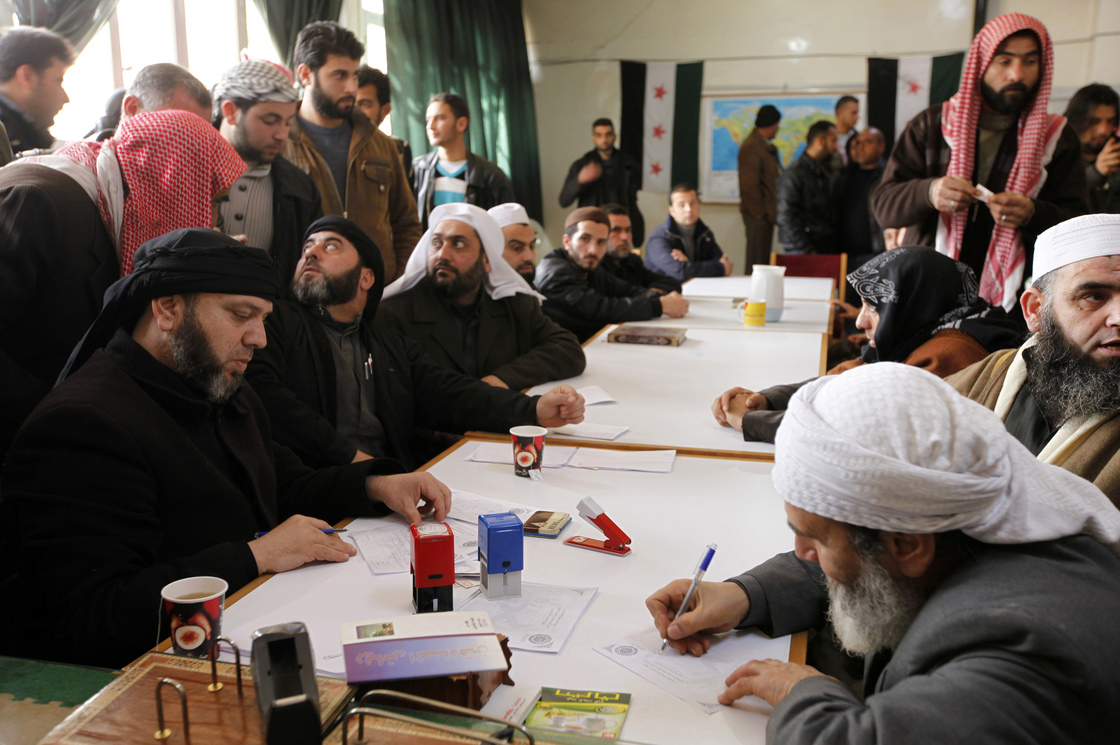
Een 29-jarige onopgeleidde idioot die onder het mom van religie denkt juridisch recht te kunnen spreken en nu verantwoordelijkheid draagt over verschillende "court houses"...
Oorlog is de verderzetting van de politiek maar met andere middelen - Clausewitz

Proberen niet in handen te vallen van de tegenstander? Zo te zien zaten ze al een tijdje in dat water.quote:
Wat doe je nou in godsnaam in een riool? Lastig vechten lijkt mij zo.
Het is vandaag ook precies 2 jaar geleden dat de volksopstand begon.
Bron met meer info en video's van demo's
quote:1336 GMT: Protests on 2nd Anniversary of Uprising. Two years is a long time to protest, and yet every Friday for exactly two years the Syrian people have taken to the streets to protest against the Assad government.
When those protests started, the people wanted reform. When they were dispersed by teargas, they wanted the removal of the president. After months of being beaten, gassed, arrested, tortured, and shot at, the people demanded the execution of the president. Two years later, with bombs falling, shells exploding, and with food and shelter scarce, the Syrian people are no less brave, and no less defiant.
Everyone who protests in Syria takes a tremendous risk. Once, the risk was that they would be targeted by Assad forces. That risk remains, but it is complemented by the risk that they will be caught in the crossfire, or killed in the indiscriminate explosions that rock the streets of Syria's cities every day.
Below, a few important examples of today's protests:


Bron met meer info en video's van demo's
Het is al een gamechanger. Wat voor toegevoegde waarde directe bewapening heeft weet ik niet precies.quote:
het zal wel neerkomen op heel veel moderne anti-tankwapens lijkt me
zou best wel eens een gamechanger kunnen zijn!
Incelfrikandel
toegevoegde waarde is de kwantiteit lijkt me ... misschien de kwaliteit maar ze zullen geen Javelins ofzo geleverd krijgen gok ik 
de Syriers gaan zwaar gepantserd te werk, feit dat ze daar al 2 jaar mee door kunnen gaan leert mij dat de rebellen tot nog toe niet heel erg sterk waren in het bestrijden van pantservoertuigen
lijkt mij het eerste probleem wat de Fransen/Britten aan gaan pakken als ze serieus zijn over dit plan
de Syriers gaan zwaar gepantserd te werk, feit dat ze daar al 2 jaar mee door kunnen gaan leert mij dat de rebellen tot nog toe niet heel erg sterk waren in het bestrijden van pantservoertuigen
lijkt mij het eerste probleem wat de Fransen/Britten aan gaan pakken als ze serieus zijn over dit plan
Op zondag 8 december 2013 00:01 schreef Karina het volgende:
Dat gaat me te diep sp3c, daar is het te laat voor.
Dat gaat me te diep sp3c, daar is het te laat voor.
Nah, de rebellen hebben ontzettend veel pantservoertuigen verwoest, maar Assad heeft er gewoon zeer veel. Officieel 5000 tanks zelfs geloof ik voor de oorlog(wat ervan werkte is een ander verhaal). Het probleem was meer de artillerie, gebrek aan munitie en wat meer recentelijk de helikopters en vliegtuigen.quote:
toegevoegde waarde is de kwantiteit lijkt me ... misschien de kwaliteit maar ze zullen geen Javelins ofzo geleverd krijgen gok ik
de Syriers gaan zwaar gepantserd te werk, feit dat ze daar al 2 jaar mee door kunnen gaan leert mij dat de rebellen tot nog toe niet heel erg sterk waren in het bestrijden van pantservoertuigen
We zullen zien.quote:lijkt mij het eerste probleem wat de Fransen/Britten aan gaan pakken als ze serieus zijn over dit plan
Incelfrikandel

"But the age of chivalry is gone; that of sophisters, economists, and calculators has succeeded, and the glory of Europe is extinguished forever."- Edmund Burke


Free Assange! Hack the Planet
[b]Op dinsdag 6 januari 2009 19:59 schreef Papierversnipperaar het volgende:[/b]
De gevolgen van de argumenten van de anti-rook maffia
[b]Op dinsdag 6 januari 2009 19:59 schreef Papierversnipperaar het volgende:[/b]
De gevolgen van de argumenten van de anti-rook maffia
Haha duidelijk Nederlands-Marokkaans accentje afkomstig uit A'dam. Twee personen.quote:
Oorlog is de verderzetting van de politiek maar met andere middelen - Clausewitz

NU.nlquote:'Honderden buitenlandse jihadisten in Syrië'
Honderden buitenlandse 'jihadisten' hebben Syrië de afgelopen twee jaar geïnfiltreerd en zich gevoegd bij de opstandelingen die president Bashar Assad uit het zadel willen krijgen.
Dat hebben Syrische staatsmedia zondag gezegd.
De regeringsgezinde krant Al-Watan schreef zondag dat in Groot-Brittannië, de Verenigde Staten en Frankrijk, landen die de Syrische oppositie steunen, radicale strijders worden getraind.
De honderden jihadistische strijders zijn verantwoordelijk voor het verval van de Syrische economie en de verwoesting van het cultureel erfgoed van Syrië, aldus de krant.
De opstand tegen Assad begon in maart 2011 en heeft inmiddels aan meer dan zeventigduizend mensen het leven gekost.
Say what?
Ben benieuwd hoe Nusra hierop reageert. Ze moeten de goede schijn ophouden van "bevrijder", ipv nieuwe onderdrukker. En dus kunnen ze zulke protesten tegen hun aanwezigheid niet makkelijk neerslaan met geweld. Het moment dat ze dat wel doen zetten ze hun geloofwaardigheid op het spel. Alleen ideologisch gezien zijn die gasten niet in staat om pragmatisch te denken en te relativeren, alles "tegen hun" is "tegen de Islam" of zelfs een oorlog "tegen de Islam".quote:Syrians take to streets as they seek to drive out Al-Nusra fighters
Activists take to streets of rebel-held Mayadeen in eastern Syria for third straight day to demand that Al-Nusra Front fighters leave town.
BEIRUT - Anti-regime activists took to the streets of rebel-held Mayadeen in eastern Syria on Wednesday for a third straight day to demand that jihadist Al-Nusra Front fighters leave the town, a watchdog said.
"For the third day in a row, protests erupted in Mayadeen calling on the Al-Nusra Front to leave the town," said the Syrian Observatory for Human Rights.
Protests erupted after the Islamist Al-Nusra Front -- blacklisted in December by the United States as a "terrorist" organisation -- set up a religious council in the east of Deir Ezzor province, where Mayadeen is situated, to administer affairs in the area.
At the weekend they set up a religious police force in Mayadeen, the Britain-based Observatory said, adding that the force had held a parade in the town.
Amateur video distributed by the Observatory showed a large convoy of vehicles driving through the east of Syria, large swathes of which have fallen out of army control in the past few months.
Rebels held up black Islamic flags while driving down an unidentified road.
"The protests are an important indicator that people in eastern Syria -- where people do not have a culture of religious extremism -- do not welcome the imposition of religious law," Observatory director Rami Abdel Rahman said.
"The fact is that fanaticism has little place in Syria as a whole, though the regime has tried hard to make the world believe that a successful revolt would put radical Islamists in power," he added.
A second amateur video distributed on Sunday by activists showed protesters, some of them on motorcycles, holding a night-time demonstration in Mayadeen.
"Protesters are calling on Al-Nusra Front to leave Al-Mayadeen!" said the unidentified cameraman filming the event.
http://www.middle-east-online.com/english/?id=57506
Eerst met Assad afrekenen, en dan komen deze lui hopelijk wel als ze Syriers hun salafistische terreurwetten op willen leggen.
Oorlog is de verderzetting van de politiek maar met andere middelen - Clausewitz
Hier een recent interview met een Libisch "sheikh" van an-Nusra in Syrie over de groep's beleid en idealen. Voordat hij naar Syrie kwam had hij ook in Sirte tegen Khadafi gevochten:
quote:A Chat With A Radical Fighter In Syria
The Islamist rebel group Jabhat al-Nusra has been secretive, keeping to itself and refusing to meet Western journalists. The group has been designated a terrorist organization by the Obama administration and was thought to be made up mostly of foreign fighters, working alongside Syrian rebels.
But lately, members are starting to open up as more Syrians join the group and they make more gains on the ground in the fight against the Syrian government.
In the northwest Syrian town of Kafr Nabel we met a 21-year-old fighter from the group. He said he came from Libya six months ago and goes by the name Brother Huthaifa. He says he is a "sheikh," or leader.
He agreed to meet on the condition that he could "invite us to Islam," though he refused to have his photo taken.
Here are highlights of the conversation:
On labeling the group
Brother Huthaifa: I object to anyone calling us extremists.
NPR: So what word would you use?
BH: Mujahedeen (fighter for God).
NPR: What is your vision for Syria?
BH: We Muslims have a certainty, there is talk of the prophet who preached that the best place on earth is the Levant. He also said that God chooses whom he wishes to be his best followers to be from here. I hope God chooses me and this is why I came to here, too.
NPR: What did you do before you came to Syria?
BH: I was a teacher of Quran and a sharia [Islamic law] student, fourth year in Benghazi, Libya. [During the uprising against Moammar Gadhafi], I was fighting in Sirte.
NPR: What is the goal of Jabhat al-Nusra in Syria?
BH: There are orders from the general command of the group that it is not allowed to conduct suicide operations inside residential neighborhoods.
On the group's attitude toward women
NPR: Will women be required to wear hijab [if the current regime is ousted]?
BH: Let me explain it this way. If I gave someone two lollipops ... one is covered and the other is not. Where will the germs and the bacteria go? To the uncovered one. And the same with the woman; if she is uncovered, the rotten one, who will the men chase? While if the woman is covered, even the most beautiful one, they will not chase her.
NPR: That brings us to the wider question of an Islamic state, and what does that mean for the non-Muslims?
BH: Preserving the Muslim society, that is the general rule. Prevention is the best treatment. What makes people commit sin is viewing porn films, listening to songs that provoke desire.
NPR: You are also in a way not respecting the minds of men. You immediately think that they will chase a woman who is unveiled.
BH: Prevention is the best treatment. Men mostly look at face and the body. Then he will be following women and Satan will be whispering into his ears.
NPR: So why don't you put on a veil, too? There are women who chase men?
BH: Are you really asking to get an answer or to argue?
NPR: To get an answer.
BH: Islam is a great religion. There is a verse that says: "Tell the believers to lower their gaze and guard their modesty. That is better for them, as God is aware of what they are doing. And tell the woman [believers] to lower their gaze and guard their modesty."
On why the group is becoming more public
BH: There are no guidelines regarding this matter. Because people want to come to Jabhat al-Nusra on their own. If you want to know about us, you can follow us on Twitter.
NPR: But today you were a bit upset that the media didn't publicize your demonstration.
BH: The problem is that the media has lost its credibility. The media's role is to convey what is happening on the ground without exaggeration. And it isn't the case. It's opposite. Especially when Jabhat al-Nusra was classified as a terrorist organization. It did not commit any terrorist acts outside Syria, and it doesn't have any links to al-Qaida, but it was classified as a terrorist organization. Why? Because it resisted [Syrian president] Bashar al Assad.
NPR: In Syria, people have different beliefs than you. So the question is, how can you come from a different country and tell Syrians how to live their lives as Muslims?
BH: In our religion, the believers are brothers and sisters. ... There is no such thing as Libyan, Syrian, Tunisian. We are all Muslims.
On Islamic law
BH: We believe in the prophecy of implementing an Islamic state.
NPR: So once there is an Islamic state, there will be the cutting off the hands of thieves and the death penalty [for worse crimes]?
BH: I decline to answer.
NPR: The people of Syria deserve an answer.
BH: Al-Hudud [the Islamic punishments for serious crimes] cannot be implemented except in a Muslim country with power and force. With cutting off hands, we would have to implement the several conditions necessary for an Islamic state before we could do that.
NPR: We saw how your organization helped with bread distribution in Aleppo. Is it an important phase for you right now to earn the trust of the people?
BH: Yes, Sheikh Abu Mohammad al-Joulani, who is the emir of Jabhat al-Nusra in Syria, wrote a letter titled, "People of Sham we sacrifice our souls for you." In it he said that Jabhat al-Nusa is not a political organization but a group that cares in the matters of all Muslims.
http://www.npr.org/blogs/(...)cal-Fighter-In-Syria
Oorlog is de verderzetting van de politiek maar met andere middelen - Clausewitz
Hehe, hoe hypocriet. Er is niemand radicaler dan Assad en zijn cronies.quote:
 Op
Op
All wars are civil wars, because all men are brothers. ~François Fénelon
Debatable. Assad is beter in die zin dat hij niet discrimineert. Als je een grote bek hebt ben je gewoon dood, wat voor religie/stroming of etniciteit je ook hebt.quote:
[..]
Hehe, hoe hypocriet. Er is niemand radicaler dan Assad en zijn cronies.
Hij is gewoon oliedom geweest. Na het bewind van zijn vader had hij Syrië verder kunnen moderniseren, ook politiek gezien, en toch blijven regeren. Hij heeft er voor gekozen de voetstappen van zijn vader te volgen.
De kans heeft hij inderdaad gekregen en daar heeft hij geen gebruik van gemaakt. Daar kon hij nog steeds gebruik van maken toen de protesten nog vredig begonnen waren.quote:
[..]
Debatable. Assad is beter in die zin dat hij niet discrimineert. Als je een grote bek hebt ben je gewoon dood, wat voor religie/stroming of etniciteit je ook hebt.
Hij is gewoon oliedom geweest. Na het bewind van zijn vader had hij Syrië verder kunnen moderniseren, ook politiek gezien, en toch blijven regeren. Hij heeft er voor gekozen de voetstappen van zijn vader te volgen.
All wars are civil wars, because all men are brothers. ~François Fénelon
Vreedzame demonstranten.
Die schieten op soldaten...
Die schieten op soldaten...
"But the age of chivalry is gone; that of sophisters, economists, and calculators has succeeded, and the glory of Europe is extinguished forever."- Edmund Burke
Voor de Arabisch sprekenden onder ons.
De titel zegt: coördinatie in Tel Aviv voor de ondersteuning van de Syrische revolutie.

De titel zegt: coördinatie in Tel Aviv voor de ondersteuning van de Syrische revolutie.
Interessante recente BBC-documentaire over Syrie, haar geschiedenis en verschillende groepen, en het huidige conflict (met beelden vanuit de frontlinie's ook). Periode vanaf het Ottomaanse rijk en Franse kolonisatie tot het huidige regime, waaruit het bestaat qua ideologie en etnisch-religieuse steun, en waar de revolutie tevoorschijn kwam:

Oorlog is de verderzetting van de politiek maar met andere middelen - Clausewitz
quote:Syrie beschiet Libanon
De Syrische luchtmacht heeft vandaag vier raketten afgevuurd op een onbewoond gebied bij de grens met Libanon. De aanvallen maakten geen slachtoffers, maar werden vanavond door de VS wel een ‘significante escalatie’ genoemd.
Vier dagen geleden waarschuwde het regime van Assad dat ze rebellen die zich ophouden bij de grens zouden kunnen beschieten.
De raketaanvallen van vandaag vonden plaats vlakbij Bekaa Valley (kaart), waar ook Arsal ligt. De bevolking van dat stadje bestaat overwegend uit Soennitische moslims die de strijd van de rebellen tegen Assad steunen.
Een woordvoerder van de VS zei dat ‘de escalatie van het geweld tegen de Libanese soevereiniteit absoluut onacceptabel’ is.
quote:Opnieuw dodelijke gevechten in Damascus
(Novum/AP) - In en rondom de Syrische hoofdstad Damascus hadden maandag opnieuw gevechten plaats tussen het leger en de rebellen in het land. Zeker 26 mensen kwamen om. Dat heeft het Syrische Observatorium voor de Mensenrechten gezegd.
In het centrum van de hoofdstad sloegen zeker drie mortiergranaten in. Een van de granaten sloeg in bij het Tishreen-paleis, een van de drie paleizen van de Syrische president Bashar Assad. Volgens activisten werden ook gebouwen van de staatsveiligheidsdiensten en het ministerie van hoger onderwijs met granaten bestookt.
Zeer ernstige situatie natuurlijk. Het lijkt mij echter dat de opstandelingen nog erger zijn dan Assad. Let maar op dat de rebellen het uiteindelijk winnen en de salafistische moslims aan het roer komen. De sharia zal vervolgens ingevoerd worden en dan het is gedaan met alles wat ook maar enigszins naar democratie neigt. Onder het bewind van Assad had de bevolking het helemaal niet zo slecht: de minderheden zoals alevieten en christenen konden in vrede leven. Als de fundamentalistische tak van de islam straks het beleid voert zal het wel een islamitische republiek worden, met alle gevolgen van dien.
[ Bericht 30% gewijzigd door SaulGoodman op 19-03-2013 13:13:59 ]
[ Bericht 30% gewijzigd door SaulGoodman op 19-03-2013 13:13:59 ]
