NWS Nieuws & Achtergronden
Discussieer hier diepgaander over de actualiteiten.



https://nos.nl/artikel/26(...)ijke-bruggen-in-kyiv
Derde dag op rij met Russische aanvallen op belangrijke bruggen in Kiev
Rusland heeft vannacht opnieuw een belangrijke brug in Kiev aangevallen die het westen en oosten van de Oekraïense hoofdstad verbindt, gebouwd over de rivier de Dnipro.
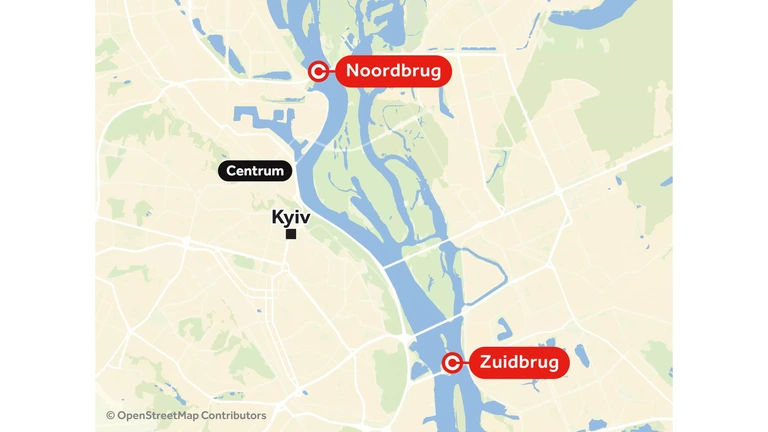
Vanmorgen deelde burgemeester Klitsjko van Kiev op Telegram dat er door de aanval geen verkeer over de Noordbrug meer mogelijk is. "Het verkeer op de brug is momenteel van de linker- naar de rechteroever geblokkeerd", schrijft hij.
Afgelopen dagen heeft Rusland meerdere aanvallen uitgevoerd op een andere brug in Kiev, de Zuidbrug. Met drones probeert Rusland de infrastructuur van de Oekraïense hoofdstad te beschadigen.
Volgens een luchtvaartexpert die The Kiev Independent sprak, is het onwaarschijnlijk dat de droneaanvallen zijn bedoeld om de brug te verwoesten. "Dat is praktisch onmogelijk. Zelfs met een grote explosieve lading om stalen bruggen te vernietigen, is dat een uitdaging", zegt de luchtvaartexpert.
Leven bemoeilijken
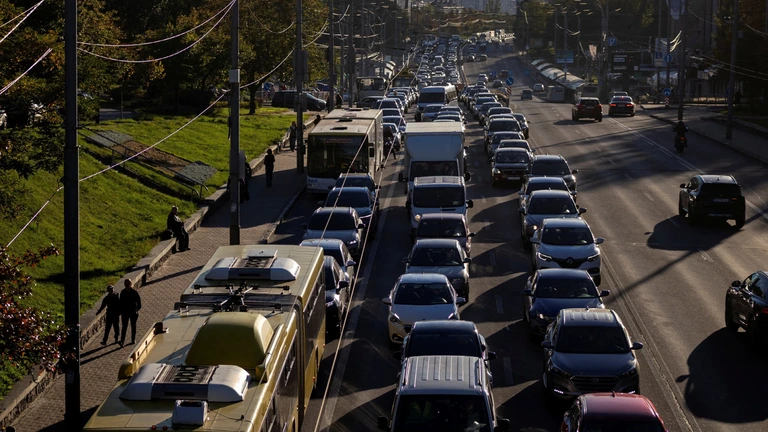
Volgens de expert probeert Rusland vooral druk te zetten op inwoners van de stad door het dagelijks leven moeilijker te maken. De aanvallen zorgen onder meer voor files in de stad.
Veel mensen in Kiev wonen aan de oostkant van de rivier, maar moeten voor hun werk een brug over. In het westen van de stad zitten de meeste overheidsgebouwen en bedrijven.
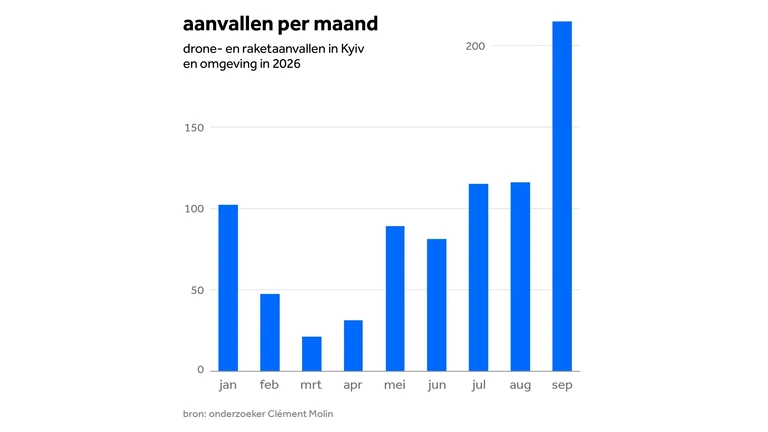
Rusland heeft de afgelopen weken de aanvallen op Kiev opgevoerd. In september werd de stad bijna twee keer zo vaak aangevallen als een maand eerder, schrijft Nieuwsuur.
Vooral het centrum van de stad wordt door Rusland aangevallen met drones en raketten, met ook dodelijke slachtoffers tot gevolg. Door de aanvallen komen veel huizen met de winter in zicht zonder gas of elektriciteit te zitten. Ook weet Rusland plekken met grote symbolische waarde te raken, zoals het historisch kloostercomplex en de boekenmarkt in de stad.
Derde dag op rij met Russische aanvallen op belangrijke bruggen in Kiev
Rusland heeft vannacht opnieuw een belangrijke brug in Kiev aangevallen die het westen en oosten van de Oekraïense hoofdstad verbindt, gebouwd over de rivier de Dnipro.
Vanmorgen deelde burgemeester Klitsjko van Kiev op Telegram dat er door de aanval geen verkeer over de Noordbrug meer mogelijk is. "Het verkeer op de brug is momenteel van de linker- naar de rechteroever geblokkeerd", schrijft hij.
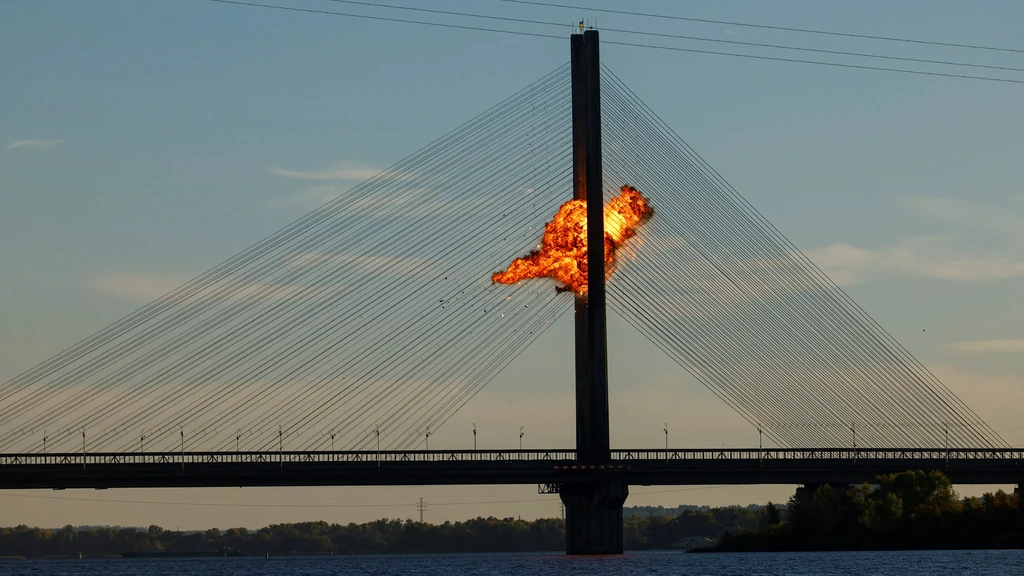
Afgelopen dagen heeft Rusland meerdere aanvallen uitgevoerd op een andere brug in Kiev, de Zuidbrug. Met drones probeert Rusland de infrastructuur van de Oekraïense hoofdstad te beschadigen.
Volgens een luchtvaartexpert die The Kiev Independent sprak, is het onwaarschijnlijk dat de droneaanvallen zijn bedoeld om de brug te verwoesten. "Dat is praktisch onmogelijk. Zelfs met een grote explosieve lading om stalen bruggen te vernietigen, is dat een uitdaging", zegt de luchtvaartexpert.
Leven bemoeilijken
Volgens de expert probeert Rusland vooral druk te zetten op inwoners van de stad door het dagelijks leven moeilijker te maken. De aanvallen zorgen onder meer voor files in de stad.
Veel mensen in Kiev wonen aan de oostkant van de rivier, maar moeten voor hun werk een brug over. In het westen van de stad zitten de meeste overheidsgebouwen en bedrijven.
Rusland heeft de afgelopen weken de aanvallen op Kiev opgevoerd. In september werd de stad bijna twee keer zo vaak aangevallen als een maand eerder, schrijft Nieuwsuur.
Vooral het centrum van de stad wordt door Rusland aangevallen met drones en raketten, met ook dodelijke slachtoffers tot gevolg. Door de aanvallen komen veel huizen met de winter in zicht zonder gas of elektriciteit te zitten. Ook weet Rusland plekken met grote symbolische waarde te raken, zoals het historisch kloostercomplex en de boekenmarkt in de stad.
🇨🇳🇻🇳🇱🇦🇨🇺🇰🇵🇷🇺☭


De NAVO rukt duidelijk op.quote:Op zaterdag 3 oktober 2026 10:07 schreef Darkomen het volgende:
Lijkt erop dat Rusland weer begint met escaleren.

Kremlin, belangrijke bruggen in st petersburg en moskou. Kerch.
Prima. Rammen.
Prima. Rammen.
'Je gaat het pas zien als je het doorhebt'
'Ieder nadeel heb zijn voordeel'
We zullen je nooit, nooit vergeten
1947-2016
'Ieder nadeel heb zijn voordeel'
We zullen je nooit, nooit vergeten
1947-2016

Tiktok-brein. Totale wereldvreemdheid. Je ziet hem naderhand nadenken over wat er nou eigenlijk gebeurde.quote:


Oekraïne gaat weer een zware winter tegemoet 
Ik hoop toch dat ze in ieder geval wat plannen hebben klaarliggen om de Oekraïners warm te houden deze winter. Want je weet gewoon dat Rusland de energievoorziening deze winter weer plat gaat leggen. Daar kunnen ze toch onmogelijk nog door verrast gaan worden. Je hebt decentrale alternatieven nodig (zoals generatoren).
Ik hoop toch dat ze in ieder geval wat plannen hebben klaarliggen om de Oekraïners warm te houden deze winter. Want je weet gewoon dat Rusland de energievoorziening deze winter weer plat gaat leggen. Daar kunnen ze toch onmogelijk nog door verrast gaan worden. Je hebt decentrale alternatieven nodig (zoals generatoren).
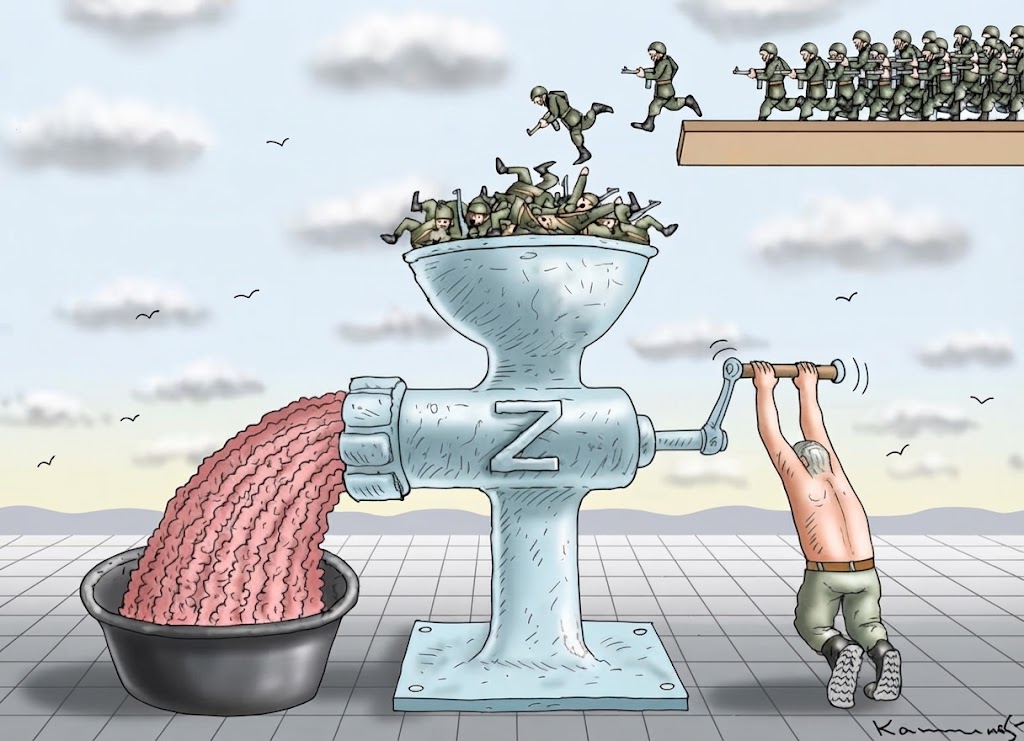
Ik begreep dat de Russen in september ruim 48.000 troepen verloren. De vervangingsgraad is nog altijd rond de 30.0000. De Russische verliezen zijn de afgelopen maanden consequent hoger dan dat, met een stijgende lijn richting die 48 van september. Dicht bij de doelstelling van UA, die op 50.000 russische verliezen per maand liggen.
Algemene mobilisatie nadert..
Algemene mobilisatie nadert..
"Ill fares the land, to hastening ills a prey;
Where wealth accumulates, and men decay"
- Oliver Goldsmith, The Deserted Village
Where wealth accumulates, and men decay"
- Oliver Goldsmith, The Deserted Village

We draaien door.
And what rough beast, its hour come round at last,
Slouches towards Bethlehem to be born?
Slouches towards Bethlehem to be born?
VS praten met Rusland over oliedeal, meldt The New York Times
Sorry Oekraine, de VS moet er wel meer geld uit slaan hoor!
Sorry Oekraine, de VS moet er wel meer geld uit slaan hoor!
The Wall Street Journalquote:Ukraine’s Big Backers in Europe Try to Counter War Fatigue
Leaders stress need for negotiated solution as populist parties critical of Kyiv aid gain sway
BERLIN—European voters are increasingly backing populist parties opposed to supporting Ukraine as fatigue grows with the war, forcing leaders to come up with a new pitch: We are pushing for peace.
In recent weeks, leaders in Europe’s biggest countries have been renewing calls for a diplomatic solution to the war. The reason isn’t a new belief that Moscow is open to talks, according to European officials. Instead, the new language aims to counter a popular argument that presents financial and military aid to Kyiv as both ruinous and dangerous.
European officials are stepping up their contacts with Moscow. Last week, German Foreign Minister Johann Wadephul met his Russian counterpart Sergei Lavrov in New York, the first meeting between the countries’ foreign ministers since 2022. This summer, a senior European Union official spoke with Russian leader Vladimir Putin’s foreign-policy adviser Yuri Ushakov. French President Emmanuel Macron sent his national-security adviser to Moscow early this year.
In a speech on Thursday, German Chancellor Friedrich Merz called for a diplomatic end to the war while defending his country’s military assistance to Ukraine, saying only a strong and united Europe could bring a reluctant Moscow to the negotiating table.
“Our support for Ukraine is what creates the necessary prerequisite for serious peace negotiations with Moscow to begin,” he said.
Officials here said the speech was a direct reaction to the shifting popular mood in the country, where close to a third of voters now back parties that are opposed to sending more aid to Ukraine.
Even in Britain, where backing for Ukraine remains accepted across the political spectrum, Prime Minister Andy Burnham has shifted the tone, stressing last week that “unlike Russia, we do not seek confrontation.”
The rhetorical shift comes as polls show several populist parties with big leads in national polls. In France, polls show Marine Le Pen is most likely to win a presidential runoff next year. Her party opposed this year’s 90 billion euro, or roughly $101 billion, EU loan to Ukraine and senior officials have said Paris would cut off future nonmilitary aid to Ukraine.
In Germany, the far-right Alternative for Germany, or AfD, scored historical wins in two state elections in the former East Germany last month. It has criticized Berlin for sending billions to Ukraine just as it is cutting welfare benefits and raising taxes at home. The party wants to lift sanctions on Russia, resume buying energy from Moscow and strip Ukrainian refugees of their status.
With the Trump administration having cut off most direct aid to Ukraine, Europe is now largely alone in shouldering the mounting cost of arming Ukraine and keeping its economy afloat. These costs have grown as Russia has intensified its attacks on Ukraine’s cities and infrastructure.
Meanwhile, populist parties are seizing on voters’ fatigue after five years of war in which both sides have made little progress. Incumbent governments, they argue, are perpetuating the conflict even while the White House is pressing for talks. Le Pen has called for a major peace conference to end the war.
A YouGov poll this spring showed the percentage of voters wanting Ukraine to win the war little changed since 2023. However in Britain, France, Germany and Italy, there is a marked increase in support for a negotiated peace, even if Ukraine must cede land. Even in Poland, a stalwart Kyiv supporter initially, polls show support for Ukraine aid has fallen to around 50% amid tensions with Kyiv over a World War II-era feud.
In Germany, which is in the midst of a brutal industrial recession, the AfD’s antiwar message is proving potent with frustrated voters. Some 42% of Germans think Berlin is sending too many weapons to Ukraine, the highest level recorded since the start of the war, according to a poll by the ARD public broadcasters last month.
The AfD’s electoral success is in turn invigorating those in the ruling coalition who have long nurtured misgivings about Kyiv, from Merz’s conservatives in the eastern part of the country to the pacifists in the center-left Social Democratic Party.
For now, this isn’t reshaping Berlin’s Ukraine policy, which remains strongly supportive of Kyiv, but it is beginning to alter the way the government is talking about it, said Claudia Major, senior vice president for trans-Atlantic security at the German Marshall Fund of the U.S., a think tank.
Wadephul’s surprise meeting with Lavrov was largely targeted at German voters, she said.
“In essence, he was saying: ‘Look, we want peace, we are trying diplomacy, but the Russians aren’t interested,’” she said.
Large sections of Merz’s speech on Thursday took direct aim at the AfD.
“We will not allow ourselves to be divided—not by hybrid attacks, not by agitation on social media driven by Moscow bots, and not by the slogans of the AfD and its Russian handlers,” he said.
Merz also stressed Germany’s self-interest in supporting Kyiv, saying it was “no end in itself. We do it above all to protect the safety of people in our country. Freedom and security are the conditions of our prosperity.”
The updated message has come alongside sharper warnings about the domestic threats posed by Russia.
Last month, Germany’s government blamed Russia publicly for deploying explosive drones to a German airport in August. Macron last week called political party leaders to the Élysée to brief them on the deteriorating international situation, including the threats posed by Moscow. Burnham said in New York last week that his government would establish a new center to fight disinformation from Russia.
Nonetheless, the push to open diplomatic channels is broadening. While it is partly intended for domestic consumption, Europeans also want to make sure they have a seat at the table as the U.S. keeps pushing for its own settlement with Moscow.
In Brussels, the EU has been debating whether to pick an envoy for talks with Moscow. Wadephul suggested that Europeans could use the White House’s invitation to Putin to attend the Miami G-20 leaders meeting in November to test the Russian leader’s seriousness about a negotiated solution to the war.
Lavrov scorned Wadephul after their discussions, accusing his German counterpart of simply reading out a statement he could have shared on the phone. The next day, Russia fired a drone at Kyiv’s prestigious National Academy of Sciences building, situated close to Germany’s Embassy in Ukraine.
That underlines a danger in seeking outreach to Moscow, said Slawomir Debski, a former adviser to the Polish government and a visiting professor of strategy and international relations at the College of Europe.
“The danger is that if we approach Russians without any conditions, like a temporary halt in civilian attacks, we are signaling weakness to them,” he said.


Rusland moordt dagelijks in Oekraïne en wij kijken als samenleving steeds vaker weg.
And what rough beast, its hour come round at last,
Slouches towards Bethlehem to be born?
Slouches towards Bethlehem to be born?


Jij bent dat vergeten. Maar gelukkig voor jou kun je alles terugzoeken.quote:
 Op
Op
"If the nation is not capable of preserving itself and reproducing, if it loses it vital bearings and ideals, then it doesn't need foreign enemies - it will fall apart on its own."
[Written by Vladimir Vladimirovich Putin]
[Written by Vladimir Vladimirovich Putin]
We kunnen niks doen, behalve een diplomatieke oplossing zoeken. Maar dat laatste is niet bon ton volgens sommigen.quote:Op zaterdag 3 oktober 2026 13:32 schreef Perrin het volgende:
Rusland moordt dagelijks in Oekraïne en wij kijken als samenleving steeds vaker weg.
"If the nation is not capable of preserving itself and reproducing, if it loses it vital bearings and ideals, then it doesn't need foreign enemies - it will fall apart on its own."
[Written by Vladimir Vladimirovich Putin]
[Written by Vladimir Vladimirovich Putin]


Nee jij hebt het verzonnenquote:Op zaterdag 3 oktober 2026 14:22 schreef phpmystyle het volgende:
[..]
Jij bent dat vergeten. Maar gelukkig voor jou kun je alles terugzoeken.
Op zondag 8 december 2013 00:01 schreef Karina het volgende:
Dat gaat me te diep sp3c, daar is het te laat voor.
Dat gaat me te diep sp3c, daar is het te laat voor.
Ik wil niet vervelend doen hoor. maar de escalatie berichten richting Europa waren hier een paar weken terug anders best vaak te lezen. Zeg ik als anti phpquote:

Maar dat wilden die Noord-Koreanen niet. Probleem niet opgelost.quote:
[..]
Dan kan zuid-korea ze toch naar noord-korea sturen?
Probleem opgelost.
 Op
Op
Maanden, jaaaarenquote:
[..]
Ik wil niet vervelend doen hoor. maar de escalatie berichten richting Europa waren hier een paar weken terug anders best vaak te lezen. Zeg ik als anti php
Maar dat is wat anders dan denken dat we binnenkort richting oorlog gaan of niet?
Op zondag 8 december 2013 00:01 schreef Karina het volgende:
Dat gaat me te diep sp3c, daar is het te laat voor.
Dat gaat me te diep sp3c, daar is het te laat voor.
Volgens Poetinquote:
[..]
We kunnen niks doen, behalve een diplomatieke oplossing zoeken. Maar dat laatste is niet bon ton volgens sommigen.

Eindelijk iemand die denkt wat iedereen zegt
