NWS Nieuws & Achtergronden
Discussieer hier diepgaander over de actualiteiten.



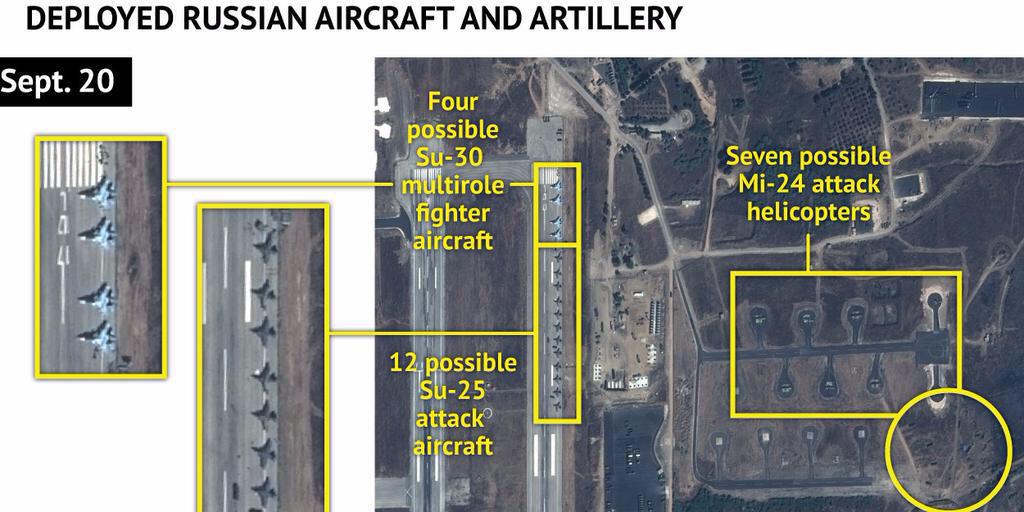
twitter:AFP twitterde op maandag 21-09-2015 om 19:37:42 #UPDATE Russia has deployed 28 fighter and bomber aircraft in Syria http://t.co/VNaZNRqwQ6 reageer retweet

it giet oantwitter:AFP twitterde op maandag 21-09-2015 om 18:17:58 #UPDATE: Russia calls for 'action' after shell hits Damascus embassy compound http://t.co/WrFjFUzaYB reageer retweet

Say what?


ik vrees dat het een aanleiding zal zijn voor een Beslan 2.0quote:Op maandag 21 september 2015 20:48 schreef UpsideDown het volgende:
twitter:AFP twitterde op maandag 21-09-2015 om 19:37:42 #UPDATE Russia has deployed 28 fighter and bomber aircraft in Syria http://t.co/VNaZNRqwQ6 reageer retweetit giet oantwitter:AFP twitterde op maandag 21-09-2015 om 18:17:58 #UPDATE: Russia calls for 'action' after shell hits Damascus embassy compound http://t.co/WrFjFUzaYB reageer retweet
quote:twitter:AFP twitterde op maandag 21-09-2015 om 19:37:42 #UPDATE Russia has deployed 28 fighter and bomber aircraft in Syria http://t.co/VNaZNRqwQ6 reageer retweetit giet oantwitter:AFP twitterde op maandag 21-09-2015 om 18:17:58 #UPDATE: Russia calls for 'action' after shell hits Damascus embassy compound http://t.co/WrFjFUzaYB reageer retweet

Belangrijk stukje uit dit nieuwsbericht
quote:US Defense Secretary Ashton Carter spoke with his Russian counterpart Sergei Shoigu on Friday, ending an 18-month freeze in military relations triggered by NATO anger over Moscow's role in the Ukraine crisis.
They agreed to continue discussions, which are crucial to lessen the risk of incidents involving coalition forces and Russian forces operating in the same air space.

Goed plan, nog meer bommen op markten  Rusland heeft echt altijd het beste met de bevolking voor
  Straks bombarderen ze nog den haag en rotterdam vanwege moslims.
Rusland heeft echt altijd het beste met de bevolking voor Straks bombarderen ze nog den haag en rotterdam vanwege moslims.
Exponentiële deflatie van Bitcoin maakt arme mensen nog veel sneller armer dan het grote probleem van inflatie. Gematigde burning van Ethereum is de gulden middenweg.
Zal iemand ze ongelijk geven?quote:Op maandag 21 september 2015 21:39 schreef firefly3 het volgende:
Goed plan, nog meer bommen op markten
Nee, jouw nusra vriendjes hebben het beste met de bevolking voor....quote:
Goed plan, nog meer bommen op markten
Haha mooi deze verzuurde al qaeda aanhangers.quote:
Goed plan, nog meer bommen op markten
Er is nog geen bom gedropt door de Russen en nu al zitten ze te huilen.
quote:twitter:AFP twitterde op maandag 21-09-2015 om 19:37:42 #UPDATE Russia has deployed 28 fighter and bomber aircraft in Syria http://t.co/VNaZNRqwQ6 reageer retweetit giet oantwitter:AFP twitterde op maandag 21-09-2015 om 18:17:58 #UPDATE: Russia calls for 'action' after shell hits Damascus embassy compound http://t.co/WrFjFUzaYB reageer retweet
Mooi om te zien dat de illegale Turkse en Saudische invloed in het destabiliseren van Syrië aangepakt gaat worden.quote:"We ... condemn the criminal shelling of the Russian diplomatic presence in Damascus. We await a clear standpoint on this terrorist act from all members of the international community, including regional actors.".......
The militants have "outside sponsors" who are responsible for influencing their actions, the foreign ministry said.

Die zijn allemaal al op weg naar Duitsland en Zweden.quote:
[..]
Ok, dus heel veel burgers die vermoord zullen worden door de Russen.
Ура для россии
"But the age of chivalry is gone; that of sophisters, economists, and calculators has succeeded, and the glory of Europe is extinguished forever."- Edmund Burke
Ik kies niet tussen al nusra en rusland. Ik kies voor de gematigde fsa divisies die niet extreem zijn (ja die bestaan nog)quote:
[..]
Nee, jouw nusra vriendjes hebben het beste met de bevolking voor....
Exponentiële deflatie van Bitcoin maakt arme mensen nog veel sneller armer dan het grote probleem van inflatie. Gematigde burning van Ethereum is de gulden middenweg.
twitter:zaidbenjamin twitterde op maandag 21-09-2015 om 23:28:27 #Russia is to deploy 2,000 military personnel to its new air base near the Syrian port city of #Latakia #Syria - FT reageer retweet

Say what?
Russia to Start Bombing in Syria ASAP
Russia to deploy 2,000 in Syria air base mission’s ‘first phase’
http://www.thedailybeast.(...)g-in-syria-asap.htmlquote:Russian combat operations on behalf of Syrian President Bashar al-Assad are likely to begin “soon,” three U.S. officials told The Daily Beast. And Russian drone flights to spot targets for potential airstrikes are already underway.
Russia to deploy 2,000 in Syria air base mission’s ‘first phase’
http://www.ft.com/intl/cm(...)4.html#axzz3mKZLTkPzquote:Russia is to deploy 2,000 military personnel to its new air base near the Syrian port city of Latakia, signaling the scale of Moscow’s involvement in the war-torn country.
The deployment “forms the first phase of the mission there”, according to an adviser on Syria policy in Moscow.

@p_vanostaeyen: Reports: Jabhat an-Nusra took over an arms stock of US trained Division 30 in Northern Aleppo. The US trained rebels are no match ...
@p_vanostaeyen: #pt addition. It is reported that the gun and ammo stock of Division 30 fighters was literary handed over to Jabhat an-Nusra
Welke van de twee ook waar is:
@p_vanostaeyen: #pt addition. It is reported that the gun and ammo stock of Division 30 fighters was literary handed over to Jabhat an-Nusra
Welke van de twee ook waar is:
Lekker zuipen, lekker dansen en daarna lekker neuken.
Daarom is het ook zo bespottelijk dat de Amerikanen de schuld krijgen van de creatie van ieder rebellengroepje. Ze zijn keer op keer totaal incompetent gebleken als het om rebellen trainen gaat.quote:
@p_vanostaeyen: Reports: Jabhat an-Nusra took over an arms stock of US trained Division 30 in Northern Aleppo. The US trained rebels are no match ...
@p_vanostaeyen: #pt addition. It is reported that the gun and ammo stock of Division 30 fighters was literary handed over to Jabhat an-Nusra
Welke van de twee ook waar is:
quote:twitter:AFP twitterde op maandag 21-09-2015 om 19:37:42 #UPDATE Russia has deployed 28 fighter and bomber aircraft in Syria http://t.co/VNaZNRqwQ6 reageer retweetit giet oantwitter:AFP twitterde op maandag 21-09-2015 om 18:17:58 #UPDATE: Russia calls for 'action' after shell hits Damascus embassy compound http://t.co/WrFjFUzaYB reageer retweet

Popcorn alles.
Reis ver, drink wijn, denk na, lach hard, duik diep. Kom Terug.
Het lijkt inmiddels wel op een hoop getroll van Amerika, kom we schoppen weer 50 zwaar bewapende rebellen de grens over die direct bij aankomst worden ontwapend. Welke totaalmalloot blijft nou volharden in deze strategie.quote:
@p_vanostaeyen: Reports: Jabhat an-Nusra took over an arms stock of US trained Division 30 in Northern Aleppo. The US trained rebels are no match ...
@p_vanostaeyen: #pt addition. It is reported that the gun and ammo stock of Division 30 fighters was literary handed over to Jabhat an-Nusra
Welke van de twee ook waar is:
Reis ver, drink wijn, denk na, lach hard, duik diep. Kom Terug.
Barrack Obama en zijn liberale dromers.quote:
[..]
Het lijkt inmiddels wel op een hoop getroll van Amerika, kom we schoppen weer 50 zwaar bewapende rebellen de grens over die direct bij aankomst worden ontwapend. Welke totaalmalloot blijft nou volharden in deze strategie.
Israel fears return of Persian Empire
http://www.al-monitor.com(...)ollah-axis-nuke.htmlquote:Prime Minister Benjamin Netanyahu embarked Sept. 21 for a meeting with Russian President Vladimir Putin. In an unusual, perhaps even unprecedented move, Netanyahu took Israel Defense Forces Chief of Staff Lt. Gen. Gadi Eizenkot as well as military intelligence chief Maj. Gen. Herzl Halevi with him.
In general, Israeli prime ministers don’t drag chiefs of staff to such meetings. No one expects Putin to sit with Israeli generals over maps and aerial photos. A prime minister could easily limit himself to bringing along his high-ranking military secretary and the head of Military Intelligence’ Research Division. But Netanyahu set his sights high, and going for broke, took with him the national military commander and the national intelligence expert.
The prevailing assessment in Israel is that Netanyahu's reasons for doing so are mixed. One is a photo opportunity on the eve of Yom Kippur. Israel’s security situation is beginning to deteriorate, Jerusalem is burning and Qassam and Grad rockets are beginning to drizzle from Gaza. When Netanyahu flies on a dramatic security mission to the Russian bear and drags such undoubtedly popular public personages as Israel’s chief of staff and military intelligence chief with him, it helps the prime minister shore up his persona as “Mr. Security,” an image that is now beginning to crumble in the current reality.
A second reason: Netanyahu is sending a signal to Washington. Russian involvement in Syria is introducing a new and unexpected player in the world war between Sunnis and Shiites, a war being waged on territories that were once Syria as well as on parts of Iraq, Lebanon, Yemen and other places. While the West vacillates and struggles with existential torment over what to do, how to do it and whether something should be done against these brutes, Putin comes along. He plants a firm Russian boot on the ground in Syria, resoundingly making his presence known.
When an Israeli prime minister rushes to meet Putin before the Americans and Europeans, and takes along with him Israel’s highest-ranking security personages, this is a clear Israeli signal: We are also here. No one has a monopoly and if necessary, Israel will even talk with Russia and try to create joint leverage.
There are other substantive developments. At the beginning of the week, talking on condition of anonymity, a high-ranking IDF officer sharply criticized Russian actions and the dangers faced by Israel from the developing radical Shiite axis. The officer (who is among the IDF’s top brass) used stinging words as he expressed the position of those in the Israeli system who view the Iranian-Shiite-Hezbollah danger as a much more severe threat to Israel than its wayward, crazy sister, the radical Sunni coalition.
“We are in a battle of titans between the Shiite and Sunni axes,” the officer said. “This is a historic event, the biggest saga of our generation. In this equation, it's impossible to determine who is the good part or the bad part. We have to be wary of everyone. Still, when I compare the Sunni radical axis with the Shiite one, it’s clear to me who’s most dangerous. With all due respect to Islamic State achievements, the Sunni threat is along the lines of ‘more of the same.’ It’s something we are familiar with. But the Shiite axis, on the other hand, is based on Iran. We are talking about a regional power that dominates 25% of the world’s natural gas reserves and 11% of its petroleum reserves. It has tremendous human capital, high capabilities in science, technology, infrastructure, operational abilities, cyber developments. Iran, Iraq, Syria, Hezbollah and now also Russia are closing ranks against the Sunni axis — including, to our stupefaction, even an international coalition headed by the United States — and this should worry us. Do we want Iran sitting on our doorstep? Do we want Iran, a country that de facto rules Iraq, Syria and Lebanon and enjoys Russian backup — to win in this confrontation? A country that maintains its standing as a nuclear-threshold state?”
With regard to Russian involvement, the officer was crystal clear and incisive. “This development is very bad for Israel; it significantly strengthens the radical Shiite axis. The Russians aren’t really interested in the Shiites. What they want is to rein in the Sunni awakening that is gushing through the Caucusus. They are embroiled in Dagestan; in Chechnya, they want to halt the Sunni wave that threatens them, thus they are taking action in Syria. Their involvement can rock the boat, even to the extent of leading to a victory for [Syrian President Bashar al-] Assad and Hezbollah with Iran’s backing. Just imagine that after all these events come to an end, Assad remains on his throne with some kind of rulership, with the addition of 7,000 Hezbollah fighters, between 1,000-2,000 Revolutionary Guards and thousands of fighters from Shiite militias who were recruited around the world. All this with Iranian power and Russian backup, and all this in our backyard.”
The officer emphasizes that these forecasts could crumble overnight, and all regional prophecies are mutable. “To the same extent that Russia could gradually increase its involvement, including heavier ground forces, Syria could also become Putin’s Vietnam and embroil Russia in an Afghanistan-type quicksand. It’s impossible to know what will happen. What is clear at this moment is that Assad retains many thousands of Hezbollah fighters, about 1,000 Revolutionary Guard fighters, thousands of Shiite militia fighters and lots and lots of money funneled to him all the time by Iran. Now the Russians are adding themselves to this equation and undermining the equilibrium. Today, Assad is incapable of carrying out any kind of important military campaign without the presence of thousands of foreign fighters in his front lines. Assad has become the puppet of those who assist him, a ruler on life support, but he could also survive the process.”
Al-Monitor asked the officer whether he was equally concerned about the Sunni axis, mainly the Islamic State. “No,” he answered, “Although it’s true that the Sunni axis has scored startling achievements, they are totally isolated and not supported by any significant external power. They are facing off alone against the radical Shiite deployment that is supported by a regional power like Iran, a world power like Russia and an international aerial coalition headed by the United States. All of the world’s largest forces are fighting the Sunni constellation and so far have been unable to overpower it, which is a staggering phenomenon. But still, I am more deterred by an organized, state-power-like system than an unorganized, gang-like apparatus. We are talking about an exquisitely complex situation, and no one knows how it will end and when. We also say this to the Americans.
“Yet still, I think that history proves that large empires coming from the East never bring good tidings to the Jewish people. What we are witnessing now is the return of the Persian Empire. The nuclear agreement between Iran and the West freezes Iran’s nuclear program for a decade or more, but allows Iran to become an empire and increase its activities and influence throughout the Middle East. From our perspective, this is bad news indeed. The Iranian adversary does not resemble any foe we have yet faced, on any scale of magnitude. The Persian civilization is much more impressive, developed and powerful than what we have today among the Arab countries. All this should worry us a lot.”
quote:
haha, lach maar nu het nog kan.Het is wachten op het eerste nieuwsbericht over Russisch vliegtuig neergehaald en piloot verbrand.

Misschien kan China haar voorraad aan Chinese melkpoeder inzetten om de toekomstige generatie jihadisten alvast onschadelijk te maken.quote:
[..]
China gaat wellicht ook meedoen.
Een nieuw tijdperk is begonnen. Daar waar de BRIC landen een streep in het zand durven zetten en de Yanks vertellen op te tyfen.
Doe afstand van je account en kom nooit meer terug.
Die generaal liegt. De Sunni groepen worden wel degelijk door grote spelers gesteund: Turkije, Amerika en Saudi-Arabië. Verder is het gewoon typische Israël praat, wat te begrijpen is vanuit Israëlisch perspectief. Maar hij geeft zelf al toe waarom Rusland orde op zaken komt stellen.quote:
Israel fears return of Persian Empire
[..]
http://www.al-monitor.com(...)ollah-axis-nuke.html
Syrisch leger boekt weer progressie in Ghouta:
http://www.almasdarnews.c(...)-the-syrian-capital/
Het Syrische leger verovert voor het eerst sinds tijden gebied in Daraa. Dit lijkt een gevolg te zijn van de gestopte Amerikaanse steun aan het Zuidelijk front.
http://www.almasdarnews.c(...)daraa-al-balad-axis/
Het Syrische leger is nu het dichtste bij Palmyra sinds het veroverd is, met de hulp van Russische intel zijn er weer heel wat aapjes naar de hel gestuurd en hebben ze heuvels nabij Palmyra ingenomen (Tal Syria Tel). Gaat Palmyra dan eindelijk worden ingenomen? Het zou in ieder geval een indicatie zijn van de flink afgenomen kracht van IS.
http://www.almasdarnews.c(...)l-syriatel-captured/
http://www.almasdarnews.c(...)-the-syrian-capital/
Het Syrische leger verovert voor het eerst sinds tijden gebied in Daraa. Dit lijkt een gevolg te zijn van de gestopte Amerikaanse steun aan het Zuidelijk front.
http://www.almasdarnews.c(...)daraa-al-balad-axis/
Het Syrische leger is nu het dichtste bij Palmyra sinds het veroverd is, met de hulp van Russische intel zijn er weer heel wat aapjes naar de hel gestuurd en hebben ze heuvels nabij Palmyra ingenomen (Tal Syria Tel). Gaat Palmyra dan eindelijk worden ingenomen? Het zou in ieder geval een indicatie zijn van de flink afgenomen kracht van IS.
http://www.almasdarnews.c(...)l-syriatel-captured/
Ga jij maar met 75 man in opstand komen als 750 mensen voor de deur staanquote:
@p_vanostaeyen: Reports: Jabhat an-Nusra took over an arms stock of US trained Division 30 in Northern Aleppo. The US trained rebels are no match ...
@p_vanostaeyen: #pt addition. It is reported that the gun and ammo stock of Division 30 fighters was literary handed over to Jabhat an-Nusra
Welke van de twee ook waar is:

Exponentiële deflatie van Bitcoin maakt arme mensen nog veel sneller armer dan het grote probleem van inflatie. Gematigde burning van Ethereum is de gulden middenweg.
Opvallend hoe poetin relaxt wilt overkomen maar daardoor juist krampachtig in zijn stoel lijkt te zitten.

Exponentiële deflatie van Bitcoin maakt arme mensen nog veel sneller armer dan het grote probleem van inflatie. Gematigde burning van Ethereum is de gulden middenweg.
Wat is de relevantie voor de Syriëcrisis precies van deze opmerking?quote:
Opvallend hoe poetin relaxt wilt overkomen maar daardoor juist krampachtig in zijn stoel lijkt te zitten.
[ afbeelding ]
Dat Israel rusland een toontje lager laat zingen. Het heeft alles te maken met dit conflict.quote:
[..]
Wat is de relevantie voor de Syriëcrisis precies van deze opmerking?
Exponentiële deflatie van Bitcoin maakt arme mensen nog veel sneller armer dan het grote probleem van inflatie. Gematigde burning van Ethereum is de gulden middenweg.
Omdat Putin zogenaamd ongemakkelijk op een stoel zitquote:
[..]
Dat Israel rusland een toontje lager laat zingen. Het heeft alles te maken met dit conflict.
?
En IS krijgt weer zware klappen bij Deir Ezzor. De samenwerking met de Shaytat stam legt de SAA bepaald geen windeieren. Er zijn de laatste tijd immers offensieven in Deir Ezzor in plaats van dat ze alleen maar verdedigen.
http://www.almasdarnews.c(...)n-the-last-24-hours/
Ook in Raqqa krijgt IS klapjes van de SyAAF, dankzij Russische sattelietbeelden. Er wordt de laatste tijd veel over gesproken, ik vraag me af in hoeverre het een gamechanger gaat worden, de Russische intel voor de SyAAF.
http://www.almasdarnews.c(...)r-force-capitalizes/
http://www.almasdarnews.c(...)n-the-last-24-hours/
Ook in Raqqa krijgt IS klapjes van de SyAAF, dankzij Russische sattelietbeelden. Er wordt de laatste tijd veel over gesproken, ik vraag me af in hoeverre het een gamechanger gaat worden, de Russische intel voor de SyAAF.
http://www.almasdarnews.c(...)r-force-capitalizes/
Het lijkt erop dat de Ghouta ratten gewoon in hun kooitje blijven, binnenkort zonder aanvoer vanuit de Qalamoun.
http://www.almasdarnews.c(...)osses-near-damascus/
http://www.almasdarnews.c(...)osses-near-damascus/
Ja dat kan iedere nitwit bedenken behalve die achterlijke Amerikanenquote:
[..]
Ga jij maar met 75 man in opstand komen als 750 mensen voor de deur staan
Lekker zuipen, lekker dansen en daarna lekker neuken.
Wat je bijna doet afvragen wat het werkelijke doel was van Amerika. Iedereen had zelf wel kunnen bedenken dat 75 gasten ondanks hun hightech wapens en training onmiddelijk gevangen zouden worden. Waarmee die Amerikaanse wapens weer in handen vallen van groepen zoals Al-Nusra.quote:
[..]
Ja dat kan iedere nitwit bedenken behalve die achterlijke Amerikanen
Yep en adhv het artikel. Dit is een bedreiging voor ruslandquote:
[..]
Omdat Putin zogenaamd ongemakkelijk op een stoel zit

Exponentiële deflatie van Bitcoin maakt arme mensen nog veel sneller armer dan het grote probleem van inflatie. Gematigde burning van Ethereum is de gulden middenweg.
Israël kan Rusland niks maken.quote:
[..]
Yep en adhv het artikel. Dit is een bedreiging voor rusland
Israël heeft het modernste leger van heel de wereld en genoeg atoomwapens enz om Rusland kapot te maken.quote:
[..]
Israël kan Rusland niks maken.
Exponentiële deflatie van Bitcoin maakt arme mensen nog veel sneller armer dan het grote probleem van inflatie. Gematigde burning van Ethereum is de gulden middenweg.


bij lange na nietquote:
[..]
Israël heeft het modernste leger van heel de wereld
waarschijnlijk ook niet en sowieso niet de middelen om genoeg van die wapens in Rusland te krijgen voor een allesvernietigende aanvalquote:en genoeg atoomwapens enz om Rusland kapot te maken.
Op zondag 8 december 2013 00:01 schreef Karina het volgende:
Dat gaat me te diep sp3c, daar is het te laat voor.
Dat gaat me te diep sp3c, daar is het te laat voor.
Waar Rusland jarenlang in Afghanistan vecht, heeft Israel in een paar dagen al overgenomen.quote:
[..]
bij lange na niet
[..]
waarschijnlijk ook niet en sowieso niet de middelen om genoeg van die wapens in Rusland te krijgen voor een allesvernietigende aanval
Hun arsenaal is strict geheim in verhouding met andere landen. Ze zijn hiernaast het dichtst bij het stoppen van ICBM's vanwege hun enorme budget voor onderzoek.
Ze moeten immers het midden oosten beveiligen en de wereldvrede behouden. Israel is 1 groot militaire samenwerking met de VS.
Exponentiële deflatie van Bitcoin maakt arme mensen nog veel sneller armer dan het grote probleem van inflatie. Gematigde burning van Ethereum is de gulden middenweg.
wat heeft Israel in een paar dagen overgenomen
Afghanistan????
dude
Afghanistan????
dude
Op zondag 8 december 2013 00:01 schreef Karina het volgende:
Dat gaat me te diep sp3c, daar is het te laat voor.
Dat gaat me te diep sp3c, daar is het te laat voor.
Theoretisch gezien heeft israel een oneindig oorlogsbudget vanwege de Joodse staatsbanken in de VS.
Exponentiële deflatie van Bitcoin maakt arme mensen nog veel sneller armer dan het grote probleem van inflatie. Gematigde burning van Ethereum is de gulden middenweg.
Haha.quote:
[..]
Israël heeft het modernste leger van heel de wereld en genoeg atoomwapens enz om Rusland kapot te maken.
Haha.
Haha.
Israel kreeg klop van Hezbollah in 2006. Het vliegt nog steeds in 4de-generatie gevechtsvliegtuigen, terwijl Rusland 5de-generatie gevechtsvliegtuigen ontwikkeld. Rusland heeft geen kind aan Israel in een conventionele oorlog.
Helaas voor ze kunnen veel Amerikanen en Europeanen niet meer door 1 deur met Netanyahu na de aanvallen op Gaza.quote:
Theoretisch gezien heeft israel een oneindig oorlogsbudget vanwege de Joodse staatsbanken in de VS.
Say what?

nee ook nietquote:
Theoretisch gezien heeft israel een oneindig oorlogsbudget vanwege de Joodse staatsbanken in de VS.
dit ook niet echtquote:
[..]
Haha.
Haha.
Haha.
Israel kreeg klop van Hezbollah in 2006. Het vliegt nog steeds in 4de-generatie gevechtsvliegtuigen, terwijl Rusland 5de-generatie gevechtsvliegtuigen ontwikkeld. Rusland heeft geen kind aan Israel in een conventionele oorlog.
Op zondag 8 december 2013 00:01 schreef Karina het volgende:
Dat gaat me te diep sp3c, daar is het te laat voor.
Dat gaat me te diep sp3c, daar is het te laat voor.
Met Iron beam kunnen ze met lasers dingen uit de lucht schieten.quote:
[..]
Haha.
Haha.
Haha.
Israel kreeg klop van Hezbollah in 2006. Het vliegt nog steeds in 4de-generatie gevechtsvliegtuigen, terwijl Rusland 5de-generatie gevechtsvliegtuigen ontwikkeld. Rusland heeft geen kind aan Israel in een conventionele oorlog.
Exponentiële deflatie van Bitcoin maakt arme mensen nog veel sneller armer dan het grote probleem van inflatie. Gematigde burning van Ethereum is de gulden middenweg.
in theoriequote:
[..]
Met Iron beam kunnen ze met lasers dingen uit de lucht schieten.
kunnen er wel meer ... in theorie
Op zondag 8 december 2013 00:01 schreef Karina het volgende:
Dat gaat me te diep sp3c, daar is het te laat voor.
Dat gaat me te diep sp3c, daar is het te laat voor.
Wat een bullshit dit, kunnen we het weer over Syrie hebben?
Vuurvlieg
Vuurvlieg
Lekker zuipen, lekker dansen en daarna lekker neuken.
Oke man.quote:
[..]
Israël heeft het modernste leger van heel de wereld en genoeg atoomwapens enz om Rusland kapot te maken.
Wel het gaat niet zo goed met de 'offensieven' van zijn vrienden in Ghouta en Daraa, dus heeft hij weinig te melden.quote:
Wat een bullshit dit, kunnen we het weer over Syrie hebben?
Vuurvlieg
ze kregen geen klop van Hezbollah, ze konden gaan en staan waar ze wilden in Libanonquote:
Op zondag 8 december 2013 00:01 schreef Karina het volgende:
Dat gaat me te diep sp3c, daar is het te laat voor.
Dat gaat me te diep sp3c, daar is het te laat voor.
Laten ze eerst maar Arrow-2, die het tegen lange afstand ballistische raketten moet opnemen, operationeel krijgen dan gezien de laatste test een mislukking was:quote:
[..]
Met Iron beam kunnen ze met lasers dingen uit de lucht schieten.
http://www.timesofisrael.(...)missile-test-failed/
Ze kregen wel harde klappen hoorquote:
[..]
ze kregen geen klop van Hezbollah, ze konden gaan en staan waar ze wilden in Libanon
 Het was zeker geen succes voor Israël als je dat wilt zeggen
Nonsense. De Israëliërs konden niet meer dan een aantal kilometers oprukken in Zuid-Libanon. Lees het door Israel-geïnitieerde Winograd-rapport of elk ander post-oorlog analyse.quote:
[..]
ze kregen geen klop van Hezbollah, ze konden gaan en staan waar ze wilden in Libanon
tot de Litani, wat ook de bedoeling wasquote:
[..]
Nonsense. De Israëliërs konden niet meer dan een aantal kilometers oprukken in Zuid-Libanon. Lees het door Israel-geïnitieerde Winograd-report of elk ander post-oorlog analyse.
dat het zolang duurde had meer te maken met de besluiteloosheid van de top (militair en politiek) dan met de slagkracht van Hezbolla
Op zondag 8 december 2013 00:01 schreef Karina het volgende:
Dat gaat me te diep sp3c, daar is het te laat voor.
Dat gaat me te diep sp3c, daar is het te laat voor.
nee dat wil ik niet zeggen, ik wil zeggen dat ze geen klop kregen van Hezbollahquote:
[..]
Ze kregen wel harde klappen hoor
sterker nog dat zei ik letterlijk
Op zondag 8 december 2013 00:01 schreef Karina het volgende:
Dat gaat me te diep sp3c, daar is het te laat voor.
Dat gaat me te diep sp3c, daar is het te laat voor.
Het was een complete fiasco voor de IDF. De Winograd-commissie moest na de oorlog in opdracht van de Israëlische regering onderzoek doen naar de oorlog, en kwam met een aantal schokkende conclusies:quote:
[..]
Ze kregen wel harde klappen hoor
- Compete bataljons die zich terugtrokken na het spotten van 5-10 Hezbollah soldaten.
- Bevoorradingsvrachtwagens die uit angst weigerden Libanon te betreden.
- Complete divisies die hun opmars staakten omdat een soldaten gewond was.
- Soldaten die in geen enkele instantie zelf het initiatief namen.
- Een gebrek aan opofferingsgezindheid in de Israëlische samenleving, die in al haar vrijheid en hedonistische levensstijl niet meer bereid is om grote verliezen te accepteren.
- Het stationeren van speciale divisies van de IDF in de Palestijnse gebieden, waar men vooral te maken heeft met 14-jarige stenengooiers en gefrustreerde gezinnen, de moraal van de IDF-soldaten niet ten goede is gekomen. De discrepantie tussen die realiteit en de realiteit aan het echte front is te groot, en zorgt enkel voor desillusie.
- Etc.
ja ze draaiden zichzelf een beetje de nek om, daar hadden ze Hezbollah niet voor nodig ... was Hezbollah ook niet toe in staat
Op zondag 8 december 2013 00:01 schreef Karina het volgende:
Dat gaat me te diep sp3c, daar is het te laat voor.
Dat gaat me te diep sp3c, daar is het te laat voor.
Je bent in de war met '78 denk ik. De IDF wist in 2006 de Litani rivier niet te bereiken, en wist zelfs een kleine stad als Bint Jbeil aan de grens met Libanon niet in te nemen.quote:
tot de Litani, wat ook de bedoeling was
dat het zolang duurde had meer te maken met de besluiteloosheid van de top (militair en politiek) dan met de slagkracht van Hezbolla
https://en.wikipedia.org/wiki/Operation_Change_of_Direction_11quote:The IDF never reached the Litani river and failed to surround Hizbullah forces in South Lebanon. Instead the Israeli government on August 13, accepted a ceasefire in accordance with UN Security Council Resolution 1701. When the ceasefire commenced the following day IDF found itself in control of 16 different pockets or sectors in South Lebanon, often isolated from each other and from Israeli territory. IDF expressed a desire to withdraw from these positions as quickly as possible, as soon as a ceasefire agreement was in place. Hizbullah remained in control of both Bint Jbeil and Ayta ash-Sha'b, close to the border, while IDF soldiers were operating well to the north of both these towns.
https://en.wikipedia.org/wiki/Battle_of_Bint_Jbeil#Aftermathquote:Israel sent the elite of its regular forces, the Golani infantry brigade and the Paratroopers brigade to Bint Jbeil. The IDF enjoyed a tremendous superiority both in numbers and firepower as well as absolute air superiority. The over 5,000 IDF soldiers laying a siege around the town were faced by little more than 100 Hizbullah fighters. The IDF failed to conquer the town or to make any other tangible operational achievements. According to Kober the Israeli withdrawal was "correctly interpreted by Hizballah as a great victory for the organization.
Dat is natuurlijk onzin, Rusland heeft niet de middelen om een conventionele oorlog tegen Israël te vechten en te winnen mits Israël een thuiswedstrijd speelt.quote:
[..]
Haha.
Haha.
Haha.
Israel kreeg klop van Hezbollah in 2006. Het vliegt nog steeds in 4de-generatie gevechtsvliegtuigen, terwijl Rusland 5de-generatie gevechtsvliegtuigen ontwikkeld. Rusland heeft geen kind aan Israel in een conventionele oorlog.
Tegen Turkije zou Rusland het al moeilijk krijgen.
Het gebrek aan ervaring van de piloten en tankvliegtuigen breekt ze gewoon op.
Kwam juist door Hezbollah's optreden, die de top echelon van de IDF verbaasde door haar professionele optreden.quote:
ja ze draaiden zichzelf een beetje de nek om, daar hadden ze Hezbollah niet voor nodig ... was Hezbollah ook niet toe in staat
Dusquote:
[..]
Wat je bijna doet afvragen wat het werkelijke doel was van Amerika. Iedereen had zelf wel kunnen bedenken dat 75 gasten ondanks hun hightech wapens en training onmiddelijk gevangen zouden worden. Waarmee die Amerikaanse wapens weer in handen vallen van groepen zoals Al-Nusra.
Aan deze tekst kunnen geen rechten worden ontleend.
Ik ben geen robot.
I stand with (the) Netherlands. w/
Ik ben geen robot.
I stand with (the) Netherlands. w/
Tegen Turkije moeilijk? Hoe lastig zou het zijn voor Rusland om al snel in de oorlog met de Turken 'air supremacy' te creëren? Turkije heeft geen noemenswaardige luchtdoelafweergeschut-systemen, noch staat het qua kwaliteit en kwantiteit m.b.t. haar gevechtsvliegtuigen gelijk aan de Russen. De Turken zouden relatief snel in de oorlog hun luchtruim verliezen, en zijn bovendien niet in staat om Russische kruis- en ballistische raketten te onderscheppen. Aan de andere kant kunnen de Russen oprukken onder de protectie van haar Antey-2500 systemen.quote:
[..]
Dat is natuurlijk onzin, Rusland heeft niet de middelen om een conventionele oorlog tegen Israël te vechten en te winnen mits Israël een thuiswedstrijd speelt.
Tegen Turkije zou Rusland het al moeilijk krijgen.
Het gebrek aan ervaring van de piloten en tankvliegtuigen breekt ze gewoon op.
Daarvoor zijn ze toch lid van de NAVO.quote:
[..]
Tegen Turkije moeilijk? Hoe lastig zou het zijn voor Rusland om al snel in de oorlog met de Turken 'air supremacy' te creëren? Turkije heeft geen noemenswaardige luchtdoelafweergeschut-systemen, noch staat het qua kwaliteit en kwantiteit m.b.t. haar gevechtsvliegtuigen gelijk aan de Russen. De Turken zouden relatief snel in de oorlog hun luchtruim verliezen, en zijn bovendien niet in staat om Russische kruis- en ballistische raketten te onderscheppen. Aan de andere kant kunnen de Russen oprukken onder de protectie van haar Antey-2500 systemen.
Ze hoeven het zelf niet te ontwikkelen of te kopen.Daarom hebben ze het ook niet gedaan, anders zouden ze het zeker ontwikkeld of gekocht hebben.
Aan deze tekst kunnen geen rechten worden ontleend.
Ik ben geen robot.
I stand with (the) Netherlands. w/
Ik ben geen robot.
I stand with (the) Netherlands. w/
Daar hebben ze weinig aan als de vliegtuigen al boven hun land zijn.quote:
[..]
Daarvoor zijn ze toch lid van de NAVO.
Ze hoeven het zelf niet te ontwikkelen of te kopen.Daarom hebben ze het ook niet gedaan, anders zouden ze het zeker ontwikkeld of gekocht hebben.
Ze zijn bezig om dergelijke systemen aan te schaffen. Sterker nog, niet heel lang geleden koos Turkije nog voor de Chinese HQ-9 systemen, wat Turkije op enorme kritiek van de NATO kwam te staan. Daardoor is het contract nog steeds niet afgerond.quote:
[..]
Daarvoor zijn ze toch lid van de NAVO.
Ze hoeven het zelf niet te ontwikkelen of te kopen.Daarom hebben ze het ook niet gedaan, anders zouden ze het zeker ontwikkeld of gekocht hebben.
Dat dachten de Japanners destijds ook.quote:
[..]
Daar hebben ze weinig aan als de vliegtuigen al boven hun land zijn.
Aan deze tekst kunnen geen rechten worden ontleend.
Ik ben geen robot.
I stand with (the) Netherlands. w/
Ik ben geen robot.
I stand with (the) Netherlands. w/
Klopt, Isael was vergeten hoe het een conventionele oorlog moest voeren. Men had last van IED's, antitankwapens, men kon slecht combined optreden (coordineren) er ware tevens veel militaire slachtoffers te betreuren wat de publieke opinie snel deed omzwaaien. hezbollah had zich met steun van Iran en Syrie juist enorm versterkt en kon gemakkelijk met guerilla tactieken de IDF de baas. Ook de IAF kon weinig uitrichten. De raketinstallaties waren te mobiel en er waren geen goede targets, de C2 van Hezbollah bleef eenvoudig in tact... Een zeer smadelijke nederlaag voor Israel. Een belangrijke reden voor isael ook om nu de as Iran-syrie-hezbollah te willen verbreken. isael heeft blijkbaar liever een door Isis geleide terreurstaat als buurman ,dan de Perzische arm in Libanon.quote:
[..]
Het was een complete fiasco voor de IDF. De Winograd-commissie moest na de oorlog in opdracht van de Israëlische regering onderzoek doen naar de oorlog, en kwam met een aantal schokkende conclusies:
- Compete bataljons die zich terugtrokken na het spotten van 5-10 Hezbollah soldaten.
- Bevoorradingsvrachtwagens die uit angst weigerden Libanon te betreden.
- Complete divisies die hun opmars staakten omdat een soldaten gewond was.
- Soldaten die in geen enkele instantie zelf het initiatief namen.
- Een gebrek aan opofferingsgezindheid in de Israëlische samenleving, die in al haar vrijheid en hedonistische levensstijl niet meer bereid is om grote verliezen te accepteren.
- Het stationeren van speciale divisies van de IDF in de Palestijnse gebieden, waar men vooral te maken heeft met 14-jarige stenengooiers en gefrustreerde gezinnen, de moraal van de IDF-soldaten niet ten goede is gekomen. De discrepantie tussen die realiteit en de realiteit aan het echte front is te groot, en zorgt enkel voor desillusie.
- Etc.

Inderdaad.quote:
[..]
Klopt, Isael was vergeten hoe het een conventionele oorlog moest voeren. Men had last van IED's, antitankwapens, men kon slecht combined optreden (coordineren) er ware tevens veel militaire slachtoffers te betreuren wat de publieke opinie snel deed omzwaaien. hezbollah had zich met steun van Iran en Syrie juist enorm versterkt en kon gemakkelijk met guerilla tactieken de IDF de baas. Ook de IAF kon weinig uitrichten. De raketinstallaties waren te mobiel en er waren geen goede targets, de C2 van Hezbollah bleef eenvoudig in tact... Een zeer smadelijke nederlaag voor Israel. Een belangrijke reden voor isael ook om nu de as Iran-syrie-hezbollah te willen verbreken. isael heeft blijkbaar liever een door Isis geleide terreurstaat als buurman ,dan de Perzische arm in Libanon.
Voor eenieder die geïnteresseerd is in deze oorlog, raad ik deze 3 artikelen aan:
HOW HEZBOLLAH DEFEATED ISRAEL
http://www.atimes.com/atimes/Middle_East/HJ12Ak01.html
http://www.atimes.com/atimes/Middle_East/HJ13Ak01.html
http://www.atimes.com/atimes/Middle_East/HJ14Ak01.html
quote:Moreover, and more significant, Hezbollah's fighters proved to be dedicated and disciplined. Using intelligence assets to pinpoint Israeli infantry penetrations, they proved the equal of Israel's best fighting units. In some cases, Israeli units were defeated on the field of battle, forced into sudden retreats or forced to rely on air cover to save elements from being overrun. Even toward the end of the war, on August 9, the IDF announced that 15 of its reserve soldiers were killed and 40 wounded in fighting in the villages of Marjayoun, Khiam and Kila - a stunning casualty rate for a marginal piece of real estate.
The robust Hezbollah defense was also taking its toll on Israeli armor. When Israel finally agreed to a ceasefire and began its withdrawal from the border area, it left behind upwards of 40 armored vehicles, nearly all of them destroyed by expertly deployed AT-3 "Sagger" anti-tank missiles - which is the NATO name for the Russian-made vehicle- or man-deployed, wire-guided, second-generation 9M14 Malyutka - or "Little Baby".
With a range of 3 kilometers, the Sagger proved enormously successful in taking on Israeli tanks, a fact that must have given Israeli armor commanders fits, in large part because the Sagger missile deployed by Hezbollah is an older version (developed and deployed in 1973) of a more modern version that is more easily hidden and deployed and has a larger warhead. If the IDF could not protect its armor against the 1973 "second generation" version, IDF commanders must now be wondering how it can possibly protect itself against a version that is more modern, more sophisticated, and more deadly.
Prior to the implementation of the ceasefire, the Israeli political establishment decided that it would "clear drop" Israeli paratroopers in key areas along the Litani River. The decision was apparently made to convince the international community that the rules of engagement for a UN force should extend from the Litani south. Such a claim could not be made unless Israel could credibly claim to have cleared that part of Lebanon to the Litani.
A significant number of Israeli forces were airlifted into key areas just south of the Litani to accomplish this goal. The decision might well have led to a disaster. Most of the Israeli forces airlifted to these sites were immediately surrounded by Hezbollah units and may well have been decisively mauled had a ceasefire not gone into effect. The political decision angered retired IDF officers, one of whom accused Olmert of "spinning the military" - using the military for public relations purposes.
Perhaps the most telling sign of Israel's military failure comes in counting the dead and wounded. Israel now claims that it killed about 400-500 Hezbollah fighters, while its own losses were significantly less. But a more precise accounting shows that Israeli and Hezbollah casualties were nearly even. It is impossible for Shi'ites (and Hezbollah) not to allow an honorable burial for its martyrs, so in this case it is simply a matter of counting funerals. Fewer than 180 funerals have been held for Hezbollah fighters - nearly equal to the number killed on the Israeli side. That number may be revised upward: our most recent information from Lebanon says the number of Shi'ite martyr funerals in the south can now be precisely tabulated at 184.
But by any accounting - whether in rockets, armored vehicles or numbers of dead and wounded - Hezbollah's fight against Israel must be accorded a decisive military and political victory. Even if it were otherwise (and it is clearly not), the full impact of Hezbollah's war with Israel over a period of 34 days in July and August has caused a political earthquake in the region.
Hezbollah's military defeat of Israel was decisive, but its political defeat of the United States - which unquestioningly sided with Israel during the conflict and refused to bring it to an end - was catastrophic and has had a lasting impact on US prestige in the region.
twitter:HDNER twitterde op dinsdag 22-09-2015 om 10:25:08 YPG not a terrorist organization for US, spokesman says http://t.co/Yy227nFlul http://t.co/ggjVFgpqKy reageer retweet
 YPG not a terrorist organization for US, spokesman says
Reis ver, drink wijn, denk na, lach hard, duik diep. Kom Terug.
How Iran's shadowy role in Syria fuels paranoia and wariness
http://www.theguardian.co(...)ess?CMP=share_btn_twquote:Iran’s embassy in the Mezze district of Damascus is a striking-looking building – the facade covered in elaborately decorated turquoise tiles that would look at home in Isfahan or Tabriz. Its roof bristles with communications antennae and it is guarded by machine-gun-toting security men and a high, earth-filled blast barrier that juts awkwardly into the busy main road outside.
The embassy is the most visible sign of the Islamic Republic’s presence in Syria. Its economic, political and military backing for President Bashar al-Assad has been crucial for the last four-and-a-half years. And it looks like becoming more so – both in shaping events on the ground and, perhaps, in international efforts to end the conflict. “The Syrian regime is increasingly dependent on Iran,” says a senior western diplomat. “Its footprint is growing.”
Iran’s fundamental view of the crisis, ambassador Mohammed Reza Shaybani explains in his elegant third-floor office, is that foreigners must not intervene. “We have to respect Syria’s national sovereignty and territorial integrity,” he told the Guardian. “Iran does not interfere in Syrian domestic affairs. Our relations are historical and strategic. Our role is limited to consultation with the Syrian government for the sake of combating terrorism.”
Shaybani, urbane and articulate in both Arabic and English, is keen to emphasise Tehran’s constructive posture in the wake of July’s landmark nuclear agreement – its ticket to international respectability after of years of sanctions and isolation.
“We provide advice to the Syrian government and the Syrian army,” he says. “It is natural that that requires us to see reality on the ground. The military advisers need to have a clear understanding of the situation on the battlefield. That does not mean that we have a lot of troops in Syria; we do not have a direct role in the fighting.”
Hard facts are elusive, but most analysts agree that Iran’s direct military presence is indeed fairly modest. It is led by the elite Quds force of the Islamic revolutionary guards corps (IRGC) and thought to number in the hundreds. Still, dozens of its men, including at least seven senior officers, have been killed in Syria since 2012. Iran also works with Hezbollah, its close Lebanese Shia ally, and with units of Shia fighters from Afghanistan, Pakistan and Iraq. General Qassem Suleimani, the famous Quds force commander, visited the Idlib area in June amid talks of a counter-offensive against advancing anti-Assad rebels.
Outside the Damascus embassy the Iranians keep a lower profile than the Russians, who have a naval base near Latakia and a more visible role boosted by the arrival of new equipment and personnel. IRGC advisers, who are occasionally spotted near the frontlines, shun publicity. Fit-looking Iranians in civilian clothes are sometimes seen crossing the Lebanese border, handing over their passports en masse without being required to leave their vehicles – a sure sign of their discreet VIP status.
“The Iranians are there – and they are not there,” quips a Sunni businessman from Homs. “They are a ghostly presence.” Speculation about their activities is rife. But the consensus among many Syrians and foreign experts is that their role is extremely important – though very shadowy.
“We know quite a lot about what the Iranians do in specific places – we see weapons, equipment and intercepts – but we still don’t have an understanding of what they do in institutional terms,” says Emile Hokayem of the International Institute for Strategic Studies (IISS). “The question is to what extent they are involved in planning and command and control.”
Iran has certainly provided a financial lifeline to Assad since the 2011 uprising, releasing billions of dollars of loans and credit for imports of oil and other commodities. Another important contribution was setting up the national defence forces (NDF), locally-based militia units outside the regular army, which have acquired a reputation for profiteering and brutality. But in recent months Iran is said to have stopped paying NDF personnel, adding to the growing strain on the Assad regime – admitted by the president in an unusually frank speech in July.
The Damascus rumour mill suggests some senior Syrian officials are unhappy with the Iranian role – but that their dependence on Tehran means they have to grin and bear it.
Relations go back to Syrian backing for the 1979 Islamic revolution – and Hafez al-Assad’s support for Iran during the grinding eight-year war with Iraq. Still, at the personal level, Russians are more comfortable allies for a relentlessly secular regime – their vodka toasts easier to stomach than the dour religiosity of the Iranians, laughs a well-connected foreign observer.
And on one view, Moscow’s increasingly active role reflects in part its own unease at Tehran’s growing influence in Syria and an effort to obtain greater leverage over Assad.
It is a measure of Tehran’s clout that Iranian officials, with Hezbollah representatives, have in recent weeks been directly conducting ceasefire negotiations over the strategic town of Zabadani, near the Lebanese border – as they did last year over the siege of Homs in central Syria. The rebel fighters in Zabadani are from Ahrar al-Sham, a big Sunni Islamist group that is backed by the Turks and is trying to appeal to western countries.
Further north, in Idlib province, its men are besieging the two Shia villages of Foua and Kafraya. The Iranians demanded a Sunni-Shia population exchange and want to resettle the Shia around the Sayyida Zeinab shrine – revered by Shia everywhere – in Damascus. To suspicious Syrians that sounds like a plan for replicating Hezbollah’s stronghold in the southern suburbs of Beirut – and making sectarian cleansing an explicit element in the war.
Faysal Itani, of the Atlantic Council, said: “Iran’s handling of the Zabadani crisis indicates a shift in its Syria strategy, in which it either negotiates on behalf of or ignores Assad and his inner circle, securing its interests directly rather than by proxy.”
Unconfirmed reports – emanating from unidentified Israeli security officials – say that the Iranians have committed “hundreds” of IRGC personnel to the battle for Zabadani.
Ordinary Syrians fret about wider Iranian influence: Damascenes gossip about land confiscated in Mezze to build a big Iranian housing project as well as a new embassy closer to the city centre; about Iranians buying up prime real estate, often anonymously. Last year 35% of all Syrian imports came from Iran. Now many government tenders are open only to Iranians.
“Syria has been sold to the Iranians,” complains a resident of one of the capital’s better neighbourhoods. “They control everything.” Prejudice and paranoia make for a toxic argument that is promoted energetically by the Syrian opposition. Some even describe Syria as “Iranian-occupied” – a wild exaggeration.
Still, even some Assad loyalists are clearly worried. “Iranians could really control everything because they hold all the keys,” says a respected lawyer, insisting on anonymity. “But they would be in direct conflict with the Saudis and the Americans and the international community if they were more overt. So they apply pressure quietly and acquire more cards to play. But yes, they have their own people here.”
Members of Syria’s small Shia Muslim community – as distinct from the Assad family’s Alawite sect – warn that it is important to distinguish between Iran’s national and strategic interests and its role as the spiritual centre of the Shia faith. But the distinction feels lost in al-Ameen, the Shia quarter of the old city of Damascus – whose alleyways are plastered with posters commemorating the dead of fighting units with resonant religious names like Fatemiyoun, Zaynabiyoun or the Sayyida Ruqayya Martyrs Brigade.
Alarm about a Shia Ashoura procession at the (Sunni) Umayyad Mosque is overblown, insists Shia journalist Maher Ashqar, but he admits ruefully that sectarian tensions are rising. “Iran’s role in Syria is important and growing, but it is exaggerated. Syrians are suspicious of it – but they are also suspicious of al-Qaida. Iran does have a national agenda but many here believe it is helping the Shia.”
The Iranians radiate growing confidence internationally but they will not persuade anti-Assad Syrians of their good intentions or the sincerity of their professed belief in non-intervention. “The more the Iranians speak about Syria’s sovereignty the more they violate it,” argues Ibrahim Hamidi, a highly-regarded Syrian journalist with the London-based al-Hayat newspaper. “The more they talk about national identity the more they promote sub-identities. The more they talk about fighting Isis, the more they provoke it. Whatever the Iranians say, they do the opposite. The Iranians are trying to play the same role in Syria as Syria used to play in Lebanon: they create their own clients and they hold the balance between different centres of power. Now the Iranians are trying to create their own parallel regime – with their militias, businessmen and properties, and social engineering.”
Still, Iran does not always get its way. It was, for example, prepared to release prisoners in the Zabadani talks but that was apparently vetoed by the Syrians. Its recent four-point peace plan, put forward by Javad Zarif, the foreign minister and hero of the marathon nuclear negotiations, was also rejected by Damascus because it called for internationally supervised elections – something Assad was not prepared to contemplate. “The Iranians are playing a key role, even a vital one,” says Hokayem of the IISS, “but they are not calling the shots.”
Ambassador Shaybani offers no detail of what Tehran will propose if diplomacy does gather momentum. But on one point he is crystal clear: “Bashar al-Assad is the choice of the Syrian people and it is up to them to elect who they wish. No one has the right to say that he must leave: the Libyan experience shows what happens after the volcano that erupted when Gaddafi was removed. In the current situation there can be no replacement until terrorism has been defeated in Syria.”
Beelden van Erdogan toen het nieuws hem bereikte:quote:twitter:HDNER twitterde op dinsdag 22-09-2015 om 10:25:08 YPG not a terrorist organization for US, spokesman says http://t.co/Yy227nFlul http://t.co/ggjVFgpqKy reageer retweet

En daarna:

 Op
Op
Via Bagdad nutwitter:AFP twitterde op dinsdag 22-09-2015 om 10:38:48 #BREAKING Moscow has supplied reconnaissance, fighter planes to Syria: security source reageer retweet
twitter:obretix twitterde op dinsdag 22-09-2015 om 11:15:45 Russian Airforce Tu-154 RA-85041 from Tehran landing in Latakia now, was in Baghdad yesterday from Orenburg http://t.co/mGbWsZXk5j reageer retweet
 Russian Airforce Tu-154 RA-85041 from Tehran landing in Latakia now, was in Baghdad yesterday from Orenburg
 Center-2015: Russia's biggest military drills of the year enter final stage (PHOTOS, VIDEO)twitter:obretix twitterde op dinsdag 22-09-2015 om 12:03:47 @obretix there was a very large military exercise "Center-2015" in Orenburg lately.. reageer retweet
Say what?

En in Nederland wordt er in de politieke discussie nu net gedaan dat wij ,met onze 4 f16s het verschil kunnen maken...quote:
[..]
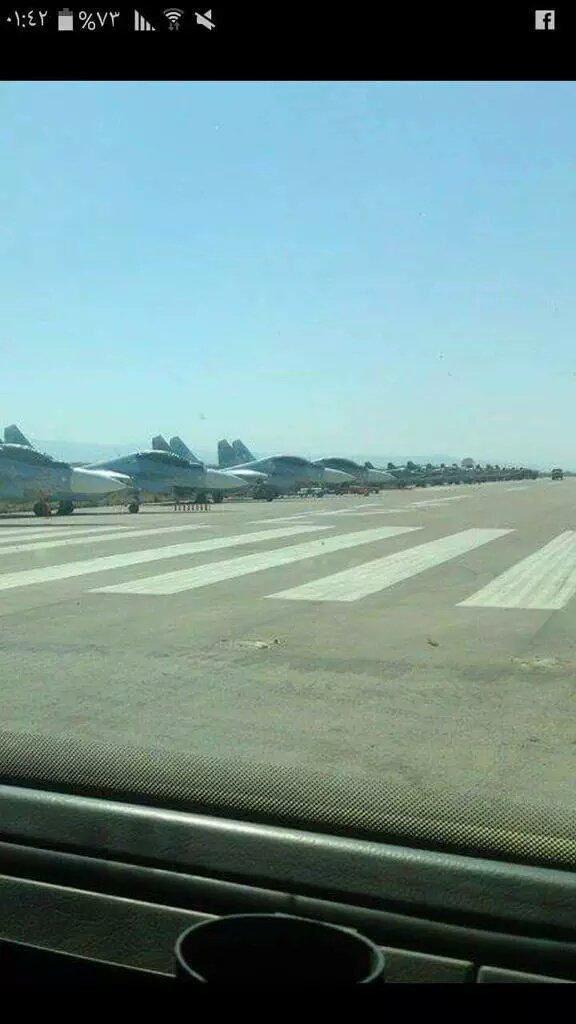
Jep, in Latakia. 28 in totaal.
Als Rusland serieus mee gaat doen is het hele land zo gezuiverd van terroristen.quote:
[..]
En in Nederland wordt er in de politieke discussie nu net gedaan dat wij ,met onze 4 f16s het verschil kunnen maken...
Betwijfel ik. Gaat nog decennia duren voordat 'the war on terror' is gewonnen.quote:
[..]
Als Rusland serieus mee gaat doen is het hele land zo gezuiverd van terroristen.
Wel in essentie kan je niet winnen, ze zullen altijd aanslagen e.d. kunnen plegen maar als we het hebben over terrein in bezit hebben: als Rusland daar serieus in is wat gaat IS daartegen beginnen dan? Syrië is geen onherbergzaam Afghanistan.quote:
[..]
Betwijfel ik. Gaat nog decennia duren voordat 'the war on terror' is gewonnen.
Wat houdt 'serieus in' dan? Syrie mag dan niet zo bergachtig zijn, maar het is een redelijke clusterfuck met geürbaniseerde gebieden.quote:
Wel in essentie kan je niet winnen, ze zullen altijd aanslagen e.d. kunnen plegen maar als we het hebben over terrein in bezit hebben: als Rusland daar serieus in is wat gaat IS daartegen beginnen dan? Syrië is geen onherbergzaam Afghanistan.
Terug naar zoals terreur 'bedoelt' is in ieder geval, geen grote stukken land, miljoenen mensen onder hun bedwang, maar kleine versplinterde cellen die af en toe hier en daar zullen slagen een aanslag te plegen.quote:
[..]
Wel in essentie kan je niet winnen, ze zullen altijd aanslagen e.d. kunnen plegen maar als we het hebben over terrein in bezit hebben.
Serieus als in met een volledige troepenmacht, ondersteund door een luchtmacht, lange afstands artillerie en tanks en BMPs plus andere gepantserde voertuigen en de SAA steden in gaan nemen. Wat willen die IS gasten dan gaan doen? Ja ze zullen er veel kunnen meenemen, maar hun gebied gaan ze kwijtraken.quote:
[..]
Wat houdt 'serieus in' dan? Syrie mag dan niet zo bergachtig zijn, maar het is een redelijke clusterfuck met geürbaniseerde gebieden.
Dat is een beetje de situatie van Irak voordat IS massaal gebied veroverde. Ik denk dat vele mensen direct zouden tekenen voor zo'n situatie.quote:
[..]
Terug naar zoals terreur 'bedoelt' is in ieder geval, geen grote stukken land, miljoenen mensen onder hun bedwang, maar kleine versplinterde cellen die af en toe hier en daar zullen slagen een aanslag te plegen.
Volledige troepenmacht gaat dus nooit gebeuren, en de build-up in Latakia lijkt daar ook geen aanleiding voor te geven.quote:
[..]
Serieus als in met een volledige troepenmacht, ondersteund door een luchtmacht, lange afstands artillerie en tanks en BMPs plus andere gepantserde voertuigen en de SAA steden in gaan nemen. Wat willen die IS gasten dan gaan doen? Ja ze zullen er veel kunnen meenemen, maar hun gebied gaan ze kwijtraken.
Ik zeg toch als. Dat geldt overigens ook voor een VN interventie. Leuk hoor die rebellengroepen, maar ze vormen geen match voor professionele legers.quote:
[..]
Volledige troepenmacht gaat dus nooit gebeuren, en de build-up in Latakia lijkt daar ook geen aanleiding voor te geven.
6 uur6 uur geleden
The 47th @THE_47th
This Assad Shabbeeh is now a "refugee" in Bremen, #Germany. He is a known mass murderer. His name is Layth Ayman
https://mobile.twitter.com/THE_47th/status/646256464948932608
The 47th @THE_47th
This Assad Shabbeeh is now a "refugee" in Bremen, #Germany. He is a known mass murderer. His name is Layth Ayman
https://mobile.twitter.com/THE_47th/status/646256464948932608
Exponentiële deflatie van Bitcoin maakt arme mensen nog veel sneller armer dan het grote probleem van inflatie. Gematigde burning van Ethereum is de gulden middenweg.
Dat is niet waar, goede guerillaoorlogsvoering is vaak uitermate efficient tegen een regulier leger. de SAA kan zich met de Russen wel verzekeren van betere en modernere luchtsteun. Tevens zijn de t90 tanks natuurlijk wat betr bestand tegen de at wapens van de rebellen.quote:
[..]
Ik zeg toch als. Dat geldt overigens ook voor een VN interventie. Leuk hoor die rebellengroepen, maar ze vormen geen match voor professionele legers.
Ik denk dat IS alleen maar groter wordt, want rusland gaat gematigde rebellen aanvallen die succesvol zijn tegen IS.
Exponentiële deflatie van Bitcoin maakt arme mensen nog veel sneller armer dan het grote probleem van inflatie. Gematigde burning van Ethereum is de gulden middenweg.
Knap dat je in de toekomst kan kijken, maar het klinkt als kletskoek. Ik denk eerder dat ze Nusra en ISIS aanvallen om een clash met de VS te voorkomen. Dit zijn ook de gevaarlijkste groepen, als deze 2 aangepakt worden is de grootste dreiging weg.quote:
Ik denk dat IS alleen maar groter wordt, want rusland gaat gematigde rebellen aanvallen die succesvol zijn tegen IS.
Say what?
Juist die "gematigde" rebellen zijn het probleem. het syrische leger kan niet meer op meerdere fronten vechten . Laten de russen en SAA vooral de fsa , al nusra en de andere splintergroepen aanpakken, dan kunnen de westerse landen en de koerden zich richten op isis.quote:
Ik denk dat IS alleen maar groter wordt, want rusland gaat gematigde rebellen aanvallen die succesvol zijn tegen IS.
Probleem is alleen dat die Koerden niet buiten hun normale gebieden gaan. Groot gelijk hebben ze ook.quote:
[..]
Juist die "gematigde" rebellen zijn het probleem. het syrische leger kan niet meer op meerdere fronten vechten . Laten de russen en SAA vooral de fsa , al nusra en de andere splintergroepen aanpakken, dan kunnen de westerse landen en de koerden zich richten op isis.
Leugenachtige wolven: Op vrijdag 15 januari 2016 01:20 schreef ClapClapYourHands het volgende:
Volgens berichten heeft het Turkse leger bombardementen uitgevoerd op Noord-Aleppo
12 jets vanuit Diyarbakir.
Volgens berichten heeft het Turkse leger bombardementen uitgevoerd op Noord-Aleppo
12 jets vanuit Diyarbakir.

quote:
Ik denk dat IS alleen maar groter wordt, want rusland gaat gematigde rebellen aanvallen die succesvol zijn tegen IS.
Daar heb ik dan niets van meegekregen dan, ik zie meer dat ze als meisjes wegrennen en dat ISIS dan een mooie collectie wapens meeneemt
Juist, bijna alle verliezen van de SAA hebben IS en Al-Nusra de grootste hand in gehad. Zijn die twee weg, kan men ook weer om de tafel gaan zitten. IS en Al-Nusra hebben daarin geen recht van spreken.quote:
[..]
Knap dat je in de toekomst kan kijken, maar het klinkt als kletskoek. Ik denk eerder dat ze Nusra en ISIS aanvallen om een clash met de VS te voorkomen. Dit zijn ook de gevaarlijkste groepen, als deze 2 aangepakt worden is de grootste dreiging weg.
Zoals ik zei zullen ze in staat zijn om veel soldaten mee te nemen, maar als er een echt professioneel leger komt zijn ze gewoon weg op de lange termijn, ze zullen dan zijn veroordeeld tot bomaanslagen op burgers en militairen. Al is het maar omdat als professionele legers vanuit mandaten handelen ze juist vanuit de grens kunnen komen en ze gelijk aanvoerlijnen vanuit bijvoorbeeld Jordanië en Turkije kunnen aanpakken.quote:
[..]
Dat is niet waar, goede guerillaoorlogsvoering is vaak uitermate efficient tegen een regulier leger. de SAA kan zich met de Russen wel verzekeren van betere en modernere luchtsteun. Tevens zijn de t90 tanks natuurlijk wat betr bestand tegen de at wapens van de rebellen.
quote:US-trained Division 30 rebels 'betrayed US and hand weapons over to al-Qaeda's affiliate in Syria'
Pentagon-trained rebels are reported to have betrayed US and handed weapons over to Jabhat al-Nusra immediately after entering Syria
http://www.telegraph.co.u(...)iliate-in-Syria.html
