POL Politiek
Discussies en diepgaande gesprekken over de politiek in de breedste zin van het woord kun je hier voeren.



Dit volledig los zien van Corbyn wordt ook niet ondersteund door de feiten. Zijn approval rating ging van -29 naar +38. Scoort veel hoger dan May.
Have I got News for You was van de week weer echt geweldig
Chicken Theresa May, Thin skinned, boneless and refuses to be grilled
Chicken Theresa May, Thin skinned, boneless and refuses to be grilled

In Baden-Badener Badeseen kann man Baden-Badener baden sehen.
Zou goed kunnen ja. En dan de EU weer de schuld geven als het niet luktquote:Op zaterdag 10 juni 2017 10:51 schreef Old_Pal het volgende:
Ik voorspel een "no deal" dus een keiharde Brexit. De politiek in de UK is zo instabiel en dat zal nog wel lang duren. Elke overeenkomst die een Brits onderhandelingsteam in de wacht sleept zal worden afgeschoten door de achterban. Uiteindelijk dus een 'no deal.'
Europas en het UK staan dan tegenover elkaar net als Europa en de VS. Het Westers machtsblok fragmenteert meer en meer.

Heeft Theresa May toch iets belangrijks bereikt, Jongeren nemen weer interesse in politiek.quote:Op zaterdag 10 juni 2017 11:00 schreef _-_ratjetoe_-_ het volgende:
[..]
De algemene analyse zowel vooraf als achteraf was dat zowel May als Corbyn niet goed scoorden op het onderwerp terrorisme.
Deze uitslag mag dan als een verrassing komen, er waren al peilingen die een verschil van slechts 1% punt voorspelden. Het grote verschil met de peilingen die ~7% punt verschil voorspelden was de inschatting van de opkomst van de jongeren. De laatste hebben dat gebaseerd op opkomst in eerdere verkiezingen, en hebben daarmee onderschat dat er nu wel wat is gaan spelen onder jongeren.
In Baden-Badener Badeseen kann man Baden-Badener baden sehen.
De EU de schuld geven doet iedere Europese regering, inpopulaire maatregel? Maar het moet van Brussel!quote:
[..]
Zou goed kunnen ja. En dan de EU weer de schuld geven als het niet lukt
In Baden-Badener Badeseen kann man Baden-Badener baden sehen.

Dat komt natuurlijk vooral doordat die jongeren zich kapot zijn geschrokken van de Brexit.quote:
[..]
Heeft Theresa May toch iets belangrijks bereikt, Jongeren nemen weer interesse in politiek.
Yankee go home!
Meer dan van Collegegeld blijkbaarquote:Op zaterdag 10 juni 2017 11:10 schreef remlof het volgende:
[..]
Dat komt natuurlijk vooral doordat die jongeren zich kapot zijn geschrokken van de Brexit.
In Baden-Badener Badeseen kann man Baden-Badener baden sehen.
En dat zij de schuld er (mede) van kregen.quote:
[..]
Dat komt natuurlijk vooral doordat die jongeren zich kapot zijn geschrokken van de Brexit.

Net daarvoor vind ik nog leuker: "What Brexit needs is a bloody difficult woman. Luckily that's just what Germany has got."quote:
Have I got News for You was van de week weer echt geweldig
Chicken Theresa May, Thin skinned, boneless and refuses to be grilled

Wow, wat een monoloog. Prachtig, die oprechtheid.twitter:kylegriffin1 twitterde op zaterdag 10-06-2017 om 01:47:29 Quite the opening from @jonsnowC4 on Channel 4 following the U.K. election. https://t.co/bS4RZp2Rjn reageer retweet
 Quite the opening from @
Het begon al met het EU-referendum. Dat werd gevoerd met leugens, manipulatie en lege beloftes van o.a. Brexit-aanvoerder Boris Johnson die gebaseerd waren op waanideeën en wensdenken. Het gevolg was dat miljoenen Britten voor een optie kozen die helemaal niet op het menu stond: niet langer de nadelen (lees: verplichtingen) van de EU, wel alle voordelen. Heel anders dan Macron in Frankrijk: die schetste aan het volk wel de dilemma's. Macron kreeg het mandaat, May niet.quote:
[..]
Ik verwacht dat ook. Ook omdat het VK nu al een half jaar heeft verprutst. De onderhandelingen moeten nog beginnen. May heeft niet het duidelijke mandaat waar ze om gevraagd heeft en zoals je zegt is de politieke situatie in het VK instabiel.
Wel jammer, want een keiharde Brexit is slecht voor zowel de EU als het VK. Een Noorwegen-achtige deal zou veel gunstiger zijn.
"Vroeger toen alles beter was, was alles slechter"
Wilders levert alleen commentaar als hij er voordeel uit kan halen.quote:
Heeft Wilders al commentaar geleverd over deze bullshit?

 .
.
Joris Luyendijk gelezen?quote:
[..]
Het begon al met het EU-referendum. Dat werd gevoerd met leugens, manipulatie en lege beloftes van o.a. Brexit-aanvoerder Boris Johnson die gebaseerd waren op waanideeën en wensdenken. Het gevolg was dat miljoenen Britten voor een optie kozen die helemaal niet op het menu stond: niet langer de nadelen (lees: verplichtingen) van de EU, wel alle voordelen. Heel anders dan Macron in Frankrijk: die schetste aan het volk wel de dilemma's. Macron kreeg het mandaat, May niet.
De volgende keer komen ze wel opdagen voor een referendum ?quote:
En daarvoor, die Anglikaans Dominee die zegt aan de stoelen te ruiken, en zich beseft wat ie net zei..quote:
[..]
Net daarvoor vind ik nog leuker: "What Brexit needs is a bloody difficult woman. Luckily that's just what Germany has got."
In Baden-Badener Badeseen kann man Baden-Badener baden sehen.
Hij zal wel zwijgen. Om nou nog te gaan roepen dat we hier een Nexit nodig hebben, of een leider als Trump, ik weet niet hoe succesvol dat zou zijn.....quote:
[..]
Wilders levert alleen commentaar als hij er voordeel uit kan halen.
Toch wel goed voor zo'n 20 zetels denk ik en dat is meer dan genoeg om zijn baantje veilig te stellen en niet teveel zodat hij niet moet regeren. De ideale uitslag voor hem want hij kan mooi langs de zijlijn blijven roepen.quote:
[..]
Hij zal wel zwijgen. Om nou nog te gaan roepen dat we hier een Nexit nodig hebben, of een leider als Trump, ik weet niet hoe succesvol dat zou zijn.....
Maar ik helemaal niks meer van hem. Geen gejuich over Trump of Brexit. Nada, nop, niemendal!quote:
[..]
De ideale uitslag voor hem want hij kan mooi langs de zijlijn blijven roepen.
Terwijl hij toch ook graag net zo succesvol wil zijn!
Haar twee adviseurs, Fiona Hill en Nick Timothy, zijn gedumpt. May moet voorlopig aanblijven.
https://www.theguardian.c(...)-recriminations-growquote:May’s ‘abusive’ top staff removed as recriminations grow over poll failure
The two aides, who were joint chiefs of staff, have been widely blamed for both strategic and policy failings during the campaign and had become increasingly unpopular among ministers and MPs for their abrasive styles and refusal to listen to advice even from cabinet ministers.
Gavin Barwell, a former minister ousted in the election, was named as their replacement on Saturday night. May said Barwell, who lost his Croydon Central seat on Thursday, would bring “considerable experience” to the job.
The removal of Hill and Timothy from Downing Street is a stark demonstration of May’s weakness in the aftermath of an election that has left the prime minister clinging to power, stripped of an outright majority, and lacking the mandate for Brexit that she sought. She is now deprived of the two people she had trusted most and who were with her during her transition from the Home Office to No 10.
The two had built their own power bases around the PM and in so doing made enemies as they shielded her from outside advice. They also became the most feared figures in Whitehall, wielding more influence over May than most cabinet members.
[..]
In a further demonstration of May’s weakness, the process of reappointing cabinet ministers to their current jobs has proved difficult as ministers have insisted on conditions for carrying on and backing her. It is understood that the chancellor Philip Hammond asked for more say over Brexit on his reappointment. On being returned to his job, he tweeted he wanted a deal that “supports British jobs, business and prosperity”.
Boris Johnson, said to be ready to make another bid for the leadership if May goes, attempted to extract an even higher price as he was reappointed as foreign secretary. Sources suggested he had asked for control of the UK’s aid budget, currently overseen by the Department for International Development.
Most Tories said on Saturday May was so isolated that she should survive only long enough to oversee a reasonable transition. “She has no long-term future, clearly, but has a duty to stay for now,” one former minister said.
[..]
Iain Duncan Smith, the former party leader, said it would be “suicide” for anyone to launch a leadership bid ahead of talks on Brexit which begin next week. But there was close to unanimous agreement that the advisers had to go. “It’s unacceptable for her to send sweary texts to cabinet ministers,” said another member of cabinet, who described Hill telling a senior government figure to “fuck off”.
But Charles Walker, a senior member of the 1922 Committee, said, before the two resigned, that such a move was not necessary. “I am pissed off with everyone sounding off. Everyone should shut the fuck up and get on with making sure we can run the country.”
are we infinite or am I alone
Fiona of Nick op een solicitatie gesprek,quote:
Haar twee adviseurs, Fiona Hill en Nick Timothy, zijn gedumpt. May moet voorlopig aanblijven.
[..]
https://www.theguardian.c(...)-recriminations-grow
U heeft een geweldig cv. U was adviseur van de PM? Waarom bent u daar weggegaan?
- Ik adviseerde vervroegde verkiezingen
Next!
In Baden-Badener Badeseen kann man Baden-Badener baden sehen.
Ja hè, tegen homosexualiteit, tegen abortus, voor de doodstraf, banden met terroristische bewegingen... echt lekkere partner voor May!quote:
[ Bericht 1% gewijzigd door #ANONIEM op 11-06-2017 00:40:22 ]
Jammer dat Osborne uit de commons is, mooie kans geweest en ultieme wraak.quote:
Haar twee adviseurs, Fiona Hill en Nick Timothy, zijn gedumpt. May moet voorlopig aanblijven.
[..]
https://www.theguardian.c(...)-recriminations-grow
Op donderdag 11 oktober 2012 19:49 schreef Tem het volgende:
Bis bis bis
Op maandag 17 december 2012 22:25 schreef KoosVogels het volgende:
Wij krijgen niks voor kerst van de baas. Alleen een trap onder de reet en een stuk steenkool.
Bis bis bis
Op maandag 17 december 2012 22:25 schreef KoosVogels het volgende:
Wij krijgen niks voor kerst van de baas. Alleen een trap onder de reet en een stuk steenkool.
May wankelt 2/3 van de partij wil haar weg hebben.
Boris Johnson weer in beeld als vervanger:
http://www.express.co.uk/news/uk/815619/boris-johnson-prime-minister-theresa-may-tories-general-election-dup
Hoewel die onderhandelingen ook niet vlekkeloos gaan:
[ Bericht 22% gewijzigd door Nintex op 11-06-2017 01:36:55 ]
Boris Johnson weer in beeld als vervanger:
http://www.express.co.uk/news/uk/815619/boris-johnson-prime-minister-theresa-may-tories-general-election-dup
Hij zegt publiekelijk May te steunen, maar volgens geruchten gaan een aantal conservative MP's May vragen op te stappen en Boris vragen om haar plaats in te nemen. De samenwerking met de DUP zien ze niet zitten.twitter:MsHelicat twitterde op zaterdag 10-06-2017 om 22:31:13 MAIL ON SUNDAY: Boris set to launch bid to be PM as May clings on #tomorrowspaperstoday #bbcpapers https://t.co/12DFS4LK5k reageer retweet
 MAIL ON SUNDAY: Boris set to launch bid to be PM as May clings on
 Hoewel die onderhandelingen ook niet vlekkeloos gaan:
twitter:skydavidblevins twitterde op zondag 11-06-2017 om 01:23:21 BREAK: DUP has NOT yet reached any agreement with the Tories. Sky sources: Downing Street issued the wrong statement in error. reageer retweet
 BREAK: DUP has NOT yet reached any agreement with the Tories. Sky sources: Downing Street issued the wrong statement in error.
 [ Bericht 22% gewijzigd door Nintex op 11-06-2017 01:36:55 ]
May blijft echt geen 5 jaar. Dit is de ideale scenario voor Corbyn en Labour die een coalition of chaos heeft moeten sluiten met de DUP en de brexit onderhandelingen moeten doen. Het is prijsschieten op May en de conservatieven nu
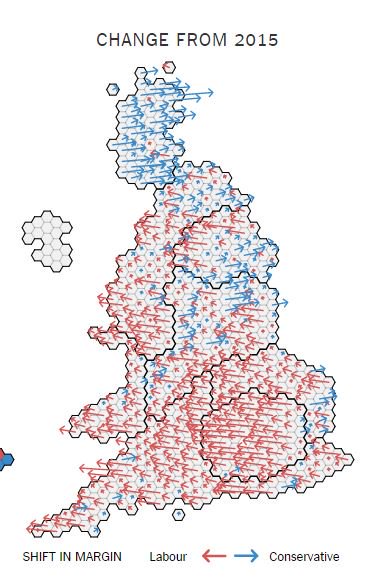
Conservatieven hebben veel verloren in het zuiden hun strongholds en London terwijl de winst in het noorden van engeland de rust belt te klein is om zetels te winnen
Meerdere politici waarschuwen voor het effect op de situatie in N-Ierland. Er is nog steeds geen executieve in Stormont na de val van de vorige assembly door een schandaal rond Arlene Foster, de leider van de DUP (een initiatief dat het gebruik van hernieuwbare energie, houtpellets, voor verwarming stimuleerde kostte de belastingbetaler 400 miljoen pond. Men betaalde veel te hoge vergoedingen, één boer zou een miljoen pond verdiend hebben met een lege schuur die hij voor dat doel gehuurd had).
Hoe kan de Britse regering onpartijdig bemiddelen wanneer ze afhankelijk is van de steun van de DUP?
Jonathan Powell, Tory, chief negotiator in N-Ierland van 1997 tot 2007:
Hoe kan de Britse regering onpartijdig bemiddelen wanneer ze afhankelijk is van de steun van de DUP?
Jonathan Powell, Tory, chief negotiator in N-Ierland van 1997 tot 2007:
https://www.theguardian.c(...)s-20-years-hard-workquote:Mrs May’s deal with the DUP threatens 20 years hard work in Ireland
Mrs May agreed a loose alliance with the Northern Irish Democratic Unionist party (DUP) yesterday to prop up her government. I believe this is a terrible mistake with lasting consequences and not just for the very valid reasons raised by Ruth Davidson, leader of the Scottish Tories, about the DUP’s attitudes to LGBTI rights.
Since 1990, the British government has been neutral in Northern Ireland, backing neither the unionists nor the nationalists. Peter Brooke, the Tory Northern Ireland secretary at the time, made a speech saying Britain had no selfish strategic or economic interests in Northern Ireland. Our aim since then has been to find an agreement that both sides could live with.
That was the basis for the peace negotiations in Northern Ireland, which allowed us to be an honest broker between the sides and reach the Good Friday agreement in 1998. And it has been the basis ever since under which we have resolved problems between unionists and nationalists that have disrupted the implementation of the peace agreement that ended 30 years of war.
No British government since then, Conservative or Labour, has chosen sides. Even John Major, when his political support in the House of Commons was at its most parlous, never took the step of relying on unionist MPs to save his government because he knew that to do so would make it impossible for him to play the role of mediator in Northern Ireland.
We have had a political crisis in Northern Ireland since the collapse of the executive last year over a heating scandal implicating Arlene Foster, the leader of the DUP. The government, together with the Irish government, has been trying to resolve the standoff by bringing the two sides together in talks. So far, they have not succeeded but when the dust has settled after the election they will have to try again. If they fail, the choice is between direct rule from Whitehall, which is considered illegitimate by nationalists and the Irish government, or new elections, which nobody wants.
If Mrs May depends on the DUP – Ian Paisley’s party, not the old Official Unionists, who used in the past to work with the Tories – to form a government, it will be impossible for it to be even-handed. The other parties in Northern Ireland will know that the unionists can pull the plug at any stage and hold the government hostage.
If the British government cannot play the role of mediator it is not obvious who can. A previous attempt to use a distinguished American diplomat failed because only the British and Irish governments have the levers to cajole the parties into an agreement. Failure to reach agreement will catapult Northern Ireland into a serious crisis and back on to our front pages, where it has been happily absent for 20 years.
I know that Mrs May is desperate to find some way to cling on to power in Westminster, but I appeal to her to reconsider doing so propped up by one side from Northern Ireland politics. Doing so would risk undermining 20 years of hard work in trying to reach a lasting settlement.
are we infinite or am I alone


Haar nieuwe achternaam, Maybe.quote:
[..]
Hmm May heeft iets van 9 u turns gemaakt sinds de verkiezingen? Er kan een hoop gebeuren tot 2019 lijkt me, en de DUP is voor een soft brexit, met open grenzen, dus ik zou er niet teveel op inzetten.
De waarheid in iemands hoofd is vaak onbuigzamer dan het sterkste staal.


Tweet van het jaar.quote:Op zaterdag 10 juni 2017 08:57 schreef crystal_meth het volgende:
"Official Twitter Account For The UK's Largest Network of Policing Forums"twitter:PolComForum twitterde op vrijdag 09-06-2017 om 16:33:53 Dear Theresa, it's not the number of MPs that counts it's how you use them. You have to do more with less that's all 😂👏👍 reageer retweet
 Dear Theresa, it's not the number of MPs that counts it's how you use them. You have to do more with less that's all 😂👏👍
De waarheid in iemands hoofd is vaak onbuigzamer dan het sterkste staal.

Erg heldere analyse bij de NYRB van de uitslag.
[ Bericht 0% gewijzigd door Maxerazzi op 11-06-2017 09:50:34 ]
quote:Britain: The End of a Fantasy
Fintan O'Toole
To understand the sensational outcome of the British election, one must ask a basic question. What happens when phony populism collides with the real thing?
Last year’s triumph for Brexit has often been paired with the rise of Donald Trump as evidence of a populist surge. But most of those joining in with the ecstasies of English nationalist self-assertion were imposters. Brexit is an elite project dressed up in rough attire. When its Oxbridge-educated champions coined the appealing slogan “Take back control,” they cleverly neglected to add that they really meant control by and for the elite. The problem is that, as the elections showed, too many voters thought the control should belong to themselves.
Theresa May is a classic phony Brexiter. She didn’t support it in last year’s referendum and there is no reason to think that, in private, she has ever changed her mind. But she saw that the path to power led toward the cliff edge, from which Britain will take its leap into an unknown future entirely outside the European Union. Her strategy was one of appeasement—of the nationalist zealots in her own party, of the voters who had backed the hard-right UK Independence Party (UKIP), and of the hysterically jingoistic Tory press, especially The Daily Mail.
The actual result of the referendum last year was narrow and ambiguous. Fifty-two percent of voters backed Brexit but we know that many of them did so because they were reassured by Boris Johnson’s promise that, when it came to Europe, Britain could “have its cake and eat it.” It could both leave the EU and continue to enjoy all the benefits of membership. Britons could still trade freely with the EU and would be free to live, work, and study in any EU country just as before. This is, of course, a childish fantasy, and it is unlikely that Johnson himself really believed a word of it. It was just part of the game, a smart line that might win a debate at the Oxford Union.
But what do you do when your crowd-pleasing applause lines have to become public policy? The twenty-seven remaining member states of the EU have to try to extract a rational outcome from an essentially irrational process. They have to ask the simple question: What do you Brits actually want? And the answer is that the Brits want what they can’t possibly have. They want everything to change and everything to go as before. They want an end to immigration—except for all the immigrants they need to run their economy and health service. They want it to be 1900, when Britain was a superpower and didn’t have to make messy compromises with foreigners.
To take power, May had to pretend that she, too, dreams these impossible dreams. And that led her to embrace a phony populism in which the narrow and ambiguous majority who voted for Brexit under false pretences are be reimagined as “the people.”
This is not conservatism—it is pure Rousseau. The popular will had been established on that sacred referendum day. And it must not be defied or questioned. Hence, Theresa May’s allies in The Daily Mail using the language of the French revolutionary terror, characterizing recalcitrant judges and parliamentarians as “enemies of the people” and “saboteurs.”
This is why May called an election. Her decision to do so—when she had a working majority in parliament—has been seen by some as pure vanity. But it was the inevitable result of the volkish rhetoric she had adopted. A working majority was not enough—the unified people must have a unified parliament and a single, uncontested leader: one people, one parliament, one Queen Theresa to stand on the cliffs of Dover and shake her spear of sovereignty at the damn continentals.
And the funny thing is that this seemed possible. As recently as late April, with the Labour Party in disarray and its leftist leader Jeremy Corbyn deemed unelectable, the polls were putting the Tories twenty points ahead and telling May that her coronation was inevitable. All she had to do was repeat the words “strong and stable” over and over and Labour would be crushed forever. The opposition would be reduced to a token smattering of old socialist cranks and self-evidently traitorous Scots. Britain would become in effect a one-party Tory state. An overawed Europe would bow before this display of British staunchness and concede a Brexit deal in which supplies of cake would be infinitely renewed.
There were three problems. Firstly, May demanded her enormous majority so that she could ride out into the Brexit battle without having to worry about mutterings in the ranks behind her. But she has no clue what the battle is supposed to be for. Because May doesn’t actually believe in Brexit, she’s improvising a way forward very roughly sketched out by other people. She’s a terrible actor mouthing a script in which there is no plot and no credible ending that is not an anti-climax. Brexit is a back-of-the-envelope proposition. Strip away the post-imperial make-believe and the Little England nostalgia, and there’s almost nothing there, no clear sense of how a middling European country with little native industry can hope to thrive by cutting itself off from its biggest trading partner and most important political alliance.
May demanded a mandate to negotiate—but negotiate what exactly? She literally could not say. All she could articulate were two slogans: “Brexit means Brexit” and “No deal is better than a bad deal.” The first collapses ideology into tautology. The second is a patent absurdity: with “no deal” there is no trade, the planes won’t fly and all the supply chains snap. To win an election, you need a convincing narrative but May herself doesn’t know what the Brexit story is.
Secondly, if you’re going to try the uno duce, una voce trick, you need a charismatic leader with a strong voice. The Tories tried to build a personality cult around a woman who doesn’t have much of a personality. May is a common or garden Home Counties conservative politician. Her stock in trade is prudence, caution, and stubbornness. The vicar’s daughter was woefully miscast as the Robespierre of the Brexit revolution, the embodiment of the British popular will sending saboteurs to the guillotine. She is awkward, wooden, and, as it turned out, prone to panic and indecision under pressure.
But to be fair to May, her wavering embodied a much deeper set of contradictions. Those words she repeated so robotically, “strong and stable,” would ring just as hollow in the mouth of any other Conservative politician. This is a party that has plunged its country into an existential crisis because it was too weak to stand up to a minority of nationalist zealots and tabloid press barons. It is as strong as a jellyfish and as stable as a flea.
Thirdly, the idea of a single British people united by the Brexit vote is ludicrous. Not only do Scotland, Northern Ireland, and London have large anti-Brexit majorities, but many of those who did vote for Brexit are deeply unhappy about the effects of the Conservative government’s austerity policies on healthcare, education, and other public services. (One of these services is policing, and May’s direct responsibility for a reduction in police numbers neutralized any potential swing toward the Conservatives as a result of the terrorist attacks in Manchester and London.)
This unrest found a voice in Corbyn’s unabashedly left-wing Labour manifesto, with its clear promises to end austerity and fund better public services by taxing corporations and the very wealthy. May’s appeal to “the people” as a mystic entity came up against Corbyn’s appeal to real people in their daily lives, longing not for a date with national destiny but for a good school, a functioning National Health Service, and decent public transport. Phony populism came up against a more genuine brand of anti-establishment radicalism that convinced the young and the marginalized that they had something to come out and vote for.
In electoral terms, of course, the two forces have pretty much canceled each other out. May will form a government with the support of the Protestant fundamentalist Democratic Unionist Party from Northern Ireland. That government will be weak and unstable and it will have no real authority to negotiate a potentially momentous agreement with the European Union. Brexit is thus far from being a done deal: it can’t be done without a reliable partner for the EU to negotiate with. There isn’t one now and there may not be one for quite some time—at least until after another election, but quite probably not even then. The reliance on a spurious notion of the “popular will” has left Britain with no clear notion of who “the people” are and what they really want.
[ Bericht 0% gewijzigd door Maxerazzi op 11-06-2017 09:50:34 ]
Ian Hislop is echt briljant op dit soort momenten.quote:
Have I got News for You was van de week weer echt geweldig
Chicken Theresa May, Thin skinned, boneless and refuses to be grilled
Toevallig ook Frankie Boyles New World Order gezien?
'Theresa May is de eerste nazi in de geschiedenis die er niet in slaagt de treinen op tijd te laten rijden'
Verder een interessante analyse van de veranderende rol van de journalistiek tijdens verkiezingen.
We Came A Long Time Ago
Nine Nine Two - But You Did Not Know
Nine Nine Two - But You Did Not Know
Maar wel Brexit!quote:
Conservatieven brengen alleen armoede, chaos, ellende en haat.

Dat hebben de Britten toch echt netjes zelf gedaan als volk, niet alleen conservatieven. Daar zijn er ook niet genoeg van en die zijn bovendien niet eensgezind.quote:
Hulde!quote:
[..]
Dat hebben de Britten toch echt netjes zelf gedaan als volk, niet alleen conservatieven.
Hij is leuk, dank voor de tipquote:
[..]
Ian Hislop is echt briljant op dit soort momenten.
Toevallig ook Frankie Boyles New World Order gezien?
'Theresa May is de eerste nazi in de geschiedenis die er niet in slaagt de treinen op tijd te laten rijden'
Verder een interessante analyse van de veranderende rol van de journalistiek tijdens verkiezingen.

In Baden-Badener Badeseen kann man Baden-Badener baden sehen.
En dus brengen de Conservatieven armoede, chaos, ellende, verminderde burgerrechten en haat.quote:
"Vroeger toen alles beter was, was alles slechter"
Brexit had een grotere meerderheid dan de Conservatieven.quote:
[..]
En dus brengen de Conservatieven armoede, chaos, ellende, verminderde burgerrechten en haat.
In Baden-Badener Badeseen kann man Baden-Badener baden sehen.
Onder ouderen ja.quote:
[..]
Brexit had een grotere meerderheid dan de Conservatieven.
"Vroeger toen alles beter was, was alles slechter"
Maar daar hoeft nu niemand iets voor te doen. Dat gaat helemaal vanzelf. Alleen moeten de Tories zorgen dat de inwoners er zo min mogelijk last van hebben.quote:
Ik vraag me af of een harde Brexit of uit uit de EU vallen zonder overeenkomst een goede ruil is voor het recht om kromme bananen te verkopen. Maar we zullen zien.
Nee, in totaal 51,9% van de kiezers stemde leave.quote:
In Baden-Badener Badeseen kann man Baden-Badener baden sehen.
En laten we wel zijn, ook Labour heeft geen campagne gevoerd Brexit terug te draaien.
In Baden-Badener Badeseen kann man Baden-Badener baden sehen.
Zolang de EU niet als opvanghuis voor economische gelukszoekers uit het VK gaan dienen is dat niet ons probleem.quote:Op zondag 11 juni 2017 10:14 schreef 99.999 het volgende:
Het volk zal nog wel flink spijt krijgen van haar keuze voor een Brexit.
We zullen er ook wel wat van meekrijgen natuurlijk.quote:
[..]
Zolang de EU niet als opvanghuis voor economische gelukszoekers uit het VK gaan dienen is dat niet ons probleem.
Frankie Boyle over de Britten die weer terug moeten naar de UK na Brexitquote:
[..]
Zolang de EU niet als opvanghuis voor economische gelukszoekers uit het VK gaan dienen is dat niet ons probleem.
Wat is je skill set?
Oh, ik kan in Spaans om de rekening vragen, en gewapende overvallen..
In Baden-Badener Badeseen kann man Baden-Badener baden sehen.
Op basis waarvan?quote:
[..]
Nee, in totaal 51,9% van de kiezers stemde leave.
Het EU-referendum werd door de Brexiteers gevoerd met leugens, manipulatie en lege beloftes die gebaseerd waren op waanideeën en wensdenken. Bijvoorbeeld: "het VK vertekt uit de EU maar behoudt ALLE voordelen van een lidmaatschap".
Het gevolg was dat miljoenen Britten voor een optie kozen die helemaal niet kan worden gerealiseerd: geen verplichtingen meer van de EU, wel alle benefits.
"Vroeger toen alles beter was, was alles slechter"
