NWS Nieuws & Achtergronden
Discussieer hier diepgaander over de actualiteiten.



na de farce:
....... The charm of any U.N. Security Council resolution lies in the preamble, which invariably begins by "recalling" all previous resolutions on the same subject that have been entirely ignored, therefore necessitating the current resolution. Hence newly minted Resolution 1701: Before mandating the return of south Lebanon to Lebanese government control, it lists the seven Security Council resolutions going back 28 years that have demanded the same thing.
We are to believe, however, that this time the United Nations means it. Yet, the fact that responsibility for implementation is given to Kofi Annan's office -- not known for integrity, competence or neutrality -- betrays a certain unseriousness about the enterprise from the very beginning...........
op naar ronde 2
....... Yet, within days, these assurances are already fraying. Hezbollah has declared that it will not disarm. The Siniora government in Beirut has acquiesced in a "don't ask, don't tell" deal in which Hezbollah retains its entire infrastructure south of the Litani -- bunkers, weapons, fighters -- with the cosmetic proviso that none will be displayed very openly. No strutting, but everything remains in place awaiting the order to restart the war when the time is right.......
met nieuwe kansen:
The stakes are high. Not so much for Israel, which in the end will take care of itself. By the now-inevitable Round Two, Israel will have rejected the failed Olmert-led exercise in hesitancy and will have new leadership, new tactics and new equipment (for example, expensive new plating for its tanks, which were so vulnerable to advanced Iranian antitank weaponry).
What is most at stake, from the American perspective, is Lebanon.......
http://www.washingtonpost(...)AR2006081701190.html
....... The charm of any U.N. Security Council resolution lies in the preamble, which invariably begins by "recalling" all previous resolutions on the same subject that have been entirely ignored, therefore necessitating the current resolution. Hence newly minted Resolution 1701: Before mandating the return of south Lebanon to Lebanese government control, it lists the seven Security Council resolutions going back 28 years that have demanded the same thing.
We are to believe, however, that this time the United Nations means it. Yet, the fact that responsibility for implementation is given to Kofi Annan's office -- not known for integrity, competence or neutrality -- betrays a certain unseriousness about the enterprise from the very beginning...........
op naar ronde 2

....... Yet, within days, these assurances are already fraying. Hezbollah has declared that it will not disarm. The Siniora government in Beirut has acquiesced in a "don't ask, don't tell" deal in which Hezbollah retains its entire infrastructure south of the Litani -- bunkers, weapons, fighters -- with the cosmetic proviso that none will be displayed very openly. No strutting, but everything remains in place awaiting the order to restart the war when the time is right.......
met nieuwe kansen:
The stakes are high. Not so much for Israel, which in the end will take care of itself. By the now-inevitable Round Two, Israel will have rejected the failed Olmert-led exercise in hesitancy and will have new leadership, new tactics and new equipment (for example, expensive new plating for its tanks, which were so vulnerable to advanced Iranian antitank weaponry).
What is most at stake, from the American perspective, is Lebanon.......
http://www.washingtonpost(...)AR2006081701190.html


excuse me????????????quote:Op zaterdag 19 augustus 2006 14:52 schreef -scorpione- het volgende:
[..]
Hoe je het ook noemt, je kunt het eens met ze zijn of niet, maar iedereen heeft de keuze een leger op te starten.
dus als ik morgen wat wapens een oude leopard gevechtstank en 2 of 3 buren om me heen verzamel en het het regiment huzaren van sp3c noem krijg ik geen klachten van de politie?
het gaat er niet om wat Hezbollah denkt maar om wat Libanon denkt, de regering vind dat ze moeten ontwapenen dus moeten ze dat maar gaan doenquote:Als men bij Hezbollah denkt dat ze bestaansrecht hebben, wie zijn anderen dan om daar wat van te zeggen? Ja ok, je mag er wat van zeggen, maar je kunt niet bepalen of ze er mogen zijn of niet.
Op zondag 8 december 2013 00:01 schreef Karina het volgende:
Dat gaat me te diep sp3c, daar is het te laat voor.
Dat gaat me te diep sp3c, daar is het te laat voor.

Jij mag toch zelf bepalen of je je iets aan trekt van die zogenaamde autoriteiten?quote:Op zaterdag 19 augustus 2006 15:09 schreef sp3c het volgende:
[..]
excuse me????????????
dus als ik morgen wat wapens een oude leopard gevechtstank en 2 of 3 buren om me heen verzamel en het het regiment huzaren van sp3c noem krijg ik geen klachten van de politie?
[..]
het gaat er niet om wat Hezbollah denkt maar om wat Libanon denkt, de regering vind dat ze moeten ontwapenen dus moeten ze dat maar gaan doen
Naja, geschiedenis zat, maar als je na 2000 jaar opeens zegt "dit stuk grond is exclusief van ons" dan kan ik me voorstellen dat dit voor bepaalde partijen in die regio er moeilijk te slikken is.quote:Op zaterdag 19 augustus 2006 14:52 schreef -scorpione- het volgende:
En de Arabische wereld is Israel natuurlijk niet zomaar opgedrongen. Alsof er voor de oprichting van Israel vorige eeuw geen geschiedenis is geweest.
Yep, dat is het meest interessante aan de discussie wellicht, een filosofisch vraagstuk, hoe ver mag men terug in de tijd gaan?quote:Denken dat de status quo hoort zoals die is is de grootste valkuil waar mensen indonderen tijdens discussies. Hell, we kunnen zelfs van de VS roepen dat ze het land terug moeten geven aan de Indianen.

Kijk, eigenlijk kan je daar nog een laag onder vinden, waarom zouden we terug in de tijd gaan, leef in het hier en nu, samen, met elkaar, voor elkaar, en zeur niet, maar heb vooral veel plezier

O, ye Fountains, Meadows, Hills, and Groves
In theorie kan je stellen dat niemand iets voor iemand anders kan bepalen inderdaad, dat is volgens mij wat je bedoelt.quote:Op zaterdag 19 augustus 2006 15:18 schreef -scorpione- het volgende:
Jij mag toch zelf bepalen of je je iets aan trekt van die zogenaamde autoriteiten?
Probleem is alleen wanneer iemand anders bepaalt om jou te laten stoppen met bepalen

O, ye Fountains, Meadows, Hills, and Groves
tot op zekere hoogte ja, op een gegeven moment beginnen ze deuren in te trappen en met pistolen in de rondte te schietenquote:Op zaterdag 19 augustus 2006 15:18 schreef -scorpione- het volgende:
[..]
Jij mag toch zelf bepalen of je je iets aan trekt van die zogenaamde autoriteiten?
Op zondag 8 december 2013 00:01 schreef Karina het volgende:
Dat gaat me te diep sp3c, daar is het te laat voor.
Dat gaat me te diep sp3c, daar is het te laat voor.
Het is jouw keuze om dit risico te nemen.quote:Op zaterdag 19 augustus 2006 15:23 schreef sp3c het volgende:
[..]
tot op zekere hoogte ja, op een gegeven moment beginnen ze deuren in te trappen en met pistolen in de rondte te schieten
Nou, waar haalt een groep mensen het recht vandaan een stuk grond zich eigen te maken? Mbt grootgrondbezitters die stukken land al sinds de middeleeuwen in bezit hebben is deze vraag nog interessanter dan met landen en regeringen. Ik kan er maar niet achter komen hoe dit is ontstaan en waarom we dat nog pikken.quote:Op zaterdag 19 augustus 2006 15:20 schreef Hallulama het volgende:
Kijk, eigenlijk kan je daar nog een laag onder vinden, waarom zouden we terug in de tijd gaan, leef in het hier en nu, samen, met elkaar, voor elkaar, en zeur niet, maar heb vooral veel plezier
De Franse versterkingen voor UNIFIL begonnen vandaag binnen te druppelen
Dat zijn ze allemaal wel denk ik he


Dat zijn ze allemaal wel denk ik he

Op zondag 8 december 2013 00:01 schreef Karina het volgende:
Dat gaat me te diep sp3c, daar is het te laat voor.
Dat gaat me te diep sp3c, daar is het te laat voor.
ja 224 moeten het er totaal worden aan engineers. Op BBC World was live te zien hoe ze aan land kwamen.
And uh now you see the first Armored personal carrier that is in Libanon......and here you see the 2nd one which now reached Libanese ground etc etc . In total there are now 3 armored personal carriers in the country!
And uh now you see the first Armored personal carrier that is in Libanon......and here you see the 2nd one which now reached Libanese ground etc etc . In total there are now 3 armored personal carriers in the country!
 . In total there are now 3 armored personal carriers in the country!
owja, en ze zullen hun voertuigen waarschijnlijk wit moeten spuiten om overal snel te worden herkend als UN Peacekeepers.
Vreselijk spannend allemaal dus.
Vreselijk spannend allemaal dus.
hahaquote:Op zaterdag 19 augustus 2006 16:07 schreef PLAE@ het volgende:
Op BBC World was live te zien hoe ze aan land kwamen.
And uh now you see the first Armored personal carrier that is in Libanon......and here you see the 2nd one which now reaced Libanese ground etc etc . In total there are now 3 armored personal carriers in the country!
"Whatever the mind of man can conceive and believe, it can achieve" Napoleon Hill
ja maar ze zouden zwaarder materiaal komen brengen, apc's met .50 machinegeweren erop heeft UNIFIL al
Op zondag 8 december 2013 00:01 schreef Karina het volgende:
Dat gaat me te diep sp3c, daar is het te laat voor.
Dat gaat me te diep sp3c, daar is het te laat voor.
Ja precies, het hele fenomeen GRENZEN is natuurlijk EIGENLIJK te gek voor woorden.quote:Op zaterdag 19 augustus 2006 15:30 schreef -scorpione- het volgende:
Nou, waar haalt een groep mensen het recht vandaan een stuk grond zich eigen te maken? Mbt grootgrondbezitters die stukken land al sinds de middeleeuwen in bezit hebben is deze vraag nog interessanter dan met landen en regeringen. Ik kan er maar niet achter komen hoe dit is ontstaan en waarom we dat nog pikken.
Met deze manier van denken komen we dus ergens, excellent
Think different
Vooruitgang...
O, ye Fountains, Meadows, Hills, and Groves
Je kent de geschiedenis dus niet.quote:Op zaterdag 19 augustus 2006 15:20 schreef Hallulama het volgende:
[..]
Naja, geschiedenis zat, maar als je na 2000 jaar opeens zegt "dit stuk grond is exclusief van ons" dan kan ik me voorstellen dat dit voor bepaalde partijen in die regio er moeilijk te slikken is.
[..]
Joden hebben er altijd gewoond, dus ook de laatste 20 eeuwen.
En niet een enkele maar tienduizenden!!!
normen en waarden politiek http://www.pphwn.nl/
Fransen gaan daar geen poot gaan uitsteken om maar iets te doen voor de veiligheid van Israel. Ze fungeren als schild waar vandaan Hezbollah kan opereren. Het is puur een politieke actie, verkiezingen komen er aan en het stikt van de moslims in Frankrijk.
quote:Lebanon threatens to halt deployment
The Lebanese defence minister has threatened to halt the army's deployment in south Lebanon if the UN does not take up the issue of Saturday's Israeli commando raid.
"If there are no clear answers forthcoming on this issue, I might be forced to recommend to the cabinet early next week the halt of the army deployment in the south," Elias Murr said after a meeting with UN representatives on Saturday.
A stop to the deployment would deeply damage efforts to move in an international force to strengthen the ceasefire.
Israeli commandos raided a Hezbollah stronghold deep inside Lebanon, losing an officer in the clash.
A Lebanese military official told AFP that Israeli helicopters, under cover of mock air raids, landed at dawn two Hummer vehicles in the mountainous region of Afqa, about 30km east of Baalbek, in the central Bekaa valley.
Commandos then drove eastward to the nearby village of Budai where they clashed with Hezbollah fighters, he said.
French arrival
Meanwhile, the first small contingent of reinforcements for the peacekeeping force - 49 French soldiers - landed on Saturday at the southern Lebanese coastal town of Naqura, with 200 more expected next week.
However, Mark Malloch Brown, the UN deputy secretary-general, said more countries need to step forward to fill out a vanguard of 3,500 troops that the UN wants on the ground by August 28 to help ensure that the truce between Israel and Lebanon holds after 34 days of warfare.
The Israeli raid took place deep
inside Lebanese territory
Murr said the Israeli raid could spark Hezbollah retaliation, which in turn could lead to Israeli reprisals. He suggested Israel might be trying to provoke a response, so it could have an excuse to attack the Lebanese army.
"We will not send the army to be prey in an Israeli trap," he said.
Under the ceasefire terms, Israel has said it will conduct defensive operations if its troops are threatened.
But the raid took place far from positions of Israeli troops in southern Lebanon.
The ceasefire resolution talks about an end to weapons shipments to Hezbollah as part of a long-term end to the conflict - but does not require it under the immediatel truce.
Israel's explanation
The Israeli military said such operations would continue until "an effective monitoring unit" was in place to prevent Hezbollah from rebuilding its arsenal.
"If the Syrians and Iran continue to arm Hezbollah in violation of the [UN ceasefire] resolution, Israel is entitled to act to defend the principle of the arms embargo," Mark Regev, Israeli foreign ministry spokesman, said.
"Once the Lebanese army and the international forces are active ... then such Israeli activity will become superfluous."
Such a bold operation, risking the ceasefire, suggested Israel was going after a major target near Baalbek - perhaps to rescue two Israeli soldiers snatched by Hezbollah on July 12, or to try to capture a senior Hezbollah official to trade for the soldiers.
bron: aljazeera
"Whatever the mind of man can conceive and believe, it can achieve" Napoleon Hill
bronquote:Op zaterdag 19 augustus 2006 20:44 schreef franske19 het volgende:
Fransen gaan daar geen poot gaan uitsteken om maar iets te doen voor de veiligheid van Israel. Ze fungeren als schild waar vandaan Hezbollah kan opereren. Het is puur een politieke actie, verkiezingen komen er aan en het stikt van de moslims in Frankrijk.
Voor vrede en rechtvaardigheid - Tegen alle soorten vormen van geweld.
Israel houdt zich niet aan hun woord
ze kunnen heel goed liegen
ze kunnen heel goed liegen
Voor vrede en rechtvaardigheid - Tegen alle soorten vormen van geweld.
Nee, ze verdedigen zich tegen Syrische en Iraanse schendingen van de wapenstilstand. Daar liegen ze toch niet over.quote:Op zaterdag 19 augustus 2006 23:26 schreef Meki het volgende:
Israel houdt zich niet aan hun woord
ze kunnen heel goed liegen
"They have invented a myth that Jews were massacred "
Ahmadinejad, leader of Iran
Ahmadinejad, leader of Iran
- troll -
[ Bericht 97% gewijzigd door sp3c op 20-08-2006 00:05:30 ]
[ Bericht 97% gewijzigd door sp3c op 20-08-2006 00:05:30 ]
Voor vrede en rechtvaardigheid - Tegen alle soorten vormen van geweld.
Volgens mij ken ik de geschiedenis best. Ik weet dat Joden er altijd al hebben gewoond, ik heb het nu over een Israëlische STAAT, een stuk grond *EXCLUSIEF* toebedeeld aan Joden.quote:Op zaterdag 19 augustus 2006 20:19 schreef lionsguy18 het volgende:
Je kent de geschiedenis dus niet.
Joden hebben er altijd gewoond, dus ook de laatste 20 eeuwen.
En niet een enkele maar tienduizenden!!!
Of was dat er vroeger ook al?
Dat is ook het hele punt van de tegenstanders, het gaat hun niet om de Joden, ook al roepen ze soms wel eens in een emotionele opwelling dat alle Joden dood moeten, nee, het gaat hun om de illegaliteit van de STAAT Israël, de STAAT moet volgens hun weg, maar de Joden mogen blijven.
O, ye Fountains, Meadows, Hills, and Groves
Die staat moet lekker blijven. Na 2000 jaar vergassingen, progroms en andere onfrisse praktijken laat die lui maar hun eigen stukkie hebben.quote:Op zondag 20 augustus 2006 00:42 schreef Hallulama het volgende:
[..]
Volgens mij ken ik de geschiedenis best. Ik weet dat Joden er altijd al hebben gewoond, ik heb het nu over een Israëlische STAAT, een stuk grond *EXCLUSIEF* toebedeeld aan Joden.
Of was dat er vroeger ook al?
Dat is ook het hele punt van de tegenstanders, het gaat hun niet om de Joden, ook al roepen ze soms wel eens in een emotionele opwelling dat alle Joden dood moeten, nee, het gaat hun om de illegaliteit van de STAAT Israël, de STAAT moet volgens hun weg, maar de Joden mogen blijven.
De Arabieren hebben plek zat en het lot van de Palestijnen heeft ze ook nooit geinteresseerd, dus dat hypocriete geneuzel daaromtrent kunnen ze ook wel achterwege laten.
"They have invented a myth that Jews were massacred "
Ahmadinejad, leader of Iran
Ahmadinejad, leader of Iran
Zullen we een FOK! weddenschap afsluiten voor de begindatum van de nieuwe ronde? De winnaar krijgt een vermelding in de OP na het begin van het geweld.quote:Op zaterdag 19 augustus 2006 14:58 schreef Godslasteraar het volgende:
na de farce:
....... The charm of any U.N. Security Council resolution lies in the preamble, which invariably begins by "recalling" all previous resolutions on the same subject that have been entirely ignored, therefore necessitating the current resolution. Hence newly minted Resolution 1701: Before mandating the return of south Lebanon to Lebanese government control, it lists the seven Security Council resolutions going back 28 years that have demanded the same thing.
We are to believe, however, that this time the United Nations means it. Yet, the fact that responsibility for implementation is given to Kofi Annan's office -- not known for integrity, competence or neutrality -- betrays a certain unseriousness about the enterprise from the very beginning...........
op naar ronde 2
....... Yet, within days, these assurances are already fraying. Hezbollah has declared that it will not disarm. The Siniora government in Beirut has acquiesced in a "don't ask, don't tell" deal in which Hezbollah retains its entire infrastructure south of the Litani -- bunkers, weapons, fighters -- with the cosmetic proviso that none will be displayed very openly. No strutting, but everything remains in place awaiting the order to restart the war when the time is right.......
met nieuwe kansen:
The stakes are high. Not so much for Israel, which in the end will take care of itself. By the now-inevitable Round Two, Israel will have rejected the failed Olmert-led exercise in hesitancy and will have new leadership, new tactics and new equipment (for example, expensive new plating for its tanks, which were so vulnerable to advanced Iranian antitank weaponry).
What is most at stake, from the American perspective, is Lebanon.......
http://www.washingtonpost(...)AR2006081701190.html
Ja, sure, waarom ook niet, maar helaas is dat een mening, als zij er niet zo over denken, dan denken zij er niet zo over, maar dat zou natuurlijk erg jammer zijn, en wellicht ook een beetje kinderachtig (weer een mening).quote:Op zondag 20 augustus 2006 00:56 schreef klez het volgende:
Die staat moet lekker blijven. Na 2000 jaar vergassingen, progroms en andere onfrisse praktijken laat die lui maar hun eigen stukkie hebben.
De Arabieren hebben plek zat en het lot van de Palestijnen heeft ze ook nooit geinteresseerd, dus dat hypocriete geneuzel daaromtrent kunnen ze ook wel achterwege laten.
O, ye Fountains, Meadows, Hills, and Groves
Ik bespeur een verrassende welwillendheid bij je naar Israel toe. De vraag is nu: hoe overtuigen we de vijanden van Israel dat ze hun tijd beter aan andere zaken kunnen besteden?quote:Op zondag 20 augustus 2006 01:25 schreef Hallulama het volgende:
[..]
Ja, sure, waarom ook niet, maar helaas is dat een mening, als zij er niet zo over denken, dan denken zij er niet zo over, maar dat zou natuurlijk erg jammer zijn, en wellicht ook een beetje kinderachtig (weer een mening).
De EU zou bijvoorbeeld financieel en infrastructureel de investeringen van Iran en Hezbollah in de Palestijnen en Libanezen zwaar te boven kunnen gaan. Als we echt van dit probleem af willen...
"They have invented a myth that Jews were massacred "
Ahmadinejad, leader of Iran
Ahmadinejad, leader of Iran
Ja, interessant, als we echt van dit probleem af willen, waarom zouden we niet van dit probleem af willen, wat is de meest voor de hand liggende theorie?quote:Op zondag 20 augustus 2006 01:29 schreef klez het volgende:
Ik bespeur een verrassende welwillendheid bij je naar Israel toe. De vraag is nu: hoe overtuigen we de vijanden van Israel dat ze hun tijd beter aan andere zaken kunnen besteden?
De EU zou bijvoorbeeld financieel en infrastructureel de investeringen van Iran en Hezbollah in de Palestijnen en Libanezen zwaar te boven kunnen gaan. Als we echt van dit probleem af willen...
(die welwillendheid zal overigens wellicht voor jou verrassender zijn dan voor anderen hoor)
O, ye Fountains, Meadows, Hills, and Groves
Ik denk dat de EU wel wil maar niet in staat is buiten de gebruikelijke wanorde die we in Europa gecreëerd hebben, kan uitstijgen.quote:Op zondag 20 augustus 2006 01:32 schreef Hallulama het volgende:
[..]
Ja, interessant, als we echt van dit probleem af willen, waarom zouden we niet van dit probleem af willen, wat is de meest voor de hand liggende theorie?
(die welwillendheid zal overigens wellicht voor jou verrassender zijn dan voor anderen hoor)
En ondertussen de VS maar de maat nemen...alsof die alles op moeten lossen.
"They have invented a myth that Jews were massacred "
Ahmadinejad, leader of Iran
Ahmadinejad, leader of Iran
Te vaag voor mij. Geld overmaken, waarnemers sturen, klaar. Als de EU wil, dan is er een weg, me dunkt. Maar hoeveel moeten we dan sturen, en wat doen Hezbollah en Hamas dan? Gaan die aan hun achterban verkopen dat ze NU opeens wel vriendjes met het westen willen zijn?quote:Op zondag 20 augustus 2006 01:36 schreef klez het volgende:
Ik denk dat de EU wel wil maar niet in staat is buiten de gebruikelijke wanorde die we in Europa gecreëerd hebben, kan uitstijgen.
En ondertussen de VS maar de maat nemen...alsof die alles op moeten lossen.
Hoe zit het trouwens met partijen die baat hebben bij het voortduren van het conflict, bestaan die?
Militante organisaties, de wapenindustrie, sure, dat is duidelijk, maar verder?
Wat wint Iran er bijvoorbeeld mee?
O, ye Fountains, Meadows, Hills, and Groves
Ik denk dat de ayatollah's het pluche lekker vinden zitten.quote:Op zondag 20 augustus 2006 01:47 schreef Hallulama het volgende:
[..]
Te vaag voor mij. Geld overmaken, waarnemers sturen, klaar. Als de EU wil, dan is er een weg, me dunkt. Maar hoeveel moeten we dan sturen, en wat doen Hezbollah en Hamas dan? Gaan die aan hun achterban verkopen dat ze NU opeens wel vriendjes met het westen willen zijn?
Hoe zit het trouwens met partijen die baat hebben bij het voortduren van het conflict, bestaan die?
Militante organisaties, de wapenindustrie, sure, dat is duidelijk, maar verder?
Wat wint Iran er bijvoorbeeld mee?
If my answers frighten you then you should cease asking scary questions.
het gaat hezbollah niet om het geld maar om het gebaar, die staan daar ter plekke contant geld uit te delen, fotograaf erbij die foto's maakt van Libanezen die hun dollars staan te tellen en klaar ... geloof maar niet dat alle gedupeerde
de EU kan dan wel geld storten op de verschillende rekeningen maar dat geeft toch niet zulke mooie beelden, dan kunnen we daar ook op een straathoek geld staan uitdelen maar dat is korte termijndenken, dat geld is na anderhalve maand op en er zijn nog steeds geen huizen opgebouwd.
Als we echt het probleem op willen lossen moeten we troepen aan UNIFIL leveren en Hezbollah ontwapenen, met geweld waar nodig maar dat begin ik wat somber in te zien, er zijn gewoon niet genoeg troepen beschikbaar.
bovendien lijkt het wel alsof er na het staakt het vuren geen interesse meer is in Libanon tot de volgende oorlog, Kofi Annan kondigde bv nog geen week na die resolutie (eindelijk) aan dat er een grote (17.000 man!) vredesmacht naar Darfur moet ... uitstekend initiatief dat een paar jaar geneden al genomen had moeten worden maar zou je daar dan niet nog even mee wachten tot je al je vacatures hebt gevuld?
nu gaan landen kiezen, Darfur of Libanon met als resultaat dat ze strax allebei halfvol zijn en er weer voor de lichte optie gekozen wordt door landen die uberhaupt geen troepen leveren
de EU kan dan wel geld storten op de verschillende rekeningen maar dat geeft toch niet zulke mooie beelden, dan kunnen we daar ook op een straathoek geld staan uitdelen maar dat is korte termijndenken, dat geld is na anderhalve maand op en er zijn nog steeds geen huizen opgebouwd.
Als we echt het probleem op willen lossen moeten we troepen aan UNIFIL leveren en Hezbollah ontwapenen, met geweld waar nodig maar dat begin ik wat somber in te zien, er zijn gewoon niet genoeg troepen beschikbaar.
bovendien lijkt het wel alsof er na het staakt het vuren geen interesse meer is in Libanon tot de volgende oorlog, Kofi Annan kondigde bv nog geen week na die resolutie (eindelijk) aan dat er een grote (17.000 man!) vredesmacht naar Darfur moet ... uitstekend initiatief dat een paar jaar geneden al genomen had moeten worden maar zou je daar dan niet nog even mee wachten tot je al je vacatures hebt gevuld?
nu gaan landen kiezen, Darfur of Libanon met als resultaat dat ze strax allebei halfvol zijn en er weer voor de lichte optie gekozen wordt door landen die uberhaupt geen troepen leveren
Op zondag 8 december 2013 00:01 schreef Karina het volgende:
Dat gaat me te diep sp3c, daar is het te laat voor.
Dat gaat me te diep sp3c, daar is het te laat voor.
Weinig kans dat er in Darfur wat gebeuren, behalve dan dat het moorden door Sudan doorgaat.quote:Op zondag 20 augustus 2006 02:52 schreef sp3c het volgende:
bovendien lijkt het wel alsof er na het staakt het vuren geen interesse meer is in Libanon tot de volgende oorlog, Kofi Annan kondigde bv nog geen week na die resolutie (eindelijk) aan dat er een grote (17.000 man!) vredesmacht naar Darfur moet ... uitstekend initiatief dat een paar jaar geneden al genomen had moeten worden maar zou je daar dan niet nog even mee wachten tot je al je vacatures hebt gevuld?
nu gaan landen kiezen, Darfur of Libanon met als resultaat dat ze strax allebei halfvol zijn en er weer voor de lichte optie gekozen wordt door landen die uberhaupt geen troepen leveren
http://www.sudan.net/news/posted/13077.htmlquote:The government in Khartoum has long opposed the deployment of any outside forces other than the African Union. Sudanese officials have compared a NATO involvement to the American occupation in Iraq, and have threatened that such a deployment would lead to a strengthening of Al Qaeda in Sudan.
"We are determined to defeat any forces entering the country, just as Hezbollah has defeated the Israeli forces," Mr. Bashir said yesterday.
Dat is het aloude patroon in het Midden-Oosten (en daarbuiten ook): zorg dat je de onvrede onder de bevolking kanaliseert in een andere richting dan de jouwe. Als machthebber.quote:
"They have invented a myth that Jews were massacred "
Ahmadinejad, leader of Iran
Ahmadinejad, leader of Iran
Juist ja, zo'n vermoeden had ik al, maar ik kon me niet voorstellen dat het zo simpel zou zijn.quote:Op zondag 20 augustus 2006 09:54 schreef klez het volgende:
Dat is het aloude patroon in het Midden-Oosten (en daarbuiten ook): zorg dat je de onvrede onder de bevolking kanaliseert in een andere richting dan de jouwe. Als machthebber.
Is dat echt alles?
O, ye Fountains, Meadows, Hills, and Groves
Dat gaat niemand winnen, dat kan nog 6 jaar duren, of enkele uren. Maar dát het weer oorlog wordt is wel zeker.quote:Op zondag 20 augustus 2006 01:11 schreef Finder_elf_towns het volgende:
[..]
Zullen we een FOK! weddenschap afsluiten voor de begindatum van de nieuwe ronde? De winnaar krijgt een vermelding in de OP na het begin van het geweld.
Ja, zolang er geen permanente oplossing is, is het wachten op de volgende klap, dat lijkt me logisch.quote:Op zondag 20 augustus 2006 10:21 schreef Godslasteraar het volgende:
Dat gaat niemand winnen, dat kan nog 6 jaar duren, of enkele uren. Maar dát het weer oorlog wordt is wel zeker.
O, ye Fountains, Meadows, Hills, and Groves

En wat een geweldige vooringenomen klootzak is die Annan zeg! Dat die vent nog niet de deur uit gesmeten is, onbegrijpelijk. Nu loopt ie te miepen dat Israel het bestand geschonden heeft, terwijl zo als altijd de VN het weer volstrekt laat afweten, en Hezbollah dezelfde dag dat de wapenstilstand inging al liet weten er niet over te peinzen zich te ontwapenen. Exit resolutie. Maar een resolutie wordt in de ogen van Koffie Annan pas gebroken als een Jood dat doet.
Overigens las ik een artikel waarin de noodzaak van de VS om landen als Rusland en China binnenboord te houden ivm met het kernwapenconflict met Iran als reden voor de steun van de VS voor deze nep-resolutie wordt genoemd.
[ Bericht 10% gewijzigd door Godslasteraar op 20-08-2006 10:35:09 (laatste alinea verbouwd :7) ]
Overigens las ik een artikel waarin de noodzaak van de VS om landen als Rusland en China binnenboord te houden ivm met het kernwapenconflict met Iran als reden voor de steun van de VS voor deze nep-resolutie wordt genoemd.
[ Bericht 10% gewijzigd door Godslasteraar op 20-08-2006 10:35:09 (laatste alinea verbouwd :7) ]
Een "Endlösung" bedoel je? Dat is in ieder geval wat moslims voor ogen hebben, en dan kun je idd wachten op de volgende klap.quote:Op zondag 20 augustus 2006 10:30 schreef Hallulama het volgende:
[..]
Ja, zolang er geen permanente oplossing is, is het wachten op de volgende klap, dat lijkt me logisch.
Zolang hun meeste acties bestaan uit het willekeurig vermoordden van zoveel mogelijk onschuldige burgers, en hun doel is het vernietigen van democratische waarden, zijn het terroristen.quote:Op zaterdag 19 augustus 2006 13:12 schreef Hallulama het volgende:
[..]
Hou toch eens op met die uitgemolken term terroristen man, dat slaat werkelijk nergens meer op, en tevens maakt het je blind, pas nou maar op!
Het gaat niet om het willekeurig vermoorden van zoveel mogelijk onschuldige burgers, het gaat om het DOEL wat ze nastreven, het gaat om het WAAROM achter hun strijd, en niet het HOE.quote:Op zondag 20 augustus 2006 10:41 schreef more het volgende:
Zolang hun meeste acties bestaan uit het willekeurig vermoordden van zoveel mogelijk onschuldige burgers, en hun doel is het vernietigen van democratische waarden, zijn het terroristen.
Als je het WAAROM weet, kun je ze vervolgens op meer fundamentele wijze de wind uit de zeilen nemen, anders blijf je eindeloos lang strijden.
O, ye Fountains, Meadows, Hills, and Groves
Wat een onzin, jij neemt dat woord in de mond, niet ik, en ik geloof er verder niets van dat moslims dat voor ogen hebben, waar haal je het in hemelsnaam vandaan?quote:Op zondag 20 augustus 2006 10:39 schreef Godslasteraar het volgende:
Een "Endlösung" bedoel je? Dat is in ieder geval wat moslims voor ogen hebben, en dan kun je idd wachten op de volgende klap.
Wacht, dat haal je uit die emotionele uitspraken van hun leiders, natuurlijk.
Dat is nog steeds heel wat anders dan moslims, je weet toch dat mensen in het algemeen meevaren met de trend van de dag? Dat is dus zo opgelost.
O, ye Fountains, Meadows, Hills, and Groves
Als het "waarom" irrelevant en kwaadaardig is kun je daar verder weinig mee.quote:Op zondag 20 augustus 2006 11:03 schreef Hallulama het volgende:
Als je het WAAROM weet, kun je ze vervolgens op meer fundamentele wijze de wind uit de zeilen nemen, anders blijf je eindeloos lang strijden.
"They have invented a myth that Jews were massacred "
Ahmadinejad, leader of Iran
Ahmadinejad, leader of Iran
Hoe kom je er bij dat het "waarom" irrelevant en kwaadaardig is? Irrelevant is het zeker niet, want er zijn genoeg mensen bezig met de strijd. En of het kwaadaardig is, doet dat er toe? We willen toch dat men de strijd staakt? Dat is ons primary objective, dacht ik zo.quote:Op zondag 20 augustus 2006 11:17 schreef klez het volgende:
Als het "waarom" irrelevant en kwaadaardig is kun je daar verder weinig mee.
Verder valt het wat kwaadaardigheid betreft best mee, wanneer men strijd tegen westerse invloeden in het Midden-Oosten, toch? Iets dat ZIJ zien als bedreiging voor de Islam, net zoals WIJ de Islam zien als bedreiging voor vrijheid en democratie.
Je KUNT je afvragen waar wij allemaal in godsnaam mee bezig zijn, en of het hele zaakje niet op een misverstand is gebaseerd, moedwillig overigens, dat dan weer wel.
Het feit dat jij (en wie nog meer?) het irrelevant noemt is overigens waarschijnlijk een deel van de voedingsbodem van hun strijd.
O, ye Fountains, Meadows, Hills, and Groves
Hebben we het nog steeds over de vernietiging van Israel?quote:Op zondag 20 augustus 2006 11:32 schreef Hallulama het volgende:
[..]
Hoe kom je er bij dat het "waarom" irrelevant en kwaadaardig is?
"They have invented a myth that Jews were massacred "
Ahmadinejad, leader of Iran
Ahmadinejad, leader of Iran
De vernietiging van Israël moet je niet letterlijk nemen, dat weet je, het gaat hen slechts om de ontmanteling van de staatsvorm, meer niet, klinkt al heel wat minder erg, toch?quote:Op zondag 20 augustus 2006 11:50 schreef klez het volgende:
Hebben we het nog steeds over de vernietiging van Israel?
Verder had ik het ook over bijvoorbeeld Al Qaida.
O, ye Fountains, Meadows, Hills, and Groves
quote:Op zondag 20 augustus 2006 12:11 schreef Hallulama het volgende:
[..]
De vernietiging van Israël moet je niet letterlijk nemen, dat weet je, het gaat hen slechts om de ontmanteling van de staatsvorm, meer niet, klinkt al heel wat minder erg, toch?

quote:Op zondag 20 augustus 2006 12:11 schreef Hallulama het volgende:
[..]
De vernietiging van Israël moet je niet letterlijk nemen, dat weet je, het gaat hen slechts om de ontmanteling van de staatsvorm, meer niet, klinkt al heel wat minder erg, toch?
"They have invented a myth that Jews were massacred "
Ahmadinejad, leader of Iran
Ahmadinejad, leader of Iran
Oh please, Nikk, Klez, willen jullie gaan ontkennen dat "de ontmanteling van de staatsvorm Israël" minder erg klinkt dan "de vernietiging van Israël"?
O, ye Fountains, Meadows, Hills, and Groves
ik zie niet in waarom je de Joden de zee in wilt drijven als je slechts een ontmanteling van de staatsvorm teweeg wilt brengen.quote:Op zondag 20 augustus 2006 12:35 schreef Hallulama het volgende:
Oh please, Nikk, Klez, willen jullie gaan ontkennen dat "de ontmanteling van de staatsvorm Israël" minder erg klinkt dan "de vernietiging van Israël"?

Ga je verder nog ergens op in Klez, of blijft het hier bij? Ik tik een verhaal, en jij komt terug met een one-liner en een smiley.
Dat is niet echt vruchtbaar voor de discussie vind ik, al is het wel tactisch, één punt uit het verhaal halen, dramatiseren, en het vervolgens belachelijk proberen te maken.
Dat is niet echt vruchtbaar voor de discussie vind ik, al is het wel tactisch, één punt uit het verhaal halen, dramatiseren, en het vervolgens belachelijk proberen te maken.
O, ye Fountains, Meadows, Hills, and Groves
En daar komen we bij het grote misverstand. Joden wonen al duizenden jaren in die omgeving, samen met de Arabieren (voor zover ze niet zelf Arabieren zijn/waren, semieten dus) en MOGEN daar ook wonen, daar is men niet op tegen. Het gaat hen slechts om de STAATSVORM, om het over nacht EXCLUSIEF toebedelen van stukken land waar ze al die tijd al SAMEN WOONDEN.quote:Op zondag 20 augustus 2006 12:55 schreef -scorpione- het volgende:
ik zie niet in waarom je de Joden de zee in wilt drijven als je slechts een ontmanteling van de staatsvorm teweeg wilt brengen.
O, ye Fountains, Meadows, Hills, and Groves
maar ze wonen er nog steeds SAMEN
Op zondag 8 december 2013 00:01 schreef Karina het volgende:
Dat gaat me te diep sp3c, daar is het te laat voor.
Dat gaat me te diep sp3c, daar is het te laat voor.
Dan hebben de Arabieren inderdaad een groot probleem. Meer dan 850.000 Joden verjaagd uit Arabische landen en veel Arabische landen kom je niet eens in als Jood. Mooi dat men in Israel zo'n mooi compromis heeft gevonden waarbij de Arabieren ook kunnen stemmen, en de meeste mensen gelukkig lijken met de democratie en welvaart die dat oplevert.quote:Op zondag 20 augustus 2006 12:59 schreef Hallulama het volgende:
[..]
En daar komen we bij het grote misverstand. Joden wonen al duizenden jaren in die omgeving, samen met de Arabieren (voor zover ze niet zelf Arabieren zijn/waren, semieten dus) en MOGEN daar ook wonen, daar is men niet op tegen. Het gaat hen slechts om de STAATSVORM, om het over nacht EXCLUSIEF toebedelen van stukken land waar ze al die tijd al SAMEN WOONDEN.
De staatsvorm van de meeste Arabische landen daarentegen...
"They have invented a myth that Jews were massacred "
Ahmadinejad, leader of Iran
Ahmadinejad, leader of Iran
een wapentransport onderscheppen met 2 humvees
quote:
Hezbollah supporters tell of bold Israeli raid gone wrong
by Patrick Rahir Sat Aug 19, 5:28 PM ET
BUDAY, Lebanon (AFP) - In the eastern Lebanese mountain village of Buday, residents say Hezbollah's strength combined with Israeli soldiers' unconvincing Arabic accents proved fatal for a daring commando raid.
And they have little doubt that the raid, which saw one soldier killed in clashes with Hezbollah fighters, targeted an Iranian-linked senior official from the Lebanese Shiite fundamentalist movement, Sheikh Mohammed Yazbek.
Israel said its raid, which drew harsh criticism from Lebanon's premier and threatened to throw off course a six-day-old truce, was aimed at preventing weapons shipments to Hezbollah from
Syria and
Iran.
But villagers in Buday, nearly all of them self-described supporters of Hezbollah which in recent days has doled out thousands of dollars in cash to those whose homes have been destroyed in southern Beirut, see a different motive.
"They came to capture Sheikh Yazbek," says one man who refuses to give his name but describes himself an an interior ministry employee in a town where Hezbollah's yellow and green flags fly proudly from every corner.
As soon as he divulges his opinion, others rush to join in.
Some say Yazbek, who is a senior member of Hezbollah's Shura consultative council and representative in Lebanon of Iran's supreme leader Ayatollah Ali Khamenei in charge of financial grants from Khamenei's office, was seen in the area as recently as Friday.
Yazbek, who is originally from Buday but does not reside in the village, was glimpsed attending the funerals of Hezbollah fighters who were killed during Israel's month long offensive in Lebanon, they say.
Yazbek's influence on the impoverished Bekaa Valley village is clear to see -- an imposing complex whose construction Yazbek sponsored, including a school, mosque and meeting rooms, stands in stark contrast to a dim conglomeration of cement apartment blocks.
The dawn battle between Israeli soldiers and Hezbollah guerrillas took place just a few hundred meters (yards) away.
Late Friday, under cover of darkness and shielded by warplanes launching mock air raids, Israeli helicopters landed two Humvees near the eastern town of Baalbek some 20 kilometers (12 miles) from Buday.
The vehicles were painted in Lebanese army colors and the Israeli soldiers were wearing Lebanese army uniforms, so the Israeli soldiers were able to move freely for several hours, residents say.
But on the outskirts of Buday, Hezbollah guerrillas were maintaining a strict patrol, and they stopped the Israeli vehicles.
After brief questioning, the Israeli soldiers responded in Arabic that they were on the same side.
Their unusual accents gave them away. The Hezbollah watchman sounded the alarm and the clash erupted.
Hezbollah fighters then rushed in from throughout the surrounding areas, says Suheil Qana, 37, who says he slept with his Kalashnikov in his hand to be ready to defend his family.
Qana awoke in the night to the sound of explosions caused when Apache helicopters fired missiles and machine gun rounds as F-16 fighters and Israeli drones overflew the area to provide cover for the commando launch.
By 6 am on Saturday, it was all over, the hen farmer says.
Residents point out bloodstains in the fields. Civil servant Hajj Mashuri Msheikh says the spots of blood are in the area where helicopters took off with the disguised vehicles and soldiers after the fighting ended.
Enormous craters are visible in the roads nearby, artillery shells are strewn across the fields and trails, and an irrigation canal is riddled with holes bored by bullets and explosions.
Eventually, two beefy men carrying pistols and walkie-talkies approach to check the identities of correspondents on the scene. Asked what happened here, one of them, a bearded man, responds.
"There were fewer than 30 Israelis. They fell during a clash," he says.
They take out a few items from a bag, war trophies. A bloodied bandage, a shell cartridge, a page written in Hebrew.
Asked for his name, the bearded man says only: "That's impossible," before climbing into a car and driving off.
Ik heb Hem niet uit vrees voor de hel noch uit liefde voor het paradijs gediend, want dan zou ik als de slechte huurling zijn geweest; ik heb hem veeleer gediend in liefde tot Hem en in verlangen naar Hem.
-Rabia Al-Basri
-Rabia Al-Basri
Onmanteling klinkt inderdaad minder slecht dan vernietiging, dat wil ook niet ontkennen. Alleen wanneer je zegt:",,het gaat hen slechts om de ontmanteling" dan heb ik het idee dat je zegt dat ontmanteling helemaal niet zo slecht is, of sterker nog, een redelijk alternatief.quote:Op zondag 20 augustus 2006 12:11 schreef Hallulama het volgende:
[..]
De vernietiging van Israël moet je niet letterlijk nemen, dat weet je, het gaat hen slechts om de ontmanteling van de staatsvorm, meer niet, klinkt al heel wat minder erg, toch?
Nog los van het feit dat het nogal ongeloofwaardig is, gezien de talloze uitlatingen uit de Arabische wereld die toch een iets ander scenario suggereren.quote:Op zondag 20 augustus 2006 13:22 schreef nikk het volgende:
het gaat hen slechts om de ontmanteling"
Israel is een souvereine staat en de Arabieren behoren hun energie niet te verspillen aan de "ontmanteling" ervan.
"They have invented a myth that Jews were massacred "
Ahmadinejad, leader of Iran
Ahmadinejad, leader of Iran
Ja, Iran heeft hier echt recht van spreken bijvoorbeeld...quote:Op zondag 20 augustus 2006 12:59 schreef Hallulama het volgende:
[..]
En daar komen we bij het grote misverstand. Joden wonen al duizenden jaren in die omgeving, samen met de Arabieren (voor zover ze niet zelf Arabieren zijn/waren, semieten dus) en MOGEN daar ook wonen, daar is men niet op tegen. Het gaat hen slechts om de STAATSVORM, om het over nacht EXCLUSIEF toebedelen van stukken land waar ze al die tijd al SAMEN WOONDEN.

En mogen daar wonen klinkt ook niet echt vriendelijk en zegt nog niets over de manier waarop. Daarnaast, als men in het M-O zo graag samen wil wonen dan kan men beter in de eigen Arabische landen beginnen ipv zich blind te staren op Israel.
bron http://news.bostonherald.com/international/view.bg?articleid=153579&format=textquote:Hezbollah has come far from the days of suicide bombings and kidnappings
By Associated Press
Saturday, August 19, 2006 - Updated: 02:21 PM EST
BAALBEK, Lebanon - There are more posters of Ayatollah Ruhollah Khomeini here than in towns in his native Iran, where he toppled 2,500 years of monarchy nearly 30 years ago, established an Islamic republic, and set out to export his Shiite Muslim ideology beyond his Persian nation.
The first target of his global revolution was Baalbek, a predominantly Shiite city in religiously diverse, ethnically Arab Lebanon.
Support for the late Khomeini and his successor, Ayatollah Ali Khamenei, has dwindled among their own people, but here and in much of southern Lebanon, it has swelled to a fervor that once marked the early years of Iran’s Islamic revolution.
Iran’s influence is embodied in Hezbollah, the party of God, Lebanon’s most robust, organized and sophisticated Shiite group. Hezbollah has become a virtual state-within-a-state, with a small army of about 6,000 soldiers who just fought off mighty Israel.
Thanks to Hezbollah, Lebanon’s Shiites - historically neglected and oppressed by feudal landlords - are now a rising political force. The party, with a $100 million annual budget largely supplied by Iran, runs a network of charities, holds positions in parliament and the cabinet, and has its own satellite television and radio stations.
It all began in 1982, when Khomeini dispatched about 650 of his Iranian revolutionary guards to Baalbek, ostensibly to fight off an Israeli invasion of Lebanon. In the following years, that number grew to 2,000, and they set out to train local Shiite guerrillas who would soon form the core of Hezbollah.
The Iranians decorated the bleak streets of Baalbek to resemble an Iranian town, with murals of Khomeini and of women donning the chador, the all-enveloping black cover worn by many Iranian women. They set up a training camp, but they built a hospital, too.
“We were worried when Hezbollah was first set up here,” said Munira Ali, 50, a Shiite school teacher who, unlike many women in Baalbek, does not cover her head in the traditional manner.
“We thought they would put the chador on our heads,” she said, “that they would hijack the country, ban dancing and stop tourists coming to Baalbek,” famed for its ancient Roman temples. “But when we started getting to know them, we found they are more open than us, that they are cultured, educated and not at all backward.”
Today, murals still tell women that the veil is the embodiment of their honor, but unveiled women generally are not harassed, as they are in Iran. The streets of Baalbek and the largely Shiite suburbs of Beirut, or what is left of them after recent Israeli bombardment, still resemble Iranian towns. Posters and murals of fallen Hezbollah guerrillas, set against a background of red tulips, a symbol of martyrdom in Iran, adorn walls and lampposts.
After its 1982 invasion of Lebanon, Israel occupied a southern strip of the country for 18 years. But when it unilaterally withdrew in 2000, unwilling to endure more casualties inflicted by Hezbollah, it made the party and its leader, Hassan Nasrallah, instant heroes.
“Lebanon became safe for the first time in its history,” said Mahmoud Komati, deputy chief of Hezbollah’s politburo. “This created a sense of trust among the people.”
Nasrallah, the only Arab leader to evict Israel from Arab land without having to sign a peace treaty, was now one of the most important leaders in Lebanon. And the Shiites took center stage in the country’s political arena.
Iran, however, was not the only foreign power exerting influence in Lebanon. Neighboring Syria has been a force since 1975, stationing 25,000 troops in the country until they were pulled out last year under international pressure.
Syria, too, supported Hezbollah and also Amal, another Shiite group, helping them enter mainstream politics.
But it was Nasrallah’s charisma that drew many Shiites to his party, including some who do not share his fundamentalist ideology.
Most Lebanese Shiites do not share Hezbollah’s adherence to the principle of wilayat al-faqih, or rule by the Islamic jurist - a principle that the Iranian regime is based on. Most accept Grand Ayatollah Mohammed Hussein Fadlallah as the highest religious authority, a position Hezbollah reserves for Iran’s Khamenei.
During the latest conflict with Israel, Nasrallah appeared on Hezbollah’s al Manar television six times, bringing the country to a standstill as everyone tuned in. His speeches are delivered in a soft voice, without the fiery, rambling rhetoric of many Arab leaders.
Munira Ali, the schoolteacher in Baalbek, said she and many of her secular friends were drawn to Hezbollah after short, plump Nasrallah, took its helm in 1992.
“He’s honest. That’s the most important thing. He has an amazing charisma,” she said. “I don’t doubt a word he utters.”
Ali, her colleague Afrah Younes, 50, and several other Shiites interviewed said they regularly donate money to the party’s fund for the poor, the handicapped, orphans and widows.
“Hezbollah is the only group we trust,” Younes said. “You want us to give to others who steal?”
But Abbas Beydoun, reflecting the views of many Lebanese and some press reports, disputed the view that Hezbollah is free of corruption. About 1,000 of its men are on the Lebanese army’s payroll even though they remain Hezbollah fighters, said Beydoun, a Shiite newspaper columnist.
Following Israel’s withdrawal in 2000, “government doors opened to Shiites,” Beydoun said, with large numbers of them getting government jobs of all sorts.
Participation in government also meant money, with large, unspecified sums allocated to the Council of the South for highways, hospitals and development projects run by Hezbollah’s ally, Amal.
Hezbollah, meanwhile, expanded its network of civil institutions including hospitals, orphanages, and schools. It also beefed up its militia with sophisticated weapons, most imported from Iran but some, including American arms, bought on the international market.
In Lebanon’s 128-seat parliament, where seats are allocated according to religious identity, Hezbollah is now the largest single block with 14 deputies. The party also has two ministers in the Lebanese cabinet.
In such a system, it is impossible to get anything done without building alliances, and Hezbollah has proven adept at it. It has found unlikely allies including the right-wing Christian Phalange Party and the National Liberal Party, both supporters of Israel during the 1975-92 civil war. More recently it has allied with the Christian Maronites of Michel Aoun’s secular Free Patriotic Movement.
Despite his dependence on Iranian arms and Syrian support, experts say, Nasrallah has achieved a significant degree of autonomy from Tehran and Damascus.
Regionally, Hezbollah has championed the Palestinian cause and backs Hamas, even though it is a Sunni group.
“Their discourse and political and military activities revolve around very secular goals and objectives,” said Amal Saad Ghorayeb, a political science professor who is an expert on Hezbollah. “Their identities are multilayered; they’re not just Islamic groups, but they’re also Arabist and nationalist organizations and that’s why they have mass appeal.”
Hezbollah has, however, suggested that it would not reject a two-state solution for Palestinians.
In the beginning, Hezbollah expressed a desire to establish an Islamic state in Lebanon, but it quickly realized the impracticality in a diverse nation with large populations of Sunnis, Druse and Christians. Now, its stated goal is to stand up for the “downtrodden” Shiite population, the largest sect in Lebanon but a minority in the Arab world.
Despite its openness to other religions and sects, however, Beydoun describes Hezbollah as an internally closed party that doesn’t allow criticism or dissent.
“Its hardline supporters are not exposed to any other thoughts,” he said. “It’s what I call a fascist party similar to Stalinism, a party that survives on intelligence (gathering).”
Hezbollah members lead secluded lives in their southern Beirut suburbs and are totally immersed in party activities, socializing only with fellow members, he said. They also marry within the party.
“I was born a Hezbollah,” said Ahmed Awadneh, 29, sitting outside his home in the Beirut suburb of Bourj al-Barajneh, three days before it was bombed by Israeli warplanes. “It has mass influence over the young.”
Hezbollah has changed since the 1980s, when its name was synonymous with kidnappings of Westerners and bombings of Western military and diplomatic targets.
The group was behind a string of attacks: the 1983 bombings of the U.S. embassy and the Marine barracks and French military headquarters in Beirut, the 1984 bombing of the U.S. embassy in east Beirut, the 1985 hijacking of a TWA plane in which an American serviceman onboard was killed.
Hezbollah now says that it opposes terrorism, and it denounced the Sept. 11 attacks on the United States. But it makes exceptions for Israeli targets, regarding such attacks as resistance against an oppressor.
Hezbollah is still labeled as a terrorist group by the United States, but Europeans and others agree the party has not been linked to any attack on a Western target since the 1980s.
Experts say Hezbollah has even acted as a buffer against al-Qaida in Lebanon, aborting a few attempts by the group to attack Israel from Lebanese soil. Hezbollah apparently detained 14 al-Qaida operatives in Lebanon this year and handed them over to the Lebanese army intelligence.
Al-Qaida in Iraq has claimed that on Dec. 27 it fired rockets from Lebanon into northern Israel, provoking Israeli airstrikes on a Palestinian base in central Lebanon. Hezbollah said privately that it was not amused.
“That’s why we haven’t seen a very strong al-Qaida presence in Lebanon, unlike in other countries,” said Ghorayeb, the political science professor.
“It’s not for Israel’s sake obviously,” she said. Until the recent Israeli offensive, Hezbollah’s war with Israel was “bound by certain rules of the game” to which both more or less adhered to for the past 10 years.
Hezbollah’s attempts to stop al-Qaida infiltration led Abu Musab al-Zarqawi, leader of al-Qaida in Iraq, before he was killed by American troops in Iraq, to accuse the party of acting as a border guard for Israel.
Observers say that if Hezbollah were to be dismantled, al-Qaida could fill its place and the Lebanese government would be powerless to stop it.
The conclusion of its latest war with Israel, triggered by Hezbollah’s capture of two Israeli soldiers in a cross-border raid on July 12, is another watershed for the party. Will Shiites and other Lebanese hail the party for courageously fighting off the Israeli army or blame it for causing widespread devastation?
In that regard, Hezbollah appears to be off to a good start. Hours after the cease-fire went into effect, Nasrallah appeared on television with a promise to help Lebanese rebuild their homes, and even help them buy new furniture.
© Copyright 2006 Associated Press. All rights reserved. This material may not be published, broadcast, rewritten, or redistributed.
Ik heb Hem niet uit vrees voor de hel noch uit liefde voor het paradijs gediend, want dan zou ik als de slechte huurling zijn geweest; ik heb hem veeleer gediend in liefde tot Hem en in verlangen naar Hem.
-Rabia Al-Basri
-Rabia Al-Basri
Mag dit trouwens?quote:The vehicles were painted in Lebanese army colors and the Israeli soldiers were wearing Lebanese army uniforms, so the Israeli soldiers were able to move freely for several hours, residents say.
onwaarschijnlijk verhaalquote:Op zondag 20 augustus 2006 13:14 schreef Slayage het volgende:
een wapentransport onderscheppen met 2 humvees
[..]
als ze echt zo zwaar onder vuur lagen dan hadden ze die hummvees ter plekke opgeblazen ipv er met de helikopter boven gaan hangen voor zolang als het duurt die dingen eraan vast te binden want hij kan er iig niet in
Op zondag 8 december 2013 00:01 schreef Karina het volgende:
Dat gaat me te diep sp3c, daar is het te laat voor.
Dat gaat me te diep sp3c, daar is het te laat voor.
Maar het feit dat men strijd tegen de staatsvorm Israël helpt ons misschien bij het komen tot een andere benadering tot het probleem, middels een andere manier van denken, in plaats van slechts te roepen dat we niet met terroristische organisaties onderhandelen.
Uiteraard blijft de eerste stap gewoon bij partijen zoals Hamas en Hezbollah liggen, het afzweren van het geweld, en het erkennen van de staat Israël, maar onze pogingen om hen zover te krijgen zouden wel eens anders in elkaar kunnen steken wanneer we het probleem wat genuanceerder zien, wat de publieke opinie betreft dus.
Als je denkt "het zijn terroristen", dan sla je er op los en probeer je ze te vernietigen, wat dus niet blijkt te werken.
Als je denkt "ze hebben moeite met het feit dat hen een stuk land is afgepakt en exclusief is toebedeeld aan een bepaalde groep mensen", dan kan je je excuses aanbieden voor het feit dat het ooit zo is gegaan, maar tevens kan je zeggen dat je hoopt dat ze inzien dat het erg lastig is om de zaak nog terug te draaien, en of ze misschien met ons willen nadenken over alternatieve oplossingen.
Grote groepen mensen hebben al alternatieve oplossingen in gedachte, zelfs uit de Arabische wereld hoor je verhalen over het feit dat terugtrekking tot de grenzen van 1967 acceptabel is, voor velen.
Veel mensen uit Palestina, Libanon, Syrië, en vermoedelijk uit wel meer landen, vinden het al lang geen probleem meer dat Israël bestaat, ze willen slechts vrede.
Ik kan me echter ook voorstellen dat er tevens mensen zijn in de Arabische wereld die flink sjagrijnig worden als wij menen dat het punt dat zij proberen te maken irrelevant is, snap je, Klez?
Uiteraard blijft de eerste stap gewoon bij partijen zoals Hamas en Hezbollah liggen, het afzweren van het geweld, en het erkennen van de staat Israël, maar onze pogingen om hen zover te krijgen zouden wel eens anders in elkaar kunnen steken wanneer we het probleem wat genuanceerder zien, wat de publieke opinie betreft dus.
Als je denkt "het zijn terroristen", dan sla je er op los en probeer je ze te vernietigen, wat dus niet blijkt te werken.
Als je denkt "ze hebben moeite met het feit dat hen een stuk land is afgepakt en exclusief is toebedeeld aan een bepaalde groep mensen", dan kan je je excuses aanbieden voor het feit dat het ooit zo is gegaan, maar tevens kan je zeggen dat je hoopt dat ze inzien dat het erg lastig is om de zaak nog terug te draaien, en of ze misschien met ons willen nadenken over alternatieve oplossingen.
Grote groepen mensen hebben al alternatieve oplossingen in gedachte, zelfs uit de Arabische wereld hoor je verhalen over het feit dat terugtrekking tot de grenzen van 1967 acceptabel is, voor velen.
Veel mensen uit Palestina, Libanon, Syrië, en vermoedelijk uit wel meer landen, vinden het al lang geen probleem meer dat Israël bestaat, ze willen slechts vrede.
Ik kan me echter ook voorstellen dat er tevens mensen zijn in de Arabische wereld die flink sjagrijnig worden als wij menen dat het punt dat zij proberen te maken irrelevant is, snap je, Klez?
O, ye Fountains, Meadows, Hills, and Groves
Ik vind de staatsvormen van de andere landen in het M-O veel meer een probleem dan het land Israel trouwens.
Kijk in dat geval ook eens in de spiegel, een aantal er van worden door ons in het zadel gehouden.quote:Op zondag 20 augustus 2006 13:40 schreef -scorpione- het volgende:
Ik vind de staatsvormen van de andere landen in het M-O veel meer een probleem dan het land Israel trouwens.
O, ye Fountains, Meadows, Hills, and Groves
niet zo onwaarschijnlijk als dat wapentransportverhaal, feit is dat ze er warenquote:Op zondag 20 augustus 2006 13:34 schreef sp3c het volgende:
[..]
onwaarschijnlijk verhaal
als ze echt zo zwaar onder vuur lagen dan hadden ze die hummvees ter plekke opgeblazen ipv er met de helikopter boven gaan hangen voor zolang als het duurt die dingen eraan vast te binden want hij kan er iig niet in
Ik heb Hem niet uit vrees voor de hel noch uit liefde voor het paradijs gediend, want dan zou ik als de slechte huurling zijn geweest; ik heb hem veeleer gediend in liefde tot Hem en in verlangen naar Hem.
-Rabia Al-Basri
-Rabia Al-Basri
als je maar niet gevat wordt mag je allesquote:
Ik heb Hem niet uit vrees voor de hel noch uit liefde voor het paradijs gediend, want dan zou ik als de slechte huurling zijn geweest; ik heb hem veeleer gediend in liefde tot Hem en in verlangen naar Hem.
-Rabia Al-Basri
-Rabia Al-Basri
Absoluut niet. Omdat ze zaken doen met het Westen? De meest verderfelijke regimes in het MO doen geen zaken met het westen...quote:Op zondag 20 augustus 2006 13:44 schreef Hallulama het volgende:
[..]
Kijk in dat geval ook eens in de spiegel, een aantal er van worden door ons in het zadel gehouden.
Wij hebben er ook zelf moeite voor moeten doen, voor onze vrijheden...
"They have invented a myth that Jews were massacred "
Ahmadinejad, leader of Iran
Ahmadinejad, leader of Iran
Iran heeft net zoveel recht van spreken als de VS, denk ik?quote:Op zondag 20 augustus 2006 13:28 schreef -scorpione- het volgende:
Ja, Iran heeft hier echt recht van spreken bijvoorbeeld...
En mogen daar wonen klinkt ook niet echt vriendelijk en zegt nog niets over de manier waarop. Daarnaast, als men in het M-O zo graag samen wil wonen dan kan men beter in de eigen Arabische landen beginnen ipv zich blind te staren op Israel.
En over dat men zich beter op de eigen landen kan gaan focussen, dat is waar, maar Klez heeft eerder al uitgelegd wat de vermoedelijke reden is van bepaalde landen om te focussen op Israël.
Dezelfde reden speelt trouwens in westerse landen, waar sommige Islamitische jongeren de kwestie Israël versus Palestina tot hun eigen strijd maken, omdat ze hier verder toch niets hebben om voor te gaan. Neem bijvoorbeeld de Marokkanen in Nederland, sommigen daarvan voelen zich niet Nederlands, ze komen bijvoorbeeld moeilijk discotheken binnen, en in Marokko worden ze gezien als verraders.
Maar eeh, waarom zit jij jezelf blind te staren op een forum? Kan je niet beter gaan stofzuigen, afwassen, huiswerk maken, de badkamer eindelijk eens schoonmaken, etc.?
(snap je?)
"Everybody wants to save the world, but nobody wants to help Mum with the dishes." - PJ O'Rourke
Concentreren op iets externs, op een probleem van een ander, neemt de aandacht weg van de problemen die dichterbij je staan, en dus eigenlijk de prioriteit verdienen, maar vanwege het feit dat ze dichterbij je staan lastiger zijn om aan te pakken, omdat je dan in de spiegel moet kijken. Een menselijke eigenschap, welke zoals de meeste menselijke eigenschappen ook op macro-niveau speelt.
O, ye Fountains, Meadows, Hills, and Groves
Er gebeurt meer dan slechts zaken doen Klez, steek je kop niet in het zand, het is heus niet erg, of eng, om eens naar buiten te kijken, des te eerder kom je tot een permanente oplossingquote:Op zondag 20 augustus 2006 13:50 schreef klez het volgende:
Absoluut niet. Omdat ze zaken doen met het Westen? De meest verderfelijke regimes in het MO doen geen zaken met het westen...
Wij hebben er ook zelf moeite voor moeten doen, voor onze vrijheden...
O, ye Fountains, Meadows, Hills, and Groves
Hallo, heb ik die lui in het zadel geholpen? Nee. Wil niet zeggen dat ik het eens ben met wat westerse regimes doen. Als men in het M-O daar ook de schuld bij mij als westerse burger wil leggen dan prima. We zitten hier namelijk ook met een aantal kutregimes, dat is duidelijk, en daar zijn wij westerse burgers mede debet aan.quote:Op zondag 20 augustus 2006 13:44 schreef Hallulama het volgende:
[..]
Kijk in dat geval ook eens in de spiegel, een aantal er van worden door ons in het zadel gehouden.
Dit is echter geen tegenargument in de discussie. De meeste regimes in het M-O zijn nu niet het toonbeeld van samenlevingen zonder segregatie. Dus als die lui Israel dat verwijten dan is dat niets meer dan de pot verwijt de ketel. Moet ik daar dan begrip voor hebben? Dacht het niet.
Ik zou ooit graag zien dat bestuur weer lokaal wordt op stam niveau, over de hele wereld, en dan gewoon lekker samen werken en van het leven genieten, ipv de rotzooi die nu overal wordt gecreeerd. Echter dit is een utopie. Komt het dan even goed uit dat ik een idealist ben, kan ik mooi blijven dromen

Dat weet ik wel, maar jij hebt het nu echt over randverschijnselen die door fundamentalisten tot hoofdzaak gemaakt worden.quote:Op zondag 20 augustus 2006 13:55 schreef Hallulama het volgende:
[..]
Er gebeurt meer dan slechts zaken doen Klez, steek je kop niet in het zand, het is heus niet erg, of eng, om eens naar buiten te kijken, des te eerder kom je tot een permanente oplossing
Het schept een zeer ongezonde samenleving indien je ingaat op de angst en terreur die een relatief kleine groep extremisten benut om haar agenda door te drukken.
Zeker laat het westen na om consequent te zijn en die foute randverschijnselen de kop in te drukken, maar of indien dat wel zou gebeuren het probleem met de Islamitische extremisten opgelost zal zijn...
Ik geloof het niet. En ik weet uit ervaring dat de meeste normale Arabieren helemaal geen afscheid willen nemen van het Westen, zoals de extremisten. Daar luister ik liever naar.
"They have invented a myth that Jews were massacred "
Ahmadinejad, leader of Iran
Ahmadinejad, leader of Iran
Zeg, ik ga niemand persoonlijk beschuldigen hoor, we doen het met z'n allen, en alleen met z'n allen kunnen we het tij keren, het is slechts wachten tot het moment waarop het besef eindelijk is doorgedrongen, wat mij betreft een kwestie van tijd.quote:Op zondag 20 augustus 2006 13:56 schreef -scorpione- het volgende:
Hallo, heb ik die lui in het zadel geholpen? Nee. Wil niet zeggen dat ik het eens ben met wat westerse regimes doen. Als men in het M-O daar ook de schuld bij mij als westerse burger wil leggen dan prima. We zitten hier namelijk ook met een aantal kutregimes, dat is duidelijk, en daar zijn wij westerse burgers mede debet aan.
Ze verwijten Israël volgens mij niet zo zeer zaken die spelen op bestuurlijk niveau, ze hebben gewoon moeite met het feit dat de staat Israël daar ooit zomaar is neergezet, zonder hun instemming. De landen in de Arabische wereld stemden toen, in 1948, voornamelijk tegen.quote:Dit is echter geen tegenargument in de discussie. De meeste regimes in het M-O zijn nu niet het toonbeeld van samenlevingen zonder segregatie. Dus als die lui Israel dat verwijten dan is dat niets meer dan de pot verwijt de ketel. Moet ik daar dan begrip voor hebben? Dacht het niet.
Niet zo snel de hoop opgeven, het komt allemaal goed, soms kost het een crisis of tig, maar goedkomen zal hetquote:Ik zou ooit graag zien dat bestuur weer lokaal wordt op stam niveau, over de hele wereld, en dan gewoon lekker samen werken en van het leven genieten, ipv de rotzooi die nu overal wordt gecreeerd. Echter dit is een utopie. Komt het dan even goed uit dat ik een idealist ben, kan ik mooi blijven dromen
O, ye Fountains, Meadows, Hills, and Groves
Waarom zouden ze daarbij instemming moeten hebben gehad? Deel van hun was gewoon een kolonie, nou dan had je niets te zeggen of je dat nu leuk vond of niet.quote:Op zondag 20 augustus 2006 14:02 schreef Hallulama het volgende:
Ze verwijten Israël volgens mij niet zo zeer zaken die spelen op bestuurlijk niveau, ze hebben gewoon moeite met het feit dat de staat Israël daar ooit zomaar is neergezet, zonder hun instemming. De landen in de Arabische wereld stemden toen, in 1948, voornamelijk tegen.
Daarnaast hadden de joden inspraak toen ze verjaagd werden in eerdere tijden?
Okay, Klez, let goed op, ik vraag me af of het misschien juist andersom in elkaar steekt:quote:Op zondag 20 augustus 2006 14:01 schreef klez het volgende:
Dat weet ik wel, maar jij hebt het nu echt over randverschijnselen die door fundamentalisten tot hoofdzaak gemaakt worden.
Het schept een zeer ongezonde samenleving indien je ingaat op de angst en terreur die een relatief kleine groep extremisten benut om haar agenda door te drukken.
Zeker laat het westen na om consequent te zijn en die foute randverschijnselen de kop in te drukken, maar of indien dat wel zou gebeuren het probleem met de Islamitische extremisten opgelost zal zijn...
Ik geloof het niet. En ik weet uit ervaring dat de meeste normale Arabieren helemaal geen afscheid willen nemen van het Westen, zoals de extremisten. Daar luister ik liever naar.
(dit gaat dus verder dan slechts Israel / Palestina, dit gaat meer over Al Qaida, en het mondiale terrorisme)
Westerse Wereld:
Randverschijnsel: Verkrijgen en behouden van invloed in landen waar grondstoffen zitten of belangrijk zijn voor de distributie van grondstoffen
Hoofdzaak: Bedreiging van vrijheid en democratie, en de strijd is in naam daarvan
Arabische Wereld:
Randverschijnsel: Zelfbeschikking
Hoofdzaak: Bedreiging van de Islam, en de strijd is in naam daarvan
Westerse Wereld:
Randverschijnsel: Bedreiging van vrijheid en democratie
Hoofdzaak: Verkrijgen en behouden van invloed in landen waar grondstoffen zitten of belangrijk zijn voor de distributie van grondstoffen, en de strijd is in naam daarvan (terwijl de publieke opinie dus meent van niet)
Arabische Wereld:
Randverschijnsel: Bedreiging van de Islam
Hoofdzaak: Zelfbeschikking, en de strijd is in naam daarvan (terwijl de publieke opinie dus meent van niet)
De propaganda machines in beide kampen maken de mensen uit beide kampen dus bang door te gebruiken wat hen het meest aanspreekt en hen het meest dierbaar is. Bij ons is dat vrijheid en democratie, bij hun is dat de Islam. Dit is logisch, ze hebben immers pionnen nodig voor hun strijd, en dat zijn wij, en wij komen slechts in actie als het echt, voor ons persoonlijk, dierbare zaken betreft.
Het is niets meer dan een tactisch spelletje.
Ik ben redelijk overtuigd van het bovenstaande, maar wellicht dat u mij uit de droom kunt helpen?
O, ye Fountains, Meadows, Hills, and Groves
Om zelfbeschikking te behalen moeten ze Israel van de kaart vegen?quote:Op zondag 20 augustus 2006 14:19 schreef Hallulama het volgende:
Arabische Wereld:
Randverschijnsel: Bedreiging van de Islam
Hoofdzaak: Zelfbeschikking, en de strijd is in naam daarvan (terwijl de publieke opinie dus meent van niet)
?
En ik tikte nog zo:quote:Op zondag 20 augustus 2006 14:22 schreef -scorpione- het volgende:
Om zelfbeschikking te behalen moeten ze Israel van de kaart vegen?
(dit gaat dus verder dan slechts Israel / Palestina, dit gaat meer over Al Qaida, en het mondiale terrorisme)
Een en ander is natuurlijk hier en daar aardig gemengd, een fijne cocktail van conflicten
O, ye Fountains, Meadows, Hills, and Groves
Ja, je kunt dat wel tikken, maar de realiteit op dit moment is dat men zich centreert op Israel.quote:Op zondag 20 augustus 2006 14:24 schreef Hallulama het volgende:
[..]
En ik tikte nog zo:
(dit gaat dus verder dan slechts Israel / Palestina, dit gaat meer over Al Qaida, en het mondiale terrorisme)
Dan komen we weer terug op de publieke opinie, die wordt hevig beinvloed door termen als terrorisme, en de nuance vervaagt dan. We moeten ons meer afvragen wat de werkelijke redenen zijn voor hun strijd. Wij zijn het meest bij de tijd in deze tijd, dus wij mogen wat dat betreft de verantwoordelijkheid wel nemen. In een hutje in Gaza heeft men nou eenmaal niet toegang tot dezelfde bronnen van informatie zoals wij dat hebben.quote:Op zondag 20 augustus 2006 14:26 schreef -scorpione- het volgende:
Ja, je kunt dat wel tikken, maar de realiteit op dit moment is dat men zich centreert op Israel.
O, ye Fountains, Meadows, Hills, and Groves
Ik kan me toch niet aan de indruk onttrekken dat de islam wel een heel centrale rol speelt voor de landen in het M-O. Zelfbeschikking is in mijn ogen niet meer dan een tussendoel om nog meer gebruik te maken van de macht die de religie islam geeft. Als die basis is gelegd zie ik niet in waarom men vervolgens het islamitische rijk niet wilt uitbreiden.quote:Op zondag 20 augustus 2006 14:28 schreef Hallulama het volgende:
[..]
Dan komen we weer terug op de publieke opinie, die wordt hevig beinvloed door termen als terrorisme, en de nuance vervaagt dan. We moeten ons meer afvragen wat de werkelijke redenen zijn voor hun strijd. Wij zijn het meest bij de tijd in deze tijd, dus wij mogen wat dat betreft de verantwoordelijkheid wel nemen. In een hutje in Gaza heeft men nou eenmaal niet toegang tot dezelfde bronnen van informatie zoals wij dat hebben.
Ik zie de islam gelijk aan de communistische en kapitalistische ideologieën. Aangezien het kapitalisme de overhand dreigt te krijgen zie je dan ook dat de commies en de moslims de handen nogal eens in één slaan. Iran en Syrie met Rusland en Noord Korea, maar ook Venezuela en Cuba roeren zich. Samen kunnen ze dan tegen de gezamelijke vijand van de ideologie van het kapitalisme.
In dat geval is het toch heel simpel? Als ze een voet in Europa zetten dan laten we ze verdampen, no problem, dus misschien moeten we ze het voordeel van de twijfel geven, en gewoon eens luisteren naar wat ze precies te zeggen hebben?quote:Op zondag 20 augustus 2006 14:35 schreef -scorpione- het volgende:
Ik kan me toch niet aan de indruk onttrekken dat de islam wel een heel centrale rol speelt voor de landen in het M-O. Zelfbeschikking is in mijn ogen niet meer dan een tussendoel om nog meer gebruik te maken van de macht die de religie islam geeft. Als die basis is gelegd zie ik niet in waarom men vervolgens het islamitische rijk niet wilt uitbreiden.
Ik zie de islam gelijk aan de communistische en kapitalistische ideologieën. Aangezien het kapitalisme de overhand dreigt te krijgen zie je dan ook dat de commies en de moslims de handen nogal eens in één slaan. Iran en Syrie met Rusland en Noord Korea, maar ook Venezuela en Cuba roeren zich. Samen kunnen ze dan tegen de gezamelijke vijand van de ideologie van het kapitalisme.
O, ye Fountains, Meadows, Hills, and Groves
Voordeel van de twijfel? ik zou niet weten waarom.quote:Op zondag 20 augustus 2006 14:49 schreef Hallulama het volgende:
[..]
In dat geval is het toch heel simpel? Als ze een voet in Europa zetten dan laten we ze verdampen, no problem, dus misschien moeten we ze het voordeel van de twijfel geven, en gewoon eens luisteren naar wat ze precies te zeggen hebben?
 Voordeel van de twijfel? ik zou niet weten waarom.
En het is toch zo dat als ze nu voet op Europese bodem zetten om de boel over te nemen dat ze dan echt gaan voelen? Ik zeg daarom ook dat ze daar nog niet aan toe zijn. Maar als ze wel sterk genoeg zijn om een vuist te maken dan zullen ze dat mijns inziens zeker niet laten. Waarom denk je dat Iran zo bezig is met nucleaire technologie? Precies, om sterker te worden.
Een ideologie heeft nooit genoeg tot ze praktisch de hele wereld bezet. Iedereen moet de waarheid toch horen?
Wil jij trouwens het westerse imperium uitbreiden? Nee? Waarom denk je dan dat zij wel hun Islamitische imperium willen uitbreiden?
Mensen zoals jij en ik willen toch eigenlijk niets liever dan rust en vrede, een kans om onszelf te ontwikkelen, zonder moeilijk gedoe en gezeik?
Ik denk dat die strijd voornamelijk met angst voor de andere partij te maken heeft, althans, zo bespeelt men het publiek, ze maken het publiek bang. Net als in de koude oorlog is het weer duck and cover.
Mensen zoals jij en ik willen toch eigenlijk niets liever dan rust en vrede, een kans om onszelf te ontwikkelen, zonder moeilijk gedoe en gezeik?
Ik denk dat die strijd voornamelijk met angst voor de andere partij te maken heeft, althans, zo bespeelt men het publiek, ze maken het publiek bang. Net als in de koude oorlog is het weer duck and cover.
O, ye Fountains, Meadows, Hills, and Groves
Ga je altijd problemen te lijf met een dergelijke negatieve houding? En leg mij nou eens uit, jij denkt dat ze hier de boel komen overnemen, maar hoe denk je dat ZIJ zich voelen, bijvoorbeeld, met al die Amerikaanse bases in hun regio? Was Iran niet compleet omsingeld, inmiddels? Graag een reactie op deze vraag, ik ben echt heel benieuwd hoe je dat ziet.quote:Op zondag 20 augustus 2006 14:55 schreef -scorpione- het volgende:
Voordeel van de twijfel? ik zou niet weten waarom.
Ik denk dat je misschien stiekem ergens diep van binnen gewoon een klein beetje bang bent.quote:En het is toch zo dat als ze nu voet op Europese bodem zetten om de boel over te nemen dat ze dan echt gaan voelen? Ik zeg daarom ook dat ze daar nog niet aan toe zijn. Maar als ze wel sterk genoeg zijn om een vuist te maken dan zullen ze dat mijns inziens zeker niet laten. Waarom denk je dat Iran zo bezig is met nucleaire technologie? Precies, om sterker te worden.
Een ideologie heeft nooit genoeg tot ze praktisch de hele wereld bezet. Iedereen moet de waarheid toch horen?
Angst is een slechte raadgever, laat je niet gek maken, volgaarne
O, ye Fountains, Meadows, Hills, and Groves
Ten eerste, het antwoord op je eerste vraag heb ik al gegeven, namelijk dat een ideologie de wereld helemaal wil hebben.quote:Op zondag 20 augustus 2006 14:58 schreef Hallulama het volgende:
[..]
Ga je altijd problemen te lijf met een dergelijke negatieve houding? En leg mij nou eens uit, jij denkt dat ze hier de boel komen overnemen, maar hoe denk je dat ZIJ zich voelen, bijvoorbeeld, met al die Amerikaanse bases in hun regio? Was Iran niet compleet omsingeld, inmiddels? Graag een reactie op deze vraag, ik ben echt heel benieuwd hoe je dat ziet.
[..]
Ik denk dat je misschien stiekem ergens diep van binnen gewoon een klein beetje bang bent.
Angst is een slechte raadgever, laat je niet gek maken, volgaarne
Angst? Waarvoor? Voor de islam? Nee hoor, totaal niet, ik zie niet in hoe die lui in de komende 50 jaar de wereld gaan veroveren met hun sprookje. Er is te weinig draagkracht voor en dit zal niet heel snel veranderen denk ik.
Daarnaast sta ik ook niet aan de kant van de kapitalistische ideologie. Het enige wat mij bezig houd is dat ik een plezierig leven leid en de rest zal me mijn reet roesten.
Negatieve instelling? Dacht het dus niet. Zeer positief zelfs , maar altijd ook zeer realistisch

Dus jij speelt het spel gewoon mee? Een beetje pot verwijt de ketel is jou niet vies? Zie ik dat goed?quote:Op zondag 20 augustus 2006 15:03 schreef -scorpione- het volgende:
Ten eerste, het antwoord op je eerste vraag heb ik al gegeven, namelijk dat een ideologie de wereld helemaal wil hebben.
Ik mis tevens wat inlevingsvermogen, maar dat komt misschien doordat je het spel gewoon mee speelt.
Je wilt dus winnen, de rest zal je aan je reet roesten, en de winnaar neemt ten koste van de verliezer, het maakt jou niet uit dat er aan ieder product dat je in huis hebt staan bloed kleeft, bij wijze van spreken?
(als dat een weloverwogen keuze is dan heb ik daar absoluut respect voor hoor)
O, ye Fountains, Meadows, Hills, and Groves
Hoe bedoel je je speelt het spel mee? Als je bedoelt dat ik niet alle ellende in de wereld op mijn schouders mee draag en via democratische weg mijn stem laat horen dan heb je gelijk. Het interesseert me weinig of anderen er een gigantische puinhoop van maken als ik er toch niets aan kan doen en stemmen doe ik niet meer, want ik zie geen heil in de het NL systeem en bijbehorende partijen die meer interesse hebben in links/rechts spelletjes en de babyboomers achterna lopen dan problemen op te lossen.
Beste les die ik ooit heb geleerd is dat een probleem waar je niets aan kunt doen geen probleem is en je daar dus ook niet druk over moet maken, want dat is verspilde moeite. Weloverwogen keuze dus denk ik dat ik me niet overal druk om maak.
Het pot verwijt de ketel snap ik niet helemaal. Welk verwijt maak ik dat ik zelf ook te verwijten ben?
Beste les die ik ooit heb geleerd is dat een probleem waar je niets aan kunt doen geen probleem is en je daar dus ook niet druk over moet maken, want dat is verspilde moeite. Weloverwogen keuze dus denk ik dat ik me niet overal druk om maak.
Het pot verwijt de ketel snap ik niet helemaal. Welk verwijt maak ik dat ik zelf ook te verwijten ben?
Je neemt niet alle ellende in de wereld op je schouders, maar je hebt wel een uitgesproken mening over de crisis in het Midden-Oosten, maar dat is waarschijnlijk gewoon omdat je het leuk vindt, echter, wat is de discussie dan nog waard, kan je er dan nog enigszins objectief in zitten, denk je?quote:Op zondag 20 augustus 2006 15:26 schreef -scorpione- het volgende:
Het pot verwijt de ketel snap ik niet helemaal. Welk verwijt maak ik dat ik zelf ook te verwijten ben?
Je geeft af op terroristen, maar als we dieper duiken en gaan kijken WAAROM die terroristen strijden, dan wordt het opeens te lastig, omdat we dan ook naar onszelf moeten kijken, zie ik het zo goed?
O, ye Fountains, Meadows, Hills, and Groves
Ik geef helemaal niet af op terroristen. Sterker nog, ik roep het hardst hier op fok dat het een misbruikte term is.quote:Op zondag 20 augustus 2006 15:49 schreef Hallulama het volgende:
[..]
Je neemt niet alle ellende in de wereld op je schouders, maar je hebt wel een uitgesproken mening over de crisis in het Midden-Oosten, maar dat is waarschijnlijk gewoon omdat je het leuk vindt, echter, wat is de discussie dan nog waard, kan je er dan nog enigszins objectief in zitten, denk je?
Je geeft af op terroristen, maar als we dieper duiken en gaan kijken WAAROM die terroristen strijden, dan wordt het opeens te lastig, omdat we dan ook naar onszelf moeten kijken, zie ik het zo goed?
Ik volg de ellende in de wereld en andere zaken uit interesse ja. En daarom ook met de grootste objectiviteit, ik sta overal namelijk helemaal buiten en heb geen echte uitgesproken voorkeuren. Mijn enige voorkeur is dat ik zo weinig mogelijk hinder wil hebben van welk regime dan ook.
Die gasten zijn daarin bloedserieus, alleen ze hebben er de macht niet voor. (gelukkig)quote:Op zondag 20 augustus 2006 12:11 schreef Hallulama het volgende:
[..]
De vernietiging van Israël moet je niet letterlijk nemen,
Sorry, dan heb ik je daar niet goed begrepen.quote:Op zondag 20 augustus 2006 16:03 schreef -scorpione- het volgende:
Ik geef helemaal niet af op terroristen. Sterker nog, ik roep het hardst hier op fok dat het een misbruikte term is.
Checkquote:Ik volg de ellende in de wereld en andere zaken uit interesse ja. En daarom ook met de grootste objectiviteit, ik sta overal namelijk helemaal buiten en heb geen echte uitgesproken voorkeuren. Mijn enige voorkeur is dat ik zo weinig mogelijk hinder wil hebben van welk regime dan ook.
O, ye Fountains, Meadows, Hills, and Groves
Tijdens de emotionele opwelling wellicht, maar laat die gasten 10 kilometer hardlopen, en moet je eens zien of ze nog ergens moeite mee hebben, wanneer ze weer helder kunnen denken, ik denk 't niet.quote:Op zondag 20 augustus 2006 16:29 schreef more het volgende:
Die gasten zijn daarin bloedserieus, alleen ze hebben er de macht niet voor. (gelukkig)
O, ye Fountains, Meadows, Hills, and Groves
onzinquote:Op zondag 20 augustus 2006 13:48 schreef Slayage het volgende:
[..]
niet zo onwaarschijnlijk als dat wapentransportverhaal, feit is dat ze er waren
om een wapentransport te onderscheppen heb je drie man nodig, de driver, de FAC en de f16 piloot.
hummvees onder zwaar vuur ophalen met helikopters daarentegen is vrijwel onmogelijk
dat ze er waren zal best wel maar dit verhaal is denk ik flink overdreven
Op zondag 8 december 2013 00:01 schreef Karina het volgende:
Dat gaat me te diep sp3c, daar is het te laat voor.
Dat gaat me te diep sp3c, daar is het te laat voor.
Van leiders verwacht je een andere instelling, we hebben het niet over de man op de straat.quote:Op zondag 20 augustus 2006 17:03 schreef Hallulama het volgende:
[..]
Tijdens de emotionele opwelling wellicht, maar laat die gasten 10 kilometer hardlopen, en moet je eens zien of ze nog ergens moeite mee hebben, wanneer ze weer helder kunnen denken, ik denk 't niet.
Nou, inderdaad, van leiders verwacht je een andere instelling.quote:Op zondag 20 augustus 2006 17:57 schreef more het volgende:
Van leiders verwacht je een andere instelling, we hebben het niet over de man op de straat.
Wat voor soort mensen worden leider denk je? Hoe moeten ze handelen om leider te worden, en hoe moeten ze handelen om leider te blijven? Dit is uiteraard afhankelijk van de cultuur waarin deze leiders vertoeven.
Leuk discussie onderwerp, ik denk namelijk persoonlijk dat de meeste leiders boze, gefrustreerde jongetjes zijn.
O, ye Fountains, Meadows, Hills, and Groves
Ik let goed op. Helder betoog van je.quote:Op zondag 20 augustus 2006 14:19 schreef Hallulama het volgende:
[..]
Okay, Klez, let goed op, ik vraag me af of het misschien juist andersom in elkaar steekt:
Ik denk dat er veel motieven een rol spelen, maar dit zijn er zeker 2 van.quote:(dit gaat dus verder dan slechts Israel / Palestina, dit gaat meer over Al Qaida, en het mondiale terrorisme)Wat wij te horen krijgen, in beide kampen:
Westerse Wereld:
Randverschijnsel: Verkrijgen en behouden van invloed in landen waar grondstoffen zitten of belangrijk zijn voor de distributie van grondstoffen
Hoofdzaak: Bedreiging van vrijheid en democratie, en de strijd is in naam daarvan
Wat de fundamentalisten willen heeft weinig met zelfbeschikking te maken, maar meer met het tegenhouden van de vooruitgang en het behouden van de macht. Met name de positie van de vrouw is een cruciale hefboom voor een veranderende samenleving.quote:Arabische Wereld:
Randverschijnsel: Zelfbeschikking
Hoofdzaak: Bedreiging van de Islam, en de strijd is in naam daarvan
Dat zou je ook als een "Bedreiging van de Islam" kunnen zien, ja.
Nee. Te veel factoren, complexiteit om dat zo te kunnen stellen. Daarnaast is de publieke opinie er redelijk van overtuigd dat bijvoorbeeld de Amerikanen daar puur uit eigenbelang zitten.quote:Wat er echt gebeurt, in beide kampen:
Westerse Wereld:
Randverschijnsel: Bedreiging van vrijheid en democratie
Hoofdzaak: Verkrijgen en behouden van invloed in landen waar grondstoffen zitten of belangrijk zijn voor de distributie van grondstoffen, en de strijd is in naam daarvan (terwijl de publieke opinie dus meent van niet)
Niet dus. Het gaat slechts om Arabische machtigen, gebruskeerd door de VS en Europa, die op handige wijze gebruik maken van de onderbuikgevoelens van de Arabische massa.quote:Arabische Wereld:
Randverschijnsel: Bedreiging van de Islam
Hoofdzaak: Zelfbeschikking, en de strijd is in naam daarvan (terwijl de publieke opinie dus meent van niet)
Voor het Westen geld dit allang niet meer. De grip van propaganda is nihil in het Westen, dankzij internet en vrijheid van meningsuiting. Mijn mening is niet gebaseerd op wat Bush zegt, maar op de overstelpende hoeveelheid aan anti-semitische uitingen in de Arabische wereld, met eigen ogen geconstateerd en vertaald door zichzelf schamende Egyptische, Palestijnse en Jordaanse zakenpartners.quote:De propaganda machines in beide kampen maken de mensen uit beide kampen dus bang door te gebruiken wat hen het meest aanspreekt en hen het meest dierbaar is. Bij ons is dat vrijheid en democratie, bij hun is dat de Islam. Dit is logisch, ze hebben immers pionnen nodig voor hun strijd, en dat zijn wij, en wij komen slechts in actie als het echt, voor ons persoonlijk, dierbare zaken betreft.
Voor het Westen geldt dat allang niet meer.
Het is niets meer dan een tactisch spelletje.
Ik ben redelijk overtuigd van het bovenstaande, maar wellicht dat u mij uit de droom kunt helpen?
Imo is de beweging naar meer individuele vrijheid het leitmotiv van de menselijke geschiedenis en zal dit ook in de Arabische wereld uiteindelijk onomkeerbaar blijken te zijn. Ondanks de krachtige stuiptrekkingen van een beklemmende religie als de Islam (waarmee ik geen waardeoordeel uitspreek over de Islam, ik vind het Christendom net zo beklemmend. In ieder geval geweest).
"They have invented a myth that Jews were massacred "
Ahmadinejad, leader of Iran
Ahmadinejad, leader of Iran
zo te zien maakt iedereen zich al op voor de volgende ronde
bron http://www.haaretz.com/hasen/spages/752773.htmlquote:Last update - 08:27 21/08/2006
Senior IDF officers: Hezbollah hostilities liable to restart soon
By Amos Harel, Haaretz Correspondent
Members of the Israel Defense Forces General Staff say that "round two" between Israel and Hezbollah could begin within months or even weeks, probably over the renewal of arms deliveries to the organization from Iran and Syria.
One senior officer told Haaretz on Sunday that throughout the month-long war with Hezbollah, Iran and Syria attempted to smuggle large quantities of weapons to Lebanon. He said that the efforts were stepped up over the past week, following the cease-fire and the end of Israel Air Force sorties deep in Lebanese territory.
The officer noted that while UN Security Council Resolution 1701 calls for an embargo on arms shipments to Hezbollah, no mechanism has been put in place to enforce this embargo, and said that Israel will have to intervene if the deliveries continue unchecked.
Advertisement
Specifically, the military source said, Israel will be forced to carry out aerial assaults on trucks traveling from Syria to Lebanon if they can be determined to contain arms shipments. Otherwise, he said, Hezbollah would renew long-range rocket attacks on Israel within a matter of months.
"If we know that a truck is carrying arms, we'll strike," he said. "There is simply no alternative."
He confirmed that the IDF was aware that such action could lead to new Katyusha attacks on communities in northern Israel.
"We presented this assessment to the government, too," he said.
The army hopes that an enforcement mechanism can be activated within a few weeks to reduce the likelihood of weapons making their way into southern Lebanon.
Despite Hezbollah's refusal to give up its arms, IDF officers believe that Resolution 1701 can be implemented, at least partially. In some parts of south Lebanon, the organization has instructed its militants not to appear in public with weapons.
IDF officers pointed with satisfaction to the fact that the new resolution places responsibility for events in southern Lebanon squarely at the feet of the Beirut government, and also creates international obligations toward Israel.
Thousands of Israeli soldiers remain in southern Lebanon. Five brigades of the regular army are deployed on the ground, though at somewhat below their full strength.
The eastern sector has been evacuated, with the exception of the Hamamis hill, near Metula. A Lebanese Army brigade has already set up headquarters near Marjayoun, in an area that was used by the Lebanese gendarmerie before the war. The IDF's Nahal Brigade controls the Taibeh area, Armored Corps Brigade 188 has the area south of Nahal, Armored Corps Brigade 7 has claimed the Maroun al-Ras area, the Golani Brigade is deployed north of Bint Jbail and the Paratroops is in control of the western sector.
If the deployment of the Lebanese Army goes according to schedule, IDF officers believe that the Israeli forces can be withdrawn to within a kilometer or two of the northern border in ten days or so.
Ik heb Hem niet uit vrees voor de hel noch uit liefde voor het paradijs gediend, want dan zou ik als de slechte huurling zijn geweest; ik heb hem veeleer gediend in liefde tot Hem en in verlangen naar Hem.
-Rabia Al-Basri
-Rabia Al-Basri
hihi, niet zo verrassend eigenlijk, de hamas gebruikt bv ook israelisch wapens
bron http://www.timesonline.co.uk/article/0,,251-2321555,00.htmlquote:British kit found in Hezbollah bunkers
By Bob Graham, Michael Evans and Richard Beeston
Video: Times Online TV
AN URGENT investigation was launched last night after Israel accused Britain of indirectly supplying Hezbollah terrorists with military night-vision equipment that helped them to target Israeli soldiers in Lebanon.
The equipment was found by Israeli troops in Hezbollah command bunkers in southern Lebanon. Each set was stamped “made in Britain”.
The Israelis made representations to the Foreign Office after it was revealed that Britain had sold 250 night-vision systems to Iran in 2003 for use against drug smugglers.
Foreign Office officials said early indications seemed to suggest that the night-vision equipment found by the Israelis was not part of the batch sold in 2003 to Iran. However, thorough checks were being made to compare serial numbers on the equipment found in the Hezbollah bunkers with those on the ones exported legitimately to Iran.
The Iranians are the prime sponsor of Hezbollah, and the Israeli authorities are demanding to know whether the equipment sold to Iran three years ago ended up in the hands of Hezbollah, which killed 117 Israeli soldiers during the month-long clashes in Lebanon.
A Department of Trade and Industry official said night-vision equipment of military specification required an export licence. The investigation will look into whether any British company might have breached export regulations.
The batch of 250 night-vision systems were given a special export licence in 2003 because they were intended to be used by Iranian police trying to stem the flow of heroin and opium from Afghanistan into Iran. Although there is what amounts to an arms embargo against Iran, aimed principally at stopping the export of equipment that could benefit Tehran’s suspected nuclear weapons programme, the request for night-vision equipment was approved in recognition of the counter-narcotics work.
When the export was agreed, Mike O’Brien, then Junior Minister at the Foreign Office, told the Commons: “The goods are for the use on the Iran-Afghanistan border against heroin smugglers.” He said there was “no risk of these goods being diverted for use by the Iranian military”.
If any of the equipment has been diverted to Hezbollah, it would be a serious embarrassment for the Government. Hezbollah’s “external security”, the military wing of the militant organisation, is proscribed as a terrorist group. The Government has also made clear its support for Israel’s struggle with Hezbollah and has approved the transit of bunker-busting bombs and missiles for the Israelis from the US through British airports.
Liam Fox, the Shadow Defence Secretary, said: “If this turns out to be true, and Iran supplied backing for Hezbollah, it will have consequences for any future military exports to Iran. And it points the finger all the more strongly at Iranian involvement in destabilising the Middle East.”
One set of the equipment was found by Israeli forces in the southern Lebanon village of Mis-a-Jebel on August 10, in a house belonging to a 60-year-old man whose four sons are all Hezbollah fighters.
One was described as a Thermo-vision 1000 LR system with a serial number 155010, part number 193960. Other equipment, including radios also thought to be British, and sophisticated recording and monitoring devices, were found.
Israeli commanders had complained that night-time operations in the border region had been hampered by the ability of Hezbollah fighters to observe and counter their moves. In more than six days of fighting around the village of Mis-a-Jebel, the Israelis lost six soldiers and 20 more were injured.
Lieutenant-Colonel Olivier Radowicz, an Israeli commander, said: “The night-vision unit was used to observe the movement of troops. You can also record what you are watching. Then it is connected to a computer. You can obtain a perfect intelligence picture in real time. It is then connected to firing systems.”
Ik heb Hem niet uit vrees voor de hel noch uit liefde voor het paradijs gediend, want dan zou ik als de slechte huurling zijn geweest; ik heb hem veeleer gediend in liefde tot Hem en in verlangen naar Hem.
-Rabia Al-Basri
-Rabia Al-Basri
bron http://www.globalresearch.ca/index.php?context=viewArticle&code=CHO20060726&articleId=2824quote:The War on Lebanon and the Battle for Oil
by Michel Chossudovsky
July 26, 2006
GlobalResearch.ca
Is there a relationship between the bombing of Lebanon and the inauguration of the World's largest strategic pipeline, which will channel more than a million barrels of oil a day to Western markets?
Virtually unnoticed, the inauguration of the Ceyhan-Tblisi-Baku (BTC) oil pipeline, which links the Caspian sea to the Eastern Mediterranean, took place on the 13th of July, at the very outset of the Israeli sponsored bombings of Lebanon.
One day before the Israeli air strikes, the main partners and shareholders of the BTC pipeline project, including several heads of State and oil company executives were in attendance at the port of Ceyhan. They were then rushed off for an inauguration reception in Istanbul, hosted by Turkey's President Ahmet Necdet Sezer in the plush surroundings of the Çýraðan Palace.
Also in attendance was British Petroleum's (BP) CEO, Lord Browne together with senior government officials from Britain, the US and Israel. BP leads the BTC pipeline consortium. Other major Western shareholders include Chevron, Conoco-Phillips, France's Total and Italy's ENI. (see Annex)
Israel's Minister of Energy and Infrastructure Binyamin Ben-Eliezer was present at the venue together with a delegation of top Israeli oil officials.
The BTC pipeline totally bypasses the territory of the Russian Federation. It transits through the former Soviet republics of Azerbaijan and Georgia, both of which have become US "protectorates", firmly integrated into a military alliance with the US and NATO. Moreover, both Azerbaijan and Georgia have longstanding military cooperation agreements with Israel.
Israel has a stake in the Azeri oil fields, from which it imports some twenty percent of its oil. The opening of the pipeline will substantially enhance Israeli oil imports from the Caspian sea basin.
But there is another dimension which directly relates to the war on Lebanon. Whereas Russia has been weakened, Israel is slated to play a major strategic role in "protecting" the Eastern Mediterranean transport and pipeline corridors out of Ceyhan.
Militarization of the Eastern Mediterranean
The bombing of Lebanon is part of a carefully planned and coordinated military road map. The extension of the war into Syria and Iran has already been contemplated by US and Israeli military planners. This broader military agenda is intimately related to strategic oil and oil pipelines. It is supported by the Western oil giants which control the pipeline corridors. In the context of the war on Lebanon, it seeks Israeli territorial control over the East Mediterranean coastline.
In this context, the BTC pipeline dominated by British Petroleum, has dramatically changed the geopolitics of the Eastern Mediterranean, which is now linked , through an energy corridor, to the Caspian sea basin:
"[The BTC pipeline] considerably changes the status of the region's countries and cements a new pro-West alliance. Having taken the pipeline to the Mediterranean, Washington has practically set up a new bloc with Azerbaijan, Georgia, Turkey and Israel, " (Komerzant, Moscow, 14 July 2006)
Israel is now part of the Anglo-American military axis, which serves the interests of the Western oil giants in the Middle East and Central Asia.
While the official reports state that the BTC pipeline will "channel oil to Western markets", what is rarely acknowledged is that part of the oil from the Caspian sea would be directly channeled towards Israel. In this regard, an underwater Israeli-Turkish pipeline project has been envisaged which would link Ceyhan to the Israeli port of Ashkelon and from there through Israel's main pipeline system, to the Red Sea.
The objective of Israel is not only to acquire Caspian sea oil for its own consumption needs but also to play a key role in re-exporting Caspian sea oil back to the Asian markets through the Red Sea port of Eilat. The strategic implications of this re-routing of Caspian sea oil are farreaching.
What is envisaged is to link the BTC pipeline to the Trans-Israel Eilat-Ashkelon pipeline, also known as Israel's Tipline, from Ceyhan to the Israeli port of Ashkelon. In April 2006, Israel and Turkey announced plans for four underwater pipelines, which would bypass Syrian and Lebanese territory.
"Turkey and Israel are negotiating the construction of a multi-million-dollar energy and water project that will transport water, electricity, natural gas and oil by pipelines to Israel, with the oil to be sent onward from Israel to the Far East,
The new Turkish-Israeli proposal under discussion would see the transfer of water, electricity, natural gas and oil to Israel via four underwater pipelines.
http://www.jpost.com/servlet/Satellite?cid=1145961328841&pagename=JPost%2FJPArticle%2FShowFull
“Baku oil can be transported to Ashkelon via this new pipeline and to India and the Far East.[via the Red sea]"
"Ceyhan and the Mediterranean port of Ashkelon are situated only 400 km apart. Oil can be transported to the city in tankers or via specially constructed under-water pipeline. From Ashkelon the oil can be pumped through already existing pipeline to the port of Eilat at the Red Sea; and from there it can be transported to India and other Asian countries in tankers. (REGNUM )
Water for Israel
Also involved in this project is a pipeline to bring water to Israel, pumping water from upstream resources of the Tigris and Euphrates river system in Anatolia. This has been a long-run strategic objective of Israel to the detriment of Syria and Iraq. Israel's agenda with regard to water is supported by the military cooperation agreement between Tel Aviv and Ankara.
The Strategic Re-routing of Central Asian Oil
Diverting Central Asian oil and gas to the Eastern Mediterranean (under Israeli military protection), for re-export back to Asia, serves to undermine the inter-Asian energy market, which is based on the development of direct pipeline corridors linking Central Asia and Russia to South Asia, China and the Far East.
Ultimately, this design is intended to weaken Russia's role in Central Asia and cut off China from Central Asian oil resources. It is also intended to isolate Iran.
Meanwhile, Israel has emerged as a new powerful player in the global energy market.
Russia's Military Presence in the Middle East
Meanwhile, Moscow has responded to the US-Israeli-Turkish design to militarize the East Mediterranean coastline with plans to establish a Russian naval base in the Syrian port of Tartus:
"Defense Ministry sources point out that a naval base in Tartus will enable Russia to solidify its positions in the Middle East and ensure security of Syria. Moscow intends to deploy an air defense system around the base - to provide air cover for the base itself and a substantial part of Syrian territory. (S-300PMU-2 Favorit systems will not be turned over to the Syrians. They will be manned and serviced by Russian personnel.)
(Kommerzant, 2 June 2006, http://www.globalresearch.ca/index.php?context=viewArticle&code=IVA20060728&articleId=2847
Tartus is strategically located within 30 km. of the Lebanese border.
Moreover, Moscow and Damascus have reached an agreement on the modernization of Syria's air defenses as well as a program in support to its ground forces, the modernization of its MIG-29 fighters as well as its submarines. (Kommerzant, 2 June 2006). In the context of an escalating conflict, these developments have farreaching implications.
War and Oil Pipelines
Prior to the bombing of Lebanon, Israel and Turkey had announced the underwater pipeline routes, which bypassed Syria and Lebanon. These underwater pipeline routes do not overtly encroach on the territorial sovereignty of Lebanon and Syria.
On the other hand, the development of alternative land based corridors (for oil and water) through Lebanon and Syria would require Israeli-Turkish territorial control over the Eastern Mediterranean coastline through Lebanon and Syria.
The implementation of a land-based corridor, as opposed to the underwater pipeline project, would require the militarisation of the East Mediterranean coastline, extending from the port of Ceyhan across Syria and Lebanon to the Lebanese-Israeli border.
Is this not one of the hidden objectives of the war on Lebanon? Open up a space which enables Israel to control a vast territory extending from the Lebanese border through Syria to Turkey.
"The Long War"
Israeli Prime minister Ehud Olmert has stated that the Israeli offensive against Lebanon would "last a very long time". Meanwhile, the US has speeded up weapons shipments to Israel.
There are strategic objectives underlying the "Long War" which are tied to oil and oil pipelines.
The air campaign against Lebanon is inextricably related to US-Israeli strategic objectives in the broader Middle East including Syria and Iran. In recent developments, Secretary of State Condoleeza Rice stated that the main purpose of her mission to the Middle East was not to push for a ceasefire in Lebanon, but rather to isolate Syria and Iran. (Daily Telegraph, 22 July 2006)
At this particular juncture, the replenishing of Israeli stockpiles of US produced WMDs points to an escalation of the war both within and beyond the borders of Lebanon.
Michel Chossudovsky is the author of the international best seller "The Globalization of Poverty " published in eleven languages. He is Professor of Economics at the University of Ottawa and Director of the Center for Research on Globalization, at www.globalresearch.ca . He is also a contributor to the Encyclopaedia Britannica. His most recent book is entitled: America’s "War on Terrorism", Global Research, 2005. To order Chossudovsky's book America's "War on Terrorism", click here.
Related article on Lebanon:
"Triple Alliance": The US, Turkey, Israel and the War on Lebanon, by Michel Chossudovsky - 2006-08-06
Revised, 28 July 2006.
Annex
The BTC Co. shareholders are: BP (30.1%); AzBTC (25.00%); Chevron (8.90%); Statoil (8.71%); TPAO (6.53%); Eni (5.00%); Total (5.00%), Itochu (3.40%); INPEX (2.50%), ConocoPhillips (2.50%) and Amerada Hess (2.36%). (source BP)

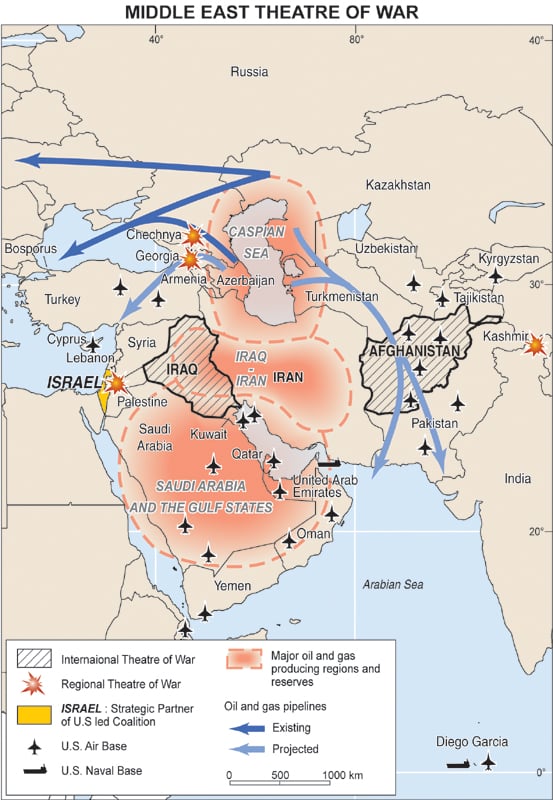
hebben we het hier ook alweer over een oorlog om de energievoorraden van de wereld?

Ik heb Hem niet uit vrees voor de hel noch uit liefde voor het paradijs gediend, want dan zou ik als de slechte huurling zijn geweest; ik heb hem veeleer gediend in liefde tot Hem en in verlangen naar Hem.
-Rabia Al-Basri
-Rabia Al-Basri
