NWS Nieuws & Achtergronden
Discussieer hier diepgaander over de actualiteiten.



Schijnt dat er na de verkiezingen een grote mobilisatie van kannonenvoer komt.quote:Op maandag 13 juli 2026 20:08 schreef TLC het volgende:
De "verkiezingen" komen er weer aan !
https://nos.nl/artikel/26(...)op-naar-verkiezingen


Scheelt toch een maandje dus. Goed dat er verkiezingen zijn.quote:
[..]
Schijnt dat er na de verkiezingen een grote mobilisatie van kannonenvoer komt.
edit:Niet te lezen.quote:
Als Zelensky het waagt Fedorov te vervangen word ik net zo anti zelensky als de gemiddelde pro Rus.
[ Bericht 34% gewijzigd door vul_maar_in op 13-07-2026 20:37:30 ]


Het was nochthans exact dezelfde tweet (had die van @skysherrif op eoa manier gemist), dus dat "Cyrillisch schrift" bezwaar lijkt me niet correct. Of ga je die van Sky nu ook verwijderen?quote:
Reeds geplaatst en netjes vertaald. Wij lezen geen Cyrillisch schrift.
My bad, ik zag het dan verkeerd maar alsnog dubbel.quote:
[..]
Het was nochthans exact dezelfde tweet (had die van @:Skysherrif op eoa manier gemist), dus dat "Cyrillisch schrift" bezwaar lijkt me niet correct. Of ga je die van Sky nu ook verwijderen?
Rustaaagh...

NP. Dubbel is idd niet nodig.quote:
My bad, ik zag het dan verkeerd maar alsnog dubbel.
quote:
quote:TENSIONS SIMMERED barely below the surface at a war-council meeting in early July. Ukraine’s military leaders had mostly good news for their president. Middle- and long-range drone operations were seeing continued successes. A campaign to isolate Russian-occupied Crimea was running ahead of schedule. But as Power Point slides were shown to the testosterone-filled room, the generals griped about missile and ammunition procurement. The focus of their criticism, Mykhailo Fedorov, the 35-year-old tech-savvy defence minister who is known—and occasionally mocked—for his Silicon Valley style presentations, responded in kind. If it wasn’t for his emergency drone-purchasing decisions at the beginning of the year, which required borrowing money earmarked for salaries, there would be no Crimean operation to speak of. A witness to the proceedings describes “two different co-ordinate systems” in a clinch: “No common language, even if holding back from direct conflict.”
Mr Fedorov, known to colleagues simply as “Misha”, arrived at the defence ministry in January with expectations riding high. The youngest member of Volodymyr Zelensky’s team, he came with a reputation as an effective, technologically minded reformer. As digital-transformation minister, he had implemented Diia, a highly regarded app that put state services and digital passports on smartphones. After Russia’s full-scale invasion in 2022, he helped drive the development of Ukraine’s “drone army,” introducing market mechanisms to boost production of everything from small battlefield drones to larger bomber and interceptor drones. To his supporters, Mr Fedorov’s presence at the defence ministry offered hope the army could be modernised—and taught to imagine victory once again.
The war is also intensely personal. A native of currently occupied lands in southern Ukraine, Mr Fedorov has relatives who were directly caught up in the fighting. Before his appointment, he was almost alone among senior officials in believing Mr Putin could and should be defeated on the battlefield. He was convinced he could reform the hardware of war in the same way he had reformed software of the government. The generals were, however, always far less certain.
His first six months in the job were characterised by hyperactivity and a pugnacity that put many noses out of joint. From the start, he ordered an audit of the defence ministry and army brigades that uncovered overspending of 300bn-hyrivna ($6.6bn). He subjected ministry officials to lie detectors; those who refused or failed were dismissed. And he moved some procurement to an open-tender system, which he says cut the cost of 155mm artillery shells by 16% almost immediately. At the same time his deep differences with the more traditionalist military leaders, especially its commander-in-chief, Oleksandr Syrsky, have rarely been far from view. It is widely known the minister angled for the general’s removal, but failed to win the president’s approval or find another way of doing it.
Mr Fedorov’s first big reform package only began to be implemented in June, after months of haranguing and waiting for sign-offs. On paper, it tackles the most urgent manpower problems. A new deal for frontline infantry will raise monthly pay from roughly $2,500 to $7,000 and even higher; introduce fixed contracts of six, ten, 14 and 24 months; and begin limited demobilisation for the longest-serving soldiers by the end of 2026. There will also be more money for recruiting foreigners. Most controversially, intermediary companies will receive a $7,000 signing fee for each soldier they enlist. One target is for foreigners to eventually provide 20-50% of new recruits. The estimated 300,000 Ukrainians listed as absent without leave will also be given a 100-day window in which to return to the army without punishment. Previously, those caught were forced into so-called reserve battalions, then sent to the hottest spots on the frontline where the chances of surviving were slim.
Mr Fedorov’s critics in the army accept he has improved drone procurement and digitalisation. But they argue his lack of military experience leaves him unqualified to plan a war. The more charitable say his flagship reforms amount to a “PR repackaging” of work that was already under way. The defence minister is the equivalent of a football “goalhanger”, says one senior general, seizing others’ ideas and credit when the efforts were collective. Some liken him to a modern day Robert McNamara, the late American defence secretary who discovered the managerial methods he had honed running Ford did not transfer well to the Pentagon. They criticise his gamification reforms, which, they argue, encourage battleground “kills” over less sexy but no less important operations like monitoring an important road. “To reform something you have to understand how it works,” says another Ukrainian general. “Would you really sit in an aeroplane if you saw that the pilot was a shopkeeper?”
Mr Fedorov’s team says there is always resistance, at first, to change. Andriy Hrytseniuk, head of Brave1, a government military-technology hub, has watched him from close quarters since 2019. He says the minister has always been a “dreamer” and suggests the army will eventually learn to understand him. “When we introduced the Diia app, every classical state official said it would be impossible. Now it has become an inseparable part of life.” Mr Fedorov admits that many in the army are sceptical of his plans, and says he has made some mistakes in selling his changes. A lot of work has gone on behind the scenes without huge fanfare, he continues: “Sit the generals across from me—and if they listen to me and understand what I’ve done, they’ll become my supporters.”
The minister does have followers within the armed forces, especially among younger officers and units that rely heavily on technology. Oleksandr “Flint” Nastenko, the commander of Code 9.2, one of the most effective assault units in the army, says Mr Fedorov deserves credit for shifting resources to the technology that saves soldiers’ lives. “The truth is we have grown stale and need to change.”
Yet even those sympathetic to Mr Fedorov’s intentions wonder if he will be allowed to stay in post long enough to see his ideas through. “Right now, he has the position, but he doesn’t have full political support from the president,” says Maryna Bezrukova, who was head of the armed forces’ independent procurement agency before being ousted in early 2025. A senior intelligence source says Mr Fedorov stands little chance in any serious confrontation with the generals. “Syrsky is experienced, knows the system much better than Misha, and will outfox him.” It is possible the defence minister has already picked one fight too many. On June 5th, Trukha, one of the country’s most popular social-media publications with 3m subscribers, posted a cryptic message promising an investigation into corruption in drone deals supposedly overseen by the minister. That publication has yet to materialise, but is already widely interpreted as a political attack on Mr Fedorov. He denies any wrongdoing.
Mr Fedorov’s future depends on Mr Zelensky, his political patron and a man with whom he shares a taste for brave decisions, PR and stubbornness. The two are close—the defence minister also acts as the president’s main elections manager—but that does not make his position secure. On July 12th, Mr Fedorov’s name was one of three floated for the newly vacant prime minister’s post. In usual circumstances that would count as a promotion; here it would be read as a defeat for his project. So far, the defence minister appears to have held his ground. “When I began in the job, the president told me to act according to my conscience,” Mr Fedorov said a few days before news of the potential reshuffle. “Plenty of people are yapping at me, and yes it worries me, but what can I do? I don’t want to leave this post knowing that I ever bent to suit anyone.”
Kyiv Independentquote:Zelensky eyes replacing Defense Minister Fedorov, source says
President Volodymyr Zelensky is considering replacing Mykhailo Fedorov as defense minister, a senior Ukrainian official familiar with the matter told the Kyiv Independent.
It is unclear whether Fedorov will get a new position within the Ukrainian government or who would replace him as defense minister.
"Fedorov and the President spoke alone; no one else heard them: That's why I don't know, and neither do the others," one Ukrainian official said.
Fedorov is viewed as one of the most trusted political figures in Ukraine, according to recent polling. A Kyiv International Institute of Sociology poll conducted in May 2026 found 50% of respondents trust Fedorov, while 21% did not.
A decision to replace a popular figure widely seen as competent would likely prove controversial with both Ukrainian politicians and wider Ukrainian society.
"Fedorov hasn't even been in office for a year. He's not the worst defense minister. At least he's not just a money-grabber," one Ukrainian lawmaker from Zelensky's Servant of the People faction told the Kyiv Independent, speaking on condition of anonymity.
Fedorov's office declined to comment.
Fedorov's advisor, well-known Ukrainian influencer and fundraiser Serhii Sternenko, claimed that Fedorov was subjected to "information attacks" on Telegram after he confronted corrupt practices in the Defense Ministry.
"You can't even imagine what streams of funding have been cut off," Sternenko wrote in a post on X. "These offended passengers have networks of (Telegram) channels, influence in parliament and more. So you'll see a lot more dirt."
Fedorov’s wins and losses
A relatively young and popular figure in the Ukrainian government, Fedorov previously served as a deputy prime minister and minister of digital transformation from 2019 to March 2023. On March 21, his brief was expanded to deputy prime minister for innovation, education, science, and technology, and on July 17, 2025, he was again promoted to first deputy prime minister, a title he held until he was tapped for the role of defense minister.
Fedorov's appointment as defense minister drew rare support from both Zelensky's party and the opposition. Some lawmakers from the opposition European Solidarity party previously described him as one of the few officials in Zelensky's team who maintained regular contact with the opposition.
If he maintains a seat in government, his reappointment, however, may face obstacles. One opposition lawmaker said Fedorov "stopped responding to lawmakers' messages" after taking office.
"It angered a lot of people," they told the Kyiv Independent. "The broader issue, I think, is that (Fedorov) has dragged out the mobilization reform for too long. And there is still no clarity on it."
"Lawmakers have very different expectations. Some want mobilization to stop, while others want fixed service terms and troop rotations. But it's simply impossible to deliver all of that at the same time."
On July 10, one parliamentary faction received a letter from Fedorov asking lawmakers to submit their proposals on mobilization.
"It seems he realized at some point that he needed to engage. The question is whether it's too late," the lawmaker said.
Despite the seemingly strained relations with some in parliament, Fedorov's efforts within the last six months have been praised by observers and military experts.
Shortly after he began his tenure, he successfully persuaded SpaceX CEO Elon Musk to deny Russia usage of the highly effective Starlink satellite communications system in February 2026.
Musk had originally activated the system in response to a direct request from Fedorov in February 2022, and the two had maintained a congenial relationship in the following years.
Senior Fellow at the Foreign Policy Research Institute, Rob Lee, described the Russian near-total loss of Starlink as "truly game changing" in comments to the Kyiv Independent in May, saying that the loss was incredibly damaging, both for Russian command and control and for their ability to operate long-range strike drones.
More recently, Fedorov launched Ukraine's "logistics lockdown" campaign on May 27, a highly effective operation targeting Russian logistics vehicles with loitering munitions and medium-range drones.
Fedorov also launched a series of controversial military reforms in June, which received a mixed response from both serving members of the Ukrainian Armed Forces, veterans' groups, and civil society.
His tenure was also marred by conflict with Ukraine's controversial Commander-in-Chief, General Oleksandr Syrskyi.
Yuriy Hudymenko, a prominent veteran and head of the Public Anti-Corruption Council at the Defense Ministry, told NV news outlet the two men approach problems from "fundamentally different perspectives" in an interview on June 17.
"This is a conflict between a young technocrat and a general from a largely post-Soviet military school," Hudymenko said.
Figures close to Fedorov, such as Sternenko, heavily criticized parts of the Ukrainian military under Syrskyi's direct command, particularly the notorious 425th Assault Regiment, more commonly known by their nickname, "Skala," for engaging in unsophisticated "meat wave" style assaults which routinely result in extremely high casualties.

En Mirage 2000 hebben ze ook al vliegen. Naast de oude Migs en Sukhois natuurlijk. Je kunt je afvragen hoe efficiënt het is om zoveel verschillende types te opereren maar hopelijk maken ze er het meeste van.quote:
[ x ]
Oekraïne heeft straks Rafales, Gripens en F16's.
Ik ga naar huis.
Beggars can't be choosers. Als ze maar genoeg onderdelen en support krijgen is alles welkom gok ik.quote:
[..]
En Mirage 2000 hebben ze ook al vliegen. Naast de oude Migs en Sukhois natuurlijk. Je kunt je afvragen hoe efficiënt het is om zoveel verschillende types te opereren maar hopelijk maken ze er het meeste van.
Rustaaagh...
Ik denk dat Zaluzhnyi al met al een betere opperbevelhebber was dan Syrskyi en idd minder een soviet stijl generaal was en het meer westers zou aanpakken,quote:
[..]
Zaluzhnyi had moeten blijven zitten, die was een stuk vooruitstrevender.
Maar uiteindelijk moet hij ook wel gewoon verantwoordelijk gehoud worden (deels, het was vooral een politiek offensief) voor het desastreuze 2023 zaporizha zomeroffensief wat bovenal de slechtste actie van Oekraine in heel de oorlog is geweest wat nu nog steeds zijn uitwerkingen heeft.
Dat laatste stukje, weet niet of het hier benoemd is, maar de bevelhebber van het 155e brigade (ja dat regiment dat toen het opgericht was ook bekend stond om zijn torenhoge AWOLS) is vandaag opgepakt wegens kidnapping en doding van 2 soldaten.quote:
Het 155e stond in de praktijk onder leiding van dat Skala regiment van Syrskyi.
https://hromadske.ua/viys(...)-u-vykradenni-liudey
En mensen vinden het gek dat er in Lviv onlangs enorme rellen waren tegen de TCK (officieren die gemobiliseerden in busjes stoppen) wetenden dat ze rechtstreeks naar ditzelfde Skala gaan. Waar onlangs ook dat artikel over ging die ik hier geplaatst had waar het ging over de enorme misstanden in de trainigscentra van Skala.quote:155th Brigade Commander in Hiding After His Soldiers Are Detained on Suspicion of Kidnapping
The commander of the 155th Mechanized Brigade, Stanislav Luchanov, is being sought after several of his soldiers were detained on suspicion of kidnapping two civilian men from the Kyiv region.
This was reported to hromadske by two sources within Ukraine's Defense Forces and one source in law enforcement.
On the night of June 27–28, seven individuals reportedly entered the property of two brothers in the Kyiv region and took them to an unknown location.
Relatives of the missing men told hromadske that their whereabouts remain unknown.
The press service of the Kyiv Regional Police declined to comment on the investigation when contacted by hromadske.
According to hromadske's own law enforcement sources, police detained nine soldiers from the brigade on suspicion of kidnapping. Among those detained is a battalion commander from the 155th Brigade.
Luchanov took command of the 155th Separate Mechanized Brigade in February 2026. Before that, he served as chief of staff of the 425th Assault Regiment "Skelia."
In May, a video circulated on social media showing a soldier from the 155th Brigade beating another serviceman, who was sitting on the ground with his hands tied behind his back. Luchanov denied any involvement in the incident and said he condemned the assault.
Luchanov did not answer hromadske's phone calls.
Tegelijkertijd moet ik ook wel weer bekennen, het levert wel resultaten op. Zeker sommige Bataljons van Skala en 225e (ander aanvalsregiment dat dezelfde brute praktijken hanteert als Skala in hun trainingen) houden wel hun terrein itt andere. Maar ten koste van veel doden.
Enfin, skala heeft zojuist een stukje opsec weggenomen over het nieuwe zaporizha offensiefje:
Dat ziet er zo uit p Dailyukrupdate
En zo op deepstate
En volgens deze oorlogsjournaliste is het front in werkelijkheid dus nog iets meer opgeschoven.
Enfin, skala heeft zojuist een stukje opsec weggenomen over het nieuwe zaporizha offensiefje:
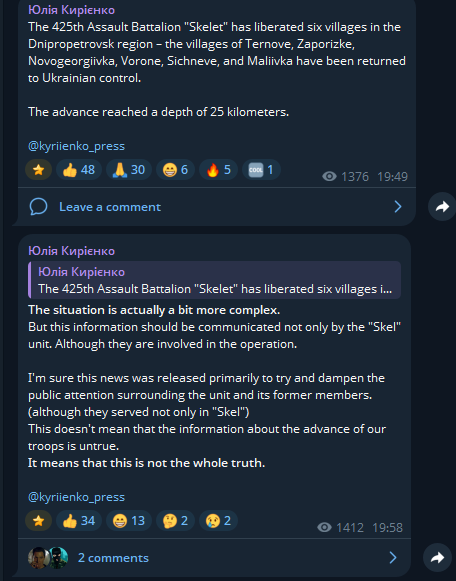
Dat ziet er zo uit p Dailyukrupdate
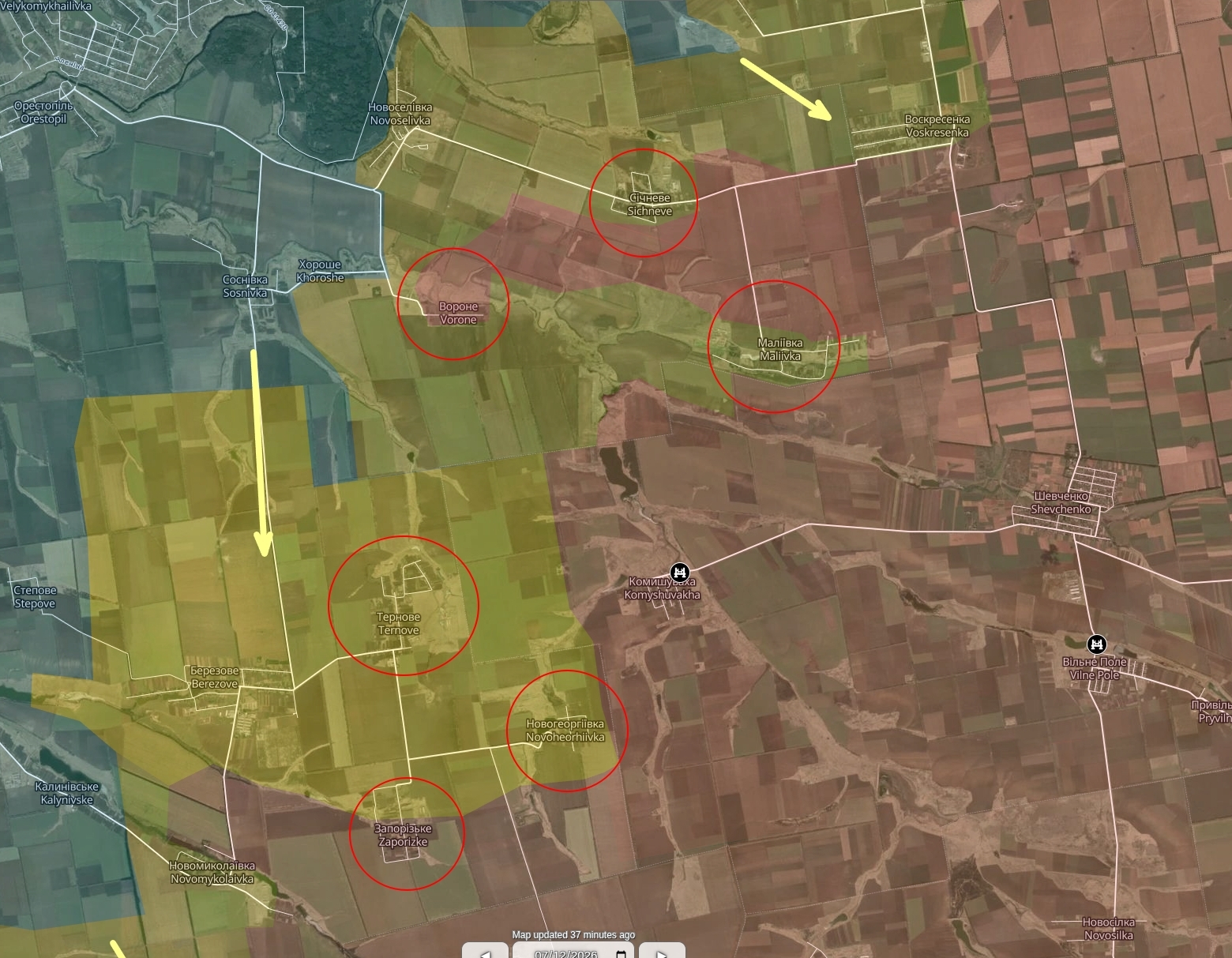
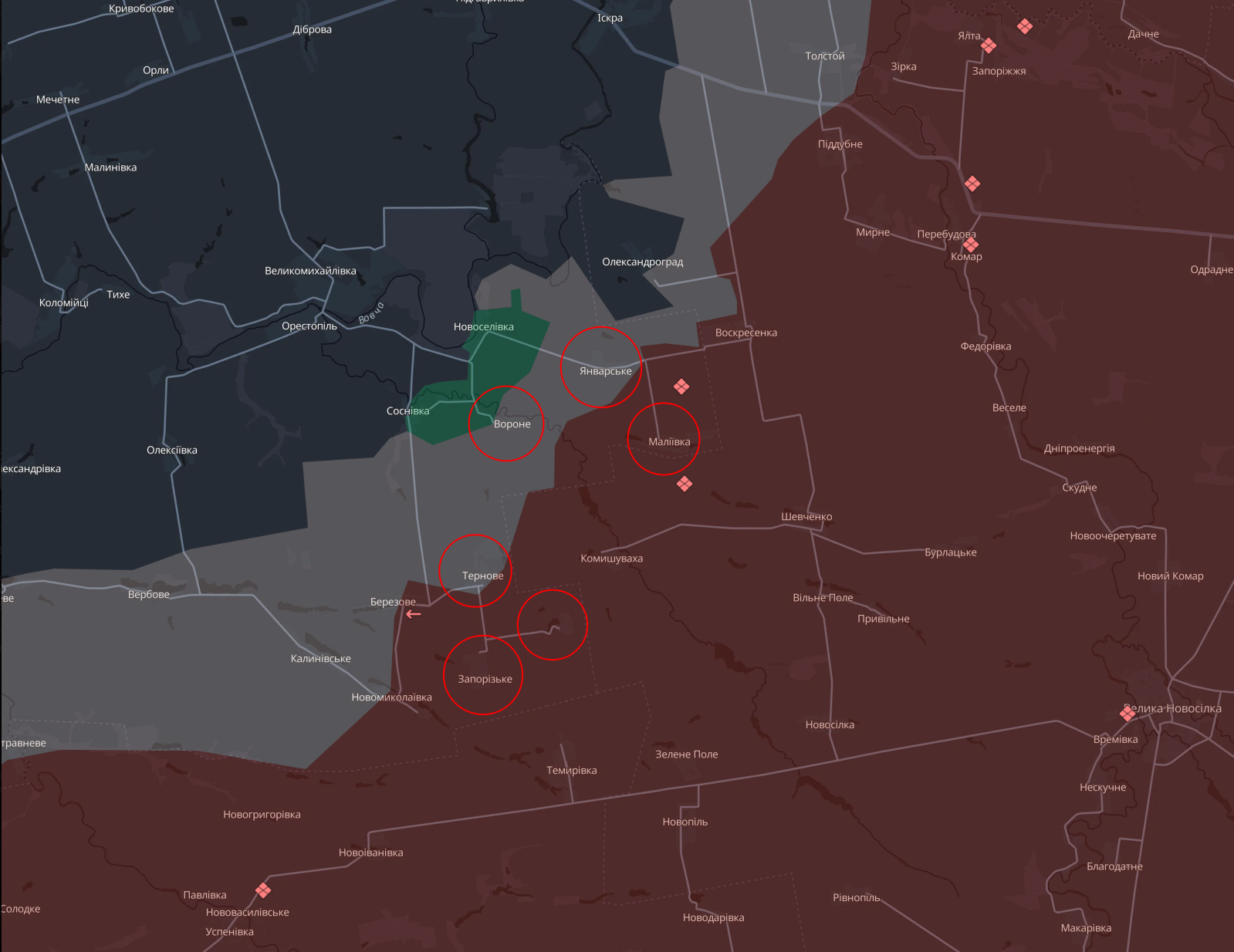
En zo op deepstate
En volgens deze oorlogsjournaliste is het front in werkelijkheid dus nog iets meer opgeschoven.

Had ze de laatste tijd niet zoveel meer gepost, en zeker niet met de hype rond de schepen, maar ook de logistieke "strikes" op gewoon trucks op de wegen gaat nog onverminderd door elke dag.
Hier nog een mooie compilatie van zojuist gepost, met hier en daar een duidelijke misser
Hier nog een mooie compilatie van zojuist gepost, met hier en daar een duidelijke misser
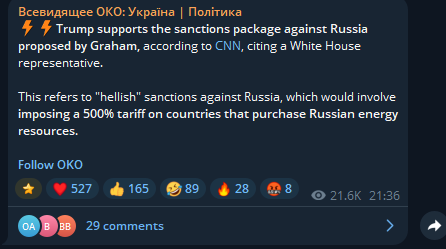
https://edition.cnn.com/2(...)sia-sanctions-grahamquote:
quote:President Donald Trump will support the passage of a bipartisan Russia sanctions package that was spearheaded by the late Sen. Lindsey Graham, a White House official told CNN on Monday.
The endorsement comes days after Graham’s unexpected death, likely further smoothing the path for a bill that the South Carolina senator spent years working to push across the finish line.
Graham and Democratic Sen. Richard Blumenthal previously indicated the administration was prepared to back the package, saying Friday that they reached an agreement following extensive negotiations. Yet it was unclear at the time whether Trump would directly support the bill, as the president had repeatedly panned the legislation and pushed for more direct discretion on imposing sanctions.
Senate Majority Leader John Thune earlier on Monday said the White House had been working closely with Graham on the measure, telling CNN that he has hopeful.
“It’ll take Democrats and Republicans here in the Senate to do that, but I’m hopeful we can make it happen,” he said.
Thune said that in Graham’s last days, the sanctions package was “the thing that he cared the most about in terms of an accomplishment, and it would certainly be an incredible legacy for him.”
ADVERTENTIE
In a separate interview, Blumenthal told CNN that he planned to speak with Thune on Monday afternoon about the final preparations and timing for the bill’s passage, including finding a new Republican to take Graham’s place as its lead sponsor.
The sanctions package would clear the way for Trump to impose heavy tariffs on imports from nations that buy Russian oil, uranium and natural gas, in an effort to further weaken Moscow amid its war with Ukraine.
“It should be seen as a fitting tribute to Sen. Graham to do it quickly in his memory,” Blumenthal said. “It’s exactly what we were talking about when I last spoke to him over the weekend.”
Als Frankrijk serieus wil zijn in hun hulp mbt Rafales** moeten ze ook technici leveren die die vloot kan onderhouden op de Oekraiense basissen.quote:
[ x ]
Oekraïne heeft straks Rafales, Gripens en F16's.
Anders heb ik medelijden met de Oekraiense lui die Rafales, Gripens, F16s en hun eigen soviet meuk moeten onderhouden
[ Bericht 0% gewijzigd door skysherrif op 13-07-2026 22:36:24 ]


Gewoon de handleiding goed lezen.quote:
[..]
Als Frankrijk serieus wil zijn in hun hulp mbt Gripens moeten ze ook technici leveren die die vloot kan onderhouden op de Oekraiense basissen.
Anders heb ik medelijden met de Oekraiense lui die Rafales, Gripens, F16s en hun eigen soviet meuk moeten onderhouden

And what rough beast, its hour come round at last,
Slouches towards Bethlehem to be born?
Slouches towards Bethlehem to be born?
https://www.facebook.com/share/r/1C8fgj6cuA/
[ Bericht 3% gewijzigd door michaelmoore op 14-07-2026 00:11:25 ]
quote:We zien hoe Russen bij tankstations vechten om jerrycans benzine en diesel stelen van staatsbedrijven, en we beleven er enig genoegen aan dat de straten langzaam leger worden.
Maar de grootste klap voor Rusland zal niet vallen bij personenauto's zelfs niet bij het vrachtvervoer.
De werkelijke impact, zo stelt de auteur, zal liggen bij het spoorwegnet, dat in veel afgelegen Russische regio's het belangrijkste vervoersmiddel is.
Tientallen jaren lang waren diesellocomotieven de enige betrouwbare manier om je tussen nederzettingen te verplaatsen.
Die zwart rokende dieselmotoren zullen uiteindelijk tot stilstand komen.
Ze zullen geen steenkool, brandhout of stookolie meer vervoeren, en ook geen tankwagens meer brengen die nodig zijn om tankstations te bevoorraden.
De auteur betoogt dat uitgestrekte gebieden; waaronder Siberië, het Russische noorden en het Verre Oosten ; nauwelijks zijn aangesloten op aardgasnetwerken en sterk afhankelijk zijn van duizenden diesellocomotieven.
Zonder deze treinen zouden er geen verwarming, geen elektriciteit en geen betrouwbare aanvoer van essentiële goederen zijn.
Er is nog een probleem, dat vooral bekend is bij werknemers in de energiesector in afgelegen Russische nederzettingen: dieselcentrales.
Veel kleine steden, dorpen, gehuchten en zelfs militaire nederzettingen zijn voor hun elektriciteit afhankelijk van generatoren op diesel.
Jaren geleden werd dit beschouwd als de eenvoudigste en goedkoopste oplossing.
De auteur wijst ook op de strenge Russische winters, waarin extreme vorst gepaard gaat met zware sneeuwval die voortdurende sneeuwruiming vereist.
Het vermogen om dit te blijven doen hangt af van de opbouw van aanzienlijke brandstofreserves, die normaal gesproken tegen augustus zijn aangelegd.
Volgens de auteur zijn die reserves echter uitgeput om brandstoftekorten bij tankstations op te vangen.
De vele werknemers in de Russische olie- en gasindustrie, zo stelt de auteur, zouden zelf zonder verwarming, elektriciteit of werk kunnen komen te zitten, omdat veel van hun materieel niet op ruwe olie draait, maar op diesel – en in sommige gevallen op benzine.
[ Bericht 3% gewijzigd door michaelmoore op 14-07-2026 00:11:25 ]
Er gaat niets boven lekker in de zon zitten in de achtertuin met een heel koud glas bier , als je al 75 jaar bent en nog gezond, laat ze maar lachen de sukkels

Ik ga er vanuit dat die sovjet meuk dan uitgefaseerd wordt. Die SU-24 worden gebuikt om Storm Shadow af te schieten. Dat kan ook met een Rafale of Mirage. Als ze er daar meer van hebben, heb je die SU-24 niet meer nodig.quote:
[..]
Als Frankrijk serieus wil zijn in hun hulp mbt Rafales** moeten ze ook technici leveren die die vloot kan onderhouden op de Oekraiense basissen.
Anders heb ik medelijden met de Oekraiense lui die Rafales, Gripens, F16s en hun eigen soviet meuk moeten onderhouden
Die SU-27 hebben ze ook nog maar de helft van over t.o.v. begin van de oorlog. Die reserveonderdelen zullen ook wel een keer opraken.
A mind with a heart of it's own

Klinkt te mooi om waar te zijnquote:
https://www.facebook.com/share/r/1C8fgj6cuA/
[..]

Eindelijk iemand die denkt wat iedereen zegt
Wij zijn voor elektriciteit aangewezen op aardgascentrales , knijp de aardgas toevoer af en onze elektriciteit stopt , verwarming stopt , alles stoptquote:
Rusland is ook zo afgrijselijk groot dat elektriciteitskabels aanleggen zinloos is
[ Bericht 3% gewijzigd door michaelmoore op 14-07-2026 03:14:10 ]
Er gaat niets boven lekker in de zon zitten in de achtertuin met een heel koud glas bier , als je al 75 jaar bent en nog gezond, laat ze maar lachen de sukkels
In Nieuwsuur lieten ze een Russisch boertje zien die moeite had normaal te boeren vanwege dieseltekort.
Afhankelijk van hoe cynisch je bent kon het overkomen als kijk wat de gevolgen zijn voor die arme man en familie nu Oekraine de raffinaderijen zo hard raakt. Ze hadden het over voedseltekorten die kunnen ontstaan. Alsof we ze zielig moeten vinden. Als Rusland Oekrainers vermoordt kan het die mensen ook niet schelen dus waarom boeit hun lot wel. Kom maar in opstand.
Afhankelijk van hoe cynisch je bent kon het overkomen als kijk wat de gevolgen zijn voor die arme man en familie nu Oekraine de raffinaderijen zo hard raakt. Ze hadden het over voedseltekorten die kunnen ontstaan. Alsof we ze zielig moeten vinden. Als Rusland Oekrainers vermoordt kan het die mensen ook niet schelen dus waarom boeit hun lot wel. Kom maar in opstand.

Naarmate het slechter gaat, gaan het kremlin en haar useful idiots meer en meer de slachtoffer kaart trekken.
Scorched earth

quote:Rusland plaatst verffabrieken AkzoNobel onder staatstoezicht
Rusland heeft de Russische divisie van de Nederlandse verffabrikant AkzoNobel onder staatstoezicht gesteld. Het zou gaan om "tijdelijk toezicht" geplaatst, meldt AkzoNobel.
Dat betekent volgens de verffabrikant dat de fabrieken worden bestuurd door een entiteit van de Russische overheid. Dit zou niet betekenen dat AkzoNobel in Rusland wordt genationaliseerd. Maar tot nu toe blijken onder staatstoezicht gestelde buitenlandse bedrijven niet te worden teruggegeven.
AkzoNobel zegt het presidentiële decreet te bestuderen om een inschatting te kunnen maken van de gevolgen.
https://nos.nl/artikel/26(...)onder-staatstoezicht
Steun het Kiva Fok! team!
http://www.kiva.org/team/fok
http://www.kiva.org/team/fok

Wat mij betreft vandaag nog naar z'n mallemoer ermee.quote:
 Op
Op
"Ik hou stiekem van mannen. Een lekkere vleesboom tussen m'n lippen, daar kan niets aan tippen." -phpmystyle
Oek is "beschaafd", in deze. Die zitten te wachten tot de laatste europese landen van het rus pijplijn gas af zijn.quote:
[..]
Wat mij betreft vandaag nog naar z'n mallemoer ermee.
Maar ik ben het met je eens. F*ck em. Doe maar nu.
Scorched earth
zitten die dingen niet meters onder de grond en is het nog niet zo makkelijk om die uit te schakelen
Don't worry about the future. Or know that worrying is as effective as trying to solve an algebra equation by chewing bubble gum.
Nee, je kunt ze zien op google maps.quote:
zitten die dingen niet meters onder de grond en is het nog niet zo makkelijk om die uit te schakelen
Dat gezegd is makkelijk om je erop te verkijken. Op het kaartje ziet het er leuk als een mooi kruispunt uit, rijp voor een flamingo.
Totdat je je de schaal realiseert.
Scorched earth
ah oke. Ik heb geen idee.quote:Op dinsdag 14 juli 2026 11:37 schreef ExTec het volgende:
[..]
Nee, je kunt ze zien op google maps.
Dat gezegd is makkelijk om je erop te verkijken. Op het kaartje ziet het er leuk als een mooi kruispunt uit, rijp voor een flamingo.
Totdat je je de schaal realiseert.
Maar heb met dit soort dingen vaak het idee van: Als het echt zo makkelijk was, dan had Oekraïne dat wel gedaan.
Don't worry about the future. Or know that worrying is as effective as trying to solve an algebra equation by chewing bubble gum.
Op dit punt zijn oostenrijk, slowakije, tjechie en hongarije niet echt blij met oek als ze dat doen. Die nemen nog steeds gewoon pijplijn gas af, ipv LNG.quote:
[..]
ah oke. Ik heb geen idee.
Maar heb met dit soort dingen vaak het idee van: Als het echt zo makkelijk was, dan had Oekraïne dat wel gedaan.
Scorched earth
Expert WAARSCHUWT dat Poetins innerlijke kring zich tegen hem keert...quote:Iedere Rus die schaakt, weet dat er een bepaald moment in het spel komt waarop je weet dat je verloren hebt en je je koning omdraait.
Bekijk deze YouTube-video
Er gaat niets boven lekker in de zon zitten in de achtertuin met een heel koud glas bier , als je al 75 jaar bent en nog gezond, laat ze maar lachen de sukkels
Yamal moet vanavond nog spelen.quote:
[..]
Wat mij betreft vandaag nog naar z'n mallemoer ermee.
Misschien in de herfst of winter 2027.quote:
Is Europa hier nog afhankelijk van?
1/10 Van de rappers dankt zijn bestaan in Amerika aan de Nederlanders die zijn voorouders met een cruiseschip uit hun hongerige landen ophaalde om te werken op prachtige plantages.
"Oorlog is de overtreffende trap van concurrentie."
"Oorlog is de overtreffende trap van concurrentie."
Altijd leuk dat zo'n expert dat even komt vermelden vanuit zijn expertise terwijl 4 dagen terug Zelensky zelf letterlijk heeft gezegd dat ze binnen Poetin's innerlijke circkel steun hebben voor vrede.quote:
[..]
Expert WAARSCHUWT dat Poetins innerlijke kring zich tegen hem keert...
Bekijk deze YouTube-video

https://english.nv.ua/rus(...)ng-war-50623537.html

Of ze wachten gewoon even tot de zomer voorbij is. Wanneer Rusland in de herfst/winter zonder gas zit doet dat veel meer pijn dan in de zomer.quote:
[..]
Oek is "beschaafd", in deze. Die zitten te wachten tot de laatste europese landen van het rus pijplijn gas af zijn.
Maar ik ben het met je eens. F*ck em. Doe maar nu.
Don't worry about the future. Or know that worrying is as effective as trying to solve an algebra equation by chewing bubble gum.
quote:De Russische Centrale Bank gelooft niet langer dat Rusland de Krim zo lang zal houden, dus de kaart met de Krim werd verwijderd uit de nieuwe 100 roebel die gisteren binnenkwamen.
In plaats van een kaart met heel Rusland inclusief de Krim, is het nu een kaart van het centrale federale district van Rusland, om de overgave niet te duidelijk te maken.

Er gaat niets boven lekker in de zon zitten in de achtertuin met een heel koud glas bier , als je al 75 jaar bent en nog gezond, laat ze maar lachen de sukkels
Oekraine is het slachtoffer van een volstrekt zinloze oorlog van de Ruzzen, er is NOOIT een excuus om een oorlog te starten, NOOIT
Bekijk deze YouTube-video
Bekijk deze YouTube-video
Er gaat niets boven lekker in de zon zitten in de achtertuin met een heel koud glas bier , als je al 75 jaar bent en nog gezond, laat ze maar lachen de sukkels

MAW: houd je bek er maar over, schooier, tot je eindelijk bereid bent dat gas te gaan leveren voor een appel en een ei.quote:According to The Wall Street Journal, during Vladimir Putin’s most recent visit to Beijing, Chinese officials asked the Russian delegation not to raise the issue of the project again until the terms of the deal change.
The newspaper reports that Beijing is willing to sign the contract only if Russia agrees to supply gas at domestic Russian prices — a condition Moscow considers economically unacceptable.
Scorched earth
Dit is zó mooi.quote:Op dinsdag 14 juli 2026 17:32 schreef ExTec het volgende:
[ x ]
[..]
MAW: houd je bek er maar over, schooier, tot je eindelijk bereid bent dat gas te gaan leveren voor een appel en een ei.
Wat een vriendschap!
"Ik hou stiekem van mannen. Een lekkere vleesboom tussen m'n lippen, daar kan niets aan tippen." -phpmystyle
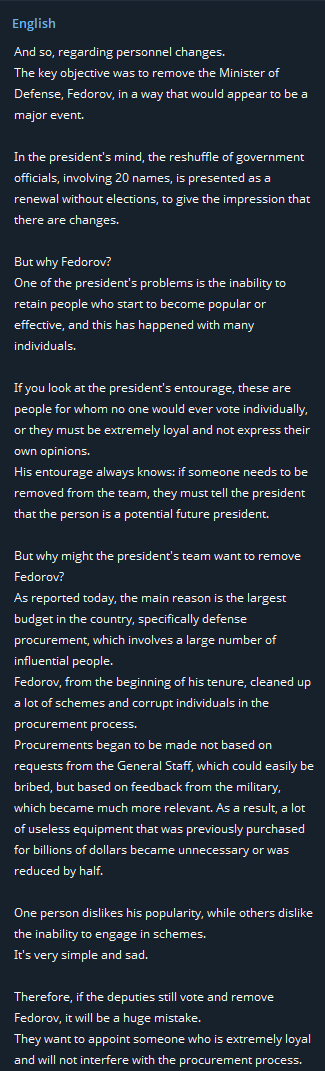

Jahaaa, dat is nou "de multi-polaire wereldorde"!quote:
[..]
Dit is zó mooi.
Wat een vriendschap!

Scorched earth
Putin kan natuurlijk ook zelf een keer het raam uitgegooid worden.quote:
[..]
Altijd leuk dat zo'n expert dat even komt vermelden vanuit zijn expertise terwijl 4 dagen terug Zelensky zelf letterlijk heeft gezegd dat ze binnen Poetin's innerlijke circkel steun hebben voor vrede.
https://english.nv.ua/rus(...)ng-war-50623537.html
Ceterum censeo Turciam delendam esse.
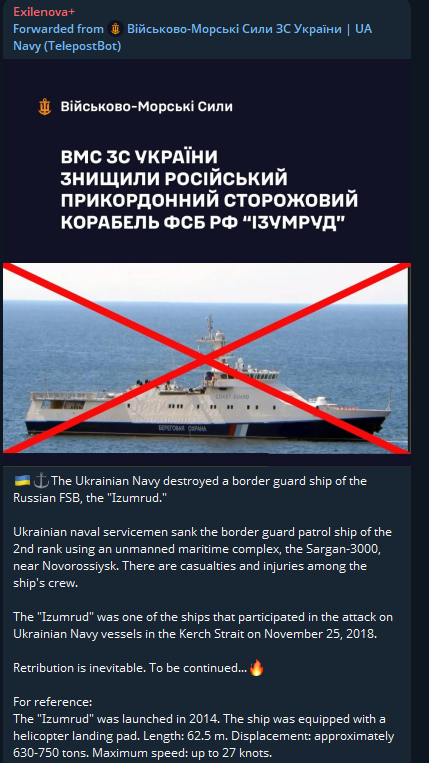
Dat gezonken FSB schip is nog boven de gebruikelijke nachtelijke aanvallen op Russische tankers/riverrines
hier te zien van afgelopen nacht:
Bekijk deze YouTube-video
hier te zien van afgelopen nacht:
Bekijk deze YouTube-video
quote:+11 ⚓️🔥 In one night, July 14th. 116 ships intercepted in 9 days by the SBS (Special Boat Service) in the Sea of Azov as part of Operation "Molochka": 5 tankers, 5 cargo ships, and 1 tugboat.
The shadow fleet is withering, but it must disappear as a species.
Many people don't understand what's happening around that naval engagement. Where do all these tanker ships come from? What is their mission? And why is the SBS targeting them, not sinking them, but turning them into drifting specters at sea? I'll have time soon to record a video with explanations.
Here's a brief explanation: The operation paralyzes the feeder fleet of Russia ("courier" small and medium-sized 140-meter flat-bottomed tankers with a deadweight of 7,000 tons), which is a significant component of Russia's shadow fleet. It essentially prevents the export of "black gold" from Russian port oil transshipment bases and pumping stations via the Volga-Don Canal and the Sea of Azov to large tankers that cannot navigate the shallow waters to the oil terminal or port. Instead, they are forced to be loaded (bunkered) from the tanks of those "courier" tankers in the Black Sea, taking on cargo from 12-15 of these vessels. Also, disabling these "camel-like" tankers (and the tugboats that persistently tow them after being hit) restricts the delivery of scarce gasoline to Crimea via the narrow channel of the shallow Sea of Azov, leaving the main and very dangerous method of delivery as rail and road tank cars, which are also under fire control of the patriotic Ukrainian SBS, whether it's asphalt or rails.
That was a complex sentence, but those who are curious will understand. I promise to record a more detailed explanation soon.
Let's work, gentlemen! There's a lot of work to be done.
We will endure.
Moscow will fall, Operation "Molochka" is in action.
We will feed and rebuild Crimea.
Was deze al gepost, deze is wel echt gaaf
Een combinatie van UGVS met machinegeweren en gewone "lucht"drones elimineren een plek vol russen
Een combinatie van UGVS met machinegeweren en gewone "lucht"drones elimineren een plek vol russen
Z'n beste vriendenquote:Op dinsdag 14 juli 2026 17:44 schreef RotatoR het volgende:
[ x ]
China weet dat Poetin met één been in het graf staat.

Wat is Nexta eigenlijk voor iets? Een beetje betrouwbaar?
Eindelijk iemand die denkt wat iedereen zegt
https://bsky.app/profile/anderspucknielsen.dk/post/3mqj6q3ndnk2p
Hier wel mee eens denk ik.quote:Lindsey Graham was not a particularly strong supporter of Ukraine. He made all the right noises, but ultimately he mostly just contributed to keeping pro-Ukrainian Republicans quiet. He gave them an illusion to cling to, that any moment now Trump will finally get tough on Putin.
Moscow times. Die zitten niet in rus zelf, meer, maar staan wel bekend als redelijk wat insider kennis.quote:
[..]
Z'n beste vrienden
Wat is Nexta eigenlijk voor iets? Een beetje betrouwbaar?
Scorched earth
Wit-Russisch oppositiekanaal, o.a. van die kerel die uit een gekaapt vliegtuig werd getrokken, werd afgetuigd door de KGB en sindsdien het Lukashenko-evangelie predikt op tv.quote:
[..]
Z'n beste vrienden
Wat is Nexta eigenlijk voor iets? Een beetje betrouwbaar?
Er werd tijdje geleden ook gespeculeerd dat Shogin een coup zou plegen. Ik moet het nog allemaal zien. Er wordt aan de lopende band over gespeculeerd.quote:
[..]
Putin kan natuurlijk ook zelf een keer het raam uitgegooid worden.
A Robin Redbreast in a Cage Puts all Heaven in a Rage.
https://www.bnr.nl/nieuws(...)he-supersnelraketten
Ben benieuwd. Als ze in een jaar iets maken dan zegt dat een hoop over de traditionele defensiebedeijven. Sowieso komen die er in mijn boekje niet zo positief uit.
Ben benieuwd. Als ze in een jaar iets maken dan zegt dat een hoop over de traditionele defensiebedeijven. Sowieso komen die er in mijn boekje niet zo positief uit.
Dankjewel voor je bijdrage, captain obvious.quote:
[..]
Er werd tijdje geleden ook gespeculeerd dat Shogin een coup zou plegen. Ik moet het nog allemaal zien. Er wordt aan de lopende band over gespeculeerd.

Scorched earth
https://www.bnr.nl/nieuws(...)oekraiense-aanvallenquote:
[..]
Er werd tijdje geleden ook gespeculeerd dat Shogin een coup zou plegen. Ik moet het nog allemaal zien. Er wordt aan de lopende band over gespeculeerd.
https://www.reddit.com/r/(...)k_runs_out_of/?tl=nl
quote:In Novorossiysk omsingelden mensen een tankwagen voor een tankstation vanwege hun weigering brandstof te verkopen aan "eenvoudige natuurkundigen".
Benzine komt alleen bij ambtenaren, veiligheidstroepen en andere diensten, en de stad staat in enorme rijen bij tankstations.
he has all the cards now , even the trump cardquote:AI-overzicht
Inwoners van Novorossiysk (Rusland) omsingelden in juli 2026 een tankwagen bij een tankstation.
Ze eisten wanhopig brandstof, nadat de stad werd getroffen door een ernstig tekort aan benzine.
De actie werd vastgelegd op sociale media.Dit incident vond plaats te midden van een bredere brandstofcrisis in de regio
:Lege pompen:
Bij vrijwel alle tankstations in Novorossiysk was enkel nog diesel verkrijgbaar en geen benzine meer.
Lange rijen:
Automobilisten stonden uren in de rij bij de schaarse stations die nog wel voorraad hadden.
Maatschappelijke impact:
De situatie verstoorde het dagelijks leven; de airconditioning in stadsbussen viel uit, taxitarieven stegen de pan uit en het werd opvallend rustiger op de weg.

[ Bericht 10% gewijzigd door michaelmoore op 14-07-2026 20:40:23 ]
Er gaat niets boven lekker in de zon zitten in de achtertuin met een heel koud glas bier , als je al 75 jaar bent en nog gezond, laat ze maar lachen de sukkels

Oekraine heeft geen marine, dus het het is een russisch schip. Geef het nog even dan heeft rusland ook geen marine meer, sowieso niet in de zee van Azov of de zwarte zee.quote:
[..]
Twitter filmpje, wie raakt nu wie? Ik kom er niet uit.
Het is ook altijd risicovol voor de coupplegers natuurlijk. Als de Russische publieke opinie daadwerkelijk een einde aan de oorlog eist is de kans op een putsch groter.quote:
[..]
Er werd tijdje geleden ook gespeculeerd dat Shogin een coup zou plegen. Ik moet het nog allemaal zien. Er wordt aan de lopende band over gespeculeerd.
Ceterum censeo Turciam delendam esse.
Dat valt nog te bezien. Het is schier onmogelijk voor de bevolking om zich te organiseren. Zo lang Poetin het leger en de veiligheidsdiensten kan betalen kan hij wel overeind blijven.quote:
[..]
Het is ook altijd risicovol voor de coupplegers natuurlijk. Als de Russische publieke opinie daadwerkelijk een einde aan de oorlog eist is de kans op een putsch groter.
De bevolking zal zich niet organiseren, het idee is dat een nieuwe dictator altijd publiekelijke ondersteuning benodigd om niet zelf een putsch tegen te krijgen; het grootste gevaar van een dictator is impopulariteit.quote:
[..]
Dat valt nog te bezien. Het is schier onmogelijk voor de bevolking om zich te organiseren. Zo lang Poetin het leger en de veiligheidsdiensten kan betalen kan hij wel overeind blijven.
Ceterum censeo Turciam delendam esse.
echte dictators hebben altijd een hele club hielelikkers om zich heen wier positie afhangt van de positie van de dictator zelfquote:
[..]
Dat valt nog te bezien. Het is schier onmogelijk voor de bevolking om zich te organiseren. Zo lang Poetin het leger en de veiligheidsdiensten kan betalen kan hij wel overeind blijven.
voor Assad echter was dat niet voldoende
Er gaat niets boven lekker in de zon zitten in de achtertuin met een heel koud glas bier , als je al 75 jaar bent en nog gezond, laat ze maar lachen de sukkels
?quote:
[..]
De bevolking zal zich niet organiseren, het idee is dat een nieuwe dictator altijd publiekelijke ondersteuning benodigd om niet zelf een putsch tegen te krijgen; het grootste gevaar van een dictator is impopulariteit.
Rusland heeft zich wel vaker tegen de heersers gekeerd, waarbij het niet altijd goed afliep voor de heersers. Laatste keer was in 2011, toen er massale protesten uitbraken. Maar ook elite wie zich tegen de heerser keerde etc.
Rusland is alles behalve een stabiele homogene maatschappij, daarom is er juist zo veel repressie, onderdrukking en beperkingen in Rusland.
In Kazakhstan zijn ze helemaal klaar met alles wat Russisch is , dat is ook een voormalig USSR land , maar daar durft Putin niet aan te beginnen , voor de drie daagse speciale operatie was Kazakhstan nog wel beleefd tegen Putin, maar dat is helemaal overquote:
[..]
?
Rusland heeft zich wel vaker tegen de heersers gekeerd, waarbij het niet altijd goed afliep voor de heersers. Laatste keer was in 2011, toen er massale protesten uitbraken. Maar ook elite wie zich tegen de heerser keerde etc.
Rusland is alles behalve een stabiele homogene maatschappij, daarom is er juist zo veel repressie, onderdrukking en beperkingen in Rusland.
quote:Kazakhstan has officially restricted the export of diesel and gasoline to protect its domestic fuel reserves.
The Ministry of Energy extended a ban on petroleum product exports--including diesel, gasoline, and certain other fuels--by road and rail to May 22, 2027.
The Kazakh government tightened these controls following a severe fuel crisis in Russia, which was triggered by Ukrainian drone strikes disabling a large portion of Russian refining capacity.
This caused significant price disparities, leading to "gasoline tourism" where Russian motorists cross into Kazakhstan to purchase cheaper fuel.To curb this outflow, authorities have implemented strict enforcement measures:
Border Controls:
Authorities established 59 police checkpoints along the border to inspect vehicles.
Rationing Crossings:
Foreign passenger and freight vehicles are limited to entering Kazakhstan a maximum of once per day.
Er gaat niets boven lekker in de zon zitten in de achtertuin met een heel koud glas bier , als je al 75 jaar bent en nog gezond, laat ze maar lachen de sukkels
Fyi als je zo van fb deelt zien mensen je profielquote:
[..]
In Kazakhstan zijn ze helemaal klaar met alles wat Russisch is , dat is ook een voormalig USSR land , maar daar durft Putin niet aan te beginnen , voor de drie daagse speciale operatie was Kazakhstan nog wel beleefd tegen Putin, maar dat is helemaal over
https://www.facebook.com/s
Het ging om een coup, niet om een revolutie.quote:
[..]
?
Rusland heeft zich wel vaker tegen de heersers gekeerd, waarbij het niet altijd goed afliep voor de heersers. Laatste keer was in 2011, toen er massale protesten uitbraken. Maar ook elite wie zich tegen de heerser keerde etc.
Rusland is alles behalve een stabiele homogene maatschappij, daarom is er juist zo veel repressie, onderdrukking en beperkingen in Rusland.
Ceterum censeo Turciam delendam esse.
Geldt ook voor het delen van insta reels.quote:
[..]
Fyi als je zo van fb deelt zien mensen je profiel
Wat wil je daar verder mee zeggen?quote:
Ben benieuwd. Als ze in een jaar iets maken dan zegt dat een hoop over de traditionele defensiebedeijven. Sowieso komen die er in mijn boekje niet zo positief uit.
Sinds de amerikanen volledig gestopt zijn met het direkt ondersteunen van de oekraine en europa wakker is geworden en heel bewust eigen startups, scale-ups en unicorns in de defensie-industrie is gaan ondersteunen, en deze direkt samenwerken met het oekrainse leger en bv direkt battlefield-data gebruiken in het ontwikkelen en innoveren van de eigen producten gaat het gewoon erg snel in die sector...
Op dit moment is er ongeveer een innovatie turnover waarin qua software iedere 3 maanden vrijwel alles herschreven wordt (en dat gebeurt vaak op direkte aanbevelingen en ook analyses van oekrainse front-soldaten die deze drones inzetten, waarbij er erg korte lijnen zijn tussen bedrijven als Destinus in Hengelo of Quantum-Systems GmbH in zuid-duitsland Destinus is overigens oorspronkelijk een amerikaanse start-up, maar is naar europa vertrokken omdat ze de amerikaanse regelgeving rondom defensie-ondernemingen te beperkend vonden, en bv ook de verseisste security-clearance waarbij de founder zelf die een groot deel van de oorspronkelijke software initieel geschreven had, geen toestemming meer kreeg zijn eigen software te bekijken, omdat hij geen amerikaans staatsburger was ).
Dat blijkt nu al ongekend succesvol te zijn... Zelfs de amerikanen hebben dit gerealiseerd en zijn geschrokken, op dit moment loopt er binnen het pentagon een evaluatie van de eigen drone-capaciteiten en vanuit het eigen leger is aangegeven dat ze dolgraag toestemming willen europese drone-producten (en EW in de vorm van jammers en scrambling tools) willen mogen gaan gebruiken, omdat die nu al een voorsprong genomen hebben op de producten van amerikaanse fabrikanten.
Wat dat zegt over wat je noemt "traditionele" defensiebedrijven is nogal weinig-zeggend...
Een direkte oorlogs-situatie is gewoon heel anders en deze startups en snel innoverende ondernemingen die zelf ook enorm veel moeite doen om snel te produceren tegen de laagste kostprijs, werken ook onder héél andere omstandigheden dan de "normale" defensie-sector.
In een gewone situatie is het verder ook totaal zinloos om als ondernemingen je kosten enorm te drukken, en daarom zie je bv dat de amerikaanse defensieindustrie eigenlijk meer gericht is op het producreen van enorm dure en kostbare hightech-wapens, die een stuks-prijs hebben waarvan je misselijk wordt, en die als je die inzet in een écht militair conflict plots kunnen betekenen dat je in één avond 5 miljard aan wapens verschiet in een aanvalsgolf (Wat de USA in Iran deed... om vervolgens later in het conflict vooral in problemen te komen tegen Iraanse drones, die $35,000 per stuk kosten (en voor de amerikanen dus een keer erop schieten om ze neer te halen al een veelvoud aan kosten brengt))
"Whatever you feel like: Life’s not one color, nor are you my only reader" - Ausonius, Epigrammata 25
China heeft Putin helemaal klemvast, met zulke vrienden heb je geen vijanden nodig
Putin zal wel moeten want LNG gastankers worden opgeblazen door Oekraïne, ja had die Putin toch wel een hele goede klant aan Europa met de Nordstream
Europa kreeg slechts een klein beetje korting op de TTF LNG prijs per MWh
[ Bericht 1% gewijzigd door michaelmoore op 15-07-2026 12:32:25 ]
Putin zal wel moeten want LNG gastankers worden opgeblazen door Oekraïne, ja had die Putin toch wel een hele goede klant aan Europa met de Nordstream
Europa kreeg slechts een klein beetje korting op de TTF LNG prijs per MWh
quote:AI-overzicht
China is currently deadlocked in price negotiations for the proposed Power of Siberia 2 pipeline.
Beijing is holding out for deeply discounted rates close to Russia's heavily subsidized domestic gas price of roughly $50 to $60 per 1000 cubic meters, while Moscow has pushed for higher rates.
Because a contract has not been finalized, there is no official Power of Siberia 2 export price.
However, the pricing dynamic involves the following details:
Power of Siberia 1 Pricing: Russian gas currently flowing through the original Power of Siberia pipeline is priced under a secret formula indexed to global oil prices, with China paying approximately $258 per 1000 cubic meters.
The Domestic Russian Benchmark:
The subsidized price of gas for Russian domestic consumers hovers at roughly $50 to $60 per 1000 cubic meters, which is the baseline China is demanding for future megaprojects.
Negotiation Status:
Talks have stalled as Beijing expects Russia to heavily subsidize the transit infrastructure.
quote:AI-overzicht
Russian pipeline gas is not typically priced as a standalone commodity on the Dutch TTF. Instead, TTF serves as the primary European wholesale benchmark.
The TTF spot price trades at approximately €49–€54 per MWh, which equates to roughly $480–$530 per 1,000 cubic meters.
Because Russia’s remaining pipeline deliveries to Europe operate via long-term, bespoke contracts (e.g., via the TurkStream pipeline into Southeastern Europe), the actual price paid by those specific buyers is generally lower than the open European market rate.
[ Bericht 1% gewijzigd door michaelmoore op 15-07-2026 12:32:25 ]
Er gaat niets boven lekker in de zon zitten in de achtertuin met een heel koud glas bier , als je al 75 jaar bent en nog gezond, laat ze maar lachen de sukkels
Aan de ene kant heeft China er belang bij om samen te werken met Rusland om de Westerse (Amerikaanse) hegemonie te doorbreken.quote:
China heeft Putin helemaal klemvast, met zulke vrienden heb je geen vijanden nodig
Putin zal wel moeten want de LNG gastankers worden opgeblazen door Oekraïne
[..]
[..]
Aan de andere kant liggen er grote kansen voor China om, nu Rusland zijn handen vol heeft aan Oekraïne, meer controle/grip te krijgen op de grote hoeveelheden grondstoffen in Siberië.
Geen idee welke belangenafweging uiteindelijk de overhand gaat krijgen in China.
De huidige situatie lijkt me zeer gunstig voor China. Alle concurrenten zijn druk met elkaar en kunnen zich dus minder met China bezig houden.quote:
[..]
Aan de ene kant heeft China er belang bij om samen te werken met Rusland om de Westerse (Amerikaanse) hegemonie te doorbreken.
Aan de andere kant liggen er grote kansen voor China om, nu Rusland zijn handen vol heeft aan Oekraïne, meer controle/grip te krijgen op de grote hoeveelheden grondstoffen in Siberië.
Geen idee welke belangenafweging uiteindelijk de overhand gaat krijgen in China.
Ondertussen kan China Rusland rustig leegtrekken en allerlei lering trekken uit de oorlog tegen Oekraïne.
Nederland 2026: Ontevreden in het hof van Eden
Als Ruzzia de hele gas en olie industrie aan China moet geven , dat mag ookquote:
Geen idee welke belangenafweging uiteindelijk de overhand gaat krijgen in China.
Putin mag wel uitkijken anders gaat ie veel meer land kwijt raken dan dat ie veroverd heeft en wel heel Siberie met heel veel gas en olie
En dan is het gebeurt met Ruzzia
Als China Siberie afpakt dan is Ruzzia in twee gespleten
China is sterk genoeg , die heeft die kleine opdonder echt niet nodigquote:
[..]
Aan de ene kant heeft China er belang bij om samen te werken met Rusland om de Westerse (Amerikaanse) hegemonie te doorbreken.
China heeft al een kleine schreeuwlelijk aan Kim il Un als het om raketten gaat
[ Bericht 6% gewijzigd door michaelmoore op 15-07-2026 13:55:25 ]
Er gaat niets boven lekker in de zon zitten in de achtertuin met een heel koud glas bier , als je al 75 jaar bent en nog gezond, laat ze maar lachen de sukkels
Admiraal Magyar heeft 20 schepen in de Zwarte Zee geraakt vannacht. Dus niet: de Zee van Azov.
https://t.me/s/robert_magyar
Quote:
•20 vessels in the Black Sea: 17 oil tankers, 2 tankers-gas trucks, 1 tug (15 July).
https://t.me/s/robert_magyar
Quote:
•20 vessels in the Black Sea: 17 oil tankers, 2 tankers-gas trucks, 1 tug (15 July).
Bekijk deze YouTube-videoquote:
Admiraal Magyar heeft 20 schepen in de Zwarte Zee geraakt vannacht. Dus niet: de Zee van Azov.
https://t.me/s/robert_magyar
Quote:
•20 vessels in the Black Sea: 17 oil tankers, 2 tankers-gas trucks, 1 tug (15 July).
en voor het eerst een schip vernietigd ipv bescahdigd, volgens eigen cijfers iig.quote:Black Sea: Unveiling 2.0
🔥⚓️SBS Operation "Molochka"
The score of the first round is 20:0. The Black Sea cluster of SBS Operation "Molochka" was launched on July 15th, coinciding with Ukrainian Statehood Day. The SBS birds are already in action.
20 of the first tankers were intercepted in the Black Sea during the first night.
The total score of the naval operation, from July 6th to 15th, amounted to 136 units of the Russian shadow fleet:
• 116 vessels in the Sea of Azov (July 6th-14th)
• 20 vessels in the Black Sea: 17 oil tankers, 2 gas tankers, and 1 tugboat (July 15th).
SBS units involved in the operation:
9th Battalion "Kairos" of the 414th SBS Brigade "Madjar Birds", 1st Special Operations Center of the SBS, 20th SBS Brigade "K-2", 412th SBS Brigade "Nemesic", 427th SBS Brigade "Rarog", 413th Operational Unit of the SBS "Raid".
Ja, dat krijgt je als een vliegtuig uit Kazachstan neerschiet en terwijl al een dag later uit onderzoek bleek dat het door Russisch afweergeschut was neergehaald, je eerst nog even 9 maanden probeert het in de schoenen van Oekraïne te schuiven voordat je je excuses maakt.quote:
[..]
In Kazakhstan zijn ze helemaal klaar met alles wat Russisch is , dat is ook een voormalig USSR land , maar daar durft Putin niet aan te beginnen , voor de drie daagse speciale operatie was Kazakhstan nog wel beleefd tegen Putin, maar dat is helemaal over
[..]
Je zou denken dat ze na MH17 wel hadden geleerd dat zoiets niet werkt, maar om het bij een bondgenoot dan nog een keer te proberen is wel echt dom
Correctie: Vliegtuig was van Azerbeidzjan en moest uiteindelijk landen (neerstorten) in Kazachstan.
[ Bericht 4% gewijzigd door Timwonnacott op 15-07-2026 13:07:42 (Mijn geheugen doet het niet vandaag..) ]
Waarschijnlijk bleef de helikopter echter onbescahdigd omdat het rotorblad de drone onschadelijk maakte.

Ik zie verder ook geen berichten over dat een Mi-28 neergehaald zou zijn. De drone is dan waarschijnlijk niet geëxplodeerd, anders was dat ding nooit in de lucht gebleven.quote:
[ x ]
Waarschijnlijk bleef de helikopter echter onbescahdigd omdat het rotorblad de drone onschadelijk maakte.
quote:
[..]
Ik zie verder ook geen berichten over dat een Mi-28 neergehaald zou zijn. De drone is dan waarschijnlijk niet geëxplodeerd, anders was dat ding nooit in de lucht gebleven.
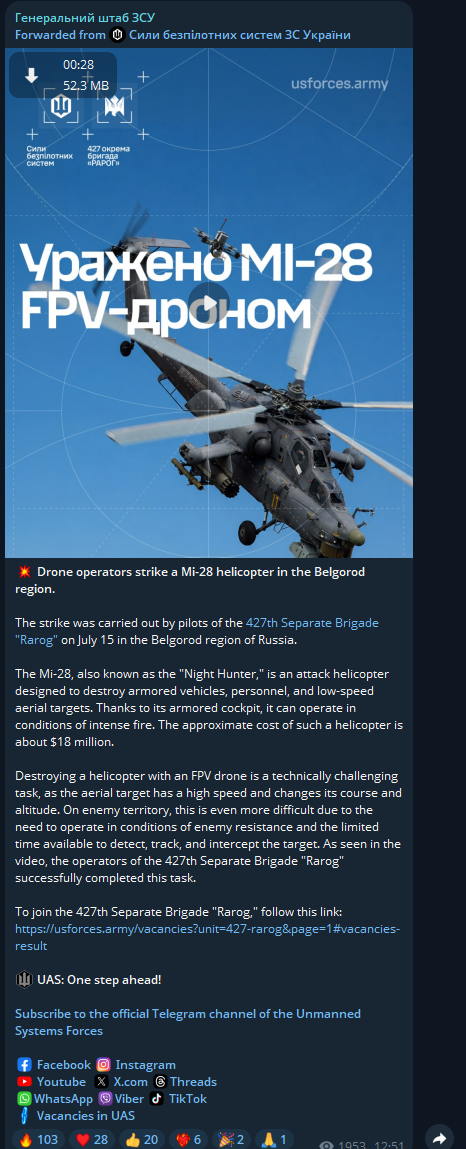
Oekraiense leger meldt dat hij is neergehaald, Russische bronnen melden dat de helikopter onbescahdigd is gebleven
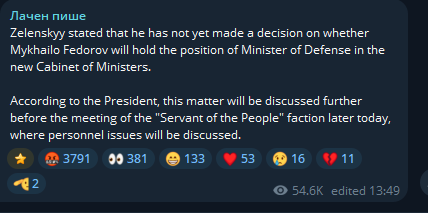
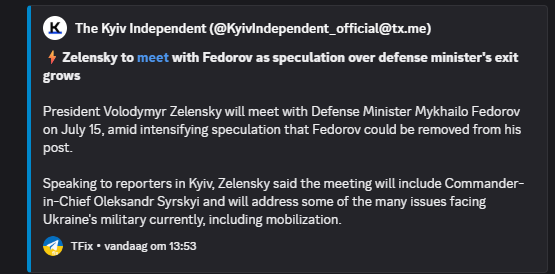

Je kan wel elke dag hetzelfde speculatieve bericht 3x posten maar zet er dan ook eens bij dat Zelensky Fevorov op het oog had om de nieuwe zelfstandigere minister president te worden en dus logischerwijs op zoek was naar iemand die defensie kon overnemen, maar dat Fedorov die functie heeft afgewezen.quote:
Dat noem je wegpromoveren.quote:Op woensdag 15 juli 2026 14:37 schreef Timwonnacott het volgende:
[..]
Je kan wel elke dag hetzelfde speculatieve bericht 3x posten maar zet er dan ook eens bij dat Zelensky Fevorov op het oog had om de nieuwe zelfstandigere minister president te worden en dus logischerwijs op zoek was naar iemand die defensie kon overnemen, maar dat Fedorov die functie heeft afgewezen.
Ahja die baan met helemaal nul macht.quote:
[..]
Je kan wel elke dag hetzelfde speculatieve bericht 3x posten maar zet er dan ook eens bij dat Zelensky Fevorov op het oog had om de nieuwe zelfstandigere minister president te worden en dus logischerwijs op zoek was naar iemand die defensie kon overnemen, maar dat Fedorov die functie heeft afgewezen.
Je kwam paar dagen terug zelf aanzetten met deze bron: https://www.pravda.com.ua/eng/articles/2026/07/13/8043869/quote:
[..]
Ahja die baan met helemaal nul macht.
" The second reason for the government reshuffle was the president's gradual fatigue with the "government babysitting" model, as cooperation with the Cabinet is referred to within Zelenskyy's team.
Svyrydenko was perfect for a system in which the head of the President's Office personally set almost all the tasks for the government and the prime minister coordinated virtually every step with Bankova Street.
Over time, however, this way of doing things began to frustrate the president himself. According to Ukrainska Pravda's sources, Zelenskyy came to expect independent decision-making from the prime minister rather than sign-offs on every minor detail. At some meetings he was even known to say something along the lines of "Well, you should be able to handle this without me at least."
Strategic decisions will, of course, remain within the president's remit. But operational management of the government is to pass to the new prime minister, who will be expected to deliver not just endless sign-offs with Bankova Street, but independent initiatives, ready-made managerial decisions, and personal accountability for their implementation. "
Klinkt niet alsof ze iemand zoeken voor een functie met 0 macht.
Maargoed blijkbaar als de WSJ, FT, Pravda, UP etc er allemaal over berichten zal het puur speculatief zijn. De enige reden dat er nog een kwestie is of het gaat gebeuren of niet is dat er heel veel mensen zich tegen uitspreken.quote:
[..]
Je kan wel elke dag hetzelfde speculatieve bericht 3x posten maar zet er dan ook eens bij dat Zelensky Fevorov op het oog had om de nieuwe zelfstandigere minister president te worden en dus logischerwijs op zoek was naar iemand die defensie kon overnemen, maar dat Fedorov die functie heeft afgewezen.
Maar laten we vooral erover zwijgen?
Ik denk niet dat je door hebt wat een desastreus effect eht zal hebben als Fedorov ontslagen wordt uit zijn positie als mindef. Niet alleen voor de war effort, maar ook als Oekraine ooit kans wil maken om de EU toe te treden, wat ze als ik eerijk moet zijn, helemaal niet verdienen op dit moment.
Waarom zou Fedorov dat soort taken moeten uitvoeren?quote:
[..]
Je kwam paar dagen terug zelf aanzetten met deze bron: https://www.pravda.com.ua/eng/articles/2026/07/13/8043869/
" The second reason for the government reshuffle was the president's gradual fatigue with the "government babysitting" model, as cooperation with the Cabinet is referred to within Zelenskyy's team.
Svyrydenko was perfect for a system in which the head of the President's Office personally set almost all the tasks for the government and the prime minister coordinated virtually every step with Bankova Street.
Over time, however, this way of doing things began to frustrate the president himself. According to Ukrainska Pravda's sources, Zelenskyy came to expect independent decision-making from the prime minister rather than sign-offs on every minor detail. At some meetings he was even known to say something along the lines of "Well, you should be able to handle this without me at least."
Strategic decisions will, of course, remain within the president's remit. But operational management of the government is to pass to the new prime minister, who will be expected to deliver not just endless sign-offs with Bankova Street, but independent initiatives, ready-made managerial decisions, and personal accountability for their implementation. "
Klinkt niet alsof ze iemand zoeken voor een functie met 0 macht.
Helemaal interessant met het stukje artikel daarna overigens

Die artikelen, voor zover die bestaan, zijn allemaal terug te herleiden naar de 1 bron van Pravda. Kwantiteit zeg niet altijd alles meer in het moderne journaliste. En ik zei nergens dat je er over moest zwijgen, maar dat je na een aantal dagen al 3x hetzelfde te posten misschien ook eens de rest moest vermelden.quote:
[..]
Maargoed blijkbaar als de WSJ, FT, Pravda, UP etc er allemaal over berichten zal het puur speculatief zijn. De enige reden dat er nog een kwestie is of het gaat gebeuren of niet is dat er heel veel mensen zich tegen uitspreken.
Maar laten we vooral erover zwijgen?
Ik denk niet dat je door hebt wat een desastreus effect eht zal hebben als Fedorov ontslagen wordt uit zijn positie als mindef. Niet alleen voor de war effort, maar ook als Oekraine ooit kans wil maken om de EU toe te treden, wat ze als ik eerijk moet zijn, helemaal niet verdienen op dit moment.
Blijkbaar omdat Zelensky er vertrouwen in heeft dat hij dat zou kunnen.quote:
[..]
Waarom zou Fedorov dat soort taken moeten uitvoeren?
Helemaal interessant met het stukje artikel daarna overigens
