POL Politiek
Discussies en diepgaande gesprekken over de politiek in de breedste zin van het woord kun je hier voeren.



Nee, Wilders denkt hetzelfde als zijn aanhang. Het zijn vaak de aanhangers van gevestigde partijen die hun mening afstemmen op de mening van hun politieke idolen.quote:Op zaterdag 28 januari 2017 09:29 schreef 99.999 het volgende:
[..]
Dan is de pvv dus voor de ware populisten.

http://www.volkskrant.nl/(...)ken-elkaar~a4453328/quote:Corruptie-index: populisme en corruptie versterken elkaar
Burgers die op populistische politici stemmen uit verontwaardiging over corruptie, komen bedrogen uit. Onder populistische regeringen neemt de corruptie alleen maar toe, zo stelt Transparency International (TI) in zijn jaarlijkse Corruption Perception Index. Populisme en corruptie versterken elkaar.
Door: Rob Vreeken 25 januari 2017, 16:51
Er is sprake van een 'vicieuze cirkel' van corruptie en maatschappelijke ongelijkheid, volgens het woensdag verschenen jaarrapport. Dat is een belangrijke bron van onvrede. Populistische leiders spinnen daar electoraal garen bij, maar ze doen niets om de problemen op te lossen. Integendeel, meent Transparency International: hun staat van dienst op dit gebied is 'bedroevend'.
'Populisme is de verkeerde remedie' voor corruptie en ongelijkheid, volgens de onderzoekers. In plaats van het 'vriendjeskapitalisme' te bestrijden, 'maken populistische en autocratische leiders de zaken alleen maar erger'. Bovendien verzwakken ze de democratie, de persvrijheid en het maatschappelijk middenveld.
Voorbeelden
Als voorbeelden worden genoemd Hongarije (onder premier Viktor Orban) en Turkije (onder president Recep Tayyip Erdogan). Hun score op de corruptie-index van TI, een ranglijst van 176 landen, is de afgelopen jaren verslechterd. Argentinië daarentegen, waar een populistische regering door de kiezers werd weggestemd, werd minder corrupt en steeg op de ranglijst.
Transparency International vreest dat de vicieuze cirkel van populisme, corruptie en ongelijkheid zich onder president Donald Trump ook gaat voordoen in de Verenigde Staten. De eerste tekenen van gebroken beloften zijn al zichtbaar, schrijft TI-onderzoeker Finn Heinrich. Hij maakt zich 'ernstig zorgen'.
Net als andere populistische leiders richt Trump zijn pijlen op een 'corrupte elite' die slechts zichzelf wil verrijken, ten koste van de hardwerkende burger. 'Maar als je naar zijn daden tot nu kijkt, zien we nepotisme', aldus Heinrich. 'Leden van zijn team hebben tal van strijdige belangen. Het zijn geen toonbeelden van transparantie.'
Jared Kushner
Als voorbeeld noemt de onderzoeker Trumps schoonzoon Jared Kushner, die is benoemd tot politiek adviseur van de president. Ook heeft Trump aangekondigd wetgeving tegen corruptie te schrappen. Heinrich voorziet dat de VS (nu op nummer 18) volgend jaar zullen kelderen op de corruptie-index.
De ranglijst wordt niet samengesteld volgens harde cijfers, maar op grond van de perceptie van corruptie door deskundigen en organisaties als de Wereldbank. Er wordt gekeken naar zaken als de omvang van omkoping, straffeloosheid voor corrupte bestuurders en de respons van de overheid op verlangens van burgers.
De Scandinavische landen staan elk jaar bovenaan in het klassement. Nieuw-Zeeland is gestegen van plaats 4 naar de top van de lijst. Nederland staat op 8. Onderaan bungelen landen als Somalië, Syrië en Noord-Korea.
'Urgente actie noodzakelijk'
De landen hebben scores van 0 (zeer corrupt) tot 100 (zeer schoon). Bijna 70 procent scoorde minder dan 50 en er waren dit jaar meer dalers dan stijgers. 'Urgente actie is nodig', aldus het rapport. Een manier om de vicieuze cirkel te doorbreken is 'een eind maken aan de draaideur tussen leidende posities in de zakenwereld en in het openbaar bestuur'.
De grootste daling komt op rekening van Qatar, dat zakte van plaats 31 naar 22. Het land ligt onder vuur wegens de behandeling van Aziatische bouwvakkers die werken aan de stadions voor het WK voetbal, dat in 2022 in het Golfstaatje wordt gehouden.

Als links, mensen die tegen de politieke -correctheid ageren, die compleet is doorgeslagen, en hun als populisten neerzet dan is dat typisch, alsof linkse gutmenschen niet populistisch bezig zijn. Zo lijkt het wel alsof links als enige een patent heeft om wat wel en niet rechtvaardig is te vinden. Walgelijk!
Als ik een populist dan ben dan benik er trots op want liever dat dat een salonsocialist / gutmensch want ik sta voor klaarheid,helderheid en principes. Links helemaal niet.
Als ik een populist dan ben dan benik er trots op want liever dat dat een salonsocialist / gutmensch want ik sta voor klaarheid,helderheid en principes. Links helemaal niet.
Ik heb toch het gevoel dat je te veel in twee kampen denkt. Ik ben er wel een beetje klaar mee dat er altijd maar de tegenstelling populist versus linkse gutmensch wordt gemaakt.quote:Op maandag 30 januari 2017 13:55 schreef Iwanius het volgende:
Als links, mensen die tegen de politieke -correctheid ageren, die compleet is doorgeslagen, en hun als populisten neerzet dan is dat typisch, alsof linkse gutmenschen niet populistisch bezig zijn. Zo lijkt het wel alsof links als enige een patent heeft om wat wel en niet rechtvaardig is te vinden. Walgelijk!
Als ik een populist dan ben dan benik er trots op want liever dat dat een salonsocialist / gutmensch want ik sta voor klaarheid,helderheid en principes. Links helemaal niet.
Er zit zoveel tussenin wat door anderen meteen maar weggezet wordt als linkse goedgelovige of rechtse populist.
We bepalen als samenleving samen wat wel en wat niet rechtvaardig is, een deel daarvan is in de wet geregeld en een deel speelt zich af op sociaal maatschappelijk niveau. (Wat vinden we normaal?) En juist dat laatste is waar veel mensen heel verschillend over denken. Juist de extremen daarin roepen het hardst en gaan makkelijk over tot populistische gedrag. Dit gaat zelfs zo ver dat ook de wettelijke rechtvaardigheid ter discussie wordt gesteld. Dit is natuurlijk niet verkeerd, maar moet wel in een maatschappelijk debat gebeuren (moet de wet aangepast worden?) en niet door de rechtspraak in twijfel te trekken.
Ik sta ook voor helderheid en principes, maar dat maakt me niet meteen een populist of niet-links. Dat kan los staan van je mening over bepaalde dingen.
Goede constatering. Zij die de ander populistisch noemen zijn zelf de populisten = helemaal waar.quote:Op zaterdag 11 juni 2016 17:23 schreef deelnemer het volgende:
Decennia lang heeft de bestuurselite het prima gevonden om dmv propaganda het volk te bespelen. Veel eindeloos herhaalde slogans in media en verkiezingscampagnes, maar geen serieuze analyses of een open publiek debat.
Nu het volk nazegt, wat er in jaren met slogans is ingehamerd, is het ineens populisme.
Volgens mij valt de bestuurselite in zijn eigen zwaard. Eerst was het een vorm van slim verkopen van het gewenste beleid. Een vorm van talent, dat geen afbreuk doet aan het zelfbeeld van verstandige mensen, want zo ken je elkaar toch, achter de schermen. Het klootjes volk zag echter alleen de facade en hoorde alleen de propaganda.
Wat voorspelbaar was, gebeurt. Propaganda is een huftermiddel, dat alleen op de korte termijn werkt. Het werkt zolang de oude trend nog standhoud. Maar als oude de trend gebroken is, word je eigen propaganda de nieuwe trend.
Beste elite: De nieuwe trend is populistisch, want het is een reflectie van je eigen propaganda.
http://sargasso.nl/wvdd/e(...)andeel-moslims-land/
Nederlanders overschatten het aantal moslims enorm, alsmede hun waardestelsel.
Nederlanders overschatten het aantal moslims enorm, alsmede hun waardestelsel.

Wel opvallend dat Nederland in 2016 juist als least ignorant uit de bus kwam bij deze peiling:quote:
http://sargasso.nl/wvdd/e(...)andeel-moslims-land/
Nederlanders overschatten het aantal moslims enorm, alsmede hun waardestelsel.
https://www.ipsos-mori.co(...)orld-gets-wrong.aspx
Kun je nagaan hoe de rest er aan toe is.quote:Op dinsdag 31 januari 2017 23:27 schreef ExtraWaskracht het volgende:
[..]
Wel opvallend dat Nederland in 2016 juist als least ignorant uit de bus kwam bij deze peiling:
https://www.ipsos-mori.co(...)orld-gets-wrong.aspx
In the beginning there was nothing, which exploded.
Denk eigenlijk dat de foutmarges bij dergelijke polls zo groot zijn dat het meer een educated guess is dan dat het werkelijk wat zegt.quote:
[..]
Kun je nagaan hoe de rest er aan toe is.
Dezelfde zwakke punten komen echter wel naar voren. Namelijk het overschatten van negatieve standpunten tav homo's.quote:
[..]
Wel opvallend dat Nederland in 2016 juist als least ignorant uit de bus kwam bij deze peiling:
https://www.ipsos-mori.co(...)orld-gets-wrong.aspx
Terzijde, die hele misplaatste trots over dat lubach filmpje ('jeej we tellen mee') past ook in de populistische wende van de laatste 15 jaar.

MAKE AMERICA GREAT AGAINquote:
"Geen kut is ooit nat geworden van een autist die 100 cijfers achter de komma van Pi uit zijn kop kan drummen."
corehype in KLB / Wiskundige bewijzen
corehype in KLB / Wiskundige bewijzen
Democratie van het Griekse woord dimokratia betekent wil van het volk en niet wil van de elite. Populisme is democratie in optima forma
Conservatieven zijn het meest tolerant. Ze moeten namelijk het meest tolereren

quote:
quote:Torture, indefinite detention, denying due process to certain suspects, requiring women seeking abortions to undergo transvaginal ultrasounds or to hold a funeral for the fetus, being "tough on" crime, the three strike rule, mandatory minimums, the war on drugs and virtually everything which stems from it...
These policies do not work. In fact, they often exacerbate problems. To many, however, the results don't ultimately matter; that's what the public is sold on to enact such policies of course, but those who push hardest for them tend to be more concerned with exacting retribution on those they deem evil-doers, because they "deserve" it. To hell with root causes, recidivism, hypocrisy, intellectual honesty, or moral integrity. These people deserve it, and by god, we'll demand our pound of flesh!
David Pakman is a political talk show host.

Free Assange! Hack the Planet
[b]Op dinsdag 6 januari 2009 19:59 schreef Papierversnipperaar het volgende:[/b]
De gevolgen van de argumenten van de anti-rook maffia
[b]Op dinsdag 6 januari 2009 19:59 schreef Papierversnipperaar het volgende:[/b]
De gevolgen van de argumenten van de anti-rook maffia
Verplichte kost:
https://www.ft.com/content/d29b0662-e880-11e6-967b-c88452263daf
En bedenk dan hoe 'wij' naar de Engelsen en Amerikanen kijken
https://www.ft.com/content/d29b0662-e880-11e6-967b-c88452263daf
En bedenk dan hoe 'wij' naar de Engelsen en Amerikanen kijken
Electoraal de doodsteek voor de pro Europese partijen is het immigratie beleid:
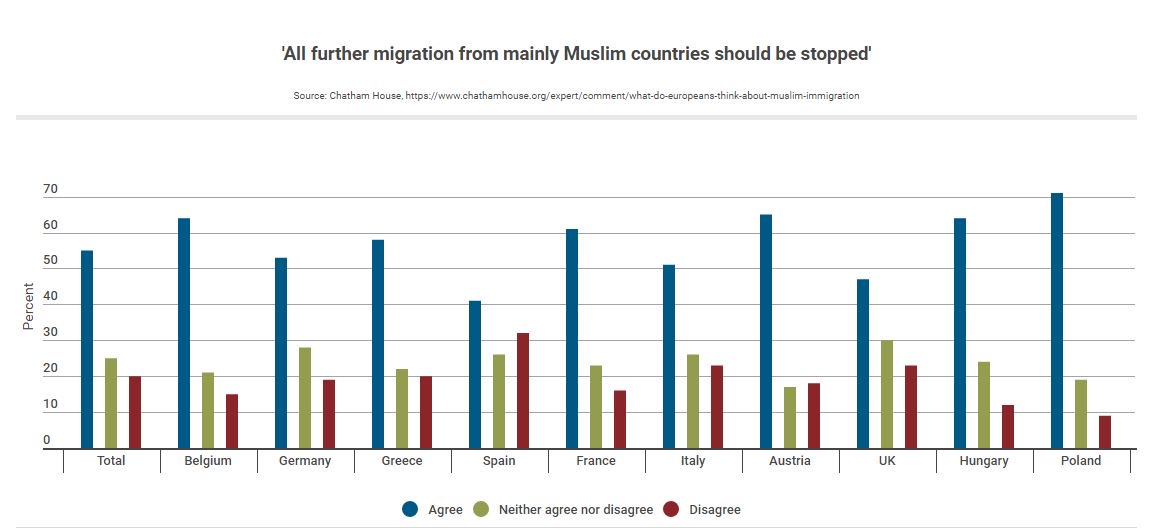
quote:"Drawing on a unique, new Chatham House survey of more than 10,000 people from 10 European states, we can throw new light on what people think about migration from mainly Muslim countries. Our results are striking and sobering. They suggest that public opposition to any further migration from predominantly Muslim states is by no means confined to Trump’s electorate in the US but is fairly widespread.
quote:Majorities in all but two of the ten states agreed, ranging from 71% in Poland, 65% in Austria, 53% in Germany and 51% in Italy to 47% in the United Kingdom and 41% in Spain. In no country did the percentage that disagreed surpass 32%."
Weldoeners worden dikwijls voor hypocriete gutmenschen uitgemaakt. Dit is een prima weerwoord.
[ Bericht 1% gewijzigd door #ANONIEM op 08-02-2017 10:55:42 ]
https://mobile.twitter.com/matthewsyed/status/829241216298524675quote:It’s natural to seek kudos for charity work. I do it, why shouldn’t Beckham?
matthew syed
In 2002 I co-founded a charity that helps kids from deprived areas through sport. This organisation now employs 80 people full time, operates across the capital, and provides coaching, support and mentoring for more than 30,000 young people. It is called Greenhouse Sports.
Do I care about the children helped by the organisation? Yes. Is that part of the driving force behind the time I give to the charity? Yes. But do I also gain personal benefits from being a high-profile member of the organisation, and are these a key part of the reason for being involved? Absolutely.
When I wrote my profile for my personal website, I made sure that it referenced the charity. Whenever I am asked to give a public speech, I ensure that Greenhouse is mentioned when I am introduced to the audience. The reason I do this is because I know that giving to others reflects well upon myself. It bolsters my image. And I care about my image.
This admission will come as no surprise to anyone with a passing understanding of psychology, as the recognition that human action emerges from mixed motives has been understood since at least the time of Aristotle. Altruism and self-interest are not mutually exclusive, but often intertwined in the same basic animus. Anyone with a sliver of self-awareness grasps this fact.
Which brings me to David Beckham. For we now know, on the basis of allegedly stolen emails, that he rather hoped to gain a knighthood as a consequence of the considerable time he gives to Unicef. This will strike most people as breathtakingly unexceptional. Many who give to charity hope for recognition of some kind. Even the New Testament widow who donated a mite — her left hand not knowing what her right was doing — expected the Lord God to give her a pat on the back.
It is in this context that the outcry against Beckham — mainly, it has to be said, from the sanctimonious and self-righteous — has been astonishing. One person on Twitter described him as a hypocrite: “Real heroes don’t use charity work to get knighthoods.” Jan Moir of the Daily Mail said that Beckham is “now revealed to be a narcissistic schemer who uses the suffering of others to polish his own credentials and promote the one cause dearest to his heart — himself.”
Piers Morgan even managed to compare Beckham with Jimmy Savile: “I think a person’s motivation for charity work matters. Exhibit One: Sir Jimmy Savile.” One wonders at such faulty (and offensive) logic. Savile worked with kids to abuse them. He wanted to harm the targets of his charitable work. Beckham, on the other hand, wants to help children, and to help himself. This is not just different but the complete opposite.
To expose fully the hypocrisy of those targeting Beckham, consider a famous study that examined some of the world’s most charitable people: winners of the annual Caring Canadian Award, the country’s most prestigious honour for giving, which recognises people who devote years to social causes and community work. Two eminent psychologists spent more than a hundred hours interviewing such people to understand their motivations and mindsets, and compared them with a group matched for ethnicity, age, gender and education, but who had not sustained the same duration of giving.
They then rated two key motivations: self-interest and altruism. In other words, were they interested in what they themselves got out of their work? Or were they motivated by how others benefited from their work? Unsurprisingly, Caring Canadians rated higher than the comparison group on altruism. Indeed, when they listed their goals, they had more than twice as many goals to help other people. But here’s the thing: they also scored higher on self-interest. They had about 20 per cent more goals about gaining influence and — wait for it — earning recognition.
Yes, you heard that last bit right. Caring Canadians, who had spent years helping others, advancing causes, giving their precious time to reduce hardship, had been angling for status and recognition all along. Does this make their work less worthy? Does it mean that the suffering they alleviated is less real? On the contrary. The fact that they were helping others at the same time as helping themselves made it easier to sustain their motivation — and do more good.
This finding is now one of the most well-established in psychology. “Most people assume that self-interest and [altruism] are opposite ends of one continuum,” Adam Grant, professor of psychology at the Wharton School of the University of Pennsylvania, has said. “Yet in my studies of what drives people at work, I’ve consistently found that . . . you can have both at the same time.” Bill Gates (who has donated billions while receiving a boost to his image, not to mention the Presidential Medal of Freedom) put it this way: “There are two great forces of human nature: self-interest and caring for others.” He also said that people give more when guided by a “hybrid engine” of the two.
Beckham has given many weeks to Unicef. He has personally donated millions, and his fund has raised millions more. He also donated his Paris Saint-Germain wages of about £1.5 million to a French children’s hospital in 2013. OK, so he wanted kudos. He wished for a knighthood, too, and expressed anger in private emails when he didn’t get one. But this isn’t hypocrisy; it is human. Those who dislike the honours system may wonder why anyone would want one of these baubles, but that is a different issue. True hypocrisy consists of judging those who wish to be recognised for their good works, for it contains the implication that only they are motivated by pure, untainted altruism.
As for the other allegations in the so-called “Beckham files”, the one pertaining to his involvement in a tax-avoidance scheme along with 1,300 other people — including a member of the Bank of England’s financial policy committee — was well known in 2014 and, while regrettable, was believed by many experts to be sound. Moreover, Beckham has since changed his tax affairs and, according to sources, has paid £11 million in 2015-16. You might say he has learnt his lesson.
As for the other “revelations” gleaned from 18.6 million emails and documents allegedly hacked from servers of Simon Oliveira, Beckham’s friend and PR adviser, they are nothing more than tittle-tattle. Beckham’s criticism of Katherine Jenkins (he referred pejoratively to her drug use) was a private remark, emailed to a confidant, and may have borne no comparison to Beckham’s considered view. Indeed, for all we know, it may have been intended as a joke, perhaps in the context of a previous conversation of which none of us are aware.
Isn’t that the point about private life? We shoot from the hip, we let off steam, particularly to close friends, not least so that they can bring us into a calmer and more rational state of mind. Making inferences about a person’s character from private conversations, digital or otherwise, is a fool’s game. It is a grievous indictment of our culture that so many are playing it.
On the wider point, it is a curious world when a footballer, who has risen from humble beginnings through hard work and resilience, and who gives time and money to charity, is attacked with gusto on the basis of private information allegedly stolen by a criminal gang that reportedly then sought to extort £1 million as the price of their silence, allegedly leaking the information when a blackmail attempt did not work.
On the basis of what we have seen so far, Beckham deserves little of the abuse coming his way, and none at all for wishing for recognition for his charity work. When we do good things in the hope of kudos, we are doing nothing wrong, whether we are involved with Unicef, Greenhouse, or the local soup kitchen. There is nothing more natural, or more human.
[ Bericht 1% gewijzigd door #ANONIEM op 08-02-2017 10:55:42 ]
Dat zijn precies de argumenten die libertariers gebruiken om niet de overheid maar rijke particulieren bijstand aan mensen die dat nodig hebben te laten verlenen. In de perfecte wereld profiteert iedereen daarvan. Zowel de gever als de ontvanger.
Een gutmensch geeft zelf niets maar dwingt anderen tot liefdadigheid.
Daar wringt hem de schoen. De gedwongen donateur blijft achter met een zure smaak terwijl de gutmensch goede sier maakt met andermans aderlating.
Een gutmensch geeft zelf niets maar dwingt anderen tot liefdadigheid.
Daar wringt hem de schoen. De gedwongen donateur blijft achter met een zure smaak terwijl de gutmensch goede sier maakt met andermans aderlating.
a man convinced against his will is of the same opinion still
Als je begint met een onderscheid tussen 'can and cannots' ga je voorbij aan doelstellingen, want dit onderscheid is een middel. Het gaat dus voorbij aan de besluitvorming, voorbij aan de vraag naar de gewenste samenleving.quote:
http://www.volkskrant.nl/(...)ent&utm_content=free
De elite van de grachtengordel
The view from nowhere.
Subscribe to read:quote:
Verplichte kost:
https://www.ft.com/content/d29b0662-e880-11e6-967b-c88452263daf
En bedenk dan hoe 'wij' naar de Engelsen en Amerikanen kijken
Limburg voters embrace Wilders in challenge to EU liberal ideals

As the officer took her away, she recalled that she asked,
"Why do you push us around?"
And she remembered him saying,
"I don't know, but the law's the law, and you're under arrest."
"Why do you push us around?"
And she remembered him saying,
"I don't know, but the law's the law, and you're under arrest."

Waar baseer je dit op?quote:
Dat zijn precies de argumenten die libertariers gebruiken om niet de overheid maar rijke particulieren bijstand aan mensen die dat nodig hebben te laten verlenen. In de perfecte wereld profiteert iedereen daarvan. Zowel de gever als de ontvanger.
Een gutmensch geeft zelf niets maar dwingt anderen tot liefdadigheid.
Daar wringt hem de schoen. De gedwongen donateur blijft achter met een zure smaak terwijl de gutmensch goede sier maakt met andermans aderlating.
my ambition is handicapped by my laziness
Trappen mensen daar in? Geen enkele partij is momenteel groot.quote:
http://nos.nl/artikel/215(...)v-te-dwarsbomen.html
Horror horror
The view from nowhere.
