NWS Nieuws & Achtergronden
Discussieer hier diepgaander over de actualiteiten.



Ik kijk zulke filmpjes altijd helemaal zodat ik nooit zal vergeten wat de echte gezicht van oorlog is.quote:Op vrijdag 30 november 2012 12:10 schreef Nibb-it het volgende:
[..]
Heb 'm na een paar minuten afgezet.

Die eerste minuten zijn al te erg ja. Dat hele filmpje ga ik echt niet trekken.quote:
[..]
Heb 'm na een paar minuten afgezet.
* Ajax * Arsenal * Barca * Fiorentina * Napoli * Leeds *

quote:
quote:The rising popularity of smartphones and the Syrian government’s sharp limits on the movements of independent journalists have made social media an especially vital source of information about the conflict. The abrupt loss of the technology has caused widespread fear, said Ammar Abdulhamid, a fellow at the Foundation for Defense of Democracies.
“Not everyone will have access” to news about the conflict, said Abdulhamid, who has close ties to Syria’s opposition. “There will be panic. There will be fear.”
Syrian rebel forces have many satellite phones. But the devices expose users to risk of detection by government forces, and there are not enough of the phones to keep millions of Syrians informed.
“Most of the activists, especially in Damascus, are relying totally on the local Internet services, which are delivered by the Syrian communication companies,” said Ahmed Radoun, an activist in Hama who works for an opposition news service. “They want to pressure the activists who rely on the Internet services from the local companies and to limit the news delivery to the TV channels and the news agencies we deal with.”
The government has shut down Internet services previously, as well, often in specific regions right before launching attacks. On at least two other occasions, the outages were national in scope.
Omar Abu Laila, a spokesman for the rebel fighters in the eastern city of Deir al-Zour, said communications have been down for so long there that the new disruptions will have no impact. “The communication outage did not affect us,” he said. “You should report that we’re happy the rest of Syria joined us.”
Free Assange! Hack the Planet
[b]Op dinsdag 6 januari 2009 19:59 schreef Papierversnipperaar het volgende:[/b]
De gevolgen van de argumenten van de anti-rook maffia
[b]Op dinsdag 6 januari 2009 19:59 schreef Papierversnipperaar het volgende:[/b]
De gevolgen van de argumenten van de anti-rook maffia
http://www.reuters.com/ar(...)dUSBRE8AT0UI20121130quote:Syrian rebel films himself shooting 10 prisoners
New footage posted on the Internet appears to have been filmed by a Syrian rebel who points the camera along the barrel of his gun as he shoots 10 unarmed prisoners.
The video, posted on YouTube on Thursday, shows 10 men wearing t-shirts and camouflage trousers lying face down next to a building and a lookout tower. Even before the shooting, two of the men are not moving and one has blood coming from his torso.
"I swear to God that we are peaceful," begs one of the men to the camera, which is being held by the gunman. Cowering, the man gets up to plead with rebels. As he approaches a rebel off-screen, a shot is heard and he returns holding his bloodied arm.
The cameraman then points the camera along the barrel of his Kalashnikov assault rifle as he shoots the men.
"God is great. Jabhat al-Nusra," he says, referring to the secretive al-Nusra Front, an Islamist rebel unit linked to al Qaeda that has claimed responsibility for several suicide bomb attacks around the country.
The gunman gets on the back of a pickup truck and the camera pans to show the man who had been shot in the arm still moving. More shots are fired and his body spasms.
Reuters could not immediately verify the authenticity of the footage. Comments accompanying the video said it was filmed in Ras al-Ain, a town on the border with Turkey where pitched battles have raged in recent weeks.
Syria's uprising started with peaceful protests which were harshly suppressed by troops and has evolved into a civil war in which foreign jihadi fighters have joined ranks with defecting soldiers and armed civilians.
The 20-month-old revolt against President Bashar al-Assad has left 40,000 people dead. World powers who support the uprising say they are wary of providing arms to rebel groups due to the increasing role of Islamist radicals.
Rights groups accuse both rebel groups and government forces of war crimes including summary executions and torture.
Volgensmij is de bomaanslag door iedereen veroordeeld of vergis ik me nu. In ieder geval is de verantwoordelijkheid nog steeds niet opgeëist, dus je weet niet wie erachter zit.quote:Op donderdag 29 november 2012 23:12 schreef zuiderbuur het volgende:
In ieder geval vind ik dat de internationale verontwaardiging maar matig is bij wat toch gewoon op een aanslag lijkt? Wie moet hiertegen optreden? Assad of de vertegenwoordigers van de Syrische Nationale Coalitie?
Ik ben verrevan pro-Assad, maar je kan het niet allemaal hebben: zowel erkenning als het afschuiven van verantwoordelijkheid over allerlei tuig dat daar nu actief is.
Incelfrikandel
Misschien niet zo interessant, maar toch.

All wars are civil wars, because all men are brothers. ~François Fénelon
Ja. Via verschillende kanalen. Tot kort kon je nog naar Damascus vliegen, maar dat zit er nu niet meer in omdat het grotendeels in de handen is van de rebellen. Turkije is nog altijd de beste optie om naar Syrie te gaan.quote:
Is het eigenlijk nog mogelijk Syrië binnen te komen?
Waarom vraag je dat?

All wars are civil wars, because all men are brothers. ~François Fénelon

omdat hij wil meevechtenquote:
[..]
Ja. Via verschillende kanalen. Tot kort kon je nog naar Damascus vliegen, maar dat zit er nu niet meer in omdat het grotendeels in de handen is van de rebellen. Turkije is nog altijd de beste optie om naar Syrie te gaan.
Waarom vraag je dat?
.
Oh wilde het oude centrum van Aleppo graag bezoeken voordat het dadelijk vernietigd is.quote:
[..]
Ja. Via verschillende kanalen. Tot kort kon je nog naar Damascus vliegen, maar dat zit er nu niet meer in omdat het grotendeels in de handen is van de rebellen. Turkije is nog altijd de beste optie om naar Syrie te gaan.
Waarom vraag je dat?
Ceterum censeo Turciam delendam esse.
Via Turkije dus.quote:
[..]
Oh wilde het oude centrum van Aleppo graag bezoeken voordat het dadelijk vernietigd is.
 En misschien Aleppo airport.
All wars are civil wars, because all men are brothers. ~François Fénelon
Interview over de Benghazi-aanval. Zou alles te maken hebben met Syrië. Heeft wel een vrij hoog BNW-gehalte, maar er staan interessante zaken in.
quote:
quote:II: As I said, the place where the attack happened is one of the largest, one of the most active CIA operation centers in North Africa, if not in the entire Middle East. It was not a diplomatic station. It was a planning and operations center, a logistics hub for weapons and arms being funneled out of Libya. Unlike the embassy in Tripoli, there was limited security in Benghazi. Why? So the operation did not draw attention to what was going on there.
quote:
quote:Now there are questions that are not being asked. The two well-armed ‘hit teams’ had the capability to reduce the compound and annex to rubble quickly. Why a protracted firefight? There are a couple of reasons.
First, what was the makeup of the ‘hit teams,’ or who were the attackers? We have verified that the attackers were a combination of members of Ansar al Sharia and Al-Qaeda in the Islamic Maghreb (AQIM), but they were operating under the flag of Ansar al Sharia. Who is Ansar al Sharia? Iranian terrorists. They are a terrorist group that receives their training by and funding from Iran. Now think about this. Carefully consider the implications here. IRAN. It’s the elephant in the room no one wants to mention or talk about.
The attack on our ambassador and our people - Americans - was an attack by Iran. It was an attack at a nation-state level.
Free Assange! Hack the Planet
[b]Op dinsdag 6 januari 2009 19:59 schreef Papierversnipperaar het volgende:[/b]
De gevolgen van de argumenten van de anti-rook maffia
[b]Op dinsdag 6 januari 2009 19:59 schreef Papierversnipperaar het volgende:[/b]
De gevolgen van de argumenten van de anti-rook maffia
twitter:petegee1 twitterde op zaterdag 01-12-2012 om 16:38:11 After blocking it, Assad regime restores internet and phones. New surveillance hardware/software fitted ? #Syria #Anonymous reageer retweet
 After blocking it, Assad regime restores internet and phones. New surveillance hardware/software fitted ?
 twitter:OpLeakSpinFr twitterde op zaterdag 01-12-2012 om 16:58:15 Internet returns across much of #Syria http://t.co/VdKVMYh4 reageer retweet
 Internet returns across much of
Free Assange! Hack the Planet
[b]Op dinsdag 6 januari 2009 19:59 schreef Papierversnipperaar het volgende:[/b]
De gevolgen van de argumenten van de anti-rook maffia
[b]Op dinsdag 6 januari 2009 19:59 schreef Papierversnipperaar het volgende:[/b]
De gevolgen van de argumenten van de anti-rook maffia
Syria opposition government nears, Brotherhood flexes muscle
quote:(Reuters) - The Syrian opposition made progress on Thursday toward forming a transitional government at the first meeting of their new coalition in Cairo and the Muslim Brotherhood emerged as an overwhelmingly powerful kingmaker, delegates said.
In a sign of its strength within the leadership of the opposition, the Brotherhood and its allies pushed for the adoption of an internal constitution that allows choosing the prime minister and the cabinet with a simple majority, rather than a two-thirds majority.
Since the coalition was set up in Qatar earlier this month with Gulf and Western support, the Brotherhood has swiftly assembled a de facto majority bloc, according to insiders keeping tabs of changes in the membership of the coalition.
The meeting in a luxury Cairo hotel, now in its second day, was held behind closed doors.
"It looks like the internal constitution will be pushed through without any real discussion. The Brotherhood has Qatar behind it and they are getting what they want," one delegate said on condition of anonymity.
The formation of a transitional government could encourage greater Western backing for the 20-month revolt against four decades of autocratic rule by Assad and his later father, President Hafez al-Assad.
The bloody repression of an armed Islamist uprising against the elder Assad's rule in the 1980s killed many thousands of Brotherhood followers, as well as leftists, and forced many Syrians to leave the country.
Membership of the Brotherhood became punishable by death and the movement was decimated, to the point that the Brotherhood announced in 2009 that it was 'suspending' opposition to Assad.
The revolt in March last year revived the Brotherhood's fortunes and opened more sources of financing for the organisation from exiled conservative Syrians.
But independent delegates at the Cairo meeting said the process by which a transitional government is being pushed through does not bode well for a democratic future for Syria.
"The West is sending a signal that it is ready to accept the Brotherhood as the only guarantee of stability other than Assad. It has not learnt from what happened in Egypt. I am afraid Syria will become like Iran, rather than a democracy," said one of them, speaking on condition of anonymity.
INTERNATIONAL SUPPORT
France, Britain, Turkey and Gulf Arab states have already recognised the coalition as the legitimate representative of the Syrian people. The United States has been more cautious.
U.S. ambassador to Syria Robert Ford said on Thursday Washington "strongly, strongly, strongly" supports efforts to develop the coalition. "We would like to see them continue to develop as an organisation, as a coalition. They are making real progress and I expect that our position with them will evolve as they themselves develop," he said in Washington.
Conspicuously absent from the Cairo discussions was Sheikh Moaz al-Khatib, the coalition's president, a popular Damascene preacher who is increasingly seen as a religious figurehead who is respected inside Syria and an interlocutor with outside powers, rather than a hands-on leader.
Aware they could quickly lose credibility with rebels and opposition activists inside Syria, the 60 delegates postponed possibly divisive discussions on the final membership of the coalition and began talks on an internal constitution as a first step toward forming a transitional government.
Liaison between the coalition and rebels has been assigned to former Prime Minister Riad Hijab, the highest ranking official to defect since the revolt, coalition sources said.
Hijab, a lifelong apparatchik in Assad's Baath Party before his defection, is also being touted as a possible prime minister but his history in Assad's Baath Party could exclude him.
Rima Fleihan, one of a handful of minorities in the coalition, said the government will be small at first, perhaps with four to five members.
Fleihan said the coalition will make it clear that any government it appoints will reject any deal to negotiate a transitional period in Syria unless Assad steps down, a condition not included in international proposals to solve the crisis that has cost tens of thousands of lives.
"The coalition will have nothing to do with any political process that includes talks with the regime, keeps Assad and his security apparatus and does not hold him and his cohorts accountable for 50,000 Syrians dead," she said.
Fleihan, from Syria's Druze community, had previously resigned from the Syrian National Council (SNC), the first major opposition grouping formed in Istanbul last year that became dominated by the Muslim Brotherhood.
The SNC won scant international support. A Western and Gulf backed effort produced the new coalition earlier this month.
The coalition is holding its first full meeting in Cairo ahead of a conference of the Friends of Syria, a grouping of dozens of nations that had pledged mostly non-military backing for the revolt but who are worried by the influence of Islamists in the opposition.
Assad, who belongs to the minority Alawite sect, an offshoot of Shi'ite Islam that has dominated power in Syria since the 1960s, has painted the opposition as Sunni extremists and al Qaeda followers and presented himself as the last guarantor for an undivided Syria.
Sources at the meeting said the coalition could eventually raise its membership from around 60 to 80 to include more minorities and Sunni figures who were overlooked.
But Michel Kilo, a veteran Christian opposition campaigner and a member of the coalition has not attended the Cairo meeting. The main Kurdish political bloc, the Kurdish National Council, has also refused to join.
All wars are civil wars, because all men are brothers. ~François Fénelon
Geen goede ontwikkeling dit:
Artikel gaat verder.
Bronquote:Syrian opposition leaders report an alarming growth within their ranks of fighters from Jabhat al-Nusra, an extremist group linked to al-Qaeda.
The Jabhat group now has somewhere between 6,000 and 10,000 fighters, according to officials of an non-governmental organization that represents the more moderate wing of the Free Syrian Army (FSA). They say that the al-Qaeda affiliate now accounts for 7.5 percent to 9 percent of the Free Syrian Army's total fighters, up sharply from an estimated 3 percent three months ago and 1 percent at the beginning of the year.
The extremist group is growing in part because it has been the most aggressive and successful arm of the rebel force. "From the reports we get from the doctors, most of the injured and dead FSA are Jabhat al-Nusra, due to their courage and [the fact they are] always at the front line," said a message sent today to the State Department by the moderate Free Syrian Army representatives, warning of the extremists' rise.
These estimates are very rough, given the scattered and disorganized nature of the opposition. But they are based on detailed reporting from the field by the members' military councils, which are the closest thing to an organized command structure among the rebels. In reports sent this week to the State Department, the NGO representing the Syrian moderates offered a detailed breakdown of the extremists' growth:
* In Aleppo, the Jabhat force is reckoned at around 2,000, mostly in the Al-Bab area northeast of the city. This estimate is based partly on reports from a doctor in the area who has treated injured fighters. The total FSA presence in the Aleppo area is about 15,000.
* In Idlib province, west of Aleppo, Jabhat's ranks number 2,500 to 3,000, or about 10 percent of the total number of FSA fighters there.
* In Deir al-Zor, to the northeast, the extremist group has about 2,000 of the FSA's total force of 17,000, according to the reports. Among Jabhat al-Nusra's most spectacular operations were recent seizures of the Al-Ward oil field and a Conoco gas field, the reports said.
* In Damascus, the Jabhat al-Nusra force is somewhere between 750 and 1,000. Another 1,000 fighters are spread around the country in Latakia, in northwest Syria, Homs in the center and Daraa in the south.
Artikel gaat verder.
Lijkt me niet, het centrum ligt al maanden in de frontlinie.quote:
[..]
Oh wilde het oude centrum van Aleppo graag bezoeken voordat het dadelijk vernietigd is.
Goed om te zien, maar hoe betrouwbaar is dit nou? Wat het regime zegt over christenen vertrouw ik bij voorbaat al niet maar beide partijen maken graag gebruik van christenen in hun propaganda.quote:
Misschien niet zo interessant, maar toch.
Incelfrikandel
Ja, zou vreselijk jammer zijn mocht met name het oude centrum van Aleppo vernietigd worden.quote:Lijkt me niet, het centrum ligt al maanden in de frontlinie.
Ceterum censeo Turciam delendam esse.
Geen goed teken mocht het waar zijn.quote:
Geen goede ontwikkeling dit:
[..]
Bron
Artikel gaat verder.
[..]
Lijkt me niet, het centrum ligt al maanden in de frontlinie.
[..]
Goed om te zien, maar hoe betrouwbaar is dit nou? Wat het regime zegt over christenen vertrouw ik bij voorbaat al niet maar beide partijen maken graag gebruik van christenen in hun propaganda.
All wars are civil wars, because all men are brothers. ~François Fénelon
[img]pic.twitter.com/jfgxO9Iu[/img]quote:Hala Gorani @HalaGorani
!! MT @jenanmoussa My passport stamped by #FSA at Bab El Salemeh crossing. Brand new stamp that reads 'New #Syria'. pic.twitter.com/jfgxO9Iu
Er staat inderdaad Nieuw Syrie op de blauw stempel.
All wars are civil wars, because all men are brothers. ~François Fénelon
Het grote gevaar is dat Assad vooralsnog met chemische wapens terughoudend is geweest maar ik denk dat met verdere afbrokkeling van zijn macht er zeker een moment gaat komen waarop hij echt overweegt die wapens in te zetten. Zeker tegen steden waarvan hij weet dat zij in het geheel tegen hem zijn, een Deir Ezzour in het Zuiden bijvoorbeeld. Hij zal er niet voor omkijken hen op het laatst ongenadig hard te straffen. Iraakse taferelen zoals met Halabja zijn - hoe verschrikkelijk ook - niet ondenkbaar.
Oorlog is de verderzetting van de politiek maar met andere middelen - Clausewitz
Watje, niks aan de hand in dat filmpjequote:
[..]
Heb 'm na een paar minuten afgezet.
Ceterum censeo Turciam delendam esse.
Een mogelijke balkanisatie van Syrië...quote:Op maandag 3 december 2012 08:07 schreef Senor__Chang het volgende:
Hoe groot is de kans dat hij zich terugtrekt naar de kust en daar blijft regeren?
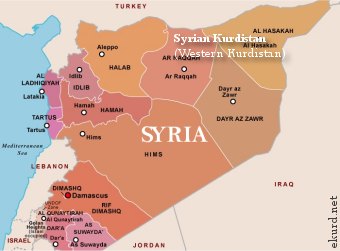
Ceterum censeo Turciam delendam esse.
Minister van Buitenlandse zaken is vandaag overgelopen naar de FSA
All wars are civil wars, because all men are brothers. ~François Fénelon
twitter:NaziqAlAbed twitterde op maandag 03-12-2012 om 19:30:27 Not a rumor MT @farGar: I once heard from very reliable activist that @IkhwansyriaEn denied aid to #Syrian women unless they'd wear hijab reageer retweet
 Not a rumor MT @
All wars are civil wars, because all men are brothers. ~François Fénelon
De woordvoerder, niet de minister zelf.quote:
Minister van Buitenlandse zaken is vandaag overgelopen naar de FSA
Klein, dat houd hij nooit lang vol omdat de rebellen dat nooit zullen accepteren.quote:
Hoe groot is de kans dat hij zich terugtrekt naar de kust en daar blijft regeren?
Komt niet overeen met wat het broederschap zegt op die twitteraccount. Maar fargar is volgensmij best betrouwbaar. Maar hoe weten we of deze account ook echt het broederschap vertegenwoordigd? In ieder geval geen goed teken.quote:twitter:NaziqAlAbed twitterde op maandag 03-12-2012 om 19:30:27 Not a rumor MT @farGar: I once heard from very reliable activist that @IkhwansyriaEn denied aid to #Syrian women unless they'd wear hijab reageer retweet
Incelfrikandel
Ik vond deze man zijn mening goed onderbouwen en wou het delen met jullie. Of hij gelijk heeft of niet, daar ga ik niet over. U moet zelf conclusies trekken, maar ik wil dit voornamelijk posten zodat er in deze topic ook goed beargumenteerde meningen worden gegeven. Ik lees vaak alleen maar tweets of mensen laten artikelen zien zonder hen mening erover te geven. Ik vind het wel fijn om andere inzichten te lezen want daar leer ik persoonlijk het meest van.
To TE's credit , Freedom of Press does include Freedom of Propaganda.
Unfortunately ,readers of "The Economist" can't be expected to be so dumb and some are bound to think of such shabby journalism as an insult to their intellect . So ,Let me try to objectively analyse the driving forces behind Western backing of Rebels and the challenges that lie ahead (Which I think TE should have been doing instead of cheerleading a side).
US and the Allies do gain a lot by backing rebels :
1. Deny Russia an opening into Mediterranean Sea and an ally in Mid-East.
2. Deny the next regional target (read Iran) an ally in the region and hence making the potential future invasion smoother . Iran will now have to do with the tacit support of Shiite Iraq only , which in turn can be pressurised into toeing the line drawn by Western allies since they were the ones who put it there in first place.
3. Deployment of another pliant pet regime of West in the Oil rich region . Perhaps some Oil Pipelines through Syria can provide easier access to Mid-East Oil to the Europe.
4. Bringing further bitterness b/w the ties of Shiite Iran and Sunni dominated countries (Saudis, Qatar etc) . This would help in gaining full hearted Support of Saudis & other sunni countries for a potential invasion of Iran or at the least in further cornering of Iran.
Yet ,there are potential challenges/threats for the West in backing rebels :
1. Setting up of a haven of Islamic Extremism right at the doorsteps of Europe.In particular , Secular Turkey could become vulnerable to the spread of Islamic extremist ideology.
2. Intensification of Shia-Sunni Sectarian strife in the broader Mid-East region that includes Iraq , Lebanon ; jeopardising the regional stability and disrupting Oil Supply to the rest of world.
3. Israel may have to to deal with yet another Islamic Brotherhood on its borders. Afterall , Islamic Brotherhood of Egypt has been in bed with Rebels since the very beginning.
4. In case rebels fail to topple Assad , Russia's relations with Syrian regime will cement further and Syria could become a hotbed of Russian Military bases.
On the balance , Rewards are indeed very tempting while the challenges/threats could very well be contained within Syria (atleast for now) - Afterall Syrian rebels do need Western , Saudi , Qatari aid to survive and hence will think twice before harming their patron's core interests. Still in a long term , Religious Extremism knows no patrons as was amply demonstrated in Afghanistan . West seems to be trading Oil & Geopolitical gains over Russia for Islamic extremism . Not that bad a deal , as a bunch of Islamist terrorists can't be expected to challenge the might of US and allies .Whenever required , They could be easily fried using drones as is being done in Pakistan/Yemen without any collateral damage.
As for the ongoing battle,It is my belief that fight is far from over. Much more blood will be spilled before the end.It may seem Rebels are on a high ground now ; but one must remember that Assad is fighting for his life , so are the other minorities in Syria.Indeed , A good number of Syrian people seem to backing Assad as there has been no popular uprising despite the conditions being perfectly ripe for the same.Most of his Military is also standing by him . Russians will also continue to do so.On the other hand , US and allies would not want to send the troops without UN backing which they'll not get (thanks to Russia and China). All things set for a protracted bloody battle unless one side unilaterally gives up .
Bron: http://www.economist.com/(...)ar/comments#comments
To TE's credit , Freedom of Press does include Freedom of Propaganda.
Unfortunately ,readers of "The Economist" can't be expected to be so dumb and some are bound to think of such shabby journalism as an insult to their intellect . So ,Let me try to objectively analyse the driving forces behind Western backing of Rebels and the challenges that lie ahead (Which I think TE should have been doing instead of cheerleading a side).
US and the Allies do gain a lot by backing rebels :
1. Deny Russia an opening into Mediterranean Sea and an ally in Mid-East.
2. Deny the next regional target (read Iran) an ally in the region and hence making the potential future invasion smoother . Iran will now have to do with the tacit support of Shiite Iraq only , which in turn can be pressurised into toeing the line drawn by Western allies since they were the ones who put it there in first place.
3. Deployment of another pliant pet regime of West in the Oil rich region . Perhaps some Oil Pipelines through Syria can provide easier access to Mid-East Oil to the Europe.
4. Bringing further bitterness b/w the ties of Shiite Iran and Sunni dominated countries (Saudis, Qatar etc) . This would help in gaining full hearted Support of Saudis & other sunni countries for a potential invasion of Iran or at the least in further cornering of Iran.
Yet ,there are potential challenges/threats for the West in backing rebels :
1. Setting up of a haven of Islamic Extremism right at the doorsteps of Europe.In particular , Secular Turkey could become vulnerable to the spread of Islamic extremist ideology.
2. Intensification of Shia-Sunni Sectarian strife in the broader Mid-East region that includes Iraq , Lebanon ; jeopardising the regional stability and disrupting Oil Supply to the rest of world.
3. Israel may have to to deal with yet another Islamic Brotherhood on its borders. Afterall , Islamic Brotherhood of Egypt has been in bed with Rebels since the very beginning.
4. In case rebels fail to topple Assad , Russia's relations with Syrian regime will cement further and Syria could become a hotbed of Russian Military bases.
On the balance , Rewards are indeed very tempting while the challenges/threats could very well be contained within Syria (atleast for now) - Afterall Syrian rebels do need Western , Saudi , Qatari aid to survive and hence will think twice before harming their patron's core interests. Still in a long term , Religious Extremism knows no patrons as was amply demonstrated in Afghanistan . West seems to be trading Oil & Geopolitical gains over Russia for Islamic extremism . Not that bad a deal , as a bunch of Islamist terrorists can't be expected to challenge the might of US and allies .Whenever required , They could be easily fried using drones as is being done in Pakistan/Yemen without any collateral damage.
As for the ongoing battle,It is my belief that fight is far from over. Much more blood will be spilled before the end.It may seem Rebels are on a high ground now ; but one must remember that Assad is fighting for his life , so are the other minorities in Syria.Indeed , A good number of Syrian people seem to backing Assad as there has been no popular uprising despite the conditions being perfectly ripe for the same.Most of his Military is also standing by him . Russians will also continue to do so.On the other hand , US and allies would not want to send the troops without UN backing which they'll not get (thanks to Russia and China). All things set for a protracted bloody battle unless one side unilaterally gives up .
Bron: http://www.economist.com/(...)ar/comments#comments
quote:Is Russia Running a Secret Supply Route to Arm Syria’s Assad?
On Nov. 27, a clip appeared on YouTube of a Russian-made Syrian military helicopter apparently being hit by Syrian rebels using a surface-to-air missile. The footage of the gunship, smoking as it turns and flies away, suddenly made the most effective killing machines in Syrian President Bashar Assad’s military look very vulnerable, as the brutal war between the Syrian government and anti-Assad rebels continues. Luckily for Assad, help appears to be on the way.
One day before the clip appeared, hackers from the group Anonymous leaked what they claim is a cache of documents stolen from the Syrian Foreign Ministry. As first reported by the non-profit investigative news organization, ProPublica, one set appears to detail shipments from Moscow to Damascus of 240 tons of newly printed Syrian money, which the Russian government has publicly acknowledged printing for the Assad regime. Another document looks to be a flight plan for four shipments of refurbished helicopters, also going from Moscow to Syria. The shipments, whose cargo the document lists in English as “old copter after overhauling,” include one delivery on Nov. 21, a second one on Nov. 28, and two more planned for the first week of December. According to the document, the payment for these shipments was made “in cash,” and their circuitous route through the skies above Iran, Iraq and Azerbaijan would circumvent the airspace of all the countries that have imposed a weapons embargo on Syria.
(PHOTOS: Inside Syria’s Slow-Motion Civil War)
“It’s getting to Syria by the back door,” says Hugh Griffiths, an arms trafficking expert at the Stockholm International Peace Research Institute (SIPRI), which operates an air-trafficking surveillance project on behalf of the European Union. Griffiths, who says the leaked flight plan appears to be genuine, sees it as the latest step in Russia’s effort to repair and then deliver Assad’s fixed-up helicopters by any means necessary. This effort has already come up against some major hurdles, with the U.S., the E.U. and Turkey making extensive efforts to stop such deliveries from crossing their airspace or territorial waters.
In June, U.S. Secretary of State Hillary Clinton criticized Russia for shipping attack helicopters to Syria; a week later, after British officials joined her calls for the shipments to stop, the Russian ship that was making the delivery—the Alaed—was forced to turn back after its British insurance company pulled its coverage. The Alaed reportedly made another attempt to fulfill the shipment in July, this time in the company of a flotilla of Russian warships. Senior U.S. officials have repeatedly warned Russian counterparts over the pattern of their arm sales to the Syrian regime.
According to the documents leaked by Anonymous, Russia has since begun transporting Syria’s patched-up helicopters by air. TIME emailed copies of the documents to the spokesman of Russia’s state arms dealer, Rosoboronexport, who declined to comment on them. But the company has previously said that it is repairing helicopter gunships for Syria under an old contract, which it says it is legally obligated to carry out regardless of the sanctions imposed by the U.S., E.U. and various Arab states. “None of these events will influence our relationships with our traditional markets in any way,” the head of Rosoboronexport, Anatoly Isaykin, told TIME in June.
And under international law, there is nothing to stop them. Russia and China have used their veto power three times in the U.N. Security Council to block sanctions against Syria over the past two years. Russia’s helicopter deliveries to Syria may be politically sensitive but they are perfectly legal.
According to the hacked documents, the helicopters were picked up from Ramenskoe airport, also known as Zhukovsky, a military facility outside Moscow that houses the fleet of Russia’s secret police, the FSB. That is the same airfield that hosts the biennial Russian arms bazaar, where TIME found and photographed Syrian officials shopping for weapons this summer
(MORE: Russian Realpolitik: Inside the Arms Trade with Syria)
The Syrian Airlines plane that is apparently ferrying the helicopters to Syria is registered under the code YK-ATA and has been on SIPRI’s watch list for two years, Griffiths says, ever since it started flying refurbished helicopter gunships to Syria. During one such shipment in 2010, Griffiths says, the government of Lithuania, an EU member, learned the nature of the plane’s cargo and refused to allow it into Lithuanian airspace. Since then, the E.U. and Turkey have banned all Syrian aircraft from flying over their territory. In October, that led to a diplomatic spat between Ankara and Moscow when Turkish fighter jets forced down a Syrian airliner flying from Moscow to Damascus. Turkish authorities searched the plane for weapons, and Turkey’s Prime Minister Recep Tayyip Erdogan said they had found munitions and “military tools” inside. The Russian Foreign Ministry has said that the plane was carrying radar equipment, not military hardware.
Still, Turkey’s vigilance seems to have forced Russia to cobble together a new route for the helicopter gunships, says Peter Danssaert, an expert at the International Peace Information Service, an Antwerp-based organization that tracks the weapons trade. He also says the flight plan released by Anonymous looks genuine. “It looks like [Syria and Russia] are trying to avoid a repeat of the Turkish situation,” Danssaert says. “It’s a classic example of clandestine arms movement,” says SIPRI’s Griffiths. “The avoidance of more rigorously monitored airspace in favor of Iraq and [Syria’s] regional ally Iran.”
But these shipments seem a lot less clandestine after the leak of the documents, which may create new problems for both Russia and Syria. The U.S. could put pressure on Iraq, for example, to refuse overflight clearance for the Russian shipments, and that would again force Russia to scramble for a new route to Damascus. Given the determination it has shown so far, it is unlikely that Moscow will give up on its helicopter contracts with Syria altogether. So even as the Syrian rebels learn to shoot the Russian-made choppers down, Moscow will likely be there to patch them up again.
Free Assange! Hack the Planet
[b]Op dinsdag 6 januari 2009 19:59 schreef Papierversnipperaar het volgende:[/b]
De gevolgen van de argumenten van de anti-rook maffia
[b]Op dinsdag 6 januari 2009 19:59 schreef Papierversnipperaar het volgende:[/b]
De gevolgen van de argumenten van de anti-rook maffia


twitter:AP twitterde op dinsdag 04-12-2012 om 15:55:01 BREAKING: Syria state media say 29 students killed when mortar slams into a school in a Damascus suburb. reageer retweet
 BREAKING: Syria state media say 29 students killed when mortar slams into a school in a Damascus suburb.
Ik dacht de FSA gericht schiet?quote:twitter:AP twitterde op dinsdag 04-12-2012 om 15:55:01 BREAKING: Syria state media say 29 students killed when mortar slams into a school in a Damascus suburb. reageer retweet
All wars are civil wars, because all men are brothers. ~François Fénelon
Ik bedoel gericht schieten op militaire doelen etc. En dat ze niet random schieten.quote:
 Op
Op [ Bericht 0% gewijzigd door rakotto op 04-12-2012 16:21:38 (typo) ]
All wars are civil wars, because all men are brothers. ~François Fénelon
"Mortar"quote:
[..]
Ik bedoel gericht schieten op militaire doelen etc. En dat ze niet random schieten.
Ceterum censeo Turciam delendam esse.
http://www.telegraaf.nl/b(...)_school_Syrie__.htmlquote:
De aanval in een buitenwijk van Damascus zou zijn uitgevoerd door rebellen, de FSA dus...
Ja maar de zinsopbouw was niet helder voor me dus ik had zoiets vanquote:
[..]
http://www.telegraaf.nl/b(...)_school_Syrie__.html
De aanval in een buitenwijk van Damascus zou zijn uitgevoerd door rebellen, de FSA dus...
 at wilde je nou zeggen
Is al eens eerder gebeurd in Aleppo, waarbij ze met mortieren een woonwijk raakte. Het is even afwachten of de FSA of een andere rebellengroep erachterzit, aan die bomexplosie een paar dagen geleden in Homs zat ook een 'luchtje'. Maar alles wijst er nu op dat de rebellen een domme fout hebben gemaakt.quote:
[..]
Ik bedoel gericht schieten op militaire doelen etc. En dat ze niet random schieten.
En nog even over dat betoog dat Djibril postte: Ben jij het eens met deze man/vrouw? Ik vind het een zeer slecht onderbouwd betoog namelijk. Als eerste wekt hij de suggestie dat de rebellen worden gesteund en bevoorraad door vooral het westen, waar geen enkel bewijs voor is. Ten tweede dat de rebellen alleen maar uit religeuze extremisten bestaat en dat dit een puur sectarisch conflict is, belachelijk natuurlijk. In essentie zegt hij gewoon dat Syrië moet kiezen tussen een gladgeschoren crimineel en een bebaarde crimineel. Alsof er geen andere andere opties zijn. Buiten het feit dat hij niks hard kan maken hoor ik geen enkel woord over de feiten dat Assad is begonnen met schieten op vreedzame betogers, dat er net zo goed jihadistische sjiieten aan Assad's kant vechten, constante overlopers etc. Nogal selectief voor iemand die beweert objectief te zijn en een ander beschuldigd van armzalige journalistiek.
Incelfrikandel
Bedankt voor het reageren.quote:
[..]
Is al eens eerder gebeurd in Aleppo, waarbij ze met mortieren een woonwijk raakte. Het is even afwachten of de FSA of een andere rebellengroep erachterzit, aan die bomexplosie een paar dagen geleden in Homs zat ook een 'luchtje'. Maar alles wijst er nu op dat de rebellen een domme fout hebben gemaakt.
En nog even over dat betoog dat Djibril postte: Ben jij het eens met deze man/vrouw? Ik vind het een zeer slecht onderbouwd betoog namelijk. Als eerste wekt hij de suggestie dat de rebellen worden gesteund en bevoorraad door vooral het westen, waar geen enkel bewijs voor is. Ten tweede dat de rebellen alleen maar uit religeuze extremisten bestaat en dat dit een puur sectarisch conflict is, belachelijk natuurlijk. In essentie zegt hij gewoon dat Syrië moet kiezen tussen een gladgeschoren crimineel en een bebaarde crimineel. Alsof er geen andere andere opties zijn. Buiten het feit dat hij niks hard kan maken hoor ik geen enkel woord over de feiten dat Assad is begonnen met schieten op vreedzame betogers, dat er net zo goed jihadistische sjiieten aan Assad's kant vechten, constante overlopers etc. Nogal selectief voor iemand die beweert objectief te zijn en een ander beschuldigd van armzalige journalistiek.
Laat ik voorop stellen: Ik steun Assad totaal niet en zie hem liever vandaag dan morgen vertrekken. Daarnaast wil ik er ook bij zeggen dat ik de FSA niet helemaal vertrouw en denk dat zodra zij aan de macht komen men weer te maken zal krijgen met een corrupte overheid. Kijk maar naar Irak, Libie, Afganistan, Jemen en waarschijnlijk nog een paar landen.
De FSA heeft mij nog steeds niet overtuigt waar ze voor staan. Ze zeggen alleen dat ze Assad weg willen. Ja, dat wil elk mens met een goed hart. Maar daarna? Wat wil je gaan doen? Wie worden je nieuwe leiders? Hoe sta je tegenover het feit dat Syrie met verschillende etniciteiten te maken heeft?
Het zegt al veel dat de FSA de Syrische overheid in het buitenland niet accepteert. Dan heb ik het over de nieuw (gemaakt door het westen) regering die in Doha bijeen was. Ben even vergeten hoe men dit noemt, misschien kan iemand mij hierbij helpen.
Ik heb het gevoel dat het bloedvergieten en mensenrechten schenden pas echt gaat beginnen nadat Assad weg is. Want de FSA wil de macht niet afstaan. En binnen de FSA heeft men ook te maken met milities die verenigd worden door het feit dat ze een gezamlijke vijand hebben, Assad. Maar buiten dat kunnen ze elkaar bloed wel drinken.
Dat zien we bijvoorbeeld ook in Libie. De verschillende milities vochten zij aan zij tegen Khadaffi, maar wat is er gebeurd daarna? Ze zijn begonnen elkaar uit te moorden. En dat doen ze nog steeds. Kijk maar naar de Misrata militie en de Ziltan militie.
Ook kunnen we Irak als voorbeeld nemen. Verschillende partijen strijden zij aan zij maar nadat Saddam weg was staan ze lijnrecht tegenover elkaar. Kijk maar naar de Koerden en Sjitten nu daar.
Daarnaast, het komt niet vaak in het nieuws maar zoek het maar op. Het vechten is nu al begonnen tussen Koerden en de zogenaamde FSA. Daarbij moet ik wel zeggen dat het deel van FSA dat tegen de Koerden vecht voornamelijk de moslim extremisten zijn.
Wat ik ook wel frappant vind: de leiders van de FSA zijn allemaal hoge pieten geweest onder Assad. Hoe denk je dat zij het vertrouwen van Assad hadden gewonnen? Natuurlijk door 5000 Koerden begin deze eeuw te vermoorden in Qamislo. Deze hoge pieten hebben ook geen schone handen.
Maar goed ik wil het stukje van FSA wel afsluiten met het feit dat er ook mensen bij lopen die echt een vrij en rechtvaardig Syrie willen hebben en daarom zich bij de FSA hebben aangesloten. Maar ik heb het gevoel dat hen wens niet zal uitkomen,
FSA krijgt zeker wel steun vanuit het buitenland en dan voornamelijk van Turkije, Qatar en Saudi Arabie. Vooral Qatar en Saudi-Arabie krijgen de wind van voren in de Arabische wereld omdat ze deze twee landen zien als marionetten van het westen. Turkije wil weer een ottomaans rijk maken en wil zodoende hen invloed in Syrie vergroten.
Hier heb ik een bron waaruit blijkt dat de FSA wel degelijk steun krijgt van het buitenland.
http://www.reuters.com/ar(...)dUSBRE86Q0JM20120727
En op youtube cirkelen er veel filmpjes rond waar de rebellen zelf toegeven dat ze wapens krijgen van het buitenland. Ik zal de volgende keer filmpjes voor je opzoeken daarover.
Daarnaast wordt Assad gewoon (militair) gesteunt door Iran en Rusland.
Wat de uitkomst van deze oorlog ook is, ik hoop het beste voor de Syrische volk. Het is niet FSA die lijdt noch lijdt Assad hieronder, de enige slachtoffers zijn de Syrische mensen.
De FSA is dan ook geen organisatie. De FSA is ontstaan uit overgelopen militairen die weigerden op burgers te schieten, aangevuld met burgers en moslimextremisten.quote:
[..]
Bedankt voor het reageren.
Laat ik voorop stellen: Ik steun Assad totaal niet en zie hem liever vandaag dan morgen vertrekken. Daarnaast wil ik er ook bij zeggen dat ik de FSA niet helemaal vertrouw en denk dat zodra zij aan de macht komen men weer te maken zal krijgen met een corrupte overheid. Kijk maar naar Irak, Libie, Afganistan, Jemen en waarschijnlijk nog een paar landen.
De FSA heeft mij nog steeds niet overtuigt waar ze voor staan. Ze zeggen alleen dat ze Assad weg willen. Ja, dat wil elk mens met een goed hart. Maar daarna? Wat wil je gaan doen? Wie worden je nieuwe leiders? Hoe sta je tegenover het feit dat Syrie met verschillende etniciteiten te maken heeft?
Het zegt al veel dat de FSA de Syrische overheid in het buitenland niet accepteert. Dan heb ik het over de nieuw (gemaakt door het westen) regering die in Doha bijeen was. Ben even vergeten hoe men dit noemt, misschien kan iemand mij hierbij helpen.
Ik heb het gevoel dat het bloedvergieten en mensenrechten schenden pas echt gaat beginnen nadat Assad weg is. Want de FSA wil de macht niet afstaan. En binnen de FSA heeft men ook te maken met milities die verenigd worden door het feit dat ze een gezamlijke vijand hebben, Assad. Maar buiten dat kunnen ze elkaar bloed wel drinken.
Dat zien we bijvoorbeeld ook in Libie. De verschillende milities vochten zij aan zij tegen Khadaffi, maar wat is er gebeurd daarna? Ze zijn begonnen elkaar uit te moorden. En dat doen ze nog steeds. Kijk maar naar de Misrata militie en de Ziltan militie.
Ook kunnen we Irak als voorbeeld nemen. Verschillende partijen strijden zij aan zij maar nadat Saddam weg was staan ze lijnrecht tegenover elkaar. Kijk maar naar de Koerden en Sjitten nu daar.
Daarnaast, het komt niet vaak in het nieuws maar zoek het maar op. Het vechten is nu al begonnen tussen Koerden en de zogenaamde FSA. Daarbij moet ik wel zeggen dat het deel van FSA dat tegen de Koerden vecht voornamelijk de moslim extremisten zijn.
Wat ik ook wel frappant vind: de leiders van de FSA zijn allemaal hoge pieten geweest onder Assad. Hoe denk je dat zij het vertrouwen van Assad hadden gewonnen? Natuurlijk door 5000 Koerden begin deze eeuw te vermoorden in Qamislo. Deze hoge pieten hebben ook geen schone handen.
Maar goed ik wil het stukje van FSA wel afsluiten met het feit dat er ook mensen bij lopen die echt een vrij en rechtvaardig Syrie willen hebben en daarom zich bij de FSA hebben aangesloten. Maar ik heb het gevoel dat hen wens niet zal uitkomen,
FSA krijgt zeker wel steun vanuit het buitenland en dan voornamelijk van Turkije, Qatar en Saudi Arabie. Vooral Qatar en Saudi-Arabie krijgen de wind van voren in de Arabische wereld omdat ze deze twee landen zien als marionetten van het westen. Turkije wil weer een ottomaans rijk maken en wil zodoende hen invloed in Syrie vergroten.
Hier heb ik een bron waaruit blijkt dat de FSA wel degelijk steun krijgt van het buitenland.
http://www.reuters.com/ar(...)dUSBRE86Q0JM20120727
En op youtube cirkelen er veel filmpjes rond waar de rebellen zelf toegeven dat ze wapens krijgen van het buitenland. Ik zal de volgende keer filmpjes voor je opzoeken daarover.
Daarnaast wordt Assad gewoon (militair) gesteunt door Iran en Rusland.
Wat de uitkomst van deze oorlog ook is, ik hoop het beste voor de Syrische volk. Het is niet FSA die lijdt noch lijdt Assad hieronder, de enige slachtoffers zijn de Syrische mensen.
De politieke oppositie in het buitenland is ook een verzameling clubjes. In het begin van de opstand was er onvrede tussen oppositie die geweldloos wilden blijven demonstreren en mensen die de wapens wilden oppakken. En veel mensen zaten al tientallen jaren in het buitenland.
Het regime van Assad heeft een echte oppositie ( in Syrië) onmogelijk gemaakt, daardoor is er geen (goed georganiseerde) oppositie die de macht ordentelijk over kan nemen. Dat is dan ook en standaard strategie van een dictatuur: oppositie onmogelijk maken en daardoor het regime neerzetten als een noodzakelijk kwaad. Zoals Mubarak al zei: zonder mij is er chaos.
Dat zijn allemaal zaken die het gevolg zijn van een dictatuur, geen argumenten om de omverwerping van die dictatuur tegen te houden.
It has to get worse before it gets better.
Free Assange! Hack the Planet
[b]Op dinsdag 6 januari 2009 19:59 schreef Papierversnipperaar het volgende:[/b]
De gevolgen van de argumenten van de anti-rook maffia
[b]Op dinsdag 6 januari 2009 19:59 schreef Papierversnipperaar het volgende:[/b]
De gevolgen van de argumenten van de anti-rook maffia
Overgelopen militairen die in begin deze eeuw wel een massamoord onder de Koerden pleegden.
http://www.mideastweb.org/log/archives/00000231.htm
Overgelopen militairen die Syrische mensen die een andere mening hadden dan Assad in de gevangenissen even in elkaar sloegen. Of erger nog vermoorden.
Je zou van deze militairen verwachten dat ze wel weten hoe ze een organisatie moeten runnen, zeker na 2 jaar van vechten. Maar dat is nog steeds niet zo. Zoals jezelf aangeeft zijn er nog steeds clubjes.
En als de FSA geen organisatie is, is het dan niet riskant om ze te bevoorraden met wapens? Ik bedoel je weet nooit wat voor clubjes onder het paraplu van de FSA functioneren. Er zijn al artikelen voorbij gekomen in dit topic die al aangeven dat het aantal extremisten onder de FSA sterk aan het stijgen is.
It has to get worse before it gets better? Moeten er nog meer mensen vermoordt worden en lijden totdat het beter gaat worden? We zijn al 2 jaar bezig en waarschijnlijk 10 jaar voordat Syrie enigszins weer een stabiele dictatuur wordt.
http://www.mideastweb.org/log/archives/00000231.htm
Overgelopen militairen die Syrische mensen die een andere mening hadden dan Assad in de gevangenissen even in elkaar sloegen. Of erger nog vermoorden.
Je zou van deze militairen verwachten dat ze wel weten hoe ze een organisatie moeten runnen, zeker na 2 jaar van vechten. Maar dat is nog steeds niet zo. Zoals jezelf aangeeft zijn er nog steeds clubjes.
En als de FSA geen organisatie is, is het dan niet riskant om ze te bevoorraden met wapens? Ik bedoel je weet nooit wat voor clubjes onder het paraplu van de FSA functioneren. Er zijn al artikelen voorbij gekomen in dit topic die al aangeven dat het aantal extremisten onder de FSA sterk aan het stijgen is.
It has to get worse before it gets better? Moeten er nog meer mensen vermoordt worden en lijden totdat het beter gaat worden? We zijn al 2 jaar bezig en waarschijnlijk 10 jaar voordat Syrie enigszins weer een stabiele dictatuur wordt.
In opdracht van Assad.quote:
Overgelopen militairen die in begin deze eeuw wel een massamoord onder de Koerden pleegden.
http://www.mideastweb.org/log/archives/00000231.htm
Overgelopen militairen die Syrische mensen die een andere mening hadden dan Assad in de gevangenissen even in elkaar sloegen. Of erger nog vermoorden.
Het is ook niet eenvoudig je te organiseren zonder hulp en tijdens een burgeroorlog.quote:Je zou van deze militairen verwachten dat ze wel weten hoe ze een organisatie moeten runnen, zeker na 2 jaar van vechten. Maar dat is nog steeds niet zo. Zoals jezelf aangeeft zijn er nog steeds clubjes.
Assad had natuurlijk ook kunnen hervormen. Het is allemaal zijn schuld.
Dat had voorkomen kunnen worden door de FSA eerder te steunen. Nu moeten ze wel steun aannemen van extremistische landen en clubjes.quote:En als de FSA geen organisatie is, is het dan niet riskant om ze te bevoorraden met wapens? Ik bedoel je weet nooit wat voor clubjes onder het paraplu van de FSA functioneren. Er zijn al artikelen voorbij gekomen in dit topic die al aangeven dat het aantal extremisten onder de FSA sterk aan het stijgen is.
We moeten er alles aan doen om het GEEN dictatuur te laten worden/blijven.quote:It has to get worse before it gets better? Moeten er nog meer mensen vermoordt worden en lijden totdat het beter gaat worden? We zijn al 2 jaar bezig en waarschijnlijk 10 jaar voordat Syrie enigszins weer een stabiele dictatuur wordt.
Free Assange! Hack the Planet
[b]Op dinsdag 6 januari 2009 19:59 schreef Papierversnipperaar het volgende:[/b]
De gevolgen van de argumenten van de anti-rook maffia
[b]Op dinsdag 6 januari 2009 19:59 schreef Papierversnipperaar het volgende:[/b]
De gevolgen van de argumenten van de anti-rook maffia
In opdracht van Assad?
Waarom handelen ze nu dan niet in opdracht van Assad? Nu hebben ze ineens wel de ballen om tegen Assad in te gaan. Daarvoor dedem ze lekker aan mensenrechten schenden om een hogere rank te krijgen en dus beloond te worden door Assad. Ze hebben zich verrijkt door mensen te vermoorden. Dit moeten we niet vergeten. Zodra zij aan de macht komen zal ik niet snel een verschil zien tussen hen en Assad.
Vaak zie ik van jou artikelen voorbij komen over occupy beweging die worden mishandeld door politieagenten of die niet eerlijk worden behandeld. Waar maak je je druk om? De politie mensen handelen in opdracht van de regering. Ik zal je niet zeggen dat je moet stoppen om zulke artikelen te gaan plaatsen, want ik vind dat wij recht hebben om te weten wat er gaande is. en jij geeft ons zulke artikelen, dus chapeau. Maar ik vind wel dat je nu vaag bent in het‘in opdracht handelen’.
Het is ook niet eenvoudig je te organiseren zonder hulp en tijdens een burgeroorlog
Dat had voorkomen kunnen worden door de FSA eerder te steunen. Nu moeten ze wel steun aannemen van extremistische landen en clubjes
Eerst zeg je dat het niet makkelijk is om te organiseren zonder hulp en dan zeg je dat ze wel steun aannemen van andere landen en clubjes. Beetje raar op zich vind je niet?
We moeten er alles aan doen om het GEEN dictatuur te laten worden/blijven.
En hoe doen we dit? Als we naar het verleden kijken dan zie je dat we steeds gefaald hebben om dit te bereiken. Blijkbaar moeten we niet zomaar klakkeloos groeperingen gaan steunen.
En waarom moeten wij nu pas Assad weg halen en niet eerder?
Waarom doen wij er alles aan om de dictatuur in Jordanie, Saudi-Arabie en Qatar in stand te houden? Graag antwoord op al deze vragen.
Wij moeten echt oppassen met wie we steunen in Syrie. Want voor je het weet is er weer een grote aanslag over 10 jaar en heeft de aanslagpleger zijn opleiding tot zelfmoord gedaan in Syrie. Dan kunnen we weer dat aanvallen wat weer slecht is voor de wereld economie.
Waarom handelen ze nu dan niet in opdracht van Assad? Nu hebben ze ineens wel de ballen om tegen Assad in te gaan. Daarvoor dedem ze lekker aan mensenrechten schenden om een hogere rank te krijgen en dus beloond te worden door Assad. Ze hebben zich verrijkt door mensen te vermoorden. Dit moeten we niet vergeten. Zodra zij aan de macht komen zal ik niet snel een verschil zien tussen hen en Assad.
Vaak zie ik van jou artikelen voorbij komen over occupy beweging die worden mishandeld door politieagenten of die niet eerlijk worden behandeld. Waar maak je je druk om? De politie mensen handelen in opdracht van de regering. Ik zal je niet zeggen dat je moet stoppen om zulke artikelen te gaan plaatsen, want ik vind dat wij recht hebben om te weten wat er gaande is. en jij geeft ons zulke artikelen, dus chapeau. Maar ik vind wel dat je nu vaag bent in het‘in opdracht handelen’.
Het is ook niet eenvoudig je te organiseren zonder hulp en tijdens een burgeroorlog
Dat had voorkomen kunnen worden door de FSA eerder te steunen. Nu moeten ze wel steun aannemen van extremistische landen en clubjes
Eerst zeg je dat het niet makkelijk is om te organiseren zonder hulp en dan zeg je dat ze wel steun aannemen van andere landen en clubjes. Beetje raar op zich vind je niet?
We moeten er alles aan doen om het GEEN dictatuur te laten worden/blijven.
En hoe doen we dit? Als we naar het verleden kijken dan zie je dat we steeds gefaald hebben om dit te bereiken. Blijkbaar moeten we niet zomaar klakkeloos groeperingen gaan steunen.
En waarom moeten wij nu pas Assad weg halen en niet eerder?
Waarom doen wij er alles aan om de dictatuur in Jordanie, Saudi-Arabie en Qatar in stand te houden? Graag antwoord op al deze vragen.
Wij moeten echt oppassen met wie we steunen in Syrie. Want voor je het weet is er weer een grote aanslag over 10 jaar en heeft de aanslagpleger zijn opleiding tot zelfmoord gedaan in Syrie. Dan kunnen we weer dat aanvallen wat weer slecht is voor de wereld economie.
quote:
quote:Syria's President Bashar Assad has been looking into the possibility of claiming political asylum for himself, his family and his associates in Latin America, according to the Israeli newspaper Haaretz. There is little confirmation for the claim but Syria's deputy foreign minister, Faisal al-Miqdad, held meetings in Cuba, Venezuela and Ecuador over the past week. Assad vowed in an interview with Russia Today last month that he would never be forced into exile and that he would "live and die in Syria."
http://www.haaretz.com/ne(...)ria.premium-1.482570
Free Assange! Hack the Planet
[b]Op dinsdag 6 januari 2009 19:59 schreef Papierversnipperaar het volgende:[/b]
De gevolgen van de argumenten van de anti-rook maffia
[b]Op dinsdag 6 januari 2009 19:59 schreef Papierversnipperaar het volgende:[/b]
De gevolgen van de argumenten van de anti-rook maffia

Dat maak ik zelf nog wel uit!quote:

We moeten vooral niet eenzijdig van buitenaf regimes aan gaan pakken. De bevolking moet het zelf doen, en dat doen ze nu. En dan moeten we ze steunen.quote:En hoe doen we dit? Als we naar het verleden kijken dan zie je dat we steeds gefaald hebben om dit te bereiken. Blijkbaar moeten we niet zomaar klakkeloos groeperingen gaan steunen.
En waarom moeten wij nu pas Assad weg halen en niet eerder?
Dat moeten we niet. Maar ik ben niet verantwoordelijk voor de politieke spelletjes van regeringen.quote:Waarom doen wij er alles aan om de dictatuur in Jordanie, Saudi-Arabie en Qatar in stand te houden? Graag antwoord op al deze vragen.
Interesseert me geen zak. Mensenrechten gaan voor economie. Ik kies altijd de kant van burgers, nooit van regeringen.quote:Dan kunnen we weer dat aanvallen wat weer slecht is voor de wereld economie.
[ Bericht 15% gewijzigd door Papierversnipperaar op 05-12-2012 13:12:48 ]
Free Assange! Hack the Planet
[b]Op dinsdag 6 januari 2009 19:59 schreef Papierversnipperaar het volgende:[/b]
De gevolgen van de argumenten van de anti-rook maffia
[b]Op dinsdag 6 januari 2009 19:59 schreef Papierversnipperaar het volgende:[/b]
De gevolgen van de argumenten van de anti-rook maffia

Ik heb Hem niet uit vrees voor de hel noch uit liefde voor het paradijs gediend, want dan zou ik als de slechte huurling zijn geweest; ik heb hem veeleer gediend in liefde tot Hem en in verlangen naar Hem.
-Rabia Al-Basri
-Rabia Al-Basri
quote:
quote:Damascus
There is a widespread fear of a battle for Damascus, according to a resident and activist who claimed the rebels were gaining the upper hand.
Majd Arar, an engineer currently based in the Mezzeh district of western Damascus, said: “The government has lots the initiative and the Free Syrian Army is calling the shots ... the power balance is shifting because the FSA is getting more ammo and conducting more operations.:
quote:Arar said rebels had looted arms and ammunition from airforce camps and were establishing training centres around the capital.
Free Assange! Hack the Planet
[b]Op dinsdag 6 januari 2009 19:59 schreef Papierversnipperaar het volgende:[/b]
De gevolgen van de argumenten van de anti-rook maffia
[b]Op dinsdag 6 januari 2009 19:59 schreef Papierversnipperaar het volgende:[/b]
De gevolgen van de argumenten van de anti-rook maffia
Dat zou misschien wel kunnen, maar ik vind dat geen excuus om Assad dan maar aan de macht te laten. Hij is volledig verantwoordelijk voor de huidige situatie, hij had voor een vreedzame overgang kunnen kiezen. Bovendien kun je niet verwachten dat alles meteen goed gaat na een revolutie.quote:
[..]
Bedankt voor het reageren.
Laat ik voorop stellen: Ik steun Assad totaal niet en zie hem liever vandaag dan morgen vertrekken. Daarnaast wil ik er ook bij zeggen dat ik de FSA niet helemaal vertrouw en denk dat zodra zij aan de macht komen men weer te maken zal krijgen met een corrupte overheid. Kijk maar naar Irak, Libie, Afganistan, Jemen en waarschijnlijk nog een paar landen.
Daar maak ik mij ook zorgen om, maar ik snap niet goed wat je met deze post wil zeggen.quote:De FSA heeft mij nog steeds niet overtuigt waar ze voor staan. Ze zeggen alleen dat ze Assad weg willen. Ja, dat wil elk mens met een goed hart. Maar daarna? Wat wil je gaan doen? Wie worden je nieuwe leiders? Hoe sta je tegenover het feit dat Syrie met verschillende etniciteiten te maken heeft?
Je doelt nu op de verklaring van die zogenaamde islamisten en jihadisten in Aleppo neem ik aan? Dat was een hoax. Sowieso bestaat dé FSA niet. Het is zoals Papier al zegt geen organisatie. Maar ik heb wel verklaringen gezien van FSA-leiders die de opgerichte oppositie in Qatar zeggen te accepteren. Maar dat hoeft niet iets te zeggen.quote:Het zegt al veel dat de FSA de Syrische overheid in het buitenland niet accepteert.
http://en.wikipedia.org/w(...)nd_Opposition_Forcesquote:Dan heb ik het over de nieuw (gemaakt door het westen) regering die in Doha bijeen was. Ben even vergeten hoe men dit noemt, misschien kan iemand mij hierbij helpen.
Ik niet.quote:Ik heb het gevoel dat het bloedvergieten en mensenrechten schenden pas echt gaat beginnen nadat Assad weg is.
quote:Want de FSA wil de macht niet afstaan. En binnen de FSA heeft men ook te maken met milities die verenigd worden door het feit dat ze een gezamlijke vijand hebben, Assad. Maar buiten dat kunnen ze elkaar bloed wel drinken.
quote:Het regime van Assad heeft een echte oppositie ( in Syrië) onmogelijk gemaakt, daardoor is er geen (goed georganiseerde) oppositie die de macht ordentelijk over kan nemen. Dat is dan ook en standaard strategie van een dictatuur: oppositie onmogelijk maken en daardoor het regime neerzetten als een noodzakelijk kwaad. Zoals Mubarak al zei: zonder mij is er chaos.
Mensen die ik sprak die recentelijk in Libië zijn geweest en/of gewoond delen die conclusie niet. Sowieso vind ik dat je wat vroeg bent met conclusies trekken uit Libië.quote:Dat zien we bijvoorbeeld ook in Libie. De verschillende milities vochten zij aan zij tegen Khadaffi, maar wat is er gebeurd daarna? Ze zijn begonnen elkaar uit te moorden. En dat doen ze nog steeds. Kijk maar naar de Misrata militie en de Ziltan militie.
Zo zwart wit is het niet. Er zitten ook koerden in de FSA. Extremisten zitten meestal bij Al-Nusra.quote:Ook kunnen we Irak als voorbeeld nemen. Verschillende partijen strijden zij aan zij maar nadat Saddam weg was staan ze lijnrecht tegenover elkaar. Kijk maar naar de Koerden en Sjitten nu daar.
Daarnaast, het komt niet vaak in het nieuws maar zoek het maar op. Het vechten is nu al begonnen tussen Koerden en de zogenaamde FSA. Daarbij moet ik wel zeggen dat het deel van FSA dat tegen de Koerden vecht voornamelijk de moslim extremisten zijn.
Heb je je eigen bron wel gelezen? Die zegt 100 en geen 5000. Sowieso kan ik nergens een bron vinden die meer dan 120 noemt.quote:Wat ik ook wel frappant vind: de leiders van de FSA zijn allemaal hoge pieten geweest onder Assad. Hoe denk je dat zij het vertrouwen van Assad hadden gewonnen? Natuurlijk door 5000 Koerden begin deze eeuw te vermoorden in Qamislo.
Natuurlijk niet, in geen enkele dictatuur. Maar hoe wil je anders een revolutie krijgen? Je zult toch de belangrijke mensen aan jou kant moeten krijgen.quote:Deze hoge pieten hebben ook geen schone handen.
Ze doen wel degelijk dingen buiten het westen om.quote:Maar goed ik wil het stukje van FSA wel afsluiten met het feit dat er ook mensen bij lopen die echt een vrij en rechtvaardig Syrie willen hebben en daarom zich bij de FSA hebben aangesloten. Maar ik heb het gevoel dat hen wens niet zal uitkomen,[quote]
Eens. Grote kans dat er nog een gevecht zal komen nadat Assad is afgezet. Maar tussen wie is nog maar de vraag. En misschien gebeurd het ook wel niet. Ik denk dat het dan zal gaan tussen de gematigden en Al-Nusra. Maar Al-Nusra vult nu een gat die andere landen(niet persé het westen) open hebben gelaten. Die hadden de FSA (of de vreedzame) oppositie moeten steunen toen het nog vooral gematigd was. Maar deze puinhoop is nog steeds Assad's volledige schuld.
[quote]FSA krijgt zeker wel steun vanuit het buitenland en dan voornamelijk van Turkije, Qatar en Saudi Arabie. Vooral Qatar en Saudi-Arabie krijgen de wind van voren in de Arabische wereld omdat ze deze twee landen zien als marionetten van het westen.
Ik denk dat je nogal overdrijft. Meer invloed zeker wel.quote:Turkije wil weer een ottomaans rijk maken en wil zodoende hen invloed in Syrie vergroten.
Maar dus niet van het westen. Dat kan die bron dus ook niet bewijzen.quote:Hier heb ik een bron waaruit blijkt dat de FSA wel degelijk steun krijgt van het buitenland.
http://www.reuters.com/ar(...)dUSBRE86Q0JM20120727
Die wil ik wel eens zien, want ik denk niet dat ze westerse landen zullen opnoemen. Wat ik heb gehoord is dat er zelfs niks terecht is gekomen van de zogenaamde 'non-lethal aid' die was beloofd aan de rebellen. Kogelvrije vesten, helmen, camera's. Niks van gezien.quote:En op youtube cirkelen er veel filmpjes rond waar de rebellen zelf toegeven dat ze wapens krijgen van het buitenland. Ik zal de volgende keer filmpjes voor je opzoeken daarover.
Rusland en Iran zijn dus onderdeel van het probleem.quote:Daarnaast wordt Assad gewoon (militair) gesteunt door Iran en Rusland.
Redelijk eens. Dan een vraag voor jou: Wat zie jij dan als (beste) oplossing voor Syrië?quote:Wat de uitkomst van deze oorlog ook is, ik hoop het beste voor de Syrische volk. Het is niet FSA die lijdt noch lijdt Assad hieronder, de enige slachtoffers zijn de Syrische mensen.
Incelfrikandel
Ik snap niet waarom mensen zeggen dat de FSA geen organisatie is, maar intussen wel zeggen dat FSA-leiders de oppositie in Qatar erkent. Hoe kan FSA leiders hebben als het geen organisatie is?
En als de FSA geen organisatie is, waarom zouden wij hen dan steunen. We kunnen niet controleren watvoor clubjes dit allemaal zijn. Blijkbaar is het steunen(militair en politiek) van onbekenden voor sommige mensen op dit forum normaal. Dezelfde mensen die niet op letten bij geschiedenis.
Het is in Libie, Irak, Jemen en Afganistan verkeerd gegaan omdat wij(het westen) de corrupte mensen steunden in de oppositie van deze landen. Vertel aan mij is een van deze landen beter geworden na onze invasie?
Leuk dat je mensen kent die in Libie zijn geweest en zeggen dat het veilig is, maar zijn deze mensen ook in Ziltan, Bani Walid of Misrata geweest? Of zijn ze alleen maar in de diplomatieke wijk van Benghazi of Tripoli geweest. Ik kan je vertellen dat de green zone in Bagdad ontzettend veilig en vrij is, wat de indruk geeft dat Irak veilig is. Maar zet maar een stap buiten, dan krijgen we een ander verhaal.
Voor de revolutie heb je hulp nodig van hoge pieten? Weer de geschiedenis niet kennen. Een revolutie zal pas succesvol zijn als de elite( of een deel ervan) zich tegen de regering zal keren. Hierna zal het volk volgen. Zo is het gegaan toen Nederland in opstand kwam tegen Spanje, zo is het gegaan toen de elite in Egypte Mubarak liet vallen en zo is het gegaan ten tijde van de Franse Revolutie en de Oktober revolutie. De elite van Syrie, waaronder vele Sunni clans hebben Assad nog steeds niet laten vallen, vandaar ook dat het niet vlot wil gaan voor de FSA.
Daarbij, er zitten niet veel Koerden bij FSA. Sterker nog ze zijn op één wellicht twee handen te tellen. De Koerden hebben altijd tegen Assad gevochten en zijn niet zoals de FSA pas begonnen toen de rest het ook deed. Daarbij heb je ook nog heel veel sunni soldaten die vechten voor Assad.
Al-Nusra is groeiende onder de FSA, ontken dat niet. En sta er niet raar van te kijken als Syrie na Assad een bedreiging voor het Westen en Israel gaat vormen.
Je vraagt wat de beste oplossing is voor Syrie voor mij?
Nou laten we beginnen met de Golan gebergte te erkennen als Israelischs grondgebied. Daarnaast moeten we de Koerden een autonomie geven. Waarom denk je nu. Nou door de Koerden autonomie te geven straffen we Iran en Turkije. Iran heeft zo minder routes om Syrie binnen te komen en minder mensen om invloed op uit te oefenen. Turkije zodat het gestraft wordt voor haar islamitische route die het bewandelt en hen grote mond jegens Israel.
Vervolgens zorgen we ervoor dat het westen van Syrie onafhankelijk wordt en een staat te maken zoals Libanon wat zijn economie zal baseren op toerisme. Latakia wordt de nieuwe Beiroet. Het zal een rustige plaats zijn voor de Alawieten, Christenen en andere minderheden. Het midden van Syrie moeten we een onafhankelijke status geven waarbij de IMF en de Wereldbank een grote rol in zullen spelen. Dit nieuwe land zal door middel van het IMF en de Wereldbank weer een stabiele economie krijgen. We moeten een VN-macht ernaar sturen om politieke stabiliteit te garanderen.
Daarnaast stoppen met het steunen van FSA en Assad koste wat het kost in Den Haag berechten voor zijn misdaden. De vrouw van Assad en zijn kinderen moeten een veilige vluchthaven krijgen want ik vind dat zij er niks mee te maken hebben.
Zo zie ik het liefst gebeuren. Of het gebeurt is een ander verhaal.
Wat mij als Westerling ook zal schikken is een militaire interventie in Syrie waarbij we Assad gevangen nemen en hierbij de FSA niet nodig hebben. Daarna zullen we een corrupte leider op het land zetten die een deel van het bruto binnenlands product aan ons geeft om zo de schulden van de militaire interventie te betalen. Hierdoor krijgen wij als het Westen meer macht over dit land en zetten we Iran ook voor een blok.
Klinkt hard, maar wij(ik weet niet of jullie daar bij horen) moeten een lekker leven leiden in Amsterdam, Parijs, Frankfurt, Stockholm en London.
Kunnen frikandel en papier zich weer richten op occupy
En als de FSA geen organisatie is, waarom zouden wij hen dan steunen. We kunnen niet controleren watvoor clubjes dit allemaal zijn. Blijkbaar is het steunen(militair en politiek) van onbekenden voor sommige mensen op dit forum normaal. Dezelfde mensen die niet op letten bij geschiedenis.
Het is in Libie, Irak, Jemen en Afganistan verkeerd gegaan omdat wij(het westen) de corrupte mensen steunden in de oppositie van deze landen. Vertel aan mij is een van deze landen beter geworden na onze invasie?
Leuk dat je mensen kent die in Libie zijn geweest en zeggen dat het veilig is, maar zijn deze mensen ook in Ziltan, Bani Walid of Misrata geweest? Of zijn ze alleen maar in de diplomatieke wijk van Benghazi of Tripoli geweest. Ik kan je vertellen dat de green zone in Bagdad ontzettend veilig en vrij is, wat de indruk geeft dat Irak veilig is. Maar zet maar een stap buiten, dan krijgen we een ander verhaal.
Voor de revolutie heb je hulp nodig van hoge pieten? Weer de geschiedenis niet kennen. Een revolutie zal pas succesvol zijn als de elite( of een deel ervan) zich tegen de regering zal keren. Hierna zal het volk volgen. Zo is het gegaan toen Nederland in opstand kwam tegen Spanje, zo is het gegaan toen de elite in Egypte Mubarak liet vallen en zo is het gegaan ten tijde van de Franse Revolutie en de Oktober revolutie. De elite van Syrie, waaronder vele Sunni clans hebben Assad nog steeds niet laten vallen, vandaar ook dat het niet vlot wil gaan voor de FSA.
Daarbij, er zitten niet veel Koerden bij FSA. Sterker nog ze zijn op één wellicht twee handen te tellen. De Koerden hebben altijd tegen Assad gevochten en zijn niet zoals de FSA pas begonnen toen de rest het ook deed. Daarbij heb je ook nog heel veel sunni soldaten die vechten voor Assad.
Al-Nusra is groeiende onder de FSA, ontken dat niet. En sta er niet raar van te kijken als Syrie na Assad een bedreiging voor het Westen en Israel gaat vormen.
Je vraagt wat de beste oplossing is voor Syrie voor mij?
Nou laten we beginnen met de Golan gebergte te erkennen als Israelischs grondgebied. Daarnaast moeten we de Koerden een autonomie geven. Waarom denk je nu. Nou door de Koerden autonomie te geven straffen we Iran en Turkije. Iran heeft zo minder routes om Syrie binnen te komen en minder mensen om invloed op uit te oefenen. Turkije zodat het gestraft wordt voor haar islamitische route die het bewandelt en hen grote mond jegens Israel.
Vervolgens zorgen we ervoor dat het westen van Syrie onafhankelijk wordt en een staat te maken zoals Libanon wat zijn economie zal baseren op toerisme. Latakia wordt de nieuwe Beiroet. Het zal een rustige plaats zijn voor de Alawieten, Christenen en andere minderheden. Het midden van Syrie moeten we een onafhankelijke status geven waarbij de IMF en de Wereldbank een grote rol in zullen spelen. Dit nieuwe land zal door middel van het IMF en de Wereldbank weer een stabiele economie krijgen. We moeten een VN-macht ernaar sturen om politieke stabiliteit te garanderen.
Daarnaast stoppen met het steunen van FSA en Assad koste wat het kost in Den Haag berechten voor zijn misdaden. De vrouw van Assad en zijn kinderen moeten een veilige vluchthaven krijgen want ik vind dat zij er niks mee te maken hebben.
Zo zie ik het liefst gebeuren. Of het gebeurt is een ander verhaal.
Wat mij als Westerling ook zal schikken is een militaire interventie in Syrie waarbij we Assad gevangen nemen en hierbij de FSA niet nodig hebben. Daarna zullen we een corrupte leider op het land zetten die een deel van het bruto binnenlands product aan ons geeft om zo de schulden van de militaire interventie te betalen. Hierdoor krijgen wij als het Westen meer macht over dit land en zetten we Iran ook voor een blok.
Klinkt hard, maar wij(ik weet niet of jullie daar bij horen) moeten een lekker leven leiden in Amsterdam, Parijs, Frankfurt, Stockholm en London.
Kunnen frikandel en papier zich weer richten op occupy
Het zijn verschillende losse clubjes en die clubjes hebben leiders. Jezus, ben jij simpel of zo?quote:
Ik snap niet waarom mensen zeggen dat de FSA geen organisatie is, maar intussen wel zeggen dat FSA-leiders de oppositie in Qatar erkent. Hoe kan FSA leiders hebben als het geen organisatie is?
Free Assange! Hack the Planet
[b]Op dinsdag 6 januari 2009 19:59 schreef Papierversnipperaar het volgende:[/b]
De gevolgen van de argumenten van de anti-rook maffia
[b]Op dinsdag 6 januari 2009 19:59 schreef Papierversnipperaar het volgende:[/b]
De gevolgen van de argumenten van de anti-rook maffia
Maar als ze dat doen dan zijn het onbetrouwbare zakkenvullers die onderdeel uitmaakten van het regime? Je bent niet simpel, je bent een troll.quote:
Voor de revolutie heb je hulp nodig van hoge pieten? Weer de geschiedenis niet kennen. Een revolutie zal pas succesvol zijn als de elite( of een deel ervan) zich tegen de regering zal keren.
Free Assange! Hack the Planet
[b]Op dinsdag 6 januari 2009 19:59 schreef Papierversnipperaar het volgende:[/b]
De gevolgen van de argumenten van de anti-rook maffia
[b]Op dinsdag 6 januari 2009 19:59 schreef Papierversnipperaar het volgende:[/b]
De gevolgen van de argumenten van de anti-rook maffia
Jongetje toch, je vindt de leiders van de FSA niet onbetrouwbaar? Je spreekt jezelf tegen steeds. Hup je occupy tent in.quote:Op woensdag 5 december 2012 20:05 schreef Papierversnipperaar het volgende:
[..]
Maar als ze dat doen dan zijn het onbetrouwbare zakkenvullers die onderdeel uitmaakten van het regime? Je bent niet simpel, je bent een troll.
Trollquote:
[..]
Jongetje toch, je vindt de leiders van de FSA niet onbetrouwbaar? Je spreekt jezelf tegen steeds. Hup je occupy tent in.
Free Assange! Hack the Planet
[b]Op dinsdag 6 januari 2009 19:59 schreef Papierversnipperaar het volgende:[/b]
De gevolgen van de argumenten van de anti-rook maffia
[b]Op dinsdag 6 januari 2009 19:59 schreef Papierversnipperaar het volgende:[/b]
De gevolgen van de argumenten van de anti-rook maffia
Ben je nou serieus? Ga nog maar eens goed lezen wat ik heb gezegd.quote:
Ik snap niet waarom mensen zeggen dat de FSA geen organisatie is, maar intussen wel zeggen dat FSA-leiders de oppositie in Qatar erkent. Hoe kan FSA leiders hebben als het geen organisatie is?
'We' moeten niet de FSA steunen, we moet de bevolking steunen.quote:En als de FSA geen organisatie is, waarom zouden wij hen dan steunen. We kunnen niet controleren watvoor clubjes dit allemaal zijn. Blijkbaar is het steunen(militair en politiek) van onbekenden voor sommige mensen op dit forum normaal. Dezelfde mensen die niet op letten bij geschiedenis.
Totaal niet te vergelijken. Irak, Afghanistan zijn buitenlandse invasies. In Syrië en Libië deden de bevolkingen het zelf dmv een volksopstand.quote:Het is in Libie, Irak, Jemen en Afganistan verkeerd gegaan omdat wij(het westen) de corrupte mensen steunden in de oppositie van deze landen. Vertel aan mij is een van deze landen beter geworden na onze invasie?
Jazeker. En leuk geprobeerd, maar Libië is niet alleen Zlitan, Bani-Walid of Misrata.quote:Leuk dat je mensen kent die in Libie zijn geweest en zeggen dat het veilig is, maar zijn deze mensen ook in Ziltan, Bani Walid of Misrata geweest? Of zijn ze alleen maar in de diplomatieke wijk van Benghazi of Tripoli geweest.
En ik heb niet gezegd dat Libië veilig is. Ik heb gezegd dat jouw beeld niet klopt. Beter lezen.
quote:Voor de revolutie heb je hulp nodig van hoge pieten? Weer de geschiedenis niet kennen.

 Mij beschuldigen dat ik de geschiedenis niet ken
 Maar dat kan dan weer niet want die hebben geen 'schone handen'. Sowieso gelul.quote:Een revolutie zal pas succesvol zijn als de elite( of een deel ervan) zich tegen de regering zal keren. Hierna zal het volk volgen. Zo is het gegaan toen Nederland in opstand kwam tegen Spanje, zo is het gegaan toen de elite in Egypte Mubarak liet vallen en zo is het gegaan ten tijde van de Franse Revolutie en de Oktober revolutie. De elite van Syrie, waaronder vele Sunni clans hebben Assad nog steeds niet laten vallen, vandaar ook dat het niet vlot wil gaan voor de FSA.
Onzin, er is al veel vaker door de Syrische bevolking tegen het regime van Assad gevochten. Je lijkt echt geen ene bal van het hele conflict te snappen.quote:Daarbij, er zitten niet veel Koerden bij FSA. Sterker nog ze zijn op één wellicht twee handen te tellen. De Koerden hebben altijd tegen Assad gevochten en zijn niet zoals de FSA pas begonnen toen de rest het ook deed. Daarbij heb je ook nog heel veel sunni soldaten die vechten voor Assad.
Dat gaat geen politieke stabileit in Syrië opleveren. En als de koerden dat willen mogen ze best autonoom worden, maar zonder overleg gaat dat nooit rust opleveren.quote:Al-Nusra is groeiende onder de FSA, ontken dat niet.[quote]
Al-Nusra is groeiende, maar niet onder de FSA.
[quote]Je vraagt wat de beste oplossing is voor Syrie voor mij?
Nou laten we beginnen met de Golan gebergte te erkennen als Israelischs grondgebied. Daarnaast moeten we de Koerden een autonomie geven.
Ja hoor, Iran en Turkije straffen is een prima oplossing voor Syriëquote:Waarom denk je nu. Nou door de Koerden autonomie te geven straffen we Iran en Turkije. Iran heeft zo minder routes om Syrie binnen te komen en minder mensen om invloed op uit te oefenen. Turkije zodat het gestraft wordt voor haar islamitische route die het bewandelt en hen grote mond jegens Israel.
Jouw 'oplossingen' gaat alleen maar mensen uit elkaar drijven en dat is precies wat ze daar nu niet kunnen gebruiken. Goed, dat zou misschien een oplossing kunnen zijn maar het lijkt me sterk dat Syrië op een verdeling en een land-locked positie zit te wachten.quote:Vervolgens zorgen we ervoor dat het westen van Syrie onafhankelijk wordt en een staat te maken zoals Libanon wat zijn economie zal baseren op toerisme. Latakia wordt de nieuwe Beiroet. Het zal een rustige plaats zijn voor de Alawieten, Christenen en andere minderheden. Het midden van Syrie moeten we een onafhankelijke status geven waarbij de IMF en de Wereldbank een grote rol in zullen spelen. Dit nieuwe land zal door middel van het IMF en de Wereldbank weer een stabiele economie krijgen. We moeten een VN-macht ernaar sturen om politieke stabiliteit te garanderen.
Dat gebeurd al niet.quote:Daarnaast stoppen met het steunen van FSA
Als ik zo die gelekte emails zie heeft ze er alles mee te maken.quote:en Assad koste wat het kost in Den Haag berechten voor zijn misdaden. De vrouw van Assad en zijn kinderen moeten een veilige vluchthaven krijgen want ik vind dat zij er niks mee te maken hebben.
Ja hoor en dan hebben we over 10 jaar een nieuwe volksopstand dit keer tegen het westen. Kijk zo creëer je een Iranquote:Wat mij als Westerling ook zal schikken is een militaire interventie in Syrie waarbij we Assad gevangen nemen en hierbij de FSA niet nodig hebben. Daarna zullen we een corrupte leider op het land zetten die een deel van het bruto binnenlands product aan ons geeft om zo de schulden van de militaire interventie te betalen. Hierdoor krijgen wij als het Westen meer macht over dit land en zetten we Iran ook voor een blok.

Dat kan ook zonder neokolonialisme.quote:Klinkt hard, maar wij(ik weet niet of jullie daar bij horen) moeten een lekker leven leiden in Amsterdam, Parijs, Frankfurt, Stockholm en London.
Die arrogante houding mag je bij je houden. Ik bepaal zelf wel of ik me wil richten op occupy.quote:Kunnen frikandel en papier zich weer richten op occupy
Incelfrikandel
