C&H Cultuur & Historie
Van Soemerië tot Moskovië en van de Gouden Eeuw tot de Slag bij de Somme. Je vindt het in dit forum.



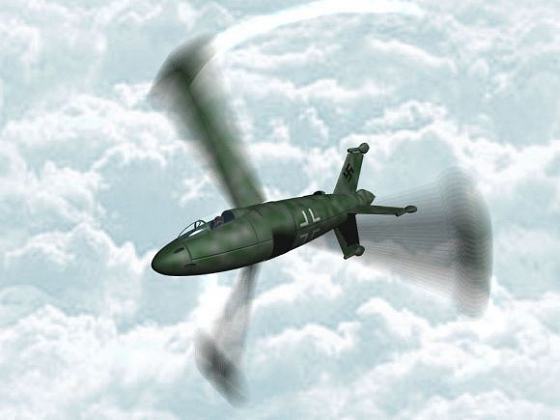
Focke-Wulf Triebfluegel, een soort kruising tussen een helikopter en een gevechtsvliegtuig. Dit bouwwerk kon goed vliegen alleen was het niet goed om te bouwen naar een gevechtsvoertuig, hij was eigenlijk bedoeld om geallieerde bommenwerpers te onderscheppen.
Op de uiteinden van de vleugels zaten straalmotoren waardoor snel kon vliegen. Het vliegtuig steeg verticaal op en kon eenmaal opgestegen vliegen als een gevechtsvliegtuig.
In vlucht zag het er zo uit:
De Puckle Gun
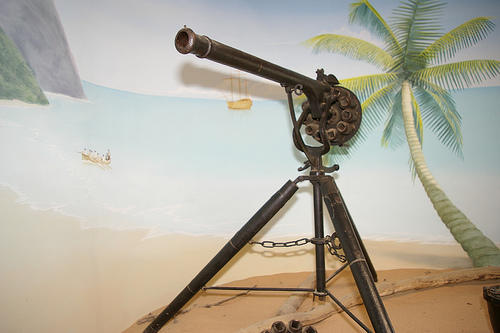
Een uitvinding van James Puckle uit 1718, het lijkt op een grote revolver en is een soort machinegeweerversie van een vuursteenslotmusket. Het ontwerp lijkt op dat van een revolver. Dit wapen kon ongeveer zestig schoten per minuut schieten, wat voor 1718 heel erg snel was omdat een soldaat toen ongeveer drie schoten per minuut kon vuren. Het werd op kleine schaal gebruikt maar raakte snel in de vergetelheid omdat het wapen veel te onbetrouwbaar was.
With my pack on my back, down the road I will stray.
Die zil met schroeven is wel zeer effectief in poolgebied.quote:Op zaterdag 5 februari 2011 22:56 schreef Nibb-it het volgende:
[ afbeelding ]
Russische ZIL met schroeven, voor gebruik in Arctisch gebied.
Nog een rare Rus, de "Rubezh" MAZ-543M.
[ afbeelding ]
Het bizarre van je tweede foto is dat het volgens mij een anti schipsraket is.
Maar om nog een bijdrage te leveren:
De vliegende tank:

De verijdbare kerncentrale:

Colatje?

Op zaterdag 14 april 2012 23:50 schreef innepin het volgende: Rucky en Merlijn zijn tof.
Op donderdag 21 juni 2012 00:22 schreef Papabear het volgende: We kennen elkaar, daten elkaar, doen elkaar en helpen elkaar. FHF O+
Op vrijdag 17 december 2010 13:58 schreef smegmanus het volgende: FOK!kers, hard van buiten. Zacht van binnen 8-)
Op donderdag 21 juni 2012 00:22 schreef Papabear het volgende: We kennen elkaar, daten elkaar, doen elkaar en helpen elkaar. FHF O+
Op vrijdag 17 december 2010 13:58 schreef smegmanus het volgende: FOK!kers, hard van buiten. Zacht van binnen 8-)
De Convair F2Y Sea Dart:
De Ekranoplan:
Niet militair maar wel leuk:
De eerste "vliegende vleugel"
En de voorwaardse vleugel:
[ Bericht 52% gewijzigd door Rucky op 06-02-2011 00:04:53 ]

De Ekranoplan:

Niet militair maar wel leuk:


De eerste "vliegende vleugel"

En de voorwaardse vleugel:

[ Bericht 52% gewijzigd door Rucky op 06-02-2011 00:04:53 ]
Op zaterdag 14 april 2012 23:50 schreef innepin het volgende: Rucky en Merlijn zijn tof.
Op donderdag 21 juni 2012 00:22 schreef Papabear het volgende: We kennen elkaar, daten elkaar, doen elkaar en helpen elkaar. FHF O+
Op vrijdag 17 december 2010 13:58 schreef smegmanus het volgende: FOK!kers, hard van buiten. Zacht van binnen 8-)
Op donderdag 21 juni 2012 00:22 schreef Papabear het volgende: We kennen elkaar, daten elkaar, doen elkaar en helpen elkaar. FHF O+
Op vrijdag 17 december 2010 13:58 schreef smegmanus het volgende: FOK!kers, hard van buiten. Zacht van binnen 8-)

Werkte dat echt serieus?quote:
[ afbeelding ]
Focke-Wulf Triebfluegel, een soort kruising tussen een helikopter en een gevechtsvliegtuig. Dit bouwwerk kon goed vliegen alleen was het niet goed om te bouwen naar een gevechtsvoertuig, hij was eigenlijk bedoeld om geallieerde bommenwerpers te onderscheppen.
Op de uiteinden van de vleugels zaten straalmotoren waardoor snel kon vliegen. Het vliegtuig steeg verticaal op en kon eenmaal opgestegen vliegen als een gevechtsvliegtuig.
In vlucht zag het er zo uit:
[ afbeelding ]
Dat eerste plaatje met die opklapbare mitrailleur in de auto bestaan echt. In die kolonnes van de president van de USA zitten altijd van zo'n wagens erbij...quote:Op vrijdag 31 december 2010 01:40 schreef Nibb-it het volgende:
Bump!
Het 'Terroristennet'
[ afbeelding ]

dit soort jeeps dus...

Is ook zo'n filmpje ergens van, van zo'n demo. Hoe dak opengaat enzo.
[ Bericht 32% gewijzigd door Dale. op 06-02-2011 00:06:38 ]

De eerste vstol toestellen zijn ook wel apart:

Maar de amerikanen hadden tijd om het door te ontwikkelen. Alleen het landen was een probleem.
Op papier wel.quote:
Maar de amerikanen hadden tijd om het door te ontwikkelen. Alleen het landen was een probleem.

Op zaterdag 14 april 2012 23:50 schreef innepin het volgende: Rucky en Merlijn zijn tof.
Op donderdag 21 juni 2012 00:22 schreef Papabear het volgende: We kennen elkaar, daten elkaar, doen elkaar en helpen elkaar. FHF O+
Op vrijdag 17 december 2010 13:58 schreef smegmanus het volgende: FOK!kers, hard van buiten. Zacht van binnen 8-)
Op donderdag 21 juni 2012 00:22 schreef Papabear het volgende: We kennen elkaar, daten elkaar, doen elkaar en helpen elkaar. FHF O+
Op vrijdag 17 december 2010 13:58 schreef smegmanus het volgende: FOK!kers, hard van buiten. Zacht van binnen 8-)
Was dat niet dat ding die ze op het nippertje niet chrasde tijdens de Grote Demonstratie van dat ding bij het Pentagon?
Je bedoeld die convair? Dat zou wel kunnen. Het nadeel van dat vliegtuig was dat de landing zeer moeilijk was. En de meeste zijn omgevallen.quote:
Was dat niet dat ding die ze op het nippertje niet chrasde tijdens de Grote Demonstratie van dat ding bij het Pentagon?
Op zaterdag 14 april 2012 23:50 schreef innepin het volgende: Rucky en Merlijn zijn tof.
Op donderdag 21 juni 2012 00:22 schreef Papabear het volgende: We kennen elkaar, daten elkaar, doen elkaar en helpen elkaar. FHF O+
Op vrijdag 17 december 2010 13:58 schreef smegmanus het volgende: FOK!kers, hard van buiten. Zacht van binnen 8-)
Op donderdag 21 juni 2012 00:22 schreef Papabear het volgende: We kennen elkaar, daten elkaar, doen elkaar en helpen elkaar. FHF O+
Op vrijdag 17 december 2010 13:58 schreef smegmanus het volgende: FOK!kers, hard van buiten. Zacht van binnen 8-)

Dacht precies hetzelfde, wel vetquote:Op zondag 6 februari 2011 00:20 schreef Nibb-it het volgende:
Wat awesome, een soort James Bond auto.
Had wel een vermoeden dat die wagens vol zaten met gewapende secret service mensen, maar meteen zo'n minigun uit het dak..
Vraag me eigenlijk af of de president van de US de enige is die zo beveiligd is, altijd in een kilometerslange(ok overdreven) colonne van wagens. De president/pm van groot-Brittannië, Rusland of China zie ik toch nooit zo rondrijden. Terwijl die toch ook wel de moeite van een aanslag waard zullen zijn voor bepaalde partijen. Of komt die beveiliging gewoon nooit zo duidelijk op tv.
..non est vivere sed valere vita est ..
Presidential Security Service [PSB]
Prezidentskaya Sluzhba Bezopasnosti

Prezidentskaya Sluzhba Bezopasnosti
Van China zou ik het niet weten.quote:Russian Presidential Security Service (PSB), formerly an element of the 9th Chief Directorate of the KGB, was established as an independent government agency in December 1993 to provide security for Russian top officials and the guards for the Kremlin.
Initially, the PSB's functions were determined by an unpublished Presidential decree. Then the Duma granted it the right to put certain persons under surveillance, and in May 1996 its statute was issued by the Duma. The code granted the service virtually unlimited powers, including among other things the right to combat foreign intelligence, fight crime, and design weapons systems, though the Duma cut out a clause that would have allowed it to engage in commercial activity. Over time the PSB evolved from a government organization into one which was loyal only to its own commander, serving Korzhakov's personal political interests. Korzhakov had been Yeltsin's bodyguard since 1987, and in August 1991, he stood next to his boss on top of a tank during Yeltsin's historic speech.
Korzhakov was frequently accused of meddling in governmental affairs, as the Service gathered evidence on high government officials engaged in corruption, bribe-taking, and squandering money. Korzhakov's people studied the origin of capital at the National Sports Fund and in the end placed at the head of that purely commercial structure a staff member of the Presidential Security Service. The service engaged in the suppression of smuggling, as when on 29 February 1996 the Presidential Security Service completed an operation which confiscated a batch of jewels worth a total of $3 million delivered from London to Moscow at Sheremetevo-2. Reportedly the PSB acquired documents which implicated Anatoly Chubais in illegal financial machinations during the privatization period, in which his banker associates Gusinsky, Berezovsky, and Vladimir Potanin, In December 1994 Korzhakov organized an armed raid on the Moscow headquarters of Most Bank headed by Vladimir Gusinskii. Gusinskii is allied with Moscow Mayor Yuri Luzhkov, a potential rival to Yeltsin in the 1996 presidential elections. Soon after the raid, Luzhkov denied he had any desire to run for president, and Gusinskii has not surfaced in Russia since January 1995, when he moved his family to London. General of the Army F.D. Bobkov -- inspirer and creator of the Fifth Department, later first deputy chairman of the USSR KGB, serves as head of the analysis service of the Most financial group.
1996 began with skepticism that President Boris Yeltsin would allow elections to take place, and on 05 May 1996 Korzhakov explicitly called for postponing the elections. But Yeltsin finished first in the 16 June 1996 initial round of the Presidential elections with about 35% of the vote, and was scheduled to compete with Zyuganov in the runoff slated for 03 July 1996. On the evening of 19 June 1996 Sergei Lisovsky and Arkady Yevstafyev, who were allegedly carrying a case containing $500,000, were arrested while leaving the White House of Russia. After being questioned for 11 hours by Presidential Security Service, Lisovsky [a wealthy advertising and showbusiness magnate] and Yevstafyev [ a close aide to former first deputy prime minister Anatoly Chubais] were released. Tipped off by Chubais, television networks broadcast updates on the unfolding scandal through the night, portraying the arrests as an attempted coup by Korzhakov.
Instigated by First Deputy Prime Minister Oleg Soskovets [who supervised the defense industry], Federal Security Service (FSB) director Mikhail Barsukov, and Aleksandr Korzhakov [Barsukov's son is married to Korzhakov's daughter, and Korzhakov reportedly helped his in-law obtain the position of counterintelligence chief], the arrests were apparently part of a plan to discredit Yeltsin's re-election campaign.
However, on 20 June the trio was abruptly fired by Yeltsin at the urging of Chubais. The three were hard-liners opposed to market reform, strong backers of the war in Chechnya, and opposed to holding the presidential election. Duma Speaker Gennadii Seleznev said that Korzhakov and Barsukov were fired because they "encroached on the holy of holies--the secret financing of the Yeltsin campaign." According to one view the firings of Korzhakov, Barsukov, and Soskovets were the result of a battle between factions within the President's inner circle between a group that wanted to take power by force and a group that wanted to win the election "legitimately." Others saw the events in the context of an ongoing struggle between three groups: the former heads of the power ministries, representatives of the energy complex, and representatives from financial circles.
Consequently the PSB no longer exists in the form it had under Alexander Korzhakov. The interference of the PSB in politics ended 20 June 1996 when Korzhakov was dismissed from his post. He was replaced by Anatoli Kuznetsov, a professional without political ambitions or interests, who first became a PSB officer when Ryzhkov was prime minister. Following Korzhakov's replacement, the FSB was incorporated into the Federal Protective Service (FSO) headed by Yuri Krapivin. Under the law of 06 June 1996, the PSS and FSO were two independent organizations.
Changes in the status of the PSB include:
• PSB is no longer an organization directly subordinate to the President
• PSB no longer has the right to gather information for the purpose of ensuring the security of the President and the state
• PSB no longer has the right to use the data bases of the Presidential staff, government staff, etc.
• PSB is no longer a separate legal entity with its own logo, stamp, bank accounts, etc.
• PSB no longer has the right to buy real estate on the territory of the Russian Federation, etc.
During the months that followed Korzhakov's dismissal, significant changes were implemented at the PSB. It is now restricted to carrying out its intended functions of protecting the President, and it no longer collects compromising documents on high-ranking officials and politicians. About 15-20 PSB officers were dismissed immediately after Korzhakov's resignation, and another 100 PSB officers submitted their resignations in the following months, with some 850 men remaining on staff [though other accounts report the total FSB staff as about 1,500].
Ik heb een filmpje gevonden over de vleermuis bom:

Op zaterdag 14 april 2012 23:50 schreef innepin het volgende: Rucky en Merlijn zijn tof.
Op donderdag 21 juni 2012 00:22 schreef Papabear het volgende: We kennen elkaar, daten elkaar, doen elkaar en helpen elkaar. FHF O+
Op vrijdag 17 december 2010 13:58 schreef smegmanus het volgende: FOK!kers, hard van buiten. Zacht van binnen 8-)
Op donderdag 21 juni 2012 00:22 schreef Papabear het volgende: We kennen elkaar, daten elkaar, doen elkaar en helpen elkaar. FHF O+
Op vrijdag 17 december 2010 13:58 schreef smegmanus het volgende: FOK!kers, hard van buiten. Zacht van binnen 8-)
Ja, er zijn er niet veel gemaakt omdat de oorlog al in zo'n vergevorderd stadium was dat het nooit tot massa-productie is gekomen en er waren veel problemen met landen en het bewapenen ervan.quote:
With my pack on my back, down the road I will stray.
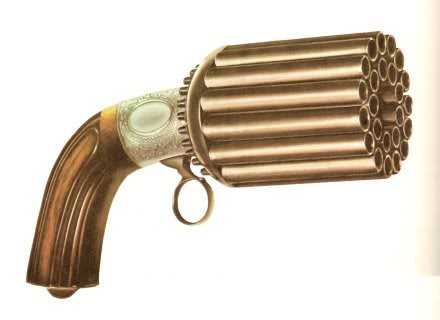
De Mariet Pepperbox Revolver.
Een pistool met vierentwintig lopen uit België van tussen 1850 en 1860. De schutter moest kruit in de achterkant van de lopen doen en dan een slaghoedje op de achterkant zetten om het pistool te laden. Het schieten ging erg snel maar het laden duurde veertig tot zestig minuten.
[ Bericht 1% gewijzigd door Id_do_her op 06-02-2011 21:16:31 ]
Een pistool met vierentwintig lopen uit België van tussen 1850 en 1860. De schutter moest kruit in de achterkant van de lopen doen en dan een slaghoedje op de achterkant zetten om het pistool te laden. Het schieten ging erg snel maar het laden duurde veertig tot zestig minuten.
[ Bericht 1% gewijzigd door Id_do_her op 06-02-2011 21:16:31 ]
With my pack on my back, down the road I will stray.
Zoals ik de afbeelding bekijk, lijkt het mij dat alle vuurmonden tegelijkertijd schieten?quote:
De Mariet Pepperbox Revolver.
[ afbeelding ]
Een pistool met vierentwintig lopen uit België van tussen 1850 en 1860. De schutter moest kruit in de achterkant van de lopen doen en dan een slaghoedje op de achterkant zetten om het pistool te laden. Het schieten ging erg snel maar het laden duurde veertig tot zestig minuten.
Handig voor als je op een woedende meute moest schieten.. Het laden duurt inderdaad wel lang, maar als je kijkt naar het formaat zou je er best 2 of 4 bij je kunnen dragen, geladen en wel..
voorlopertje van deze:"
1 miljoen kogels per minuut!

"Een volk dat voor tirannen zwicht zal meer dan lijf en goed verliezen dan dooft het licht.."
"Madju Terus!"
"Madju Terus!"
Ik ga ervan uit dat de lopen wel kunnen draaien, omdat het pistool een revolver genoemd wordt. Ik denk niet dat alle vierentwintig schoten tegelijk afgingen maar misschien drie tegelijk zodat je acht keer kon schieten.quote:
[..]
Zoals ik de afbeelding bekijk, lijkt het mij dat alle vuurmonden tegelijkertijd schieten?
Handig voor als je op een woedende meute moest schieten.. Het laden duurt inderdaad wel lang, maar als je kijkt naar het formaat zou je er best 2 of 4 bij je kunnen dragen, geladen en wel..
voorlopertje van deze:"
1 miljoen kogels per minuut!
With my pack on my back, down the road I will stray.
In vergelijkbare modellen roteerden de lopen niet maar de slagpin. Maar hier zit ik te twijfelen.quote:
Ik ga ervan uit dat de lopen wel kunnen draaien, omdat het pistool een revolver genoemd wordt. Ik denk niet dat alle vierentwintig schoten tegelijk afgingen maar misschien drie tegelijk zodat je acht keer kon schieten.
VB:

Op zaterdag 14 april 2012 23:50 schreef innepin het volgende: Rucky en Merlijn zijn tof.
Op donderdag 21 juni 2012 00:22 schreef Papabear het volgende: We kennen elkaar, daten elkaar, doen elkaar en helpen elkaar. FHF O+
Op vrijdag 17 december 2010 13:58 schreef smegmanus het volgende: FOK!kers, hard van buiten. Zacht van binnen 8-)
Op donderdag 21 juni 2012 00:22 schreef Papabear het volgende: We kennen elkaar, daten elkaar, doen elkaar en helpen elkaar. FHF O+
Op vrijdag 17 december 2010 13:58 schreef smegmanus het volgende: FOK!kers, hard van buiten. Zacht van binnen 8-)
Ik denk dat hij misschien wel kan draaien aangezien hij rond is, die Mariet dan in ieder geval. Het lijkt me niet echt handig om alle vierentwintig schoten in één schot weg te schieten.quote:
[..]
In vergelijkbare modellen roteerden de lopen niet maar de slagpin. Maar hier zit ik te twijfelen.
VB:
[ Bericht 1% gewijzigd door Id_do_her op 07-02-2011 19:29:04 ]
With my pack on my back, down the road I will stray.
Lijkt me ook niet echt haalbaar qua terugslagquote:
[..]
Ik misschien kan hij wel draaien aangezien hij rond is, die Mariet dan in ieder geval. Het lijkt me niet echt handig om alle vierentwintig schoten in één schot weg te schieten.

Vierentwintig musketschoten is ook nogal wat, ook al was het op pistoolformaat. En wat zou je er neer mee willen schieten als hij daadwerkelijk vierentwintig schoten tegelijk lost? Elanden?quote:
[..]
Lijkt me ook niet echt haalbaar qua terugslag
With my pack on my back, down the road I will stray.

In Zuid-Engeland staan nog een paar van dat soort grote systemenquote:
Om nog even terug te komen op mijn vorige post over 'radar' uit en net na de Eerste Wereldoorlog:
[ afbeelding ]
[ afbeelding ]
[ afbeelding ]
Zijn trouwens Nederlandse toestellen op de foto's.
Meer informatie hierover op de website van Museum Waalsdorp

http://www.andrewgrantham.co.uk/soundmirrors/
Door de geluidssterkte te meten via een microfoon op verschillende plekken op de schotel konden ze bepalen uit welke richting een vliegtuig kwam. Het scheen dat je een 20mi/km (?) voorsprong had voordat het visueel zichtbaar werd.
In de eerste aflevering van BBC Coast wordt er ook aandacht aan besteed:
quote:The Sound Mirrors - Denge, Kent
Sound Mirror
These three concrete "listening ears" range in size from 20 to 200 feet in size. They were built between World War I and II: designed to give early warning of incoming enemy aircraft. Nick Crane and a team of academics experimented with how the mirrors actually worked. With the invention of radar in 1935, the sound mirrors became obsolete, but the relay system that their creator, Dr Tucker, had devised, was vital to the success of radar. Unfortunately the sound mirrors are not normally open to the public.

Wat tof, ik dacht dat die allemaal gesloopt waren. Gelukkig niet dus!
De Boirault, een Franse uitvinding om prikkeldraadversperringen over te steken
De Boirault, een Franse uitvinding om prikkeldraadversperringen over te steken

Nope, mocht je eens in de buurt zijn.......quote:Op woensdag 9 februari 2011 00:24 schreef Nibb-it het volgende:
Wat tof, ik dacht dat die allemaal gesloopt waren. Gelukkig niet dus!
Officieel niet toegankelijk, maar als je dat watertje over weet te steken. Kan me niet voorstellen dat er echt controle op is
Wel grappig, ik kwam er ook achter dat de clip van The Prodigy - Invaders Must Die er op genomen is.
Vanaf 1:15 ofzo

[ Bericht 11% gewijzigd door tjoptjop op 09-02-2011 01:03:16 ]
Had alleen het nadeel dat je niet kon sturen.quote:
Wat tof, ik dacht dat die allemaal gesloopt waren. Gelukkig niet dus!
De Boirault, een Franse uitvinding om prikkeldraadversperringen over te steken
[ afbeelding ]
Volgens mij is het ook bij een prototype gebleven.
Op zaterdag 14 april 2012 23:50 schreef innepin het volgende: Rucky en Merlijn zijn tof.
Op donderdag 21 juni 2012 00:22 schreef Papabear het volgende: We kennen elkaar, daten elkaar, doen elkaar en helpen elkaar. FHF O+
Op vrijdag 17 december 2010 13:58 schreef smegmanus het volgende: FOK!kers, hard van buiten. Zacht van binnen 8-)
Op donderdag 21 juni 2012 00:22 schreef Papabear het volgende: We kennen elkaar, daten elkaar, doen elkaar en helpen elkaar. FHF O+
Op vrijdag 17 december 2010 13:58 schreef smegmanus het volgende: FOK!kers, hard van buiten. Zacht van binnen 8-)
Ach ja.. Gewoon vol gas recht vooruit met dat dingquote:
[..]
Had alleen het nadeel dat je niet kon sturen.
Volgens mij is het ook bij een prototype gebleven.
Gatling Gun

Patronen aan de bovenkant invoeren en geef er maar een slinger aan..
(Het de scene van het eindgevecht van de "The Last Samurai" toont een paar van deze in werking)
[ Bericht 18% gewijzigd door Tallywhacker op 09-02-2011 17:05:56 ]
"Een volk dat voor tirannen zwicht zal meer dan lijf en goed verliezen dan dooft het licht.."
"Madju Terus!"
"Madju Terus!"
NASA werkt momenteel aan een indrukwekkend eenpersoons minivliegtuig. De Puffin is een elektrisch eenpersoons vliegtuig dat misschien wel het begin kan zijn van nieuwe, fantastische luchtvaarttechnologie. Met twee elektrische motoren, een lithium fosfaat batterij en een topsnelheid van 480 km p/u. (bericht van feb. 2010)quote:
De eerste vstol toestellen zijn ook wel apart:
[..]
Op papier wel.
Maar de amerikanen hadden tijd om het door te ontwikkelen. Alleen het landen was een probleem.
[ afbeelding ]


"Een volk dat voor tirannen zwicht zal meer dan lijf en goed verliezen dan dooft het licht.."
"Madju Terus!"
"Madju Terus!"
quote:
[ [/url] ]
Vast een Italiaanse uitvinding?
 [/url] ]
"Een volk dat voor tirannen zwicht zal meer dan lijf en goed verliezen dan dooft het licht.."
"Madju Terus!"
"Madju Terus!"
het ronde oorlogsschip (Admiral Popov)
Turtle-ship

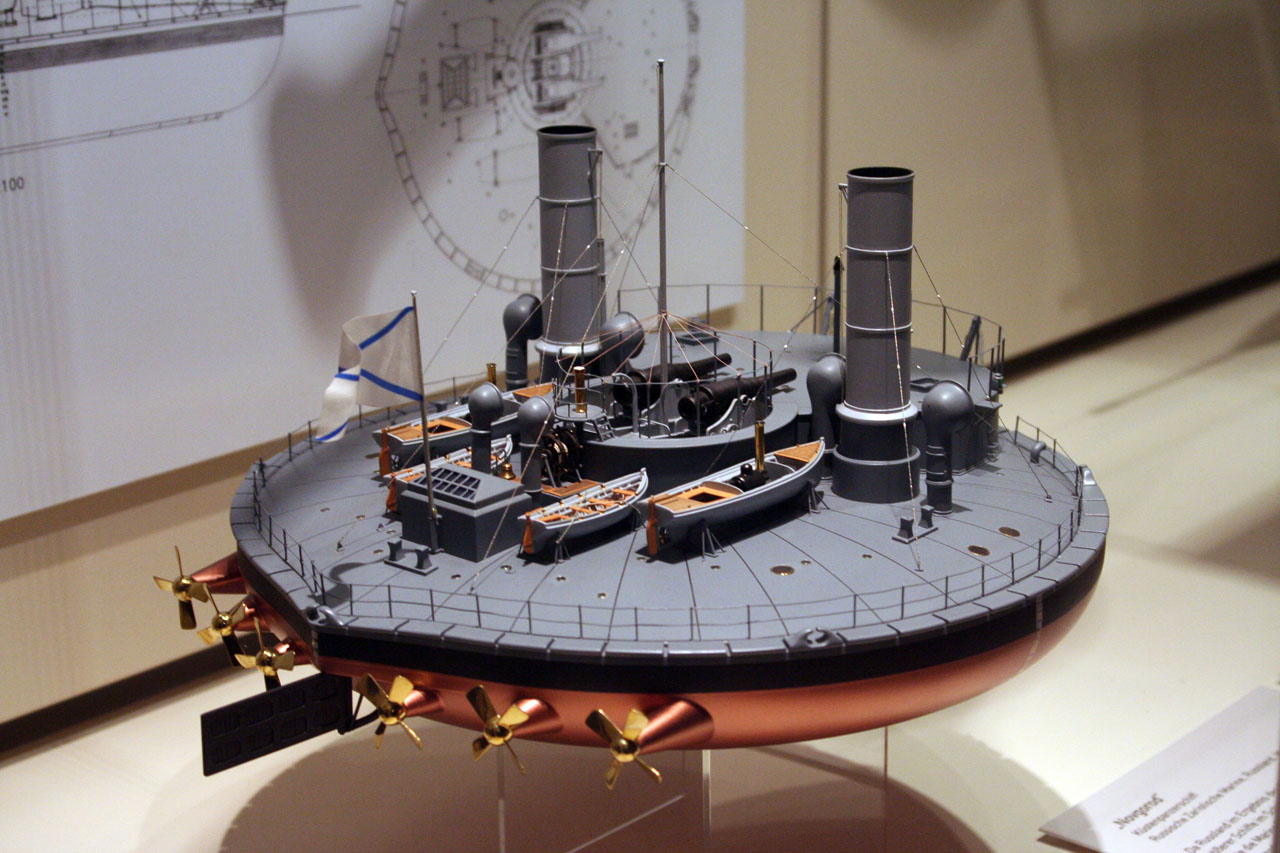
Turtle-ship


"Een volk dat voor tirannen zwicht zal meer dan lijf en goed verliezen dan dooft het licht.."
"Madju Terus!"
"Madju Terus!"
Klopt ja, al geloof ik dat het 3e en 4e prototype wel konden 'sturen', eigelijk meer om hun as draaien waardoor je een andere richting op ging.quote:
[..]
Had alleen het nadeel dat je niet kon sturen.
Volgens mij is het ook bij een prototype gebleven.
de chinezen schenen, honderden jaren geleden, ook gigantische slagschepen te hebben waarmee ze iedereen uit hun zeeën verdreven.
hoofdletters kosten teveel tijd
don't avoid pain to gain pleasure
niet iedereen is iedereen
don't avoid pain to gain pleasure
niet iedereen is iedereen

Klopt, maar er is weinig over terug te vinden. Zowel in geschrift als in wrakken.quote:
de chinezen schenen, honderden jaren geleden, ook gigantische slagschepen te hebben waarmee ze iedereen uit hun zeeën verdreven.
Bio is baas. Ik ben niet meer op straat. Ik rij alleen langs om te kijken hoe het gaat.
maar ze wonnen wel alles en daar is heel veel over terug te vinden. in logboeken die het net wel hebben gehaald.quote:
[..]
Klopt, maar er is weinig over terug te vinden. Zowel in geschrift als in wrakken.
hoofdletters kosten teveel tijd
don't avoid pain to gain pleasure
niet iedereen is iedereen
don't avoid pain to gain pleasure
niet iedereen is iedereen
Die schepen schijnen toch tot West-Afrika te zijn gekomen.
Tot een keizer besloot dat China het middelpunt van de beschaving was en dat de minderwaardige beschavingen het niet waard waren om handel mee te drijven, en daardoor een grote vloot niet meer nodig was?
Tot een keizer besloot dat China het middelpunt van de beschaving was en dat de minderwaardige beschavingen het niet waard waren om handel mee te drijven, en daardoor een grote vloot niet meer nodig was?
Rond 1500 waren er twee werelden die Europa ver vooruit waren, het Midden-Oosten en China. De Chinezen kenden al een anatal eeuwen vóór de Europeanen navigatiemiddelen waardoor het mogelijk werd overzee (Azië en de oostkust van Afrika) te handelen.quote:
Die schepen schijnen toch tot West-Afrika te zijn gekomen.
Tot een keizer besloot dat China het middelpunt van de beschaving was en dat de minderwaardige beschavingen het niet waard waren om handel mee te drijven, en daardoor een grote vloot niet meer nodig was?
Volgens de leer van volgelingen van onder andere de filosoof Confucius moest je je niet laten leiden 'door emoties en materialisme'. Deze gedachtengang vond veel steun bij het Chinese ambtenarenapparaat en daardoor ook bij de Chinese keizers. Hierdoor is het voor Chinezen 'verboden' geworden overzee handel te te drijven en te handelen vanuit het winstprincipe.
OT hier nog wat vroege 'radarsystemen'
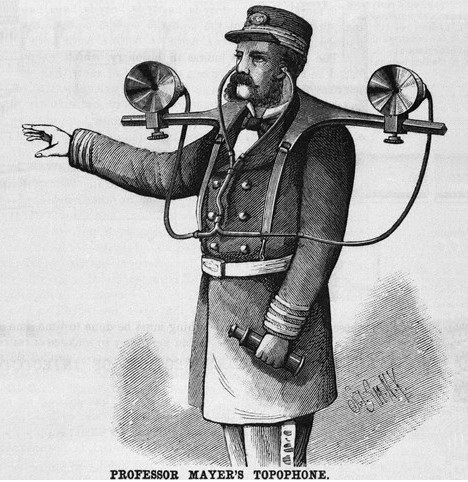
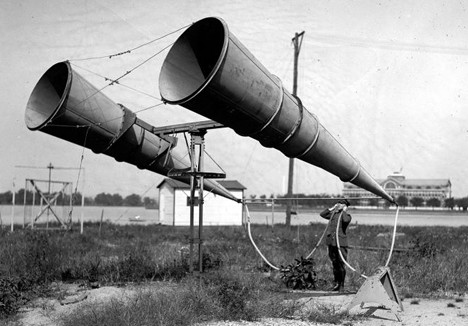
[ Bericht 5% gewijzigd door Nibb-it op 10-02-2011 01:32:13 ]
Niet echt de grootste maar wel apart tochquote:
de chinezen schenen, honderden jaren geleden, ook gigantische slagschepen te hebben waarmee ze iedereen uit hun zeeën verdreven.
Early Han Dynasty warship, battle canoes, and fire-boats.

A Southern Tang dynasty Lou chuan ("tower ship") fights off a Sung war junk

A Sung dynasty paddleboat warship.


Een Zheng He schip

En een groot Japans oorlogsschipquote:According to ancient Chinese sources, Zheng He commanded seven expeditions. The 1405 expedition consisted of 27,800 men and a fleet of 62 treasure ships supported by approximately 190 smaller ships. The fleet included:
· Treasure ships, used by the commander of the fleet and his deputies (nine-masted, about 126.73 metres (416 ft) long and 51.84 metres (170 ft) wide), according to later writers. Such dimension is more or less the shape of a football field. The treasure ships purportedly can carry as much as 1,500 tons. By way of comparison, a modern ship of about 1,200 tons is 60 meters (200 ft) long, and the ships Christopher Columbussailed to the New World in 1492 were about 70-100 tons and 17 meter (55 ft) long.
· Horse ships, carrying tribute goods and repair material for the fleet (eight-masted, about 103 m (339 ft) long and 42 m (138 ft) wide).
· Supply ships, containing staple for the crew (seven-masted, about 78 m (257 ft) long and 35 m (115 ft) wide).
· Troop transports, six-masted, about 67 m (220 ft) long and 25 m (83 ft) wide.
· Fuchuan warships, five-masted, about 50 m (165 ft) long.
· Patrol boats, eight-oared, about 37 m (120 ft) long.
· Water tankers, with 1 month supply of fresh water.
Six more expeditions took place, from 1407 to 1433, with fleets of comparable size.
Trade in the Indian Ocean was decentralized and cooperative. Commercial interest prevailed over political authorities.
Strait of Malacca was the meeting point between Indian Ocean and South China Sea, between the Malay Peninsula and the island of Sumatra. The Kingdom of Siam gained control of the upper Malay Peninsula, while the Java-based Kingdom of Majapathi ruled over the lower portion of the peninsula and most of Sumatra. Majapahit was not strong enough to stop the Chinese pirates that were affecting trade in this region. In the 1407, the Chinese government sent a fleet and smashed the pirates.
The city of Alden (Arabia) had a double advantage: enough rainfall to supply drinking water to a large population and to grow grain for export and to be a convenient stopover for trade between India and the Persian Gulf, East Africa, and Egypt.

The iron ships of the Kuku Suigun

Voor die tijd wel bizarre uitvindingen.. Waar ze in Europa met houten schepen de zee opgingen, bouwden de chinezen honderden jaren eerder al drijvende flatgebouwen!
[ Bericht 2% gewijzigd door Tallywhacker op 10-02-2011 19:22:39 ]
"Een volk dat voor tirannen zwicht zal meer dan lijf en goed verliezen dan dooft het licht.."
"Madju Terus!"
"Madju Terus!"
quote:
[..]
Niet echt de grootste maar wel apart toch
Early Han Dynasty warship, battle canoes, and fire-boats.
[ afbeelding ]
A Southern Tang dynasty Lou chuan ("tower ship") fights off a Sung war junk
[ afbeelding ]
A Sung dynasty paddleboat warship.
[ afbeelding ]
[ afbeelding ]
Een Zheng He schip
[ afbeelding ]
[..]
En een groot Japans oorlogsschip
The iron ships of the Kuku Suigun
[ afbeelding ]
Voor die tijd wel bizarre uitvindingen.. Waar ze in Europa met houten schepen de zee opgingen, bouwden de chinezen honderden jaren eerder al drijvende flatgebouwen!

hoofdletters kosten teveel tijd
don't avoid pain to gain pleasure
niet iedereen is iedereen
don't avoid pain to gain pleasure
niet iedereen is iedereen

Het is alleen zeer onwaarschijnlijk dat die dingen ook echt bestaan hebben in die maten.
Op woensdag 24 sept. 2008 schreef Danny het volgende:
Dagonet doet onaardig tegen iedereen. Je bent dus helemaal niet zo bijzonder als je denkt...
Mijn grootste bijdrage aan de FP.
Dagonet doet onaardig tegen iedereen. Je bent dus helemaal niet zo bijzonder als je denkt...
Mijn grootste bijdrage aan de FP.
Want?quote:
Het is alleen zeer onwaarschijnlijk dat die dingen ook echt bestaan hebben in die maten.
Chinezen bouwen als het moet ook een muur van een kilometer of duizend over de meeste steile bergen..
"Een volk dat voor tirannen zwicht zal meer dan lijf en goed verliezen dan dooft het licht.."
"Madju Terus!"
"Madju Terus!"
Zover ik weet is er nooit bewijs van gevonden dat deze knapen echt rondgedobberd hebben.quote:
[..]
Want?
Chinezen bouwen als het moet ook een muur van een kilometer of duizend over de meeste steile bergen..
Het blijft een mystery idd. Maar die schepen werden van hout gemaakt met verbindingen van touw opdat ze flexibel waren voor de golven. Tachnisch waren de Chinezen wel in staat om zulke schepen te maken. Wel een leuk onderwerp om me eens in te verdiepen.quote:
Zover ik weet is er nooit bewijs van gevonden dat deze knapen echt rondgedobberd hebben.
Ik zag laatst een docu over plannen van Duitsland om Amerika te bombarderen. Het idee was om 5 fighters onder één grote vleugel over de oceaan te laten vliegen. Waar ze vervolgens te pletter zouden vliegen in Manhatten. Het plan was goedgekeurd maar 2 maanden later was Duitsland verslagen.
Ik kan er alleen helemaal niets over vinden. Weet iemand hier meer over?
Deze docu:
Deze was laatst op ketnet.quote:Hitler's war on America
Al vanaf het begin van de Tweede Wereldoorlog waren Hitler en zijn strategen bezig een aanval tegen Amerika te beramen. Het plan rees om Duitse piloten zich tegen wolkenkrabbers in Manahattan te pletter te laten vliegen. Zestig jaar later zouden die plannen alsnog door Al Qaida uitgevoerd worden.
Op zaterdag 14 april 2012 23:50 schreef innepin het volgende: Rucky en Merlijn zijn tof.
Op donderdag 21 juni 2012 00:22 schreef Papabear het volgende: We kennen elkaar, daten elkaar, doen elkaar en helpen elkaar. FHF O+
Op vrijdag 17 december 2010 13:58 schreef smegmanus het volgende: FOK!kers, hard van buiten. Zacht van binnen 8-)
Op donderdag 21 juni 2012 00:22 schreef Papabear het volgende: We kennen elkaar, daten elkaar, doen elkaar en helpen elkaar. FHF O+
Op vrijdag 17 december 2010 13:58 schreef smegmanus het volgende: FOK!kers, hard van buiten. Zacht van binnen 8-)
Niet zo zeer nieuw ontwerp, maar wel zo'n beetje het toppunt van deze vorm van oorlogvoering.

When the priest killed a maiden in the metal church
Armored saints and warlocks watched the slaughter
Rage of the slayer forced the pretty maids
To kiss the Queen in crimson glory
Armored saints and warlocks watched the slaughter
Rage of the slayer forced the pretty maids
To kiss the Queen in crimson glory
|
|
