WGR Werk, Geldzaken, Recht en de Beurs
Hier kun je alles kwijt over sollicitaties, werksituaties, belastingen, (handelen op) de beurs, hypotheken, beleggingen en salarissen, arbeidscontracten of geschillen met je (huis)baas. Alles over werk, geldzaken en recht dus.



'Crisisaanpak VS leidt naar de hel'
Topolánek: "De Amerikaanse regering heeft het over permanente actie, iets waar wij tijdens onze bijeenkomst (EU-top over de crisis op 1 maart jongstleden) van geschrokken zijn. Amerika maakt dezelfde fouten als in 1930 tijdens de Grote Depressie, zoals grootschalige stimuleringsmaatregelen en protectionisme. De combinatie van deze maatregelen en het permanente karakter ervan zijn de weg naar de hel. De financiering van regeringssteun aan Amerikaanse banken zal de stabiliteit ondermijnen van de wereldwijde financiële markt."
Grappig dat dit keer niet Peter Schiff, maar iemand uit de gevestigde politiek het durft te zeggen.
Topolánek: "De Amerikaanse regering heeft het over permanente actie, iets waar wij tijdens onze bijeenkomst (EU-top over de crisis op 1 maart jongstleden) van geschrokken zijn. Amerika maakt dezelfde fouten als in 1930 tijdens de Grote Depressie, zoals grootschalige stimuleringsmaatregelen en protectionisme. De combinatie van deze maatregelen en het permanente karakter ervan zijn de weg naar de hel. De financiering van regeringssteun aan Amerikaanse banken zal de stabiliteit ondermijnen van de wereldwijde financiële markt."
Grappig dat dit keer niet Peter Schiff, maar iemand uit de gevestigde politiek het durft te zeggen.
President Camacho
TV series: Boardwalk Empire | Burn Notice | Dexter | Game of Thrones | Impractical Jokers | Luther | Sherlock | Sons of Anarchy
TV series: Boardwalk Empire | Burn Notice | Dexter | Game of Thrones | Impractical Jokers | Luther | Sherlock | Sons of Anarchy


Money is short, times are hard, here's my fucking business card!
"I never let my schooling interfere with my education." — Mark Twain
"I never let my schooling interfere with my education." — Mark Twain

de hel? Toe maar.. en als ik daar nou niet in geloof? 
Trots lid van het 👿 Duivelse Viertal 👿
Een gedicht over Maanvis
Het ONZ / [KAMT] Kennis- en Adviescentrum Maanvis Topics , voor al je vragen over mijn topiques!
Een gedicht over Maanvis
Het ONZ / [KAMT] Kennis- en Adviescentrum Maanvis Topics , voor al je vragen over mijn topiques!
President Camacho
TV series: Boardwalk Empire | Burn Notice | Dexter | Game of Thrones | Impractical Jokers | Luther | Sherlock | Sons of Anarchy
TV series: Boardwalk Empire | Burn Notice | Dexter | Game of Thrones | Impractical Jokers | Luther | Sherlock | Sons of Anarchy
Wat een drama. Als dit eenmaal in gang gezet is, is het moeilijk om te keren. De economie is letterlijk een kaartenhuis. En dat is nu in elkaar aan het donderen tot de bodem bereikt is.quote:Op donderdag 26 maart 2009 15:34 schreef pberends het volgende:
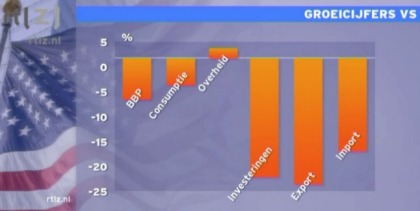
Amerikaanse economie krimpt 6,3%
[ afbeelding ]
De overheid is de motor van de economie.
Uiteindelijk zal alleen het noodzakelijke overblijven waar nog geld mee valt te verdienen. Eten, onderdak en kleding. En seks natuurlijk, want dat is van alle tijden.
Money is short, times are hard, here's my fucking business card!
"I never let my schooling interfere with my education." — Mark Twain
"I never let my schooling interfere with my education." — Mark Twain


De staatsschuld is straks niets meer waard...quote:Geldhoeveelheid eurozone sneller gestegen dan verwacht
AMSTERDAM (Dow Jones)--De aangepaste geldhoeveelheid M3 in de eurozone is in februari met 5,9% gestegen ten opzichte van dezelfde maand een jaar eerder. Dit heeft de Europese Centrale Bank (ECB) donderdag bekendgemaakt.
Vooraf geraadpleegde economen gingen uit van een stijging van de geldhoeveelheid met 5,5%.
In de drie maanden tot en met februari 2009 bedroeg de groei gemiddeld 6,5%, tegen een groei van 7,0% in de voorgaande driemaandsperiode.
Als de geldhoeveelheid te hard groeit kan dat duiden op toenemend inflatiegevaar wat van invloed kan zijn op de rentepolitiek van de Europese Centrale Bank (ECB). De referentiewaarde voor de geldgroei is 4,5%.
Bron

I am not omniscient, but I know a lot.
- Goethe, “Faust”
- Goethe, “Faust”
Zolang er nog geen inflatie ontstaat niet. Voorlopig vind ik deflatie nog steeds het meest waarschijnlijk.quote:Op donderdag 26 maart 2009 15:50 schreef capricia het volgende:
[..]
De staatsschuld is straks niets meer waard...
Meer geld betekent namelijk niet automatisch meer inflatie. Al dat gecreëerde geld komt namelijk nog steeds helemaal niet bij burgers en bedrijven terecht.
Money is short, times are hard, here's my fucking business card!
"I never let my schooling interfere with my education." — Mark Twain
"I never let my schooling interfere with my education." — Mark Twain

Hoe zit dat dan met werkloosheidsuitkeringen en allerlei subsidies?quote:Op donderdag 26 maart 2009 15:52 schreef Lemmeb het volgende:
[..]
Zolang er nog geen inflatie ontstaat niet. Voorlopig vind ik deflatie nog steeds het meest waarschijnlijk.
Meer geld betekent namelijk niet automatisch meer inflatie. Al dat gecreëerde geld komt namelijk nog steeds helemaal niet bij burgers en bedrijven terecht.
And what rough beast, its hour come round at last,
Slouches towards Bethlehem to be born?
Slouches towards Bethlehem to be born?
Wat is daarmee?quote:
[..]
Hoe zit dat dan met werkloosheidsuitkeringen en allerlei subsidies?
Werkloosheidsuitkeringen komen in de plaats van hogere salarissen. Mensen gaan er juist enorm in koopkracht op achteruit met een uitkering.
Subsidies had je altijd al en dat zal alleen maar minder worden. Zeker al die culturele onzin.
Money is short, times are hard, here's my fucking business card!
"I never let my schooling interfere with my education." — Mark Twain
"I never let my schooling interfere with my education." — Mark Twain
Nouja, om even in het extreme te trekken, als 50% werkt en 50% heeft een uitkering (waarvoor de overheid dan neem ik aan zal moeten lenen of geld bijdrukken omdat de 50% werkenden nooit via belasting de uitkering voor de 50% anderen kunnen ophoesten) dan neem ik aan dat elke euro minder koopt dan wanneer 95% werkt en 5% een uitkering heeft.
And what rough beast, its hour come round at last,
Slouches towards Bethlehem to be born?
Slouches towards Bethlehem to be born?
Ah het BBP is meer gezakt als de consumenten bestedingen dus wanneer we het vanaf die kant benaderen kunnen we wel zeggen dat de consumenten bestedingen gestegen zijn.quote:Op donderdag 26 maart 2009 15:34 schreef pberends het volgende:
Amerikaanse economie krimpt 6,3%
[ afbeelding ]
De overheid is de motor van de economie

Mooie flashback naar 1999:
CONGRESS PASSES WIDE-RANGING BILL EASING BANK LAWS
[ Bericht 0% gewijzigd door Perrin op 26-03-2009 17:14:33 ]
CONGRESS PASSES WIDE-RANGING BILL EASING BANK LAWS
quote:Congress approved landmark legislation today that opens the door for a new era on Wall Street in which commercial banks, securities houses and insurers will find it easier and cheaper to enter one another's businesses.
''Today Congress voted to update the rules that have governed financial services since the Great Depression and replace them with a system for the 21st century,'' Treasury Secretary Lawrence H. Summers said. ''This historic legislation will better enable American companies to compete in the new economy.''
The decision to repeal the Glass-Steagall Act of 1933 provoked dire warnings from a handful of dissenters that the deregulation of Wall Street would someday wreak havoc on the nation's financial system. The original idea behind Glass-Steagall was that separation between bankers and brokers would reduce the potential conflicts of interest that were thought to have contributed to the speculative stock frenzy before the Depression.
The opponents of the measure gloomily predicted that by unshackling banks and enabling them to move more freely into new kinds of financial activities, the new law could lead to an economic crisis down the road when the marketplace is no longer growing briskly.
''I think we will look back in 10 years' time and say we should not have done this but we did because we forgot the lessons of the past, and that that which is true in the 1930's is true in 2010,'' said Senator Byron L. Dorgan, Democrat of North Dakota. ''I wasn't around during the 1930's or the debate over Glass-Steagall. But I was here in the early 1980's when it was decided to allow the expansion of savings and loans. We have now decided in the name of modernization to forget the lessons of the past, of safety and of soundness.''
Senator Paul Wellstone, Democrat of Minnesota, said that Congress had ''seemed determined to unlearn the lessons from our past mistakes.'
''Scores of banks failed in the Great Depression as a result of unsound banking practices, and their failure only deepened the crisis,'' Mr. Wellstone said. ''Glass-Steagall was intended to protect our financial system by insulating commercial banking from other forms of risk. It was one of several stabilizers designed to keep a similar tragedy from recurring. Now Congress is about to repeal that economic stabilizer without putting any comparable safeguard in its place.''
Supporters of the legislation rejected those arguments. They responded that historians and economists have concluded that the Glass-Steagall Act was not the correct response to the banking crisis because it was the failure of the Federal Reserve in carrying out monetary policy, not speculation in the stock market, that caused the collapse of 11,000 banks. If anything, the supporters said, the new law will give financial companies the ability to diversify and therefore reduce their risks. The new law, they said, will also give regulators new tools to supervise shaky institutions.
''The concerns that we will have a meltdown like 1929 are dramatically overblown,'' said Senator Bob Kerrey, Democrat of Nebraska.
[ Bericht 0% gewijzigd door Perrin op 26-03-2009 17:14:33 ]
And what rough beast, its hour come round at last,
Slouches towards Bethlehem to be born?
Slouches towards Bethlehem to be born?

http://www.bloomberg.com/apps/news?pid=20601087&sid=aUzSQ01UhV6s&refer=homequote:Roubini Says Stocks Will Drop as Banks Go ‘Belly Up’ (Update2)
By Michael Patterson and Maithreyi Seetharaman
March 26 (Bloomberg) -- U.S. stocks will fall and the government will nationalize more banks as the economy contracts through the end of 2009, said Nouriel Roubini, the New York University professor who predicted last year’s economic crisis.
“The stock market is a bit ahead of the real macroeconomic and financial news,” Roubini, a professor at NYU’s Stern School of Business and the chairman of consulting firm Roubini Global Economics, said in an interview with Bloomberg Television in London today. “We’ll have some major banks going belly up that will need to be taken over.”
The global equity rebound in March that sent the Standard & Poor’s 500 Index to its best monthly advance in 17 years is a “bear-market rally” and U.S. Treasury yields will “remain relatively low” as investors flock to the safest assets, Roubini said. Treasury Secretary Timothy Geithner’s new plan to remove toxic debt from financial companies won’t be enough for insolvent banks, he said.
Roubini’s outlook contrasts with predictions this week from Templeton Asset Management Ltd.’s Mark Mobius and Traxis Partners LLC’s Barton Biggs, who said that equities are poised to rally as government efforts to revive the economy and banking system begin to work. Investors are “way too optimistic” about the prospects for a recovery in the economy and earnings, Roubini said.
Stress Tests
The S&P 500 surged 7.1 percent on March 23 after Geithner unveiled a plan to finance as much as $1 trillion in purchases of illiquid real-estate assets, using $75 billion to $100 billion of the Treasury’s remaining bank-rescue funds. The government is conducting stress tests of banks to determine how much more capital each will need.
Roubini, who predicts loan and securities losses in the U.S. will reach $3.6 trillion, said the stress tests will reveal that some banks need to be taken over and have their good and bad assets separated before being sold to the private sector. He didn’t name which companies he thought would need to be rescued.
Futures on the S&P 500 expiring in June advanced 1.2 percent to 818 as of 8:30 a.m. in New York.
Critics of Geithner’s plan including Nobel laureate Paul Krugman, a professor at Princeton University, say the government should take over banks loaded with devalued assets, remove their top management, and dispose of the toxic securities. Sweden adopted the temporary nationalization approach in the 1990s.
‘Deflationary Forces’
“Some banks are going to have to be nationalized,” said Roubini. “It’s going to be bumpy ahead of us.”
Geithner and Federal Reserve Chairman Ben S. Bernanke this week called for new powers to take over and wind down failing financial companies. They said the U.S. also needs stronger regulation to constrain the risks taken by firms that could endanger the financial system.
With “deflationary forces” lingering for as long as three years, Roubini said U.S. government bond yields will remain low and American house prices will fall as much as 20 percent in the next 18 months. While the dollar will initially benefit as investors seek a safe haven in the U.S., the currency will ultimately drop as the nation’s trade deficit shrinks, he said.
Roubini dismissed China’s call for the creation of a new international reserve currency as a “pie in the sky idea” that’s unlikely to gain traction any time soon.
Mobius, Biggs
China’s central bank Governor Zhou Xiaochuan this week urged the International Monetary Fund to expand the use of so- called Special Drawing Rights and move toward a “super- sovereign reserve currency.” Geithner sent the dollar tumbling yesterday by saying he would consider China’s idea, only to drive it back up by affirming that the greenback should remain the world’s reserve currency.
“This was a political call and in a nut shell - it ain’t going to happen any time soon,” Roubini said.
Mobius, who helps oversee about $20 billion of emerging- market assets as executive chairman at San Mateo, California- based Templeton, said March 23 the next “bull-market” rally has begun. Biggs, the former chief global strategist for Morgan Stanley who now runs New York-based hedge fund Traxis Partners, predicted the same day the S&P 500 may jump between 30 percent and 50 percent.
The benchmark index for U.S. equities has surged 11 percent in March, poised for its biggest monthly gain since 1991. The MSCI Emerging Markets Index of equities in 23 developing nations is headed for the steepest monthly advance on record after rising 20 percent in March.
President Camacho
TV series: Boardwalk Empire | Burn Notice | Dexter | Game of Thrones | Impractical Jokers | Luther | Sherlock | Sons of Anarchy
TV series: Boardwalk Empire | Burn Notice | Dexter | Game of Thrones | Impractical Jokers | Luther | Sherlock | Sons of Anarchy

Technisch gezien zal die Roubini best gelijk hebben. Maar het is verrekkes lastig om aan de kant te blijven staan als je de Dow iedere dag met 1 a 2 procent omhoog ziet kruipen.
Good intentions and tender feelings may do credit to those who possess them, but they often lead to ineffective — or positively destructive — policies ... Kevin D. Williamson
Dr doom is right.quote:Op donderdag 26 maart 2009 17:06 schreef pberends het volgende:
[..]
http://www.bloomberg.com/apps/news?pid=20601087&sid=aUzSQ01UhV6s&refer=home
Banken laten geven hun fuzzy L3 assets niet prijs. Tenminste niet tegen een opruimprijzen. Op hun balans staat het mooier dan via een gecontroleerde veilingprijs. Ik heb persoonlijk ook niet zulke hoge verwachtingen van het nieuwe plan.
Banken hebben 2 opties...
[1] Keep up the appearances till the levees brake.
[2] Or writing down great goofy losses (cleaning up the mess) and get spanked (by public afterwards).
Ik denk dat [1] voor veel banken belangrijker is dan [2].
De enige juiste oplossing is nationaliseren de hap en dan met de stofkam erover. De 4 grootste banken hebben voor 4 of 5 triljoen aan assets uitstaan.... dus die writedowns by goverment will get very very ugly.
Met andere woorden.... is het plan van Geitner (lees Paulson version 2.0) slechts een lokkertje of kunnen we nog wat vuurwerk verwachten. Achteraf hadden ze plan [2] al eind 2007/begin 2008 moeten uitvoeren , want nu is er geen commitment meer van het grote publiek (ze hebben simpelweg te lang met de verbandtrommel rond gelopen en de crisis in al zijn facetten onderschat).
En de aandelenkoersen..... they will get knocked down (in the end). Simple by the repricing of everything.
Dat maakt het juist mooier om short te gaan, wanneer iedereen weer positief is en in de markt zit.quote:Op donderdag 26 maart 2009 17:43 schreef Lyrebird het volgende:
Technisch gezien zal die Roubini best gelijk hebben. Maar het is verrekkes lastig om aan de kant te blijven staan als je de Dow iedere dag met 1 a 2 procent omhoog ziet kruipen.
President Camacho
TV series: Boardwalk Empire | Burn Notice | Dexter | Game of Thrones | Impractical Jokers | Luther | Sherlock | Sons of Anarchy
TV series: Boardwalk Empire | Burn Notice | Dexter | Game of Thrones | Impractical Jokers | Luther | Sherlock | Sons of Anarchy

Dead men walking. Listen to his pounding heartbeat.quote:Op donderdag 26 maart 2009 17:43 schreef Lyrebird het volgende:
Technisch gezien zal die Roubini best gelijk hebben. Maar het is verrekkes lastig om aan de kant te blijven staan als je de Dow iedere dag met 1 a 2 procent omhoog ziet kruipen.


Pas 1,2 van de 3,6 biljoen afgeschreven.
Aegon en ING kunnen wel opgeruimd worden.
President Camacho
TV series: Boardwalk Empire | Burn Notice | Dexter | Game of Thrones | Impractical Jokers | Luther | Sherlock | Sons of Anarchy
TV series: Boardwalk Empire | Burn Notice | Dexter | Game of Thrones | Impractical Jokers | Luther | Sherlock | Sons of Anarchy


Het wordt juist elke dag makkelijker.quote:Op donderdag 26 maart 2009 17:43 schreef Lyrebird het volgende:
Technisch gezien zal die Roubini best gelijk hebben. Maar het is verrekkes lastig om aan de kant te blijven staan als je de Dow iedere dag met 1 a 2 procent omhoog ziet kruipen.
"If you want to make God laugh, tell him about your plans"
Mijn reisverslagen
Mijn reisverslagen
Waarom zou dat zo moeten zijn? Die uitkeringen liggen dan natuurlijk veel lager dan de salarissen.quote:
Nouja, om even in het extreme te trekken, als 50% werkt en 50% heeft een uitkering (waarvoor de overheid dan neem ik aan zal moeten lenen of geld bijdrukken omdat de 50% werkenden nooit via belasting de uitkering voor de 50% anderen kunnen ophoesten) dan neem ik aan dat elke euro minder koopt dan wanneer 95% werkt en 5% een uitkering heeft.
Money is short, times are hard, here's my fucking business card!
"I never let my schooling interfere with my education." — Mark Twain
"I never let my schooling interfere with my education." — Mark Twain
Grappige is eigenlijk dat deze reeks altijd dezelfde discussies heeft gehad.
The real and basic problem has never been solved.
We zitten nu al weer op +1.3%. Ik heb een paar aandelen die er vandaag weer >5% bij hebben gekregen. Als ik ze niet had gehad, dan had ik me nu enorm lopen te verbijten.quote:Op donderdag 26 maart 2009 19:23 schreef SeLang het volgende:
[..]
Het wordt juist elke dag makkelijker.
Good intentions and tender feelings may do credit to those who possess them, but they often lead to ineffective — or positively destructive — policies ... Kevin D. Williamson
Soros, een van de grootste kenners van dit systeem, waarschuwt wederom voor banken;
http://www.bloomberg.com/apps/news?pid=20601087&sid=ahCDwyRZkAUI&refer=homequote:Soros Says Commercial Property Values Will Fall 30% (Update1)
By Michael Forsythe
March 26 (Bloomberg) -- Billionaire investor George Soros said U.S. commercial real estate will probably drop at least 30 percent in value, causing further strains on banks.
President Camacho
TV series: Boardwalk Empire | Burn Notice | Dexter | Game of Thrones | Impractical Jokers | Luther | Sherlock | Sons of Anarchy
TV series: Boardwalk Empire | Burn Notice | Dexter | Game of Thrones | Impractical Jokers | Luther | Sherlock | Sons of Anarchy
