POL Politiek
Discussies en diepgaande gesprekken over de politiek in de breedste zin van het woord kun je hier voeren.



Do I make you horny baby?
President Camacho
TV series: Boardwalk Empire | Burn Notice | Dexter | Game of Thrones | Impractical Jokers | Luther | Sherlock | Sons of Anarchy
TV series: Boardwalk Empire | Burn Notice | Dexter | Game of Thrones | Impractical Jokers | Luther | Sherlock | Sons of Anarchy

 .
.
President Camacho
TV series: Boardwalk Empire | Burn Notice | Dexter | Game of Thrones | Impractical Jokers | Luther | Sherlock | Sons of Anarchy
TV series: Boardwalk Empire | Burn Notice | Dexter | Game of Thrones | Impractical Jokers | Luther | Sherlock | Sons of Anarchy


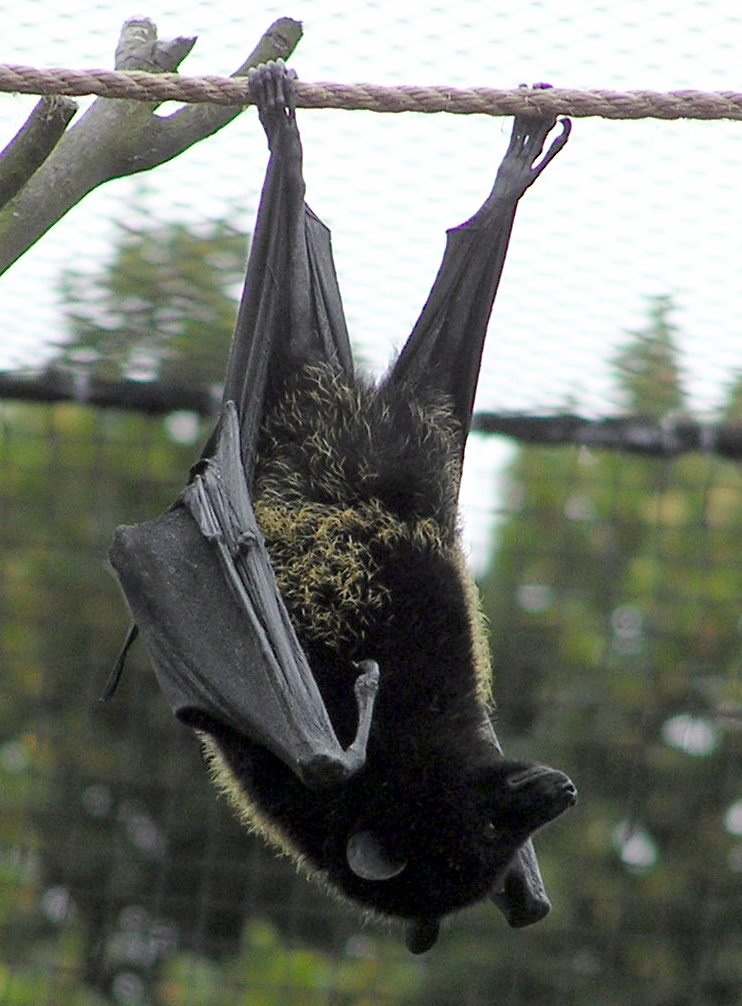
Vliegende honden zijn leuke beesten. Knuffelaars. Stinken als een beer natuurlijk; met dat opdekop hangen pissen en schijten ze over zichzelf.
ik moet verrassend weinig
Es ist heute schlecht und wird nun täglich schlechter werden, – bis das Schlimmste kommt
Es ist heute schlecht und wird nun täglich schlechter werden, – bis das Schlimmste kommt

.quote:Op maandag 2 juli 2007 13:55 schreef sigme het volgende:
Vliegende honden zijn leuke beesten. Knuffelaars. Stinken als een beer natuurlijk; met dat opdekop hangen pissen en schijten ze over zichzelf.

President Camacho
TV series: Boardwalk Empire | Burn Notice | Dexter | Game of Thrones | Impractical Jokers | Luther | Sherlock | Sons of Anarchy
TV series: Boardwalk Empire | Burn Notice | Dexter | Game of Thrones | Impractical Jokers | Luther | Sherlock | Sons of Anarchy
Niet zo janken, 80% van de moslims schijt nog steeds op dezelfde dingen als Nederlanders 100 jaar geleden deden.quote:Op maandag 2 juli 2007 14:12 schreef Mutant01 het volgende:
eeuw
President Camacho
TV series: Boardwalk Empire | Burn Notice | Dexter | Game of Thrones | Impractical Jokers | Luther | Sherlock | Sons of Anarchy
TV series: Boardwalk Empire | Burn Notice | Dexter | Game of Thrones | Impractical Jokers | Luther | Sherlock | Sons of Anarchy

Waarom ook niet hè.quote:Op maandag 2 juli 2007 13:55 schreef sigme het volgende:
Vliegende honden zijn leuke beesten. Knuffelaars. Stinken als een beer natuurlijk; met dat opdekop hangen pissen en schijten ze over zichzelf.
Whehehequote:De 13e editie van de Ha-Schi-Ba, het multiculturele evenement in de Haagse Schilderswijk, gaat niet door. Een complex van factoren heeft tot deze ingrijpende beslissing geleid. Na twaalf succesvolle edities kende de Ha-Schi-Ba dit jaar veel tegenwind.
Op woensdag 23 januari 2013 16:22 schreef gnaeus het volgende:[/b]
Je denkt serieus dat een goede opvoeding dit kan voorkomen ? Het is juist vaak de oorzaak van misdragingen.
Je denkt serieus dat een goede opvoeding dit kan voorkomen ? Het is juist vaak de oorzaak van misdragingen.

Sterke daling aantal burgerslachtoffers in Bagdad
ANP
BAGDAD - Het aantal burgerslachtoffers van gewelddadigheden in de Iraakse hoofdstad Bagdad is in de maand juni drastisch gedaald. Het aantal slachtoffers nam ten opzichte van de maand ervoor met 36 procent af, meldden Iraakse kranten maandag.
In juni vonden 1227 burgers de dood terwijl dat er in mei nog 1944 waren, blijkt uit cijfers van de ministeries van Volksgezondheid, Binnenlandse Zaken en Defensie.
ANP
BAGDAD - Het aantal burgerslachtoffers van gewelddadigheden in de Iraakse hoofdstad Bagdad is in de maand juni drastisch gedaald. Het aantal slachtoffers nam ten opzichte van de maand ervoor met 36 procent af, meldden Iraakse kranten maandag.
In juni vonden 1227 burgers de dood terwijl dat er in mei nog 1944 waren, blijkt uit cijfers van de ministeries van Volksgezondheid, Binnenlandse Zaken en Defensie.
Zelden schryf ik wat ik wil, en nooit wat 'n ander wil.

/quotaquote:Op maandag 2 juli 2007 15:57 schreef Apropos het volgende:
Sterke daling aantal burgerslachtoffers in Bagdad
ANP
BAGDAD - Het aantal burgerslachtoffers van gewelddadigheden in de Iraakse hoofdstad Bagdad is in de maand juni drastisch gedaald. Het aantal slachtoffers nam ten opzichte van de maand ervoor met 36 procent af, meldden Iraakse kranten maandag.
In juni vonden 1227 burgers de dood terwijl dat er in mei nog 1944 waren, blijkt uit cijfers van de ministeries van Volksgezondheid, Binnenlandse Zaken en Defensie.
De voorzitter zegt: Laat duizend bloemen bloeien.
Laat duizend balletjes stuiteren.
Laat duizend balletjes stuiteren.

President Camacho
TV series: Boardwalk Empire | Burn Notice | Dexter | Game of Thrones | Impractical Jokers | Luther | Sherlock | Sons of Anarchy
TV series: Boardwalk Empire | Burn Notice | Dexter | Game of Thrones | Impractical Jokers | Luther | Sherlock | Sons of Anarchy

Bob Fagget.
"I think I'm in a tragedy"
[youtube]http://www.youtube.com/watch?v=FZFG5PKw504[/youtube]
"In America today profit is privatized but risk is increasingly socialized"
[youtube]http://www.youtube.com/watch?v=FZFG5PKw504[/youtube]
"In America today profit is privatized but risk is increasingly socialized"
Volgens de krant was er ook 'geen voldoende draagvlak onder de bewoners'.quote:Op maandag 2 juli 2007 16:48 schreef DrWolffenstein het volgende:
[..]
De vernietiging van de symbolen van de multicul [14.gif]
Op woensdag 23 januari 2013 16:22 schreef gnaeus het volgende:[/b]
Je denkt serieus dat een goede opvoeding dit kan voorkomen ? Het is juist vaak de oorzaak van misdragingen.
Je denkt serieus dat een goede opvoeding dit kan voorkomen ? Het is juist vaak de oorzaak van misdragingen.

Een understatement waarschijnlijk.quote:Op maandag 2 juli 2007 16:49 schreef Die_Hofstadtgruppe het volgende:
[..]
Volgens de krant was er ook 'geen voldoende draagvlak onder de bewoners'.

Zeg Sidekick, die persoonlijke aanval was volkomen terecht.
Zelden schryf ik wat ik wil, en nooit wat 'n ander wil.
Precies, anders was ie wel verwijderd.quote:Op maandag 2 juli 2007 17:01 schreef Apropos het volgende:
Zeg Sidekick, die persoonlijke aanval was volkomen terecht.
"I think I'm in a tragedy"
[youtube]http://www.youtube.com/watch?v=FZFG5PKw504[/youtube]
"In America today profit is privatized but risk is increasingly socialized"
[youtube]http://www.youtube.com/watch?v=FZFG5PKw504[/youtube]
"In America today profit is privatized but risk is increasingly socialized"

tvp
Iconen verdwijnen, klonen verschijnen.
Dan ken jij de CDA aanhangers niet.
Fok = bruinhemdenforum, want smilies zijn kaal.
Dan ken jij de CDA aanhangers niet.
Fok = bruinhemdenforum, want smilies zijn kaal.

Jij kan het weten, kloon zijnde.quote:Op maandag 2 juli 2007 17:01 schreef Apropos het volgende:
Zeg Sidekick, die persoonlijke aanval was volkomen terecht.
A single death is a tragedy, a million deaths is a statistic - Joseph Stalin
Political power grows out of the barrel of a gun - Mao Zedong
I will eat the headdoekjes rauw - Geert Wilders
Political power grows out of the barrel of a gun - Mao Zedong
I will eat the headdoekjes rauw - Geert Wilders
HENRYK M. BRODERquote:Op maandag 2 juli 2007 10:27 schreef Die_Hofstadtgruppe het volgende:
..
Gelukkig worden ook daar mensen wakker: http://www.spiegel.de/kultur/gesellschaft/0,1518,490497,00.html (alleen met intolerantie is het Westen te redden)
Adolf Hitler: And so I believe to-day that my conduct is in accordance with the will of the Almighty Creator. In standing guard against the Jew I am defending the handiwork of the Lord. [Mein Kampf - hst2]
quote:De 26-jarige man verklaarde door anderen op de auto te zijn gezet. Hij is bekeurd voor openbare dronkenschap, het niet kunnen tonen van een identiteitsbewijs en het opgeven van een valse naam.

http://www.nieuwnieuws.nl(...)an_van_dak_rijd.html

Adolf Hitler: And so I believe to-day that my conduct is in accordance with the will of the Almighty Creator. In standing guard against the Jew I am defending the handiwork of the Lord. [Mein Kampf - hst2]
 .
.
Pretbedervers, de blauwe maffia.quote:Op maandag 2 juli 2007 19:33 schreef raaretsalsdoG het volgende:
[..]
[afbeelding]
http://www.nieuwnieuws.nl(...)an_van_dak_rijd.html
JTamtmer dat die duitser niet een keer stevig naar rechts en naar links stuurde... Ben benieuwd of het fietsenrekje dan overeind zou blijven.
"I think I'm in a tragedy"
[youtube]http://www.youtube.com/watch?v=FZFG5PKw504[/youtube]
"In America today profit is privatized but risk is increasingly socialized"
[youtube]http://www.youtube.com/watch?v=FZFG5PKw504[/youtube]
"In America today profit is privatized but risk is increasingly socialized"
Als je echt apocalyptische voorspellingen en doemdenkerij wilt zien, dan moet je nu Discovery Science kijken. Future Storm 2050, over wat klimaatverandering ons over vijftig jaar brengt. "Als nu op 1 op de 30 mensen te maken heeft met natuurrampen... in 2050 1 op de 1." Permanente rampen. Niets of niemand is veilig. Etcetera, blabla. Kijken naar overstromingen in Peru, El Nino, waar zwaardere stormen waarschijnlijk wel zullen zijn, maar ze vergeten gewoon glad te vermelden over de toegenomen bevolking, de houtkap. Dat is zelfs voor deze slinkse milieuhippie te gek.
quote:Op maandag 2 juli 2007 20:16 schreef Rock_de_Braziliaan het volgende:
JTamtmer dat die duitser niet een keer stevig naar rechts en naar links stuurde... Ben benieuwd of het fietsenrekje dan overeind zou blijven.
quote:
Adolf Hitler: And so I believe to-day that my conduct is in accordance with the will of the Almighty Creator. In standing guard against the Jew I am defending the handiwork of the Lord. [Mein Kampf - hst2]
Je kunt 'm torrenteren: http://www.google.nl/search?q=future+storm+2050&ie=utf-8&oe=utf-8&aq=t&rls=org.mozilla:nl:official&client=firefox-aquote:Op maandag 2 juli 2007 20:26 schreef Monidique het volgende:
Als je echt apocalyptische voorspellingen en doemdenkerij wilt zien, dan moet je nu Discovery Science kijken. Future Storm 2050, over wat klimaatverandering ons over vijftig jaar brengt. "Als nu op 1 op de 30 mensen te maken heeft met natuurrampen... in 2050 1 op de 1." Permanente rampen. Niets of niemand is veilig. Etcetera, blabla. Kijken naar overstromingen in Peru, El Nino, waar zwaardere stormen waarschijnlijk wel zullen zijn, maar ze vergeten gewoon glad te vermelden over de toegenomen bevolking, de houtkap. Dat is zelfs voor deze slinkse milieuhippie te gek.
Ik word echt heel bang ervanquote:Op maandag 2 juli 2007 20:26 schreef Monidique het volgende:
Als je echt apocalyptische voorspellingen en doemdenkerij wilt zien, dan moet je nu Discovery Science kijken. Future Storm 2050, over wat klimaatverandering ons over vijftig jaar brengt. "Als nu op 1 op de 30 mensen te maken heeft met natuurrampen... in 2050 1 op de 1." Permanente rampen. Niets of niemand is veilig. Etcetera, blabla. Kijken naar overstromingen in Peru, El Nino, waar zwaardere stormen waarschijnlijk wel zullen zijn, maar ze vergeten gewoon glad te vermelden over de toegenomen bevolking, de houtkap. Dat is zelfs voor deze slinkse milieuhippie te gek.

Gelukkig is er komende maand Al Gore met zijn de wereld om vlieg concerten, fietst Ruud de Wild naar Londen, zijn kleuters met bivakmutsen het zat dat pappa met de auto naar de bakker gaat, prijst Filemon de Smart aan want 'als jij niet verandert, verandert het klimaat rijdt dus een Smart want die heeft de laagste CO2 uitstoot' en is bijna elke kleuter doodsbang geworden voor de klimaatsveranderingen.

Op woensdag 23 januari 2013 16:22 schreef gnaeus het volgende:[/b]
Je denkt serieus dat een goede opvoeding dit kan voorkomen ? Het is juist vaak de oorzaak van misdragingen.
Je denkt serieus dat een goede opvoeding dit kan voorkomen ? Het is juist vaak de oorzaak van misdragingen.
Ik las het, ja, .quote:Op maandag 2 juli 2007 20:35 schreef Die_Hofstadtgruppe het volgende:
en is bijna elke kleuter doodsbang geworden voor de klimaatsveranderingen.
Ik word debiel van die klimaathysterie en dan vooral van ieder bedrijf dat er brood in ziet.
Smart 'als jij niet verandert, verandert het klimaat'
Rabobank: Nu met klimaatneutrale lening
Etc etc etc
Smart 'als jij niet verandert, verandert het klimaat'
Rabobank: Nu met klimaatneutrale lening
Etc etc etc
Op woensdag 23 januari 2013 16:22 schreef gnaeus het volgende:[/b]
Je denkt serieus dat een goede opvoeding dit kan voorkomen ? Het is juist vaak de oorzaak van misdragingen.
Je denkt serieus dat een goede opvoeding dit kan voorkomen ? Het is juist vaak de oorzaak van misdragingen.
Milieu is keiharde commercie.
GL zal er binnenkort wel de handen vanaf halen.
GL zal er binnenkort wel de handen vanaf halen.
Iconen verdwijnen, klonen verschijnen.
Dan ken jij de CDA aanhangers niet.
Fok = bruinhemdenforum, want smilies zijn kaal.
Dan ken jij de CDA aanhangers niet.
Fok = bruinhemdenforum, want smilies zijn kaal.
http://www.theglobalist.com/StoryId.aspx?StoryId=6240quote:Chinese Soft Power in Southeast Asia (Part I)
By Josh Kurlantzick | Monday, July 02, 2007
While China’s hard power continues to grow in lockstep with its booming economy and ever more powerful military, the country is increasingly looking for ways to augment its soft power. As Josh Kurlantzick writes, China has marshaled its soft power by portraying itself as the natural guardian of developing countries.
In November 2000, Jiang Zemin made his first visit to Cambodia. Arriving at the airport in Cambodia’s capital, the normally stiff Chinese leader offered a brief greeting to his Cambodian hosts. He was whisked into a motorcade that rumbled through the streets.
But on this morning, the cityscape resembled that of a papal visit to a devoutly Catholic nation. Thousands of Cambodian children lined the streets, waving tiny Chinese flags or small photographs of Jiang’s face.
Growing Chinese influence
The kids cheered for Jiang as his open car toured through the city, chanting like he was David Beckham, rather than an elderly politician with thick glasses and an oily, swept-back hairdo.
China had quietly laid the groundwork for Jiang’s visit. Beijing had become Cambodia’s major provider of foreign aid. Chinese language programs dominated downtown Phnom Penh, and one Chinese-language school alone drew 14,000 students.
Cambodian kids who once would have headed to France or the United States for higher education now looked to universities in Shanghai.
Exerting more power
Cambodia is hardly unique. Since the late 1990s, perceptions of China across the developing world have been transformed, and countries have come to view China as a partner, and even a friend.
This transformation is partly due to a growth in China’s soft power — the attractiveness of China’s culture, diplomacy, businesses and arts.
Bad move
Until the past decade, China exerted minimal soft power. But by the late 1990s, the Chinese leadership seems to have made a decision that its hard power was still limited. In the mid-1990s, China had tried to signal Beijing’s rising military strength to the world by moves like sending ships to disputed reefs in the South China Sea in 1995.
This backfired. “China’s provocative military exercises … frightened much of Southeast Asia,” argues Rommel C. Banlaoi, a former analyst in the Philippines’ Department of National Defense.
In the past decade, then, China has marshaled its soft power — particularly by portraying itself as the natural guardian of developing countries.
An ideal portrayal
“It was very clear that at meetings of the Asia Pacific Economic Cooperation, that China was looking to be the spokesperson of the Third World countries,” said Federico Macaranas, a Filipino scholar.
Another aspect of China’s appeal to developing nations involves Beijing portraying China as a potential ideal. China utilizes a model of top-down control of development in which political reform is sidelined for economic reform.
Blatant advertisement
And on visits abroad, Chinese officials do not shy away from advertising the benefits of its socioeconomic model.
“China … has created a miracle by feeding nearly 22% of the world’s population on less than 10% of the world’s arable land. The living standards of its 1.3 billion people are constantly improving,” noted one white paper issued by the Chinese government.
As China’s engagement with the developing world has become more sophisticated, its tools of soft power have become more sophisticated as well. In the past decade, China has upgraded its public diplomacy.
Upgrading public diplomacy
China’s public diplomacy efforts reinforce the concept of peaceful development — efforts like museum exhibits in Malaysia to celebrate the 600th anniversary of the voyages of Zheng He, a Chinese admiral who sailed across the world, encountering but never conquering other nations.
Beijing also has created a Chinese version of the Peace Corps to send young Chinese on long-term volunteer service projects to developing nations like Laos.
Better diplomatic corps
China has upgraded the newswire Xinhua and expanded its output in languages other than English and Chinese — and has expanded the international broadcasting of CCTV, Chinese television.
As China has upgraded its public diplomacy, it also has invested in improving its diplomatic corps. Over the past fifteen years, the Chinese Ministry of Foreign Affairs has begun to retire older diplomats, replacing them with a young generation of envoys who speak better English and local languages.
One 2005 study suggested that one-half of the country’s 4,000 diplomats are less than thirty-five years old. Consequently, top Chinese diplomats in nations like Thailand now often have done multiple rotations in those countries before rising to the rank of ambassador, developing extensive local contacts.
Encouraging Chinese culture
Promotion of Chinese culture and language are major components of this public diplomacy. Beijing now funds Confucius Institutes, Chinese-language schools created at leading local universities.
Beijing also has tried to push instruction in Mandarin and in Chinese culture in overseas primary schools, partly by signing agreements with countries like Thailand to help integrate Chinese into public schools’ curricula.
Economic influences
China’s economic tools of soft power also have become more sophisticated.
According to a study of Chinese aid by Henry Yep of National Defense University in Washington, in 2003, China’s aid to the Philippines was roughly four times greater than U.S. aid to Manila, China’s aid to Laos was three times greater than U.S. aid — and China’s aid to Indonesia was nearly double U.S. aid.
And China’s embrace of free trade also bolsters its image. In addition to a free trade agreement with Southeast Asia, Beijing is negotiating more than fifteen free trade agreements with other nations, all at the same time.
Migrating Chinese
Finally, over the past decade the Chinese government has not only lifted restrictions on migration within China but also made it vastly easier for Chinese to leave the country for business and tourism.
Partly as a result, Chinese migration is transforming the demographic makeup of northern mainland Southeast Asia, from northern Burma to northern Vietnam. Because of outmigration, ethnic Chinese now dominate entire towns in places like Luang Namtha, in northern Laos.
Editor's Note: This feature is adapted from Charm Offensive: How China's Soft Power Is Transforming the World by Josh Kurlantzick. Copyright 2007, Yale University Press. Reprinted with permission of the author.
Part II of this feature will appear on The Globalist tomorrow.
http://www.vrtnieuws.net/(...)unsten/070702Rushdiequote:Alweer echtscheiding voor Salman Rushdie
ma 02/07/07 - De Britse schrijver met Indiase roots, Salman Rushdie, gaat scheiden van zijn vierde vrouw, Padma Lakshmi. Het koppel is getrouwd in 2004 in New York.
"Padma Lakshmi heeft de scheiding aangevraagd", meldt een woordvoerder van de schrijver.
"Salman Rushdie heeft de scheiding aanvaard. Hij gaat in op de wens van Padma Lakshmi om het huwelijk te beëindigen."
De voorbije weken gonsde het van de geruchten over een nakende scheiding. Met de officiële mededeling is nu een eind aan alle speculaties gekomen.
Salman Rusdie (60) werd wereldberoemd met zijn boek "De duivelsverzen". Twee weken geleden werd hij nog geridderd in
Groot-Brittannië. Dat zorgde voor heel wat protest in de moslimwereld.
Zijn toekomstige ex is een gevierde actrice en supermodel in India. Padma Lakshmi heeft ook een gelauwerd kookboek geschreven.
Ze was ook echt te lekker voor m. Dat mixt niet.quote:Op maandag 2 juli 2007 21:21 schreef zakjapannertje het volgende:
[..]
http://www.vrtnieuws.net/(...)unsten/070702Rushdie
"I think I'm in a tragedy"
[youtube]http://www.youtube.com/watch?v=FZFG5PKw504[/youtube]
"In America today profit is privatized but risk is increasingly socialized"
[youtube]http://www.youtube.com/watch?v=FZFG5PKw504[/youtube]
"In America today profit is privatized but risk is increasingly socialized"
In Nederland wil ik niet leven,quote:Coffeeshop verdeelt coalitie
DEN HAAG - Coalitiepartijen CDA en PvdA staan lijnrecht tegenover elkaar als het gaat om het roken in coffeeshops. CDA-Kamerlid Cisca Joldersma vreest dat minister Ab Klink (Volksgezondheid) te veel ruimte geeft voor roken in deze horecagelegenheid en PvdA'er Lea Bouwmeester is juist bang dat de coffeeshop voor blowers minder aantrekkelijk wordt.
Per 1 juli 2008 wil Klink het roken in de horeca verbieden. Wel mogen kroegen en restaurants nog een rookruimte inrichten waar niet bediend wordt. Voor de coffeeshops zegt hij dat de verkoop afgescheiden van de rookruimte plaats moet vinden. Volgens het CDA kan dit betekenen dat in vrijwel de hele coffeeshop nog gerookt kan worden, de PvdA vreest juist dat de verkoop in een glazen hokje afbreuk doet aan deze horecagelegenheid.
Dinsdag praat de Tweede Kamer met Klink over het rookverbod in de horeca.
Men moet er steeds zijn lusten reven,
Ter wille van de goede buren
Die gretig door elk gaatje gluren
Houd toch op, man.quote:Op maandag 2 juli 2007 21:30 schreef Monidique het volgende:
Te lekker, te jong, te wulps, te vrouw.
Zelden schryf ik wat ik wil, en nooit wat 'n ander wil.
quote:Op maandag 2 juli 2007 21:32 schreef Reya het volgende:
[..]
In Nederland wil ik niet leven,
Men moet er steeds zijn lusten reven,
Ter wille van de goede buren
Die gretig door elk gaatje gluren
En nooit, neen nooit gebeurt een mooie eerwraakmoord.
Zelden schryf ik wat ik wil, en nooit wat 'n ander wil.
Dat is een goede openingszin.quote:Op maandag 2 juli 2007 21:34 schreef Apropos het volgende:
[..]
En nooit, neen nooit gebeurt een mooie eerwraakmoord.
"I think I'm in a tragedy"
[youtube]http://www.youtube.com/watch?v=FZFG5PKw504[/youtube]
"In America today profit is privatized but risk is increasingly socialized"
[youtube]http://www.youtube.com/watch?v=FZFG5PKw504[/youtube]
"In America today profit is privatized but risk is increasingly socialized"
Dat ''te vrouw''. Wat een minderwaardige uitdrukking. Doet me denken aan krakers.quote:
Zelden schryf ik wat ik wil, en nooit wat 'n ander wil.

http://www.nos.nl/nos/art(...)1C7BCB07841E8D5.htmlquote:16:03 02 Juli 2007
Franse vervoerder koopt Connexxion
Het vervoersbedrijf Connexxion komt in handen van de Franse branchegenoot Transdev. De Nederlandse staat, die nu nog alle aandelen bezit, verkoopt 66% daarvan aan het Franse bedrijf.
Wat Transdev betaalt, is niet bekend. Er waren nog twee andere gegadigden voor Connexxion: de Britse First Group en een groep waarin onder meer de Rabo Bank en de Duitse spoorwegen zitten.
De vakbonden staan gematigd positief tegenover de overname. Zij hebben van het Franse bedrijf te horen gekregen, dat er geen plannen zijn voor ontslagen en dat de arbeidsvoorwaarden overeind blijven bij het Nederlandse bedrijf.
gelukkig hebben we Veolia nog
Het doet je denken aan lesbisch, bedoel je.quote:Op maandag 2 juli 2007 21:40 schreef Apropos het volgende:
[..]
Dat ''te vrouw''. Wat een minderwaardige uitdrukking. Doet me denken aan krakers.
Nooit gedacht dat het gadeslaan van historische gebeurtenissen zo aartsvervelend kon zijn.
Zelden schryf ik wat ik wil, en nooit wat 'n ander wil.
't is wat het is..quote:Op maandag 2 juli 2007 21:45 schreef Apropos het volgende:
Nooit gedacht dat het gadeslaan van historische gebeurtenissen zo aartsvervelend kon zijn.
De voorzitter zegt: Laat duizend bloemen bloeien.
Laat duizend balletjes stuiteren.
Laat duizend balletjes stuiteren.
Ze zoeken het maar uit.quote:Op maandag 2 juli 2007 21:45 schreef Apropos het volgende:
Nooit gedacht dat het gadeslaan van historische gebeurtenissen zo aartsvervelend kon zijn.
"I think I'm in a tragedy"
[youtube]http://www.youtube.com/watch?v=FZFG5PKw504[/youtube]
"In America today profit is privatized but risk is increasingly socialized"
[youtube]http://www.youtube.com/watch?v=FZFG5PKw504[/youtube]
"In America today profit is privatized but risk is increasingly socialized"
