COR Corona COVID-19 forum
Alles over het corona / COVID-19 virus.



Misschien een naïeve vraag, maar waarom delen overheden dan niet massale pillen met vitamine D3 uit?quote:Op zondag 6 december 2020 20:12 schreef Tijn het volgende:
[..]
Er zijn steeds meer aanwijzingen dat mensen met lage vitamine D-levels een hogere kans hebben om meer last van covid te hebben. Dit is wel een aardige site waar de onderzoeken worden bijgehouden: https://vitamin-d-covid.shotwell.ca/

Kun je bij een teveel aan vit.D ook klachten hebben?quote:Op zondag 6 december 2020 20:07 schreef Noek het volgende:
[..]
Butt naked zelfs, armen en/of benen zijn niet genoeg.
Ik had teveel vit D. Was wel na Indonesië en ik ben vrij strikt met suppletie want eet plantaardig.
Dus ik moest om de dag bijslikken.
Zijn er goede bronnen dat vit D een rol speelt in het corona verhaal?
Dat heb ik in dit topic ook wel 's gezegd idd.quote:Op zondag 6 december 2020 20:15 schreef Hamzoef het volgende:
[..]
Misschien een naïeve vraag, maar waarom delen overheden dan niet massale pillen met vitamine D3 uit?
Schaf BTW op groente en fruit af gedurende de pandemie, zorg dat Vitaminepillen via de verzekering declarabel zijn. Wie weet, misschien scheelt het 3 ziekenhuisopnames.

Dat is wel een beetje een kip-ei discussie.quote:
[..]
Er zijn steeds meer aanwijzingen dat mensen met lage vitamine D-levels een hogere kans hebben om meer last van covid te hebben. Dit is wel een aardige site waar de onderzoeken worden bijgehouden: https://vitamin-d-covid.shotwell.ca/
Mensen met een chronische aandoening, met name diabetes hebben over het algemeen ook een lagere vitamine D level. Dus je zou kunnen stellen dat het aan de vitamine ligt, of aan het feit dat ziekte vaak samengaat met lagere waardes.
blablablabla
Wat een nonsens. Is de natuurlijke manier van vitamine d aanmaak. Maar blijf vooral je pillen slikkenquote:
[..]
alleen is het niet zo gezond.....


Ja, goeie vraag. Er is volgens mij nog niet zoveel echt duidelijk, veel onderzoek loopt nog. Maar bv in Scandinavië wordt er al jaren vitamine D aan allerlei producten in de supermarkt toegevoegd, omdat mensen daar een nog grotere kans op een tekort hebben. In Nederland zit het volgens mij alleen in margarine.quote:
[..]
Misschien een naïeve vraag, maar waarom delen overheden dan niet massale pillen met vitamine D3 uit?

Wordt het niet eens tijd om de ouderen te gaan isoleren?
Ik bedoel.. we hebben bijvoorbeeld ouderenuurtjes in de supermarkt ingevoerd, maar ik zie opa en oma gewoon samen achter de rollator om 13:00 uur boodschappen doen.
Het probleem is dat het gros van de 60 plussers gewoon doorgaat met het leven zoals ze altijd gewend waren.
"Dood gaan we binnenkort toch wel"

Ik bedoel.. we hebben bijvoorbeeld ouderenuurtjes in de supermarkt ingevoerd, maar ik zie opa en oma gewoon samen achter de rollator om 13:00 uur boodschappen doen.
Het probleem is dat het gros van de 60 plussers gewoon doorgaat met het leven zoals ze altijd gewend waren.
"Dood gaan we binnenkort toch wel"
Zuiger van het FOK!-OMT
Ik probeer het nog eens, dit keer met een andere link. Je bewering klopt niet.quote:
[..]
Wat een nonsens. Is de natuurlijke manier van vitamine d aanmaak. Maar blijf vooral je pillen slikken
https://www.kwf.nl/standpunten/vitamine-d
Post nu eens de besmettingsgevallen per leeftijdscategorie, dit is natuurlijk weinig relevante data aangezien algemeen bekend is dat ouderen er vaker ziek van worden.quote:
Wordt het niet eens tijd om de ouderen te gaan isoleren?
[ afbeelding ]
Ik bedoel.. we hebben bijvoorbeeld ouderenuurtjes in de supermarkt ingevoerd, maar ik zie opa en oma gewoon samen achter de rollator om 13:00 uur boodschappen doen.
Het probleem is dat het gros van de 60 plussers gewoon doorgaat met het leven zoals ze altijd gewend waren.
"Dood gaan we binnenkort toch wel"
blablablabla
Jawel zijn zonnebanken met speciale lampen hiervoor.quote:
[..]
Ik probeer het nog eens, dit keer met een andere link. Je bewering klopt niet.
https://www.kwf.nl/standpunten/vitamine-d
Kan me wel goed vinden in dit artikel trouwens:
Ik denk niet dat iemand binnenshuis op visite mondkapjes gaat dragen trouwens, maar dat is een ander verhaal. Maar zelfs dat zouden mensen misschien sneller doen als iemand er nog in geloofde, als je een overheid zou hebben die consequent betrouwbare informatie geeft.
Wat mij verbaast is dat we hier i.t.t. de VS geen 50 staten hebben met elk een ander beleid, maar dat je dit artikel toch bijna één op één kunt vertalen naar de Nederlandse situatie. Ook bijvoorbeeld omdat (i.t.t. het CDC in de VS) het RIVM zegt dat mondkapjes niet helpen, maar ze wel verplicht zijn. Arbitraire regels loeren dan ook om de hoek, zelfs in een land als Nederland waar de landelijke overheid bepaalt en zich (m.u.v. mondkapjes) baseert op deskundig advies. Hoe is het mogelijk dat wij hetzelfde probleem hebben als in de VS, terwijl wij geen Trump-type als premier hebben en wij geen 12 provincies met elk een ander beleid hebben?
Ook hier hebben we allerlei regeltjes die er zijn om 'een signaal af te geven' zonder uitleg over nut of noodzaak, of zelfs boetes voor het overtreden van regels waar het nut niet van is aangetoond. Op deze manier wordt het draagvlak voor regels inderdaad steeds minder.
Het ontbreekt bij overheden aan de moed om niet alleen adviezen te geven over wat wel werkt, maar ook om uit te leggen wat niet werkt, en waarom ze bepaalde regels níet invoeren. Het beleid omtrent mondkapjes was tot voort kort het Gallisch dorpje dat eenzaam standhield, maar ook dat werd opgeofferd in het belang van 'heldere communicatie'. Inderdaad zoals in het artikel staat, omdat veel beleid door communicatie-experts wordt gemaakt die het communiceren al jaren verleerd zijn, en die het volk daarom aanspreken alsof we allemaal kleine kinderen zijn. "Doe dit! Omdat ik het zeg! Anders krijg je straf!" (zie ook Hugo de Jonge met zijn pabo-achtergrond). Heldere communicatie tot je op het punt aankomt van "Jullie mogen het niet, maar de juf mag het wel, omdat..."
https://www.bloomberg.com(...)ess-too-many-of-themquote:Skip the Useless Covid-19 Rules, Please
A tangle of recommendations — some not even helpful — is contributing to pandemic fatigue.
By Faye Flam
6 December 2020, 14:00 CET
Not helpful.
Faye Flam is a Bloomberg Opinion columnist. She has written for the Economist, the New York Times, the Washington Post, Psychology Today, Science and other publications. She has a degree in geophysics from the California Institute of Technology.
A clutter of unhelpful pandemic rules is wearing people down. One-way systems in stores, outdoor mask mandates, ceaselessly cleaning groceries and packages — should these things be our top priorities for limiting the spread of Covid-19?
Harvard’s Joseph Allen is an associate professor of exposure assessment science and one of the world’s experts on why some indoor spaces are worse than others for spreading viruses. Like other experts, he agrees that poorly ventilated indoor sites are the prime spreading ground for SARS-CoV-2. So the longer people spend in any indoor space with other people, the greater the risk they pose to themselves and others.
I asked him: Wouldn’t it be better if we did away with the one-way system so that people could dispatch with their grocery shopping quickly, without having to endure long waits behind price-comparers or other slowpokes? The answer is yes. Eliminating those annoying arrows would probably make shopping safer as well as less stressful.
Businesses are, of course, free to impose their own rules, but it’s unlikely many would knowingly make shopping less safe. The fault lies with the public health community for being too shy in talking about which rules don’t help, leaving us with a tangle of rules and recommendations — and pandemic fatigue.
State rules have an even bigger effect on our lives and are often thrown at people with no transparency. My state of Rhode Island has recently become one of the worst five states for per-capita infections, despite getting praise from Anthony Fauci, director of the National Institute of Allergy and Infectious Diseases, at the end of the summer for our strict rules and good compliance. With cases already climbing in late November, Governor Gina Raimondo held a press conference where she scolded citizens for not following the rules.
Soon afterwards, a talk radio host voiced what I was thinking. Who are these people filling up the hospitals? Where do they live? What kind of work do they do? Do we have any idea how they got the virus? And which rules, exactly, were they breaking?
As risk communication consultant Peter Sandman has said early in the pandemic, a public health policy that people don’t follow is a failed policy. That means even a really solid, science-based set of rules can fail if it’s not communicated with a clear rationale.
In Massachusetts, governor Charlie Baker has focused his latest round of rules on outdoor mask wearing — something that many experts have said is unlikely to help since the virus is extremely unlikely to be transmitted over distances outside. The British Scientific Advisory Group for Emergencies has deemed outdoor mask wearing of negligible benefit.
Baker’s ruling prompted Harvard epidemiologist Julia Marcus to suggest in Boston.com that he’s playing pandemic theater. “Arbitrary public health rules are a way to break the public’s trust, which is essential to keeping people engaged in public health efforts,” she told a reporter for the site. “I think a mandate like this — that people know is arbitrary — is going to do more to reduce trust than it will to reduce infections.”
Harvard’s William Hanage, who studies infectious disease dynamics, told me that people don’t need more rules. They need more information about how the virus is transmitted so they can take steps to avoid it. “When you phrase things in terms of rules, it leads people to try to come up with ways to get around those rules,” he says.
Rules can become a form of misinformation. The rules in many states seem to suggest that walking outside is dangerous and eating in a restaurant is safe, but Hanage says the truth is the other way around.
Baker has justified his outdoor mask mandate by saying it sends a message. The message I heard was that that the rules are not chosen for our health and welfare but to make our political leaders look like they are doing something.
Rules should only be decreed along with evidence for their benefit, argued statistician and risk communication expert David Spiegelhalter in a piece for The Guardian: “Too often, the message is shaped by communication professionals working to ensure the greatest number of people ‘get the message’ rather than thinking about how to present the evidence so the greatest number of people can understand it, trust it, and then decide for themselves.”
I hear from diverse readers who want to do the right thing, but need to know where to focus their efforts. A farmer in Florida recently wrote to me about the pandemic fatigue that’s affecting him and his neighbors. “What happens here is that we get worn out, beaten down and overloaded such that no matter how well-intentioned we are we are prone to latch onto something wrong.”
“So I think people here get it that it's serious … they like their neighbors and don't want them dead,” he wrote. But they’re wondering how much effort to put into disinfecting groceries and kitchen counters — something that some media outlets recommended in the spring, as well as wearing gloves at the gas station, disinfecting credit cards and letting packages sit outside for a few days before opening them.
Harvard disease expert Hanage says that the science to date points to the primary risk coming from what he calls the three C’s — close contact, closed spaces and crowds. He says in Japan, where they’ve had few Covid-19 deaths, people are advised to avoid these — not just to wear masks in these situations but to limit them or avoid them altogether.
One place where the informational clutter can get sorted out is the CDC. In an encouraging trend, the agency is starting to make recommendations by explaining why they’re likely to improve public health. The agency cited good reasons people should avoid traveling for the holidays, including many combinations of those three C’s. They’ve just issued new guidelines recommending masks when people are indoors outside their homes or cannot stay more than six feet away from other people. And they’ve just shortened the quarantine period for people exposed to the virus from 14 days to 10, or seven if you get a test at the end. Again, the rationale was explained — some cases can incubate for two full weeks, but most people develop symptoms sooner. A shorter quarantine period can still cut down on transmission and will get better compliance.
It would be wonderful if the CDC could also start telling us which rules and recommendations are unlikely to work, so we can all concentrate on the ones that will. There’s some denial out there, but there’s also enormous curiosity and willingness to help. It’s a resource we can’t afford to keep squandering.
This column does not necessarily reflect the opinion of the editorial board or Bloomberg LP and its owners.
To contact the author of this story:
Faye Flam at fflam1@bloomberg.net
To contact the editor responsible for this story:
Sarah Green Carmichael at sgreencarmic@bloomberg.net
Ik denk niet dat iemand binnenshuis op visite mondkapjes gaat dragen trouwens, maar dat is een ander verhaal. Maar zelfs dat zouden mensen misschien sneller doen als iemand er nog in geloofde, als je een overheid zou hebben die consequent betrouwbare informatie geeft.
Wat mij verbaast is dat we hier i.t.t. de VS geen 50 staten hebben met elk een ander beleid, maar dat je dit artikel toch bijna één op één kunt vertalen naar de Nederlandse situatie. Ook bijvoorbeeld omdat (i.t.t. het CDC in de VS) het RIVM zegt dat mondkapjes niet helpen, maar ze wel verplicht zijn. Arbitraire regels loeren dan ook om de hoek, zelfs in een land als Nederland waar de landelijke overheid bepaalt en zich (m.u.v. mondkapjes) baseert op deskundig advies. Hoe is het mogelijk dat wij hetzelfde probleem hebben als in de VS, terwijl wij geen Trump-type als premier hebben en wij geen 12 provincies met elk een ander beleid hebben?
Ook hier hebben we allerlei regeltjes die er zijn om 'een signaal af te geven' zonder uitleg over nut of noodzaak, of zelfs boetes voor het overtreden van regels waar het nut niet van is aangetoond. Op deze manier wordt het draagvlak voor regels inderdaad steeds minder.
Het ontbreekt bij overheden aan de moed om niet alleen adviezen te geven over wat wel werkt, maar ook om uit te leggen wat niet werkt, en waarom ze bepaalde regels níet invoeren. Het beleid omtrent mondkapjes was tot voort kort het Gallisch dorpje dat eenzaam standhield, maar ook dat werd opgeofferd in het belang van 'heldere communicatie'. Inderdaad zoals in het artikel staat, omdat veel beleid door communicatie-experts wordt gemaakt die het communiceren al jaren verleerd zijn, en die het volk daarom aanspreken alsof we allemaal kleine kinderen zijn. "Doe dit! Omdat ik het zeg! Anders krijg je straf!" (zie ook Hugo de Jonge met zijn pabo-achtergrond). Heldere communicatie tot je op het punt aankomt van "Jullie mogen het niet, maar de juf mag het wel, omdat..."
Maar dan heb je het niet over de standaard-zonnebank.quote:
[..]
Jawel zijn zonnebanken met speciale lampen hiervoor.
Dan heb je het over hele andere lampen.
Lekker belangrijk als je besmet wordt.quote:
[..]
Post nu eens de besmettingsgevallen per leeftijdscategorie, dit is natuurlijk weinig relevante data aangezien algemeen bekend is dat ouderen er vaker ziek van worden.
Het gaat erom dat we er voor moeten zorgen dat de ouderen en kwetsbaren niet besmet worden.
En aangezien die groep over het algemeen overal schijt aan heeft, moeten die tegen zichzelf in bescherming worden genomen.
Dus.. thuisisolatie voor een maand. Je laat je eten gewoon bezorgen. Wil je toch naar buiten, dan op eigen risico.
Zuiger van het FOK!-OMT

Geen idee, kwam uit de test. Een teveel is vaak ook niet goed dus ben maar gaan minderen met mn vrije hoog gedoseerde pillen.quote:
[..]
Kun je bij een teveel aan vit.D ook klachten hebben?
Ik had wel slaapproblemen maar wist al wel dat ik vit D in de ochtend moest nemen.
Maar misschien heb ik dat ergens gelezen op klazienuutzalk.nl dat ik het s ochtends moest nemen.
Maar vond t wel logisch, zon komt op, free vit D.
Go hard or go home
Ja, vaak gaat dat gepaard met een rode, geïrriteerde huid.quote:
Kun je bij een teveel aan vit.D ook klachten hebben?
So we just called him Fred
Johquote:
[..]
Lekker belangrijk als je besmet wordt.
Het gaat erom dat we er voor moeten zorgen dat de ouderen en kwetsbaren niet besmet worden.
En aangezien die groep over het algemeen overal schijt aan heeft, moeten die tegen zichzelf in bescherming worden genomen.
Dus.. thuisisolatie voor een maand. Je laat je eten gewoon bezorgen. Wil je toch naar buiten, dan op eigen risico.
Dat is precies wat mensen doen.
Verder is de vraag hoe en waar 70+ besmet raakt, het zou zomaar kunnen via (klein) kinderen die op bezoek komen dus daar hebben de jongeren met zoveel 'schuld' aan. Voor zover een schuldvraag überhaupt relevant is natuurlijk.
Had gehoopt dat we dat geneuzel over leeftijden inmiddels wel voorbij waren..
blablablabla
En constipatie.quote:
[..]
Ja, vaak gaat dat gepaard met een rode, geïrriteerde huid.
blablablabla
Ik denk dat het punt wat @DonDruiper aanstippeld wel belangrijk is, en daar is het wel vaker over gegaan. Als je als volledige maatschappij er alles aan doet om de mensen met zwakkere gezondheid te ontzien, is het natuurlijk niet logisch als die mensen alsnog het op gaan zoeken. Daar mogen best vragen over gesteld worden.quote:
[..]
Joh
Dat is precies wat mensen doen.
Verder is de vraag hoe en waar 70+ besmet raakt, het zou zomaar kunnen via (klein) kinderen die op bezoek komen dus daar hebben de jongeren met zoveel 'schuld' aan. Voor zover een schuldvraag überhaupt relevant is natuurlijk.
Had gehoopt dat we dat geneuzel over leeftijden inmiddels wel voorbij waren..
Als ik op vrijdagavond boodschappen doe kom ik regelmatig ouderen tegen die 'gezellig' samen boodschappen aan 't doen zijn. Vaak zijn dat ook degenen die totaal geen moeite doen om afstand te houden.
Hoe langer deze situatie duurt, hoe prangender die vraag wordt.

Deze onderzoeken beschouwen alleen het mondkapje zelf om dat op grond van "kansberekening" die zich weer baseren op een veronderstelde werkingen, om dan ongefundeerde uitspraken te doen.quote:
Het is van een misplaatst niveau dat wanneer beide personen iets dragen (wat regelmatig wordt getoond), er dan geen transmissie meer kan plaatsvinden. zoals bron: France gouvernement :

Dit is meer het eerlijke verhaal:
Om wat onderbouwd over een mondkapje te kunnen zeggen moet ook de stof, aard, plaats, omstandigheden en (verschoonde) manier van dragen worden meegenomen. Metingen in een/uit lab zijn niet realistisch te projecteren naar de weerbarstige praktijk die maar wat deugnietend doet.quote:Bron: polifact
No mask is 100% effective, but health care officials stress that face masks increase their effectiveness when combined with other measures, such as social distancing and regular hand washing.
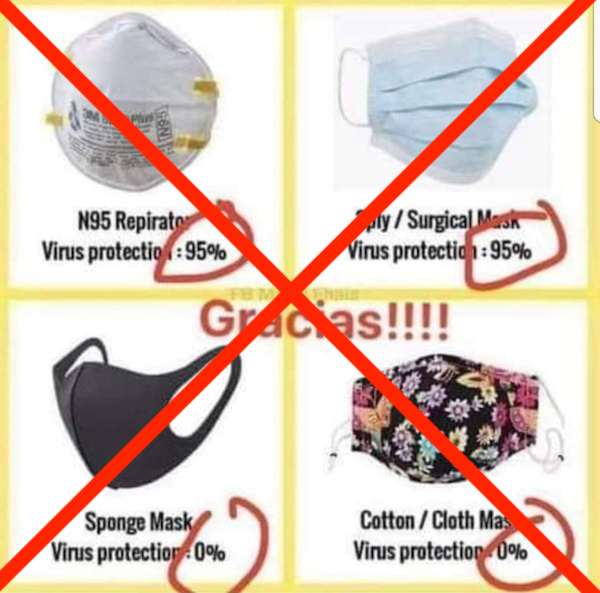
Het is van een Dettolgehalte die 99% van de bacteriën tegenhoudt en niet vermeld dat er daarna nog een miljard overblijven die ruimschoots voldoende zijn om iemand ziek te maken.
Hier een lijstje van stoffen en soort (bron: sciencealert
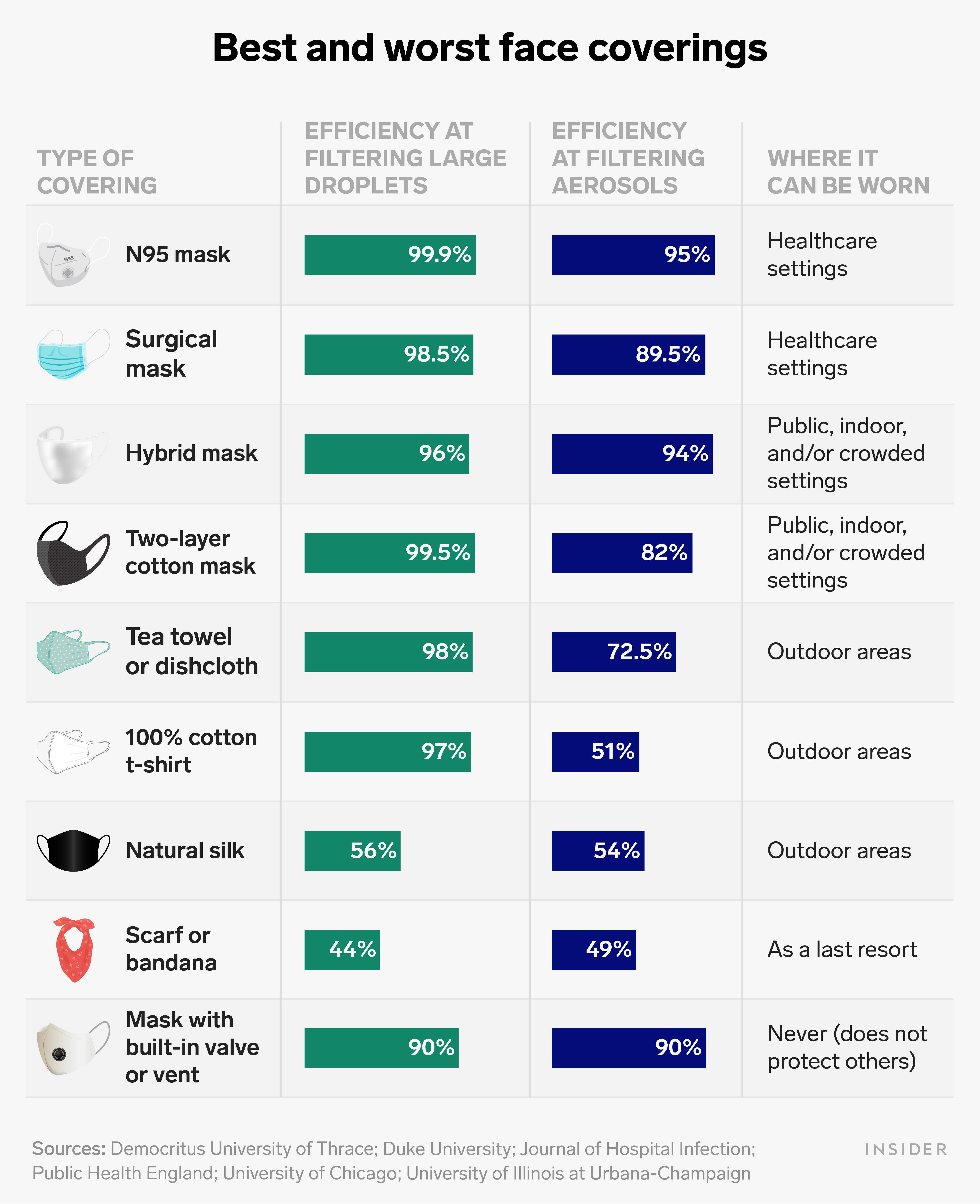
Zelf prefereer ik de veiligheid van iemand die zonder kapje met afgewend hoofd bewust snel en stil achter mij langs gaat; dan die onveiligheid van iemand die met een kèk "kapje" voor mij met een geschreeuwd "sorry" voordringt en dan treuzelt bij graaien.
Zo en nu maar hopen dat we verlost gaan worden van mondkapjes gereutel die overheden als kippen zonder kop blijven doordreinen.
"On bended knee is no way to be free" Peter R 1954-2021 (©Zapata)
Hegel: "De waarheid is subjectief"
Covid19: "Doctors can’t cure stupid, but at least they can sedate it."
Hegel: "De waarheid is subjectief"
Covid19: "Doctors can’t cure stupid, but at least they can sedate it."
Alsof je in de supermarkt wel even besmet raakt, heb dat gedurende die hele pandemie echt nog nooit ergens gehoord.quote:
[..]
Ik denk dat het punt wat @:DonDruiper aanstippeld wel belangrijk is, en daar is het wel vaker over gegaan. Als je als volledige maatschappij er alles aan doet om de mensen met zwakkere gezondheid te ontzien, is het natuurlijk niet logisch als die mensen alsnog het op gaan zoeken. Daar mogen best vragen over gesteld worden.
Als ik op vrijdagavond boodschappen doe kom ik regelmatig ouderen tegen die 'gezellig' samen boodschappen aan 't doen zijn. Vaak zijn dat ook degenen die totaal geen moeite doen om afstand te houden.
Hoe langer deze situatie duurt, hoe prangender die vraag wordt.
Als er al sprake is van direct constact is dat hooguit dertig seconden. Maar laten we vooral doorgaan met het winkelwagentjes ontsmetten en ouderen uurtjes organiseren, terwijl zowel de ondernemer als de doelgroep aangeeft daar geen behoefte aan te hebben.
Het is ook vaak op debiele tijden, van 07:00 tot 08:00 of 21:00 tot 22:00. Wat zou jij doen?
blablablabla
