NWS Nieuws & Achtergronden
Discussieer hier diepgaander over de actualiteiten.



Duterte vergelijkt zichzelf met Hitler en nog steeds wordt hier gedaan alsof de man een held is.
Tsja.
Tsja.
Op maandag 3 februari 2014 08:10 schreef Enchanter het volgende:[/b]
In discussie gaan met Koos Vogels :') , een grotere mongool is er niet :r
In discussie gaan met Koos Vogels :') , een grotere mongool is er niet :r


Ze streefden ook beide naar hetzelfdequote:Op zondag 2 oktober 2016 11:30 schreef KoosVogels het volgende:
Duterte vergelijkt zichzelf met Hitler en nog steeds wordt hier gedaan alsof de man een held is.
Tsja.

De beste man werd er continue mee vergeleken en haakte er een keer op in.
Een leider die verklaart miljoenen drugsverslaafden zonder proces af te willen slachten.quote:Op zondag 2 oktober 2016 11:35 schreef Mojo.jojo het volgende:
[..]
Ze streefden ook beide naar hetzelfde
De beste man werd er continue mee vergeleken en haakte er een keer op in.
Het is maar waar je enthousiast van wordt.
Op maandag 3 februari 2014 08:10 schreef Enchanter het volgende:[/b]
In discussie gaan met Koos Vogels :') , een grotere mongool is er niet :r
In discussie gaan met Koos Vogels :') , een grotere mongool is er niet :r
En zette met die vergelijking zes miljoen Joden weg als een probleempje wat Hitler zeer effectief uit de weg heeft geruimd, zoals hij dat met drie miljoen verslaafden wil doen.quote:
[..]
Ze streefden ook beide naar hetzelfde
De beste man werd er continue mee vergeleken en haakte er een keer op in.

Inderdaad, gewoon een kekke inhaker. Verder vooral niet druk maken om de uitspraak dat hij, ik zeg maar iets, 3 miljoen drugsgebruikers wil afslachten.quote:
[..]
Ze streefden ook beide naar hetzelfde
De beste man werd er continue mee vergeleken en haakte er een keer op in.
Hoeren neuken, nooit meer werken.
Niet weten dat Duterte eigenhandig een jaren lange strijd, met duizenden aantallen slachtoffers, met communisten heeft beeindigd. Iets waar zn voorgangers maar niet in slaagden omdat ze zo ethisch waren. Niet weten dat duterte gekidnapte buitenlanders heeft vrijgekocht. Ook iets waar zn voorgangers voor bedankten, want stel je voor dat mijn imago beschadigd omdat ik heb onderhandeld met criminelen. Past ook echt allemaal in het hokje van moorddadige bejaarde.
T is wel weer duidelijk wie hier criminelen verwelkomt.
Die man is gewoon duidelijk. Vergiftig mijn land niet met Shabu. Wees niet corrupt. Dat heb ik mijn burgers beloofd. En als je dat wel doet zet je me voor gek. Dat pik ik niet.
Iets met eer en je bevolking behagen. Datgene wat de leiders hier al jarenlang geleden verkocht hebben en alleen met hun eigen hachje bezig zijn.
T is wel weer duidelijk wie hier criminelen verwelkomt.
Die man is gewoon duidelijk. Vergiftig mijn land niet met Shabu. Wees niet corrupt. Dat heb ik mijn burgers beloofd. En als je dat wel doet zet je me voor gek. Dat pik ik niet.
Iets met eer en je bevolking behagen. Datgene wat de leiders hier al jarenlang geleden verkocht hebben en alleen met hun eigen hachje bezig zijn.
Jij met je proces.quote:
[..]
Een leider die verklaart miljoenen drugsverslaafden zonder proces af te willen slachten.
Het is maar waar je enthousiast van wordt.
Wat heb je aan een proces als een flink deel van de rechters betrokken is in dezelfde handel als degenen die je voor het gerecht sleept? Hoe wil jij een land met zoveel kilometers kust bewaken voor de smokkel van die zooi?
Hoe wil jij rechttrekken wat zn voorgangers decennia lang op zn beloop hebben gelaten.
Nee echt, blijf maar lekker wijzen. Genaaid worden door mensen die schijt hebben aan mensengerechten. Blijf jij maar braaf
wir haben es nicht gewusst. Slaap lekker.
Ik heb ook een bloedhekel aan ze, die hele keten van drugsbaas tot gebruiker mag van mijn part uitgeroeid worden.quote:
[..]
Een leider die verklaart miljoenen drugsverslaafden zonder proces af te willen slachten.
Het is maar waar je enthousiast van wordt.
Mensen doodmaken, lekker manquote:
[..]
Ik heb ook een bloedhekel aan ze, die hele keten van drugsbaas tot gebruiker mag van mijn part uitgeroeid worden.

Цой жив
Gisteren weer drie gekidnapte Indonesiërs vrijgelaten! De afgelopen drie maanden 6 Indonesiërs, 3 Filipino's en een Noor vrijgelaten. Duterte is natuurlijk een straatschoffie, die man kent de leiders van die terreurgroepen door en door, hij heeft met ze gedronken en gegeten, en veel van die leiders hebben toch wel een soort van respect voor hem. Het is een heel ander leider dan de voorgaande die toch hun hele leven in elitaire kringen zijn gebleven en verder van niks weten. Hij staat veel dichter bij dat soort lieden. De hoogste Filipijnse politiebaas Del Rosa is overigens al wezen kijken hoe ze in Colombia de drugsproblemen bestrijden. Daar 5 dagen verbleven. Dus staan open om te leren van andere landen.quote:
[..]
Jij met je proces.
Hoe wil jij een land met zoveel kilometers kust bewaken voor de smokkel van die zooi?
Hoe wil jij rechttrekken wat zn voorgangers decennia lang op zn beloop hebben gelaten.
Nee echt, blijf maar lekker wijzen. Genaaid worden door mensen die schijt hebben aan mensengerechten. Blijf jij maar braaf

Hij heeft overigens al zijn excuses aangeboden aan de Joodse mensen want kreeg de nodige verontwaardige reacties uit die hoek. Het was niet zijn bedoeling om ze te beledigen. Hij maakte nog wel duidelijk dat die excuses alleen geldt voor de Joden, niet voor critici zoals mensenrechtenorganisaties. Die kunnen van hem naar de hel lopen. Volgende week verder met de vredesonderhandelingen met communisten van NPA. Dat een wapenstilstand is komt door hem. Hij liet twee van hun kompanen vrij en deed net alsof zijn neus bloedde toen ze een regeringssoldaat dood schoten (die heeft overigens wel een mooie en uitgebreide begrafenis gekregen). Die goede contacten met terreurleiders kan de doorbraak zijn tot vrede en rust voor de Filipijnen. Naar verluidt houden veel Filipijnse elitaire zakenmannen het nog steeds niet voor mogelijk dat Duterte heeft gewonnen. Hij hoort niet bij de machtige politieke clans. Natuurlijk waren zijn vader en moeder wel betrokken bij politiek maar dan regionaal niveau. Landelijk nee, toch een ander verhaal. En verder is hij bezig met een derde corrruptie- en drugslijst.
[ Bericht 1% gewijzigd door George_Zinnnn op 02-10-2016 15:12:22 ]
In plaats van iets vanzelfsprekends zijn mensenrechten inmiddels ook al gedegradeerd tot een stokpaardje van de corrupte elite, iets waarmee we zonder beter af zouden zijn.quote:
Niet weten dat Duterte eigenhandig een jaren lange strijd, met duizenden aantallen slachtoffers, met communisten heeft beeindigd. Iets waar zn voorgangers maar niet in slaagden omdat ze zo ethisch waren. Niet weten dat duterte gekidnapte buitenlanders heeft vrijgekocht. Ook iets waar zn voorgangers voor bedankten, want stel je voor dat mijn imago beschadigd omdat ik heb onderhandeld met criminelen. Past ook echt allemaal in het hokje van moorddadige bejaarde.
T is wel weer duidelijk wie hier criminelen verwelkomt.
Die man is gewoon duidelijk. Vergiftig mijn land niet met Shabu. Wees niet corrupt. Dat heb ik mijn burgers beloofd. En als je dat wel doet zet je me voor gek. Dat pik ik niet.
Iets met eer en je bevolking behagen. Datgene wat de leiders hier al jarenlang geleden verkocht hebben en alleen met hun eigen hachje bezig zijn.
Hebben mensen geen geschiedenis gehad op school? Ja, mensenrechten zorgen er helaas voor dat er drugscriminelen zijn die niet doodgemaakt kunnen worden zonder proces. Maar dezelfde mensenrechten zorgen er ook voor dat jij normaal over straat kunt, en als je eens ergens van beschuldigd wordt, je gewoon je onschuld kunt bepleiten zonder je zorgen te maken over je eigen leven.
Mensenrechten zijn er niet voor anderen. Die zijn er voor jou. Wil je nou werkelijk beweren dat jij die basale, universele rechten niet nodig hebt omdat er mensen zijn die je liever dood wilt zien?
En als je wilt beweren dat het alleen maar in de Filipijnen zo hoeft, en niet hier: waarom zouden ze in de Filipijnen minder rechten nodig hebben dan jij of ik hier? Alle mensen zijn gelijk, behalve als je op de Filipijnen woont, dan heb je nu eenmaal minder rechten?
En daarom is het prima om mensen die verslaafd zijn aan drugs zonder pardon over hoop te knallen?quote:
[..]
Jij met je proces.
Ik blijf het een vreemde redenering vinden, maar goed.
Op maandag 3 februari 2014 08:10 schreef Enchanter het volgende:[/b]
In discussie gaan met Koos Vogels :') , een grotere mongool is er niet :r
In discussie gaan met Koos Vogels :') , een grotere mongool is er niet :r

Philippines' Duterte apologizes to Jewish community after Nazi remarks
Philippines President Rodrigo Duterte apologized "profoundly and deeply" to the Jewish community on Sunday, and said his references to the Holocaust while discussing his war on drugs were to hit back at critics who had likened him to Adolf Hitler.
Duterte said he recognized the comments made in the early hours of Friday had caused outrage among Jewish communities around the world, but he insisted his mention of the Nazi leader was to show how opponents had sought to portray him. "I would like to make it now, here and now, that there was never an intention on my part to derogate the memory of the six million Jews murdered," he said in a speech at a festival carried live on television.
"The reference to me was, I was supposedly Hitler, who killed many people." He added: "I apologize profoundly and deeply to the Jewish community ... it was never my intention, but the problem was I was criticized, using Hitler comparing to me."
More than 3,100 people have been killed since Duterte took office three months ago and launched a promised drugs war that was the bedrock of his campaign for elections, which he won by a large margin. Most of those killed so far have been drug users and pushers, with some deaths during shootouts in police operations and others the work of vigilantes, police say.
Duterte, 71 years, has been nicknamed "the Punisher" for his tough stance on crime. He said on Friday he had been portrayed by critics as being "a cousin of Hitler" and said he would "be happy to slaughter" three million Filipino drug users and peddlers.
The comments caused outrage, and follow other provocative public outbursts in the past few months. Duterte's narcotics crackdown has broad support among Filipinos fed up with drugs and crime, and he has lashed out at those who have challenged it, including U.S. President Barack Obama and U.N. chief Ban Ki-moon.
He had vented his frustration again on Sunday at human rights groups and what he called "stupid" lawyers of the European Union. Duterte's spokesman on Saturday said Duterte rejected the Hitler label and his remarks the previous day were an "oblique deflection" of him being portrayed as a mass murderer.
Reuters
Een leuk feitje. De man heeft al 8 kleinkinderen...... Als die allemaal zo als hem worden.
[ Bericht 17% gewijzigd door George_Zinnnn op 02-10-2016 16:48:43 ]
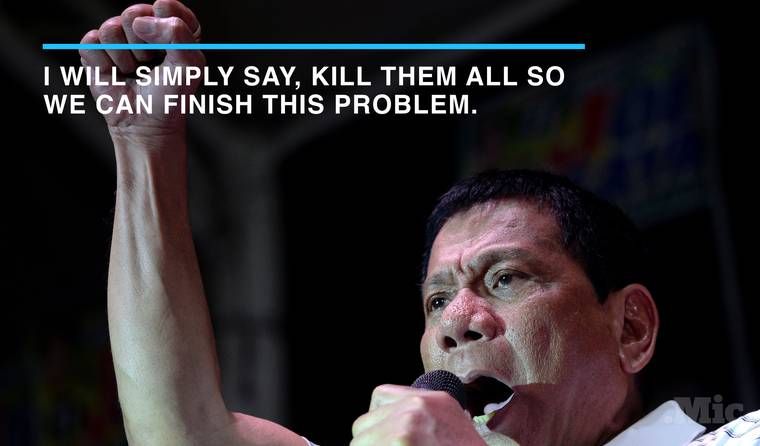
Philippines President Rodrigo Duterte apologized "profoundly and deeply" to the Jewish community on Sunday, and said his references to the Holocaust while discussing his war on drugs were to hit back at critics who had likened him to Adolf Hitler.
Duterte said he recognized the comments made in the early hours of Friday had caused outrage among Jewish communities around the world, but he insisted his mention of the Nazi leader was to show how opponents had sought to portray him. "I would like to make it now, here and now, that there was never an intention on my part to derogate the memory of the six million Jews murdered," he said in a speech at a festival carried live on television.
"The reference to me was, I was supposedly Hitler, who killed many people." He added: "I apologize profoundly and deeply to the Jewish community ... it was never my intention, but the problem was I was criticized, using Hitler comparing to me."
More than 3,100 people have been killed since Duterte took office three months ago and launched a promised drugs war that was the bedrock of his campaign for elections, which he won by a large margin. Most of those killed so far have been drug users and pushers, with some deaths during shootouts in police operations and others the work of vigilantes, police say.
Duterte, 71 years, has been nicknamed "the Punisher" for his tough stance on crime. He said on Friday he had been portrayed by critics as being "a cousin of Hitler" and said he would "be happy to slaughter" three million Filipino drug users and peddlers.
The comments caused outrage, and follow other provocative public outbursts in the past few months. Duterte's narcotics crackdown has broad support among Filipinos fed up with drugs and crime, and he has lashed out at those who have challenged it, including U.S. President Barack Obama and U.N. chief Ban Ki-moon.
He had vented his frustration again on Sunday at human rights groups and what he called "stupid" lawyers of the European Union. Duterte's spokesman on Saturday said Duterte rejected the Hitler label and his remarks the previous day were an "oblique deflection" of him being portrayed as a mass murderer.
Reuters
Een leuk feitje. De man heeft al 8 kleinkinderen...... Als die allemaal zo als hem worden.
[ Bericht 17% gewijzigd door George_Zinnnn op 02-10-2016 16:48:43 ]
Is Philippine President Duterte playing the United States and China?
This Tuesday, 1,400 US marines and navy servicement will train with 500 Filipino soldiers on Philippine soil, for the final time if President Rodrigo Duterte is to be taken at his word.
“You [the United States] are scheduled to hold war games again which China does not want. I will serve notice to you now, this will be the last military exercise,” he said during a visit to Vietnam on September 28. The military exercises are to be accompanied by humanitarian and engineering projects.
Philippine soldiers and a US army soldier take part in a joint exercise at Fort Magsaysay in 2015. Photo: AFP
Duterte’s statement caught two key cabinet secretaries off guard. “No, no, no, he did not say that at all,” Perfecto Yasay, Duterte’s foreign secretary, told reporters in Hanoi who had sought clarification.
The next day, the defence department issued this terse statement: “The DND will await further orders from President Rodrigo R. Duterte regarding the [armed forces’] exercises with the US forces. Defence secretary Delfin N. Lorenzana will discuss this with the president to seek more clarification and guidance. As stated earlier, all agreements and treaties with the US are still in effect. As to succeeding exercises, we will have to sit down with our US counterparts to discuss them.”
Since the US bases were kicked out of the former US colony 25 years ago, succeeding Philippine presidents have all sought to “normalise” relations with the premiere super power. Joseph Estrada – who had voted as senator to kick out the bases – backed a Visiting Forces Agreement that allowed several hundred US soldiers to be present in the country at any given time. Gloria Macapagal-Arroyo reeled in greater US support by siding with its war on terror. And Benigno Aquino III pushed for an Enhanced Defence Cooperation Agreement enabling the US to set up permanent military structures for their own use inside Philippine military camps.
In March this year, ahead of the presidential polls, both countries identified five military camps for this purpose. Among them was Fort Magsaysay, the biggest army camp used also for training.
But the newly elected President Duterte now appears to have another plan for Fort Magsaysay and a new arrangement with the US. He disclosed last month that China offered to help him in his “war on drugs” by building a rehabilitation centre for drug addicts inside Fort Magsaysay.
Philippine military personnel stand next to hundreds of old assault rifles after receiving new M4 assault rifles during a distribution ceremony at Fort Magsaysay. Photo: AFP
During the presidential campaign, Duterte had kept his pivot to China and anti-US rhetoric in check. With victory in hand, Duterte cold-shouldered the US ambassador – even calling him “gay” – but warmed up to China’s envoy and made approving noises toward Russia’s overtures for wider relations.
The sudden sea change from the Philippine president has reaped both admiration and trepidation. Lauro Baja, the Philippines’ former permanent representative to the United Nations, doubted Duterte would abandon the country’s alliance with the US altogether.
“I don’t think so,” Baja told This Week in Asia. “He should have more sense ... he should know which side of his bread is buttered.” He said among the views that reached him from the presidential palace was that Duterte was using the prospect of closer relations with China and Russia as “a bargaining chip” with the US.
Philippine President Rodrigo Duterte, left, and Vietnam's Communist Party General Secretary Nguyen Phu Trongt speak in Hanoi on the second day of Duterte’s visit.
He said the military would probably try to dissuade Duterte from such a move “because the [Philippine armed forces] depend so much on the US for their military hardware and assistance. They have been networking with the US, which they don’t have with China or Russia.”
Teodoro Locsin, Jr., Duterte’s newly-appointed UN permanent representative, was optimistic the US would read beyond the harsh rhetoric because “the Americans are not irrational people. They really study, they think.”
Philippine President Rodrigo Duterte waves as he arrives in Hanoi (Vietnam) on September 28, 2016. Photo: AFP
The US had reacted mildly to Duterte’s move to cozy up to the rival powers by saying it had “no objections if he wants to establish diplomatic relations with Russia and China”, noted Locsin, a former congressman who once served as legal counsel and speech-writer for the late President Corazon Aquino.
“When you sit down with American policy makers, they have no idea what their strategic interest [in Asia] is. During the cold war, they were very clear what they wanted – the containment of communism, the spread of free enterprise and free trade in which it was assumed America always had the leading role.
A stock market analyst said Duterte was playing one superpower against the other. By annoying Washington, Manila would be able to convince Beijing to sit down and perhaps offer infrastructure projects such as a railway in the south. Then, the analyst said, Duterte would “go back to the US and say, what will you offer me?”
He described the situation as a “lover’s quarrel” and added: “I’m not convinced he’s really going to switch sides. He’s just playing them [Americans].” He said the drivers of the Philippine economy were American companies in business process outsourcing.
Over in California, however, lawyer Rodel Rodis who holds dual citizenship found Duterte’s unorthodox moves “very worrisome because the pivot [to China] is becoming very clear”.
“I think it’s real,” Rodis, the national president of US Pinoys for Good Governance, said. He cited Duterte’s “unprovoked attacks on the US ambassador, his constant referrals to atrocities committed [by the US] more than a hundred years ago”.
“Whatever problems there are in the Philippines, he is blaming the US for them [but] he has been very deferential to President Xi [Jinping] ( 習近平 ) and to China, never insulting him the way he has [US President Barack] Obama, Pope Francis and the EU.”
Rodis’s group was recently accused by the presidential palace of plotting to oust Duterte. Rodis denied this to This Week in Asia and said wrong information had reached the palace. He said the group had discussed options from asking Duterte to tone down his anti-US rhetoric to telling him to resign. In the end, they decided to buy Duterte a jet ski “to help him fulfil his campaign pledge to jet ski to Scarborough Shoal to plant a Philippine flag” in defiance of China’s efforts to build a fortress there.
Bron
Het buitenlandse beleid van Duterte is onvoorspelbaar. Niemand weet wat ze van hem kunnen verwachten. Obama kan beter zijn Pivot-strategie voor Zuid-Oost Azië (een militaire afschrikkingsgordel om China heen bouwen) aanpassen. Duterte heeft daar geen zin in. Hij heeft al gezegd we mengen ons niet in een maritiem conflict opgestart door USA ongeacht het verdrag van 1951. De sterkste maritieme (dus op zee) macht in die regio is toch wel Japan. Het meest moderne materiaal tot haar beschikking. De Japanners hebben hun defensie-uitgaven de laatste jaren verhoogd van 35 miljard tot 50 miljard dollar per jaar. En men is al bezig om het pacifisme uit de Japanse grondwet te halen zodat de Jappen ook de mogelijkheid hebben om vaker assertief te reageren. Vooral omdat China zich in hun wateren begint te roeren. China heeft vooral het voordeel van enorme aantallen maar materiaal is minder sterk.
Ook vanwege die speklap Kim Jong Un met zijn kernproeven (kracht was 10 tot 15 kiloton laatst, genoeg om een grote stad van de kaart te vegen). Dat land wordt 24/7 in de gaten gehouden. Als hij aanstalten maakt voor een kernaanval dan reageert men extreem snel. In minuten. Alles staat al klaar inclusief elitecommando's die speciaal zijn opgeleid om de Noord-Koreaanse leider en zijn topofficieren te doden. Noord-Korea heeft alleen nog niet de techniek in handen om ze te lanceren maar dat is een kwestie van tijd. Het leeuwendeel deel van de gelden stoppen ze in kernonderzoek. Als ze die bom dusdanig kunnen verkleinen dat hij op een raket kan dan is het een kernmacht. Ze hebben genoeg grondstoffen voor 20 atoombommen van 20 a 30 kiloton volgens kernexperts.
[ Bericht 0% gewijzigd door George_Zinnnn op 02-10-2016 17:50:42 ]
This Tuesday, 1,400 US marines and navy servicement will train with 500 Filipino soldiers on Philippine soil, for the final time if President Rodrigo Duterte is to be taken at his word.
“You [the United States] are scheduled to hold war games again which China does not want. I will serve notice to you now, this will be the last military exercise,” he said during a visit to Vietnam on September 28. The military exercises are to be accompanied by humanitarian and engineering projects.

Philippine soldiers and a US army soldier take part in a joint exercise at Fort Magsaysay in 2015. Photo: AFP
Duterte’s statement caught two key cabinet secretaries off guard. “No, no, no, he did not say that at all,” Perfecto Yasay, Duterte’s foreign secretary, told reporters in Hanoi who had sought clarification.
The next day, the defence department issued this terse statement: “The DND will await further orders from President Rodrigo R. Duterte regarding the [armed forces’] exercises with the US forces. Defence secretary Delfin N. Lorenzana will discuss this with the president to seek more clarification and guidance. As stated earlier, all agreements and treaties with the US are still in effect. As to succeeding exercises, we will have to sit down with our US counterparts to discuss them.”
Since the US bases were kicked out of the former US colony 25 years ago, succeeding Philippine presidents have all sought to “normalise” relations with the premiere super power. Joseph Estrada – who had voted as senator to kick out the bases – backed a Visiting Forces Agreement that allowed several hundred US soldiers to be present in the country at any given time. Gloria Macapagal-Arroyo reeled in greater US support by siding with its war on terror. And Benigno Aquino III pushed for an Enhanced Defence Cooperation Agreement enabling the US to set up permanent military structures for their own use inside Philippine military camps.
In March this year, ahead of the presidential polls, both countries identified five military camps for this purpose. Among them was Fort Magsaysay, the biggest army camp used also for training.
But the newly elected President Duterte now appears to have another plan for Fort Magsaysay and a new arrangement with the US. He disclosed last month that China offered to help him in his “war on drugs” by building a rehabilitation centre for drug addicts inside Fort Magsaysay.

Philippine military personnel stand next to hundreds of old assault rifles after receiving new M4 assault rifles during a distribution ceremony at Fort Magsaysay. Photo: AFP
During the presidential campaign, Duterte had kept his pivot to China and anti-US rhetoric in check. With victory in hand, Duterte cold-shouldered the US ambassador – even calling him “gay” – but warmed up to China’s envoy and made approving noises toward Russia’s overtures for wider relations.
The sudden sea change from the Philippine president has reaped both admiration and trepidation. Lauro Baja, the Philippines’ former permanent representative to the United Nations, doubted Duterte would abandon the country’s alliance with the US altogether.
“I don’t think so,” Baja told This Week in Asia. “He should have more sense ... he should know which side of his bread is buttered.” He said among the views that reached him from the presidential palace was that Duterte was using the prospect of closer relations with China and Russia as “a bargaining chip” with the US.

Philippine President Rodrigo Duterte, left, and Vietnam's Communist Party General Secretary Nguyen Phu Trongt speak in Hanoi on the second day of Duterte’s visit.
He said the military would probably try to dissuade Duterte from such a move “because the [Philippine armed forces] depend so much on the US for their military hardware and assistance. They have been networking with the US, which they don’t have with China or Russia.”
Teodoro Locsin, Jr., Duterte’s newly-appointed UN permanent representative, was optimistic the US would read beyond the harsh rhetoric because “the Americans are not irrational people. They really study, they think.”

Philippine President Rodrigo Duterte waves as he arrives in Hanoi (Vietnam) on September 28, 2016. Photo: AFP
The US had reacted mildly to Duterte’s move to cozy up to the rival powers by saying it had “no objections if he wants to establish diplomatic relations with Russia and China”, noted Locsin, a former congressman who once served as legal counsel and speech-writer for the late President Corazon Aquino.
“When you sit down with American policy makers, they have no idea what their strategic interest [in Asia] is. During the cold war, they were very clear what they wanted – the containment of communism, the spread of free enterprise and free trade in which it was assumed America always had the leading role.
A stock market analyst said Duterte was playing one superpower against the other. By annoying Washington, Manila would be able to convince Beijing to sit down and perhaps offer infrastructure projects such as a railway in the south. Then, the analyst said, Duterte would “go back to the US and say, what will you offer me?”
He described the situation as a “lover’s quarrel” and added: “I’m not convinced he’s really going to switch sides. He’s just playing them [Americans].” He said the drivers of the Philippine economy were American companies in business process outsourcing.
Over in California, however, lawyer Rodel Rodis who holds dual citizenship found Duterte’s unorthodox moves “very worrisome because the pivot [to China] is becoming very clear”.
“I think it’s real,” Rodis, the national president of US Pinoys for Good Governance, said. He cited Duterte’s “unprovoked attacks on the US ambassador, his constant referrals to atrocities committed [by the US] more than a hundred years ago”.
“Whatever problems there are in the Philippines, he is blaming the US for them [but] he has been very deferential to President Xi [Jinping] ( 習近平 ) and to China, never insulting him the way he has [US President Barack] Obama, Pope Francis and the EU.”
Rodis’s group was recently accused by the presidential palace of plotting to oust Duterte. Rodis denied this to This Week in Asia and said wrong information had reached the palace. He said the group had discussed options from asking Duterte to tone down his anti-US rhetoric to telling him to resign. In the end, they decided to buy Duterte a jet ski “to help him fulfil his campaign pledge to jet ski to Scarborough Shoal to plant a Philippine flag” in defiance of China’s efforts to build a fortress there.
Bron
Het buitenlandse beleid van Duterte is onvoorspelbaar. Niemand weet wat ze van hem kunnen verwachten. Obama kan beter zijn Pivot-strategie voor Zuid-Oost Azië (een militaire afschrikkingsgordel om China heen bouwen) aanpassen. Duterte heeft daar geen zin in. Hij heeft al gezegd we mengen ons niet in een maritiem conflict opgestart door USA ongeacht het verdrag van 1951. De sterkste maritieme (dus op zee) macht in die regio is toch wel Japan. Het meest moderne materiaal tot haar beschikking. De Japanners hebben hun defensie-uitgaven de laatste jaren verhoogd van 35 miljard tot 50 miljard dollar per jaar. En men is al bezig om het pacifisme uit de Japanse grondwet te halen zodat de Jappen ook de mogelijkheid hebben om vaker assertief te reageren. Vooral omdat China zich in hun wateren begint te roeren. China heeft vooral het voordeel van enorme aantallen maar materiaal is minder sterk.
Ook vanwege die speklap Kim Jong Un met zijn kernproeven (kracht was 10 tot 15 kiloton laatst, genoeg om een grote stad van de kaart te vegen). Dat land wordt 24/7 in de gaten gehouden. Als hij aanstalten maakt voor een kernaanval dan reageert men extreem snel. In minuten. Alles staat al klaar inclusief elitecommando's die speciaal zijn opgeleid om de Noord-Koreaanse leider en zijn topofficieren te doden. Noord-Korea heeft alleen nog niet de techniek in handen om ze te lanceren maar dat is een kwestie van tijd. Het leeuwendeel deel van de gelden stoppen ze in kernonderzoek. Als ze die bom dusdanig kunnen verkleinen dat hij op een raket kan dan is het een kernmacht. Ze hebben genoeg grondstoffen voor 20 atoombommen van 20 a 30 kiloton volgens kernexperts.
[ Bericht 0% gewijzigd door George_Zinnnn op 02-10-2016 17:50:42 ]
Duterte maakt excuses aan Joodse gemeenschap
De Filipijnse president Rodrigo Duterte heeft zondag zijn excuses aangeboden aan de Joodse gemeenschap vanwege zijn vergelijking tussen Hitler en zijn eigen oorlog tegen drugs. Dat meldt persbureau AP. De uitspraak leidde tot veel verontwaardiging.
Tijdens een toespraak in zijn thuisstad Davao zei Duterte vrijdag dat “Hitler drie miljoen Joden vermoordde… Er zijn drie miljoen drugsverslaafden in dit land. Ik zou ze graag afmaken.” De Filipijnse president reageerde op critici, die hem hebben omschreven als een “neef van Hitler”. Hij vervolgde: “Als Duitsland Hitler had, dan hebben de Filipijnen…”, waarna hij naar zichzelf wees. Duterte zondag op televisie: “Ik wil graag duidelijk maken, hier en nu, dat er nooit de intentie van mijn kant was om afbreuk te doen aan de herinnering van de zes miljoen vermoorde Joden.”
Daarna bood hij zijn “oprechte en diepe” excuses aan de Joodse gemeenschap aan. Duterte is op 30 juni verkozen tot president en sindsdien ligt hij regelmatig onder vuur vanwege zijn opmerkelijke uitspraken en harde campagne tegen drugs. Sinds zijn aantreden zijn meer dan drieduizend mensen gedood door de politie en burgerwachten, onder wie vooral drugsverslaafden en handelaars.
https://www.nrc.nl/nieuws(...)gemeenschap-a1524438
[ Bericht 0% gewijzigd door George_Zinnnn op 02-10-2016 18:21:07 ]
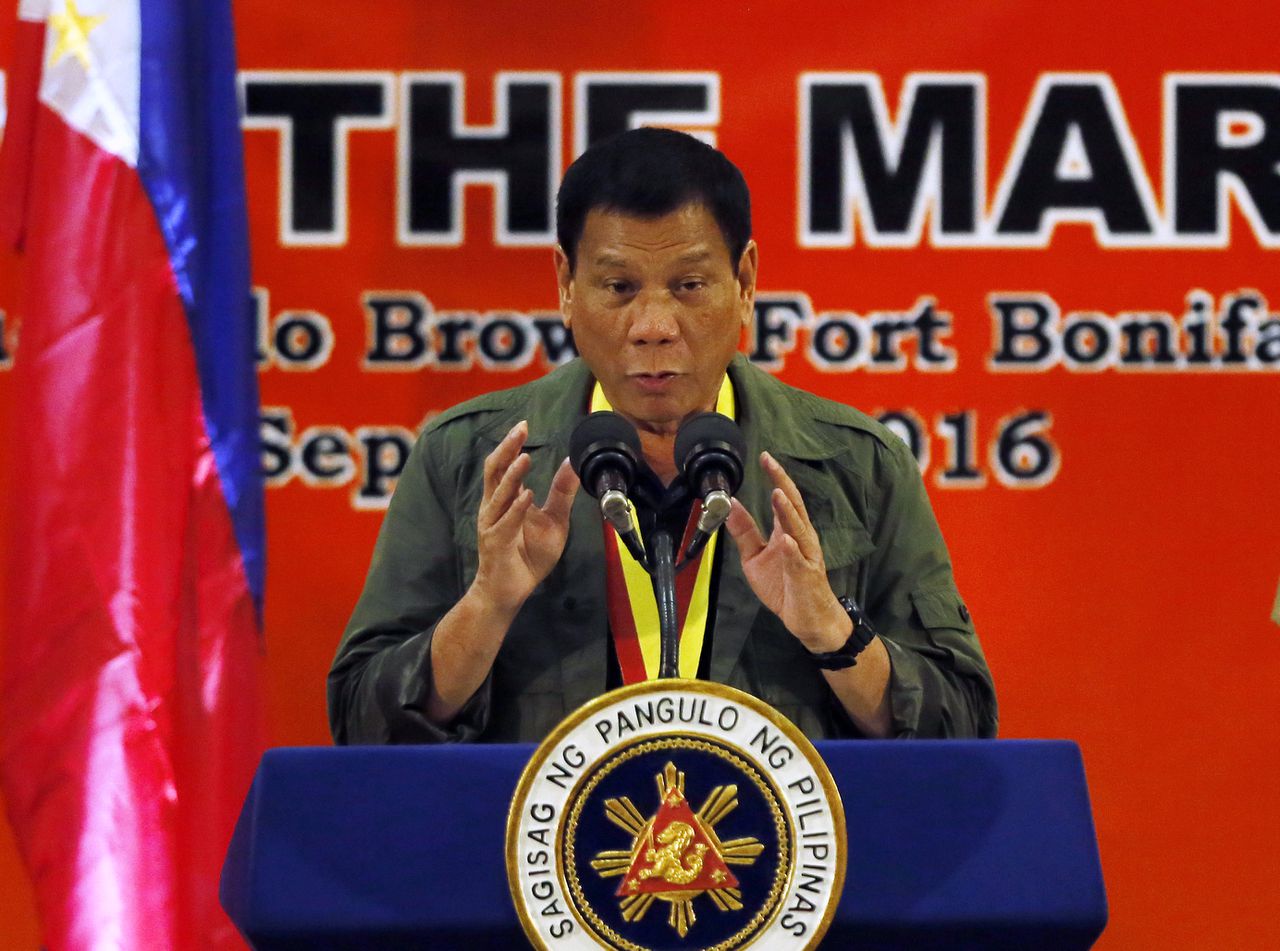
De Filipijnse president Rodrigo Duterte heeft zondag zijn excuses aangeboden aan de Joodse gemeenschap vanwege zijn vergelijking tussen Hitler en zijn eigen oorlog tegen drugs. Dat meldt persbureau AP. De uitspraak leidde tot veel verontwaardiging.
Tijdens een toespraak in zijn thuisstad Davao zei Duterte vrijdag dat “Hitler drie miljoen Joden vermoordde… Er zijn drie miljoen drugsverslaafden in dit land. Ik zou ze graag afmaken.” De Filipijnse president reageerde op critici, die hem hebben omschreven als een “neef van Hitler”. Hij vervolgde: “Als Duitsland Hitler had, dan hebben de Filipijnen…”, waarna hij naar zichzelf wees. Duterte zondag op televisie: “Ik wil graag duidelijk maken, hier en nu, dat er nooit de intentie van mijn kant was om afbreuk te doen aan de herinnering van de zes miljoen vermoorde Joden.”
Daarna bood hij zijn “oprechte en diepe” excuses aan de Joodse gemeenschap aan. Duterte is op 30 juni verkozen tot president en sindsdien ligt hij regelmatig onder vuur vanwege zijn opmerkelijke uitspraken en harde campagne tegen drugs. Sinds zijn aantreden zijn meer dan drieduizend mensen gedood door de politie en burgerwachten, onder wie vooral drugsverslaafden en handelaars.
https://www.nrc.nl/nieuws(...)gemeenschap-a1524438
[ Bericht 0% gewijzigd door George_Zinnnn op 02-10-2016 18:21:07 ]
Duterte biedt Joodse gemeenschap excuses aan voor Hitler-uitspraak
De Filipijnse president Rodrigo Duterte heeft zondag zijn excuses aangeboden aan de Joods gemeenschap vanwege zijn vergelijking tussen Hitler en zijn eigen oorlog tegen drugs. 'Hitler slachtte drie miljoen joden af', zei hij vrijdag in een toespraak. 'Nou, er zijn hier drie miljoen drugsverslaafden. Ik zal die met alle plezier afslachten.' 'Ik wil graag duidelijk zijn, hier en nu, dat er nooit de intentie van mijn kant was om afbreuk te doen aan de herinnering van de zes miljoen vermoorde Joden', zei Duterte op televisie. Vervolgens bood hij zijn 'oprechte en diepe' excuses aan.
Duterte werd in mei gekozen tot president, nadat hij beloofd had de Filipijnen van het drugsprobleem te verlossen. In drie maanden tijd zijn in de Filipijnen zeker 3.500 mensen doodgeschoten die drugs zouden verhandelen of gebruiken. De president heeft de Filipijnse politie carte blanche gegeven om te schieten en die politie maakt daar gretig gebruik van. De meeste doden komen echter op het conto van anonieme doodseskaders die op straat mensen executeren. Duterte ontkent rechtstreekse betrokkenheid bij deze moorden, maar hij laat altijd duidelijk merken dat hij er wel blij mee is.
Het steekt Duterte dat de halve wereld kritiek heeft op zijn moordcampagne tegen drugscriminelen. Paus Franciscus en de Amerikaanse president Obama waren al 'hoerenzonen', VN-chef Ban Ki-moon een 'duivel'. Hoe meer het pijn doet wat hij zegt, hoe tevredener Duterte lijkt.
Bron
[ Bericht 0% gewijzigd door George_Zinnnn op 02-10-2016 18:36:00 ]

De Filipijnse president Rodrigo Duterte heeft zondag zijn excuses aangeboden aan de Joods gemeenschap vanwege zijn vergelijking tussen Hitler en zijn eigen oorlog tegen drugs. 'Hitler slachtte drie miljoen joden af', zei hij vrijdag in een toespraak. 'Nou, er zijn hier drie miljoen drugsverslaafden. Ik zal die met alle plezier afslachten.' 'Ik wil graag duidelijk zijn, hier en nu, dat er nooit de intentie van mijn kant was om afbreuk te doen aan de herinnering van de zes miljoen vermoorde Joden', zei Duterte op televisie. Vervolgens bood hij zijn 'oprechte en diepe' excuses aan.
Duterte werd in mei gekozen tot president, nadat hij beloofd had de Filipijnen van het drugsprobleem te verlossen. In drie maanden tijd zijn in de Filipijnen zeker 3.500 mensen doodgeschoten die drugs zouden verhandelen of gebruiken. De president heeft de Filipijnse politie carte blanche gegeven om te schieten en die politie maakt daar gretig gebruik van. De meeste doden komen echter op het conto van anonieme doodseskaders die op straat mensen executeren. Duterte ontkent rechtstreekse betrokkenheid bij deze moorden, maar hij laat altijd duidelijk merken dat hij er wel blij mee is.
Het steekt Duterte dat de halve wereld kritiek heeft op zijn moordcampagne tegen drugscriminelen. Paus Franciscus en de Amerikaanse president Obama waren al 'hoerenzonen', VN-chef Ban Ki-moon een 'duivel'. Hoe meer het pijn doet wat hij zegt, hoe tevredener Duterte lijkt.
Bron
[ Bericht 0% gewijzigd door George_Zinnnn op 02-10-2016 18:36:00 ]

Duterte biedt excuses aan voor Hitler-vergelijking
De Filipijnse president Rodrigo Duterte heeft vandaag zijn excuses aangeboden aan de Joodse gemeenschap vanwege zijn vergelijking tussen Hitler en zijn eigen oorlog tegen drugs. Hij verwees vrijdag in een toespraak naar de miljoenen Joden die Hitler vermoord had en liet vervolgens optekenen dat er drie miljoen druggebruikers zijn in de Filipijnen die hij graag "zou afslachten''.
"Ik wil graag duidelijk zijn, hier en nu, dat er nooit de intentie van mijn kant was om afbreuk te doen aan de herinnering van de zes miljoen vermoorde Joden'', zei Duterte op televisie. Vervolgens bood hij zijn "oprechte en diepe'' excuses aan. Duterte benadrukte wel dat zijn excuses alleen bedoeld waren voor de Joodse gemeenschap in de wereld.
Duterte maakte zijn omstreden opmerkingen toen hij deze week terugkeerde van een bezoek aan Vietnam waar hij met Vietnamese leiders sprak over het drugsprobleem en zijn aanpak daarvan. "Hitler vermoordde drie miljoen Joden (...) er zijn drie miljoen drugsgebruikers. Echt waar. Ik zou ze graag slachten", zei hij.
Woedende reacties
De uitspraken van Duterte zorgden de afgelopen dagen voor woedende reacties. Verschillende joodse gemeenschappen veroordeelden zijn uitspraak over Hitler. "Drugsverslaving is een serieus probleem, maar wat president Duterte zegt is inhumaan en de minachting waarmee hij spreekt over het leven is bedroevend voor een gekozen leider", zei Ronald Lauder van het Joods Wereld Congres op vrijdag.
De Duitse regering noemde de opmerkingen van Duterte onacceptabel. Het ministerie van buitenlandse zaken vroeg de Filippijnse ambassadeur tekst en uitleg te komen geven.
Duterte werd in mei gekozen tot president, nadat hij beloofd had de Filipijnen van het drugsprobleem te verlossen. Geschat wordt dat sinds het aantreden van Duterte als president op 30 juni ongeveer drieduizend vermeende drugscriminelen zijn gedood.
Trouw
Ik heb medelijden met de Filipijnse diplomaten en ambassadeurs. Ze maken overuren om zijn uitspraken goed te praten. Spindoctors.

De Filipijnse president Rodrigo Duterte heeft vandaag zijn excuses aangeboden aan de Joodse gemeenschap vanwege zijn vergelijking tussen Hitler en zijn eigen oorlog tegen drugs. Hij verwees vrijdag in een toespraak naar de miljoenen Joden die Hitler vermoord had en liet vervolgens optekenen dat er drie miljoen druggebruikers zijn in de Filipijnen die hij graag "zou afslachten''.
"Ik wil graag duidelijk zijn, hier en nu, dat er nooit de intentie van mijn kant was om afbreuk te doen aan de herinnering van de zes miljoen vermoorde Joden'', zei Duterte op televisie. Vervolgens bood hij zijn "oprechte en diepe'' excuses aan. Duterte benadrukte wel dat zijn excuses alleen bedoeld waren voor de Joodse gemeenschap in de wereld.
Duterte maakte zijn omstreden opmerkingen toen hij deze week terugkeerde van een bezoek aan Vietnam waar hij met Vietnamese leiders sprak over het drugsprobleem en zijn aanpak daarvan. "Hitler vermoordde drie miljoen Joden (...) er zijn drie miljoen drugsgebruikers. Echt waar. Ik zou ze graag slachten", zei hij.
Woedende reacties
De uitspraken van Duterte zorgden de afgelopen dagen voor woedende reacties. Verschillende joodse gemeenschappen veroordeelden zijn uitspraak over Hitler. "Drugsverslaving is een serieus probleem, maar wat president Duterte zegt is inhumaan en de minachting waarmee hij spreekt over het leven is bedroevend voor een gekozen leider", zei Ronald Lauder van het Joods Wereld Congres op vrijdag.
De Duitse regering noemde de opmerkingen van Duterte onacceptabel. Het ministerie van buitenlandse zaken vroeg de Filippijnse ambassadeur tekst en uitleg te komen geven.
Duterte werd in mei gekozen tot president, nadat hij beloofd had de Filipijnen van het drugsprobleem te verlossen. Geschat wordt dat sinds het aantreden van Duterte als president op 30 juni ongeveer drieduizend vermeende drugscriminelen zijn gedood.
Trouw
Ik heb medelijden met de Filipijnse diplomaten en ambassadeurs. Ze maken overuren om zijn uitspraken goed te praten. Spindoctors.

Waarom moet elk nieuwsbericht minstens drie keer geplaatst worden? Krijg er een lamme duim van..
Verder is de beste man een volslagen idioot, maar verder niet gevaarlijk voor de internationale gemeenschap, dus hij zal zn gang kunnen gaan.
Verder is de beste man een volslagen idioot, maar verder niet gevaarlijk voor de internationale gemeenschap, dus hij zal zn gang kunnen gaan.

Speciaal agent Filipijnen: doodseskaders van politie ruimen drugscriminelen op
In de oorlog tegen drugs heeft de Filipijnse president Rodrigo Duterte zestien gespecialiseerde politieteams samengesteld die in het geheim drugscriminelen moeten vermoorden. Dat zegt een van de speciale agenten in een interview met The Guardian. De strijd heeft sinds de inauguratie van Duterte op 1 juli van dit jaar aan ruim 3.600 mensen het leven gekost.
Meer dan de helft van de slachtoffers zou zijn omgebracht door onbekenden. Dit heeft de geruchten over doodseskaders aangewakkerd. Vorige maand beweerde een oud-medewerker van Duterte dat hij voorheen deel uitmaakte van zo'n executieploeg toen Duterte nog burgemeester van Davao City was.
The Guardian sprak een medewerker van een geheime, maar door de overheid gefaciliteerde, campagne die de straten van hoofdstad Manilla moeten schoonvegen van drugscriminelen. Naar eigen zeggen heeft deze man in de afgelopen drie maanden samen met zijn team tientallen mensen vermoord. Of 'geneutraliseerd', zoals de politie het noemt.
The Guardian sprak een medewerker van een geheime, maar door de overheid gefaciliteerde, campagne die de straten van hoofdstad Manilla moeten schoonvegen van drugscriminelen. Naar eigen zeggen heeft deze man in de afgelopen drie maanden samen met zijn team tientallen mensen vermoord. Of 'geneutraliseerd', zoals de politie het noemt.
Donkere kleding
Zijn team zou één van de in totaal tien doodseskaders zijn. Ploegen bestaande uit zestien speciaal agenten die een lijst met verdachten afwerken. De moordpartijen vinden voornamelijk 's nachts plaats. In donkere kleding valt het team de woning binnen en binnen twee minuten moet het slachtoffer zijn omgelegd. De lichamen worden in een naburige stad of onder een brug gedumpt. Een enkel slachtoffer blijft liggen met een bord om zijn nek. 'Drugsdealer', staat daarop geschreven.
De werkwijze van de moordteams verloopt volgens een vast patroon. Via de radio wordt de teamleider opgeroepen, waarna de teamleden zich op de basis verzamelen. Hier ontvangen ze een lijst met foto's en profielen van de verdachten. Een of twee teamleden zoeken het 'doel' op en doen een achtergrondcontrole. 'Hier bekijken we of de verdachte een grote jongen is', zegt de agent. 'Vervolgens handelen we op de wijze die bij zijn status hoort. Dus misschien passen we onze eigen vorm van gerechtigheid toe.'
Verkiezingsbelofte
Ondanks de vele moorden zouden de agenten het niet voor hun plezier doen. 'Maar als het gaat om een geharde crimineel dan geven wij hem de ergste dood, zodat zelfs satan hem niet kan aankijken.' De Filipijnse politie wilde The Guardian geen reactie geven op het relaas van de speciaal agent.
De harde aanpak tegen drugscriminelen vloeit voort uit de verkiezingsbelofte van Duterte dat hij binnen een half jaar de Filipijnen zou ontdoen van drugscriminaliteit. Deze oorlog stopt volgens de president niet voordat de laatste drugscrimineel zich heeft overgegeven, in de gevangenis zit of dood is. Duterte grapte al dat hij de vissen in de Baai van Manilla ging vetmesten met de lijken van zijn slachtoffers.
Een protest tegen het doden voor het hoofdkantoor van Filipijnse politie in de de oorlog tegen drugs. © EPA
Bron
[ Bericht 3% gewijzigd door George_ZinNNNNN op 04-10-2016 14:55:00 ]

In de oorlog tegen drugs heeft de Filipijnse president Rodrigo Duterte zestien gespecialiseerde politieteams samengesteld die in het geheim drugscriminelen moeten vermoorden. Dat zegt een van de speciale agenten in een interview met The Guardian. De strijd heeft sinds de inauguratie van Duterte op 1 juli van dit jaar aan ruim 3.600 mensen het leven gekost.
Meer dan de helft van de slachtoffers zou zijn omgebracht door onbekenden. Dit heeft de geruchten over doodseskaders aangewakkerd. Vorige maand beweerde een oud-medewerker van Duterte dat hij voorheen deel uitmaakte van zo'n executieploeg toen Duterte nog burgemeester van Davao City was.
The Guardian sprak een medewerker van een geheime, maar door de overheid gefaciliteerde, campagne die de straten van hoofdstad Manilla moeten schoonvegen van drugscriminelen. Naar eigen zeggen heeft deze man in de afgelopen drie maanden samen met zijn team tientallen mensen vermoord. Of 'geneutraliseerd', zoals de politie het noemt.
The Guardian sprak een medewerker van een geheime, maar door de overheid gefaciliteerde, campagne die de straten van hoofdstad Manilla moeten schoonvegen van drugscriminelen. Naar eigen zeggen heeft deze man in de afgelopen drie maanden samen met zijn team tientallen mensen vermoord. Of 'geneutraliseerd', zoals de politie het noemt.
Donkere kleding
Zijn team zou één van de in totaal tien doodseskaders zijn. Ploegen bestaande uit zestien speciaal agenten die een lijst met verdachten afwerken. De moordpartijen vinden voornamelijk 's nachts plaats. In donkere kleding valt het team de woning binnen en binnen twee minuten moet het slachtoffer zijn omgelegd. De lichamen worden in een naburige stad of onder een brug gedumpt. Een enkel slachtoffer blijft liggen met een bord om zijn nek. 'Drugsdealer', staat daarop geschreven.
De werkwijze van de moordteams verloopt volgens een vast patroon. Via de radio wordt de teamleider opgeroepen, waarna de teamleden zich op de basis verzamelen. Hier ontvangen ze een lijst met foto's en profielen van de verdachten. Een of twee teamleden zoeken het 'doel' op en doen een achtergrondcontrole. 'Hier bekijken we of de verdachte een grote jongen is', zegt de agent. 'Vervolgens handelen we op de wijze die bij zijn status hoort. Dus misschien passen we onze eigen vorm van gerechtigheid toe.'
Verkiezingsbelofte
Ondanks de vele moorden zouden de agenten het niet voor hun plezier doen. 'Maar als het gaat om een geharde crimineel dan geven wij hem de ergste dood, zodat zelfs satan hem niet kan aankijken.' De Filipijnse politie wilde The Guardian geen reactie geven op het relaas van de speciaal agent.
De harde aanpak tegen drugscriminelen vloeit voort uit de verkiezingsbelofte van Duterte dat hij binnen een half jaar de Filipijnen zou ontdoen van drugscriminaliteit. Deze oorlog stopt volgens de president niet voordat de laatste drugscrimineel zich heeft overgegeven, in de gevangenis zit of dood is. Duterte grapte al dat hij de vissen in de Baai van Manilla ging vetmesten met de lijken van zijn slachtoffers.
Een protest tegen het doden voor het hoofdkantoor van Filipijnse politie in de de oorlog tegen drugs. © EPA
 Een protest tegen het doden voor het hoofdkantoor van Filipijnse politie in de de oorlog tegen drugs. © EPA
Bron
[ Bericht 3% gewijzigd door George_ZinNNNNN op 04-10-2016 14:55:00 ]
Filipijnse president haalt weer uit naar "hoerenzoon" Obama: "Loop naar de hel"
quote:De Filipijnse president Rodrigo Duterte heeft dinsdag opnieuw uitgehaald naar zijn Amerikaanse ambtgenoot Barack Obama. Nadat Duterte hem enkele weken geleden al een "hoerenzoon" noemde, hield hij het deze keer bij "loop naar de hel". Duterte deed de uitspraak tijdens een speech waarin hij zijn ongenoegen uitte over de kritiek van de Verenigde Staten en de Europese Unie op zijn "war on drugs", die al aan ruim 3.000 mensen het leven kostte.
"Als je mij geen wapens wil verkopen, ga ik naar Rusland"
De uithaal komt er net op de dag dat de Verenigde Staten hun jaarlijkse militaire oefening met de Filipijnen zijn gestart. Dat weerhield Duterte er niet van om ook te zeggen dat zijn land ooit "zal breken" met de VS.
De Filipijnse president vindt het onder meer niet kunnen dat de Amerikanen weigeren om hem raketten en andere wapens te verkopen. "Als je mij geen wapens wil verkopen, ga ik naar Rusland, waar ze zeggen dat ze alles hebben wat wij nodig hebben", aldus Duterte. "En ook China zei: kom langs en teken, en alles zal geleverd worden."
One who deceives will always find those who allow themselves to be deceived.
- Niccolo Machiavelli, Chapter XVIII, Il Principe.
- Niccolo Machiavelli, Chapter XVIII, Il Principe.
WATCH: Jewish community applauds #PresidentDuterte for apology for Hitler remark, gives standing ovation
https://twitter.com/piaranada/status/783305414213382144
https://twitter.com/piaranada/status/783305414213382144

Duterte heeft Obama niet meer nodig


Zo dat zal hem lerenquote:De Filipijnse leider Rodrigo Duterte heeft Barack Obama dinsdag opnieuw geschoffeerd. Hij zei dat de Amerikaans president ,,naar de hel kan lopen'' en dat het hem niets uitmaakt dat de VS zijn land geen wapens wil verkopen, omdat Rusland en China die wel graag zullen leveren. ,,Ik breek met Amerika'', liet Duterte zich ook ontvallen. Wat hij daarmee precies bedoelde, werd niet duidelijk.
In Washington werd met verbazing gereageerd op de laatste tirade van de Filipijnse president. ,,Eerlijk gezegd lijkt het nogal in tegenspraak met de warme relatie die bestaat tussen het Filipijnse en Amerikaanse volk en de betekenis van onze samenwerking. Die ging door toen Duterte aan de macht kwam'', zei John Kirby, woordvoerder van Buitenlandse Zaken.
Het Witte Huis heeft geen officiële berichtgeving ontvangen uit Manila. Volgens ingewijden bestaat de neiging de retoriek van Duterte zou veel mogelijk te negeren om geen escalatie uit te lokken in dit deel van Azië, waar de Chinese invloed groeit.
“The fundamental cause of the trouble in the modern world today is that the stupid are cocksure while the intelligent are full of doubt.”— Bertrand Russell
quote:Jellinek voorzichtig optimistisch over Filipijns drugsbeleid
Verslavingskliniek zet in op combinatie cognitieve gedragstherapie en doodseskaders
7 oktober 2016 door Jan van Tienen en Laura van der Haar
Gijsbert Kranenborgh van Jellinek vindt het nog te vroeg om van een doorslaand succes te spreken, maar kan niet anders dan de Filipijnse aanpak van drugsverslaafden met groeiende interesse aanschouwen.“De cijfers spreken voor zich”, zegt Kranenborgh, “daar is iets groots gaande! Volgens de statistieken zijn in de afgelopen twaalf weken al ruim 3500 gebruikers definitief gestopt. Zulke resultaten, daar kunnen wij in Nederland nog een puntje aan zuigen.”Een belangrijk onderdeel van de Filipijnse success story zijn volgens Kranenborgh de zogenaamde doodseskaders. “Dat zijn een soort in het zwart geklede verplegers, zo heb ik begrepen. Het aantal terugvallen van de gebruikers na een contactmoment staat op nul. Bovendien is er geen sprake van wachtlijsten, ingewikkelde aanmeldingsprocedures en de behandelkosten zijn aanzienlijk lager.”Kranenborgh is al bezig stappen te zetten om de Filipijnse methode te integreren in de behandelmethoden van het Jellinek. “Momenteel hebben we grofweg drie methoden: cognitieve gedragstherapie, de Minnesotabehandeling en de groepsbehandeling. We denken dat met name een koppeling van gedragstherapie aan doodseskaders snel vruchten af zal werpen.”Het instituut geeft toe dat het nog niet echt storm loopt qua aanmeldingen voor het programma. “Maar we zijn van plan een proactieve houding jegens onze doelgroep aan te nemen”, besluit Kranenborgh. “We roeien het verslavingsprobleem voor eens en altijd uit!”

