PTA Planes, Trains & Automobiles
Gemotoriseerd of niet, alles op wielen heeft hier een plek. Van oldtimers tot je nieuwe fiets, van Smart tot brandweerwagen, post het hier!



Twee funkelnagelneue motoren, liggen die gewoon nog op de plank bij GE? De 747-8 heeft toch vernieuwde motoren?
Kranplätze müssen verdichtet sein

Waar lees jij dat deze nieuw zijn? Lijkt me vreemd om nieuwe motoren op zo'n kist te plakken, er moet genoeg gebruikt op de markt zijn.quote:Op dinsdag 22 maart 2016 00:12 schreef derLudolf het volgende:
Twee funkelnagelneue motoren, liggen die gewoon nog op de plank bij GE? De 747-8 heeft toch vernieuwde motoren?

http://www.dumpert.nl/med(...)_crash_flydubai.html
Iemand een idee hoe dit kan gebeuren? Vliegt te langzaam?
Iemand een idee hoe dit kan gebeuren? Vliegt te langzaam?
"2 new fully-working engines" stond in die Tweet? Lijkt mij idd ook vreemd om er nieuwe onder te hangen.quote:Op dinsdag 22 maart 2016 03:34 schreef Sparqq het volgende:
[..]
Waar lees jij dat deze nieuw zijn? Lijkt me vreemd om nieuwe motoren op zo'n kist te plakken, er moet genoeg gebruikt op de markt zijn.
Kranplätze müssen verdichtet sein
Met nieuw bedoelen zd natuurlijk geen nieuwe uit de fabriek maar het feit dat er andere onder zitten. Ik vermoed de GE's.
PW 4062
GE CF6-80C2B5F
RR RB211-524G/H
ER: GE CF6-80C2B5F
KLM heeft altijd wel deze motoren in stock. Maar ze kunnen ook uit de desert gehaald zijn. Fyi een gloednieuwe GE 90 (777-300) kost 35 miljoen.(KLM)
PW 4062
GE CF6-80C2B5F
RR RB211-524G/H
ER: GE CF6-80C2B5F
KLM heeft altijd wel deze motoren in stock. Maar ze kunnen ook uit de desert gehaald zijn. Fyi een gloednieuwe GE 90 (777-300) kost 35 miljoen.(KLM)
woensdag 6 mei 2015 17:54 schreef Libertarisch het volgende:
Helaas pindakaas dan, het leven is hard. Je kunt niet iedereen blijven begeleiden alsof het kinderen zijn, je zult het zelf moeten doen.
Helaas pindakaas dan, het leven is hard. Je kunt niet iedereen blijven begeleiden alsof het kinderen zijn, je zult het zelf moeten doen.
Moeilijk om er iets over te zeggen aangezien je de neusstand van het vliegtuig niet ziet.quote:
http://www.dumpert.nl/med(...)_crash_flydubai.html
Iemand een idee hoe dit kan gebeuren? Vliegt te langzaam?
Dat zou kunnen, maar valt idd weinig over te zeggen op dit moment.quote:
http://www.dumpert.nl/med(...)_crash_flydubai.html
Iemand een idee hoe dit kan gebeuren? Vliegt te langzaam?
Al denk ik persoonlijk dat de kans op een microburst wel steeds groter wordt.
Daarbij wordt het vliegtuig naar beneden gedrukt alsof het te langzaam vliegt.
So we just called him Fred

Dat klopt het zijn de GE CF6'en die eronder zijn geplaatst, en ze zijn uit Duitsland gekomenquote:
Met nieuw bedoelen zd natuurlijk geen nieuwe uit de fabriek maar het feit dat er andere onder zitten. Ik vermoed de GE's.
PW 4062
GE CF6-80C2B5F
RR RB211-524G/H
ER: GE CF6-80C2B5F
KLM heeft altijd wel deze motoren in stock. Maar ze kunnen ook uit de desert gehaald zijn. Fyi een gloednieuwe GE 90 (777-300) kost 35 miljoen.(KLM)
Waarom niet?
Teveel flutter?quote:
http://www.dumpert.nl/med(...)_crash_flydubai.html
Iemand een idee hoe dit kan gebeuren? Vliegt te langzaam?
Lang artikel uit de WSJ over de expansie plannen van de Chinese luchtvaart..
A Tarnished Turboprop Clouds China’s Aviation Dream
A Tarnished Turboprop Clouds China’s Aviation Dream
quote:In June 2013, Myanma Airways Flight 309 veered off a runway in Kawthaung, Myanmar, with 60 passengers aboard and hit a wall. Myanmar’s investigation concluded the brakes and steering failed after a hydraulic-pressure drop.
Myanmar that year banned the plane, a Chinese-made Modern Ark 60 turboprop, from its airspace. Flight 309’s hulk still sits by the runway.
The day of that incident, another MA60 crash-landed in Kupang, Indonesia, injuring five. Bolivia, the Philippines and others have had MA60 accidents and grounded planes. Tonga grounded its MA60 after pressure from New Zealand, which warned its citizens not to fly in it.
China hopes soon to start exporting two new jetliners, part of its goal of securing a bigger place in global aviation and competing with giants such as Boeing Co. and Bombardier Inc. Looming over its plan is the turboprop that was supposed to be a steppingstone into foreign markets, the MA60, seating up to 60.
A Wall Street Journal examination of the MA60, the first Chinese-built airliner with sizable overseas sales, found a pattern of safety problems involving landing-gear malfunctions, braking failures and steering loss, and a track record of multiple other mishaps. Some caused injuries; one killed 25.
Fewer than half the MA60s exported since 2005 appear to be still flying abroad, according to the Journal examination of accident reports and databases, airline and government statements, media accounts, and interviews with regulators and operators.
Of the 57 MA60s the manufacturer said it had exported as of January, at least 26 were put in storage after safety concerns, maintenance problems or other performance issues, the Journal calculated. Six others were deemed damaged beyond repair, or 11% of the foreign MA60 fleet.
A comparable plane, the European-made ATR-72—Myanmar and Tonga switched to it from their MA60s—has seen 3% of its fleet of 835 damaged beyond repair in its 26 years in service, the Journal calculated.
Xi’an Aircraft Industry (Group) Co., the MA60’s maker, referred queries to its parent, state-owned Aviation Industry Corp. of China, or AVIC, which didn’t respond to inquiries.
China has soared into markets from steel to smartphones, often selling low-cost products in poorer nations before moving upmarket. Its aviation ambitions are having trouble following that path, showing the limits of China’s state-sponsored approach to a global market that presents high technological and regulatory hurdles.
The Journal examination found the regulator, the Civil Aviation Administration of China, may not have conveyed certain MA60 safety information to some importing countries despite bilateral agreements requiring it do so. The CAAC doesn’t always make domestic accident data readily available, a problem for a global industry that depends on such data to hone safety measures, and abroad has played down safety concerns around the MA60.
In a written response to the Journal, the CAAC said the MA60 has no design flaws compromising safety. Overseas accidents in recent years “weren’t directly caused by factors related to the aircraft’s design and manufacture,” it said. “These accidents have no direct relation with the aircraft’s safety.” It said it sends safety information in line with bilateral agreements.
Tevita Palu, chief executive of Tonga’s national carrier, to which China gave an MA60 as a gift, said CAAC officials told him the accidents were “only caused by pilot error.”
Inside China, the CAAC has been more vocal about MA60 problems. In 2014, it issued Chinese-language notices on its website warning about parts of the plane after domestic incidents involving landing-gear problems. A Xi’an official in 2014 told state media the landing-gear system had reliability issues.
The CAAC said it uses “stern administrative measures” to oversee aviation and cites China’s record of few recent domestic air fatalities: “This is sufficient for giving the public confidence in the overall safety of Chinese civil aviation.” It didn’t respond to subsequent inquiries.
China’s new jets
China will need confidence in its regulator when it markets its new jets. Neither jet has U.S. or European certification, so China can’t sell them in much of the developed world. It must persuade operators elsewhere its CAAC can provide oversight of the planes.
One is China’s first homemade commercial jetliner, the ARJ21 seating up to 90, slated for commercial debut this year. The other, the C919 seating up to 174, is at least two years from delivery. Both are built by state-owned Commercial Aircraft Corp. of China, or Comac, of which AVIC is a major shareholder. The jets are expected to have lower price tags than Western rivals’.
The CAAC certified the smaller jet in 2014, a process the U.S. Federal Aviation Administration observed. The FAA last year said it never intended to certify the ARJ21 as part of the process and would consider approving it after Comac upgraded it to Western standards, adding that Comac planned a derivative model complying with FAA standards.
The CAAC has said it also plans to seek FAA certification for the larger jet.
“The CAAC adopts a serious, strict and meticulous attitude in examining the development and production of Chinese-made civil aircraft,” Comac said. “They must also be put through all sorts of tests, examinations and regulatory assessment, in line with international standards and requirements that are integrated with or equivalent to the FAA’s.” The MA60 and the jets, Comac said, “are independent of each other, and don’t affect one another.”
The MA60, too, doesn’t have FAA approval. In developing nations where its exports concentrated, authorities have signed agreements with China that typically let the planes fly on the proviso the CAAC monitors aircraft problems and keeps local regulators abreast of safety issues.
In marketing materials, Xi’an touts the MA60 as inexpensive and fuel-efficient with a “precisely-designed landing-gear system.” The MA60’s lineage harks to 1966, when Xi’an started developing the Y-7, a variant of a Soviet turboprop.
China’s global-aviation efforts since have been mixed. China in 1970 began developing a jetliner seating up to 178, later abandoning the program after deeming the jet uneconomical. A small utility turboprop developed in the 1980s won FAA approval and flies in a number of countries. China removed the Y-7 from commercial service after a crash in 2000 killed 49. In 1988, Xi’an started developing a new Y-7 variant. The FAA in 1995 agreed to evaluate the CAAC’s certification process of that plane, a step toward potential U.S. approval. The FAA said that “this evaluation was stopped in mid-1996 after the applicant terminated the Y-7 certification program after design deficiencies were identified.”
That plane later evolved into the MA60, which Xi’an started delivering to Chinese carriers in 2000. In 2002, one operated by state-owned Wuhan Airlines belly-landed after its crew forgot to lower its gear, state-run Xinhua News Agency reported last year.
After the crash, Wuhan and other Chinese customers stopped operating the MA60 and canceled orders, with one of them citing the MA60’s subpar performance and poor profitability, Xinhua reported. China Eastern Airlines, Wuhan’s parent, didn’t respond to inquiries.
The MA60 wouldn’t operate commercially in China again until 2008, when Beijing-based Okay Airways deployed the plane.
Instead, China exported the MA60, starting with Zimbabwe in 2005.
In 2009, a Philippines MA60 operator suffered two runway overruns, writing off one plane, according to air-safety archive Aviation Herald, an independent accident database used by the United Nations. One was blamed on pilot inexperience with the craft, said Philippine authorities, who didn’t comment on the second. AirAsia Philippines, which bought the operator in 2013, said it didn’t acquire the MA60s in the deal and doesn’t know their whereabouts; fleet-tracking websites list them as stored in Manila.
In Bolivia, an MA60 operated by TAM, a military-run airline, belly-landed after the gear failed in 2011 and had another landing-gear failure 10 months later, according to Aviation Herald. TAM officials didn’t respond to inquiries.
Bolivian Defense Minister Reymi Ferreira said in a February local-radio interview the government had begun an investigation into the purchase of two MA60s for TAM. He said the planes were grounded for lack of parts and “technically, they haven’t given results.” A ministry spokeswoman confirmed the investigation.
Myanma Airways, which began buying MA60s in 2010, experienced three accidents, including Flight 309’s. Capt. Than Tun, managing director of the airline, now Myanmar National Airlines, said at least two related to low hydraulic pressure and, in one, pilots also erred by not going around for another landing and engaging a backup system.
Airworthiness
Several years earlier, China had begun flagging problems with the MA60’s hydraulics.
In February 2008, the CAAC issued two “airworthiness directives”—notifications detailing mandatory safety actions—regarding a malfunctioning low-pressure warning in the hydraulics system, as well as endemic braking and landing-gear failures. A review of the CAAC’s database shows it posted more than 40 directives related to MA60 safety risks.
Some English translations in the database contain discrepancies. An April 2010 airworthiness directive in Chinese, for example, identifies safety issues with the MA60’s hydraulic-oil tank; the translation describes wing-flap malfunctions.
Under bilateral agreements, the CAAC must send relevant airworthiness directives in English to foreign counterparts signing the pacts. Myanmar’s head of airworthiness at the time of the 2013 Kawthaung accident, Mya Thant, said his department received only about four such directives from the CAAC during the years it operated the MA60. A review of China’s database suggests Myanmar should have received about 20.
Myanmar in 2013 permanently grounded its three MA60 planes for “public safety,” said Mr. Mya Thant, recently retired.
Indonesian authorities said they received only three directives. Indonesia’s Merpati Nusantara Airlines from 2007 accumulated 14 MA60s. The planes suffered six accidents before Merpati grounded them in 2013, Indonesian officials said. One crashed into the sea in 2011, killing 25. Indonesian investigators blamed pilot confusion and poor training, according to a 2012 report, and requested Xi’an revise its operating manuals into standard aviation English—renewing the request after another accident, according to a 2014 report. The reports said Xi’an promised to revise the manuals.
The 2014 report quoted senior airline managers saying a safety stop on a power-control lever frequently malfunctioned, making the plane hard to halt. It also said the lever didn’t resemble operating-manual illustrations. The CAAC acknowledged the power-lever problem in a letter to Indonesian investigators, the report said.
The CAAC addressed the power-lever problem in 2015 after a state-owned Joy Air MA60 crash-landed in China, injuring five. The regulator posted a notice on its website about efforts to respond to the issue. A foreign-airline executive said Xi’an issued a so-called service bulletin, a nonbinding notification. The Journal couldn’t locate a related airworthiness directive in the CAAC’s database.
In 2013, New Zealand issued a travel warning about the MA60 in Tonga, popular with New Zealand tourists. With so many accidents, it said, “travellers utilising the MA-60 do so at their own risk.” New Zealand suspended millions of dollars in aid to Tonga to protest the aircraft’s use.
Mr. Palu, the Tongan carrier’s CEO, said CAAC officials told him the plane was safe. He said the airline received all relevant airworthiness directives. Tonga in 2015 grounded its MA60, saying it was adopting New Zealand’s aviation code. New Zealand officials declined to comment.
In 2014, after China’s Joy and Okay airlines reported MA60 landing-gear troubles, a Chinese-language notice on the CAAC’s website said there were “inherent problems with the aircraft’s design and reliability.” Joy and Okay didn’t respond to safety-related inquiries.
Xi'an has delivered 101 MA60s, an AVIC executive told Xinhua in January. Xi'an has developed an improved version, the MA600. It hasn’t reported new MA60 orders since August 2014 but has continued deliveries.
The CAAC published reports on domestic safety incidents from 2008 to 2010 in an archive on its website, but this archive disappeared in 2014, said Aviation Herald editor Simon Hradecky. The CAAC occasionally posts domestic-accident information on its website, such as notices on the 2014 and 2015 MA60 incidents.
The CAAC, without commenting on whether it removed the archive, said in its written response that in providing data to learn from accidents, “it’s more helpful to share with the industry than to share with the public.”
The secret to happiness is freedom...
And the secret to freedom is courage.
Thucydides
And the secret to freedom is courage.
Thucydides
Arme China,ze hebben niet bepaald makkelijk.quote:
Lang artikel uit de WSJ over de expansie plannen van de Chinese luchtvaart..
A Tarnished Turboprop Clouds China’s Aviation Dream
[..]
Grote ambitie + sterke manufacturing skills + gebrek aan inzicht + relatief weinig prio voor safety + corruptie (en daarmee mindere kwaliteit)quote:
[..]
Arme China,ze hebben niet bepaald makkelijk.
Ze komen er wel, het duurt alleen nog XX jaar

The secret to happiness is freedom...
And the secret to freedom is courage.
Thucydides
And the secret to freedom is courage.
Thucydides


KUT! 
Obama komt morgen "even" naar Bariloche, maar lees nu net dat ie niet met de AF1 komt Dan heeft het ook weinig nut om naar het vliegveld te rijden, dat gun ik hem dan mooi ook niet 
Obama komt morgen "even" naar Bariloche, maar lees nu net dat ie niet met de AF1 komt
Dan heeft het ook weinig nut om naar het vliegveld te rijden, dat gun ik hem dan mooi ook niet
Ik hou me bezig met het organiseren van reizen naar Argentinie, Chili en Peru voor Tipica Reizen.
twitter:kjwoerkom twitterde op woensdag 23-03-2016 om 16:34:47 Finnair zet 24/3 een A350 in op Helsinki - Amsterdam, ivm sluiting Brussel. Vluchtnrs AY841/842. (ovb) https://t.co/UpooTgai0F reageer retweet
 Finnair zet 24/3 een A350 in op Helsinki - Amsterdam, ivm sluiting Brussel. Vluchtnrs AY841/842. (ovb)
I was built to be the best, the number one and nothing less!
Ik weet dat het suf is maar ik heb niet veel zin om vrijdag weer naar Schiphol te gaan... what if...
Jesus saves but death prevails.
Gewoon dus doorgaan.quote:
[..]
Grote ambitie + sterke manufacturing skills + gebrek aan inzicht + relatief weinig prio voor safety + corruptie (en daarmee mindere kwaliteit)
Ze komen er wel, het duurt alleen nog XX jaar

Daarnaast komen er 3 Airbus A330-300's van Jet Airways op Schiphol.quote:twitter:kjwoerkom twitterde op woensdag 23-03-2016 om 16:34:47 Finnair zet 24/3 een A350 in op Helsinki - Amsterdam, ivm sluiting Brussel. Vluchtnrs AY841/842. (ovb) https://t.co/UpooTgai0F reageer retweet
VT-JWR kwam gisteren vanuit Delhi aan op Brussel en zou moeten doorvliegen naar Toronto, VT-JWS kwam uit Toronto en zou door moeten gaan naar Delhi en VT-JWU kwam uit Mumbai en zijn doorvliegen naar Newark.
Deze drie staan nog steeds in Brussel. Deze komen morgen (zonder passagiers; die worden vanavond met 15 bussen van Brussel naar Amsterdam gebracht) binnen vanuit Brussel om 12:00, 14:00 en 16:00 uur en vliegen 2 uur na aankomst door naar Delhi, Mumbai en Toronto. De kisten komen aan gates E07, E09, E17 te staan.
Aangezien Jet Airways bij het ingaan van het zomerseizoen (komende zondag) Brussel zou verruilen voor Amsterdam is het best mogelijk dat morgen dus de laatste keer is dat Jet Airways vliegtuigen vanaf Brussel vertrekken.
De Airbus A350 (OH-LWA) aan gate D43. Deze is dus te zien vanaf het panoramaterras.
Dit toestel kwam op 9 oktober ook naar Schiphol; morgen is dus de tweede keer dat er een A350 naar Schiphol komt.

En schijnbaar komt morgen Mohammed VI van Marokko naar Nederland.
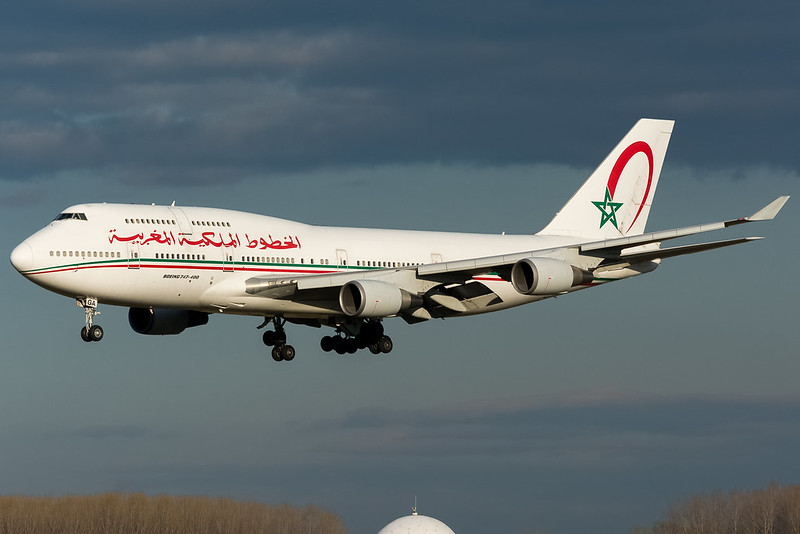
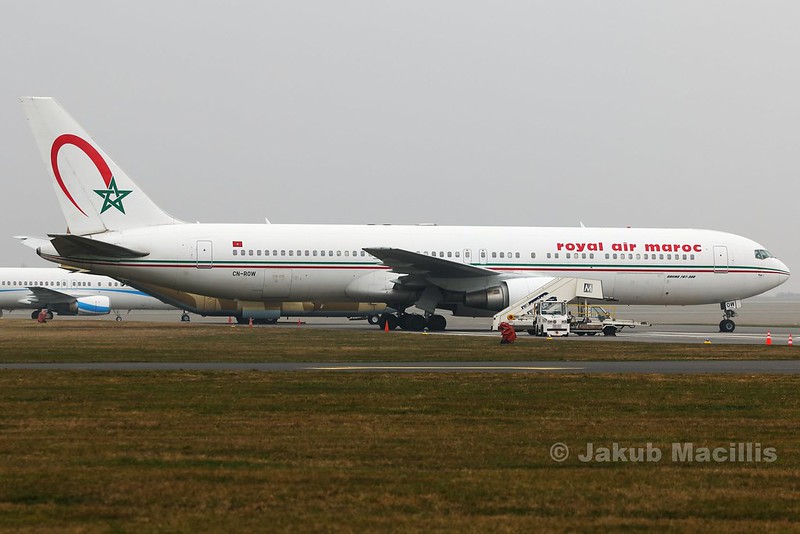
Toestellen die genoemd worden zijn de Boeing 767-300ER (CN-ROW) en Boeing 747-400 (CN-RGA).
Tijden (nog) niet bekend. Momenteel staan beide toestellen in Boedapest.
Hier aankomst van de 747 in Boedapest gisteravond:
En de 767-300ER eerder deze maand:
Maandag (CN-AOG) en vandaag (CN-AOL) kwamen al twee Lockheed C-130 Hercules toestellen naar Rotterdam.
De VIP-toestellen zouden oorspronkelijk ook naar Rotterdam komen maar beide toestellen konden daar vanwege hun grootte niet afgehandeld worden.
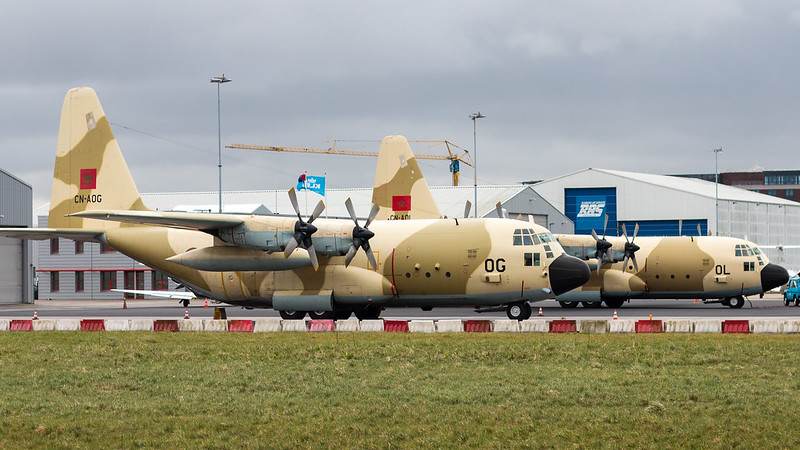
De vandaag aangekomen CN-AOL is ondertussen al weer weg naar Praag.
[ Bericht 0% gewijzigd door Iemand91 op 23-03-2016 20:42:19 ]
Transavia wil tot zes extra buitenlandse bases
Goede ontwikkelingen:)quote:Transavia wil de komende twee jaar nog vier tot zes uitvalsbases in het buitenland openen. Dat zegt topman Mattijs ten Brink in een interview met het AD, waarvan een gedeelte woensdagavond is gepubliceerd.
De prijsvechter binnen de luchtvaartgroep Air France-KLM, vliegt met ingang van vrijdag vanaf München op en neer naar achttien bestemmingen in Europa.
De vier vliegtuigen die de Nederlandse tak van Transavia stationeert in de Zuid-Duitse stad, zijn de eerste buiten de thuismarkten Nederland en Frankrijk.
''We willen volgend jaar een à twee nieuwe bases openen en in 2018 drie à vier'', zegt Ten Brink. ''Ik kan nog geen namen noemen, maar de kans dat we niet verder groeien in Duitsland, is klein.'' Dat het niet bij München zou blijven was al duidelijk, maar over het tempo van de geplande expansie liet Transavia zich niet eerder uit.
Ten Brink noemde verder Oostenrijk als een markt waar nog groeiruimte bestaat voor prijsvechters. Eerder liet hij al weten dat gedacht wordt aan Portugal, Spanje en Italië. Waar Transavia precies neerstrijkt, zal afhankelijk zijn van de marktvraag, maar ook van de beschikbaarheid van geschikte start- en landingstijden.
Hebben ze daar wel genoeg toestellen voor in bestelling staan? Of gaat dat ten koste van de bezetting in NL?quote:
Transavia wil tot zes extra buitenlandse bases
[..]
Goede ontwikkelingen:)
En geen base op Rotterdam The Hague Airport?quote:
Transavia wil tot zes extra buitenlandse bases
[..]
Goede ontwikkelingen:)
quote:KLM geeft Transavia op
Luchtvaartmaatschappij KLM is bereid om de zeggenschap over vakantievlieger Transavia over te dragen. Dat melden bronnen aan De Telegraaf. Transavia is nu nog 100% eigendom van KLM. President-directeur Pieter Elbers zegt in een reactie „dat de discussie nu niet aan de orde is”, maar bronnen stellen dat men bij KLM het verzet heeft laten varen.
De overdracht van de zeggenschap zou te maken hebben met de zoektocht naar een partner voor Transavia. Het is de bedoeling dat KLM het Nederlandse Transavia-belang gaat verkopen aan een aparte holding, die Transavia Company heet.
Ook het 40%-belang dat Transavia Nederland heeft in Transavia Frankrijk komt daarin. Deze houdstermaatschappij kan dan ondergebracht worden in een joint-venture met een andere partij of in een ander scenario worden verkocht.
De vraag is of Transavia het gaat redden, zo stellen de hoge bronnen in Parijs. De vakantievlieger is niet winstgevend en volgens ingewijden liggen de kosten in Nederland nog altijd 20% te hoog.
De Europese luchtvaart wacht echter een nieuwe consolidatieslag. De grote „full-service” luchtvaartmaatschappijen die ook intercontinentaal vliegen dingen naar de gunsten van de succesvolle prijsvechters als Ryanair en easyJet.
Binnen Europa zijn de grote maatschappijen verliesgevend. Door samen te werken met een prijsvechter hoeven ze het wiel niet meer zelf uit te vinden.
Transavia is in omvang een stuk kleiner dan concurrenten als easyJet, Ryanair, Wizzair en Vueling die oppermachtig zijn binnen Europa en inmiddels allemaal vliegen vanaf Schiphol.
Omdat Air France KLM in dit spel niet wil verliezen moet er een partner gezocht worden voor Transavia, waarin Wizzair, Ryanair en easyJet het meest worden genoemd als mogelijke samenwerkingskandidaten. Onlangs zei bestuursvoorzitter Carolyn McCall van easyJet nog tegen De Telegraaf dat „iedereen met met iedereen praat.”
Ryanair stelde al eerder dat het wel wil samenwerken met KLM. EasyJet is op dit moment in onderhandeling met het verlieslatende Air Berlin, dat KLM’s strategische partner Etihad als grootaandeelhouder heeft.
Air France KLM kwam in 2014 met het plan om Transavia fors uit te bouwen. Dit voornemen liep echter meteen na de presentatie ernstige schade op door een twee weken durende pilotenstaking in Frankrijk.
Om een staking te voorkomen werd besloten om de verdere expansie dan maar eerst te laten plaatsvinden onder de vlag van het Nederlandse Transavia. Vrijdag wordt pas eindelijk de nieuwe basis buiten de thuislanden Nederland en Frankrijk geopend in München in Duitsland.
Het is nog niet duidelijk wanneer de overdracht van Transavia juridisch geregeld wordt. „We richten ons dit jaar op de groei in het buitenland. De discussie over de zeggenschap speelt daarna weer”, zegt Mattijs ten Brink, directeur Transavia Nederland in een reactie.
Voor KLM is het verlies van over de zeggenschap van Transavia dramatisch, omdat ze de vakantievlieger gebruikt om de eigen Nederlandse markt te bewerken. KLM kan straks niet meer beslissen over het netwerk en de investeringen van de eigen dochter.
Het lijkt er echter op dat KLM aan het voorsorteren is op een toekomst zonder Transavia. Een veeg teken aan de wand is dat luchtvaartmaatschappij onlangs een aantal nieuwe toeristische bestemmingen in Europa, zoals Ibiza en Alicante, heeft toegevoegd.
Dit wekte bij vriend en vijand verbazing, omdat KLM door deze beslissing ook passagiers inpikt van Transavia. Daarbij heeft KLM duurder personeel, waardoor het nog minder logisch is om naar bestemmingen te vliegen waarop de concurrentie van prijsvechters moordend is.
Vorige week heeft staatssecretaris Dijksma van Luchtvaart nog in een kamerdebat toegezegd dat ze een overdracht van de zeggenschap van Transavia gaat voorkomen. Kamerlid Graus (PVV) trok zijn motie in na haar toezegging.

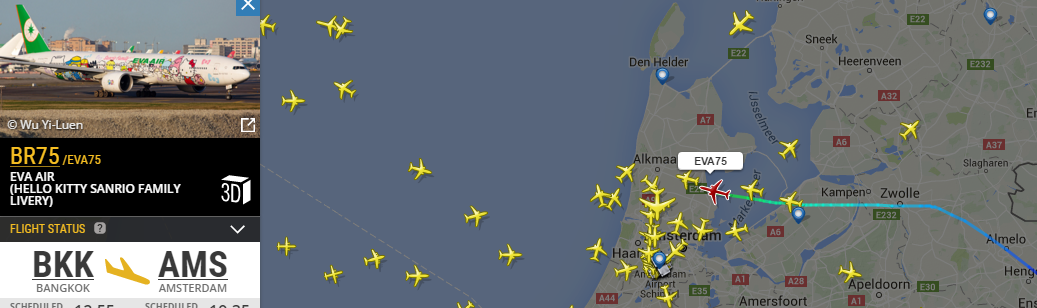
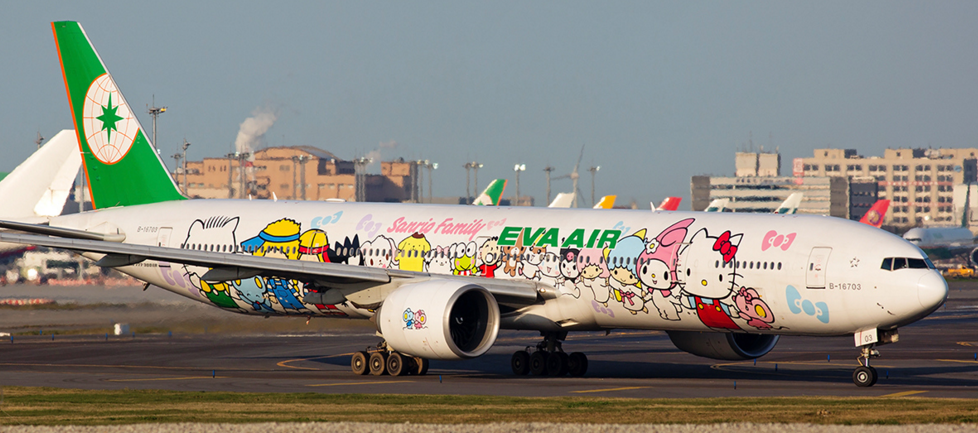

Ik zou mijn reis cancelen als dat ding bij de gate zou staan 
Who the fuck can sleep with all this shit going on?
Bezoek is overigens uitgesteld tot morgen.quote:
Vanavond komt nog wel een Marokkaanse Lockheed C-130 Hercules (CN-AOR) naar Schiphol.
Morgenvroeg komt de genoemde Boeing 767 naar Schiphol en morgenmiddag om 16:45 uur de 747.
(Tenzij het weer verandert uiteraard).
Een van de Jet Airways A330-300's had/heeft problemen (VT-JWS) en staat nog steeds in Brussel.
Jet Airways heeft de Delhi en Mumbai vluchten van uit Amsterdam daarom gecombineerd; VT-JWR vliegt nu eerst naar Delhi en daarna door naar Mumbai om dit op te vangen. (foto hieronder)
VT-JWU is vanavond vertrokken naar Toronto.
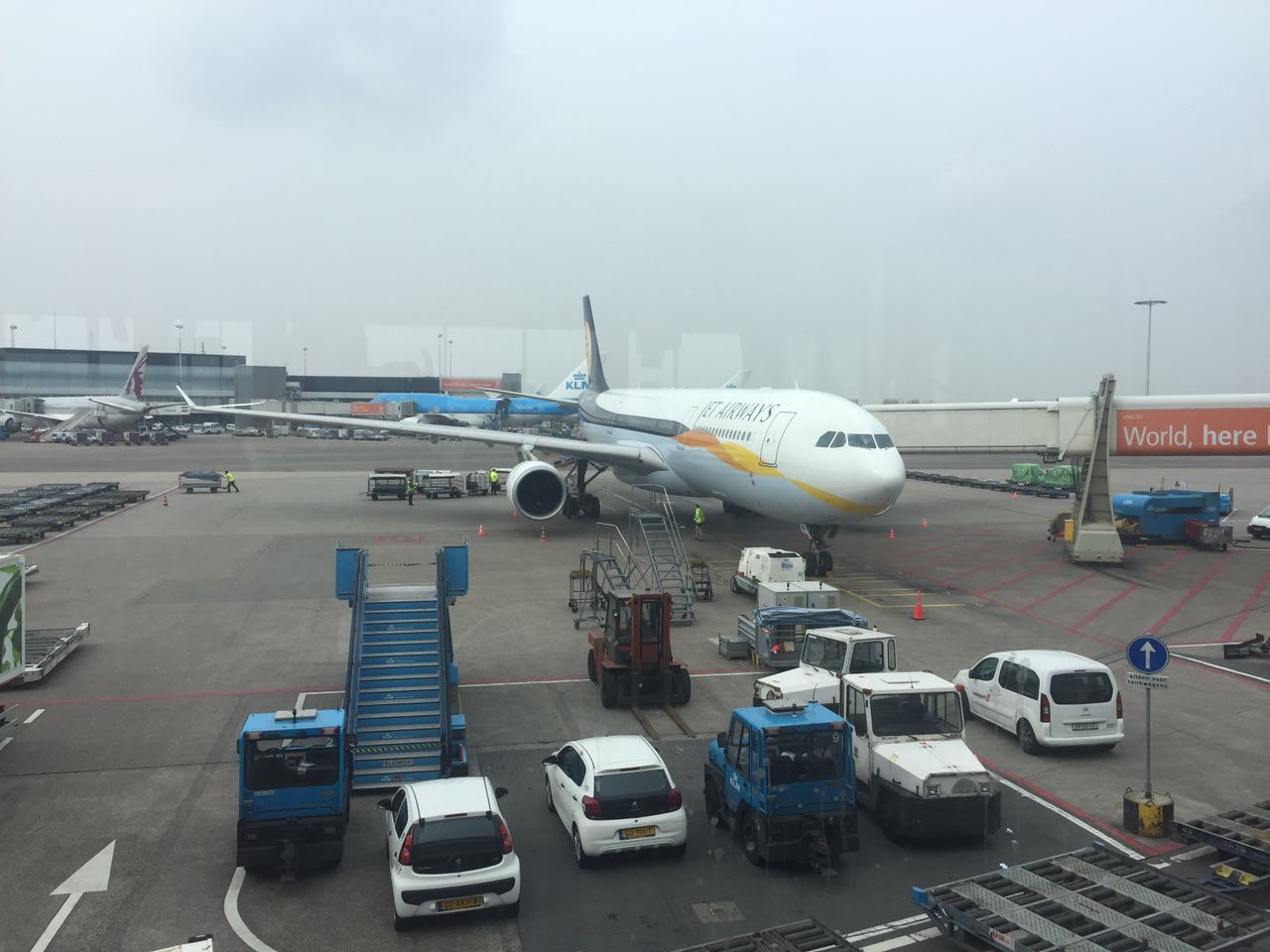
Aangezien de luchthaven van Brussel nog tot in ieder geval zondag gesloten blijft en Jet Airways vanaf zondag Brussel zou verruilen voor Amsterdam waren dit dus de laatstetwitter:jetairways twitterde op donderdag 24-03-2016 om 18:59:43 Statement on departure of flights from Amsterdam. reageer retweet
 Statement on departure of flights from Amsterdam.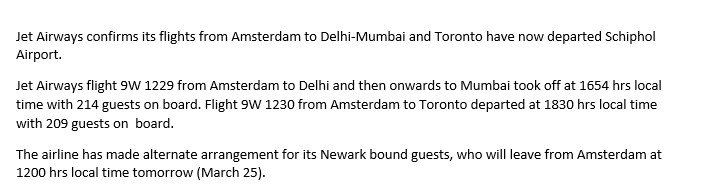
United en Delta Airlines vliegen morgen ook een extra vlucht naar Amsterdam.
United stuurt een 777-200ER vanuit en naar Newark. (UA2064/2065)
Delta een 767-300ER van en naar New York JFK. (DL9856/9557 uitgevoerd door N1605)
Op 8 september 2015 in de fik; en nu weer vliegen.
G-VIIO werd gisteravond vanuit Cardiff (BA maintenance) overgevlogen naar Gatwick en maakte vandaag haar eerste commerciële vlucht sinds Las Vegas:
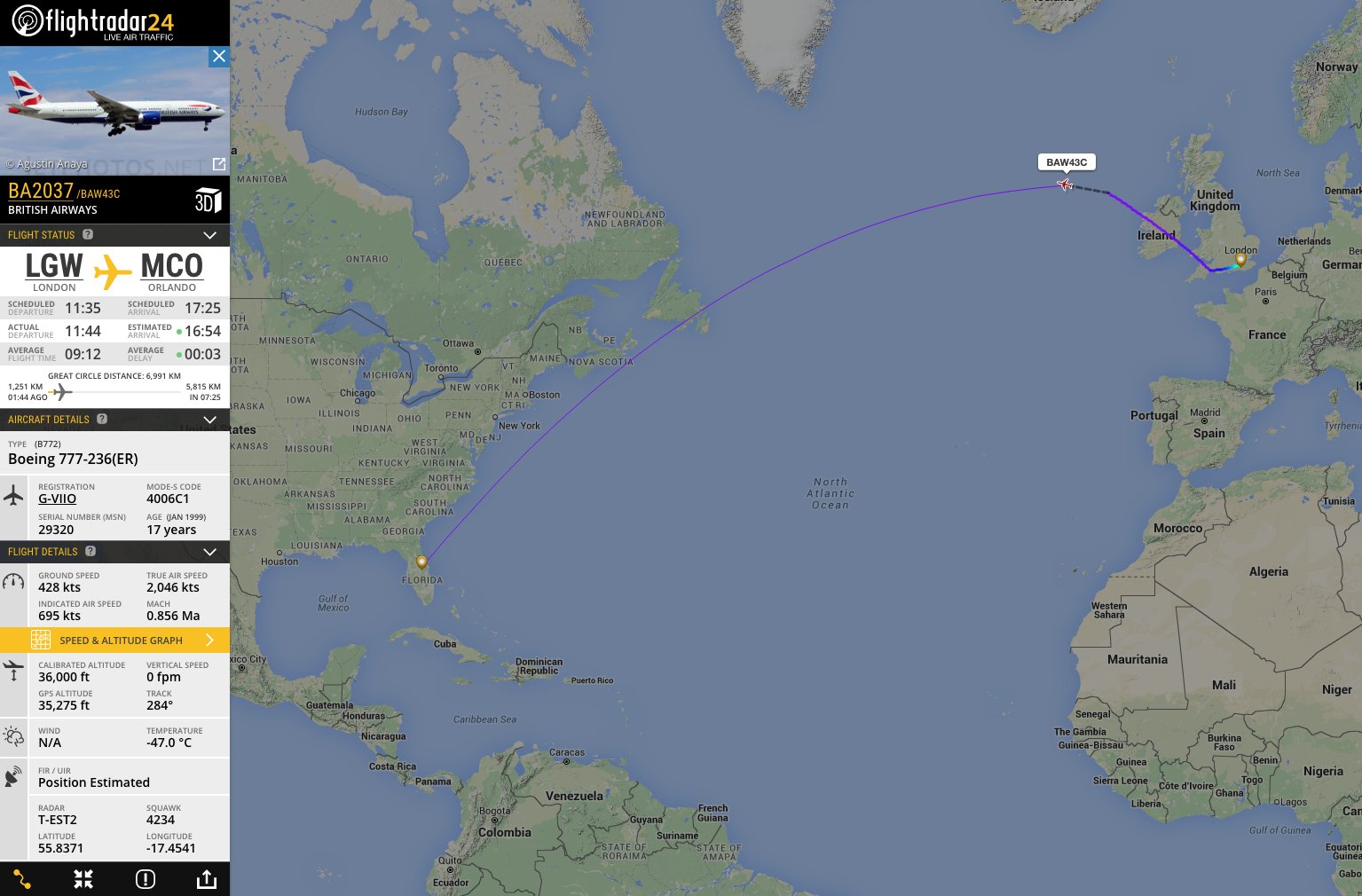
Dit is overigens ook wel misselijkmakend
 :
:EDIT @ hieronder: LOT Polish Airlines 787-8.

[ Bericht 5% gewijzigd door Iemand91 op 24-03-2016 23:42:52 ]
 Carnaval aan boord
Op Amsterdam is het alleen de buitenkant. Maar op de echte Kitty bestemmingen is alles aan de binnenkant tot het eten aan toe Hello Kitty!quote:Op donderdag 24 maart 2016 20:09 schreef APK het volgende:
Ik zou mijn reis cancelen als dat ding bij de gate zou staan
testvlucht zo te zien?quote:
Op dit moment vliegt de nieuwe Embraer E175 van KLM (de PH-EXG) boven Friesland; flightradar
Find your guiding inspiration. In a place where dreams are made
With a lifetime's preparation. It’s no time to be afraid
Put our differences behind us. While we shine like the sun
See what we've all become. Together we are one
With a lifetime's preparation. It’s no time to be afraid
Put our differences behind us. While we shine like the sun
See what we've all become. Together we are one
En inclusief een test aanvlucht op Leeuwarden? De lijn wordt daar geel, geen idee hoe hoog/laag dat dan is ... ik dacht dat dat vliegveld alleen voor militaire doeleinden was.quote:
 Op
Op
I hope you can see this because I'm doing it as hard as I can.
Gezien het vluchtnummer wel. Met een flyover luchtmachtbasis Leeuwarden.quote:
So we just called him Fred
Daar wordt wel vaker een flyover met burgertoestellen gedaan over luchtmachtbases:quote:
En inclusief een test aanvlucht op Leeuwarden? De lijn wordt daar geel, geen idee hoe hoog/laag dat dan is ... ik dacht dat dat vliegveld alleen voor militaire doeleinden was.

So we just called him Fred
jep zette even een daling in en daarna weer stijgen. Zit nu boven kampen.quote:
[..]
En inclusief een test aanvlucht op Leeuwarden? De lijn wordt daar geel, geen idee hoe hoog/laag dat dan is ... ik dacht dat dat vliegveld alleen voor militaire doeleinden was.
Find your guiding inspiration. In a place where dreams are made
With a lifetime's preparation. It’s no time to be afraid
Put our differences behind us. While we shine like the sun
See what we've all become. Together we are one
With a lifetime's preparation. It’s no time to be afraid
Put our differences behind us. While we shine like the sun
See what we've all become. Together we are one
Rondvluchtje met genodigde gasten/pers:quote:
Op dit moment vliegt de nieuwe Embraer E175 van KLM (de PH-EXG) boven Friesland; flightradar
twitter:dsajet twitterde op vrijdag 25-03-2016 om 11:45:04 Straks 1e vlucht met E175 @klm, uurtje lokaal (reken op laag) NH, ZH, ZL, FR, Wadden. Later video @rtvnh @luchtvaart reageer retweet
 Straks 1e vlucht met E175 @
twitter:dsajet twitterde op vrijdag 25-03-2016 om 14:35:42 Aan boord van de eerste @klm E175+ op @schiphol. Vlucht KL9945 AMS-AMS taxiet naar runway @rtvnh @luchtvaart reageer retweet
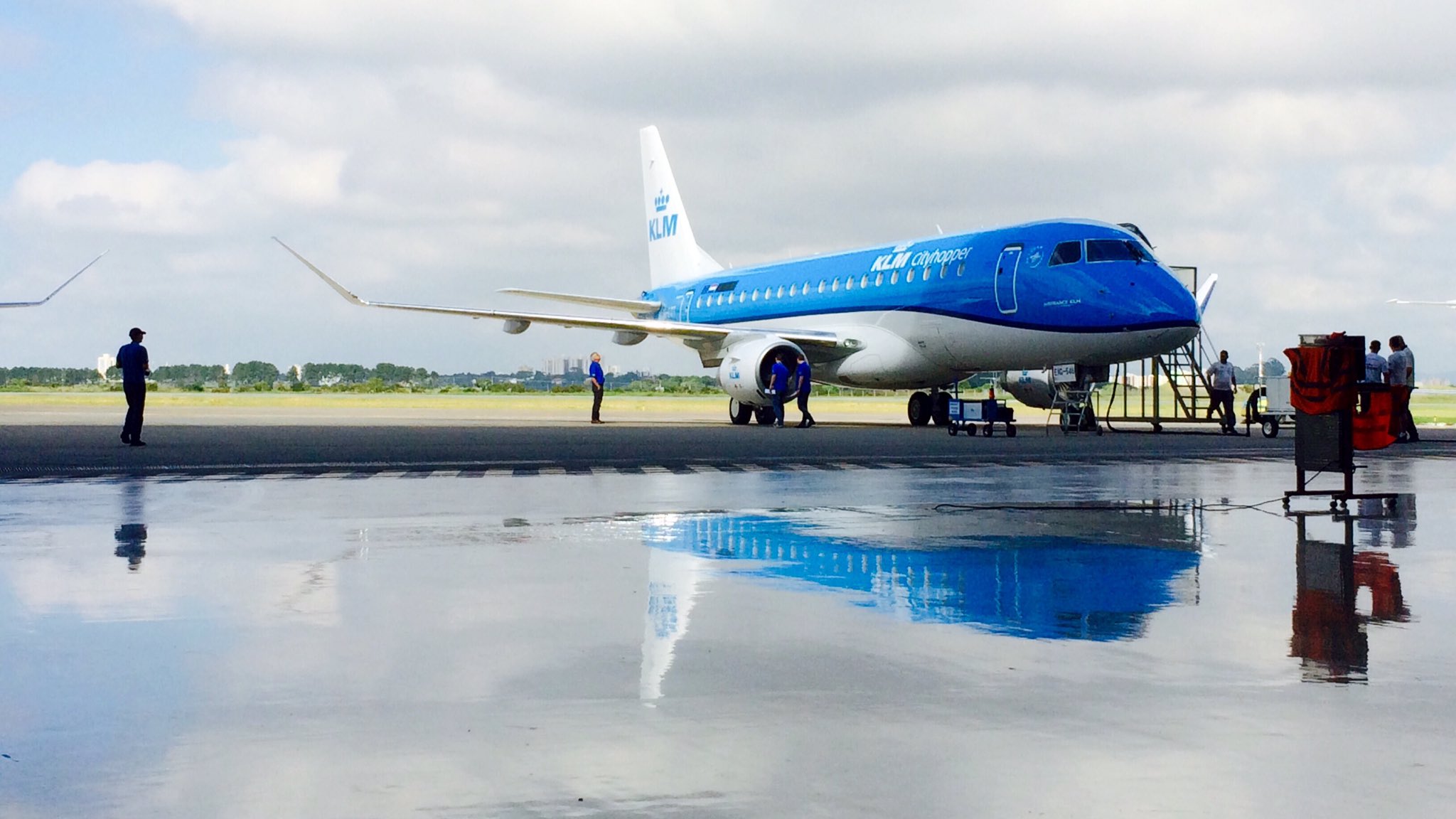
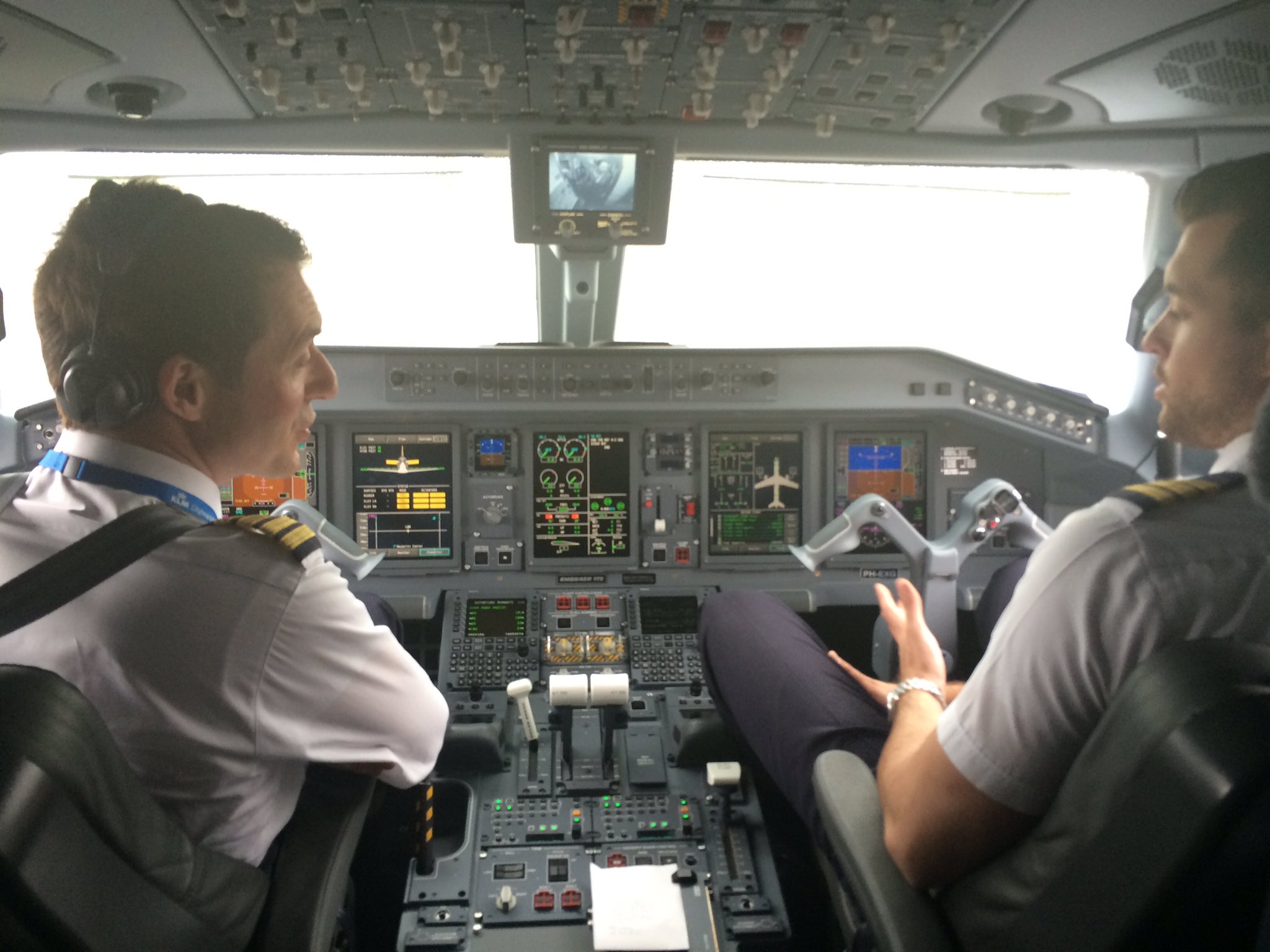
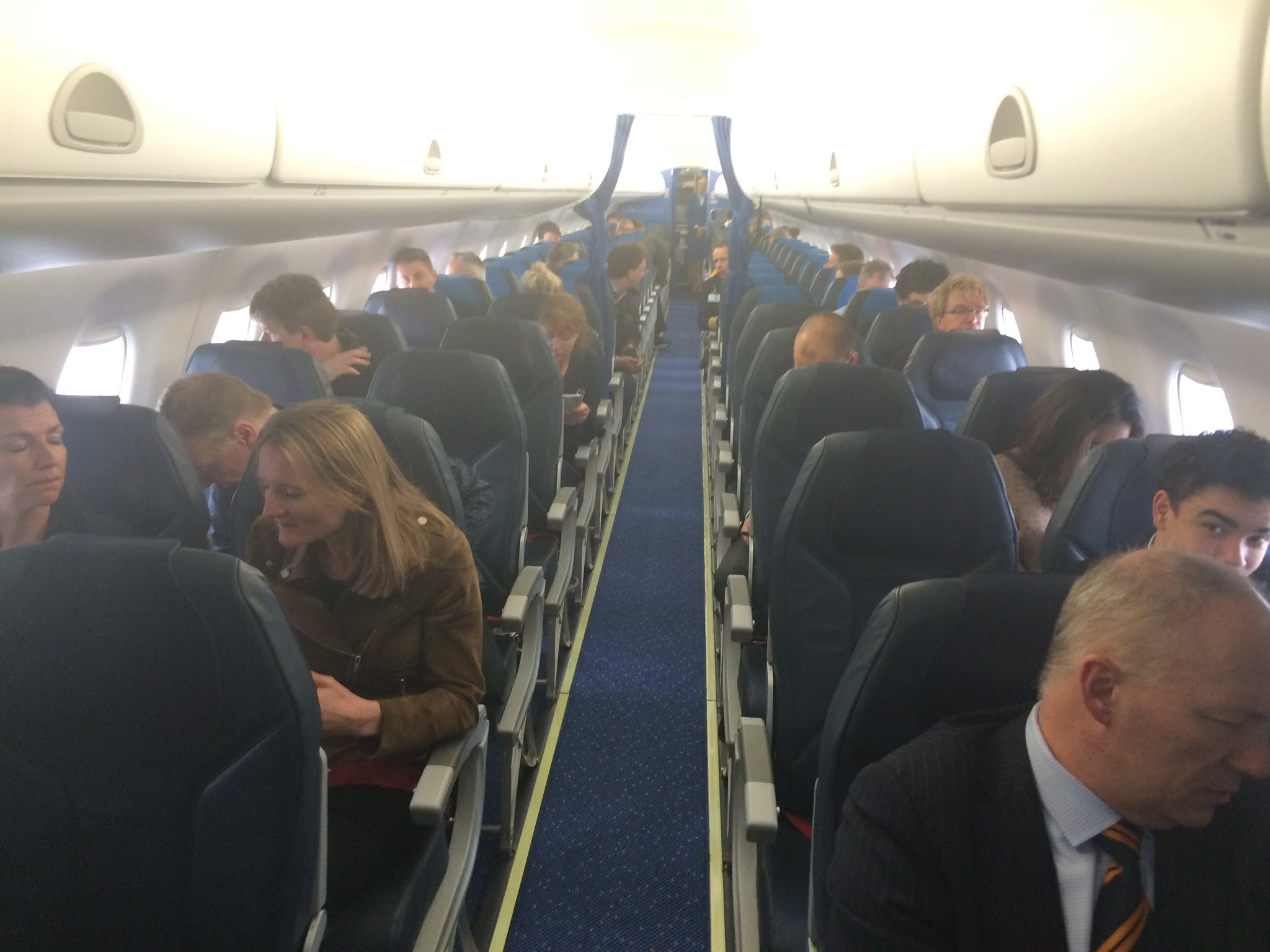
Eerste commerciële vlucht is komende zondag.
China Airlines alleen nog direct op Taipei, zou dat de deur openen voor Thai Airways op Schiphol? Valt immers frequentie weg, kan voor Thai een kans bieden om dat gat te vullen.
Ik denk dat Thai daar geen brood in ziet gezien hun algemene tariefstelling die gevoelsmatig hoger ligt dan die van KLM. Daarnaast zal het geen schaalvoordeel opleveren gezien de alliantie waar ze in zitten met Lufthansa als feeder in Frankfurt en Munchen.quote:
China Airlines alleen nog direct op Taipei, zou dat de deur openen voor Thai Airways op Schiphol? Valt immers frequentie weg, kan voor Thai een kans bieden om dat gat te vullen.
Aan de andere kant zou het wel prettig zijn want dan zullen de tarieven van de ME3 ook nog wat vaker concurrerend zijn, met name op de gunstige overstaptijden.
Maar wellicht heeft er iemand een betere analyse.....
2015: BUD - SAW - AUH - BKK - CNX - UTH - SIN - KUL - SGN - DAD - HUI - HAN - HKG . . . . . .
Thai vliegt in Europa inderdaad voornamelijk op hubs van andere Star Alliance maatschappijen zoals Lufthansa (Frankfurt, Munchen), Brussels (Brussels), SAS (Oslo, Copenhagen, Stockholm) en Swiss (Zurich) vanwege het genoemde netwerk van die maatschappijen.
Mijn persoonlijke gok is dat, als China Airlines inderdaad rechtstreeks gaat vanaf Taipei, EVA Air een aantal vluchten extra gaat doen. EVA vliegt nu 3x/week Taipei - Bangkok - Amsterdam (zelfde als China Airlines dus) en is daarnaast Skyteam-lid en kan dus rekenen op het Europese netwerk van KLM.
Mijn persoonlijke gok is dat, als China Airlines inderdaad rechtstreeks gaat vanaf Taipei, EVA Air een aantal vluchten extra gaat doen. EVA vliegt nu 3x/week Taipei - Bangkok - Amsterdam (zelfde als China Airlines dus) en is daarnaast Skyteam-lid en kan dus rekenen op het Europese netwerk van KLM.
Blijft toch raar, een grijze snavel (nose cone) op een blauw/wit toestel:
Zag er bij de vorige livery op hun 767's ook al raar uit:
Dit komt ook niet vaak voor, PH-TFK en PH-TFM vliegen op enkele minuten afstand van elkaar naar de Caribbean:
[ Bericht 20% gewijzigd door Fred op 26-03-2016 19:07:17 ]
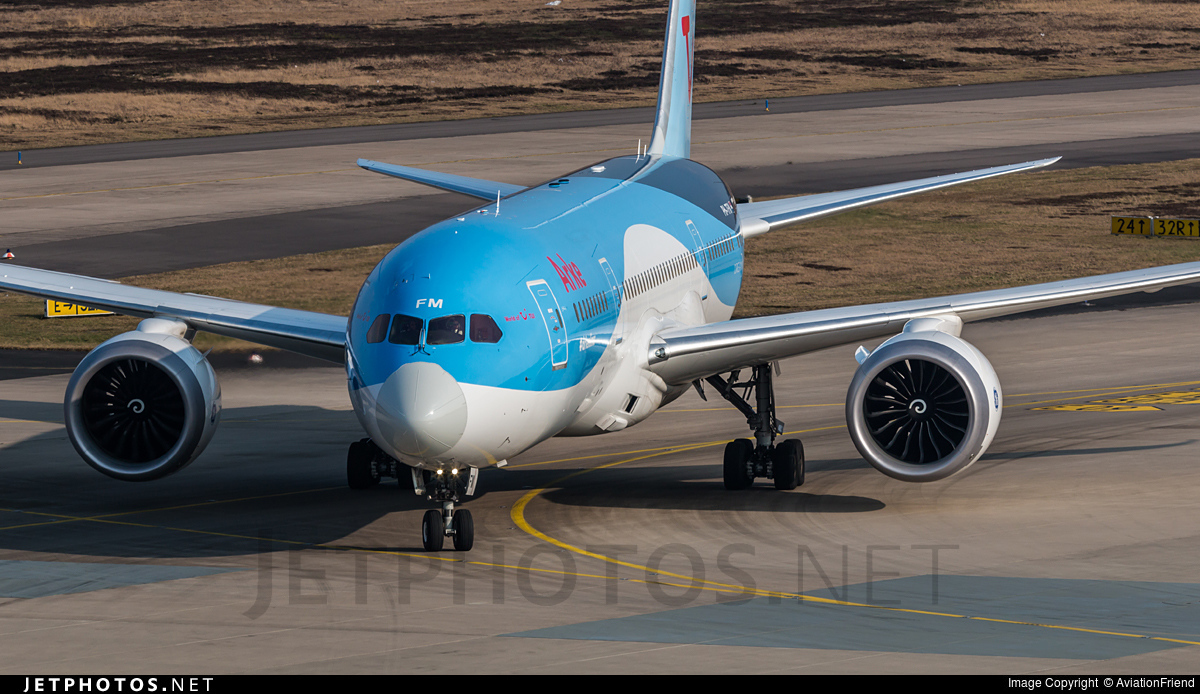
Zag er bij de vorige livery op hun 767's ook al raar uit:

Dit komt ook niet vaak voor, PH-TFK en PH-TFM vliegen op enkele minuten afstand van elkaar naar de Caribbean:

[ Bericht 20% gewijzigd door Fred op 26-03-2016 19:07:17 ]
So we just called him Fred
Waar is dat goed voor?quote:
Blijft toch raar, een grijze snavel (nose cone) op een blauw/wit toestel:
[ afbeelding ]
Zag er bij de vorige livery op hun 767's ook al raar uit:
[ afbeelding ]
Die cones worden gewisseld bij schade. Als er geen cone voor handen is die past bij de livery, dan wordt er een standaard cone opgezet en krijg je dit soort taferelen.quote:
So we just called him Fred
En het is te veel moeite dat ding even in de kleur te spuiten?quote:
[..]
Die cones worden gewisseld bij schade. Als er geen cone voor handen is die past bij de livery, dan wordt er een standaard cone opgezet en krijg je dit soort taferelen.
Kost tijd...quote:
[..]
En het is te veel moeite dat ding even in de kleur te spuiten?
Over schade gesproken, dit gebeurde gisteren met een Jetblue vlucht naar Nassau op de Bahama's:
Kost ook weer extra tijd, tijd die voor TUI te kostbaar is. Als je aan de andere kant van de wereld staat en je moet zo'n cone ook nog ter plaatse verven ben je zo een paar uur verder. Per retoutje naar de vakantieoorden aan de andere kant van de oceaan heeft TUI vanuit Nederland 3u40 minuten speling (40 minuten in het vliegschema en 3 uur volgens Europesche regels), als ze maar iets later terug zijn wordt het in het slechtste geval 300x 600 euro schade vergoeding. Dan kan is het een stuk goedkoper om tot de volgende geplande onderhoudsbeurt met een andere kleur neus rond te vliegen.
In mei is er volgens mij sowieso een bezoek aan de spuiter gepland voor het spuiten van TUI-logo's, dan kan die cone gelijk mee natuurlijk.

Moet je wel een plek staan waar een spuiterij isquote:
[..]
En het is te veel moeite dat ding even in de kleur te spuiten?
Kost ook weer extra tijd, tijd die voor TUI te kostbaar is. Als je aan de andere kant van de wereld staat en je moet zo'n cone ook nog ter plaatse verven ben je zo een paar uur verder. Per retoutje naar de vakantieoorden aan de andere kant van de oceaan heeft TUI vanuit Nederland 3u40 minuten speling (40 minuten in het vliegschema en 3 uur volgens Europesche regels), als ze maar iets later terug zijn wordt het in het slechtste geval 300x 600 euro schade vergoeding. Dan kan is het een stuk goedkoper om tot de volgende geplande onderhoudsbeurt met een andere kleur neus rond te vliegen.
In mei is er volgens mij sowieso een bezoek aan de spuiter gepland voor het spuiten van TUI-logo's, dan kan die cone gelijk mee natuurlijk.
So we just called him Fred
Dat zie je toch best nog wel eens gebeuren. Maar het is vervelender voor het vliegveld dan voor het vliegtuig zelf qua schade denk ik. En de wegsleepregelingquote:
Over schade gesproken, dit gebeurde gisteren met een Jetblue vlucht naar Nassau op de Bahama's:
Ik hou me bezig met het organiseren van reizen naar Argentinie, Chili en Peru voor Tipica Reizen.

Mooie uitdaging als piloot. Goed gedaan ook 
Science adjusts its views based on what's observed, faith is the denial of observation so that belief can be preserved.
Gisteren toch aangekomen.quote:
En schijnbaar komt morgen Mohammed VI van Marokko naar Nederland
Toestellen die genoemd worden zijn de Boeing 767-300ER (CN-ROW) en Boeing 747-400 (CN-RGA).
Maandag (CN-AOG) en vandaag (CN-AOL) kwamen al twee Lockheed C-130 Hercules toestellen naar Rotterdam.
De VIP-toestellen zouden oorspronkelijk ook naar Rotterdam komen maar beide toestellen konden daar vanwege hun grootte niet afgehandeld worden.
De vandaag aangekomen CN-AOL is ondertussen al weer weg naar Praag.
Even een bezoekje brengen:
Morocco Air Force Gulf V CN-AMS by Maarten Dols, on Flickr
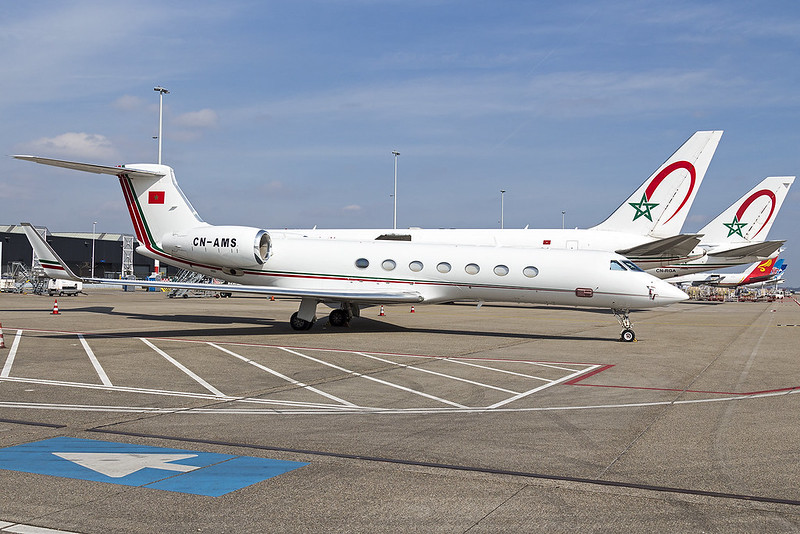
160326 CN-RGA B744 RAM and CN-ROW B763 RAM by mzunguwamap, on Flickr

160326 Part of the Moroccan delegation on Romeo apron (CN-RGA CN-ROW CN-AMS) by mzunguwamap, on Flickr

