NWS Nieuws & Achtergronden
Discussieer hier diepgaander over de actualiteiten.



Gaat hard daar.
106 soldiers killed as Syrian rebels go on attack in Daraa: Watchdog
Britain-based watchdog says rebels kill 106 soldiers in Syrian Daraa province over past two days during attack on military post
106 soldiers killed as Syrian rebels go on attack in Daraa: Watchdog
Britain-based watchdog says rebels kill 106 soldiers in Syrian Daraa province over past two days during attack on military post
Bronquote:Syrian rebels killed 14 soldiers in an attack on an army post in Daraa province on Friday, a watchdog said, a day after the army suffered 92 losses, the highest daily total of the 19-month conflict.
Six rebels were also killed in Friday's attack on the army checkpoint at Khirba in the southern province, the Syrian Observatory for Human Rights said, adding that fighting also raged in the northern provinces of Idlib and Aleppo.
The Britain-based watchdog said Thursday had marked one of the deadliest days of fighting since an anti-regime revolt erupted in March last year, with at least 240 people killed across the country, including the 92 soldiers, 67 rebel fighters and 81 civilians.
Of the soldiers killed on Thursday, 36 died in fighting in Idlib province, where much of the fiercest clashes have taken place over the past three months.
Regime war planes Friday attacked two buildings in the Idlib town of Maaret al-Numan, where intense fighting has raged since rebels overran it on Tuesday after a fierce 48-hour gunbattle, the Observatory said.
An AFP reporter said that the rebels, by gaining control of a stretch of highway near Maaret al-Numan, were on Thursday able to cut off the route linking Damascus to Aleppo, choking the flow of troops to battlefields in the north.
In Aleppo province, rebels attacked a large air defence battalion on the highway connecting Aleppo to Raqa province, further to the east, near to the Kweris military airport, according to the Observatory.
"The rebels attacked the air force battalion after midnight and the clashes went on until dawn, but the rebels definitely did not gain control of the post," Observatory director Rami Abdel Rahman told AFP by phone.
Rebels suffered a number of casualties, but immediate figures were not available.
Military airports have been a key target for the rebels as the army has increasingly deployed war planes and helicopter gunships to launch devastating strikes.
In Aleppo city, regime forces pounded the districts of Haidariyeh in the northeast and Sukari and Fardoss in the southwest at dawn, as fierce fighting broke out in Sakhur, Suleiman al-Halabi and Sheikh Khodr in the northeast.
More than 32,000 people have been killed in the Syrian conflict, according to the Observatory, which compiles its data from a network of activists, medics and lawyers on the ground.
All wars are civil wars, because all men are brothers. ~François Fénelon

Heeft iemand ook deze Russische docu gezien?
Bron: http://www.geenstijl.nl/m(...)he_repo_over_sy.htmlquote:De burgeroorlog in Syrië is al maanden het middelpunt van de internationale diplomatie. Israël zweet peentjes, Iran dreigt met totale intifada als het Westen ingrijpt, de NAVO etaleert haar diplomatieke onmacht en Superjan geeft dode Syrische jongetjes een naam. Ondertussen trekt Jan Eikelboom avond aan avond in Nieuwsuur op met de houtje-touwtje brigades van de opstandelingen. Tijd voor een nieuw perspectief: de Russische media. Die zijn nogal pro-Assad. Vanwege Roesiese handelsbelangen in straaljagers, duikboten, vuurwapens en gas. En omdat de enige Ruskische marinebasis in het mediterrane gebied in Syrië zit. Dus als Russische journo's embedded gaan, gaan ze met het leger van hun goede vriend President Assad mee. En dan hoor je ineens getuigen spreken over buitenlandse strijders die in Syrië de sharia willen invoeren, blijken er Afghaanse, Pakistaanse en Libische huurlingen rond te lopen in Aleppo en heeft een Franse Arts Zonder Grenzen het over rebellen met Franse paspoorten. De opstand in Syrië is geen vrijheidsstrijd, de opstand in Syrië is een Jihad. Althans, volgens de Russen dan hè. De Syrische rappers waar de NOS concerten van bezoekt, zeggen natuurlijk precies het tegenovergestelde. Maar linksom of rechtsom: met Lente heeft het in iedere geval weer geen fuck te maken. Update: BBC doet ook nog een hartverscheurende duit in het zakje.


Ja, grappig. Vooral vanaf 9m00. Het Syrische leger beschermt zijn infanteristen met technicals in Alleppo en evacueert burgers met heli's.quote:Op vrijdag 12 oktober 2012 12:36 schreef Piktussendedeur het volgende:
Heeft iemand ook deze Russische docu gezien?
[..]
Bron: http://www.geenstijl.nl/m(...)he_repo_over_sy.html

Free Assange! Hack the Planet
[b]Op dinsdag 6 januari 2009 19:59 schreef Papierversnipperaar het volgende:[/b]
De gevolgen van de argumenten van de anti-rook maffia
[b]Op dinsdag 6 januari 2009 19:59 schreef Papierversnipperaar het volgende:[/b]
De gevolgen van de argumenten van de anti-rook maffia

quote:British Troops Join US Forces on the Jordan-Syria Border
According to ANSA, the Italian News Agency, “several hundred British soldiers and military advisors are in Jordan to monitor the Syria situation, Western diplomatic sources said on Thursday.”One hundred US troops are already stationed on the Syria-Jordan border.
Sources do not indicate the nature of these US and British troops, as to whether they are regular or special forces. The New York Times confirms the presence of 150 British troops,
“The Times of London reported on an undisclosed number of British troops. The troops have been in Jordan since participating in joint military maneuvers in the past months. They remained on concerns over Syria’s chemical weapons arsenal, Jordanian military sources said, adding that French troops might also be in place. ANSA, the Italian News Agency, October 11, 2012)
Free Assange! Hack the Planet
[b]Op dinsdag 6 januari 2009 19:59 schreef Papierversnipperaar het volgende:[/b]
De gevolgen van de argumenten van de anti-rook maffia
[b]Op dinsdag 6 januari 2009 19:59 schreef Papierversnipperaar het volgende:[/b]
De gevolgen van de argumenten van de anti-rook maffia
quote:
quote:On many fronts in the Middle East major geopolitical and military changes are taking place.
Syria is more or less out of control, and a potential conflict with Turkey is now looming. In Iraq, the fighting continues, and the regime in Iran is facing sanctions and possible Israeli military action.
One group of people straddling the upheaval are the Kurds. You find them in all these countries and they have long fought to create their own country.
So, could geopolitical changes taking place in the Middle East give them a chance to finally reach their goal?
There are an estimated 40 million of them seeking recognition as Kurdish people, but it is not a coordinated effort under one command. One of the most important Kurdish groups is the PKK, the Kurdistan Workers' Party, which is based in northern Iraq. In Iran there is the Party of Free Life of Kurdistan (PJAK) and in Syria there is the Democratic Union Party (PYD).
After seeing reports that the PKK has recently become more involved in attacks in Turkey and after hearing that Kurdish fighters have been seen in battles going on in Syria, we decided to seek out the PKK leader to discuss what he and his fellow Kurds are doing now.
But finding the man leading the PKK in Iraq is not easy. Constantly under threat from Turkish jet fighters dropping bombs on PKK targets, the commander, Murat Karayilan and his team, are constantly on the move, hiding. After driving to an agreed upon meeting point in northern Iraq, however, we met his people who escorted us to a lush area where we finally met him and invited him to talk to Al Jazeera.
Free Assange! Hack the Planet
[b]Op dinsdag 6 januari 2009 19:59 schreef Papierversnipperaar het volgende:[/b]
De gevolgen van de argumenten van de anti-rook maffia
[b]Op dinsdag 6 januari 2009 19:59 schreef Papierversnipperaar het volgende:[/b]
De gevolgen van de argumenten van de anti-rook maffia

Ja, prima docu.quote:
Heeft iemand ook deze Russische docu gezien?
[..]
Bron: http://www.geenstijl.nl/m(...)he_repo_over_sy.html
Sum es est, sumus estis sunt
quote:Syria using Russian cluster bombs, says human rights group
Watchdog claims video evidence shows government forces dropped Soviet-era cluster bombs in bid to halt rebel advances
Syrian government forces have used Russian-made cluster bombs on populated areas in their effort to push back rebel advances along the country's main north-south highway, according to Human Rights Watch.
The watchdog on Sunday pointed to videos put up on the internet showing bomblets from cluster munitions in Idlib, Homs, Aleppo and Latakia provinces and outside Damascus. It said interviews with witnesses backed up the video evidence and there were clear signs the weapons had been dropped from aircraft.
The allegations came as President Bashar al-Assad's government was struggling to stop opposition forces consolidating their hold on Idlib province, on the Turkish border. The rebels were reported to have surrounded an army garrison of several hundred men at Urum al-Sughra, between the contested city of Aleppo, the country's commercial and industrial centre, and the frontier.
"Rebels attacked an armoured column sent from Aleppo to rescue the 46th Regiment at Urum al-Sughra and stopped it in its tracks," Firas Fuleifel, an opposition activist told Reuters by phone from Idlib. He said a Syrian air force jet was shot down while trying to provide air support to the column.
Sunday's Human Rights Watch report said there were Soviet-era markings on the cluster bombs used over the past few days but it was unclear when they had been delivered to Syria. Russia continued to be Syria's main arms suppliers after the demise of the Soviet Union.
More than 100 countries have signed a treaty banning the use of cluster bombs on the grounds that they are indiscriminate weapons and unexploded bomblets scattered across a wide area in the wake of an attack pose an unacceptable threat to civilians. Neither Syria nor Russia has signed the 2010 treaty. Nor have China and the US.
"Syria's disregard for its civilian population is all too evident in its air campaign, which now apparently includes dropping these deadly cluster bombs into populated areas," said Steve Goose, arms director at Human Rights Watch. "Cluster bombs have been comprehensively banned by most nations, and Syria should immediately stop all use of these indiscriminate weapons that continue to kill and maim for years."
Turkey closed its airspace to Syrian airliners on Saturday, four days after it claimed to have found weaponry on a Syrian Air Airbus flying to Damascus from Moscow, which Turkish warplanes forced to land on suspicion of gun-running. The Russian government insisted the plane had been carrying legal radar components in its hold, but Turkey said the consignment included missile parts. The Russian newspaper Kommersant said the consignment had been sent by a company in the Russian city of Tula, which manufactures missiles and radar equipment.
Following the Airbus incident on 10 October, Syria accused Turkey of "piracy" and banned Turkish overflights on Saturday. Turkey had stopped using Syrian airspace some months previously and its foreign minister, Ahmet Davutoglu, said on Sunday: "The Syrian announcement has no value for us."
The Airbus incident was a low point in the Turkish-Russian relationship, which has been severely strained by the conflict in Syria. The Turkish prime minister, Recep Tayyip Erdogan, lambasted the UN security council at a conference in Istanbul for its failure to intervene in the Syrian conflict, in what was regarded as thinly-veiled criticism of Russia and China, which have vetoed any direct pressure on Assad's regime.
"The UNS security council has not intervened in the human tragedy that has been going on in Syria for 20 months," he said. "There's an attitude that encourages, gives the green light to, Assad to kill tens or hundreds of people every day," he said.
Free Assange! Hack the Planet
[b]Op dinsdag 6 januari 2009 19:59 schreef Papierversnipperaar het volgende:[/b]
De gevolgen van de argumenten van de anti-rook maffia
[b]Op dinsdag 6 januari 2009 19:59 schreef Papierversnipperaar het volgende:[/b]
De gevolgen van de argumenten van de anti-rook maffia
quote:
quote:Throughout this year, as fighting intensified in Syria and antigovernment fighters grew in numbers and in strength, it had seemed inevitable that they would acquire heat-seeking shoulder-fired missiles and turn them against the Syrian military aircraft.
This blog had documented the part-by-part appearance in rebel hands of one old heat-seeking system, known as the SA-7. Since midsummer there have been occasional sightings of full systems but none, as far as we know, showing the system in actual use.
Two videos recently posted on YouTube suggest that what had been expected is now occurring.
Free Assange! Hack the Planet
[b]Op dinsdag 6 januari 2009 19:59 schreef Papierversnipperaar het volgende:[/b]
De gevolgen van de argumenten van de anti-rook maffia
[b]Op dinsdag 6 januari 2009 19:59 schreef Papierversnipperaar het volgende:[/b]
De gevolgen van de argumenten van de anti-rook maffia


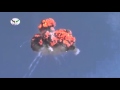
Die was al in het vorige topic gepostquote:Op woensdag 17 oktober 2012 19:52 schreef T_Bag het volgende:
Spectaculaire beelden: Syrische rebellen schieten helikopter uit de lucht
Ceterum censeo Turciam delendam esse.
Dit heb ik niet eerder gezien.quote:
Spectaculaire beelden: Syrische rebellen schieten helikopter uit de lucht
 Wanneer was dat?
All wars are civil wars, because all men are brothers. ~François Fénelon
Is van vandaag hoor. In Maarat al-Numan in de provincie Idlib, noord Syrië. Het is inmiddels niet echt iets bijzonders meer de afgelopen week heeft de FSA meerdere helikopters en straaljagers neergehaald. Opvallend is wel dat deze helikopter gewoon wordt neergehaald door machinegeweervuur, zijn die piloten echt zo incompetent?quote:
[..]
Die was al in het vorige topic gepost
Incelfrikandel
Wat een gelul datzelfde filmpje heb ik weken terug gezien.quote:
[..]
Is van vandaag hoor. In Maarat al-Numan in de provincie Idlib, noord Syrië. Het is inmiddels niet echt iets bijzonders meer de afgelopen week heeft de FSA meerdere helikopters en straaljagers neergehaald. Opvallend is wel dat deze helikopter gewoon wordt neergehaald door machinegeweervuur, zijn die piloten echt zo incompetent?
Ceterum censeo Turciam delendam esse.
Als dat filmpje niet van vandaag was had ik dat wel eerder gelezen. Bron, link?quote:
[..]
Wat een gelul datzelfde filmpje heb ik weken terug gezien.
Incelfrikandel
Het komt bekend voor, nja mooi fimpje in ieder gevalquote:
[..]
Als dat filmpje niet van vandaag was had ik dat wel eerder gelezen. Bron, link?
Ceterum censeo Turciam delendam esse.
Jij bedoeld denk ik die helikopter in Damascus van 2 maanden terug. Die video staat ernaast in t-Bags link. de video lijkt er wel op, maar is in dichtbebouwd gebied en valt niet in één keer in stukken. Vrij duidelijk dus.quote:
[..]
Het komt bekend voor, nja mooi fimpje in ieder geval
Incelfrikandel
Inderdaadquote:
[..]
Jij bedoeld denk ik die helikopter in Damascus van 2 maanden terug. Die video staat ernaast in t-Bags link. de video lijkt er wel op, maar is in dichtbebouwd gebied en valt niet in één keer in stukken. Vrij duidelijk dus.
Ceterum censeo Turciam delendam esse.
De rebellen hebben ook veel wapens gepakt van de regering. Tussen die wapens zitten heel veel anti-air wapens.
All wars are civil wars, because all men are brothers. ~François Fénelon


tering zeg. Uiteundelijk zijn we allemaal een bag of meatquote:
[..]
De nasleep van dit bombardement (LET OP: ZEER SCHOKKENDE BEELDEN)
All wars are civil wars, because all men are brothers. ~François Fénelon
Goed artikel van journalist Benjamin Hall die net uit Aleppo terug is. Zijn standpunt is dat ondanks al het leed hij tegen ingrijpen van het Westen is. Simpelweg omdat de rebellen veel te verdeeld zijn en er ook onfrisse gasten tussen zitten die vechten voor een Islamitische staat. Het droevige is dat juist het niet ingrijpen of afzetten van no-fly zone ertoe leidt dat Syriers alle andere hulp accepteren om Bashar te verslaan, ook van jihadisten. Vrij logisch als je met je rug tegen de muur zwaar afgemaakt wordt en er geen enkel uitzicht is op enige hulp van buitenaf.
Ik ben het wel met zijn conclusie eens dat ingrijpen voor het Westen echt de grootste fout zou zijn. Iets waar de Amerikaanse verkiezing volgende maand overigens cruciaal voor zal zijn. De rebellen zijn meer gebaat bij een winst van de rechtse Romney ironisch genoeg die al aankondigde rebellen actief en militair te zullen steunen om Bashar eruit te trappen en Iran's macht in te perken. De rebellen weten overigens dat Amerika sowieso niets gaat doen tot na de verkiezingen.
Nadat Bashar weg is gaat Syrie nog veel ellende tegemoet met de verschillende groepen die elkaar dan naar het leven gaan staan door politieke meningsverschillen. Saudie Arabie ziet niet voor niets liever het Syrische leger het overnemen om vervolgens de orde te handhaven en af te dwingen.
Ik ben het wel met zijn conclusie eens dat ingrijpen voor het Westen echt de grootste fout zou zijn. Iets waar de Amerikaanse verkiezing volgende maand overigens cruciaal voor zal zijn. De rebellen zijn meer gebaat bij een winst van de rechtse Romney ironisch genoeg die al aankondigde rebellen actief en militair te zullen steunen om Bashar eruit te trappen en Iran's macht in te perken. De rebellen weten overigens dat Amerika sowieso niets gaat doen tot na de verkiezingen.
Nadat Bashar weg is gaat Syrie nog veel ellende tegemoet met de verschillende groepen die elkaar dan naar het leven gaan staan door politieke meningsverschillen. Saudie Arabie ziet niet voor niets liever het Syrische leger het overnemen om vervolgens de orde te handhaven en af te dwingen.
quote:Among the Snipers of Aleppo
IN the Syrian city of Aleppo, there are neighborhoods that are almost entirely abandoned; blocks of buildings with their facades blown off, apartments open to the street; and other buildings, intact but empty, their curtains billowing out the windows. Broken water pipes have turned roads into debris-clogged rivers. And tribes of cats stalk around like predators; every now and then you pass one lying dead on the ground, its body torn apart by sniper fire.
The snipers, both rebel and regime, are everywhere. The MIG jets are always overhead, and shelling continues day and night. You cannot escape the smell of dead bodies, and it feels as if it is only a matter of time before you are hit, too.
This is life on the ground for the remaining residents of Aleppo. With only this in mind, it is easy to argue that the West should intervene — arm the rebels, help them overthrow the vicious rule of the Assads, and try to create something good from the chaos. After all, the rebels are outgunned, outsupplied and outfinanced. They are battling a force that is aligned with Iran and Hezbollah, and one that commits daily atrocities.
And yet, all things considered, I can’t argue for intervention in Aleppo, or in the wider Syrian conflict.
For a few days in September, I was embedded with the Ahrar al-Sham, or Free Men, rebel faction in the city. These men are fierce and battle-hardened. They sit chatting or sleeping while shells fall all around, and seem nonchalant while lobbing homemade bombs into government compounds. Some taunt the enemy. Others seem almost excited to fire their guns — for them the conflict is jihad, a badge of honor. We sat with one rebel marksman as he followed government soldiers through his scope and laughed as he shot at them. “My throat is full of victims,” he said.
But every couple of streets in Aleppo is under the watch of a different brigade, and while they sometimes work together, they are just as often at odds. I have seen one brigade lay down covering fire to allow another group to retrieve the dead body of one of its fighters, only to see the same two factions scream at each other later in the day and refuse to cooperate in a battle that did not benefit them both. I have met some members of the Free Syria Army who prefer to enter Aleppo illegally rather than go through the gate held by the Northern Storm Brigade, a strict Islamist group under the umbrella of the F.S.A. “They’re not our guys,” one explained.
In addition to great mistrust, there is a general lack of leadership. The opposition coalition in exile, the National Syrian Council, debates from Istanbul but gets no respect from the fighters on the ground. Last month, the leader of the F.S.A., Riad al-Assad, announced that he was moving his headquarters to Syria in an attempt to unify the different battalions under his watch, but rumors abound that he remains in Turkey. Other leaders who have tried to command respect are defectors from the regime of President Bashar al-Assad, and they are not often trusted.
Many of the rebels are fighting for a noble cause, and have no motive beyond protecting their homes and families. But it is hard to pick them apart from those who seek to take advantage of the chaos to transform Syria into a Shariah-based fundamentalist state. In Aleppo, I heard Salafi jihadists talk of slaying the minority Alawites, and call for both the immediate support of America, and its immediate demise. These extremist groups are getting weapons from Saudi Arabia and Qatar already; they are not groups that the West would choose to arm. Compared with them, it is not clear that Mr. Assad is the bigger foe.
It would be an error for the United States and the European Union to supply arms to the rebels or intervene on the ground. No one would be happier to see America mired in the country than Iran, which sees a chaotic Syria as the next best thing to an allied Syria.
The most the West can do is impose a no-fly zone under the auspices of NATO to ground the government’s air force. This would level the playing field, giving the rebels space to try to form a more unified leadership near the Turkish border, while preventing the slaughter of civilians and the destruction of more cities like Aleppo. Since the rebels took over an air defense base near the city last week, this seems to be an ever more feasible option. But it won’t be easy: no-fly zones are hugely expensive, and Syria is no Libya; its air defense system is far more sophisticated.
And even with a no-fly zone, it’s hard to see a way out of this quagmire. Turkey has been in discussions with the rebels and the government about the possibility of beginning a peace process, but it seems unlikely at this point that the rebels will stop until they have taken Damascus.
So for all the horrors on the ground, it seems almost impossible that the United States and Europe can do much to help while the future is so blurred and so bleak. As President Bill Clinton once said, “Where our values and our interests are at stake, and where we can make a difference, we must act.”
Despite what I have witnessed, I am not convinced we can in Syria.
New York Times
Oorlog is de verderzetting van de politiek maar met andere middelen - Clausewitz

Saudi-Arabië steunt toch openlijk de rebellen met wapens e.d.? Volgens mij zien zij juist liever de soennieten aan de macht komen dan dat de Ba'ath-partij (alawieten) aan de macht blijft. SA is tevens een aardsvijand van Iran die Assad steunt.quote:
Saudie Arabie ziet niet voor niets liever het Syrische leger het overnemen om vervolgens de orde te handhaven en af te dwingen.
Say what?
Saudie Arabie steunt openlijk de rebellen. Om Assad´s regime neer te halen ja. En dat komt door zijn alliantia met Iran. Maar de vraag wie het over moet nemen is wat anders. Zij willen gewoon dat de sjitische macht van Iran wordt neergehaald met het vallen van Assad. En dat daarna gelijk orde wordt herstelt. Geen zin in geflipte jihadisten die veel macht krijgen en ook voor de koning in Saudie Arabie een dreiging worden. Zoals zij eerst de mujahedin steunden in Afghanistan tegen de Russen maar vervolgens wel Bin Laden onderdak kreeg van dezelfde mensen ondanks het feit dat Saudie Arabie hem zocht ivm terreuraanslagen in het koninkrijk zelf. Democratie of wat dan ook doet ook voor hen er niet toe in Syrie. Als Assad´s regime verdwijnt en andere (bijv. militaire machthebbers) het over nemen om orde te houden is dat perfect voor hen. Iran´s macht is gebroken and thats all they wanted. Saudie Arabie heeft dat ook als oplossing geopperd in een post-Assad Syrie. Dat het leger het dus gaat overnemen om orde te handhaven. Wie dat is boeit hen niet. Zolang de Iran-Syrie alliantie maar voor eeuwig verbroken is. En dat is het als Assad verdwijnt aangezien elke Syrier heel goed weet dat Iran Assad in deze zware tijd actief steunt.quote:Op vrijdag 19 oktober 2012 13:33 schreef UpsideDown het volgende:
Saudi-Arabië steunt toch openlijk de rebellen met wapens e.d.? Volgens mij zien zij juist liever de soennieten aan de macht komen dan dat de Ba'ath-partij (alawieten) aan de macht blijft. SA is tevens een aardsvijand van Iran die Assad steunt.
Een democratischer Syrie met overgrote meerderheid soennieten zou een Moslimbroederschap aan de macht kunnen brengen. En Saudie Arabie wil dat absoluut niet, net zoals sommige andere golfstaten niet. Zij zien dat als een bedreiging voor hun hegemonie in de soennitische wereld. De Moslimbroederschap vaart namelijk een eigen koers en is altijd voor grote hervorming geweest tegen het oude corrupte Arabische establishment van presidenten en koningen. En dus ook tegen Saudie Arabie. Als de Moslimbroederschap in Egypte aan de macht is en bijv. in de toekomst ook in Syrie is dat niet in het belang van de oude alliantie: Saudische & Jordaanse koning (als vrienden van Amerika ook). Vroeger was daar Mubarak bij maar die is verdwenen, voor de Moslimbroeders. Om maar aan te geven dat men in de golfstaten niet zit te wachten op teveel invloed van de Moslimbroederschap. Koning Hussein in Jordanie doet er alles aan om de machtige Moslimbroederschap klein te houden, en Saudie Arabie houdt dat als "sponsor" van Hussein ook echt wel goed in de gaten.
Oorlog is de verderzetting van de politiek maar met andere middelen - Clausewitz
