WKN Weer, Klimaat en Natuurrampen
Lees alles over het onstuimige weer op onze planeet, volg orkanen en tornado's, zie hoe vulkanen uitbarsten en hoe Moeder Aarde beeft bij een aardbeving. Alles over de verwoestende kracht van onze planeet en tal van andere natuurverschijnselen.



VolcanoDiscoveryquote:A small jökulhlaup (glacier outburst flood) started yesterday from the subglacial lake Grímsvötn and has been discharging into the river Gígjukvísl.
The event, which could have been triggered by normal fluctuations of hydrothermal activity under the ice is expected to be small. The Icelandic Met Office reports maximum discharge rates on the order of magnitude 1000 cubic meters per second, similar to rates during summer ice melt, and expects no damage to occur. The maximum of the flood is expected to be around the end of the week.
A small shallow earthquake swarm, probably as a result of adjustments in the ice mass above the draining lake, has accompanied the flood today. There are no indications that the flood was caused by a volcanic eruption of Grímsvötn volcano.


http://www.jonfr.com/volcano/?p=4456
http://en.vedur.is/earthquakes-and-volcanism/earthquakes/
Flinke swarm in de buurt van de Aksja vulkaan. Schijnt niet tektonisch te zijn maar allemaal met magma te verbonden te zijn.
Begint er weer in een vulkaan te borrelen? Het schijnt er al 1000 jaar rustig te zijn in dat gebeid....
http://en.vedur.is/earthquakes-and-volcanism/earthquakes/
Flinke swarm in de buurt van de Aksja vulkaan. Schijnt niet tektonisch te zijn maar allemaal met magma te verbonden te zijn.
Begint er weer in een vulkaan te borrelen? Het schijnt er al 1000 jaar rustig te zijn in dat gebeid....


laatste 2 weken steeds meer actie in de katla! Van 25km diepte tot aan het oppervlak zijn de bevingen
Ook vandaag weer.
Ook vandaag weer.

Update at 21:27 UTC on earthquake activity in Katla volcano
Posted on July 7, 2014 by Jón Frímann
Send to Kindle
This is a short update on what is now taking place in Katla volcano. This information might go outdated quickly after it is being written.
Currently the earthquake activity in Katla volcano is increasing. However there are no signs of imminent eruption as is. However that might change without notice under my current estimate. It is impossible to know if this activity in Katla volcano is going to continue to increase or slow down again. It is my estimate that activity in Katla volcano is going to continue to increase (based on past experience) before it quiets down again. That might not result in a eruption, since this type of activity does not mean that an eruption is going to take place. This activity in Katla volcano has increased that risk at current time and until this earthquake activity stops or gets to lower levels, that risk is going to remain higher then normal. As things stand now there are no signs of that an eruption is going to take place in Katla volcano.
140707_2017
The earthquake activity in Katla volcano during the past 48 hours. Copyright of this image belongs to Icelandic Meteorological Office.
During the minor eruption in Katla volcano in July-2011 (I wrote about it here and here) a minor earthquake swarm like this was also detected in Katla volcano. Back then as now it did start about one month earlier before the minor eruption took place. That activity took place in different part of the caldera then the activity that is now taking place. Today the activity in Katla volcano is the area that might have erupted during the 1918 eruption in Katla volcano (I think).
140706.234343.hkbz.psn
The magnitude 3,0 earthquake in Katla volcano yesterday. This image is under Creative Commons licence. Please see CC Licence page for more details.
This earthquake clearly shows the sign of magma under pressure creating a earthquake. This is a possibly a tornillo event. Since it is a low frequency, monochromatic and with long tale in it’s end. I don’t know what is going to happen next in Katla volcano, if anything happens at all other then just this earthquake activity. More water has been reported in Múlakvísl along with higher conductivity taking place, that however might just be rain water in the area since it has been experiencing heavy rain for the past few days. I am going to continue to watch the activity in Katla volcano.
Ook vandaag weer mee bevingen en zelfs eentje van 3.0
Posted on July 7, 2014 by Jón Frímann
Send to Kindle
This is a short update on what is now taking place in Katla volcano. This information might go outdated quickly after it is being written.
Currently the earthquake activity in Katla volcano is increasing. However there are no signs of imminent eruption as is. However that might change without notice under my current estimate. It is impossible to know if this activity in Katla volcano is going to continue to increase or slow down again. It is my estimate that activity in Katla volcano is going to continue to increase (based on past experience) before it quiets down again. That might not result in a eruption, since this type of activity does not mean that an eruption is going to take place. This activity in Katla volcano has increased that risk at current time and until this earthquake activity stops or gets to lower levels, that risk is going to remain higher then normal. As things stand now there are no signs of that an eruption is going to take place in Katla volcano.
140707_2017
The earthquake activity in Katla volcano during the past 48 hours. Copyright of this image belongs to Icelandic Meteorological Office.
During the minor eruption in Katla volcano in July-2011 (I wrote about it here and here) a minor earthquake swarm like this was also detected in Katla volcano. Back then as now it did start about one month earlier before the minor eruption took place. That activity took place in different part of the caldera then the activity that is now taking place. Today the activity in Katla volcano is the area that might have erupted during the 1918 eruption in Katla volcano (I think).
140706.234343.hkbz.psn
The magnitude 3,0 earthquake in Katla volcano yesterday. This image is under Creative Commons licence. Please see CC Licence page for more details.
This earthquake clearly shows the sign of magma under pressure creating a earthquake. This is a possibly a tornillo event. Since it is a low frequency, monochromatic and with long tale in it’s end. I don’t know what is going to happen next in Katla volcano, if anything happens at all other then just this earthquake activity. More water has been reported in Múlakvísl along with higher conductivity taking place, that however might just be rain water in the area since it has been experiencing heavy rain for the past few days. I am going to continue to watch the activity in Katla volcano.
Ook vandaag weer mee bevingen en zelfs eentje van 3.0
quote:Experts: Katla not erupting but stay away!
Geologists flew over Mýrdalsjökull glacier, which covers the active volcano Katla, yesterday to investigate sudden glacial flooding in Múlakvísl river and Jökulsá river, reports RÚV.
“It is obvious that [the floodwater] is originating from Katla, but there is nothing that points to a major event,” said geophysicist Björn Oddsson.
Although glacial flooding in the area is not expected to be heavy, travellers and tour companies are being told to stay vigilant of sudden rises in water levels and are advised to keep their distance by going no further than Múlakvísl river.
“In large quantities sulphur pollution [rising from the glacial flood] can be dangerous and people can pass out from it if they venture too close,” geologist Gunnar B. Guðmundsson told Vísir.
Glacial floods can be caused by any number of factors – rising lava, eruptions, steam vents or newly opened hot springs can all cause glacial ice to quickly melt, accumulate under the glacier, and then release. The effects can range from minor flooding to powerful destructive forces.
There have been no recorded earthquakes around Katla that might indicate an impending eruption though scientists will monitor the situation in the coming days.
Helga van Leur zit op IJsland momenteel, ze is aan de voet van de vulkaan geweest en bericht op haar Twitter ook over de 'veranderingen'. Verhoogde staat van paraatheid, ze ruikt de zwavelgeur etc.
https://twitter.com/helgavanleur
https://twitter.com/helgavanleur

quote:Earthquakes have been more frequent recently under the volcano recently. Most of them were small (below mag. 3) and shallow events. It is unknown whether these relate to magmatic movements inside the volcano, increased hydrothermal activity or are adjustments of the ice cap due to increased melting.
The government has declared "Uncertainty level" for Katla volcano yesterday. The largest hazard comes in the form of melt-water floods and sulfurous volcanic gasses dissolved in and released from glacial rivers.
People are advised not to stop at Múlakvísl and Jökulsá and other glacier river valleys and keep cell phones turned on in order to be able to receive potential SMS alerts.
Currently, there are no signs of an impending eruption at Katla.
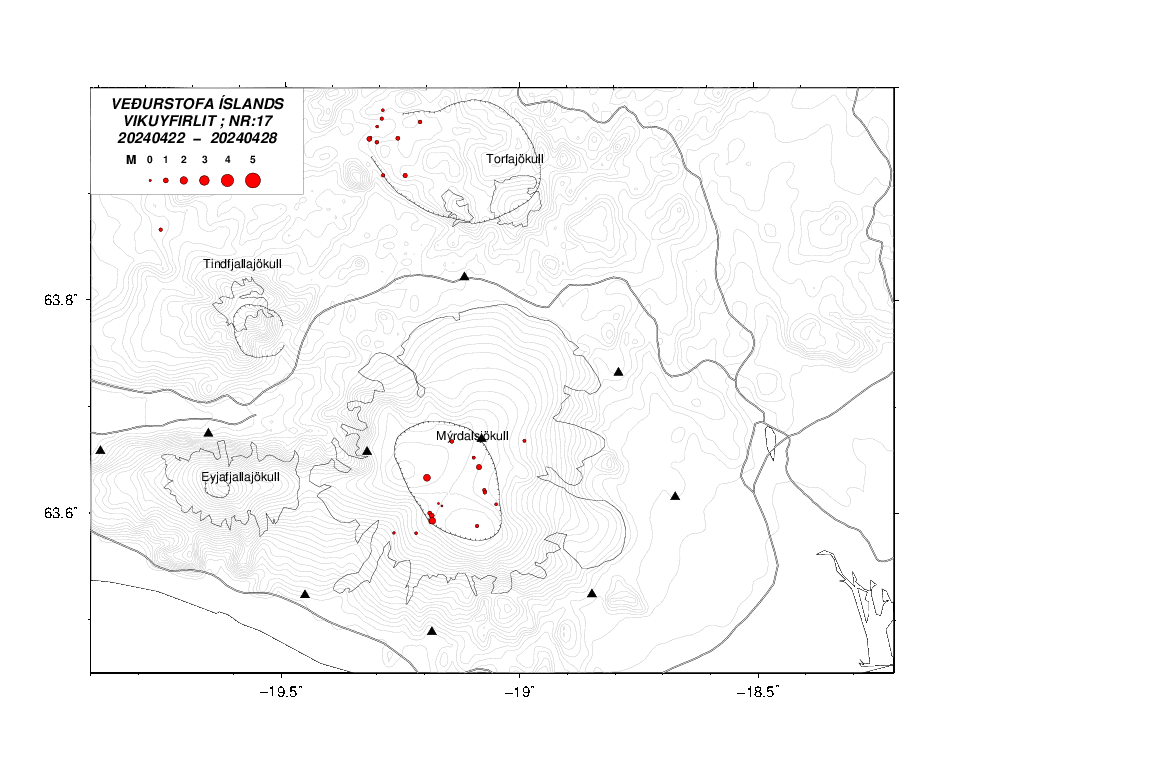
quote:How to keep things hot at Yellowstone and Katla: Just add water
Two volcanoes that get the interwebs all hot and bothered have made the news in the last week. First, Katla in Iceland produced some glacial flooding (jökulhlaups) that followed some earthquakes. Second, over at everyone’s favorite caldera, Yellowstone, there has been a lot of buzz over roads melting due to heat from the volcano. Now, as odd as it might seem, these two events are connected by the same process: geothermal (and hydrothermal) activity. When it comes down to it, most volcanoes are sitting on big heat sources. One way to lose the heat is by erupting, but probably the most important way to lose the heat is by the circulation of water in the crust. This water help keep things hot by efficiently moving heat generated by the magma that might be 5-6 kilometers (or more) below the surface and bringing it up to the surface — all of this happening when there is no threat of an eruption.
When you examine the history of a volcano, you’ll quickly see it spends much of its existence not erupting. However, during those periods of quiet between eruptions, there is plenty going on beneath the volcano. The magma is cooling and releasing heat and fluids in the surrounding rocks, causing the development of a hydrothermal system above the cooling magma. This is usually the top 5 kilometers of crust above the magma, where cracks in the rocks can help hot fluids rise from the magma and cool fluids (like rainwater or snowmelt) percolate down into the crust and heat up. So, how hot does it get under a volcano? Well, by examining the exposed innards of extinct volcanoes, we can see how much alteration the rocks and minerals have experienced. This is an important step in understand how certain valuable ore deposits, like porphyry copper, form above bodies of magma under volcanoes.
Looking at these zones of hydrothermal alteration, it is clear that the subsurface temperatures get hot — upwards of 300-500°C even multiple kilometers above any cooling magma body. Now, that heat isn’t getting there by conduction alone. Rock isn’t a very good conductor, so heat won’t travel far. However, if you heat up water traveling through cracks in the rock, you can transport a lot of heat upwards. That’s because water has a high heat capacity – think about how the Gulf Stream brings warm water from the tropics to the North Atlantic to keep Europe warm. That is what allows all the alteration to occur and for hydrothermal systems to form. These hydrothermal systems are constantly changing based on the seasons (thanks to changing access to water percolating into the crust), seismicity that opens and closes cracks and yes, even magma moving. However, most of the time, the changes in the system are merely due to new routes these hot fluids take to reach the surface.
What are the manifestations of these hydrothermal fluids? You see some of them at most active volcanoes: steam vents (fumaroles), hot springs, geysers, mud pots. Each is a different way heat escapes the ground. Steam vents tend to be the hottest, releasing steam (with other volcanic gases) at temperatures of 300-500°C. Geysers are explosions of superheated water, so they will be ~100°C. Hot springs and mud pots tend to be much cooler, with temperatures usually 20-70°C, depending of the vigor of the spring or geyser.
Glacial flooding from underneath Mýrdalsjökull in Iceland, seen at Múlakvísl. Photo by the Icelandic Met Office.
Glacial flooding from underneath Mýrdalsjökull in Iceland, seen at Múlakvísl. Photo by the Icelandic Met Office.
So, even moving water through the crust can bring a lot of heat upwards and that is common at most volcanoes — as are changes in the hydrothermal system over time. So, what is happening at Katla and Yellowstone?First, at Katla, the hydrothermal system works underneath a large ice cap (Mýrdalsjökull). Especially during warmer months, more water can percolate into the crust, causing changes in the hydrothermal system (which, by itself, can generate earthquakes). If more heated water and steam is allowed to reach the surface, then more ice can melt and pond until it is catastrophically released as a flood. Reports from the Iceland Met Office support this idea – the waters are warm as they come out from under the glacier. However, unlike an eruption-driven event, the melting isn’t accompanied by a continuously increasing number of earthquakes that would betray magma moving. So, the most likely explanation for these floods is increasing melting due to changes in the hydrothermal (geothermal) system, not an eruption. These sorts of floods have happened before during this time of year at Katla, sometimes more dramatic than others.
Now, at Yellowstone, we have a different manifestation of the same thing. The news has splashed images of melting roads on Firehole Lake Drive in an area with intense hydrothermal activity. The usual suspects (e.g., the Yellowstone disaster groupies) want to say this is evidence that an eruption is in the works. Well, again, sorry to disappoint the lunatic fringe, but it isn’t. Instead, this is a sign that the hydrothermal system under Firehole Lake Drive has shifted some — maybe due to the constant seismicity that gently shakes Yellowstone, maybe due to the water table, maybe even due to the road itself — and now heat is coming up directly under the road. Now, asphalt like that can melt at temperatures as low at ~50-70°C, so well within the range of most hydrothermal features. Measures of the road surface by NPS workers are ~70°C, so we’re well within the range of temperatures needed to melt the road. Just move where that hot spring or fumarole is coming up and boom, you have heat under the road, melting it.
quote:Update on Katla
Few days ago the uncertainty level around glacier rivers that come from Mýrdalsjökull glacier have been cancelled. However the area remains dangerous due to gases that might collect in pockets in low lying areas. So it is not safe to go close to the glacier rivers from Mýrdalsjökull glacier even if the uncertainty level has been cancelled by the authorities.
Today (15-July-2014) an earthquake swarm took place in Katla volcano. Largest earthquake in this swarm had the magnitude of 3,1. Other earthquake that happened where smaller. This earthquake swarm is one of the most dense in the past few weeks and it appears that earthquake activity is once again on the rise in Katla volcano. I am now expecting this earthquake activity to continue. I also think there is a high risk of small eruptions within the Katla volcano caldera. This eruptions would only last for few hours at the most and not even break trough the Mýrdalsjökull glacier. It has to be noted that scientist on duty at Icelandic Meteorology Office does not agree with my opinion. While there is a high risk of this (in my opinion) that this might happen, it does not mean it is going to do so. The best thing that can be done for now is to observe activity in Katla volcano.
If anything more happens. I am going to post update on it soon as possible. Any large earthquakes that happen in Katla volcano do appear clearly on my geophone at Heklubyggð and they can be viewed here. There is also a web camera of Katla / Eyjafjallajökull located here.

http://en.vedur.is/earthquakes-and-volcanism/earthquakes/vatnajokull/#view=table
Earthquake swarms and raised alert for Baroarbunga.
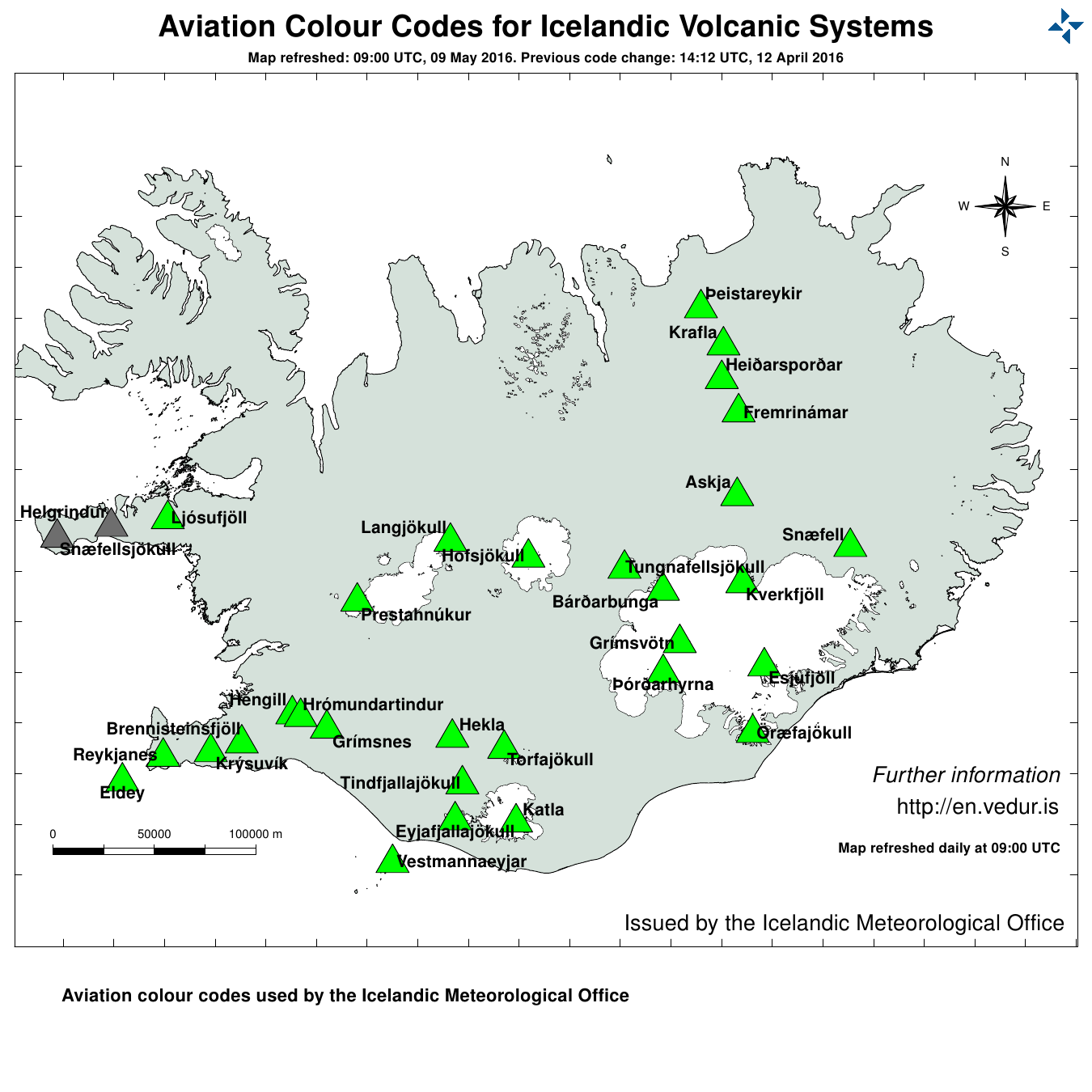
Earthquake swarms and raised alert for Baroarbunga.
PVDA-PTB lid. Sanders supporter. Student psychologie. Interesse voor films, sport, geschiedenis, multimedia, wereldpolitiek, geologie en het weer.
Ik heb er een artikel over gemaakt op mijn site:
http://www.geoweather.eu/vulkanen/verhoogde-alertstatus-voor-bardarbunga/
http://www.geoweather.eu/vulkanen/verhoogde-alertstatus-voor-bardarbunga/
PVDA-PTB lid. Sanders supporter. Student psychologie. Interesse voor films, sport, geschiedenis, multimedia, wereldpolitiek, geologie en het weer.

Ik zat net te kijken op en.vedur.is omdat ik dinsdag op vakantie ga naar IJsland. Zag dit inderdaad ook voorbij komen. Ik hou dit topic even in de gaten!
Wer lesen kann, ist klar im Vorteil.
http://www.jonfr.com/volcano/
Onze IJslandse collega is ook wakkergeschoten met twee berichten. Hij spreekt over een mogelijke eruptie onder de gletsjer.
Blijven opvolgen dus. De media springt er nog niet op in, wellicht doordat de vulkaan niet zo bekend is.
Onze IJslandse collega is ook wakkergeschoten met twee berichten. Hij spreekt over een mogelijke eruptie onder de gletsjer.
Blijven opvolgen dus. De media springt er nog niet op in, wellicht doordat de vulkaan niet zo bekend is.
PVDA-PTB lid. Sanders supporter. Student psychologie. Interesse voor films, sport, geschiedenis, multimedia, wereldpolitiek, geologie en het weer.
Ik zie er wel berichten over staan in de IJslandse online media. Maar de vertalingen daarvan zijn zo onduidelijk dat je er ook niet heel veel extra info uit kunt halen.
Wer lesen kann, ist klar im Vorteil.
http://en.vedur.is/about-imo/news/nr/2936
Op twitter is de storm nu ook begonnen, zowel met de IJslandse als de Engelse benaming.
Op twitter is de storm nu ook begonnen, zowel met de IJslandse als de Engelse benaming.
PVDA-PTB lid. Sanders supporter. Student psychologie. Interesse voor films, sport, geschiedenis, multimedia, wereldpolitiek, geologie en het weer.

In the past few hours the harmonic tremors around Bárðarbunga volcano have been dropping slowly. The drop in harmonic tremor has not been followed by drop in earthquake activity. At least that is not the case when this is written. This means that the magma that is on the move there still has not yet found a pathway to the surface, even if some small part of it has done so in possibly in one or two eruptions vents under the thick glacier. If the harmonic tremor stops completely without the earthquake activity stopping it means that magma is still on the move there and it might look for a new pathway to the surface. When and where that might happen is impossible to know at current time, but once the magma has clear path to the surface, even if it is under a glacier all earthquake activity is going to stop (for most part).
http://www.jonfr.com/volcano/?p=4683
http://www.jonfr.com/volcano/?p=4683
Earthquake activity continues in Bárðarbunga volcano and shows no signs of slowing down. Two swarms have appeared in Bárðarbunga volcano system. One is at location called Kistufell, while the second one is at the south-east part of the Bárðarbunga volcano. Increase in earthquake activity in south-east part of Bárðarbunga volcano seems to increase harmonic tremor. I am not sure why that is. As of now (when this is written) no eruption has been confirmed in Bárðarbunga volcano, the volcano is under glacier so confirmation is difficult at best.
Earthquake activity in Bárðarbunga volcano. The two groups of earthquake swarms are visible on this map. Copyright of this image belongs to Icelandic Met Office.
Earthquake activity has been dense as can be seen here. Copyright of this image belongs to Icelandic Met Office.
Harmonic tremor remains high on the Dyngjuháls SIL station. Why that is not clear at the moment. Copyright of this image belongs to Icelandic Met Office.
Harmonic tremor remains high at Vonarskarð SIL station. It has dropped little during the day, but it remains constant at current time. Copyright of this image belongs to Icelandic Met Office.
So far no major eruption has started in Bárðarbunga volcano. That might change without warning as this activity continues. There is a risk of large earthquakes taking place before such eruption. Since the crust in this part of Iceland is thick (up to 40 km thick) and last eruption in Bárðarbunga volcano took place in the year 1794. The eruption in the year 1910 took place in a volcano named Hamarinn and is south-west of Bárðarbunga volcano. Fissure eruptions are also a feature that Bárðarbunga volcano has, if this activity is going to result in such eruption is something that is impossible to know at current time.
http://www.jonfr.com/volcano/ (bericht wel volledig overgenomen nota bene op 4 uur gepost vannacht

Earthquake activity in Bárðarbunga volcano. The two groups of earthquake swarms are visible on this map. Copyright of this image belongs to Icelandic Met Office.

Earthquake activity has been dense as can be seen here. Copyright of this image belongs to Icelandic Met Office.

Harmonic tremor remains high on the Dyngjuháls SIL station. Why that is not clear at the moment. Copyright of this image belongs to Icelandic Met Office.

Harmonic tremor remains high at Vonarskarð SIL station. It has dropped little during the day, but it remains constant at current time. Copyright of this image belongs to Icelandic Met Office.
So far no major eruption has started in Bárðarbunga volcano. That might change without warning as this activity continues. There is a risk of large earthquakes taking place before such eruption. Since the crust in this part of Iceland is thick (up to 40 km thick) and last eruption in Bárðarbunga volcano took place in the year 1794. The eruption in the year 1910 took place in a volcano named Hamarinn and is south-west of Bárðarbunga volcano. Fissure eruptions are also a feature that Bárðarbunga volcano has, if this activity is going to result in such eruption is something that is impossible to know at current time.
http://www.jonfr.com/volcano/ (bericht wel volledig overgenomen nota bene op 4 uur gepost vannacht
PVDA-PTB lid. Sanders supporter. Student psychologie. Interesse voor films, sport, geschiedenis, multimedia, wereldpolitiek, geologie en het weer.

PVDA-PTB lid. Sanders supporter. Student psychologie. Interesse voor films, sport, geschiedenis, multimedia, wereldpolitiek, geologie en het weer.

Meer bevingen als gister dus...quote:Op zondag 17 augustus 2014 20:18 schreef TheRussianBear het volgende:
http://www.jonfr.com/volcano/?p=4702
Update

klinkt goed 
DeLuna vindt me dik ;(
Op zondag 22 juni 2014 12:30 schreef 3rdRock het volgende:
pas als jullie gaan trouwen. nu ben je gewoon die Oom Rubber die met onze mama leuke dingen doet :)
Op zondag 22 juni 2014 12:30 schreef 3rdRock het volgende:
pas als jullie gaan trouwen. nu ben je gewoon die Oom Rubber die met onze mama leuke dingen doet :)
oh myquote:
http://www.jonfr.com/volcano/?p=4702
Update
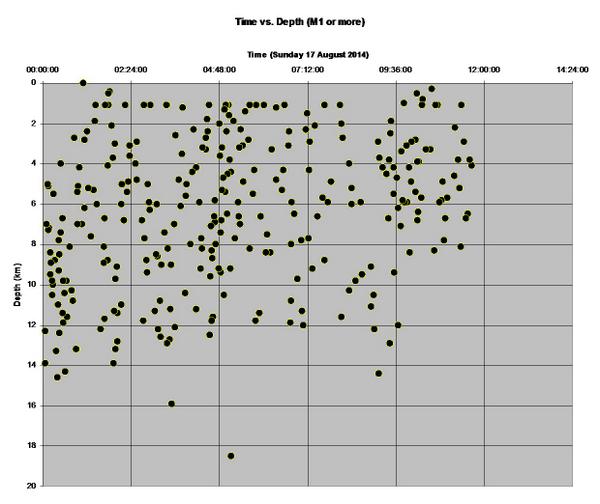
twitter:subglacial twitterde op zondag 17-08-2014 om 14:05:23 #Bárðarbunga. 1/2 Rough time v depth eq plot for Sun Aug 17 shows fewer deep eqs but no obvious increase in eq rate. http://t.co/X93NCJKTs2 reageer retweet

twitter:subglacial twitterde op zondag 17-08-2014 om 14:39:16 #Bárðarbunga. Getting simpler? Latest map from IMO shows 2 main eq clusters - one to N and one to E of volcano. 1/2 http://t.co/Ypwuis8lDh reageer retweet

twitter:gislio twitterde op zondag 17-08-2014 om 20:55:49 Roads to #Herdubreidarlindir F88 & part of #Gaesavatnaleid F910 closed due to possible #eruption #Bardarbunga #ashtag http://t.co/ca607hxbJ3 reageer retweet
 Roads to
 twitter:eruptionsblog twitterde op zondag 17-08-2014 om 21:01:46 Update on the IMO website: "Intense earthquake swarm continues at Barðarbunga. Presently there are no signs of magma moving to the surface." reageer retweet
 Update on the IMO website: "Intense earthquake swarm continues at Barðarbunga. Presently there are no signs of magma moving to the surface."
 twitter:eruptionsblog twitterde op zondag 17-08-2014 om 21:40:44 New post on the earthquake swarm over at Icelands Barðarbunga. Lots of shaking, not much else so far: http://t.co/HYGbjbh7dI reageer retweet
[ Bericht 15% gewijzigd door bwt op 18-08-2014 09:19:22 ]
<a href="http://goo.gl/q8fhTe" target="_blank">FAQ?</a>
<a href="http://goo.gl/gYvZFq" target="_blank">Geel is een zonnige en vrolijke kleur, als hij tenminste enigszins warm is gekleurd en wat naar het oranje neigt</a>
<a href="http://goo.gl/gYvZFq" target="_blank">Geel is een zonnige en vrolijke kleur, als hij tenminste enigszins warm is gekleurd en wat naar het oranje neigt</a>
Zeker @subglacial volgen op Twitter.
PVDA-PTB lid. Sanders supporter. Student psychologie. Interesse voor films, sport, geschiedenis, multimedia, wereldpolitiek, geologie en het weer.
Ik las ook op Twitter dat het gebied ten noorden van de vulkaan inmiddels is gesloten.
Hoe dan ook, ben net ingecheckt voor de vlucht voor morgen en ga maar gewoon mijn tas inpakken. Als er iets gebeurt, dan maar als ik er ben, niet dat we morgen onderweg weer terug naar Schiphol moeten vliegen.
Hoe dan ook, ben net ingecheckt voor de vlucht voor morgen en ga maar gewoon mijn tas inpakken. Als er iets gebeurt, dan maar als ik er ben, niet dat we morgen onderweg weer terug naar Schiphol moeten vliegen.

Wer lesen kann, ist klar im Vorteil.
twitter:subglacial twitterde op maandag 18-08-2014 om 14:06:12 #Bárðarbunga IMO statement confirms that intrusion (in dyke form) is taking place. No indication of eruption yet. http://t.co/hQZyf35QHu reageer retweet
twitter:eruptionchaser twitterde op maandag 18-08-2014 om 14:22:07 @subglacial @eruptionsblog #Bárðarbunga alert upgraded to orange on basis of harmonic tremor: http://t.co/YAnkOHGmJn http://t.co/4QL5J1znSS reageer retweet
 @subglacial @
[ Bericht 35% gewijzigd door bwt op 18-08-2014 14:30:00 ]
<a href="http://goo.gl/q8fhTe" target="_blank">FAQ?</a>
<a href="http://goo.gl/gYvZFq" target="_blank">Geel is een zonnige en vrolijke kleur, als hij tenminste enigszins warm is gekleurd en wat naar het oranje neigt</a>
<a href="http://goo.gl/gYvZFq" target="_blank">Geel is een zonnige en vrolijke kleur, als hij tenminste enigszins warm is gekleurd en wat naar het oranje neigt</a>
