POL Politiek
Discussies en diepgaande gesprekken over de politiek in de breedste zin van het woord kun je hier voeren.



Hahahahaha, wat een flauwekul.quote:Op donderdag 23 juli 2026 20:30 schreef michaelmoore het volgende:
de grootste bedreiging voor de natuur en voor Nederland is het feit dat ambtenaren van drinkwaterbedrijveen en de waterschappen de pest aan elkaar hebben en niet samenwerken

Als de gletsjers in Zwitserland en Oostenrijk gesmolten zijn , dan komt er in de zomer haast geen rivierwater meer naar beneden en de waterschappen zijn nog steeds druk met al ons drinkwater direct de Waddenzee in te laten lopenquote:
[..]
Hahahahaha, wat een flauwekul.
Dan hebben de waterschappen hun werk gedaan, zo zijn ze getraind
[ Bericht 0% gewijzigd door michaelmoore op 24-07-2026 11:25:53 ]
AI-overzicht Volgens onderzoeken behoren autonome, gezonde westerse ouderen met een goed pensioen tot meest tevreden mensen ter wereld. Deze combinatie van factoren zorgt voor een hoog welzijn.
Daarom hebben ze bijvoorbeeld het IJsselmeerniveau reeds verhoogd?quote:
[..]
Als de gletsjers in Zwitserland en Oostenrijk gesmolten zijn , dan komt er in de zomer haast geen rivierwater meer naar beneden en de waterschappen zijn nog steeds druk met al ons drinkwater direct de Waddenzee in te laten lopen
Dan hebben de waterschappen hun werk gedaan, zo zijn ze getraind
ja ze kunnen in plaats van , zonder boeren, geen voedsel (wat grote onzin is) , beter zeggen,quote:
[..]
Daarom hebben ze bijvoorbeeld het IJsselmeerniveau reeds verhoogd?
zonder regen geen Europese snijmais voor Europese koeien
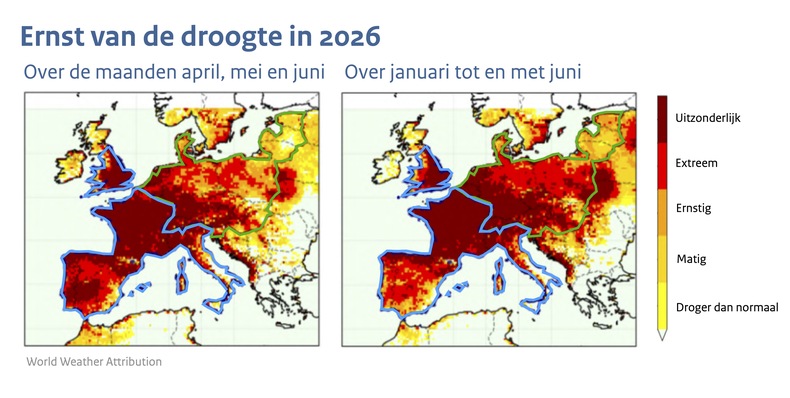
quote:Kaartjes van Europa met in kleur de ernst van de droogte in de periode april, mei juni 2026 en januari tot en met juni 2026.
De westelijke regio omvat o.a. Spanje en Portugal, Frankrijk, Italie, Engeland en Wales en is blauw omlijnd, de oostelijke regio omvat oa Nederland, Duisland, Zwitserland en oostelijker gelegen landen tot aan de Baltische staten en is groen omlijnd.
Tekort aan bodemvocht
De Europese droogte is veroorzaakt door langdurige neerslagtekorten en extreme hitte.
De droogte legt een zware druk op de landbouw: historische oogstverliezen, waaronder de laagste maïsoogst in Frankrijk in 50 jaar en het verlies van meer dan een miljoen hectare maïs in Roemenië.
Lage oogstopbrengsten kunnen resulteren in hogere voedselprijzen.
.
Tegelijkertijd verstoren lage waterstanden in rivieren het goederenvervoer, terwijl waterschaarste de energieproductie in regio's die afhankelijk zijn van waterkracht bedreigt.
Laagste maïsoogst in Frankrijk in 50 jaar
Bij weinig regen en veel verdamping droogt de bodem uit.
In de westelijke regio wordt geschat dat de bodemvochttekorten van april tot en met juni in het huidige klimaat ongeveer eens in de 5 jaar voorkomen.
Een analyse van waarnemingen en klimaatmodellen laat zien dat een dergelijke bodemdroogte ongeveer 5 keer waarschijnlijker is geworden door de opwarming van de aarde met 1,4 graden sinds het begin van de vorige eeuw.
Op de zomer aan stijgt de melkprijs altijdquote:AI-overzicht
Dat klopt, de melkprijs vertoont historisch gezien een duidelijk seizoenpatroon waarbij de prijzen richting de zomer en in het vroege najaar vaak licht stijgen.
Dit fenomeen wordt gestuurd door biologische en markttechnische factoren.
Waarom de melkprijs stijgt richting de zomer
Lagere melkaanvoer door warmte:
Koeien produceren bij warm weer en hitte minder melk.
quote:De Europese melkprijs is na tien maanden van dalingen in mei gestegen €40,14 per 100 kilo.
Hiermee is de neergaande trend tijdelijk doorbroken, nadat de prijs in april 2026 nog was gedaald tot een gemiddelde van €39,76.
Prijsverloop en Cijfers
Mei 2025: piek van €50,29 per 100 kilo.
April 2026: dieptepunt van €39,76 per 100 kilo.
[ Bericht 1% gewijzigd door michaelmoore op 25-07-2026 09:55:16 ]
AI-overzicht Volgens onderzoeken behoren autonome, gezonde westerse ouderen met een goed pensioen tot meest tevreden mensen ter wereld. Deze combinatie van factoren zorgt voor een hoog welzijn.
De D66 minister van Essen kon beter 1000 Nederlandse veehouders uitkopen in de buurt van "kwetsbare" natuurgebieden dan het verlagen van een algemene koeien-norm van 2,7 koe naar 2,6 koe per hectare over heel Nederland
Nu moeten er een aantal kleine veehouders verplicht overstappen van veehouder naar aardappelboer of alle koeien weg doen, gras geel spuiten , omploegen en al land inzaaien voor snijmais
zomaar 6% minder salaris dat is voor niemand acceptabel, ook voor een minister niet
Wat is nu het nut van die lagere koeien-norm, geen mens die het weet
Minder grasland en meer snijmais , waarom????
Minister van Essen weet het ook niet , heeft ook geen reden aangevoerd
Het aantal koeien daalde al van 5 miljoen naar 3,5 miljoen terwijl de bevolking in die tijd met 3 miljoen groeide
Omdat de Europese melkprijs voor Nederland al te laag is door overheidsmaatregelen hier
[ Bericht 15% gewijzigd door michaelmoore op 26-07-2026 10:20:39 ]
Nu moeten er een aantal kleine veehouders verplicht overstappen van veehouder naar aardappelboer of alle koeien weg doen, gras geel spuiten , omploegen en al land inzaaien voor snijmais
zomaar 6% minder salaris dat is voor niemand acceptabel, ook voor een minister niet
Wat is nu het nut van die lagere koeien-norm, geen mens die het weet
Minder grasland en meer snijmais , waarom????
Minister van Essen weet het ook niet , heeft ook geen reden aangevoerd
Het aantal koeien daalde al van 5 miljoen naar 3,5 miljoen terwijl de bevolking in die tijd met 3 miljoen groeide
Omdat de Europese melkprijs voor Nederland al te laag is door overheidsmaatregelen hier
quote:AI-overzicht
Het totaal aantal runderen (runderen in het algemeen) in Nederland is de afgelopen 40 jaar (sinds midden jaren 80) met ruim 1,5 miljoen dieren afgenomen volgens cijfers van het Centraal Bureau voor de Statistiek.
Het totale rundvee daalde van ongeveer 5,2 miljoen in 1980 naar circa 3,55 miljoen runderen recentelijk.
Belangrijke Trends en Cijfers
Totaal aantal runderen: Gedaald van ruim 5,2 miljoen (1980) naar ongeveer 3,55 miljoen runderen.
Dit is een afname van meer dan 1,6 miljoen runderen in totaal.
Melk- en kalfkoeien: Het aantal melkkoeien daalde fors na de invoering van de Europese melkquota in 1984, met schommelingen rondom de afschaffing van deze quota in 2015 en latere inkrimpingen door strengere mest- en fosfaatregels.
[ Bericht 15% gewijzigd door michaelmoore op 26-07-2026 10:20:39 ]
AI-overzicht Volgens onderzoeken behoren autonome, gezonde westerse ouderen met een goed pensioen tot meest tevreden mensen ter wereld. Deze combinatie van factoren zorgt voor een hoog welzijn.
https://www.bnr.nl/nieuws(...)houden-moeten-worden
Laat Nederland zich maar eens op echte problemen gaan richten in plaats van de collectieve stikstof en wolven waanzin
Mijn eikenboom laat nu (juli) al haar blad vallen door de droogte
Daar helpt tegels wippen in de binnenstad van Amsterdam echt niet bij
[ Bericht 4% gewijzigd door michaelmoore op 26-07-2026 15:36:54 ]
Laat Nederland zich maar eens op echte problemen gaan richten in plaats van de collectieve stikstof en wolven waanzin
Mijn eikenboom laat nu (juli) al haar blad vallen door de droogte
Daar helpt tegels wippen in de binnenstad van Amsterdam echt niet bij
Gigantisch grote waterbekkens bij Lobith ipv het wegspoelen van ons drinkwater naar de Waddenzeequote:Droogte in de polder: ‘We zullen kampioen water vasthouden moeten worden’
Auteur: Arjan Terpstra
Effecten van klimaatverandering hebben grote invloed op het denken over watermanagement in de Nederlandse polders.
Toenemende droogte, de zeespiegelstijging, maar ook het zouter worden van het grondwater in het westen leveren hoofdbrekens op.
Op veel plekken zal de landbouw in droge jaren echt in de problemen gaan komen.;
quote:AI-overzicht
De 6 nieuwe megapompen in de Afsluitdijk kunnen samen op vol vermogen maar liefst 275.000 liter water per seconde vanuit het IJsselmeer de Waddenzee in pompen.
Deze gigantische pompen zijn geplaatst bij het nieuwe gemaal in Den Oever om Nederland te beschermen tegen extreem hoogwater en de gevolgen van zeespiegelstijging.
Belangrijke feiten over de pompen
Snelheid: Ze vullen een Olympisch wedstrijdzwembad in slechts 9 seconden.
Locatie: Het pompgemaal staat bij Den Oever op de Afsluitdijk.
Formaat: Elke individuele pomp is bijna 12 meter hoog en weegt 90 ton.
Doel: Water afvoeren als spuien (vrijstromend lozen) bij vloed op de Waddenzee niet meer lukt.
[ Bericht 4% gewijzigd door michaelmoore op 26-07-2026 15:36:54 ]
AI-overzicht Volgens onderzoeken behoren autonome, gezonde westerse ouderen met een goed pensioen tot meest tevreden mensen ter wereld. Deze combinatie van factoren zorgt voor een hoog welzijn.


Laat minder tegels nou net best effectief zijn om droogte te voorkomen. Ook in de binnenstad.quote:
https://www.bnr.nl/nieuws(...)houden-moeten-worden
Laat Nederland zich maar eens op echte problemen gaan richten in plaats van de collectieve stikstof en wolven waanzin
Mijn eikenboom laat nu (juli) al haar blad vallen door de droogte
Daar helpt tegels wippen in de binnenstad van Amsterdam echt niet bij
[..]
Gigantisch grote waterbekkens bij Lobith ipv het wegspoelen van ons drinkwater naar de Waddenzee
[..]
Ongeïnteresseerd maar toch aanwezig.
minder tegels veroorzaakt onkruid en mensen gooien er hun patat en shoarma in en dan komen er overal rattenquote:
[..]
Laat minder tegels nou net best effectief zijn om droogte te voorkomen. Ook in de binnenstad.
da heeft geen zak met watervooraden te maken
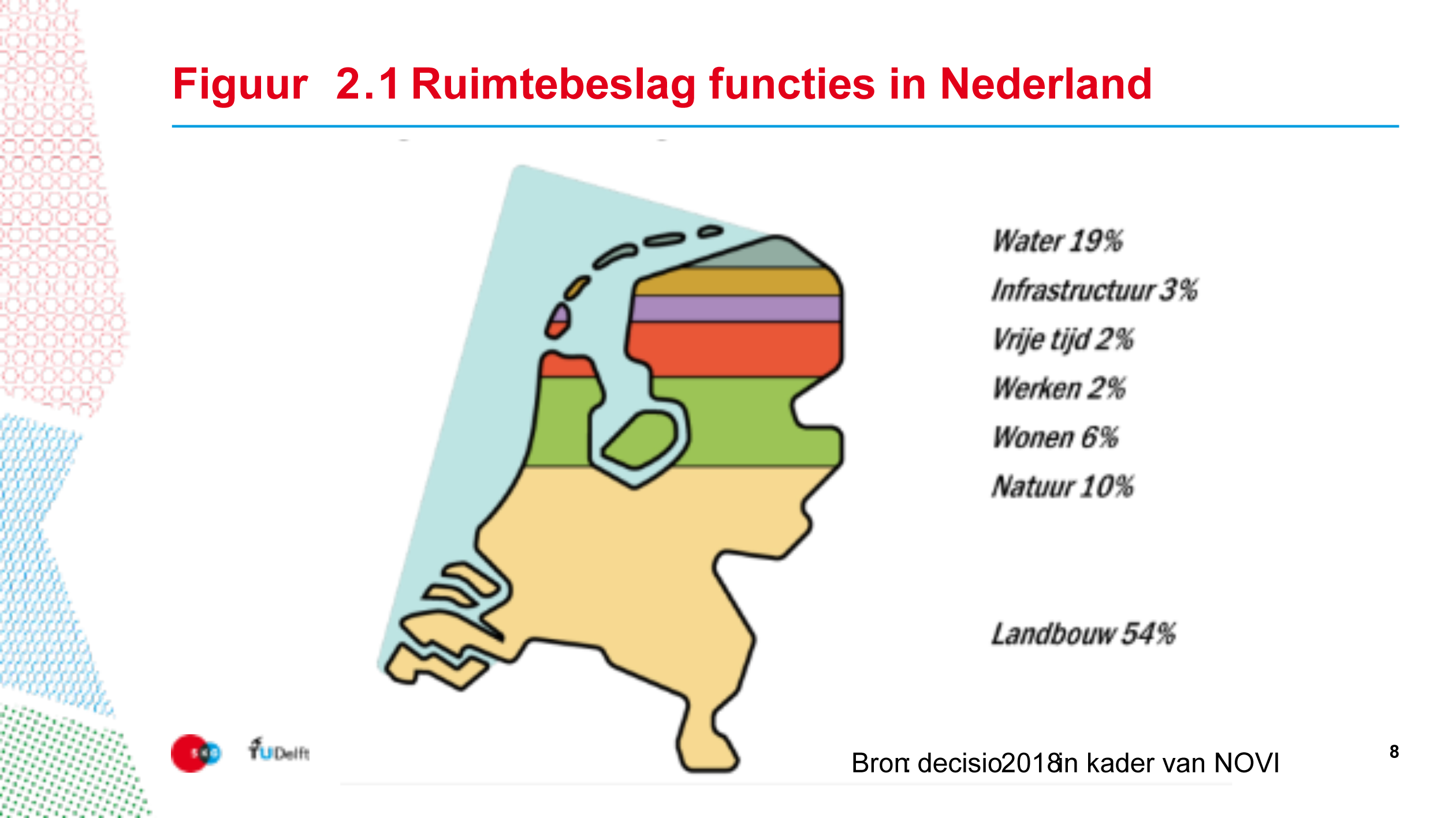
Nederland is 80% weiland landbouw, en daken van distributiecentra en water
het gaat om het opvangen van water dat Nederland binnenkomt en het niet onmiddellijk afvoeren naar de Waddenzee
quote:AI-overzicht
Vanuit onze buurlanden stroomt er gemiddeld 2,5 miljoen liter water per seconde (2.500 kubieke meter per seconde) via de grote rivieren Nederland binnen.
Dit is te vergelijken met iets meer dan één olympisch zwembad aan water per seconde.
Omdat dit een jaargemiddelde is, verschilt de werkelijke hoeveelheid enorm per seizoen en weersomstandigheid.
De verdeling per rivier (gemiddeld)
Het overgrote deel van het water komt via twee grote rivieren ons land binnen:
De Rijn (bij Lobith): Is goed voor veruit het meeste water, met een normaal gemiddelde van zo'n 2,0 miljoen liter (2.000 m³) per seconde.
De Maas (bij Eijsden): Levert gemiddeld zo'n 250.000 liter (250 m³) per seconde.
AI-overzicht Volgens onderzoeken behoren autonome, gezonde westerse ouderen met een goed pensioen tot meest tevreden mensen ter wereld. Deze combinatie van factoren zorgt voor een hoog welzijn.
tegels weghalen in je tuin is linkse onzin net als voedselbossenquote:
[..]
Laat minder tegels nou net best effectief zijn om droogte te voorkomen. Ook in de binnenstad.
Regenwater dat de afvoerput ingaat gaat toch wel de grond in of naar de gemeentelijke waterzuivering die er drinkwater van maakt
en dat gaat linearecta naar de Noordzee en de Waddenzee, er is iets helemaal foutquote:Dit is te vergelijken met iets meer dan één olympisch zwembad aan water per seconde
quote:AI-overzicht
De 6 nieuwe megapompen in de Afsluitdijk kunnen samen op vol vermogen maar liefst 275.000 liter water per seconde vanuit het IJsselmeer de Waddenzee in pompen.
Deze gigantische pompen zijn geplaatst bij het nieuwe gemaal in Den Oever om Nederland te beschermen tegen extreem hoogwater en de gevolgen van zeespiegelstijging.
[ Bericht 7% gewijzigd door michaelmoore op 26-07-2026 17:33:29 ]
AI-overzicht Volgens onderzoeken behoren autonome, gezonde westerse ouderen met een goed pensioen tot meest tevreden mensen ter wereld. Deze combinatie van factoren zorgt voor een hoog welzijn.

Tja het is geen gebruikelijk FOK onderbuik gereutel , Fokkers hebben een hekel aan objectief lezen en aan AI feitenquote:
https://www.rijkswatersta(...)op-extreem-hoogwater
https://www.trouw.nl/binn(...)n-we-nu-al~baba9398/quote:AI-overzicht
De 6 nieuwe megapompen in de Afsluitdijk kunnen samen op vol vermogen maar liefst 275.000 liter water per seconde vanuit het IJsselmeer de Waddenzee in pompen.
Deze gigantische pompen zijn geplaatst bij het nieuwe gemaal in Den Oever om Nederland te beschermen tegen extreem hoogwater en de gevolgen van zeespiegelstijging.

Nederland moet grote waterbekkens bij Lobith creëren ipv het doorspoelen van vers schoon zoetwater naar de Noordzee en Waddenzee
Over 5 jaar begint de aanvoer van vers schoon bergwater uit de gletsjers in Oostenrijk op te drogen
quote:AI-overzicht
Vanuit onze buurlanden stroomt er gemiddeld 2,5 miljoen liter water per seconde (2.500 kubieke meter per seconde) via de grote rivieren Nederland binnen.
Dit is te vergelijken met iets meer dan één olympisch zwembad aan water per seconde.
Omdat dit een jaargemiddelde is, verschilt de werkelijke hoeveelheid enorm per seizoen en weersomstandigheid.
De verdeling per rivier (gemiddeld)
Het overgrote deel van het water komt via twee grote rivieren ons land binnen:
De Rijn (bij Lobith): Is goed voor veruit het meeste water, met een normaal gemiddelde van zo'n 2,0 miljoen liter (2.000 m³) per seconde.
De Maas (bij Eijsden): Levert gemiddeld zo'n 250.000 liter (250 m³) per seconde.
[ Bericht 16% gewijzigd door michaelmoore op 28-07-2026 09:51:53 ]
AI-overzicht Volgens onderzoeken behoren autonome, gezonde westerse ouderen met een goed pensioen tot meest tevreden mensen ter wereld. Deze combinatie van factoren zorgt voor een hoog welzijn.
in de Zwitserse gletsjers is het vandaag 37 C hoorde ik net
en Nederland maar klagen over brandnetels door stikstof
[ Bericht 20% gewijzigd door michaelmoore op 30-07-2026 17:48:03 ]
en Nederland maar klagen over brandnetels door stikstof
quote:AI-overzicht
Op de Zwitserse gletsjers zelf is het geen 37 °C, maar in de lagere dalen van Zwitserland bereikt het kwik tijdens de huidige hittegolf lokaal inderdaad temperaturen tot wel 37 °C à 40 °C.
Hoewel de extreme hitte zich in de dalen bevindt (zoals in Basel en Genève), zorgt deze intense vierde hittegolf van deze zomer ervoor dat de vorstgrens in de Alpen naar een extreme hoogte van bijna 5000 meter stijgt.
Dit betekent dat het zelfs op de allerhoogste gletsjers en bergtoppen (zoals de Matterhorn en Mont Blanc) ruim boven het vriespunt is, wat rampzinnige gevolgen heeft voor het ijs.
De situatie op en rondom de gletsjers is momenteel kritiek door een combinatie van factoren:
Gevolgen voor de gletsjers en bergen
Extreme smelting:
Door de aanhoudende hittegolven in juni en juli heeft de bekende Rhônegletsjer volgens het Zwitserse monitoringsinstituut Glamos alleen al meer dan vier meter ijs verloren.
[ Bericht 20% gewijzigd door michaelmoore op 30-07-2026 17:48:03 ]
AI-overzicht Volgens onderzoeken behoren autonome, gezonde westerse ouderen met een goed pensioen tot meest tevreden mensen ter wereld. Deze combinatie van factoren zorgt voor een hoog welzijn.

Mooi stukje aanpassen, zo kan het ook. Naast maatregelen om droogte tegen te gaan.
https://nos.nl/artikel/26(...)-de-bodem-te-zout-isquote:Meer quinoa uit Nederland: interessant alternatief als de bodem te zout is
Akkerbouwer Renze Rispens kwam het tegen in een vakblad en kort daarna stond het op zijn land: quinoa. Het is gezond, rijk aan eiwitten en het kan goed tegen verzilting. Door droogte hebben steeds meer boeren in de kustprovincies daar last van. Inmiddels verbouwen meer dan 24 boeren in Nederland het Zuid-Amerikaanse zaad.
Het bedrijf van Rispens staat tegen de zeedijk bij het Groningse Vierhuizen. Het is een gebied dat altijd al last had van verzilting, waarbij de bodem zouter wordt. "Dat wordt er in de toekomst niet beter op natuurlijk", zegt hij. Quinoa leek hem daarom goed om toe te voegen aan zijn gewassen.
Door droogte is er te weinig zoet water om het zoute water van de zee tegen te houden. Ook kan zout omhoogkomen als het erg droog is. Verzilting is een groot probleem voor de landbouw en de natuur langs de kust, want planten kunnen slecht tegen zout water. Dat terwijl Nederland juist vaker en langduriger droogte kan verwachten door klimaatverandering.
Interessante oplossing
Te veel zout in de bodem beïnvloedt de akkerbouw dus enorm. Uien kunnen er slecht tegen en ook de opbrengst van aardappelen wordt minder. "Er zijn allerlei ingenieuze oplossingen om toch uien te telen, maar daar zitten grenzen aan", ziet onderzoeker Robert van Loo van Wageningen University & Research. "Op een gegeven moment kan het niet meer en dan is quinoa financieel interessant voor een boer."
Door partner GreenFood50 wordt Van Loo ook wel 'Mister Quinoa' genoemd. In de jaren 90 is hij begonnen met het veredelen van quinoa. Daarvoor gebruikte hij twee soorten: een uit Ecuador en de ander uit Chili. De dagen in Nederland zijn langer dan in Ecuador, iets waar het quinoazaad uit die regio niet tegen kon.
Het Chileense zaad had een ander probleem. Dat was te bitter, wat in Zuid-Amerika mechanisch en met water wordt verwijderd. "Maar dat is veel te duur in Europa." Daarom heeft Van Loo de twee rassen met elkaar gekruist. "Dat is de basis van de Europese teelt."
Quinoa als zoutkampioen
Quinoa is duizenden jaren geleden ontstaan langs de randen van het Titicacameer in de Andes. Dat was ooit een zoutwatermeer, maar het zout is inmiddels verdund en weggelopen. Door evolutie in die regio is quinoa zo zouttolerant geworden.
Quinoa kan prima overleven als er 12 gram 'keukenzout' in een liter water zit, berekende Van Loo. Ter vergelijking: aardappelen krijgen het al moeilijk bij 1 gram zout per liter.
De meeste boeren die quinoa telen hebben een contract met GreenFood50, het bedrijf dat is opgericht om lokaal geteelde quinoa te gaan verkopen. Oprichter Marc Arts: "We zijn van nul begonnen. Nu hebben onze boeren ongeveer 200 hectare aan quinoa." Dat levert 600 ton quinoa per jaar op. Naast deze 24 boeren zijn er nog enkele zelfstandige boeren die quinoa telen.
Dat er inmiddels genoeg quinoa beschikbaar is in Nederland om een afzetmarkt te creëren, is te merken. Jumbo heeft besloten om met het huismerk alleen nog maar biologische quinoa uit Nederland te verkopen. De komende drie jaar heeft de supermarkt een contract met twaalf Nederlandse boeren via GreenFood50.
Het kost momenteel meer geld om Nederlandse quinoa in te kopen dan het zaad uit Zuid-Amerika, zegt duurzaamheidsmanager Marjolein Verkerk van Jumbo. "Maar we hebben er vertrouwen in dat dit uiteindelijk rechttrekt."
Hoeveel quinoa nu wordt gegeten in Nederland is onduidelijk. Jumbo wil de exacte verkoopcijfers niet delen. "Maar jaarlijks verkopen we in elk geval honderdduizenden pakken van ons huismerk", zegt Verkerk.
Nicheproduct
De hype rondom quinoa ontstond in Nederland in 2013, herinnert Van Loo zich. Het was niet bij iedereen populair of zoals Ramon Cijffers van GreenFood50 het verwoordt: "Het had een soort geitenwollensokken-imago." Beiden vinden dat quinoa nu een stuk gewoner is geworden. "Het ligt overal en veel meer mensen kopen het", aldus Van Loo.
Het is nog wel een nicheproduct, erkent Rispens, die vorig jaar is begonnen met quinoa. "Maar dat kan best groeien. En die plantaardige eiwitten zijn helemaal in." En zelfs met de huidige droogte staat de quinoa op de akkers van Rispens er goed bij.
Ongeïnteresseerd maar toch aanwezig.
dat is leuk voor de qunoaquote:Op zondag 2 augustus 2026 16:03 schreef Cyan9 het volgende:
Mooi stukje aanpassen, zo kan het ook. Naast maatregelen om droogte tegen te gaan.
[..]
https://nos.nl/artikel/26(...)-de-bodem-te-zout-is
en de snijmais, de aardappel , soja, suikerbieten , fruitbomen ,de bloemen sector en ons drinkwater ??
quote:AI-overzicht
Zout in de grond zorgt voor een gemiddeld verlies van dertig procent aan opbrengst bij aardappelen.
Dit verlies kan in de praktijk uiteenlopen van tien tot wel zestig procent.
Gevolgen van zout voor de aardappel
Groei:
Zout in de bodem remt de groei van jonge uitlopers en de hele plant.
Bladeren:
Het opgenomen zout hoopt zich vooral op in de bladeren van de aardappelplant.
Schade:
De aardappel is slechts matig tolerant voor zout, waardoor verzilting direct ingrijpt op de uiteindelijke oogst.
quote:AI-overzicht
Ja, tarweplanten kunnen zoutbestendig zijn, hoewel reguliere tarwe van nature matig gevoelig is voor zoutgehaltes in de bodem.
Door recente wetenschappelijke doorbraken en plantenveredeling zijn er nu specifieke zouttolerante tarwerassen ontwikkeld die goed kunnen overleven en produceren op verzilte landbouwgrond.
Hoe werkt zouttolerantie bij tarwe?
Zouttolerante tarwerassen maken gebruik van specifieke biologische overlevingsmechanismen:
Zoutuitsluiting (Na?-uitsluiting):
De wortels filteren het zout (natrium) grotendeels eruit, zodat het de bladeren niet bereikt en de plant niet vergiftigt.
[ Bericht 6% gewijzigd door michaelmoore op 02-08-2026 21:59:28 ]
AI-overzicht Volgens onderzoeken behoren autonome, gezonde westerse ouderen met een goed pensioen tot meest tevreden mensen ter wereld. Deze combinatie van factoren zorgt voor een hoog welzijn.
Het beste is wachten tot de natuur hersteld is van de droogte voor we de stikstof grens gaan verhogen naar 0,5 MOL per hectare in 2028
Ik vrees dat de natuur in 2028 een kurkdroge zwart geblakerde vlakte is, en de wolven niet weten waar ze het zoeken moeten
Voordeel van de hitte over Europa is dat de melkprijs iets oploopt , ( koeien hebben hun vocht nodig om te zweten)
[ Bericht 12% gewijzigd door michaelmoore op 04-08-2026 23:21:55 ]
Ik vrees dat de natuur in 2028 een kurkdroge zwart geblakerde vlakte is, en de wolven niet weten waar ze het zoeken moeten
Voordeel van de hitte over Europa is dat de melkprijs iets oploopt , ( koeien hebben hun vocht nodig om te zweten)
De friet gaat duur wordenquote:AI-overzicht
De Europese melkprijs in juli 2026 laat per verwerker verschillende noten zien, met een garantieprijs van € 41,25 (gangbaar) en € 44,96 (integrale prijs) per 100 kg bij FrieslandCampina.
Melkprijzen per Zuivelverwerker (Juli 2026)
FrieslandCampina (Gangbaar): Garantieprijs € 41,25; integrale melkprijs € 44,96 per 100 kg.
Bekijk deze YouTube-videoquote:Aardappeltelers in Noord-Holland in de knel door droogte en zoute sloten
[ Bericht 12% gewijzigd door michaelmoore op 04-08-2026 23:21:55 ]
AI-overzicht Volgens onderzoeken behoren autonome, gezonde westerse ouderen met een goed pensioen tot meest tevreden mensen ter wereld. Deze combinatie van factoren zorgt voor een hoog welzijn.
we kunnen de Flevo beter gebruiken voor woningbouw op terpen , met al dat zoute kwelwater
AI-overzicht Volgens onderzoeken behoren autonome, gezonde westerse ouderen met een goed pensioen tot meest tevreden mensen ter wereld. Deze combinatie van factoren zorgt voor een hoog welzijn.
iedere veehouder dit jaar voor straf een koe minder houden, goed zaak van Essen,  topper ,
we zullen van jou ook je salaris 10% korten
In 2028 het kdw percentage verhogen van 0,005 naar 0,006 MOL per hectare , ... misschien,
de stikstof crisis is gigantisch he , al die bramen overal
In Rusland hebben ze ook last van de stikstof crisis , en in Polen ook , daar groeien ook bramen
https://nos.nl/artikel/23(...)orm-ook-in-nederland
[ Bericht 11% gewijzigd door michaelmoore op 15-08-2026 11:44:42 ]
topper , we zullen van jou ook je salaris 10% korten
In 2028 het kdw percentage verhogen van 0,005 naar 0,006 MOL per hectare , ... misschien,
de stikstof crisis is gigantisch he , al die bramen overal
In Rusland hebben ze ook last van de stikstof crisis , en in Polen ook , daar groeien ook bramen
https://nos.nl/artikel/23(...)orm-ook-in-nederland
quote:AI-overzicht
Denemarken hanteert geen vast KDW-percentage (Kritische Depositiewaarde) voor stikstof.
Het land werkt met absolute drempelwaarden voor stikstofdepositie per hectare, variërend van 200 tot 700 gram (14 tot 50 mol) stikstof per hectare per jaar, afhankelijk van de ligging en de hoeveelheid naburige bedrijven.
[ Bericht 11% gewijzigd door michaelmoore op 15-08-2026 11:44:42 ]
AI-overzicht Volgens onderzoeken behoren autonome, gezonde westerse ouderen met een goed pensioen tot meest tevreden mensen ter wereld. Deze combinatie van factoren zorgt voor een hoog welzijn.

Beetje de verwachte reacties:
https://nos.nl/artikel/26(...)rechtszaken-verwachtquote:Verdeelde reacties op rapport over stikstofplannen, nieuwe rechtszaken verwacht
Boeren, bouwers en natuurbeschermers reageren wisselend op de analyse die het Planbureau voor de Leefomgeving (PBL) maakte over de stikstofplannen van het kabinet. Het PBL concludeert dat Nederland niet van het stikstofslot gaat, maar het kabinet wel belangrijke stappen zet. Voor een deel van de boeren zijn de plannen niet haalbaar.
Bouwend Nederland is blij met de beoordeling van het PBL. "Het stikstofpakket haalt Nederland uit de impasse en brengt perspectief", zegt voorman Arno Visser. Het is nu tijd voor "uitwerking en uitvoering".
Het Economisch Instituut voor de Bouw benadrukt dat de problemen rond vergunningverlening nog niet zijn opgelost. De situatie voor de bouw wordt pas echt beter als er voor kleine beetjes stikstof geen vergunning meer nodig is.
Afzwakking van het maatregelenpakket is geen optie, vinden natuurorganisaties. Zo ziet Natuurmonumenten de maatregelen als de "minimale ondergrens van wat nodig is voor natuurherstel". Daar sluit Natuur & Milieu zich bij aan. "Dit pakket is nodig om de balans tussen landbouw en natuur weer te herstellen."
Natuur wordt verbeterd
De natuur gaat er inderdaad op vooruit, blijkt uit de analyse van het PBL. Hoewel in 2035 het stikstofprobleem in slechts 14 van de 120 gebieden helemaal is opgelost, neemt de mate van overbelasting in de andere gebieden wel fors af, is te lezen in het rapport.
Daarvoor moet wel de stikstofuitstoot in 2035 flink lager liggen dan in 2019. Voor de landbouwsector is het doel 42 tot 46 procent minder stikstofuitstoot. Verkeer en industrie moeten de uitstoot straks met de helft verminderen.
Maar Nederland gaat niet direct "van het stikstofslot", wat het kabinet wel graag wilde. "Maar wij kunnen ons ook geen pakket voorstellen dat dit wél kan", zegt het PBL daarover. Het maatregelenpakket van minister Van Essen vraagt om een inspanning die grenst aan wat in tien jaar uitvoerbaar is, aldus het planbureau.
Toch vindt Johan Vollenbroek van Mobilisation for the Environment (MOB) dat het "veel te weinig" is wat de minister van plan is. Hij is kritisch over het feit dat het stikstofdoel van het kabinet pas in 2035 wordt bereikt, in plaats van in 2030. Volgens de MOB-voorman is een halvering van de veestapel nodig om Nederland van het slot te krijgen.
"Als we dit wankele beleid zien, dan zullen wij toch weer de rechter gaan vragen om natuurvergunningen in te trekken", kondigt Vollenbroek aan, die momenteel al tientallen soortgelijke procedures voert.
Grote offers van boeren
Waar MOB de plannen te zwak vindt, vinden veel boeren ze juist te zwaar. Over de eisen die aan veehouderijen gesteld worden leven grote zorgen bij boerenbelangenorganisatie Agractie, die vindt "dat Nederland de weg volledig kwijt is". Voldoen aan de nieuwe eisen is te duur voor veel veehouders, waarschuwt de organisatie al langer.
Uit de analyse van het planbureau blijkt dat die zorgen terecht zijn. Aan de regels voldoen, is niet voor alle boeren financieel haalbaar, aldus het PBL. De verwachting is dan ook dat boeren die de benodigde aanpassingen niet kunnen betalen, met hun bedrijf zullen stoppen.
Boerenorganisatie LTO eist dat de stikstofplannen worden verbeterd. "Boeren moeten meer mogelijkheden krijgen waaruit zij kunnen kiezen om de stikstofdoelen te halen", is te lezen in een reactie. Daarmee kan de boer "vanuit vakmanschap en ondernemerschap" kiezen welke aanpassingen passen bij het eigen bedrijf.
Stok achter de deur
Een van de maatregelen uit het stikstofpakket moet sowieso van tafel, vindt de boerenorganisatie: de zogeheten 'generieke korting' voor boeren. Die stok achter de deur houdt in dat boeren dieren moeten wegdoen als de doelen toch niet gehaald worden.
Het PBL heeft daar ook kritiek op. Het planbureau is bang dat de dreigende korting boeren weerhoudt van verduurzaming, want waarom zou je dure aanpassingen aan je bedrijf doen als je later misschien alsnog dieren kwijtraakt?
"Het spreken over generieke krimp is onnodig, werkt averechts en is voor LTO onbespreekbaar", zegt de organisatie, die wekelijks met minister Van Essen praat over verbetering van zijn plannen.
Van Essen heeft vertrouwen dat de stikstofdoelen gehaald worden en de generieke korting niet nodig is. Toch houdt hij eraan vast. "Ze staan in de plannen en het coalitieakkoord als een noodrem." Hij hoopt daarmee voldoende zekerheid te geven dat het de goede kant op gaat met de natuur, zodat vergunningverlening weer mogelijk wordt. "Maar het kabinet wil de generieke korting niet inzetten", benadrukt de minister.
Ongeïnteresseerd maar toch aanwezig.
klopt, zonder varkensvlees en melk gaan we doodquote:Hebben we straks geen eten meer vanwege stikstofregels? | LUBACH
Bekijk deze YouTube-video
[ Bericht 0% gewijzigd door michaelmoore op 11-09-2026 13:31:54 ]
AI-overzicht Volgens onderzoeken behoren autonome, gezonde westerse ouderen met een goed pensioen tot meest tevreden mensen ter wereld. Deze combinatie van factoren zorgt voor een hoog welzijn.
AI-overzicht Volgens onderzoeken behoren autonome, gezonde westerse ouderen met een goed pensioen tot meest tevreden mensen ter wereld. Deze combinatie van factoren zorgt voor een hoog welzijn.
|
|
