WKN Weer, Klimaat en Natuurrampen
Lees alles over het onstuimige weer op onze planeet, volg orkanen en tornado's, zie hoe vulkanen uitbarsten en hoe Moeder Aarde beeft bij een aardbeving. Alles over de verwoestende kracht van onze planeet en tal van andere natuurverschijnselen.



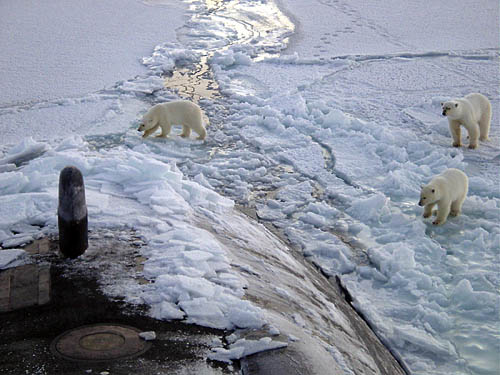
Breken amerikaanse en russische onderzeeërs niet al sinds de jaren 50 regelmatig door de dunne plekken op de Noordpool?
In 1986 en 1987 hebben ze er zelfs feestjes met drie subs van gemaakt (merk op hoeveel water er tussen het ijs te vinden is in 1987):
In 1986 en 1987 hebben ze er zelfs feestjes met drie subs van gemaakt (merk op hoeveel water er tussen het ijs te vinden is in 1987):


mooie foto's
Ik zit de laatste dagen steeds te kijken of dat uitstekende enorme stuk zeeijs voor de kust van New-Foundland op drift raakt.
Ik zit de laatste dagen steeds te kijken of dat uitstekende enorme stuk zeeijs voor de kust van New-Foundland op drift raakt.

Huidige trend atmosf. CO2 Mauna Loa: 411 ppm ,10 jaar geleden: 387 ppm , 25 jaar geleden: 358 ppm


http://www.nzz.ch/nachric(...)scnat_1.2307132.htmlquote:Die Gletscher in den Alpen schwinden weiter
Gornergletscher innert eines Jahres um 290 Meter geschrumpft
Die Schweizer Gletscher schmelzen rasch weiter, wie die neusten Daten zeigen. Dies hat die Schweizer Akademie der Naturwissenschaften (SCNAT) am Mittwoch mitgeteilt. Vom Herbst 2007 bis zum Herbst 2008 seien 82 der 88 untersuchten Gletscher kürzer geworden. Der Gornergletscher habe gar 290 Meter an Länge verloren.
(sda) Die jüngsten Messungen bestätigten den anhaltenden Rückgang der Gletscher in den vergangenen Jahren, schreibt die SCNAT in ihrer Mitteilung. Von 88 Gletschern, deren Daten ausgewertet wurden, blieben nur zwei unverändert, und vier wurden etwas länger. Die meisten Gletscher verloren zwischen 0 und 25 Metern Länge. Den Negativrekord hält der Walliser Gornergletscher, der sich innert eines Jahres um 290 Meter verkürzte. Zurückzuführen ist dies laut Communiqué auf ein Absinken bei der Gletscherzunge: Das Zungenende wurde vom Gletscher abgetrennt und ist nun bis auf kleine Reste zusammengeschmolzen.
Verzögerte Auswirkung
Die Änderung der Gletscherlänge folgt mit zeitlicher Verzögerung auf Ursachen wie Temperaturerwärmungen. Die Zu- oder Abnahme der Gletschermasse widerspiegelt die Witterung im Untersuchungszeitraum deutlicher und unmittelbarer. Dieser Massehaushalt wurde insgesamt an fünf Gletschern bestimmt; alle davon verloren im Untersuchungszeitraum an Masse. Insgesamt liege die Abnahme etwa im Rahmen der vergangenen zehn Jahre, sagte der Glaziologe Andreas Bauder von der ETH Zürich auf Anfrage. Die Werte am Pizol- und Silvrettagletscher sind weniger negativ, jene der Gletscher Basòdino, Gries und Rhone etwas negativer als das Zehnjahresmittel.
Warmer Mai und Juni 2008
Der Grund für die Gletscherschmelze 2007/08 sind laut dem Communiqué der SCNAT vor allem die überdurchschnittlich warmen Monate Mai und Juni im Jahr 2008. Sie sorgten dafür, dass der im Winter 2007/08 eigentlich reichlich gefallene Schnee auf den Gletschern rasch schmolz, so dass die Hitze des Sommers direkt das Gletschereis angreifen konnte.
Für den Winter 2008/09 gibt es laut Bauder noch keine Zahlen. Der Winter dauert nämlich für die Gletscher noch an: Weil es in den Bergen immer noch kalt ist und schneit, erreichen die Gletscher erst etwa Ende April oder Anfang Mai ihre grösste Ausdehnung und Masse.
Alpengletsjers verder geslonkenquote:De Zwitserse Alpengletsjers smelten in rap tempo. Volgens de meest recente gegevens zijn 82 van de 88 onderzochte gletsjers in een jaar tijd geslonken in omvang. Dat maakte de Zwitserse Academie voor Natuurwetenschappen (SCNAT) woensdagmiddag bekend.
De jongste metingen bevestigen de aanhoudende teruggang van gletsjers in de afgelopen jaren. Van de 88 onderzochte ijsmassa's bleven er twee onveranderd en werden er vier iets langer. Het merendeel van de gletsjers verloor tot 25 meter in lengte.
De ijstong die het zwaarst te lijden had, was de Walliser Gornergletsjer. Deze ijsmassa moest tussen herfst 2007 en herfst 2008 maar liefst 290 meter prijsgeven. De ongewoon warme maanden mei en juni vorig jaar zijn indirect de oorzaak van de afgenomen lengte. Doordat in die maanden de sneeuw zo snel smolt, kon de zomerwarmte meteen toeslaan.
Op zaterdag 15 augustus 2009 23:05 schreef eer-ik het volgende:
Ik vind je sig nogal denigrerend.
Ik vind je sig nogal denigrerend.

Zo dadelijk weer een stukje van de wilkinsplaat eraf.quote:125 Teletekst za 04 apr
***************************************
IJsschots Antarctica op afbreken
***************************************
` In het Zuidpoolgebied dreigt een
grote ijsschots af te breken van de
zogenoemde Wilkins-ijsplaat.De schots
zit nu nog met een smalle ijsbrug vast
aan het vasteland van Antarctica,maar
op satellietbeelden van de Europese
Ruimtevaart Organisatie ESA is te zien
dat die verbinding op knappen staat.
De ijschots is zeker 10.000 km2 groot,
een kwart van Nederland.Oorspronkelijk
was hij nog groter maar er is vorig
jaar twee keer een stuk van afgebroken.
Wetenschappers houden de Wilkinsplaat
al jaren scherp in de gaten.Voor hen
geldt de ijsplaat als barometer voor de
opwarming van de aarde.
http://www.esa.int/esaCP/SEMD07EH1TF_index_0.html (met plaatjes in het engels)
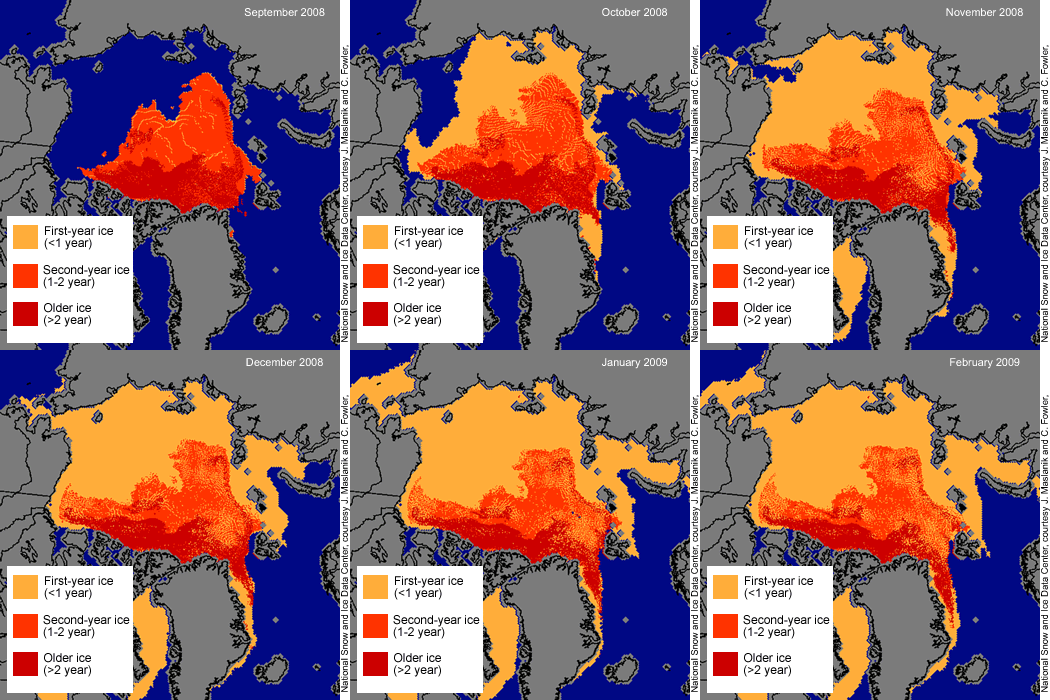
De NSIDC laat aan het begin van het smeltseizoen weer waarschuwende berichten horen over de dikte van het noordpoolijs. De kwetsbaarheid ervan omdat er veel eenjarig ijs is, ook 'wel wat' tweejarig ijs is maar het oudere meerjarige ijs heel weinig.
Sciencedaily: Arctic Literally On Thin Ice, According To New Satellite Data
Associated Press: Arctic sea ice thinnest ever going into spring
[ Bericht 31% gewijzigd door barthol op 07-04-2009 01:16:53 ]
Sciencedaily: Arctic Literally On Thin Ice, According To New Satellite Data
Associated Press: Arctic sea ice thinnest ever going into spring
[ Bericht 31% gewijzigd door barthol op 07-04-2009 01:16:53 ]
Huidige trend atmosf. CO2 Mauna Loa: 411 ppm ,10 jaar geleden: 387 ppm , 25 jaar geleden: 358 ppm
Vooralsnog is er nog niet veel van te zien, maar dat komt natuurlijk vooral eind augustus. Zo vroeg in het seizoen valt er met geen enkele zekerheid te zeggen wat de eindstand zal gaan zijn. Je kent enkele variabelen, zoals dikte en leeftijd, maar anderen zoals wind en temperatuur zijn niet op zo'n termijn voorspelbaar. De temperatuur is nu nog ongewoon koud op de Noordpool, zeker in vergelijking met recente jaren, wat betekent dat de sneeuwlaag die er op ligt voorlopig het ijs eronder nog zal beschermen. We hebben ook nog geen enkel idee wat voor windpatronen er deze zomer zullen zijn; wordt het ijs naar het warme zuiden geblazen of juist door de wind op z'n plek gehouden?
Anyway, update:
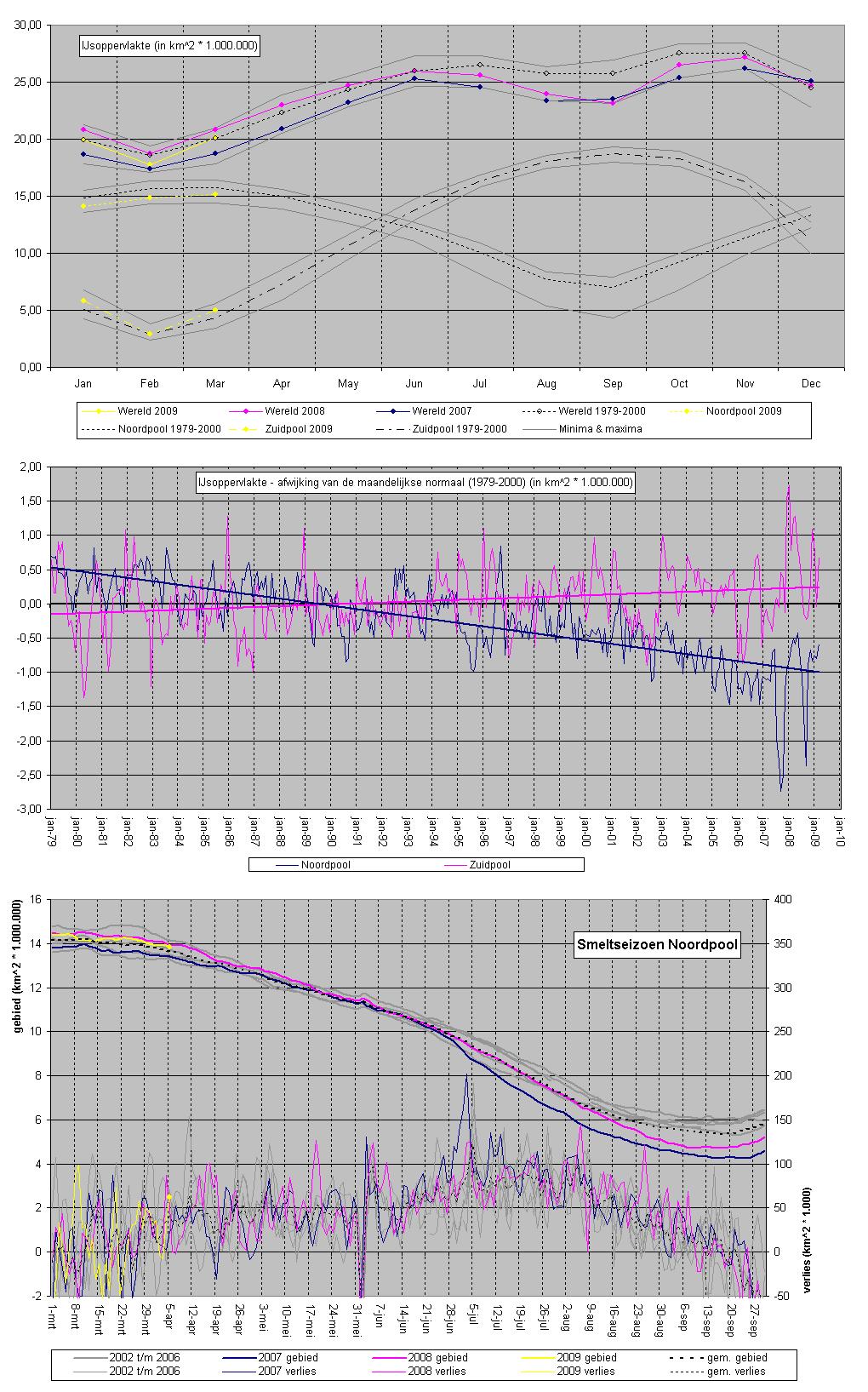
De wereld als geheel heeft nagenoeg een normale oppervlakte ijs, met dien verstande dat de Zuidpool wat groter dan normaal is en de Noordpool wat kleiner. Trend voor de zuidpool blijft +0,13 miljoen vierkante kilometer per decennium, en ondanks dat de Noordpool al een half jaartje boven de lange-termijn trend zit, blijft deze ook -0,5 per decennium.
Anyway, update:
De wereld als geheel heeft nagenoeg een normale oppervlakte ijs, met dien verstande dat de Zuidpool wat groter dan normaal is en de Noordpool wat kleiner. Trend voor de zuidpool blijft +0,13 miljoen vierkante kilometer per decennium, en ondanks dat de Noordpool al een half jaartje boven de lange-termijn trend zit, blijft deze ook -0,5 per decennium.


Zie ook de FPquote:Antarctic sea ice increasing: study
In recent years all the headlines have been about ice melting in some of the globe's chilliest places. But it seems that global warming may actually be leading to an increase in sea ice in parts of the Antarctic.
Scientists in the United Kingdom have produced a study which shows ice has grown by 100,000 square kilometres each decade in the past 30 years.
The increase is being put down to the hole in the ozone layer.
The British Antarctic Survey combined with NASA to look at the levels of ice in the region over the long term.
What was clear was that climate change produces complex results. Instead of a widening hole in the ozone layer, produced by human activity, warming temperatures as they have in the Arctic, in Antarctica it was having the opposite effect.
Scientists such as Julienne Stroeve from the National Snow and Ice Data Centre in the United States say they are not that surprised by the news of the study and its findings.
"There's been a change in atmospheric circulation around Antarctica related to the stratospheric ozone depletion and this actually causes stronger winds, which then pushes the ice away from the coast in some regions of Antarctica, which actually then causes more new ice formation and increases the overall sea ice in that region," she said.
"In other parts of Antarctica the temperatures have been decreasing and this is again sort of what we've expected to see, at least according to what the climate models tell us should be happening.
"But if you look at the Antarctic Peninsula for example, that's where you've had really strong warming and you've had a warming of about 3 degrees Celsius in the last 50 years.
"And if you look at changes in sea ice in that region they all show very strong negative trends.
"The paper shows an overall positive trend if you look at all of Antarctica, but there's regional differences that are quite different from different regions.
"We have to deal with what we know about warming in certain regions and changes in circulation and wind patterns in other regions."
Dr Stroeve argues that the rate of ice expansion, even as it translates to hundreds of thousands of square kilometres, is relatively insignificant.
"This recent paper shows you know a change in the annual mean ice extent of Antarctica of only 0.97 per cent per decade which is really close to zero," she added.
"In contrast if you look at the Arctic, you see statistically significantly trends of about 4 per cent per decade in the opposite direction right now if you look at the annual mean. Certainly it's a very small change for the Antarctic.
"The Antarctic is very different than the Arctic and what we're noticing is that you'll see negative trends in some areas of the Antarctic and positive trends elsewhere.
vreemd toch altijd dat ze dit soort dingen niet voorspellen, maar dat ze achteraf zeggen niet verbaasd te zijn en het allemaal prima kunnen verklaren.
De trend in zee-ijs was al een tijdje duidelijk, het enige wat "nieuw" is, is de verklaring ervoor. Maar die is dan ook wel interessant:
Dus wetenschapper A zegt: "Zie je wel, Antarctica warmt op, precies zoals we altijd al gezegd hebben," en drie maanden later komt wetenschapper B en die zegt: "Zie je wel, het ijs wordt groter omdat Antarctica afkoelt, precies zoals we altijd al verwacht hadden."

Overigens is de temperatuurtrend in Antarctica sinds 1979 (volgens satellieten, dus niet volgens het model van Steig) ongeveer -1 graad per eeuw, dus ongeacht waarom het afkoelt, ben ik het wel met deze nieuwe studie eens dat Antarctica op dit moment aan het afkoelen is. Het vreemde is dat het afkoelen niet is afgeremd of gestopt op het moment dat het ozongat gestopt is met groeien, maar wie weet is dat een kwestie van momentum. Dat zou duidelijker moeten worden op het moment dat het gat ook echt aan het sluiten is.
De trend in zee-ijs was al een tijdje duidelijk, het enige wat "nieuw" is, is de verklaring ervoor. Maar die is dan ook wel interessant:
staat hier nou echt dat het vergrote ozongat een afkoelend effect heeft gehad in Antarctica? Ja, het staat er echt. In Antarctica heeft het vergrote gat een tegenovergesteld effect van de opwarming die het in het noorden heeft, dus afkoeling. Zijn ze nu al weer vergeten dat Steig et al eerder dit jaar "bewezen" hebben dat Antarctica niet afkoelt, maar opwarmt?quote:What was clear was that climate change produces complex results. Instead of a widening hole in the ozone layer, produced by human activity, warming temperatures as they have in the Arctic, in Antarctica it was having the opposite effect.
Dus wetenschapper A zegt: "Zie je wel, Antarctica warmt op, precies zoals we altijd al gezegd hebben," en drie maanden later komt wetenschapper B en die zegt: "Zie je wel, het ijs wordt groter omdat Antarctica afkoelt, precies zoals we altijd al verwacht hadden."
Overigens is de temperatuurtrend in Antarctica sinds 1979 (volgens satellieten, dus niet volgens het model van Steig) ongeveer -1 graad per eeuw, dus ongeacht waarom het afkoelt, ben ik het wel met deze nieuwe studie eens dat Antarctica op dit moment aan het afkoelen is. Het vreemde is dat het afkoelen niet is afgeremd of gestopt op het moment dat het ozongat gestopt is met groeien, maar wie weet is dat een kwestie van momentum. Dat zou duidelijker moeten worden op het moment dat het gat ook echt aan het sluiten is.

quote:The Wilkins Ice Shelf, on the western side of the Antarctic Peninsula, experienced multiple disintegration events in 2008. A rapid retreat started in February, near the end of the Antarctic summer. Another breakup began in May, during the Antarctic winter. And fresh cracks appeared on the shelf in late November 2008. By the beginning of 2009, a narrow ice bridge was all that remained to connect the ice shelf to ice fragments fringing nearby Charcot Island. That bridge gave way in early April 2009.
Days after the ice bridge rupture, on April 12, 2009, the Advanced Spaceborne Thermal Emission and Reflection Radiometer (ASTER) on NASA’s Terra satellite captured this image of the southern base of the ice bridge, where it connected with the remnant ice shelf. This image shows ice fragments of varying sizes mixed with ice mélange. A crack in the east reveals dark ocean water below. Although the ice bridge between the shelf and Charcot Island had played a role in stabilizing the ice fragments in the region, its rupture didn’t guarantee an immediate ice exodus. The Wilkins Ice Shelf experienced a breakup event in 1998, yet the ice blocks from that breakup froze in place for a decade.
In this image, the low angle of the Sun accentuates shadows, and highlights an interesting feature. The large slab of ice in the lower left corner of this image displays a slight linear bulge along its northeastern edge. This area of raised ice is consistent with ice shelf modeling in numerous studies.
An ice shelf is a thick slab of ice that is attached to a coastline. The seaward extension of the shelf floats on the water like sea ice. Unlike sea ice, however, ice shelves can have thicknesses in excess of 100 meters, with part of the ice front above water and part of it below. After part of an ice shelf breaks away, the remaining ice shelf, despite its thickness, doesn’t remain impervious to the change. In both ice and water, pressure increases with depth, but the pressure gradient is steeper in water. This means that ocean water tends to deform the ice, pushing inward on the ice slab’s front. On its top surface, the ice slab bulges, and its top edge rotates outward and downward. The raised area along the front of the ice slab in this image suggests that ocean water has deformed this ice slab as predicted.
ijs op de Noordpool dikker dan verwacht:
da's nog eens wat anders dan we van de Amerikaanse wetenschappers horen
bronquote:Das Forschungsflugzeug "Polar 5" beendet heute in Kanada seine jüngste Arktis-Expedition. Bei dem Flug haben Forscher die aktuelle Eisstärke gemessen am Nordpol gemessen, und zwar in Gebieten, die nie zuvor überflogen worden sind. Ergebnis: Das Meer-Eis in den untersuchten Gebieten ist offenbar dicker, als die Wissenschaftler vermutet hatten.
Normalerweise sei neu gebildetes Eis nach zwei Jahren gut zwei Meter dick. "Hier wurden aber Eisdicken von bis zu vier Metern gemessen", sagte ein Sprecher des Bremerhavener Alfred-Wegener-Instituts für Polar- und Meeresforschung.
da's nog eens wat anders dan we van de Amerikaanse wetenschappers horen
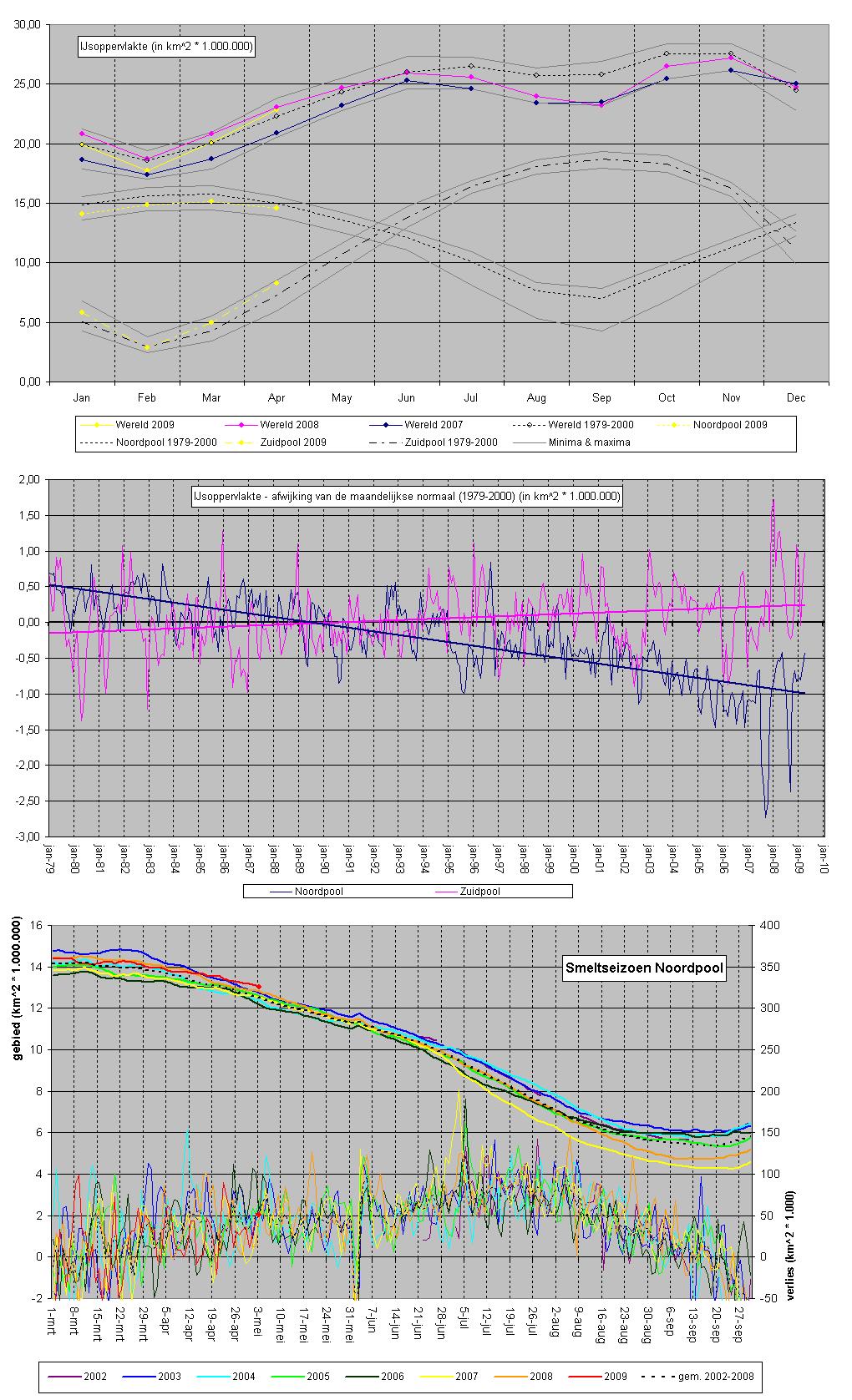
update: de cijfers over april zijn binnen, en de Noordpool heeft zich (in vergelijking met recente jaren) voorbeeldig gedragen. We moeten terug naar 2001 voor een aprilmaand met meer ijs dan afgelopen maand. Er lag dus ook iets meer ijs dan vorig jaar in april, maar als we naar de dagelijkse voortgang kijken, zien we iets belangrijkers: vorig jaar begon met relatief veel ijs, en eindigde met minder. Dit jaar begon ietsje lager, maar eindige flink boven alle recente jaren. Dat is goed nieuws, want dat extra ijs weerkaatst zonlicht terug de ruimte in dat anders het water had opgewarmd en meer ijs had doen smelten. Dat is een voordeel wat ook in komende maanden zou kunnen doorwerken. Overigens is de stand dan wel hoger dan afgelopen jaren, we zitten nog steeds iets onder de normaal, en de trend blijft -0,5 miljoen vierkante kilometer per decennium.
De Zuidpool zit in het groeiseizoen, en loopt flink voor op schema. In april lag er gemiddeld een miljoen vierkante kilometer meer zee ijs dan normaal, en begint daarmee weer aardig in de buurt van een record te komen. Trend blijft onveranderd op +0,13 miljoen vierkante kilometer per jaar.
De wereld als geheel had daardoor een overschot van 0,6 miljoen vierkante kilometer aan zee ijs.
Grafiekjes:
De Zuidpool zit in het groeiseizoen, en loopt flink voor op schema. In april lag er gemiddeld een miljoen vierkante kilometer meer zee ijs dan normaal, en begint daarmee weer aardig in de buurt van een record te komen. Trend blijft onveranderd op +0,13 miljoen vierkante kilometer per jaar.
De wereld als geheel had daardoor een overschot van 0,6 miljoen vierkante kilometer aan zee ijs.
Grafiekjes:
quote:New warning over Arctic ice-cap
The Arctic ice-cap, a permanent feature for at least 100,000 years, could vanish in summertime far sooner than predicted, a leading scientist says.
Professor Peter Wadhams, from the University of Cambridge, told BBC News he has brought forward his estimates of the ice-cap's demise.
He believes the ice is now so thin that almost all of it will disappear in about a decade.
He says it will become seasonal, forming only during the winter.
He told the BBC: "By 2013 we will see a much smaller area in summertime than now, and certainly by about 2020, I can imagine that only one area will remain in summer."
His assessment is based on analysis of nearly 40 years of sonar data gathered on Royal Navy submarines patrolling beneath the ice - the first, HMS Dreadnought, was in 1971.
Until recently, most climate forecasts suggested that the Arctic Ocean would have ice-free summers only towards the end of the century.
The most extreme scenario was for the ice to retreat as soon as 2013, but that was dismissed by many as far too soon.
Now Professor Wadhams, who has studied the Arctic for the past 40 years, says that there is "almost a breakdown" in the ice-cover.
Over most of the Arctic, there has been a massive decline in the amount of so-called multi-year ice - ice that is tough enough to withstand the summer warmth.
Much of what is left of this ice accumulates in an area north of Greenland and Ellesmere Island in Canada, and may form what he calls "a last holdout, a kind of Alamo".
Professor Wadhams said: "The change is happening so fast. It's the result of this steady thinning over four decades that has brought it to a state where its summer melt is causing it to disappear.
"It's like the Arctic is covered with an egg shell and the egg shell has been thinning to the point where it is now just cracking completely."
The rest of the story continues here...
Hmm, ik bekijk de ijsbedekking elke dag en zoals Ahred al zei, het ijs lijkt zich voorbeeldig te gedragen.quote:
De ijsoppervlakte is nog steeds groter dan het in de laatste jaren was rond deze tijd.
Zou de schijn bedriegen?
Huidige trend atmosf. CO2 Mauna Loa: 411 ppm ,10 jaar geleden: 387 ppm , 25 jaar geleden: 358 ppm
Nou, ik geloof zeker dat meneer Wadhams gelijk heeft dat het ijs in de afgelopen 40 jaar minder, dunner en gemiddeld jonger is geworden. Ook nu zitten we nog onder de normaal (1979-2000), en dit is in vergelijking met recente jaren een briljant jaar - extent is groter dan verwacht, dikte is beter dan verwacht, er is weer iets meer meerjarig ijs dan vorig jaar, etc. Maar meneer Wadhams negeert wel het feit dat zijn studie is begonnen op het hoogtepunt (qua ijs) van een cyclus, die mogelijk in de afgelopen jaren haar dieptepunt bereikt heeft. Voor een correcte analyse moet je natuurlijk van top tot top of van dal tot dal of iets dergelijks kijken, niet van top tot dal en dan een lineaire regressie toepassen om de toekomst te voorspellen. Als je het huidige dal vergelijkt met de jaren 30/40 (het vorige dal) is de achteruitgang een stuk minder uitgesproken dan in vergelijking met de jaren 70.
Hier is bijvoorbeeld een artikel uit maart 2005 (toen er nog geen enkel zicht op herstel was), waarin zij het vermoeden uiten dat de pool binnen 5 jaar zou kunnen beginnen met een herstel. Uiteraard betekent dat in een 60 tot 80 jarige cyclus dat het nog wel een aantal jaar kan duren voor het echt duidelijk wordt welk deel van de trend in de afgelopen decennia structureel is, en welk deel cyclisch.
Hier is bijvoorbeeld een artikel uit maart 2005 (toen er nog geen enkel zicht op herstel was), waarin zij het vermoeden uiten dat de pool binnen 5 jaar zou kunnen beginnen met een herstel. Uiteraard betekent dat in een 60 tot 80 jarige cyclus dat het nog wel een aantal jaar kan duren voor het echt duidelijk wordt welk deel van de trend in de afgelopen decennia structureel is, en welk deel cyclisch.
quote:Origin of Antarctic ice revealed
Incredible peaks and valleys, buried beneath ice for 14 million years, have revealed evidence of how the East Antarctic ice sheet first formed.
Scientists used radar to map an area of the Gamburtsev mountains - believed to be the point of origin of the ice.
The region would have been cold enough for the first glacier to form.
Writing in the journal Nature, the researchers say their findings provide important clues about how the ice sheet will behave as our climate changes.
"This is the largest reservoir of ice on Earth, and the most poorly understood place on our planet," said the British Antarctic Survey's Fausto Ferraccioli, a scientist involved in a separate international project to study the region.
He explained that the elevation and location of the Gamburtsev Mountains - in the centre of the ice sheet - made them an "ideal place" for the formation of the very first ice.
Icy unknown
Sun Bo from the Polar Research Institute of China, who led this study, has now provided further insight into the evolution of the ice sheet.
He and his colleagues travelled 1,235km (767 miles) by tractor train from a research station at the edge of East Antarctica, to the summit of Dome A of the Gamburtsev range, near the centre.
Dr Sun's team then attached radar equipment to the tractor and drove around, meticulously surveying a 30km by 30km square of the glacial region.
Their radar revealed a landscape that, 14 million years ago, looked similar to the European Alps.
"This is true scientific exploration," said Martin Siegert, head of the school of geosciences at Edinburgh University, who was also involved in the study.
"There's nothing to guide you really. Peering down at the ice sheet beneath your feet, you just don't know what's under there."
And for this type of exploration, the use of radio waves is very powerful.
When the waves reach the interface between ice and rock they bounce back, because of the difference in electrical properties between the two.
....Rest of story...

quote:Doek Ten Cate beschermt gletsjers
Textielconcern Ten Cate gaat mogelijk twee van de grootste gletsjers in Groenland beschermen tegen afbrokkeling.
Het Almelose bedrijf heeft een doek ontwikkeld die geen warmte doorlaat, waardoor de gletsjers niet verder smelten. Inmiddels zijn er in het Oosternrijkse Innsbruck proeven gedaan met het doek en het blijkt dat de gletsjers door het doek zestig procent minder smelten. Ook in Groenland zijn proeven gestart.
RTV Oost
quote:Argentine Glacier Advances Despite Global Warming
BUENOS AIRES, Argentina — Argentina's Perito Moreno glacier is one of only a few ice fields worldwide that have withstood rising global temperatures.
Nourished by Andean snowmelt, the glacier constantly grows even as it spawns icebergs the size of apartment buildings into a frigid lake, maintaining a nearly perfect equilibrium since measurements began more than a century ago.
"We're not sure why this happens," said Andres Rivera, a glacialist with the Center for Scientific Studies in Valdivia, Chile. "But not all glaciers respond equally to climate change."
Viewed at a safe distance on cruise boats or the wooden observation deck just beyond the glacier's leading edge, Perito Moreno's jagged surface radiates a brilliant white in the strong Patagonian sun. Submerged sections glow deep blue.
And when the wind blows in a cloud cover, the 3-mile-wide glacier seems to glow from within as the surrounding mountains and water turn a meditative gray.
Every few years, Perito Moreno expands enough to touch a point of land across Lake Argentina, cutting the nation's largest freshwater lake in half and forming an ice dam as it presses against the shore.
The water on one side of the dam surges against the glacier, up to 200 feet above lake level, until it breaks the ice wall with a thunderous crash, drowning the applause of hundreds of tourists.
"It's like a massive building falling all of the sudden," said park ranger Javier D'Angelo, who experienced the rupture in 2008 and 1998.
The rupture is a reminder that while Perito Moreno appears to be a vast, 19-mile-long frozen river, it's a dynamic icescape that moves and cracks unexpectedly.
"The glacier has a lot of life," said Luli Gavina, who leads mini-treks across the glacier's snow fields.

Maandelijkse update wat later dan normaal, maar dat komt omdat nu de spannende weken pas echt beginnen. De zon staat op z'n hoogst boven de horizon, en schijnt nu 24 uur per dag op het ijs. Maar eerst mei.
Hoewel in de laatste week van mei het verschil tussen dit jaar en 2007 en 2008 grotendeels is weg gesmolten, was de gemiddelde ijsdekking van de noordpool in mei bijna normaal. We moeten (net als april) terug naar 2001 om een mei met meer ijs op de noordpool te zien.
De zuidpool had wederom een maand in de buurt van een record, dus dat gaat prima. Samen hadden de noord- en zuidpool dus ongeveer een half miljoen vierkante kilometer meer drijfijs dan normaal.
Ook in de eerste weken van juni was de extent iets groter dan in de afgelopen twee jaar, al is het verschil behoorlijk klein. Als het oppervlak nu zo dicht op dat van 2007 zit, is er dan een grote kans op herhaling? Dat hangt vooral van de komende weken af. In de derde grafiek zie je dat 2007 tot ongeveer deze week vrijwel gelijk op ging met de andere jaren. Dan zie je opeens dat er in korte tijd heel veel ijs smelt, en het verschil met de andere jaren snel veel groter wordt. Aan het eind van het seizoen komt 2008 nog behoorlijk in de buurt, maar kan het gat niet meer overbruggen. Dat is belangrijk, want 2008 smolt laat in het seizoen harder dan ooit. De grote vraag is wat de extent dit jaar gaat doen - volgt het 2007, of blijft het meer bij 2008 in de buurt? In het eerste geval is de kans groot op een nieuw record, in het laatste geval lijkt dit zeer moeilijk te worden.
De onderste van de 4 grafieken probeert ook om iets over de toekomst te zeggen. Omdat deze grafiek lastig af te lezen is wat uitleg: op de horizontale as staat hoeveel ijs er op een bepaalde datum lag. Op de vertikale as staat hoeveel ijs er aan het einde van het seizoen overbleef. De verschillende kleurengroepen geven aan welke datum dat is. Je ziet dat vroeg in de lente, de stippen (iedere stip is een jaar) ver van de trendlijn zitten. Dat wil zeggen dat hoeveel ijs er vroeg in de lente ligt, weinig informatie geeft over het uiteindelijke minimum. Naarmate het seizoen vordert komen de stippen dichter bij de trendlijn, en kun je een betere uitspraak doen over waar het heen gaat. Bij iedere trend staat een R2 waarde. Deze geeft aan hoe goed de trend de waardes kan verklaren op een schaal van 0 (geen verklarende kracht) tot 1 (perfecte verklarende kracht). Op 1 mei zie je zelfs een negatiefe R2 - dit wil zeggen dat des te groter de oppervlakte op 1 mei is, des te kleiner wordt het minimum (de waarde zit echter zo dicht bij de nul dat ik hier geen waarde aan zou hechten).
De rode stippen geven de meest recente data weer (21 juni) met een voorspelling voor het minimum van dit jaar. Op basis van hoe ver de trend er in andere jaren naast zat, is een schatting gemaakt van hoe veel foutmarge er in deze voorspelling zit. Statistisch gezien zou je verwachten dat 95% van alle jaren die op 21 juni 10,36 miljoen vierkante kilometer extent hadden, binnen de getekende marge zou vallen. De kans op een nieuw record is wat dat aan gaat dus erg klein, maar merk op dat de R2 op dit moment nog slechts 0,14 is. Erg veel waarde zou ik hier dus nog niet aan hechten. Eerst maar eens de komende weken afwachten.
Wie geen zin heeft om te wachten op m'n updates: een dagelijkse data vind je hier.
Hoewel in de laatste week van mei het verschil tussen dit jaar en 2007 en 2008 grotendeels is weg gesmolten, was de gemiddelde ijsdekking van de noordpool in mei bijna normaal. We moeten (net als april) terug naar 2001 om een mei met meer ijs op de noordpool te zien.
De zuidpool had wederom een maand in de buurt van een record, dus dat gaat prima. Samen hadden de noord- en zuidpool dus ongeveer een half miljoen vierkante kilometer meer drijfijs dan normaal.
Ook in de eerste weken van juni was de extent iets groter dan in de afgelopen twee jaar, al is het verschil behoorlijk klein. Als het oppervlak nu zo dicht op dat van 2007 zit, is er dan een grote kans op herhaling? Dat hangt vooral van de komende weken af. In de derde grafiek zie je dat 2007 tot ongeveer deze week vrijwel gelijk op ging met de andere jaren. Dan zie je opeens dat er in korte tijd heel veel ijs smelt, en het verschil met de andere jaren snel veel groter wordt. Aan het eind van het seizoen komt 2008 nog behoorlijk in de buurt, maar kan het gat niet meer overbruggen. Dat is belangrijk, want 2008 smolt laat in het seizoen harder dan ooit. De grote vraag is wat de extent dit jaar gaat doen - volgt het 2007, of blijft het meer bij 2008 in de buurt? In het eerste geval is de kans groot op een nieuw record, in het laatste geval lijkt dit zeer moeilijk te worden.
De onderste van de 4 grafieken probeert ook om iets over de toekomst te zeggen. Omdat deze grafiek lastig af te lezen is wat uitleg: op de horizontale as staat hoeveel ijs er op een bepaalde datum lag. Op de vertikale as staat hoeveel ijs er aan het einde van het seizoen overbleef. De verschillende kleurengroepen geven aan welke datum dat is. Je ziet dat vroeg in de lente, de stippen (iedere stip is een jaar) ver van de trendlijn zitten. Dat wil zeggen dat hoeveel ijs er vroeg in de lente ligt, weinig informatie geeft over het uiteindelijke minimum. Naarmate het seizoen vordert komen de stippen dichter bij de trendlijn, en kun je een betere uitspraak doen over waar het heen gaat. Bij iedere trend staat een R2 waarde. Deze geeft aan hoe goed de trend de waardes kan verklaren op een schaal van 0 (geen verklarende kracht) tot 1 (perfecte verklarende kracht). Op 1 mei zie je zelfs een negatiefe R2 - dit wil zeggen dat des te groter de oppervlakte op 1 mei is, des te kleiner wordt het minimum (de waarde zit echter zo dicht bij de nul dat ik hier geen waarde aan zou hechten).
De rode stippen geven de meest recente data weer (21 juni) met een voorspelling voor het minimum van dit jaar. Op basis van hoe ver de trend er in andere jaren naast zat, is een schatting gemaakt van hoe veel foutmarge er in deze voorspelling zit. Statistisch gezien zou je verwachten dat 95% van alle jaren die op 21 juni 10,36 miljoen vierkante kilometer extent hadden, binnen de getekende marge zou vallen. De kans op een nieuw record is wat dat aan gaat dus erg klein, maar merk op dat de R2 op dit moment nog slechts 0,14 is. Erg veel waarde zou ik hier dus nog niet aan hechten. Eerst maar eens de komende weken afwachten.
Wie geen zin heeft om te wachten op m'n updates: een dagelijkse data vind je hier.

UPDATE!
eerst juni maar: gemiddelde oppervlak van de noordpool was op wat wisselgeld na gelijk aan dat in 2004, 2007 en 2008, en wat groter dan 2005 en 2006. Weinig nieuws dus. Zuidpool is met een overschot van ruim een half miljoen vierkante kilometer wat kleiner dan 2008, maar zit nog altijd niet alleen boven normaal, maar ruim boven de (stijgende) trendlijn. Totaal van de noord- en de zuidpool samen was een haar onder normaal.
Dan de actuele stand van zaken. We hebben de eerste week van juli gehad, dit is de week waarin de dagen met de grootste verliezen te zien zijn. Al zijn er later in juli ook nog wel weken waarin het gemiddelde per dag hoger ligt. De eerste week van juli was vooral voor het recordjaar 2007 slopend. Om het minimum-record van 2007 te breken, mag er niet te veel "achterstand" opgelopen worden in deze week. Later in het seizoen zijn de verliezen per dag minder, en is het dus lastiger om een achterstand in te halen.
Dit jaar zagen we een piek die lager was dan 2005, 2006 en 2007 in deze week hadden (geen enkele dag boven 150.000 vierkante kilometer verlies), maar de piek was wel breed, waardoor het gemiddelde per dag boven alle jaren op 2007 na uit kwam. De afgelopen dagen echter waren juist weer zeer rustig, waardoor het totale oppervlak nog steeds vergelijkbaar is met dat van 2005 en 2008.
2007 verloor rond deze dagen bijna 100.000 vierkante kilometer ijs per dag meer dan er nu te zien is. Als dat niet heel snel verandert, lijkt het uitgesloten dat we dit jaar een nieuw record gaan zien. Sterker nog: als dat niet snel verandert, is de kans groot dat we een flinke groei tov van 2008 kunnen zien, want ook vorig jaar verloren we op dit punt zo'n 50.000 vierkante kilometer per dag meer dan we de afgelopen paar dagen gezien hebben.
Statistisch gezien zou dit jaar iets onder 2005 uit moeten komen, met een 95% zekerheidinterval tussen de 4,6 en 6 miljoen vierkante kilometer. (zie vorige post voor uitleg)
eerst juni maar: gemiddelde oppervlak van de noordpool was op wat wisselgeld na gelijk aan dat in 2004, 2007 en 2008, en wat groter dan 2005 en 2006. Weinig nieuws dus. Zuidpool is met een overschot van ruim een half miljoen vierkante kilometer wat kleiner dan 2008, maar zit nog altijd niet alleen boven normaal, maar ruim boven de (stijgende) trendlijn. Totaal van de noord- en de zuidpool samen was een haar onder normaal.
Dan de actuele stand van zaken. We hebben de eerste week van juli gehad, dit is de week waarin de dagen met de grootste verliezen te zien zijn. Al zijn er later in juli ook nog wel weken waarin het gemiddelde per dag hoger ligt. De eerste week van juli was vooral voor het recordjaar 2007 slopend. Om het minimum-record van 2007 te breken, mag er niet te veel "achterstand" opgelopen worden in deze week. Later in het seizoen zijn de verliezen per dag minder, en is het dus lastiger om een achterstand in te halen.
Dit jaar zagen we een piek die lager was dan 2005, 2006 en 2007 in deze week hadden (geen enkele dag boven 150.000 vierkante kilometer verlies), maar de piek was wel breed, waardoor het gemiddelde per dag boven alle jaren op 2007 na uit kwam. De afgelopen dagen echter waren juist weer zeer rustig, waardoor het totale oppervlak nog steeds vergelijkbaar is met dat van 2005 en 2008.
2007 verloor rond deze dagen bijna 100.000 vierkante kilometer ijs per dag meer dan er nu te zien is. Als dat niet heel snel verandert, lijkt het uitgesloten dat we dit jaar een nieuw record gaan zien. Sterker nog: als dat niet snel verandert, is de kans groot dat we een flinke groei tov van 2008 kunnen zien, want ook vorig jaar verloren we op dit punt zo'n 50.000 vierkante kilometer per dag meer dan we de afgelopen paar dagen gezien hebben.
Statistisch gezien zou dit jaar iets onder 2005 uit moeten komen, met een 95% zekerheidinterval tussen de 4,6 en 6 miljoen vierkante kilometer. (zie vorige post voor uitleg)


Duitse rederij wil Arctische NO-passage gebruiken
Rederij Beluga uit Bremen (Duitsland) hoopt deze zomer de Arctische Noordoost-passage te kunnen gebruiken voor vrachtvervoer per schip. Het zou voor het eerst zijn dat een niet-Russisch schip de tocht ten noorden van Siberië volbrengt.
Een poging van dezelfde rederij vorig jaar kreeg geen toestemming van de Russische autoriteiten. De Noordoost-passage, de zeeroute tussen Europa en Azië langs het Arctische noorden van Siberië, was dat jaar geblokkeerd door ijs tussen de Laptev Zee en de Kara Zee.
In die contreien is momenteel veel minder ijs. De Duitse rederij wil onderdelen vervoeren voor een elektriciteitscentrale in Surgut, Siberië, vanaf Zuid-Korea. Ontscheping moet dan plaatsvinden in de havens van Nowy Urengoj, gelegen oostelijk van Nova Zembla. Het is de bedoeling daarna door te varen naar Moermansk of Rotterdam.
Russische schepen varen in de zomermaanden regelmatig naar Siberische bestemmingen, vergezeld van krachtige ijsbrekers. Maar een niet-Russisch schip, zonder ijsbreker, zou een unicum betekenen voor de Noordoostelijke doorvaart. De Duitse rederij heeft deze zomer drie vrachtschepen in de planning staan voor deze doorvaart, een en ander afhankelijk van Russische toestemming: de schepen Family, Fraternity en Foresight.
vwk
Ze durven wel zonder ijsbreker.
Rederij Beluga uit Bremen (Duitsland) hoopt deze zomer de Arctische Noordoost-passage te kunnen gebruiken voor vrachtvervoer per schip. Het zou voor het eerst zijn dat een niet-Russisch schip de tocht ten noorden van Siberië volbrengt.
Een poging van dezelfde rederij vorig jaar kreeg geen toestemming van de Russische autoriteiten. De Noordoost-passage, de zeeroute tussen Europa en Azië langs het Arctische noorden van Siberië, was dat jaar geblokkeerd door ijs tussen de Laptev Zee en de Kara Zee.
In die contreien is momenteel veel minder ijs. De Duitse rederij wil onderdelen vervoeren voor een elektriciteitscentrale in Surgut, Siberië, vanaf Zuid-Korea. Ontscheping moet dan plaatsvinden in de havens van Nowy Urengoj, gelegen oostelijk van Nova Zembla. Het is de bedoeling daarna door te varen naar Moermansk of Rotterdam.
Russische schepen varen in de zomermaanden regelmatig naar Siberische bestemmingen, vergezeld van krachtige ijsbrekers. Maar een niet-Russisch schip, zonder ijsbreker, zou een unicum betekenen voor de Noordoostelijke doorvaart. De Duitse rederij heeft deze zomer drie vrachtschepen in de planning staan voor deze doorvaart, een en ander afhankelijk van Russische toestemming: de schepen Family, Fraternity en Foresight.
vwk
Ze durven wel zonder ijsbreker.
vandaag is ook de data over juli op de site van het NSIDC gepubliceerd. De Noordpool zat qua extent wat onder 2008, maar verrassend genoeg qua area een fractie boven 2008. De conclusie lijkt dat er iets grotere gebieden zonder ijs waren, maar dat er op de plaatsen waar wel ijs lag, het ijs iets minder gefragmenteerd was, wat een positieve invloed zou kunnen hebben op het verdere smeltverloop.
De zuidpool zat iets boven normaal, praktisch op de trendlijn. Gecombineerd had de wereld dus iets minder ijs (extent) dan vorig jaar. Aangezien beide polen zo vlak bij de trendlijn zaten, is daar geen verschil in.
Als we naar de dagelijkse data kijken (derde grafiek), zien we dat de noordpool het grootste deel van juli zeer snel smolt en op weg leek om 2007 te volgen, Tot er rond 25/26 juli opeens een enorme vertraging inzette. Ik heb daarom ook een grafiek toegevoegd met hoeveel ijs er gemiddeld per dag smolt met een tien daags zwevend gemiddelde. Daarin is duidelijk te zien dat het smelttempo deze juli hoger lag dan enig ander jaar, op 2007 na, en zelfs een week boven het tempo van 2007 zat. Sinds 26 juli is het tempo echter volledig ingestort, en loopt snel richting en zelfs onder het tempo van 2006. (let op dat het dunne gedeelte van de rode lijn onvolledig is; de dikke rode lijn heeft 100% van de data, het dunne gedeelte loopt van 91% tot 55%, dus het uiteinde kan nog iets veranderen.)
De grote vraag is natuurlijk of 2009 vanaf nu het pad van 2006 gaat volgen, of toch weer kan versnellen tot 2008-niveau of hoger. In de laatste grafiek zie je weer de voorspelling op basis van correlatie tussen de grootte op 3 augustus en het uiteindelijke minimum, met de onzekerheidsmarge gebaseerd op hoe ver voorspellingen voor 2002-2008 er naast zaten. Daaruit blijkt dat het minimum grofweg tussen 4,6 en 5,6 miljoen vierkante kilometer terecht zou moeten komen. Een nieuw record lijkt uitgesloten, op basis van deze benadering.
[ Bericht 0% gewijzigd door Ared op 04-08-2009 11:05:00 ]
De zuidpool zat iets boven normaal, praktisch op de trendlijn. Gecombineerd had de wereld dus iets minder ijs (extent) dan vorig jaar. Aangezien beide polen zo vlak bij de trendlijn zaten, is daar geen verschil in.
Als we naar de dagelijkse data kijken (derde grafiek), zien we dat de noordpool het grootste deel van juli zeer snel smolt en op weg leek om 2007 te volgen, Tot er rond 25/26 juli opeens een enorme vertraging inzette. Ik heb daarom ook een grafiek toegevoegd met hoeveel ijs er gemiddeld per dag smolt met een tien daags zwevend gemiddelde. Daarin is duidelijk te zien dat het smelttempo deze juli hoger lag dan enig ander jaar, op 2007 na, en zelfs een week boven het tempo van 2007 zat. Sinds 26 juli is het tempo echter volledig ingestort, en loopt snel richting en zelfs onder het tempo van 2006. (let op dat het dunne gedeelte van de rode lijn onvolledig is; de dikke rode lijn heeft 100% van de data, het dunne gedeelte loopt van 91% tot 55%, dus het uiteinde kan nog iets veranderen.)
De grote vraag is natuurlijk of 2009 vanaf nu het pad van 2006 gaat volgen, of toch weer kan versnellen tot 2008-niveau of hoger. In de laatste grafiek zie je weer de voorspelling op basis van correlatie tussen de grootte op 3 augustus en het uiteindelijke minimum, met de onzekerheidsmarge gebaseerd op hoe ver voorspellingen voor 2002-2008 er naast zaten. Daaruit blijkt dat het minimum grofweg tussen 4,6 en 5,6 miljoen vierkante kilometer terecht zou moeten komen. Een nieuw record lijkt uitgesloten, op basis van deze benadering.

[ Bericht 0% gewijzigd door Ared op 04-08-2009 11:05:00 ]
Erosie door rivieren gelijk aan dat van gletsjers
Erosie maakt het landschap een kopje kleiner. Wetenschappers becijferden dat gletsjers daar zeer bedreven in waren. Nu blijkt dat rivieren net zo snel eroderen. Op langere tijdsschaal neemt de erosiesnelheid van gletsjers zelfs dramatisch af. Een laatste resultaat van het onderzoek van Koppes en Montgomery is dat ook mensen flinke erosie veroorzaken.
Beeld je hoge pieken met daarop schurende gletsjers en kabbelende bergriviertjes in en bedenk waar snellere erosie optreedt. Lang dachten ook wetenschappers dat erosie door gletsjers veel sneller ging dan erosie door rivieren. Nieuw onderzoek van de Nederlandse Michele Koppes en de Amerikaan David Montgomery gepubliceerd in Nature Geoscience zet deze theorie op zijn kop. Gletsjers en rivieren eroderen verrassend genoeg namelijk ongeveer even snel, zeker op tijdsschalen van miljoenen jaren.
Erosie door gletsjers en rivieren
Eerder onderzoek liet zien dat erosiesnelheden van gletsjers 1-10 maal sneller zouden zijn dan die van rivieren bij bekkens van gelijke grootte. In het kustgebergte van Alaksa is de erosie door gletsjers zelfs 10 mm per jaar, terwijl het gebergte slecht 1-4 mm per jaar omhoog komt. Netto erosie dus. Verder werd een paar weken geleden bekend dat de hoogte van de sneeuwlijn bepaalt hoe hoog een gebergte kan worden. Genoeg om te stellen dat erosie door gletsjers belangrijk is.
Waar de gletsjer stopt, begint de rivier, die sediment uiteindelijk in de oceaan brengt. Maar hoe snel eroderen rivieren werkelijk? Eerder onderzoek liet ook al zien dat erosiesnelheden oplopen tot meer dan 10 mm per jaar voor rivieren in twee gebieden: het Himalayagebergte en in Taiwan. Koppes en Mongomery hebben een enorme database van erosiesnelheden van gletsjers en rivieren over de hele wereld verzameld en geanalyseerd.
Zij ontdekten bijvoorbeeld dat de snelste erosie optreedt bij vulkanen die recent actief waren en na stormen en aardbevingen. Hier komt namelijk snel veel vrijliggend sediment beschikbaar. Dit zijn echter meestal uitzonderingen. Het belangrijkste resultaat is het volgende: in gebergtevormende gebieden zijn de erosiesnelheden van gletsjers en rivieren gelijk. Anders dan werd gedacht op basis van eerder onderzoek.
Reis door de tijd
De genoemde erosiesnelheden gaan over het nu. De onderzoekers namen echter ook het verleden mee in hun studie. Ze ontdekten dat de erosiesnelheden van gletsjers juist afnemen op langere tijdschalen. In de afgelopen tientallen jaren was de erosiesnelheid soms wel 100 mm per jaar, maar op een tijdschaal van miljoenen jaren is de erosiesnelheid slechts 1 mm per jaar. Een honderdvoudige afname dus.
Koppes en Montgomery denken dat de huidige, snelle erosie een gevolg is van de landschapsverandering door de vele smeltende gletsjers. Een tijdelijk fenomeen dus. Wat er gebeurt is dat er meer water tot op de bodem onder het ijs komt waardoor de gletsjers sneller ‘glijden’ en dus meer sediment verplaatsen. De erosiesnelheid van rivieren blijft daarentegen constant door de tijd heen.
Menselijke invloed
Niet alleen rivieren en gletsjers verplaatsen enorme hoeveelheden sediment. Ook de mens kan er wat van. In landbouwgebieden is de erosie even snel volgens de onderzoekers. In de afgelopen duizenden jaren verdween er daarom steeds meer sediment van het land naar de oceaan zoals bijvoorbeeld vruchtbare landbouwgrond.
De extra afvoer van sediment naar lagergeleden gebieden door gletsjersmelt en menselijke activiteiten is wellicht een extra steuntje in de rug voor gebieden die onder dreigen te lopen als de gevreesde zeespiegelstijging doorzet.
Met dank aan: Kennislink
Erosie maakt het landschap een kopje kleiner. Wetenschappers becijferden dat gletsjers daar zeer bedreven in waren. Nu blijkt dat rivieren net zo snel eroderen. Op langere tijdsschaal neemt de erosiesnelheid van gletsjers zelfs dramatisch af. Een laatste resultaat van het onderzoek van Koppes en Montgomery is dat ook mensen flinke erosie veroorzaken.
Beeld je hoge pieken met daarop schurende gletsjers en kabbelende bergriviertjes in en bedenk waar snellere erosie optreedt. Lang dachten ook wetenschappers dat erosie door gletsjers veel sneller ging dan erosie door rivieren. Nieuw onderzoek van de Nederlandse Michele Koppes en de Amerikaan David Montgomery gepubliceerd in Nature Geoscience zet deze theorie op zijn kop. Gletsjers en rivieren eroderen verrassend genoeg namelijk ongeveer even snel, zeker op tijdsschalen van miljoenen jaren.
Erosie door gletsjers en rivieren
Eerder onderzoek liet zien dat erosiesnelheden van gletsjers 1-10 maal sneller zouden zijn dan die van rivieren bij bekkens van gelijke grootte. In het kustgebergte van Alaksa is de erosie door gletsjers zelfs 10 mm per jaar, terwijl het gebergte slecht 1-4 mm per jaar omhoog komt. Netto erosie dus. Verder werd een paar weken geleden bekend dat de hoogte van de sneeuwlijn bepaalt hoe hoog een gebergte kan worden. Genoeg om te stellen dat erosie door gletsjers belangrijk is.
Waar de gletsjer stopt, begint de rivier, die sediment uiteindelijk in de oceaan brengt. Maar hoe snel eroderen rivieren werkelijk? Eerder onderzoek liet ook al zien dat erosiesnelheden oplopen tot meer dan 10 mm per jaar voor rivieren in twee gebieden: het Himalayagebergte en in Taiwan. Koppes en Mongomery hebben een enorme database van erosiesnelheden van gletsjers en rivieren over de hele wereld verzameld en geanalyseerd.
Zij ontdekten bijvoorbeeld dat de snelste erosie optreedt bij vulkanen die recent actief waren en na stormen en aardbevingen. Hier komt namelijk snel veel vrijliggend sediment beschikbaar. Dit zijn echter meestal uitzonderingen. Het belangrijkste resultaat is het volgende: in gebergtevormende gebieden zijn de erosiesnelheden van gletsjers en rivieren gelijk. Anders dan werd gedacht op basis van eerder onderzoek.
Reis door de tijd
De genoemde erosiesnelheden gaan over het nu. De onderzoekers namen echter ook het verleden mee in hun studie. Ze ontdekten dat de erosiesnelheden van gletsjers juist afnemen op langere tijdschalen. In de afgelopen tientallen jaren was de erosiesnelheid soms wel 100 mm per jaar, maar op een tijdschaal van miljoenen jaren is de erosiesnelheid slechts 1 mm per jaar. Een honderdvoudige afname dus.
Koppes en Montgomery denken dat de huidige, snelle erosie een gevolg is van de landschapsverandering door de vele smeltende gletsjers. Een tijdelijk fenomeen dus. Wat er gebeurt is dat er meer water tot op de bodem onder het ijs komt waardoor de gletsjers sneller ‘glijden’ en dus meer sediment verplaatsen. De erosiesnelheid van rivieren blijft daarentegen constant door de tijd heen.
Menselijke invloed
Niet alleen rivieren en gletsjers verplaatsen enorme hoeveelheden sediment. Ook de mens kan er wat van. In landbouwgebieden is de erosie even snel volgens de onderzoekers. In de afgelopen duizenden jaren verdween er daarom steeds meer sediment van het land naar de oceaan zoals bijvoorbeeld vruchtbare landbouwgrond.
De extra afvoer van sediment naar lagergeleden gebieden door gletsjersmelt en menselijke activiteiten is wellicht een extra steuntje in de rug voor gebieden die onder dreigen te lopen als de gevreesde zeespiegelstijging doorzet.
Met dank aan: Kennislink
In het kader van verzamelen van klimaat gerelateerde verhalen.quote:
Global warming has made Arctic summers hottest for 2,000 yearsThe Arctic has warmed as a result of climate change, despite the Earth being farther from the sun during summer months
Ian Sample, science correspondent guardian.co.uk, Thursday 3 September 2009 19.00 BST Article history
Global warming has nullified the effect of increasing distance between the sun and Earth during the Arctic summer solstice. Photograph: National Science Foundation
Warming as a result of increased levels of greenhouse gases in the atmosphere has overwhelmed a millennia-long cycle of natural cooling in the Arctic, raising temperatures in the region to their highest for at least 2,000 years, according to a report.
The Arctic began to cool several thousand years ago as changes in the planet's orbit increased the distance between the sun and the Earth and reduced the amount of sunlight reaching high northern latitudes during the summer.
But despite the Earth being farther from the sun during the northern hemisphere's summer solstice, the Arctic summer is now 1.2C warmer than it was in 1900.
Writing in the US journal Science, an international team of researchers describe how thousands of years of natural cooling in the Arctic were followed by a rise in temperatures from 1900 which accelerated briskly after 1950.
The warming of the Arctic is more alarming in view of the natural cooling cycle, which by itself would have seen temperatures 1.4C cooler than they are today, scientists said.
"The accumulation of greenhouse gases is interrupting the natural cycle towards overall cooling," said Professor Darrell Kaufman, a climate scientist at Northern Arizona University and lead author of the study.
"There's no doubt it will lead to melting glacier ice, which will impact on coastal regions around the world. Warming in the region will also cause more permafrost thawing, which will release methane gas into the atmosphere," he added.
Scientists fear that warming could release billions of tonnes of methane from frozen soils in the Arctic, driving global temperatures even higher.
On a tour of the Arctic this week, UN secretary general Ban Ki-moon urged nations to support a comprehensive accord to limit greenhouse gas emissions ahead of the organisation's climate summit in Copenhagen in December. The accord has been drawn up as a successor to the Kyoto Protocol, which expires in 2012.
The latest study comes months after scientists at the US National Oceanic and Atmospheric Administration (NOAA) warned that within the next 30 years Arctic sea ice is likely to vanish completely during the summer for the first time.
Kaufman and his colleagues reconstructed a decade-by-decade record of the Arctic climate over the past 2,000 years by analysing lake sediments, ice cores and tree rings. Computer simulations of changes in seasonal sunlight levels caused by the Earth's elliptical orbit and the shifting tilt of its axis verified the long-term cooling trend.
The scientists showed that summer temperatures in the Arctic fell by an average of 0.2C every thousand years, but that this cooling was swamped by human-induced warming in the 20th century.
"This study provides a clear example of how increased greenhouse gases are now changing our climate, ending at least 2,000 years of Arctic cooling," said Caspar Ammann, a climate scientist and co-author of the report at the National Centre for Atmospheric Research in Boulder, Colorado.
The Arctic began cooling around 8,000 years ago as natural variations in the Earth's orbit and angle of tilt reduced the amount of sunlight reaching high latitudes. Today, the planet is one million kilometres farther away from the sun during the northern hemisphere's summer solstice than it was in 1BC. This natural cooling effect will continue for 4,000 more years.
Previous research has shown that temperatures over the past century rose nearly three times as fast in the Arctic as elsewhere in the northern hemisphere. This is due to an effect called Arctic amplification, whereby highly reflective sea ice and snow melt to reveal darker land and sea water, which absorb sunlight and warm up more quickly.
De winter gaat langzaam weer beginnen in Siberie.
jan visserquote:Ondertussen raken de thermometers in Siberië in vorstige sferen. In Selagoncy werd gisternacht -10,1º gemeten. Overdag is er van kou weinig te merken. Zondagmiddag meldde Selagoncy 16,5º en tijdens de maandwisseling werd het daar nog circa 23 graden.
