PTA Planes, Trains & Automobiles
Gemotoriseerd of niet, alles op wielen heeft hier een plek. Van oldtimers tot je nieuwe fiets, van Smart tot brandweerwagen, post het hier!



Ik nomineer:
1.
De Ford GT. In mijn ogen de pure vormgeving van een sportauto en legendarisch.
2.
De Audi Urquattro. De vierwielaandrijving, de 'looks', het ontzettend mooie geluid, de legende!
3.
De Volkswagen Scirocco mk 1. Met name toen de GTi series uitkwamen was dit destijds de auto om te hebben. Geweldig apparaatje. heb er zelf eentje gehad. Wat een fun (en wat een roest...)
4.
De Bugatti Royal. Gezien in het museum van Donnington (replica). Ongelofelijk zeldzaam. Buitengewoon exclusief voor z'n tijd en een aluminium motorblok en velgen(en dat in 1932).
Ik heb een lekker uiteenlopende smaak, geloof ik...
1.
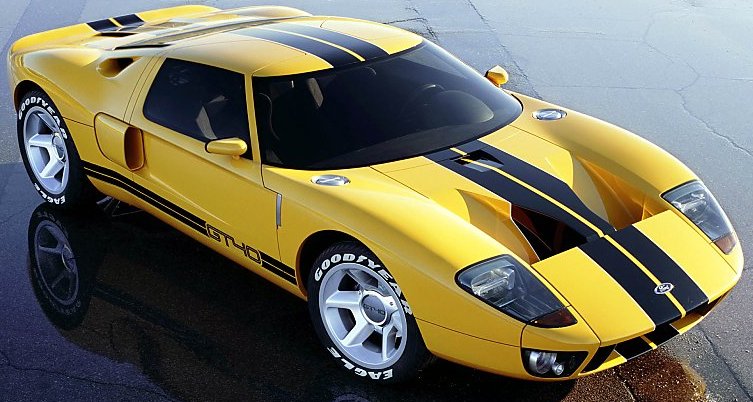
De Ford GT. In mijn ogen de pure vormgeving van een sportauto en legendarisch.
2.

De Audi Urquattro. De vierwielaandrijving, de 'looks', het ontzettend mooie geluid, de legende!
3.

De Volkswagen Scirocco mk 1. Met name toen de GTi series uitkwamen was dit destijds de auto om te hebben. Geweldig apparaatje. heb er zelf eentje gehad. Wat een fun (en wat een roest...)
4.

De Bugatti Royal. Gezien in het museum van Donnington (replica). Ongelofelijk zeldzaam. Buitengewoon exclusief voor z'n tijd en een aluminium motorblok en velgen(en dat in 1932).
Ik heb een lekker uiteenlopende smaak, geloof ik...
Er zijn mensen die mij platvloers vinden... Die moeten niet zo zeiken!
Taxiracing weblog
Taxiracing weblog
Ferrari 575M Maranello
waarom ?
- ontworpen door Pininfarina
- V12 met 588nm en 515pk
- 0-100 in 4.2 seconden, makkelijk over de 300km/u
- geprezen voor zijn rij-kwaliteiten


waarom ?
- ontworpen door Pininfarina
- V12 met 588nm en 515pk
- 0-100 in 4.2 seconden, makkelijk over de 300km/u
- geprezen voor zijn rij-kwaliteiten
Jeff Buckley - All Flowers in Time bend Towards the Sun
http://youtube.com/watch?v=chZbxlbGkMU&mode=user&search=
Jeff Buckley - I Woke up in a Strange Place
http://youtube.com/watch?v=jfy_vnWWN0s
http://youtube.com/watch?v=chZbxlbGkMU&mode=user&search=
Jeff Buckley - I Woke up in a Strange Place
http://youtube.com/watch?v=jfy_vnWWN0s
Ferrari F-40
General specifications
Country of origin Italy
Years of production 1987 - 1992
Numbers built 1315
Body design Pininfarina
Weight 1100 kilo / 2425.1 lbs
Drivetrain
Engine Type F120 A 90º V 8
Engine Location Mid , longitudinally mounted
Displacement 2.936 liter / 179.2 cu in
Valvetrain 4 valves / cylinder, DOHC
Fuel feed Weber-Marelli Fuel injection
Aspiration Two IHI Turbos with two Behr intercoolers
Gearbox 5 speed Manual
Drive Rear wheel drive
Performance figures
Power 478 bhp / 357 KW @ 7000 rpm
Torque 577 Nm / 426 ft lbs @ 4000 rpm
BHP/Liter 163 bhp / liter
Power to weight ratio 0.43 bhp / kg
Top Speed 324 km/h / 201 mph
0-60 mph Acceleration 3.5 s
Overigens heeft de amerikaanse versie rondom zwarte 'bumpers' (soort stoot strippen).
Helaasch is dit dan ook erg lelijk. Maar dat neemt niet weg dat dit een auto is in zn puurste vorm. Mensen die de Top Gear aflevering hebben gezien tussen de enzo en f40 weten dat Jeremy er ook weg van was (de f40 dus )

quote:What qualifies as a 'supercar'? Although this is a highly debatable question, few automotive enthusiasts will disagree when it comes to the Ferrari F40. This thoroughbred from Maranello's finest stable incorporates everything needed to be a true 'supercar', and more.
Built to celebrate the marque's 40th anniversary, the F40 was a development of the 288 GTO. Whereas the GTO's looks are understated, the F40's curvaceous body and huge rear wing just scream performance. Penned by Pininfarina, the F40 shares some design elements with the 288 GTO Evoluzione race car.
Under the composite body panels, Ferrari fitted nothing but the essential bits and pieces to keep the car's overall weight down. The chassis consists of a composite central section with steel tubular space frames on either end to support the suspension. This setup offers a good balance between light weight and rigidity. Suspension is by double wishbones all-round, helped by coil springs over dampers and an anti-roll bar fore and aft.
The heart of every Ferrari is the engine and the F40 is no exception. Unlike most other Ferraris, which are powered by a high revving V12 engine, the F40 uses a V8. Like the manufacturer's contemporary Formula 1 engines, the V8 is fitted with two turbochargers and intercoolers. The three litre engine was rated at 478 bhp, which was well within the chassis' 600 - 650 bhp limit.
The complete package combined stunning looks and tarmac ripping performance, which could very well be considered the essential ingredients for being a supercar. The lack of creature comforts and practicality ads to the 'perfect mix.' Driving a F40 requires a very strong left foot and a very careful right foot.
At the time of the F40's launch there was just one real competitor, the Porsche 959. Equipped with a heavy all wheel drive system, the Porsche was let down by a much higher kerb weight. For many years the F40's performance remained unmatched. Ferrari intended to produce less than 950 examples, but to match the 3100 potential orders, just over 1300 were eventually built.
The spartan F40 was basically a road legal racer, so it came as no surprise that Ferrari customers were interested in racing the F40 in GT-races. For this purpose Michelotto modified a number of F40s, which were raced with considerable success, long after the road car's production had halted. Dubbed F40 LM and F40 GTE, these racers were fitted with a 700 bhp version of the V8.
Today, the F40 still ranks high on many enthusiasts' favorite car list. With 1315 examples it is not as rare as Ferrari's other 'supercars' and is common sight on many Ferrari events, where its unique looks still makes fans' hearts beat faster. It is pictured here at Ferrari events and auctions all over Europe

General specifications
Country of origin Italy
Years of production 1987 - 1992
Numbers built 1315
Body design Pininfarina
Weight 1100 kilo / 2425.1 lbs
Drivetrain
Engine Type F120 A 90º V 8
Engine Location Mid , longitudinally mounted
Displacement 2.936 liter / 179.2 cu in
Valvetrain 4 valves / cylinder, DOHC
Fuel feed Weber-Marelli Fuel injection
Aspiration Two IHI Turbos with two Behr intercoolers
Gearbox 5 speed Manual
Drive Rear wheel drive
Performance figures
Power 478 bhp / 357 KW @ 7000 rpm
Torque 577 Nm / 426 ft lbs @ 4000 rpm
BHP/Liter 163 bhp / liter
Power to weight ratio 0.43 bhp / kg
Top Speed 324 km/h / 201 mph
0-60 mph Acceleration 3.5 s


Overigens heeft de amerikaanse versie rondom zwarte 'bumpers' (soort stoot strippen).
Helaasch is dit dan ook erg lelijk. Maar dat neemt niet weg dat dit een auto is in zn puurste vorm. Mensen die de Top Gear aflevering hebben gezien tussen de enzo en f40 weten dat Jeremy er ook weg van was (de f40 dus )
 )
)
"The guys from Mclaren kept saying: "sounds like a spitfire", and the guys from Mercedes went: "Nein, nein, nein, sounds like a Messerschmitt", they're both wrong actually, it sounds like the god of Thunder"
ik zag er laatst nog 1 rijden het zijn inderdaad mooie bakken.quote:
Holy-Gosh-Golly-Gee-Willickers-Zippity-Doo, Batman!
[Centraal] Icons klaar terwijl u wacht! #56
[Centraal] Icons klaar terwijl u wacht! #56

Helemaal mee eens!quote:Op maandag 1 augustus 2005 02:25 schreef blackmage het volgende:
mijn nominatie
Honda Civic Type r
[afbeelding]
Even wat meer informatie:
topsnelheid 235 km/h
acceleratie 0-100 km/h 6,6 s
verbruik binnen b.k. 12.3 l/100km
verbruik buiten b.k. 7.0 l/100km
verbruik gecombineerd 8,9 l/100km
CO2 uitstoot 212 g/km
laatste nieuwprijs € 29.025
nieuwprijs 2004 € 29.025
nieuwprijs 2003 € 28.885
wegenbelasting/3mnd € 100 - € 117
afleveringskosten € 395
occasionprijs 2004 € 22.600 (20.000km)
occasionprijs 2003 € 19.900 (40.000km)
wegenbelasting/jaar € 388 - € 456
aantal cilinders 4, in lijn
kleppen per cilinder 4
cilinderinhoud 1998 cm3
boring x slag 86,0 x 86,0 mm
compressieverh. 11,0:1
max. vermogen 147 kW (200 pk) 7400tpm
max. koppel 196 Nm 5900tpm
brandstofsysteem multipoint injectie
klepbediening dohc
turbo nee
katalysator geregeld


Het nieuwe model
Waarom zet ik dit allemaal neer?
Omdat je in tegenstelling tot een groot aantal andere auto's in dit topic veel krijgt voor een veel kleinere prijs. OK, hij kost nog steeds een aardige duit, maar dat staat toch in schril contrast met wat een Aston Martin DB7 kost. Daarbij is Honda al jarenlang een van de meest betrouwbare merken en zijn ze onverwoestbaar, zelfs de carosserie die vroeger nogal eens wilde roesten lijkt nu helemaal tip top in orde. Uiteraard staat een Honda garant voor rijplezier, comfort en duurzame auto's. Wat mij betreft is dit de beste en best betaalbare FOK! auto.
Gr.
Robar


Ik nomimeer de Corvette C4 ('84-'96)
Ik zag dat de C3 al genoemd was, wat mijn 2e keus zou zijn, maar de mooiste in mijn ogen is natuurlijk de C4. Een jeugdliefde zullen we het maar noemen.
Ik zag dat de C3 al genoemd was, wat mijn 2e keus zou zijn, maar de mooiste in mijn ogen is natuurlijk de C4. Een jeugdliefde zullen we het maar noemen.


Ik hou hem nog wat langer open, de mooie nominaties lopen nog te lekker.
Klonk is alleen Klonk als er Klonk op staat
Zie ik het nu goed dat de Porsche 911 nog niet genomineerd is? In dat geval nomineer ik hem. Een auto die al dik 40 jaar rond rijdt, en in de basis nog steeds dezelfde, naar mijn mening prachtige, lijnen heeft, mag natuurlijk absoluut niet ontbreken.
De eerste, Porsche 911 2.0:
De nieuwste, Porsche 997:
Wat mij betreft blijft het gewoon dè sportwagen.
De eerste, Porsche 911 2.0:

De nieuwste, Porsche 997:

Wat mij betreft blijft het gewoon dè sportwagen.
Nou, dan zal ik naast de M3, de M3 CSL de daarna meest spectaculaire M3 nomineren;
De BMW M3 GTR:
De straat versie heeft +/- 350pk.
De M3 GTR race versie:
De race uitvoering heeft +/- 500pk. De GTR heeft vele overwinningen op zijn naam staan.
En nog eentje die in dit rijtje kan behoren.
De Mercedes CLK DTM
582pk, 0 - 100 in 3.9sec en een electronisch geregelde top van 320km/uur
De BMW M3 GTR:


De straat versie heeft +/- 350pk.
De M3 GTR race versie:

De race uitvoering heeft +/- 500pk. De GTR heeft vele overwinningen op zijn naam staan.
En nog eentje die in dit rijtje kan behoren.
De Mercedes CLK DTM


582pk, 0 - 100 in 3.9sec en een electronisch geregelde top van 320km/uur

De meeste fokkkers zijn sloebers en hebben weinig te makken, daarom is de ultieme fok! auto in mijn ogen :
De suzuki alto, de meest goedkope en in die klasse betrouwbare (winkel)wagen, welke meestal niet meer kost dan een krat bier (wat ook meteen het gemiddelde is wat een fokker kan betalen!) Vergeet de panda welke onder je kont vandaan roest en de cuore welke bij een windvlaag in de greppel ligt, dit is de shit!!
[ Bericht 11% gewijzigd door _Drake_ op 06-08-2005 19:34:44 ]

De suzuki alto, de meest goedkope en in die klasse betrouwbare (winkel)wagen, welke meestal niet meer kost dan een krat bier (wat ook meteen het gemiddelde is wat een fokker kan betalen!) Vergeet de panda welke onder je kont vandaan roest en de cuore welke bij een windvlaag in de greppel ligt, dit is de shit!!
 (wat ook meteen het gemiddelde is wat een fokker kan betalen!) Vergeet de panda welke onder je kont vandaan roest en de cuore welke bij een windvlaag in de greppel ligt, dit is de shit!!
 [ Bericht 11% gewijzigd door _Drake_ op 06-08-2005 19:34:44 ]
De Volga V12 Coupé mag hier niet ontbreken..


Jeremy Clarkson: "You're not a real petrolhead, unless you've had an Alfa Romeo"
Ik stem duidelijk voor de Nissan Skyline GTR 34
Als ik ooit geld genoeg heb koop k der meteen 1!!!
Ubergeile dingen!
Als ik ooit geld genoeg heb koop k der meteen 1!!!
Ubergeile dingen!
Op vrijdag 18 mei 2007 11:31 schreef miss_sly het volgende:
Ik was allang overtuigd van jouw wijsheid O+
_______________________________________________________
Peter Jennings - Ecstasy Rising
Ik was allang overtuigd van jouw wijsheid O+
_______________________________________________________
Peter Jennings - Ecstasy Rising
Weet dat het te laat is, maar ik zie nog geen ander topic voor het stemmen
Deze oldtime favourite mag eigenlijk niet missen
De Lamborghini Diablo
Hier wat foto's van de Lamborghini Diablo VT 6.0. Is de laatste Diablo versie geperfectioneerd door Audi en is voor mij toch wel 1 van de mooiste auto's

Deze oldtime favourite mag eigenlijk niet missen
De Lamborghini Diablo


Hier wat foto's van de Lamborghini Diablo VT 6.0. Is de laatste Diablo versie geperfectioneerd door Audi en is voor mij toch wel 1 van de mooiste auto's
De ABT audi AS3:
Het is een snelle auto, heeft veel klasse en is niet overdreven optisch getuned, veel vermogen en nog meer stijl.
[sub]als tuner-auto's niet mogen nomineer ik de Audi S3 quattro om dezelfde redenen[/IMG]

Het is een snelle auto, heeft veel klasse en is niet overdreven optisch getuned, veel vermogen en nog meer stijl.

[sub]als tuner-auto's niet mogen nomineer ik de Audi S3 quattro om dezelfde redenen[/IMG]
With only two tools, you can fix everything:
WD40: If something doesn't move and it should.
Ducttape: If something moves and it shouldn't.
WD40: If something doesn't move and it should.
Ducttape: If something moves and it shouldn't.
Mercedes Benz G 55 AMG
Waarom?
- ruim
- absurd snel/krachtig (476 pk/700 nm)
- 0-100 in 5,5 sec voor een wagen van 2450 kg (Top: 210 kmh)
- luxe
- imposante verschijning
Voor mij de ultieme allrounder, enorm snel maar toch veel ruimte en luxe


Waarom?
- ruim
- absurd snel/krachtig (476 pk/700 nm)
- 0-100 in 5,5 sec voor een wagen van 2450 kg (Top: 210 kmh)
- luxe
- imposante verschijning
Voor mij de ultieme allrounder, enorm snel maar toch veel ruimte en luxe
wanneer sluit de nominatie ronde nou dan?
"The guys from Mclaren kept saying: "sounds like a spitfire", and the guys from Mercedes went: "Nein, nein, nein, sounds like a Messerschmitt", they're both wrong actually, it sounds like the god of Thunder"
Ik neem aan dat voor iedere auto het 'gewone' type wordt genomen bij de verkiezing?
Dus (voor de 2 laatst genoemde) de Audi A3, en de Mercedes G-klasse
Dus (voor de 2 laatst genoemde) de Audi A3, en de Mercedes G-klasse
Nou, dan nomineer ik ook nog wat.
Ford Probe
Stoer.Amerikaans (is dat een plus of een min?). En die vrouw krijg je erbij. Echt!


Ford Probe
Stoer.Amerikaans (is dat een plus of een min?). En die vrouw krijg je erbij. Echt!
Jesus saves but death prevails.
Mag deze er nog bij?
Mooi van lelijkheid en een wagen die ik absoluut binnen een paar jaar ga aanschaffen.

Mooi van lelijkheid en een wagen die ik absoluut binnen een paar jaar ga aanschaffen.
Ik heb al een boek.
De Trabant, de trots van de DDR:

<a href="https://www.youtube.com/watch?v=yIl_jGh-LWE" target="_blank" rel="nofollow">Afleidingsmanoeuvre</a>

TS heeft nog best zin
de nominaties liepen nog erg lekker, en vond het zonde om te vroeg met het stemmen te beginnen

de nominaties liepen nog erg lekker, en vond het zonde om te vroeg met het stemmen te beginnen
Klonk is alleen Klonk als er Klonk op staat
meer dan een maand nu al, misschien tijd om eens te beginnen?quote:Op zaterdag 27 augustus 2005 22:55 schreef Klonk het volgende:
TS heeft nog best zin
de nominaties liepen nog erg lekker, en vond het zonde om te vroeg met het stemmen te beginnen
|
|
