NWS Nieuws & Achtergronden
Discussieer hier diepgaander over de actualiteiten.



nos.nl/artikel/2585414-franse-premier-lecornu-nog-geen-maand-in-functie-treedt-af
 lekker landje om te besturen daar
5de ook gewoonquote:Franse premier Lecornu, nog geen maand in functie, treedt af
De Franse premier Sébastien Lecornu stapt na nog geen maand op. De 39-jarige Lecornu was de vijfde premier in minder dan twee jaar tijd. Waarom hij opstapt is nog onduidelijk.
Lecornu volgde Bayrou op, die door het parlement was weggestuurd in verband met bezuinigingsplannen. Hij was aangesteld om Frankrijk uit de politieke malaise te halen. Het Elysée meldt dat president Macron het ontslag heeft geaccepteerd.
Het land verkeert in een economische crisis, met een begrotingstekort van 5 procent van het bruto binnenlands product, het hoogste binnen de EU. Dat begrotingstekort en de aangekondigde bezuinigingen leidden de afgelopen maanden tot veel maatschappelijke onrust.
Bij zijn aantreden was Lecornu omstreden. Hij had jarenlang onjuiste informatie op zijn cv gezet. Zo stond er dat hij een masterdiploma in rechten had behaald aan de Universiteit van Parijs, terwijl hij slechts het eerste jaar had gevolgd en geen diploma had. Zowel vanuit de linkse als de rechtse oppositie was er al weinig vertrouwen in de nieuwe premier.
lekker landje om te besturen daar
THE FUCK?quote:Op maandag 6 oktober 2025 10:18 schreef Moonversion het volgende:
Zo stond er dat hij een masterdiploma in rechten had behaald aan de Universiteit van Parijs, terwijl hij slechts het eerste jaar had gevolgd en geen diploma had.


so what, NL is ook demissionair.
Aan deze tekst kunnen geen rechten worden ontleend.
Ik ben geen robot.
it's ok to be licht getint
I stand with (the) Netherlands. w/
Ik ben geen robot.
it's ok to be licht getint
I stand with (the) Netherlands. w/

Wat voor voordeel bereiken de fransen daarmeequote:

Geld maakt meer kapot dan je lief is.
Het zijn sterke ruggen die vrijheid en weelde kunnen dragen
Het zijn sterke ruggen die vrijheid en weelde kunnen dragen

Da's maar drie procent of zo op hun begroting. Althans, dat vermoed ik met hun BBP.quote:Op maandag 6 oktober 2025 10:54 schreef QWARQTAARTJE het volgende:
Tis ook een beetje koekkoek om meteen 44 miljard te willen bezuinigen
Voor de dagelijkse Trumprotzooi: https://reportersonline.nl/auteur/kirsten-verdel/
Kijk live hoe Trump zijn eigen land sloopt: https://www.project2025.observer/
Kijk live hoe Trump zijn eigen land sloopt: https://www.project2025.observer/


Als ze het 10 jaar eerder hadden gedaan dan was het waarschijnlijk nog niet eens de helft geweest. Hoe langer ze wachten met het doorvoeren van wijzigingen hoe zuurder de appel wordt.quote:
Tis ook een beetje koekkoek om meteen 44 miljard te willen bezuinigen
Op zaterdag 8 februari 2014 23:39 schreef Slaapscheet het volgende:
Oke, MichaelScott, je bent geweldig. :D
Oke, MichaelScott, je bent geweldig. :D
Kunnen ze nog eerder met pensioen.quote:
[..]
Wat voor voordeel bereiken de fransen daarmee
Die lui daar moeten eens gaan werken voor hun centen en niet zo klagen. Ik ga in ieder geval geen cent meebetalen voor de zooi die ze daar zelf gemaakt hebben
Moeten ze wel op een houtje bijten, het zal een karig bestaan worden met de waardeloze geinflateerde franken waarin dat pensioen dan uitbetaald wordt. Ik zie dat zo snel niet gebeuren, een Frexit is vooral gunstig voor ons, niet voor de fransen.quote:
Geld maakt meer kapot dan je lief is.
Het zijn sterke ruggen die vrijheid en weelde kunnen dragen
Het zijn sterke ruggen die vrijheid en weelde kunnen dragen
Je kan de euro gewoon aanhouden als betaalmiddel.quote:
[..]
Moeten ze wel op een houtje bijten, het zal een karig bestaan worden met de waardeloze geinflateerde franken waarin dat pensioen dan uitbetaald wordt. Ik zie dat zo snel niet gebeuren, een Frexit is vooral gunstig voor ons, niet voor de fransen.
Ontvang jij je salaris in euros?, dan betaal je sowieso daaraan mee, dat is ook het grote probleem wat ermee speelt.quote:
Die lui daar moeten eens gaan werken voor hun centen en niet zo klagen. Ik ga in ieder geval geen cent meebetalen voor de zooi die ze daar zelf gemaakt hebben
Geld maakt meer kapot dan je lief is.
Het zijn sterke ruggen die vrijheid en weelde kunnen dragen
Het zijn sterke ruggen die vrijheid en weelde kunnen dragen
Die kunnen ze dan niet langer meer zelf bijdrukken, dat is sowieso iets wat ze nooit gaan doenquote:
[..]
Je kan de euro gewoon aanhouden als betaalmiddel.
Geld maakt meer kapot dan je lief is.
Het zijn sterke ruggen die vrijheid en weelde kunnen dragen
Het zijn sterke ruggen die vrijheid en weelde kunnen dragen
Stoere maar loze woordenquote:
Die lui daar moeten eens gaan werken voor hun centen en niet zo klagen. Ik ga in ieder geval geen cent meebetalen voor de zooi die ze daar zelf gemaakt hebben
Dat maakt niet uit.quote:
[..]
Ontvang jij je salaris in euros?, dan betaal je sowieso daaraan mee, dat is ook het grote probleem wat ermee speelt.
Als hij in een Europees land iets koopt draagt hij al bij, de btw gaat naar de staat en die gebruikt daar een deel van om aan europa te geven en dat gaat dan weer naar frankrijk
Nee, Frankrijk int veel te weinig belasting waar dus geen geleverde (reele diensten en goederen) tegenover staan. Ze laten het begrotingstekort in euros bijdrukken. Deze inflatie gaat naar alle euro houders die daaraan dus meebetalen. De zogenoemde inflatie-tax.quote:
[..]
Dat maakt niet uit.
Als hij in een Europees land iets koopt draagt hij al bij, de btw gaat naar de staat en die gebruikt daar een deel van om aan europa te geven en dat gaat dan weer naar frankrijk
Geld maakt meer kapot dan je lief is.
Het zijn sterke ruggen die vrijheid en weelde kunnen dragen
Het zijn sterke ruggen die vrijheid en weelde kunnen dragen
Voorlopig blijft de pensioenleeftijd dus 62 jaar in Frankrijk, enige dekking voor die enorme kosten is er niet, behalve dan de euro drukpers. De hierdoor veroorzaakte inflatie wordt vooral geëxporteerd naar de overige euro-landen, zolang die dat blijven toestaan.quote:S&P hands crisis-prone France surprise downgrade
S&P Global downgraded France's, opens new tab rating a notch on Friday in a surprise update on the euro zone's second-biggest economy, warning that political instability put the government's efforts to repair its finances at risk.
Credit ratings agencies rarely downgrade outside of regulated schedules for updates, but S&P said France's cut to A+/A-1' from 'AA-/A-1+' was merited after a high-tension week in which Prime Minister Sebastien Lecornu pledged to suspend a deeply unpopular 2023 pension reform and faced two votes of no-confidence.
"We expect policy uncertainty will affect the French economy by dragging on investment activity and private consumption, and therefore on economic growth," the credit ratings agency said in a statement.
Lecornu survived the two no-confidence votes in parliament on Thursday, but the reprieve for his days-old government came at the price of sacrificing President Emmanuel Macron's signature pension reform in order to win support from Socialist lawmakers.
Any respite will prove short-lived as Lecornu's 2026 budget, which he also presented this week, faces a rough ride in France's fractured parliament when they begin reviewing the bill on Monday.
In reaction to the downgrade, Finance Minister Roland Lescure said that it was now "the collective responsibility of the government and parliament" to pass a budget by year-end, ensuring the fiscal deficit is on a path to the European Union ceiling of 3% of GDP by 2029.
According to S&P, the passage of a budget by year-end would help give greater clarity on how France will manage its rising debt burden, which it projected would climb to 121% of GDP by 2028 versus 112% of GDP at end-2024.
"Nevertheless, in our view, uncertainty on public finances remains elevated ahead of the 2027 presidential elections," S&P said.
The agency revised the country's outlook from 'negative', saying the 'stable' outlook balances rising government debt and weak political consensus on the pace of budgetary consolidation against France's credit strengths.
Geld maakt meer kapot dan je lief is.
Het zijn sterke ruggen die vrijheid en weelde kunnen dragen
Het zijn sterke ruggen die vrijheid en weelde kunnen dragen
The French Economy is Broken…
Bekijk deze YouTube-video

Bekijk deze YouTube-video
quote:ABP (Algemeen Burgerlijk Pensioenfonds) belegt in franse staatsobligaties, ook wel Obligations assimilables du Trésor (OAT's) genoemd, die worden uitgegeven door de Franse staat voor middellange en lange termijn leningen. Deelnemers kunnen obligaties aanhouden of verkopen voor de vervaldatum, en deze betalen een vaste rente tot aan de vervaldatum, aldus ABP en Agence France Trésor.
Geld maakt meer kapot dan je lief is.
Het zijn sterke ruggen die vrijheid en weelde kunnen dragen
Het zijn sterke ruggen die vrijheid en weelde kunnen dragen
Something's Going Seriously Wrong in France
Bekijk deze YouTube-video
Bekijk deze YouTube-video
Geld maakt meer kapot dan je lief is.
Het zijn sterke ruggen die vrijheid en weelde kunnen dragen
Het zijn sterke ruggen die vrijheid en weelde kunnen dragen
quote:French Bond Futures Fall After S&P Downgrade Sparks Budget Concerns
On Monday, French bond futures declined as traders adjusted positions following the downgrade. The yield on the 10-year French government bond (OAT) rose to 3.42 percent, widening the spread over German Bunds, a benchmark for Eurozone risk premium.
Traders now price in higher borrowing costs for France into 2026. Yahoo Finance noted moderate selling pressure on trading desks, tempered by expectations that the European Central Bank (ECB) would maintain caution on rate adjustments.
Will yields keep rising? Analysts say it depends on France’s 2026 budget measures. If the government strengthens spending discipline, yields could stabilize, though the margin for error is slim.
Geld maakt meer kapot dan je lief is.
Het zijn sterke ruggen die vrijheid en weelde kunnen dragen
Het zijn sterke ruggen die vrijheid en weelde kunnen dragen
belachelijk. ik heb een vriendin in japan waar ik mee spreek, daar heb je 'pin pin korori' ofwel, levendig tot het einde, en dan plots sterven. de arbeidsparticipatie zelfs boven de 70 jaar is daar heel hoog.quote:
[..]
Voorlopig blijft de pensioenleeftijd dus 62 jaar in Frankrijk, enige dekking voor die enorme kosten is er niet, behalve dan de euro drukpers. De hierdoor veroorzaakte inflatie wordt vooral geëxporteerd naar de overige euro-landen, zolang die dat blijven toestaan.
frankrijk? pensioenleeftijd 62 (!!) jaar, vervangingsratio rond de 73% van het laatste loon, omslagstelsel. dat is niet houdbaar
het feit is dat de ouderen in frankrijk een veel te hoge druk leggen op de jongere werkenden. ouderen in heel europa leven langer, dus zullen langer moeten doorwerken en dat moet worden genormaliseerd.
en daarom moet ook leeftijdsdiscriminatie worden aangepakt
Nope, zolang de rest van de euro-lidstaten het financieren middels de inflatie-tax is het voor de fransen houdbaar.quote:
[..]
belachelijk. ik heb een vriendin in japan waar ik mee spreek, daar heb je 'pin pin korori' ofwel, levendig tot het einde, en dan plots sterven. de arbeidsparticipatie zelfs boven de 70 jaar is daar heel hoog.
frankrijk? pensioenleeftijd 62 (!!) jaar, vervangingsratio rond de 73% van het laatste loon, omslagstelsel. dat is niet houdbaar
Schuldmonetariseringquote:Inflatie werkt als een belasting doordat de koopkracht van je geld afneemt en de overheid de belastingschijven en heffingskortingen niet altijd volledig compenseert. Dit betekent dat je, als je inkomen wel meestijgt met de inflatie, daardoor meer belasting kunt gaan betalen, een fenomeen dat ook wel bekend staat als fiscal drag.
Geld maakt meer kapot dan je lief is.
Het zijn sterke ruggen die vrijheid en weelde kunnen dragen
Het zijn sterke ruggen die vrijheid en weelde kunnen dragen
Bekijk deze YouTube-videoquote:Wealthy French are taking their wealth out and leaving the country, people are ashamed of the situation
Wealthy French people are taking their wealth out to “safe“ countries such as Luxembourg and Switzerland amid the political crisis in France, the Financial Times reports.
A previous survey by Verian for the Figaro newspaper showed that more than half of French residents are ashamed of the current political situation in the country.
“Wealthy French people are moving their wealth to Luxembourg and Switzerland. The political crisis and tax threats have accelerated the flow of investments to safe havens. French entrepreneurs and wealthy families, concerned about the political crisis at home, are investing record amounts in Luxembourg annuities and moving other assets to supposed safe havens such as Switzerland, the report said.
[ Bericht 0% gewijzigd door Digi2 op 20-10-2025 15:44:39 ]
Geld maakt meer kapot dan je lief is.
Het zijn sterke ruggen die vrijheid en weelde kunnen dragen
Het zijn sterke ruggen die vrijheid en weelde kunnen dragen
Too big to fail: Frankrijk dreigt Europa mee te sleuren
Bekijk deze YouTube-video
Bekijk deze YouTube-video
quote:Frankrijk verkeert in politieke chaos en kampt met een torenhoge staatsschuld. Volgens hoogleraar bankwezen en financiering Harald Benink dreigt het land de zwakste schakel in de eurozone te worden. Wat gebeurt er als Frankrijk wankelt — en kan Europa dat nog opvangen?
Geld maakt meer kapot dan je lief is.
Het zijn sterke ruggen die vrijheid en weelde kunnen dragen
Het zijn sterke ruggen die vrijheid en weelde kunnen dragen
Tja, het is ook erg raar dat ze in Frankrijk alles over rechts willen spelen terwijl een (radicaal) links blok de verkiezingen had gewonnen.
'I moved to Peru and shaved half my head and wrote for Teen Vogue. If I can come back from the depths of leftism, trust me, anyone can.' - Gina Florio
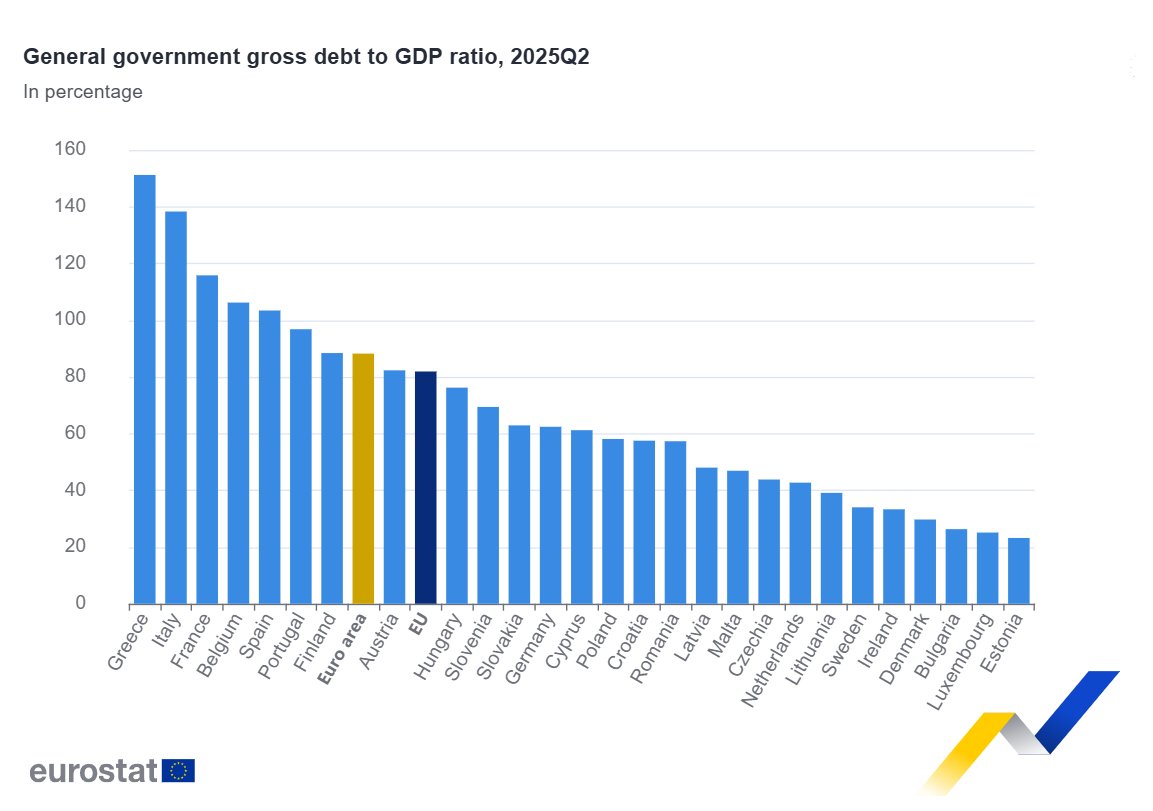
Toch is Frankrijk het land waardoor het voortbestaan van de euro het meest bedreigt wordt, dat ligt geheel aan de franse mentaliteit. De recente franse historie geeft ook geen enkele indicatie dat deze ook zelfs maar gering gewijzigd is. In feite worden de euro lidstaten in gijzeling genomen door de fransen, de vraag is of we ons in dit Stockholm syndroom blijven bevinden of dat we ondanks de grote schade toch liever eieren voor ons geld gaan kiezenquote:Frontpage: Welke EU-landen verzuipen in hun schulden?
Niet alleen Frankrijk worstelt met een te hoog oplopende staatsschuld, meer dan de helft van alle EU-lidstaten overschrijdt de afgesproken bovengrens voor hun schuldratio. Er zijn echter verrassend consistente uitzonderingen.

Geld maakt meer kapot dan je lief is.
Het zijn sterke ruggen die vrijheid en weelde kunnen dragen
Het zijn sterke ruggen die vrijheid en weelde kunnen dragen

Dit staat op zeer gespannen voet met de mensenrechten en ik vermoed dat het europees hof of een internationaal hof hier sowieso een streep door gaat zetten. Zoals ook de hoge raad hier in nl al heeft gedaan tav de vermogensrendementsheffing. Het werkelijk rendement op vermogen mag belast worden (naar redelijkheid), het vermogen zelf principieel niet omdat dit al snel leidt tot een willekeur waaraan geen mens/(en bedrijf) blootgesteld wil worden.quote:French government's fate in the balance as lawmakers set to vote on wealth tax
France may see another government fall as early as next week as lawmakers debated budgetary amendments on Saturday, including a proposed 2 percent levy on France's ultra-rich known as the "Zucman tax". The centre-left Socialist Party has threatened to use its crucial swing vote to topple the government if a wealth tax is not included in next year's budget.
French lawmakers were due to vote on a wealth tax late on Saturday after the centre-left Socialist Party threatened to use its swing vote to topple the government if the levy was not added in next year's austerity budget.
France is under pressure to pass a spending bill by an end-of-year deadline to rein in its deficit and rising debt, but efforts have been hampered by a political crisis.
The country's third prime minister in a little over a year, Sébastien Lecornu has promised to get the job done, after the legislature ousted his two predecessors over cost-cutting measures.
Lecornu survived a confidence vote earlier this month by agreeing to suspend a deeply unpopular pensions reform under pressure from the Socialists.
But the Socialists have also demanded a tax on the ultra-wealthy, without which they have threatened to topple his government as soon as Monday.
They originally requested a levy, named after French economist Gabriel Zucman, who hoped to raise around €20 billion ($27 billion) per year from just 1,800 wealthy households.
Zucman's proposal was to make people with at least €100 million in assets pay a minimum tax of 2 percent on that wealth.
quote:Article 17 of the Universal Declaration of Human Rights (UDHR) enshrines the right to property as follows:
Everyone has the right to own property alone as well as in association with others. No one shall be arbitrarily deprived of his or her property.
Geld maakt meer kapot dan je lief is.
Het zijn sterke ruggen die vrijheid en weelde kunnen dragen
Het zijn sterke ruggen die vrijheid en weelde kunnen dragen
De franse regering wil ook de belastingen voor grote bedrijven verhogen. Dit zal waarschijnlijk leiden tot een verslechtering van het investeringsklimaat. De grote vraag is dan ook of dit daadwerkelijk meer aan belastingen gaat opbrengen. Mijn indruk is dat Frankrijk hun kip die de gouden eieren legt aan't slachten is. De belasting en regeldruk is al zeer hoog in Frankrijk, deze nog verder verhogen zal imo meer kwaad dan goed doen.
Frankrijk gaat in economisch opzicht over van een palliatieve naar een terminale fase, dit geldt dan overigens eveneens voor de euro als valuta.
[ Bericht 3% gewijzigd door Digi2 op 28-10-2025 10:35:53 ]
Frankrijk gaat in economisch opzicht over van een palliatieve naar een terminale fase, dit geldt dan overigens eveneens voor de euro als valuta.
quote:France's Corporate Tax Hike: Implications for European Equities and Cross-Border Investment Flows
The recent amendment to France's 2025 budget, which includes a significant increase in corporate tax rates for large firms, marks a pivotal moment in the country's fiscal strategy. According to a Bloomberg Law report, the National Assembly adopted this measure as part of a broader compromise to address a deteriorating budget situation and placate opposition lawmakers. While the exact percentage of the tax hike remains unspecified, the finance ministry has raised its revenue target from €4 billion to €6 billion in 2026, reflecting a more aggressive fiscal stance than initially planned. This shift carries profound implications for European equities and cross-border investment flows, as multinational corporations recalibrate their strategies in response to heightened tax burdens.
A Tax Hike with Broad Economic Ripples
The extension of temporary corporate tax increases into 2026 signals a departure from France's previous approach of short-term fiscal adjustments. By targeting the country's largest companies, the government aims to stabilize public finances amid rising deficits. However, such measures risk dampening corporate profitability and investment. Higher taxes on large firms could reduce their capacity to reinvest in growth, potentially slowing productivity gains and innovation. For European equities, this creates a dual challenge: immediate pressure on earnings and long-term uncertainty about the competitiveness of France as a business destination, as the Bloomberg Law report indicates.
Investor sentiment is already shifting. The tax hike, coupled with the removal of other revenue-raising measures like an income tax bracket freeze, has introduced volatility into equity markets. While the full impact may take months to materialize, cross-border capital flows are likely to be affected. Multinational corporations may accelerate strategies to relocate operations or shift profits to jurisdictions with lower tax rates, a trend that has gained momentum in recent years.
Countries like Germany and Spain, which have maintained relatively stable corporate tax regimes, may see increased interest from firms seeking to avoid France's higher burden. This could lead to a reallocation of capital toward southern and central Europe, reshaping regional equity market dynamics.
[ Bericht 3% gewijzigd door Digi2 op 28-10-2025 10:35:53 ]
Geld maakt meer kapot dan je lief is.
Het zijn sterke ruggen die vrijheid en weelde kunnen dragen
Het zijn sterke ruggen die vrijheid en weelde kunnen dragen
Een aanzienlijk deel van de pensioenreserves bestaat uit bonds, die werden als 'veilig' beschouwd, die illusie is nu verdampt, zeker nu de franse regering daarbij nog eens extra olie op het vuur gooit.
Why Smart Money Is Fleeing Bonds Right Now
Bekijk deze YouTube-video
Why Smart Money Is Fleeing Bonds Right Now
Bekijk deze YouTube-video
quote:Smart investors are quietly abandoning the bond market — and almost nobody’s talking about why. For decades, government bonds were considered the safest asset in the world. But after years of artificial interest rates, record inflation, and collapsing confidence in central banks, that safety illusion is breaking apart. In this video, we reveal how the world’s biggest funds, billionaires, and even central banks are escaping the bond trap — and what they’re buying instead. The bond market is cracking, and the smart money sees what’s coming next. Watch till the end to understand how this shift could redefine “safe” investing forever.
Geld maakt meer kapot dan je lief is.
Het zijn sterke ruggen die vrijheid en weelde kunnen dragen
Het zijn sterke ruggen die vrijheid en weelde kunnen dragen
Het ging erom dat je geen fictief rendement mag belasten, je mag kapitaal wel gewoon belasten. Een 2% belasting kan wel problematisch zijn als dat er voor zorgt dat een groot deel van het grootkapitaal het land zal verlaat.quote:
[..]
Dit staat op zeer gespannen voet met de mensenrechten en ik vermoed dat het europees hof of een internationaal hof hier sowieso een streep door gaat zetten. Zoals ook de hoge raad hier in nl al heeft gedaan tav de vermogensrendementsheffing. Het werkelijk rendement op vermogen mag belast worden (naar redelijkheid), het vermogen zelf principieel niet omdat dit al snel leidt tot een willekeur waaraan geen mens/(en bedrijf) blootgesteld wil worden.
[..]
Ceterum censeo Turciam delendam esse.
Nope, je mag werkelijk rendement van kapitaal belasten, niet het eigendom/vermogen zelf, dat is de crux van dit mensenrecht en ook de basis waarom de Hoge raad een fictief rendement als confiscatoir beschouwde, omdat het werkelijke rendement vanwege de lage rentes en relatief hoge inflatie vaak lager was dan het fictieve rendement.quote:
[..]
Het ging erom dat je geen fictief rendement mag belasten, je mag kapitaal wel gewoon belasten. Een 2% belasting kan wel problematisch zijn als dat er voor zorgt dat een groot deel van het grootkapitaal het land zal verlaat.
[ Bericht 0% gewijzigd door Digi2 op 28-10-2025 23:00:23 ]
Geld maakt meer kapot dan je lief is.
Het zijn sterke ruggen die vrijheid en weelde kunnen dragen
Het zijn sterke ruggen die vrijheid en weelde kunnen dragen
Blijkbaar is Art 17 van de mensenrechten ook al van toepassing binnen de franse grondwet. Zo verbazingwekkend is dat nu ook weer niet, het kan in dit geval helpen om economische suicide te vermijden/voorkomen. Vooral de jongere generatie zou met de catastrofale gevolgen te maken krijgen. Gelukkig wordt dat bemoeilijkt.quote:French lawmakers reject wealth tax on ultra-rich
French lawmakers shot down proposals to levy a wealth tax on the ultra-rich demanded by the Left and on Friday backed instead a diluted government plan to tax assets kept in holding companies.
Eager to calm Socialist lawmakers furious over the rejection of the wealth tax, Prime Minister Sebastien Lecornu said the government would not oppose lifting a freeze on pensions and welfare benefits in his 2026 budget.
Centrist, conservative and far-right lawmakers formed a majority against multiple proposals from left-wing parties, including a 2% tax on wealth of more than 100 million euros ($117 million) - a measure promoted by French economist Gabriel Zucman, who says it could generate 15 billion to 20 billion euros annually.
Lecornu, who lacks a parliamentary majority, is reliant on Socialist support to pass the budget and survive potential votes of no confidence.
"If the copy remains as it is today, I solemnly say that there will be no positive vote and there will even be a vote against from the Socialists, meaning that this budget will not be able to pass," Socialist Party leader Olivier Faure said.
"What we want is that the French don't have to pay the tax that billionaires don't want to pay," he added.
Lecornu responded that the Constitutional Court would strike down the Zucman tax and said the government was open to scrapping its plans to freeze pensions and welfare benefits, which otherwise would not have been adjusted next year for inflation.
Zucman argues that his tax, hugely popular in polls, would ensure the ultra-rich pay at least as much, proportionally, as average earners.
The legislation will also face scrutiny from the Constitutional Court, which has previously struck down tax laws it deemed confiscatory.
Geld maakt meer kapot dan je lief is.
Het zijn sterke ruggen die vrijheid en weelde kunnen dragen
Het zijn sterke ruggen die vrijheid en weelde kunnen dragen
How France is becoming a ‘third-world’ economy
Bekijk deze YouTube-video
Frankrijk leeft al langere tijd ver boven zijn stand dmv leningen die feitelijk nooit werkelijk afgelost worden middels belastinginkomsten, maar simpelweg continu worden omgezet in nieuwe leningen. De begrotingstekorten worden ook met nieuwe leningen aangevuld. Deze financiering lijkt nu het einde van de doodlopende weg te naderen.
Bekijk deze YouTube-video
Frankrijk leeft al langere tijd ver boven zijn stand dmv leningen die feitelijk nooit werkelijk afgelost worden middels belastinginkomsten, maar simpelweg continu worden omgezet in nieuwe leningen. De begrotingstekorten worden ook met nieuwe leningen aangevuld. Deze financiering lijkt nu het einde van de doodlopende weg te naderen.
Geld maakt meer kapot dan je lief is.
Het zijn sterke ruggen die vrijheid en weelde kunnen dragen
Het zijn sterke ruggen die vrijheid en weelde kunnen dragen
Het past bij de huidige trend van grote Westerse landen. De VS is ook al tijden op papier failliet en politiek instabiel.quote:
How France is becoming a ‘third-world’ economy
Bekijk deze YouTube-video
Frankrijk leeft al langere tijd ver boven zijn stand dmv leningen die feitelijk nooit werkelijk afgelost worden middels belastinginkomsten, maar simpelweg continu worden omgezet in nieuwe leningen. De begrotingstekorten worden ook met nieuwe leningen aangevuld. Deze financiering lijkt nu het einde van de doodlopende weg te naderen.
|
|
