NWS Nieuws & Achtergronden
Discussieer hier diepgaander over de actualiteiten.



ja gewoon. Niet genoeg doen. Zodat we fucked zijn als het uit de hand loopt of we over jaren nog steeds even afhankelijk van de vS zijnquote:


Recentste data.
[ Bericht 6% gewijzigd door Perrin op 17-02-2025 23:37:05 ]
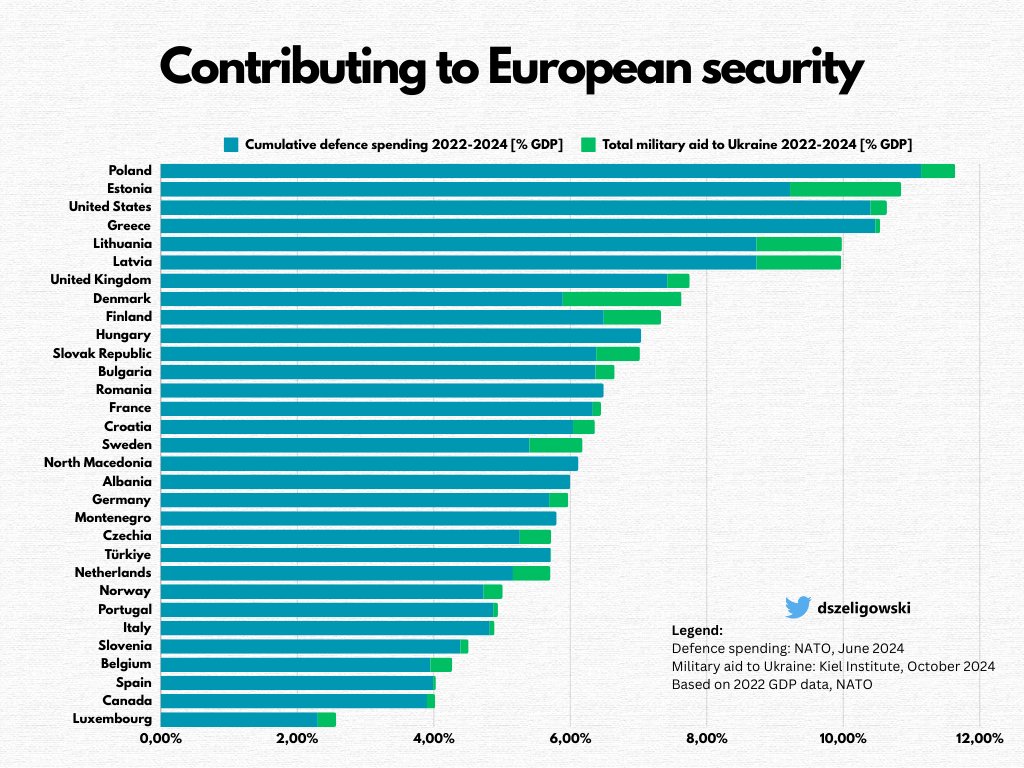
[ Bericht 6% gewijzigd door Perrin op 17-02-2025 23:37:05 ]
And what rough beast, its hour come round at last,
Slouches towards Bethlehem to be born?
Slouches towards Bethlehem to be born?
Ja Trump en Musk zijn nu Poetin's grootste fanboys.quote:
 Op
Op
And what rough beast, its hour come round at last,
Slouches towards Bethlehem to be born?
Slouches towards Bethlehem to be born?

Bizar dat het gewoon kan tegenwoordig als Amerikaan. Ze staan erop de Koude Oorlog alsnog te verliezen.quote:Op maandag 17 februari 2025 23:42 schreef Momo het volgende:
[..]
Ze willen het niet eens meer verbergen
And what rough beast, its hour come round at last,
Slouches towards Bethlehem to be born?
Slouches towards Bethlehem to be born?


Echt leiderschap, andere landen binnenvallen, burgers doden, bombarderen, kinderen ontvoeren, strafkamp voor mensen die kritiek hebben. Echt prachtig!
Luitjes als Musk en Trump houden wel van nietsontziende macht. Het lijden van anderen doet ze niks. Poetin is een voorbeeld.quote:
Echt leiderschap, andere landen binnenvallen, burgers doden, bombarderen, kinderen ontvoeren, strafkamp voor mensen die kritiek hebben. Echt prachtig!
And what rough beast, its hour come round at last,
Slouches towards Bethlehem to be born?
Slouches towards Bethlehem to be born?


Europeans explore troops for Ukraine ceasefire — and want U.S. support
The prospect of troops in Ukraine gained traction as Europeans seek a role in talks between the Trump team and Moscow that could shape the continent’s security.
The prospect of troops in Ukraine gained traction as Europeans seek a role in talks between the Trump team and Moscow that could shape the continent’s security.
quote:European leaders held an urgently arranged meeting Monday in part to discuss the potential deployment of their troops to Ukraine as part of a ceasefire deal as contacts accelerate between the United States and Russia over ending the war.
The Trump administration has been seeking to learn what forces and weapons European countries could commit, while the Europeans, for their part, have been sounding out the Trump team about what kind of military backing would be available, for instance intelligence or air defenses.
The prospect of deploying troops to Ukraine has gained traction among European leaders in recent days as the Trump administration has moved quickly toward opening direct negotiations with Moscow. Ukraine’s European backers are scrambling for a role in those talks, which could reshape the continent’s security landscape. U.S. and Russian officials are expected to meet in Saudi Arabia on Tuesday.
French President Emmanuel Macron convened a meeting of some of the continent’s top leaders in Paris on Monday to spur planning on European support for Ukraine and to forge a consensus on a potential deployment. Macron held a 20-minute phone call with President Donald Trump ahead of the meeting, the French Foreign Ministry said.
After the hours-long meeting, German Chancellor Olaf Scholz said he welcomed talks about developing a peace agreement but said, “This does not mean that there can be a dictated peace and that Ukraine must accept what is presented to it.” Ukraine must be able to continue on a path toward membership in the European Union, be able to defend its democracy and sovereignty, and maintain a strong army, he said.
Scholz also stressed the need for Europe and the United States to present a common front. “There must be no division of security and responsibility between Europe and the USA. This means that NATO is based on the fact that we always act together and take risks together and thereby ensure our security,” he said.
While Washington has ruled out U.S. troops in Ukraine, European officials say the Trump team has not excluded the prospect of supporting a European force and has asked what kind of U.S. backing might be necessary.
The European requests include intelligence, surveillance and reconnaissance capabilities, and potential air cover or some help with air defenses to protect the force, four officials briefed on the discussions said.
A U.S. questionnaire sent to European capitals, about forces and equipment they could free up for Ukraine, has also spawned more serious consultations about the possibility in recent days, said the officials, who, like others, spoke on the condition of anonymity to share sensitive deliberations.
The latest iteration under discussion envisions a “reassurance” or “deterrence” force of a few brigades, possibly 25,000 to 30,000 troops, who would not be stationed along the contact line but would stand ready as a show of force if Russian forces tried to restart the war, they said. The troops could be backstopped by more forces outside Ukraine in case they need to ramp up and move quickly.
France has done more advanced military planning than others and estimates that it could commit nearly 10,000 troops, although other European allies have so far been more uneasy or contending with constrained militaries, two of the officials said.
British Prime Minister Keir Starmer announced for the first time Sunday night that he was ready to deploy British boots in Ukraine as part of a deal “if necessary,” which could pressure other European leaders to make similar pledges. He said he did not take lightly the decision to put British service members “in harm’s way” but that “any role in helping to guarantee Ukraine’s security is helping to guarantee the security of our continent.”
When asked about whether Germany would deploy its soldiers, Scholz said it was “completely premature” to have the discussion. “For me it is quite clear that this is an inappropriate debate at the wrong time and about the wrong topic. We are not yet at peace but in the middle of a brutal war,” he added.
France and Britain, the only two nuclear powers among the Europeans, have been at the forefront of the discussions, which have involved at least a dozen countries, including Poland, the Netherlands, Germany, and Nordic and Baltic states.
Dutch Defense Minister Ruben Brekelmans told The Washington Post the plan would need more than just U.S. political backing. “You also want to have the escalation dominance,” he said, “if tensions would arise and if there would be any conflict. … And we need to have the United States on board.”
“It’s of course about security guarantees for Ukraine, but it’s directly related to our defense and deterrence within NATO,” he said on the sidelines of the Munich Security Conference. “We have discussions among European countries and with the U.S. about what every country can do. Over the next couple of weeks, it needs to become more specific in terms of numbers.”
“It’s a big puzzle, with many pieces that we need to bring together,” he added.SPOILEROm spoilers te kunnen lezen moet je zijn ingelogd. Je moet je daarvoor eerst gratis Registreren. Ook kun je spoilers niet lezen als je een ban hebt.“The fundamental cause of the trouble in the modern world today is that the stupid are cocksure while the intelligent are full of doubt.”— Bertrand Russell
Hij loopt een fucking trapje af van een vliegtuig en dat is "competent leadership". Dan zijn Wesley en Priscilla ook competente leiders als ze all inclusive naar Antalya vliegenquote:

Zou dit nu echt zo breed gedragen worden binnen het elite MAGA groepje? Of zouden sommige nog bedenkingen hebben bij Rusland?quote:Op maandag 17 februari 2025 23:46 schreef Perrin het volgende:
[..]
Luitjes als Musk en Trump houden wel van nietsontziende macht. Het lijden van anderen doet ze niks. Poetin is een voorbeeld.
Degenen van belang vinden het nu belangrijk om knus te zijn met de Russen. De rest vindt precies wat de baas vindt. Zo gaan die dingen in een cultus.quote:
[..]
Zou dit nu echt zo breed gedragen worden binnen het elite MAGA groepje? Of zouden sommige nog bedenkingen hebben bij Rusland?
And what rough beast, its hour come round at last,
Slouches towards Bethlehem to be born?
Slouches towards Bethlehem to be born?

Hij bedoelt niet: kijk we hebben ze aan tafel gedwongen?quote:
Echt leiderschap, andere landen binnenvallen, burgers doden, bombarderen, kinderen ontvoeren, strafkamp voor mensen die kritiek hebben. Echt prachtig!
Vakman pur sang
Dat lijkt me niet. Rusland heeft nog nooit zo sterk gestaan.quote:
[..]
Hij bedoelt niet: kijk we hebben ze aan tafel gedwongen?

Precies bij Trump valt tenminste wat te halen ....quote:
[..]
Dat lijkt me niet. Rusland heeft nog nooit zo sterk gestaan.
Ook maar even hier posten:

Trump's confidential plan to put Ukraine in a stranglehold

De dwang is richting Oekraine, niet Rusland.
“The fundamental cause of the trouble in the modern world today is that the stupid are cocksure while the intelligent are full of doubt.”— Bertrand Russell
Oh, dat gaan ze nu wel doen. Reken daar maar op. Ik vind het ook niet heel erg dat de VS doet alsof de EU irrelevant is. Laat hem maar lekker met China en Rusland over nukes gaan praten zonder ons. Arrogantie is een slechte adviseur.quote:
[..]
ja gewoon. Niet genoeg doen. Zodat we fucked zijn als het uit de hand loopt of we over jaren nog steeds even afhankelijk van de vS zijn
Ik zie trouwens dat Polen, Litouwen en Finland niet (meer) in het Cluster Munitie verdrag zitten. Zijn daar fabrieken die die granaten kunnen maken?
Techies weten niet wat ze zeggen en wat voor consequenties dat kan hebben. Zitten te ver met hun hoofd in de dingen die ze 'maken'.quote:
Echt leiderschap, andere landen binnenvallen, burgers doden, bombarderen, kinderen ontvoeren, strafkamp voor mensen die kritiek hebben. Echt prachtig!
'Je gaat het pas zien als je het doorhebt'
'Ieder nadeel heb zijn voordeel'
We zullen je nooit, nooit vergeten
1947-2016
'Ieder nadeel heb zijn voordeel'
We zullen je nooit, nooit vergeten
1947-2016
Making Russia Great Again.
And what rough beast, its hour come round at last,
Slouches towards Bethlehem to be born?
Slouches towards Bethlehem to be born?
Heel krachtig kwam het niet over nee.quote:
Heel de dag vergaderen niks opgeleverd. Zo ziet competentie er dus niet ui
And what rough beast, its hour come round at last,
Slouches towards Bethlehem to be born?
Slouches towards Bethlehem to be born?
Verdrag slaat sws nergens opquote:
Ik zie trouwens dat Polen, Litouwen en Finland niet (meer) in het Cluster Munitie verdrag zitten. Zijn daar fabrieken die die granaten kunnen maken?
Op zondag 8 december 2013 00:01 schreef Karina het volgende:
Dat gaat me te diep sp3c, daar is het te laat voor.
Dat gaat me te diep sp3c, daar is het te laat voor.
En kennelijk dat we om niet de rekening oppikken.quote:
[..]
Ach, Russische mafkees verwacht dat ze Kherson krijgen.
.

| Forum Opties | |
|---|---|
| Forumhop: | |
| Hop naar: | |