NWS Nieuws & Achtergronden
Discussieer hier diepgaander over de actualiteiten.



Echt zo'n onzin om mensen die oprecht waarschuwen voor de risico's van BTC te zeggen dat ze dit uit jaloezie doen.quote:Op maandag 8 januari 2018 22:26 schreef Patroon het volgende:
[..]
Naja afgunst? Het getuigd weinig respect om mensen die zich vroeg verdiept hebben in crypto te vergelijken met loterij winnaars. Maar ik zie jou elke kans grijpen om te roepen dat het een bubbel is, misschien heb je wel gelijk, maar het komt nogal over of je enorm baalt dat jij niet diegene was. Dat zal je ontkennen, maar zo komt het wel over.
The End Times are wild

Als dat zo is, waar zijn er dan zoveel mensen die hun Bitcoin juist niet willen ruilen tegen die geweldige Euros?quote:Op maandag 8 januari 2018 20:05 schreef slashdotter3 het volgende:
The Greater Fool Theory
People are buying bitcoins because they are expecting other people to buy it from them at a higher price
“Arguing that you don't care about the right to privacy because you have nothing to hide is no different than saying you don't care about free speech because you have nothing to say.”
― Edward Snowden
― Edward Snowden
Ik gebruik het dagelijks om hoeveelheden 'valuta' te verplaatsen.
Goedkoop en snel! (2 dogecoins per transactie)
Goedkoop en snel! (2 dogecoins per transactie)

Omdat ze verwachten dat hij nog meer waard gaat worden, duhquote:
[..]
Als dat zo is, waar zijn er dan zoveel mensen die hun Bitcoin juist niet willen ruilen tegen die geweldige Euros?
Als ze zeker wisten dat hij minder waard zou worden zouden ze hem meteen verkopen! Niemand wil zo'n coin om de coin. Iedereen wil hem slechts om hem voor meer echt geld door te verkopen!quote:
[..]
Omdat ze verwachten dat hij nog meer waard gaat worden, duh
The End Times are wild
Nee. Als je 100 miljoen hebt of 200 miljoen. Wat moet je dan met 100 miljoen euro? Wat is het alternatief, dat is een betere vraag. Er is geen alternatief voor BTC dus ze houden ze aan.quote:
[..]
Omdat ze verwachten dat hij nog meer waard gaat worden, duh
“Arguing that you don't care about the right to privacy because you have nothing to hide is no different than saying you don't care about free speech because you have nothing to say.”
― Edward Snowden
― Edward Snowden

Zeker.quote:
[..]
Wat ik reeeler vind is dat Bitcoin onderuit gaat, die is met z'n transactie tijd van 40~90 minuten totaal niet geschikt om betalingen mee te doen en dat mensen hun geld gaan stallen in betere munten zoals Ripple en Ethereum.
[b]Op <a href="http://forum.fok.nl/topic/2419064/1/999#p176295558" target="_blank" >vrijdag 5 januari 2018 08:29</a> schreef <a href="http://forum.fok.nl/user/profile/144984" target="_blank" >xminator</a> het volgende:[/b]
Anyway gelukkig zijn er een hoop mensen net zo dom als jij. Daarom koop ik nu wat extra ripple..
Anyway gelukkig zijn er een hoop mensen net zo dom als jij. Daarom koop ik nu wat extra ripple..
Mensen willen altijd meer geld, zelfs als ze 100 miljoen hebbenquote:
[..]
Nee. Als je 100 miljoen hebt of 200 miljoen. Wat moet je dan met 100 miljoen euro? Wat is het alternatief, dat is een betere vraag. Er is geen alternatief voor BTC dus ze houden ze aan.
Ok. Bitcoin eigenaars zijn ook maar een appart volk dan..quote:
[..]
Mensen willen altijd meer geld, zelfs als ze 100 miljoen hebben
https://pineapplefund.org/
Vreemde lui.
“Arguing that you don't care about the right to privacy because you have nothing to hide is no different than saying you don't care about free speech because you have nothing to say.”
― Edward Snowden
― Edward Snowden

Zeven transacties per seconde toch? Voor de anderen meer dan duizend.quote:
[..]
Ik vraag me wel af op welk punt we zitten van de grafiek. Het gaat op een dag crashen, de bubble gaat barsten, maar wanneer? Als dat punt pas over 1/2/5/10 jaar is dan is het nu makkelijk geld verdienen.
Wat ik reeeler vind is dat Bitcoin onderuit gaat, die is met z'n transactie tijd van 40~90 minuten totaal niet geschikt om betalingen mee te doen en dat mensen hun geld gaan stallen in betere munten zoals Ripple en Ethereum.
Op een slecht moment betaal je ook meer dan 20% transactiekosten.
Average Confirmation Time
De gemiddelde transactietijd van Bitcoin is ook extreem volatiel zelfs binnen een dag en neemt blijkbaar steeds verder toe.
De gemiddelde transactietijd van Bitcoin is ook extreem volatiel zelfs binnen een dag en neemt blijkbaar steeds verder toe.
Geld maakt meer kapot dan je lief is.
Het zijn sterke ruggen die vrijheid en weelde kunnen dragen
Wees nutteloos, want zodra je nuttig bent wordt je gebruikt
Het zijn sterke ruggen die vrijheid en weelde kunnen dragen
Wees nutteloos, want zodra je nuttig bent wordt je gebruikt
Oke niet iedereen, maar het is niet alsof iedereen die 100 miljoen heeft van alles weg gaat geven e.d. Genoeg die 200 miljoen willen, dan 400 miljoen etc...quote:
[..]
Ok. Bitcoin eigenaars zijn ook maar een appart volk dan..
https://pineapplefund.org/
Vreemde lui.

Ga je hier nog een punt van maken?quote:
Average Confirmation Time
De gemiddelde transactietijd van Bitcoin is ook extreem volatiel zelfs binnen een dag en neemt blijkbaar steeds verder toe.
[ Bericht 2% gewijzigd door #ANONIEM op 09-01-2018 00:56:14 ]

Echt geld.quote:
[..]
Ja. Als het bepaalde mensen HEEL VEEL geld oplevert, gaat het anderen weer HEEL VEEL geld kosten. Onvermijdelijk. En dat is ook het verschil met aandelen: die genereren echt geld, waardoor 'iedereen' er rijk van kan worden.

Leuk om te zien hoeveel mensen er zo op tegen zijn. 
Ik weet zelf ook niet hoe lang het goed blijft gaan maar ik ben begonnen met €500 2 jaar geleden en heb er ondertussen al 3x een leuke vakantie van kunnen betalen en nog een aanzienlijk bedrag over.
Rijk zal ik er misschien niet mee worden maar als ik er iedere maand een half maandloon bij heb dan ben ik tevreden.
Ik weet zelf ook niet hoe lang het goed blijft gaan maar ik ben begonnen met €500 2 jaar geleden en heb er ondertussen al 3x een leuke vakantie van kunnen betalen en nog een aanzienlijk bedrag over.
Rijk zal ik er misschien niet mee worden maar als ik er iedere maand een half maandloon bij heb dan ben ik tevreden.
Ik had nog een wallet met een paar dogecoins ooit, maar natuurlijk allemaal allang van mijn laptop afgesodemieterd inmiddels
Robert Moog died for our synths
Hoeveel bedoel je met een paar?quote:
Ik had nog een wallet met een paar dogecoins ooit, maar natuurlijk allemaal allang van mijn laptop afgesodemieterd inmiddels
Die dingen zijn lang niet zoveel waard als bitcoins he.
"Ik heb nog met hem gekoerst"
2quote:
[..]
Hoeveel bedoel je met een paar?
Die dingen zijn lang niet zoveel waard als bitcoins he.

Gewoon $0,032 door de plee gespoeld

Robert Moog died for our synths
Maar de meerderheid die 100 Miljoen hebben zullen dit geld proberen vast te houden.quote:
Oke niet iedereen, maar het is niet alsof iedereen die 100 miljoen heeft van alles weg gaat geven e.d. Genoeg die 200 miljoen willen, dan 400 miljoen etc...
Waarom zou je 200 miljoen willen met het risico om naar 0 te gaan?
Dat is geen hebzucht maar domheid, daarom zie je dat hun veel meer vertrouwen hebben in BTC dan in een andere valuta.
“Arguing that you don't care about the right to privacy because you have nothing to hide is no different than saying you don't care about free speech because you have nothing to say.”
― Edward Snowden
― Edward Snowden

===========================
http://www.thebubblebubble.com/tulip-mania/
The Dutch “Tulip Mania” Bubble (aka “Tulipomania”)
Tulips have long held a significant role in Dutch history and culture ever since they were introduced to the Netherlands from the Ottoman Empire in the mid-1500s. So strong was the Dutch love affair with tulips during the Dutch Golden Age of the mid-1600s that a tulip bulb bubble or "Tulip Mania" even occurred. Generally considered to be the first recorded financial bubble, the Tulip Mania of 1636-1637 was an episode in which tulip bulb prices were propelled by speculators to incredible heights before collapsing and plunging the Dutch economy into a severe crisis that lasted for many years.
Events Leading Up to the Tulip Bulb Bubble
The Golden Century is the name of the period in Dutch history between 1600 and 1700 when the port city of Amsterdam was one of the richest of all cities in Western Europe due to its strong role in international trade. Trading companies such as the VOC (Verenigde Oost-Indische Compagnie), commonly known as the Dutch East India Company, became dominant players in the Netherlands’ trade with Indonesia and other far-away lands. Amsterdam’s booming economy led to a flourishing of the arts and architecture, as well as trade in blue glass, china and other luxury goods.
Dutch trade with foreign lands led to the importation of exotic goods that were never seen before by Europeans. Tulips were first introduced to Europe from Turkey when a sultan sent bulbs and seeds to Vienna. Shortly after 1554, these seeds were sent to Amsterdam, where their popularity began to rise. A university study in 1593 led to the discovery that tulips could withstand the harsh northern-European climate, which further boosted their desirability in the Netherlands. With their intensely colorful petals, tulips were unlike any other flower popular in Europe at that time and having tulips growing in one’s garden became an important status symbol (The Tulipomania, n.d).
Tulip plants originate in the form of tulip bulbs which do not flower until seven to twelve years later. Between April and May, tulips bloom for about one week, with bulbs appearing between June and September, thus confining Dutch sales to that season. A rudimentary derivatives market, similar to modern-day options and futures contracts, eventually arose so that traders could conduct trade in tulips all year round. Traders entered into tulip contracts by signing contracts for future tulip purchases before a notary. The very active tulip contract market eventually became an integral part of the overall booming Dutch tulip industry.
As the Dutch tulip market became increasingly sophisticated, tulips were classified into groups and priced according to their rarity. In general, solid-colored tulips were worth less than those with multiple colors. Couleren was the classification for solid-colored red, white, or yellow tulips, rosen referred to multi-colored tulips, often red, pink, or white and violetten described the white tulips with purple or lilac on them. Bizarden were the most popular tulips, with a yellow background and red, brown, or purple coloration (Allan Bellows, 2012). Tulips that were infected with the benign mosaic virus, which caused "flames" of color to appear upon the petals, sold at a premium due to their unique beauty and rarity (Investopedia, 2012).
The Mania Phase
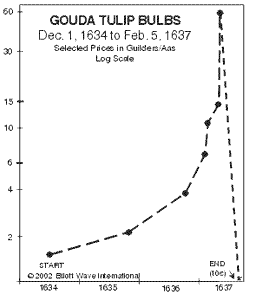
Dutch Tulip Bulb Bubble Chart
Tulip prices steadily rose with their growing popularity and bulbs were purchased at higher and higher prices by speculators who planned to turn around and sell them for a profit, similar to modern-day house "flippers." From 1634 to 1637, an index of Dutch tulip prices (see chart above) soared from approximately one guilder per bulb to a lofty sixty guilders per bulb. Traders who sold their bulbs for a profit began to reinvest all of their profit into new tulip bulb contracts or new bulbs to sell to other Dutch citizens or to take with them on trips around the world to sell alongside with spices from the Dutch East India Company. Many merchants sold all of their belongings to purchase a few tulip bulbs for the purpose of cultivating and selling them for more profit than they could have ever made in a lifetime as a merchant. As the tulip bulb bubble crescendoed, already pricey tulip bulbs experienced a twentyfold price explosion in just a single month (Investopedia, 2012). By the peak of tulipmania in February of 1637, a single tulip bulb was worth about ten times a craftsman’s annual income and a single Viceroy tulip bulb was allegedly exchanged for the following goods (The Tulipomania, n.d):
Two lasts of wheat
Four lasts of rye
Four fat oxen
Eight fat swine
Twelve fat sheep
Two hogsheads of wine
Four tuns of beer
Two tons of butter
1,000 lb. of cheese
A complete bed
A suit of clothes
A silver drinking cup
Successful Dutch tulip bulb traders, the archaic counterparts to the day traders of the late 1990s Dot-com bubble and the house flippers of the mid-2000s U.S. housing bubble, could earn up to 60,000 florins in a month– approximately $61,710 in current U.S. dollars (Allan Bellows, 2012). Tulip bulb speculation became so widespread by 1636 that they were traded on Amsterdam’s Stock Exchange and in Rotterdam, Haarlem, Leyden, Alkmar, Hoorn, and other towns. Around the same time, tulip speculation even spread to Paris and England, where tulips were traded on the London Stock Exchange. In both cities, traders strove to push tulip prices up to the lofty levels seen in Amsterdam but were only moderately successful in their attempt (The Tulipomania, n.d).
Astronomically-high tulip bulb prices resulted in some equally astonishing anecdotes such as the sailor who mistakenly ate an extremely rare Semper Augustus tulip bulb thinking it was an onion. This "onion" was so valuable that it could have fed his whole ship’s crew for an entire year. The hapless sailor was jailed for several months for his innocent but costly mistake. Another similar anecdote is of an traveling English botanist who was unaware of the Dutch tulip mania of the time, who peeled and dissected a wealthy Dutchman’s four thousand florin Admiral Von der Eyk tulip bulb mistaking it for an unusual species of onion. The bewildered English traveller was quickly led through the streets, followed by a mob, to be brought before a judge who sentenced him to prison until he could pay for the damage (The Tulipomania, n.d).
The Crash
Like all bubbles, the Dutch tulip bulb bubble continued to inflate beyond people’s wildest expectations until it abruptly "popped" in the winter of 1636-37. A default on a tulip bulb contract by a buyer in Haarlem was the main bubble-popping catalyst and caused the tulip bulb market to violently implode as sellers overwhelmed the market and buyers virtually disappeared altogether. Some traders attempted to support prices, to no avail. Within just a few days, tulip bulbs were worth only a hundredth of their former prices, resulting in a full-blown panic throughout Holland. Dealers refused to honor contracts, further damaging confidence in the tulip bulb market. Eventually, the government attempted to stem the the tulip market meltdown by offering to honor contracts at 10% of their face value, which only caused the market to plunge even further. The brutal popping of the tulip bulb bubble ended the Dutch Golden Age and hurled the country into a mild economic depression that lasted for several years. The traumatic tulip bulb crash resulted in a suspicion toward speculative investments in Dutch culture for a very long time after. (One also has to wonder if this is how the Dutch reputation for frugality arose!)
==============
https://www.investopedia.com/features/crashes/crashes2.asp
A Happy Accident, a Speculative Bubble
In 1593 tulips were brought from Turkey and introduced to the Dutch. The novelty of the new flower made it widely sought after and therefore fairly pricey. After a time, the tulips contracted a non-fatal virus known as mosaic, which didn't kill the tulip population but altered them causing "flames" of color to appear upon the petals. The color patterns came in a wide variety, increasing the rarity of an already unique flower. Thus, tulips, which were already selling at a premium, began to rise in price according to how their virus alterations were valued, or desired. Everyone began to deal in bulbs, essentially speculating on the tulip market, which was believed to have no limits.
The true bulb buyers (the garden centers of the past) began to fill up inventories for the growing season, depleting the supply further and increasing scarcity and demand. Soon, prices were rising so fast and high that people were trading their land, life savings, and anything else they could liquidate to get more tulip bulbs. Many Dutch persisted in believing they would sell their hoard to hapless and unenlightened foreigners, thereby reaping enormous profits. Somehow, the originally overpriced tulips enjoyed a twenty-fold increase in value - in one month!
The Risk of Putting Your Life Savings in Flowers
Needless to say, the prices were not an accurate reflection of the value of a tulip bulb. As it happens in many speculative bubbles, some prudent people decided to sell and crystallize their profits. A domino effect of progressively lower and lower prices took place as everyone tried to sell while not many were buying. The price began to dive, causing people to panic and sell regardless of losses.
Dealers refused to honor contracts and people began to realize they traded their homes for a piece of greenery; panic and pandemonium were prevalent throughout the land. The government attempted to step in and halt the crash by offering to honor contracts at 10% of the face value, but then the market plunged even lower, making such restitution impossible. No one emerged unscathed from the crash. Even the people who had locked in their profit by getting out early suffered under the following depression.
The effects of the tulip craze left the Dutch very hesitant about speculative investments for quite some time. Investors now can know that it is better to stop and smell the flowers than to stake your future upon one.
==============
Ik zie wel gelijkenissen met de huidige crypto mania

Maar met als verschil dat cryptocurrency wel de toekomst gaat worden. Bitcoin en duizenden andere crypto's gaan onderuit en iedereen vlucht weg in een aantal stabiele munten (Ripple?).
[ Bericht 3% gewijzigd door slashdotter3 op 09-01-2018 22:22:32 ]
https://www.investopedia.com/features/crashes
The Greatest Market Crashes
Market Crashes: Introduction
Market Crashes: What are Crashes and Bubbles?
Market Crashes: The Tulip and Bulb Craze (1630s)
Market Crashes: The South Sea Bubble (1711)
Market Crashes: The Florida Real Estate Craze (1926)
Market Crashes: The Great Depression (1929)
Market Crashes: The Crash of 1987
Market Crashes: The Asian Crisis (1997)
Market Crashes: The Dotcom Crash (2000-2002)
Market Crashes: Housing Bubble and Credit Crisis (2007-2009)
Market Crashes: Conclusion
The Greatest Market Crashes
Market Crashes: Introduction
Market Crashes: What are Crashes and Bubbles?
Market Crashes: The Tulip and Bulb Craze (1630s)
Market Crashes: The South Sea Bubble (1711)
Market Crashes: The Florida Real Estate Craze (1926)
Market Crashes: The Great Depression (1929)
Market Crashes: The Crash of 1987
Market Crashes: The Asian Crisis (1997)
Market Crashes: The Dotcom Crash (2000-2002)
Market Crashes: Housing Bubble and Credit Crisis (2007-2009)
Market Crashes: Conclusion
Wat bedoel je met "echt geld genereren"? Toen auto's met katalysator verplicht werden steeg de prijs van paladium, dat zal aandeelhouders van paladiummijnen geld opgeleverd hebben. Maar die katalysator maakte een nieuwe auto wel 1000€(?) duurder...quote:
[..]
Ja. Als het bepaalde mensen HEEL VEEL geld oplevert, gaat het anderen weer HEEL VEEL geld kosten. Onvermijdelijk. En dat is ook het verschil met aandelen: die genereren echt geld, waardoor 'iedereen' er rijk van kan worden.
are we infinite or am I alone
Bitcoin is zero sum. Jouw winst is het verlies van iemand anders.quote:
[..]
Wat bedoel je met "echt geld genereren"? Toen auto's met katalysator verplicht werden steeg de prijs van paladium, dat zal aandeelhouders van paladiummijnen geld opgeleverd hebben. Maar die katalysator maakte een nieuwe auto wel 1000€(?) duurder...
Jij koopt een bitcoin van Jantje voor 100 euro. Jij hebt dan een voorlopig verlies van 100 euro en Jantje een winst van 100 euro.
Dan komt Pietje en die koopt hem van je over voor 1000 euro. Pietje heeft nu een verlies van 1000 euro, jij een winst van 900 euro, en Jantje (nog steeds) een winst van 100 euro.
Dit kan je nog duizenden keren herhalen met doorverkopen en doorverkopen, maar de som blijft 0.
Dat is niet het geval met aandelen, omdat bedrijven waarde creëren. Er zijn nog steeds winnaars en verliezers, maar de optelsom voor alle deelnemers is (over een langere periode) positief.
Als je de klanten van bedrijven meerekent, dan is het resultaat ook nul, want een bedrijf moet (op lange termijn) winst maken om in waarde te stijgen, en die winst maakt het door goederen duurder te verkopen dan de produktie ervan kost. Die meerkost is geld dat de klant verliest...quote:
[..]
Bitcoin is zero sum. Jouw winst is het verlies van iemand anders.
Jij koopt een bitcoin van Jantje voor 100 euro. Jij hebt dan een voorlopig verlies van 100 euro en Jantje een winst van 100 euro.
Dan komt Pietje en die koopt hem van je over voor 1000 euro. Pietje heeft nu een verlies van 1000 euro, jij een winst van 900 euro, en Jantje (nog steeds) een winst van 100 euro.
Dit kan je nog duizenden keren herhalen met doorverkopen en doorverkopen, maar de som blijft 0.
Dat is niet het geval met aandelen, omdat bedrijven waarde creëren. Er zijn nog steeds winnaars en verliezers, maar de optelsom voor alle deelnemers is (over een langere periode) positief.

are we infinite or am I alone
|
|
