NWS Nieuws & Achtergronden
Discussieer hier diepgaander over de actualiteiten.



Ik dacht heel even dat Clinton 'freedom of warship' zei 
Als het niet met een hamer te repareren is, is het een elektrisch probleem.
Precies!quote:Op woensdag 9 november 2016 17:45 schreef RobbieRonald het volgende:
[..]
En dan moet het heerlijk avondje NPO nog beginnen

"We gaan beginnen!"

Hoe denk je dan precies dat dat gaat komen als hij zich meer op de VS zelf wilt gaan richten, minder op het buitenland en met Putin akkoord is over de gang van zaken in Syrië?quote:
[..]
Ik kom er van terug dat alleen Trump er voor gaat zorgen. Clinton was ook niet bepaald deëscalerend aan het praten. Echter schatte ik in dat dat spierballencampagnetaal was om beter als grote leider over te komen bij Trumps electoraat.
De oorlog gaat er komen. Of door een natuurramp, of door ruzie maken met Rusland, of door genaaid te worden door Rusland waar we bij staan en goede vriendjes beweren te zijn met ome Vladimir. Hoe dan ook worden de komende vijf jaar zeer bepalend, net als Bush' interventie 15 jaar geleden de grootst mogelijke klerezooi in het Midden-Oosten heeft veroorzaakt. We gaan het merken in 2030.

Nou, dan gaat Rusland zijn autoritaire gang en de VS vindt het allemaal wel best want ziet geen belang meer om NAVO-partners te hulp te schieten.
== houdt van sterke anekdotes voor op feesten en partijen ==
--- Ga van dat gas af! - Laat Groningen niet zakken ---
Don't give up Andro: https://www.youtube.com/watch?v=VjEq-r2agqc O+
*O* ESF-gekkie: justice for Elvana en justice for Keiino :'( *O*
--- Ga van dat gas af! - Laat Groningen niet zakken ---
Don't give up Andro: https://www.youtube.com/watch?v=VjEq-r2agqc O+
*O* ESF-gekkie: justice for Elvana en justice for Keiino :'( *O*


 Op
Op
#boosquote:
[..]
Vergeten capslock uit te zetten, proleet?


Laat hem toch genieten joh :pquote:
[..]
Vergeten capslock uit te zetten, proleet?
Vergeten te winnen, elitaire D66'er?quote:
[..]
Vergeten capslock uit te zetten, proleet?


U riep? Ik was aan het werk.quote:
[..]
Vroeg me ook al af waar EchovanBelgie is.
Omnibus in omnibus.
Ad Maiorem Dei Gloriam
Ad Maiorem Dei Gloriam
Logisch dat het rascisten zijn geworden aangezien de illegale Mexicaan hun baan heeft ingepikt omdat hij het voor een appel en een ei doetquote:Op woensdag 9 november 2016 17:33 schreef Slayage het volgende:
[..]
xenofoben en racisten gun weinig...
Ook zo aan het genieten?quote:
[..]
U riep? Ik was aan het werk.
Ik vind het een mooie en waardige toespraak. Goed ook dat ze de jongeren aanspreekt om niet in de schulp te krijgen maar binnen de omstandigheden er nog steeds wat van te maken, niet in de segregatie te blijven denken.
== houdt van sterke anekdotes voor op feesten en partijen ==
--- Ga van dat gas af! - Laat Groningen niet zakken ---
Don't give up Andro: https://www.youtube.com/watch?v=VjEq-r2agqc O+
*O* ESF-gekkie: justice for Elvana en justice for Keiino :'( *O*
--- Ga van dat gas af! - Laat Groningen niet zakken ---
Don't give up Andro: https://www.youtube.com/watch?v=VjEq-r2agqc O+
*O* ESF-gekkie: justice for Elvana en justice for Keiino :'( *O*
quote:
[..]
Logisch dat het rascisten zijn geworden aangezien de illegale Mexicaan hun baan heeft ingepikt omdat hij het voor een appel en een ei doet
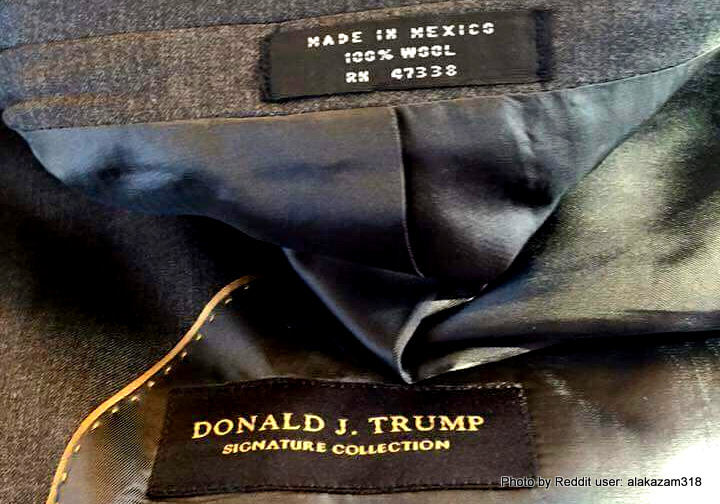
Omnibus in omnibus.
Ad Maiorem Dei Gloriam
Ad Maiorem Dei Gloriam

er bestaat geen excuus voor racisme...quote:
[..]
Logisch dat het rascisten zijn geworden aangezien de illegale Mexicaan hun baan heeft ingepikt omdat hij het voor een appel en een ei doet
Ik heb Hem niet uit vrees voor de hel noch uit liefde voor het paradijs gediend, want dan zou ik als de slechte huurling zijn geweest; ik heb hem veeleer gediend in liefde tot Hem en in verlangen naar Hem.
-Rabia Al-Basri
-Rabia Al-Basri
Jammer dat ze eerst is gaan slapen en vervolgens ook nog de speech uitstelt maar een goede, sportieve en waardige is het wel

quote:Op woensdag 9 november 2016 17:45 schreef Straatcommando. het volgende:
[..]
Moeite waard om terug te kijken dus.
De zeges in Pennsylvania en Ohio mogen historisch genoemd worden, overigens.
Omnibus in omnibus.
Ad Maiorem Dei Gloriam
Ad Maiorem Dei Gloriam
From: Sidney Blumenthal
To: Hillary Clinton
Date: 2009-09-20 02:07
Subject: NUMBER OF THINGS, FYI. SID
UNCLASSIFIED U.S. Department of State Case No. F-2014-20439 Doc No. C05764687 Date: 01/29/2016
RELEASE IN PART
B6
From: sbwhoeop
Sent: Monday, September 21, 2009 9:07 AM
To:
Subject number of thingsfyi.Sid
H: See this mild, reasoned piece below by the former editor of The Economist, a hardline
conservative free trader. In light of the upcoming, mostly vacuous G-20, and the supposed mystery of
the jobless "recovery," not felt by 95 percent of the country (over 10 percent unemployment rates in
CA, FL, Midwest, etc), still rampant home foreclosures, and various health care "reforms" that would
significantly jack up rates on the working and middle classes without insurance company cost
containment, leave tens of millions uncovered, and be depicted by the GOP as tax hikes (super-Prop
13), the most important underlying issue is China's currency, the source of much of the jobless
"recovery." If I were a Democrat running in MI, OH, PA, etc next year, and I didn't want to be drowned
attached to Obama, I would run on it. I could tell you how it could be done, up to talking about how
our policy subsidizes a slave labor system that is destroying American families--half slave, half free,
etc. Someone is going to figure this out. If Democrats don't do it, Republicans will figure out a toxic
xenophobic version that could even turn CA given its history. As I understand it, State helped shut
down Geithner's early view delivered in his confirmation testimony on this matter. This new politics is
coming, one way or another, including "rough beast" form. Meanwhile: I had lunch yesterday with
Philip Bobbitt, who told me he had recently been at the Bohemian Grove and had lunch there with Kis
singer and Colin Powell. Powell offered his opinion that if the Democrats do poorly in the mid-term
elections, Obama, as he judges him, would quickly reduce the commitment in Afghanistan. That, at
least, is Powell's private opinion. I am now on way to NYC, Emmys ceremony tonight (Monday),
nominated for the documentary; Max's NY book party; and CGI. Very, very good that the Irish panel
has worked out. Sid
From The Times
September 21, 2009
Time to stop being chicken and talk about China
The most important subject for the world economy won't even be on
the agenda in this packed season of summitry
By Bill Emmott
An economic crisis that began as a drama, or even a tragedy, is descending into farce. It is bad enough at home,
what with Labour and the Tories arguing over whose spending cuts will be the nastiest, when the real issue is
what it will mean for Britain to have a budget deficit that might reach 15 per cent of GDP next year. Abroad,
however, things are taking an even more absurd turn, with the world's two supposedly most important
countries, America and China, descending into a trade row about Chinese car tyres and American chickens.
UNCLASSIFIED U.S. Department of State Case No. F-2014-20439 Doc No. C05764687 Date: 01/29/2016
Moreover, we are entering a packed season of international summitry, with the G20 countries=2 Omeeting in
Pittsburgh this week to put the world to rights in a trendily broad and inclusive way, just ahead of the annual
meeting of the International Monetary Fund in Istanbul. But what are they planning to do? They will talk
mainly about bankers' bonuses. They will do so in a format seemingly designed to prevent proper thought or
decision-making, or at least long speeches from Nicolas Sarkozy and Gordon Brown: the world's mightiest
heads of government will meet for just a dinner and a morning, giving them about five minutes each to get their
points across.
Amid this comedy, the most important topic in international economic policy will not be discussed at all, either
in private or in public. The silence on this vital issue is partly because it is complex. Mainly, however, our
global leaders will be silent for an unfunny but alarming reason: to avoid offending one among their number,
China.
At this point in articles about the importance of unspoken issues, it is traditional to cite a literary analogy:
typically, Sherlock Holmes and his dog that didn't bark; or Lady Bracknell's exhortation to her niece to "omit
the chapter on the rupee — it is somewhat sensational". Readers should feel free to insert their own preference,
but the rupee might be the more apt. For the subject about which our leaders will be silent is the Chinese
currency, the renminbi, also known as the yuan.
This issue is vital because the big background to today's economic crisis is the unbalanced nature of the global
economy. For the past decade or so, Americans, Brits and some other Europeans have consumed and borrowed
beyond their means, running up big balance-of-payments deficits, while China, some other Asian countries and
the oil producers of the Arab world have consumed too little, saving far more than they were spending and
running up vast balance-of-payments surpluses.
Their capital exports provided the great flood of money, the financial equivalent to the European wine lakes of
yore, that swept along the credit boom and the disastrous manoeuvres of our Western banks. Thanks to Western
self-flagellation, it is common to see this as a long-term sign of our decadence and decline. But in reality it was
a creation of the past ten years, after thprevious big financial crisisinEast Asia convinced China and many
others to keep their currencies pegged low, to build up big current-account surpluses and, as a result, to build
vast foreign-exchange reserves (in China's case $2 trillion-worth), much of it held as dollar securities.
That, along with the domestic politics of preserving trade union backing for President Obama's healthcare
reforms, is also the background to last week's trade row about tyres and chickens. That is the American
response to unbalanced trade: to threaten protectionism against imports from China made OAartificially cheap
by the rigged renminbi. The Chinese response, beyond crying foul about fowl, has been to try to divert the
world's attention by claiming that the dollar is the real problem, along with its "hegemonic" role in global
reserves. But this need fool no one except Hugo Chavez and Vladimir Putin. The real problem is the renminbi.
China is the world's largest exporter and its third-largest economy. Yet among the leading economies it is the
only one whose currency is not freely convertible, with a price mainly set in the markets. From mid-2005 until
late 2007, China gradually revalued the renminbi against the dollar by about 15 per cent. But since then the
appreciation has stopped. And as the dollar has been weak against the euro and even the pound, the Chinese
undervaluation against those currencies became worse.
There has been a lot of waffle since the crisis began about the need to get Chinese, German, Japanese,
Malaysian, Arab and many other high-surplus countries to consume, and hence import, more. But the one
measure that would stand a chance of making a difference — floating the renminbi — has been taboo since the
US Treasury Secretary, Tim Geithner, caused outrage in Beijing by describing it as "manipulated" in his Senate
confirmation hearings. The truth often hurts.
It is time, surely, to end the silence over this topic, the one big global macroeconom is issue that really matters.
With Chinese convertibility, a lot of other Asian countries that have pegged their currencies to the dollar to
remain competitive in and with China would also be stirred to change their approach.
Could it happen? Most China-watchers assume that it will take ten years or more. I disagree. It could be done in
three at the most. For China at last has an interest in changing its currency policy too: first, because of its
problem in facing up to the currency risk on those $2 trillion of reserves; second because, thanks to its huge
domestic stimulus package, it faces a real risk of inflation; third, because its leaders know (and regularly say)
that Chinese industry and the Chinese economy needs to move upmarket, out of low-cost car tyres and into
higher (and cleaner) technologies. The chapter on the renminbi has become too sensational to ignore.
UNCLASSIFIED U.S. Department of State Case No. F-2014-20439 Doc No. C05764687 Date: 01/29/2016
Bill Emmott is a former Editor of The Economist and author of Rivals: How the Power Struggle Between China,
India and Japan Will Shape Our Next Decade
To: Hillary Clinton
Date: 2009-09-20 02:07
Subject: NUMBER OF THINGS, FYI. SID
UNCLASSIFIED U.S. Department of State Case No. F-2014-20439 Doc No. C05764687 Date: 01/29/2016
RELEASE IN PART
B6
From: sbwhoeop
Sent: Monday, September 21, 2009 9:07 AM
To:
Subject number of thingsfyi.Sid
H: See this mild, reasoned piece below by the former editor of The Economist, a hardline
conservative free trader. In light of the upcoming, mostly vacuous G-20, and the supposed mystery of
the jobless "recovery," not felt by 95 percent of the country (over 10 percent unemployment rates in
CA, FL, Midwest, etc), still rampant home foreclosures, and various health care "reforms" that would
significantly jack up rates on the working and middle classes without insurance company cost
containment, leave tens of millions uncovered, and be depicted by the GOP as tax hikes (super-Prop
13), the most important underlying issue is China's currency, the source of much of the jobless
"recovery." If I were a Democrat running in MI, OH, PA, etc next year, and I didn't want to be drowned
attached to Obama, I would run on it. I could tell you how it could be done, up to talking about how
our policy subsidizes a slave labor system that is destroying American families--half slave, half free,
etc. Someone is going to figure this out. If Democrats don't do it, Republicans will figure out a toxic
xenophobic version that could even turn CA given its history. As I understand it, State helped shut
down Geithner's early view delivered in his confirmation testimony on this matter. This new politics is
coming, one way or another, including "rough beast" form. Meanwhile: I had lunch yesterday with
Philip Bobbitt, who told me he had recently been at the Bohemian Grove and had lunch there with Kis
singer and Colin Powell. Powell offered his opinion that if the Democrats do poorly in the mid-term
elections, Obama, as he judges him, would quickly reduce the commitment in Afghanistan. That, at
least, is Powell's private opinion. I am now on way to NYC, Emmys ceremony tonight (Monday),
nominated for the documentary; Max's NY book party; and CGI. Very, very good that the Irish panel
has worked out. Sid
From The Times
September 21, 2009
Time to stop being chicken and talk about China
The most important subject for the world economy won't even be on
the agenda in this packed season of summitry
By Bill Emmott
An economic crisis that began as a drama, or even a tragedy, is descending into farce. It is bad enough at home,
what with Labour and the Tories arguing over whose spending cuts will be the nastiest, when the real issue is
what it will mean for Britain to have a budget deficit that might reach 15 per cent of GDP next year. Abroad,
however, things are taking an even more absurd turn, with the world's two supposedly most important
countries, America and China, descending into a trade row about Chinese car tyres and American chickens.
UNCLASSIFIED U.S. Department of State Case No. F-2014-20439 Doc No. C05764687 Date: 01/29/2016
Moreover, we are entering a packed season of international summitry, with the G20 countries=2 Omeeting in
Pittsburgh this week to put the world to rights in a trendily broad and inclusive way, just ahead of the annual
meeting of the International Monetary Fund in Istanbul. But what are they planning to do? They will talk
mainly about bankers' bonuses. They will do so in a format seemingly designed to prevent proper thought or
decision-making, or at least long speeches from Nicolas Sarkozy and Gordon Brown: the world's mightiest
heads of government will meet for just a dinner and a morning, giving them about five minutes each to get their
points across.
Amid this comedy, the most important topic in international economic policy will not be discussed at all, either
in private or in public. The silence on this vital issue is partly because it is complex. Mainly, however, our
global leaders will be silent for an unfunny but alarming reason: to avoid offending one among their number,
China.
At this point in articles about the importance of unspoken issues, it is traditional to cite a literary analogy:
typically, Sherlock Holmes and his dog that didn't bark; or Lady Bracknell's exhortation to her niece to "omit
the chapter on the rupee — it is somewhat sensational". Readers should feel free to insert their own preference,
but the rupee might be the more apt. For the subject about which our leaders will be silent is the Chinese
currency, the renminbi, also known as the yuan.
This issue is vital because the big background to today's economic crisis is the unbalanced nature of the global
economy. For the past decade or so, Americans, Brits and some other Europeans have consumed and borrowed
beyond their means, running up big balance-of-payments deficits, while China, some other Asian countries and
the oil producers of the Arab world have consumed too little, saving far more than they were spending and
running up vast balance-of-payments surpluses.
Their capital exports provided the great flood of money, the financial equivalent to the European wine lakes of
yore, that swept along the credit boom and the disastrous manoeuvres of our Western banks. Thanks to Western
self-flagellation, it is common to see this as a long-term sign of our decadence and decline. But in reality it was
a creation of the past ten years, after thprevious big financial crisisinEast Asia convinced China and many
others to keep their currencies pegged low, to build up big current-account surpluses and, as a result, to build
vast foreign-exchange reserves (in China's case $2 trillion-worth), much of it held as dollar securities.
That, along with the domestic politics of preserving trade union backing for President Obama's healthcare
reforms, is also the background to last week's trade row about tyres and chickens. That is the American
response to unbalanced trade: to threaten protectionism against imports from China made OAartificially cheap
by the rigged renminbi. The Chinese response, beyond crying foul about fowl, has been to try to divert the
world's attention by claiming that the dollar is the real problem, along with its "hegemonic" role in global
reserves. But this need fool no one except Hugo Chavez and Vladimir Putin. The real problem is the renminbi.
China is the world's largest exporter and its third-largest economy. Yet among the leading economies it is the
only one whose currency is not freely convertible, with a price mainly set in the markets. From mid-2005 until
late 2007, China gradually revalued the renminbi against the dollar by about 15 per cent. But since then the
appreciation has stopped. And as the dollar has been weak against the euro and even the pound, the Chinese
undervaluation against those currencies became worse.
There has been a lot of waffle since the crisis began about the need to get Chinese, German, Japanese,
Malaysian, Arab and many other high-surplus countries to consume, and hence import, more. But the one
measure that would stand a chance of making a difference — floating the renminbi — has been taboo since the
US Treasury Secretary, Tim Geithner, caused outrage in Beijing by describing it as "manipulated" in his Senate
confirmation hearings. The truth often hurts.
It is time, surely, to end the silence over this topic, the one big global macroeconom is issue that really matters.
With Chinese convertibility, a lot of other Asian countries that have pegged their currencies to the dollar to
remain competitive in and with China would also be stirred to change their approach.
Could it happen? Most China-watchers assume that it will take ten years or more. I disagree. It could be done in
three at the most. For China at last has an interest in changing its currency policy too: first, because of its
problem in facing up to the currency risk on those $2 trillion of reserves; second because, thanks to its huge
domestic stimulus package, it faces a real risk of inflation; third, because its leaders know (and regularly say)
that Chinese industry and the Chinese economy needs to move upmarket, out of low-cost car tyres and into
higher (and cleaner) technologies. The chapter on the renminbi has become too sensational to ignore.
UNCLASSIFIED U.S. Department of State Case No. F-2014-20439 Doc No. C05764687 Date: 01/29/2016
Bill Emmott is a former Editor of The Economist and author of Rivals: How the Power Struggle Between China,
India and Japan Will Shape Our Next Decade
Ik shuffel je woorden naar een hoogtepunt.
Huh? In Libië is de president afgezet met hulp van het westen.. en dat liep inderdaad niet goed af.quote:
[..]
Juist niet, dat heeft in Libië ook niet gewerkt.
Irak en Afghanistan zijn ook nog één grote puinhoop..
Dat pleit er juist voor wél met Assad samen te werken.
quote:Gaan onze politici straks zo naar Het Witte Huis? 'Trump you are a mafketel!'
De overgrote meerderheid van de Tweede kamer zat niet te wachten op president Trump. Hij werd een 'botte boer', 'een mafketel' en een 'gevaar voor de wereld' genoemd. Politiek verslaggever Roel Geeraedts vroeg Kamerleden hoe ze nu denken over de nieuwe president van de VS.


Het lijkt mij echt hilarisch om Rutte bij Trump op staatsbezoek te zien zitten.. En dat Trump dan zegt: "Hee Pinokkio, who are you to tell me what to do? If you were president of the Saraha, you would create a shortage of sand..."quote:
