NWS Nieuws & Achtergronden
Discussieer hier diepgaander over de actualiteiten.



Nog meer tekenen dat ISIS aan het verliezen is.
http://in.reuters.com/art(...)dINKBN0M110720150305quote:(Reuters) - Islamic State militants have set fire to oil wells northeast of the city of Tikrit, a witness said, to obstruct an assault by Shi'ite militia fighters and Iraqi soldiers trying to drive them from the Sunni Muslim city and surrounding towns.
The witness and a military source said Islamic State fighters ignited the fire at the Ajil oil field to shield themselves from attack by Iraqi military helicopters.
The offensive is the biggest Iraqi forces have yet mounted against IS, which has declared an Islamic caliphate on captured territory in Iraq and Syria and spread fear across the region by slaughtering Arab and Western hostages and killing or kidnapping members of religious minorities like Yazidis and Christians.
#freefrederike

Ze worden bewapend en gefinancieerd door Iran. Ik moet nog zien dat ze bestuurd worden door Iran.quote:Op donderdag 5 maart 2015 15:24 schreef PizzaMizza het volgende:
[..]
Dat klopt toch ook gewoon? Hoezo doen Irakezen daar zo moeilijk over? De sterkste milities worden door Iran bestuurd, ze zijn afhankelijk van Iran.
Bron? En coördineert met/over wat? Coördineren doe je samen, dat betekent niet dat iemand bestuurd wordt.quote:Daarnaast coördineert ayatollah Sistani van Irak sterk met Iran.
Nog een keertje dan maar. Grote invloed hebben en besturen zijn twee verschillende dingen. Alle buurlanden van Irak hebben invloed op het land. Natuurlijk heeft Iran meer invloed op Irak dan Koeweit dat heeft. Maar Turkije en de Saudis hebben ook een hele grote invloed op Irak, minstens net zo groot als de invloed van Iran. Maar het is nogal een extreme om te zeggen dat ze het soennitische gedeelte van Irak besturen.quote:Je kan niet ontkennen dat Iran een grote invloed in Irak heeft. Nee, ze zijn niet direct de baas zoals het Britse rijk over India was, maar ze hebben wel grote invloed en bepalen ook hoe het Iraakse beleid in elkaar zit, a la Soviet-satellietstaat.
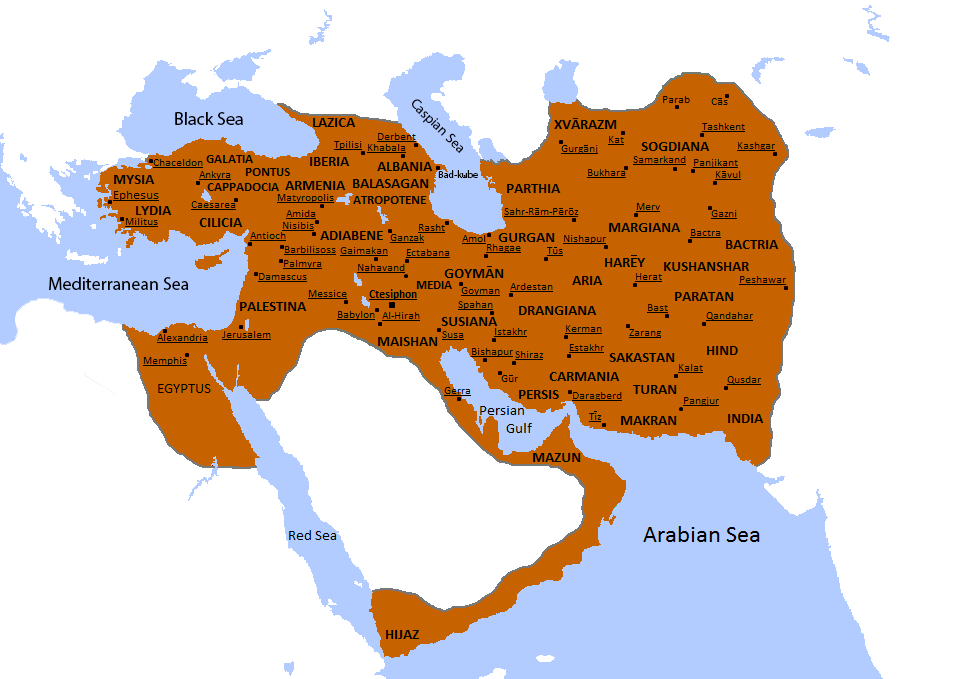
Ik snap niet waar die drang voor nodig is om Irak zo onafhankelijk te laten lijken. Iran is nou eenmaal een buurland van Irak en heeft er duizenden jaren een kijk op. Iran is ook heel lang deel van de Perzische rijken geweest.
Dat is geen vergelijkbare uitspraak. Een vergelijkbare uitspraak zou zijn dat Turkije de KRG bestuurt. Zie je het verschil?quote:Zelfde met KRG, het is algemeen bekend dat de VS een sterke hand heeft in de KRG. Toch zie ik nooit Koerden dat ontkennen. Hoezo moeten Irakezen dat wel doen bij Iran?
"Turkije heeft een sterke band met de KRG" - "Turkije bestuurt de KRG"
"Iran heeft een sterke band met Irak" - "Iran bestuurt Irak"

Natuurlijk gaan ze dat niet direct toegeven, maar ze accepteren meer autoriteit van Iran dan Irak.quote:Op donderdag 5 maart 2015 16:27 schreef Peunage het volgende:
Ze worden bewapend en gefinancieerd door Iran. Ik moet nog zien dat ze bestuurd worden door Iran.
Dat ligt totaal anders. De shiitische milities doen niets waar Iran tegen is. Maar bijv. de KRG doet wel dingen waar Turkije tegen is. Iran bestuurt de shiitische milities direct, zonder eerst via Baghdad te onderhandelen.quote:
Nog een keertje dan maar. Grote invloed hebben en besturen zijn twee verschillende dingen. Alle buurlanden van Irak hebben invloed op het land. Natuurlijk heeft Iran meer invloed op Irak dan Koeweit. Maar Turkije en de Saudis hebben ook een hele grote invloed op Irak, minstens net zo groot als de invloed van Irak. Maar het is nogal een extreme om te zeggen dat ze het soennitische gedeelte van Irak besturen.
Ik heb overigens niet gezegd dat Iran, Irak heeft gekoloniseerd. Ik zeg echter dat Irak een soort van satellietstaat is geworden van Iran.
Het verschil is echter dat de Peshmerga voor het overgrote deel niet militair wordt gebacked door Turkije. Bovendien heeft de KRG een semi-zelfstandig beleid, ze doen hun eigen dingen zonder eerst Turkije van alles in te lichten. Ik geloof trouwens niet dat Turkije en KRG een sterke band hebben. Het is voornamelijk economisch, toen Erbil bedreigd werd, liet Turkije de KRG keihard vallen. Iets wat Iran niet zou doen bij Irak.quote:
Dat is geen vergelijkbare uitspraak. Een vergelijkbare uitspraak zou zijn dat Turkije de KRG bestuurt. Zie je het verschil?
"Turkije heeft een sterke band met de KRG" - "Turkije bestuurt de KRG"
"Iran heeft een sterke band met Irak" - "Iran bestuurt Irak"
De door Iran gesponsorde shiitische milities echter niet. Ze lopen rond met vlaggen van Khamenei, zweren trouw aan Iran, ed ed. Een goed voorbeeld hiervan is het niet inlichten van de VS voor de slag om Tikrit.
De KRG wordt trouwens wel voor een heel groot deel gecontroleerd door de VS. De KRG voert politiek op basis van Amerikaanse adviseurs. Letterlijk 100% van de KRG's militaire acties worden eerst gemeld bij de VS.
#freefrederike

quote:ISIS militants have fled areas surrounding Tikrit as Iraqi joint forces fought to capture strategic roads leading to the militant-occupied city, a Shiite militia spokesman has told Rudaw.
“We managed to liberate lots of territory around Tikrit from ISIS and we also captured some roads overlooking Tikrit. This will help us liberate Tikrit very soon,” said Karim Nuri, official spokesperson of the People’s Mobilization Forces, a Shiite militia fighting alongside the Iraqi army.
Nuri added: “People’s Mobilization Forces managed to retake control of the main Tikrit-Hawijja road which was in the hands of the ISIS militants in the area. With the control of this road, we will be able to liberate Tikrit more easily than before. We were also able to recapture the high ground in the areas being used by ISIS to hide.”
#freefrederike

Ja dat is wat jij de hele tijd zegt. Ik heb nog niks tastbaars gezien.quote:
Natuurlijk gaan ze dat niet direct toegeven, maar ze accepteren meer autoriteit van Iran dan Irak.
Dat ligt totaal anders. De shiitische milities doen niets waar Iran tegen is. Maar bijv. de KRG doet wel dingen waar Turkije tegen is. Iran bestuurt de shiitische milities direct, zonder eerst via Baghdad te onderhandelen.
Tot nu toe delen Iran en Irak als buurlanden heel veel belangen en er is nog niks waar zij tegengestelde belangen hebben. Er zijn momenteel Amerikaanse militairen (weinig, maar ze zijn er wel) en de situatie tussen Amerika en Iran is voor iedereen duidelijk. In het verleden hebben dezelfde milities waar we het nu over hebben een strijd gevoerd tegen de Amerikanen. Dat doen ze op dit moment ook gewoon niet.
Waarin is Irak afhankelijk van Iran? Want dat is een satellietstaat. Missen ze economische, militaire of politieke onafhankelijkheid? Iran heeft veel militaire kennis en het is hun belang dat de situatie in Irak normaliseert en veiligheid terugkeert. Daarom hebben ze er generaals, adviseurs, trainers, etc. Allemaal op verzoek van de Irakese overheid.quote:Ik heb overigens niet gezegd dat Iran, Irak heeft gekoloniseerd. Ik zeg echter dat Irak een soort van satellietstaat is geworden van Iran.
En waar licht Irak Iran dan in, voordat ze het doen?quote:Het verschil is echter dat de Peshmerga voor het overgrote deel niet militair wordt gebacked door Turkije. Bovendien heeft de KRG een semi-zelfstandig beleid, ze doen hun eigen dingen zonder eerst Turkije van alles in te lichten. Ik geloof trouwens niet dat Turkije en KRG een sterke band hebben. Het is voornamelijk economisch, toen Erbil bedreigd werd, liet Turkije de KRG keihard vallen. Iets wat Iran niet zou doen bij Irak.
Ik ben al heel vaak in Irak geweest, in veel verschillende plekken, en ik heb geen 1 keer de Iraanse vlag gezien. Of iemand gezien die trouw zweert aan Iran. Jij gaat nu zeker dat filmpje quoten van die mafkees van de Mukhtar army. De niet bestaande militie waarvan de leider uberhaupt in de gevangenis heeft gezeten en niemand serieus neemt.quote:De door Iran gesponsorde shiitische milities echter niet. Ze lopen rond met vlaggen van Khamenei, zweren trouw aan Iran, ed ed. Een goed voorbeeld hiervan is het niet inlichten van de VS voor de slag om Tikrit.
Dit is mijn probleem met mensen die hetzelfde riedeltje ophangen over Irak en Iran. Het blijft bij loze woorden en aannames en er is nergens bewijs voor. Iran heeft grote invloed op Irak, no shit. Dat weet iedereen en niemand ontkent het. Maar dat ze Irak 'besturen' of 'controleren' is gewoon onzin. Net zo min dat Turkije de KRG 'bestuurt'. Ja ze hebben er invloed op, en misschien zit Barzani in hun ''pocket'', maar de KRG is veel groter dan alleen Barzani.

Ik heb het ook niet over Badr. Badr is al lang gefocussed op Irak en bestaat al veel langer. Op Irak gefocussed zowel militair gezien als ook politiek en vergenwoordigers die een flinke vinger in de Iraakse politieke pap vingen en goede contacten.quote:
Irak heeft die ook. De grootste en sterkste Iraakse militie, de Badr organisatie, wordt sterk bestuurd door Iran. Je ziet het zelfs als ze vechten, ze lopen met Iraanse vlaggen en zweren Khamenei trouw.[/quote[
Dat ontken ik toch ook nergens? Alleen de mensen in deze militie die een wapen dragen zijn gewoon Irakezen. Het is dus een Iraakse militie, die zwaar naar Iran hangt.
[quote]
Nee, zeer zeker niet. De Badr organisatie is bijvoorbeeld al jaren actief in Irak, het is niet alsof die pas uit de grond komt schieten sinds ISIS. Natuurlijk, er zullen sjiitische milities Syrie gaan helpen(zoals ze daarvoor ook al deden), maar het meeste blijft in Irak.
Maar de sjia-milities beperken zich allerminst tot Badr. Het is mijn stellige overtuiging dat de militarisatie die zich heeft ingezet na de winsten van ISIS aan sjitische kant en die worden aangestuurd vanuit Teheran gewoon doorgaat uiteindelijk naar Syrie en het verdedigen van Assad. Dat betekent niet dat er tientallen duizenden Iraaks-sjieten straks vertrekken. Men is wel wat subtieler en kiest ook wel wie ze sturen. Maar zeer zeker gaat de focus naar Syrie als Irak redelijk is teruggewonnen en de dreiging van ISIS is gaan liggen daar. Je ziet zelfs arme pauper Afghaanse Hazaras inmiddels in Syrie vechten. De grote spil is het Iraanse regime. En in Irak is er straks met de hoge militairisatie onder sjitische milities weer een heel blik strijders tegenaan te gooien die ook al enige ervaring hebben. Wat dus ideaal is en veel beter dan eerst die jongens nog een snelcursus geven hoe ze een wapen moeten dragen en dan naar Damascus sturen.
Uiteindelijk staat voor zowel Iran als de VS Irak niet los van Syrie. Als je in Irak ISIS hebt teruggedreven maar je stoot niet door naar Syrie heb je nog steeds een groot probleem. De enige manier om ISIS echt aan te pakken is dus nadat Irak terug is onder controle ook die gasten in Syrie te bestrijden. Amerika zal dat wel middels de Syrische Koerden doen, en wellicht een Turkse interventie of operatie toch tegen ISIS ooit. En Iran doet dat via de sjitische milities waarvan het inmiddels stikt in Irak en die een aantal van hen nadat ze vechtervaring hebben ideaal zijn om naar Syrie te sturen en aan Bashar's zijde te strijden.
Dat een Iraanse vlag of portret van Khamenei in Irak hangt is niet uitzonderlijk, zelfs in Zuid-Libanon of Hizbullahwijken in Beiroet en ook de Houthi's in Jemen beelden Khamenei en Nasrallah af naast hun eigen politieke leider. Ook Assad verspreidde zulke foto's in Libanon; hij naast Nasrallah en Khamenei. "Verzet", zogenaamd dan.
Op woensdag 26 oktober 2022 07:33 schreef Lospedrosa:
“Kan gebeuren in een live uitzending dat je je een beetje laat meeslepen er bleert dat je kinderen maar moet verbranden.”
“Kan gebeuren in een live uitzending dat je je een beetje laat meeslepen er bleert dat je kinderen maar moet verbranden.”
http://www.washingtonpost(...)fab0155a7_story.htmlquote:
Nog meer tekenen dat ISIS aan het verliezen is.
[..]
http://in.reuters.com/art(...)dINKBN0M110720150305
Dat kon ook nooit goed gaan natuurlijk.
Die Lebenslust bringt dich um.
Reassessing the 1991 Iraqi Intifada 24 Years On

quote:It has been 24-years to the month since the March 1991 revolt against the Baathist regime of Saddam Hussein in Iraq. It is important to remember and reevaluate this important moment in Iraq’s modern history.
One sometimes wonders what would have happened had that intifada succeeded. After Iraq’s military had suffered a decimating defeat at the hands of the U.S.-led multinational military coalition large swaths of the country’s Shia Arab and Kurdish communities rose up against the tyrant in Baghdad, President Saddam Hussein after U.S. President George H.W. Bush suggested they do so.
Put another way, here was an army which was pounded by a much more technological advanced coalition of nations and saw its country’s infrastructure pulverized by multiple air and missile attacks. And what did they do? Blamed their dictator and, recognizing that he had led them straight into that utter mess and ruin, accordingly sought to remove him and in doing so determine the course their country took themselves. A spontaneous action on the part of those two communities who had long been subjugated, oppressed and even, in the case of the Kurds just three years beforehand, subjected to a genocidal campaign by Saddam Hussein’s brutal and ruthless regime. All done mere days after the U.S. and the Iraqis agreed to a ceasefire which left the dictator entrenched in power. Hussein consequently turned his attention inward and focused on consolidating his complete control over the country. Estimates of how many people were killed in that month vary from between 80,000 to 230,000. Which is possibly, we may never know, more people than have perished to date in the horrible war in Syria!
After overseeing the terms of the ceasefire between Iraq and the coalition on the 28th February 1991 U.S. General Norman Schwarzkopf, gave the Iraqis permission to use armed helicopters under the pretext that they were being used to ship necessities across the country in the wake of the U.S. bombing of Iraq’s roads and general infrastructure. It is hard, even with 24-years of retrospect, to comprehend how he possibly thought they would have been used for anything else when one considers the regime he was dealing with.
Hundreds-of-thousands of Kurds once again fled in terror fearful that the helicopters bombing their homes would unleash poison gas on their communities yet again. Their hopes of being once again able to defend themselves and their homeland and stand up to the murderous regime in Baghdad were dashed. Had the safe zones not stopped the regimes onslaughts a few weeks after they began tens-of-thousands more Kurds would doubtlessly have been butchered.
In the Shia south Saddam’s forces were completely ruthless. After attacking Karbala they even used their helicopters to set fire to refugees, whom they had first drenched with kerosene, who were fleeing the fighting in that city. And, in ways the notorious Islamic State can thankfully only dream of doing today, they purposely destroyed or defaced many sites of great importance and value to Shia Muslims in that Shi’a Islamic shrine city. They also showed no compunction when it came to tying civilians to their tanks and using them as human shields. Some tanks also displayed banners with sectarian slogans which pronounced “No Shi’ites after today”. Retrospectively such cruel subjugation of the Shia on the part of the Baath make the flirtations and collusion’s between the remnants of that regime and Islamist terrorists like Islamic State not so surprising and also hard to attribute simply and solely to resentful “grievances” over their removal from power in 2003.
But for the month of March 1991 the Iraqi regime was able to crush an enormous revolt that would more likely than not have been a success if the Americans had given it decisive support. Alas they did not. American pilots witnessed the carnage when flying over Saddam’s killing fields they were not permitted to defend the masses of populations Saddam was once again sending his forces out to slaughter, or at the very least use their advanced warplanes to shoot down the helicopters which were spearheading those attacks. One American F-15 fighter pilot interviewed in a superb 1996 PBS documentary aptly summed up the direness of the situation when he recalled how;
“We saw helicopters chasing a lot of people down a road, and we saw the [Republican Guard helicopter] gunships shooting at them [the Kurds], you could see the smoke coming out of the gunship, and occasionally see flashes of the tracers even though the sun had just started coming up. We felt frustrated by the fact we couldn’t help the uprising that was going on the ground for whatever political reasons that were above our rank. The best we could do was report what we saw and eventually hope it was taken care of.”
Most witnesses of this carnage did report the despair and horrors they witnessed, and even, for a brief few minutes due to security concerns, the U.S. Secretary of State himself went to see the displaced Kurds firsthand and subsequently informed the administration of the pressing political, not to mention moral, necessity of shielding those people against the murderous rampages of the very tyrant they had spent the previous months vehemently condemning, quite rightfully, for his heinous crimes against humanity.
Subsequently the U.S. was forced to act, so it enforced the no-fly zones above the south and north of Iraq, which remained in place until they dismantled the Iraqi regime in 2003. Something which was certainly a whole lot better than nothing. But something which, alas, came after the massacres Saddam’s forces carried out in March 1991 in order to retain their (remember Saddam’s Republican Guard had a highly vested interest in the preservation of a status quo that saw them occupy an extremely privileged position in society, especially economically) hold on the reigns of absolute state power.
Had the administration supported those uprising Iraqis across the country the last 24-years would doubtlessly have been radically different. It’s hard to determine what would have happened, even if a post-Saddam Iraq had been brought about shortly after the Gulf War there is no way to say it would have been in anyway pleasant and could very well have seen sectarian fissures badly ravage the society as did happen after 2003. However since that time tens-of-thousands of Iraqis were killed, the population was very badly impoverished for years as a result of the international sanctions (which, it’s important to remember, eroded away institutions in Iraq which are of pivotal importance when it comes to sustaining the fundamental foundations of any civil society) and suffered as a result of the war and strife which ensued after the 2003 regime change. It is worth taking into account that the adverse affects on society of that strife and conflict was most likely worsened as a result of those 12 ruinous years between 1991 and 2003.
In light of these salient facts it’s a bit difficult to imagine that Iraq and Iraqis would be much worse off if Saddam’s regime was toppled by those war weary revolting masses back in those fateful days of 1991.
Dat was echt het moment om Saddam's regime om te gooien. Het had zoveel levens bespaardquote:Op donderdag 5 maart 2015 19:44 schreef reza1 het volgende:
Reassessing the 1991 Iraqi Intifada 24 Years On
[ afbeelding ]
[..]
 En een hoop onrust waarschijnlijk.\
*** waar was Amerika toen?
-
twitter:AP twitterde op donderdag 05-03-2015 om 21:53:55 BREAKING: Iraqi ministry: Islamic State militants 'bulldoze' Nimrud archaeological site near Mosul. reageer retweet
 BREAKING: Iraqi ministry: Islamic State militants 'bulldoze' Nimrud archaeological site near Mosul.
quote:
[..]
Dat was echt het moment om Saddam's regime om te gooien. Het had zoveel levens bespaard
*** waar was Amerika toen?
quote:In 1996, Colin Powell, Chairman of the Joint Chiefs of Staff, admitted in his book My American Journey that, while Bush's rhetoric "may have given encouragement to the rebels", "our practical intention was to leave Baghdad enough power to survive as a threat to Iran that remained bitterly hostile toward the United States."[9] Coalition Commander Norman Schwarzkopf, Jr has expressed regret for negotiating a ceasefire agreement that allowed Iraq to keep using helicopters, but also suggested a move to support the uprisings would have empowered Iran.
http://en.wikipedia.org/w(...)rvention_controversyquote:U.S. Major General Martin Brandtner, deputy director of operations for the Joint Chiefs of Staff, added that "there is no move on the [part of] U.S. forces... to let any weapons slip through [to the rebels], or to play any role whatsoever in fomenting or assisting any side."[45] Consequently, U.S. troops that were deployed in southern Iraq blew up enormous stockpile of weapons to prevent them from falling into hands of the opposition, blocked the rebels from advancing onto Baghdad and even actively disarmed some rebel forces; according to Middle East expert William B. Quandt, U.S. forces also "let one Iraqi division go through [their] lines to get to Basra because the United States did not want the regime to collapse."

Op de site van CNN schokkende beelden van hoe IS strijders mannen die verdacht worden van het zijn van homosexueel van flatgebouwen gooien en waarna de toegestroomde bevolking de slachtoffers dan kan stenigen (voor zover ze nog leven dan).
Ook te zien een foto van een oude man vastgebonden aan een stoel die van een flatgebouw wordt gekieperd.
En de plaatselijke bevolking schijnt het ook helemaal niet erg te vinden wat er allemaal gebeurd
Ook te zien een foto van een oude man vastgebonden aan een stoel die van een flatgebouw wordt gekieperd.
En de plaatselijke bevolking schijnt het ook helemaal niet erg te vinden wat er allemaal gebeurd
"You can call me Susan if it makes you happy"

90% van de mensen zijn meelopersquote:
Op de site van CNN schokkende beelden van hoe IS strijders mannen die verdacht worden van het zijn van homosexueel van flatgebouwen gooien en waarna de toegestroomde bevolking de slachtoffers dan kan stenigen (voor zover ze nog leven dan).
Ook te zien een foto van een oude man vastgebonden aan een stoel die van een flatgebouw wordt gekieperd.
En de plaatselijke bevolking schijnt het ook helemaal niet erg te vinden wat er allemaal gebeurd

daarnaast niks nieuws toch
Ik heb Hem niet uit vrees voor de hel noch uit liefde voor het paradijs gediend, want dan zou ik als de slechte huurling zijn geweest; ik heb hem veeleer gediend in liefde tot Hem en in verlangen naar Hem.
-Rabia Al-Basri
-Rabia Al-Basri
Nu ISIS weet dat Mosul binnenkort bevrijd gaat worden maken ze nog snel even alle historische monumenten en gebouwen kapot.
-
Zeer veel Soennieten steunen ISIS..
"But the age of chivalry is gone; that of sophisters, economists, and calculators has succeeded, and the glory of Europe is extinguished forever."- Edmund Burke

twitter:KarlreMarks twitterde op vrijdag 06-03-2015 om 09:38:50 But seriously ISIS have gone back so far in time, they're actually fighting the Assyrian Empire now. reageer retweet
 But seriously ISIS have gone back so far in time, they're actually fighting the Assyrian Empire now.
Ik heb Hem niet uit vrees voor de hel noch uit liefde voor het paradijs gediend, want dan zou ik als de slechte huurling zijn geweest; ik heb hem veeleer gediend in liefde tot Hem en in verlangen naar Hem.
-Rabia Al-Basri
-Rabia Al-Basri
zo komt het wel over iddquote:
Nu ISIS weet dat Mosul binnenkort bevrijd gaat worden maken ze nog snel even alle historische monumenten en gebouwen kapot.
helaas, pact met de duivel waar ze spijt van hebben gekregenquote:
Ik heb Hem niet uit vrees voor de hel noch uit liefde voor het paradijs gediend, want dan zou ik als de slechte huurling zijn geweest; ik heb hem veeleer gediend in liefde tot Hem en in verlangen naar Hem.
-Rabia Al-Basri
-Rabia Al-Basri
quote:Op vrijdag 6 maart 2015 14:50 schreef Slayage het volgende:
twitter:KarlreMarks twitterde op vrijdag 06-03-2015 om 09:38:50 But seriously ISIS have gone back so far in time, they're actually fighting the Assyrian Empire now. reageer retweet

#ISIS, we're coming! Iraqi Special Operations Forces at village of Al-Auja, about 14km south of #Tikrit . pic.twitter.com/PfEZS7sALf

Waarom ISIS geeft gewoon goede invulling aan de soenah volgens velen.quote:
helaas, pact met de duivel waar ze spijt van hebben gekregen
"But the age of chivalry is gone; that of sophisters, economists, and calculators has succeeded, and the glory of Europe is extinguished forever."- Edmund Burke
ze hebben altijd een goede marketing gehad iddquote:Op vrijdag 6 maart 2015 15:07 schreef IPA35 het volgende:
[..]
Waarom ISIS geeft gewoon goede invulling aan de soenah volgens velen.
Ik heb Hem niet uit vrees voor de hel noch uit liefde voor het paradijs gediend, want dan zou ik als de slechte huurling zijn geweest; ik heb hem veeleer gediend in liefde tot Hem en in verlangen naar Hem.
-Rabia Al-Basri
-Rabia Al-Basri
Beetje Ibn Ishak lezen en zo...quote:
[..]
ze hebben altijd een goede marketing gehad idd
"But the age of chivalry is gone; that of sophisters, economists, and calculators has succeeded, and the glory of Europe is extinguished forever."- Edmund Burke
heb meer met kuifje...quote:
Ik heb Hem niet uit vrees voor de hel noch uit liefde voor het paradijs gediend, want dan zou ik als de slechte huurling zijn geweest; ik heb hem veeleer gediend in liefde tot Hem en in verlangen naar Hem.
-Rabia Al-Basri
-Rabia Al-Basri
Maar daar kun je geen verklaringen voor hun gedrag uit halen.quote:
"But the age of chivalry is gone; that of sophisters, economists, and calculators has succeeded, and the glory of Europe is extinguished forever."- Edmund Burke
waarom zou ik hun gedraging willen verklaren?quote:
[..]
Maar daar kun je geen verklaringen voor hun gedrag uit halen.
Ik heb Hem niet uit vrees voor de hel noch uit liefde voor het paradijs gediend, want dan zou ik als de slechte huurling zijn geweest; ik heb hem veeleer gediend in liefde tot Hem en in verlangen naar Hem.
-Rabia Al-Basri
-Rabia Al-Basri
Al Arabiya English:
#BreakingNews: Iraqi forces backed by militias take control of al-Dour, near #Tikrit
#BreakingNews: Iraqi forces backed by militias take control of al-Dour, near #Tikrit

Heeft me je religie te maken dus op zich zou het je moeten interesseren.quote:
[..]
waarom zou ik hun gedraging willen verklaren?
"But the age of chivalry is gone; that of sophisters, economists, and calculators has succeeded, and the glory of Europe is extinguished forever."- Edmund Burke

Niet te snel. Zo dacht ik ook, maar als je je even goed verdiept: grote delen van de soennitische bevolking staan nog steeds achter ISIS. Ze zullen de shias dus bevechten.quote:
Het einde van ISIS in Iraq is in zicht!
En vergeet niet dat het grootste gestolen arsenaal nog steeds in Mosul is. ISIS heeft nog steeds honderden tanks, humvees, en ook zelfs chemisch materiaal als ik mij niet vergis.
Ze halen ook een vieze streek uit: landmijnen. Ze laten je een dorp/stad niet zomaar veroveren dus..
#freefrederike
Steven Nabil:
Iraqi forces are attacking by missiles Al alam district, tomorrow they should be able to enter it #ISIS #Win_or_Win #tikrit
Iraqi forces are attacking by missiles Al alam district, tomorrow they should be able to enter it #ISIS #Win_or_Win #tikrit
Operatie loopt ietjes trager dan verwacht, niet? Hoe zit het trouwens met de bevolking, waar zijn ze heen gevlucht? Als ik zo op de map kijk, is Tikrit omsingeld..quote:
Steven Nabil:
Iraqi forces are attacking by missiles Al alam district, tomorrow they should be able to enter it #ISIS #Win_or_Win #tikrit
#freefrederike
Komt door bermbommen, maar binnen een week is Tikrit veroverd.quote:
[..]
Operatie loopt ietjes trager dan verwacht, niet?
30.000 burgers zijn gevlucht naar Sammara,ze krijgen hulp van overheid en VN.quote:
[..]
Hoe zit het trouwens met de bevolking, waar zijn ze heen gevlucht? Als ik zo op de map kijk, is Tikrit omsingeld..
Binnen een week... Niet overdrijven gozer. Ik denk zelf eerlijk gezegd een maand.quote:
[..]
Komt door bermbommen, maar binnen een week is Tikrit veroverd.
[..]
30.000 burgers zijn gevlucht naar Sammara,ze krijgen hulp van overheid en VN.
#freefrederike
We zullen het zien.quote:
[..]
Binnen een week... Niet overdrijven gozer. Ik denk zelf eerlijk gezegd een maand.
Tikrit is een strategische plek, maar daarna moeten ze doorstoten naar Baji, om de supplyroutes van ISIS te blokkeren(zie rode X).quote:
Als dat is gedaan, zou de coalitie+Peshmerga de groene kruisjes moeten veroveren om ook die supplyroute te stoppen. Daarmee is Mosul zo goed als omsingeld(ze hebben geen nieuwe aanvoerroutes meer).
Eens?

#freefrederike
Na Diyala en Salah el-Din is Al-Anbar volgende doel en dan Mosul.quote:
[..]
Tikrit is een strategische plek, maar daarna moeten ze doorstoten naar Baji, om de supplyroutes van ISIS te blokkeren(zie rode X).
Als dat is gedaan, zou de coalitie+Peshmerga de groene kruisjes moeten veroveren om ook die supplyroute te stoppen. Daarmee is Mosul zo goed als omsingeld(ze hebben geen nieuwe aanvoerroutes meer).
Eens?
[ afbeelding ]
Hmm, Mosul offensief gaat dan nog wel maanden duren. Misschien eind 2015?quote:
[..]
Na Diyala en Salah el-Din is Al-Anbar volgende doel en dan Mosul.
#freefrederike
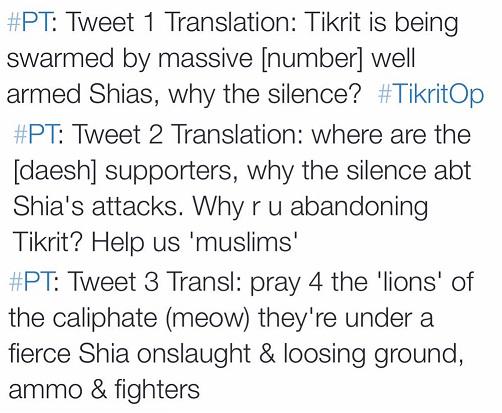
Bin Maymun:
#PT:2day w / be 4ever known as the day daesh-holes squealed [on twitter] like stuck pigs. Read on folks. #TikritOP pic.twitter.com/cMFnTxtnY1
#PT:2day w / be 4ever known as the day daesh-holes squealed [on twitter] like stuck pigs. Read on folks. #TikritOP pic.twitter.com/cMFnTxtnY1
Sowieso midden/einde van het jaar, Al-Anbar wordt een zware klus, vooral Al Faluja.quote:
[..]
Hmm, Mosul offensief gaat dan nog wel maanden duren. Misschien eind 2015?
[ Bericht 0% gewijzigd door Montana_ir op 06-03-2015 22:22:58 ]

Idd. Hadden de Turken ze maar gespaard, dan hoefden ze nu niet aan te zoen hoe hun leven kapot gemaakt werd door huurlingen van het Turkse leger, bataljon ISISquote:
Foto: Turkse soldaat met zijn terroristische broeder.

#freefrederike
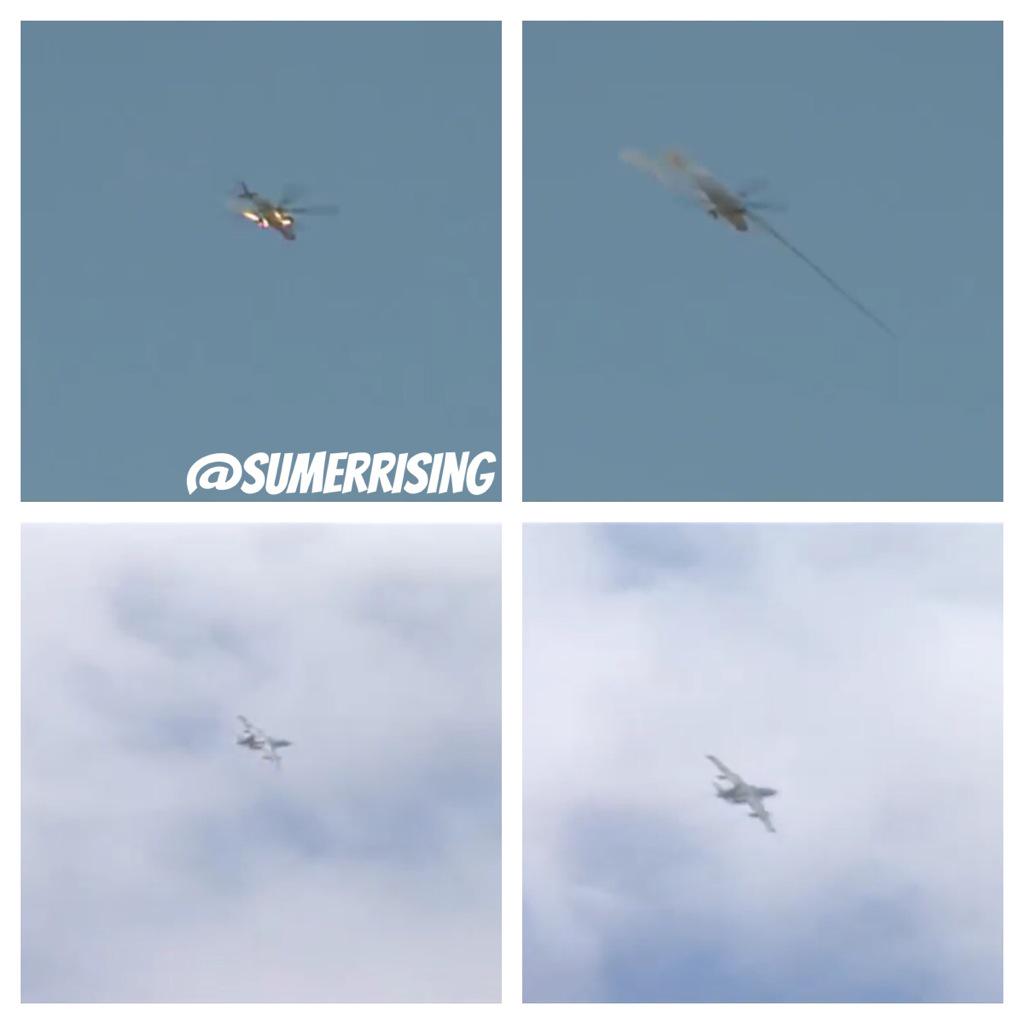
Haidar Sumeri:
#Iraq; Iraqi Army Aviation & Air Force providing air support to Iraqi forces & the Hashd al-Sha'abi during #TikritOp pic.twitter.com/79ThGsj1qx
#Iraq; Iraqi Army Aviation & Air Force providing air support to Iraqi forces & the Hashd al-Sha'abi during #TikritOp pic.twitter.com/79ThGsj1qx
Mooi, langzaam komen er steeds meer beelden vrij. Heb je deze al gezien?quote:
Haidar Sumeri:
#Iraq; Iraqi Army Aviation & Air Force providing air support to Iraqi forces & the Hashd al-Sha'abi during #TikritOp pic.twitter.com/79ThGsj1qx
[ afbeelding ]

#freefrederike
