NWS Nieuws & Achtergronden
Discussieer hier diepgaander over de actualiteiten.



Uiteindelijk zal het wel goed komen waar ik me zorgen om maak is de periode tussen de huidige situatie en de periode dat alles goed geregeld is.quote:Op donderdag 4 december 2014 21:10 schreef Probably_on_pcp het volgende:
[..]
Ik volg het hele basisinkomen idee op de voet en in meerdere landen wordt het idee serieus besproken momenteel.
Ik heb goede hoop dat we allemaal intelligent genoeg zijn om op een bepaald moment in te zien dat we een andere tijd ingaan. Vergelijkbaar met de overgang van agrarische samenleving, naar industriële samenleving. Een grote overgang dus en grote overgangen vergen grote ideeën. Ik heb het vertrouwen wel dat we dat inzien.
Vergeet ook niet dat grote ideeën als afschaffing van de slavernij of gelijkheid voor man en vrouw en het idee van democratie, ook ooit utopische ideeën waren die nooit werkelijkheid zouden kunnen worden.
Dat kan een hele slechte tijd voor heel veel mensen gaan betekenen.


Ik ben ook wel benieuwd wat het voor bezittingen betekend: Momenteel wordt eerst je bankrekening geplunderd voordat je recht hebt op een basisuitkering. Moet men dan verplicht alles eerst inleveren, voordat ze daarna aan het overheidsinfuus kunnen zonder eigen centen?
steck bratwurst in dein sauerkraut :)


Interessante ontwikkelingen bij de belastingdientst. Je zet zelden zo'n direct gevolg van automatisering.
5000 mensen worden ontslagen omdat computers het werk gaan overnemen, maar er komen 1500 mensen bij die de computersystemen moeten gaan onderhouden. Zo zie je ook maar dat er wel nieuwe banen bijkomen maar 1) fors minder en 2) op een heel ander niveau.
http://tweakers.net/nieuw(...)or-data-analyse.html
5000 mensen worden ontslagen omdat computers het werk gaan overnemen, maar er komen 1500 mensen bij die de computersystemen moeten gaan onderhouden. Zo zie je ook maar dat er wel nieuwe banen bijkomen maar 1) fors minder en 2) op een heel ander niveau.
http://tweakers.net/nieuw(...)or-data-analyse.html
Opgeblazen gevoel of winderigheid? Zo opgelost met Rennie!


Als ik Ex Machina moet geloven gaan we eerst sexbots met A.I. maken.
Goeie film btw.
Goeie film btw.
"The north remembers, Lord Davos. The north remembers, and the mummer’s farce is almost done.”

Eerst nog eens zien hoe het gaat uitpakken..quote:Op woensdag 20 mei 2015 02:47 schreef Eyjafjallajoekull het volgende:
Interessante ontwikkelingen bij de belastingdientst. Je zet zelden zo'n direct gevolg van automatisering.
5000 mensen worden ontslagen omdat computers het werk gaan overnemen, maar er komen 1500 mensen bij die de computersystemen moeten gaan onderhouden. Zo zie je ook maar dat er wel nieuwe banen bijkomen maar 1) fors minder en 2) op een heel ander niveau.
http://tweakers.net/nieuw(...)or-data-analyse.html
Overheid en ICT kan wel eens betekenen dat ze duizenden consultants moeten inhuren omdat blijkt dat het niet helemaal werkt zoals gedacht.
Ik weet niet met welke wapens de derde wereldoorlog uitgevochten zal worden, maar de vierde wereldoorlog wordt uitgevochten met stokken en stenen.
Grappig conceptquote:Op woensdag 20 mei 2015 08:38 schreef Dale. het volgende:
Flexibele wagen
http://mashable.com/2015/05/08/eo2-flexible-car/

En op de snelweg zuinig i.v.m. treintje rijden/luchtweerstand.
Ik weet niet met welke wapens de derde wereldoorlog uitgevochten zal worden, maar de vierde wereldoorlog wordt uitgevochten met stokken en stenen.
over twintig jaar bestel je een wagen per Km via internet bij de dealer, niet meer parkerenquote:Op woensdag 20 mei 2015 08:54 schreef Stokken_en_stenen het volgende:
[..]
Eerst nog eens zien hoe het gaat uitpakken..
Overheid en ICT kan wel eens betekenen dat ze duizenden consultants moeten inhuren omdat blijkt dat het niet helemaal werkt zoals gedacht.
na je op de gewenste plek te hebben afgezet gaat ie zelf terug naar een dealer vestiging
alleen een auto voor de deur als je hem werkelijk nodig hebt
de politiek begint wakker te worden....
http://www.ad.nl/ad/nl/10(...)ing-komt-eraan.dhtmlquote:De 'robotsamenleving' komt eraan. Robots zullen de arbeidsmarkt steeds meer beïnvloeden. De samenleving staat voor een technologische revolutie en moet zich afvragen hoe daarmee om te gaan. Deze conclusies staan in een woensdag gepresenteerd rapport dat het Rathenau Instituut schreef in opdracht van de Tweede Kamer.
De invloed van informatietechnologie op werk verschilt. Vooral banen op mbo-niveau staan onder druk.
Het rapport
Een robot van een Japans bedrijf geeft een kookdemonstratie op de International Food Machinery and Technology Exhibition in Tokyo © anp.
Kleine geheimen dienen beschermd te worden.
Grote geheimen worden beschermd door publiek ongeloof.
Grote geheimen worden beschermd door publiek ongeloof.
Foxconn gaat miljarden investeren in India omdat de lonen daar lager zijn dan in China. Wat ook een rol speelt is dat Foxconn de komende jaren massief inzet op verdere robotisering en dat stuitte in China al op weerstand. In India is laborforce protection veel geringer dan in China, een logische keuze dus voor India.quote:Robot Invasion Undercuts Modi’s Quest to Put Indians to Work
In a sweltering factory in southern India, Royal Enfield motorcycles are being painted and lacquered by giant robotic arms that move at twice the maximum speed of a human limb, day in, day out, never making a mistake.
Only a few workers are still needed on the paint line at Royal Enfield Motors Ltd.’s plant in Oragadam, doing touch-ups on the iconic two-wheelers coveted for their classic design. Four robots can do the work of 15 human painters toiling across three shifts.
Robots and automation are invigorating once-sleepy Indian factories, boosting productivity by carrying out low-skill tasks more efficiently. While in theory, improved output is good for economic growth, the trend is creating a headache for Prime Minister Narendra Modi: Robots are diminishing roles for unskilled laborers that he wants to put to work as part of his Make in India campaign aimed at creating jobs for the poor.
India’s largely uneducated labor force and broken educational system aren’t ready for the more complex jobs that workers need when their low-skilled roles are taken over by machines. Meanwhile, nations employing robots more quickly, such as China, are becoming even more competitive.
“The need for unskilled labor is beginning to diminish,” Akhilesh Tilotia, head of thematic research at Kotak Institutional Equities in Mumbai and author of a book on India’s demographic impact. “Whatever education we’re putting in and whatever skill development we’re potentially trying to put out - - does it match where the industry will potentially be five to 10 years hence? That linkage is reasonably broken in India.”
....
Geld maakt meer kapot dan je lief is.
Het zijn sterke ruggen die vrijheid en weelde kunnen dragen
Wees nutteloos, want zodra je nuttig bent wordt je gebruikt
Het zijn sterke ruggen die vrijheid en weelde kunnen dragen
Wees nutteloos, want zodra je nuttig bent wordt je gebruikt
Niet eens zo dom gedacht, denk bijv aan Philips die het superieure video 2000 op de markt bracht, maar het uiteindelijk verloren van de betamax en VHS video's, de reden? Juist, daar waren pornovideo's beschikbaarquote:
Als ik Ex Machina moet geloven gaan we eerst sexbots met A.I. maken.
Goeie film btw.
Exaudi orationem meam
Requiem aeternam dona eis, Domine.
Et lux perpetua luceat eis.
Requiem aeternam dona eis, Domine.
Et lux perpetua luceat eis.
Uit het Rathenau rapport:quote:
[..]
Foxconn gaat miljarden investeren in India omdat de lonen daar lager zijn dan in China. Wat ook een rol speelt is dat Foxconn de komende jaren massief inzet op verdere robotisering en dat stuitte in China al op weerstand. In India is laborforce protection veel geringer dan in China, een logische keuze dus voor India.
Typisch consultants taal voor: "jullie worden in de toekomst allemaal overbodig".quote:"De eensgezindheid onder economen dat innovatie niet tot baanverlies leidt, brokkelt echter sinds 2010 af, stelt het instituut."
Logisch gezien weten we al sinds Turing dat in principe alle menselijk arbeid door machines overgenomen kan worden. Hoe snel dat gaat is nog open voor discussie, mogelijk is een snelle (sommigen zeggen sneller dan exponentiële) groei in deze ontwikkelingen.
Ik denk niet dat de politiek hier echt mee bezig is en kiest voor de gebruikelijke procedure:
- rapportje laten schrijven
- eventueel een studie commissie instellen (die voor jaren werk heeft)
- rapport in de diepe la met 1000den andere rapporten en afwachten
Exaudi orationem meam
Requiem aeternam dona eis, Domine.
Et lux perpetua luceat eis.
Requiem aeternam dona eis, Domine.
Et lux perpetua luceat eis.

Het begint te komen. Volgens mij was GL al bezig met proefballonnen voor een sterk verkorte werkweek in de toekomst.

We kunnen beter gaan nadenken over noodzakelijke veranderingen in arbeid en distributie van rijkdom. In plaats van zeuren over al of niet werk hebben.. Who cares of hij kan werken of niet.. Iedereen maakt zich druk over geld en meer precies het kunnen doen en laten waar men zin in heeft.
Dit kan een zeer positief keerpunt in de geschiedenis zijn. Zeker als er iets meer utopisch gedacht gaat worden. De RBE is daar een mooi voorbeeld van. Maar het vergt veel om dit in goede banen te kunnen leiden, de transitie althans.
Dit kan een zeer positief keerpunt in de geschiedenis zijn. Zeker als er iets meer utopisch gedacht gaat worden. De RBE is daar een mooi voorbeeld van. Maar het vergt veel om dit in goede banen te kunnen leiden, de transitie althans.
Voor al uw dwaze oneliners en geavanceerde sofisterij
Dat komen er nog meer gelukszoekers naar Nederlandquote:
Het begint te komen. Volgens mij was GL al bezig met proefballonnen voor een sterk verkorte werkweek in de toekomst.
Je kunt het alleen oplossen door drastische maatregelen, daarvoor moet Nederland eerst uit de EU, dan kun je pas een kortere werkweek invoeren of een basisloon.
Maar dan prijs je jezelf uit de wereldmarkt, een oplossing, zelfs een theoretische is heel moeilijk.
Dat gaan "onze" politici nooit trekken

Daarom is het devies:
- rapportje laten schrijven
- eventueel een studie commissie instellen (die voor jaren werk heeft)
- rapport in de diepe la met 1000den andere rapporten en afwachten
Wachten op de grote crisis
Exaudi orationem meam
Requiem aeternam dona eis, Domine.
Et lux perpetua luceat eis.
Requiem aeternam dona eis, Domine.
Et lux perpetua luceat eis.
Onze eigen zelfrijdende 'auto' gaat zowaar de weg op 
http://qz.com/507795/worl(...)icient-and-adorable/
http://qz.com/507795/worl(...)icient-and-adorable/

Opgeblazen gevoel of winderigheid? Zo opgelost met Rennie!
Kickerdekick. Morgen op Radio 1 een marathoninterview met Max Welling over ai:
Leek me ook wel interessant voor de posters in dit topic.
http://www.vpro.nl/programmas/marathoninterview/2015.htmlquote:Max Welling is sinds 2013 hoogleraar Machine learning aan de Faculteit der Natuurwetenschappen, Wiskunde en Informatica van de Universiteit van Amsterdam. Volgens de UvA-persvoorlichting doet hij onder meer onderzoek naar ‘lerende systemen en hun toepassing bij de analyse van grootschalige datasets, hoe inzichten uit de neurowetenschap en de cognitieve wetenschap over menselijk leren kunnen worden ingezet voor computergestuurd leren, en hoe we machines kunnen ontwerpen die altijd blijven doorleren en de complexiteit van het interne model automatisch blijven aanpassen aan nieuwe informatie.’
Kortom, Jelle Brandt Corstius verstaat zich vanavond over artificiële intelligentie met Welling, van wie op 12 juni 2016 de Paradiso-lezing ‘De empathische machine. Wanneer zullen machines ons echt begrijpen?’ gepland staat.
Leek me ook wel interessant voor de posters in dit topic.
Ik lees wel veel toffe ontwikkelingen op AI gebied in de MIT tech review de laatste tijd. Een paar voorbeelden:
Bron (met filmpjes)quote:A Master Algorithm Lets Robots Teach Themselves to Perform Complex Tasks
One researcher has developed a simple way to let robots generate remarkably sophisticated behaviors.
For all the talk of machines becoming intelligent, getting a sophisticated robot to do anything complex, like grabbing a heavy object and moving it from one place to another, still requires many hours of careful, patient programming.
Igor Mordatch, a postdoctoral fellow at the University of California, Berkeley, is working on a different approach–one that could help hasten the arrival of robot helpers, if not overlords. He gives a robot an end goal and an algorithm that lets it figure out how to achieve the goal for itself. That’s the kind of independence that will be necessary for, say, a home assistance bot to reliably fetch you a cup of coffee from the counter.
Mordatch works in the lab of Pieter Abbeel, an associate professor of robotics at Berkeley. When I visited the lab this year, I saw all sorts of robots learning to perform different tasks. A large white research robot called PR2, which has an elongated head and two arms with pincer-like hands, was slowly figuring out how to pick up bright building blocks, through a painstaking and often clumsy process of trial and error.
As he works on a better teaching process, Mordatch is mainly using software that simulates robots. This virtual model, first developed with his PhD advisor at the University of Washington, Emo Todorov, and another professor at the school, Zoran Popović, has some understanding of how to make contact with the ground or with objects. The learning algorithm then uses these guidelines to search for the most efficient way to achieve a goal. “The only thing we say is ‘This is the goal, and the way to achieve the goal is to try to minimize effort,’” Mordatch says. “[The motion] then comes out these two principles.”
Mordatch’s simulated robots come in all sorts of shapes and sizes, rendered in blocky graphics that look like something from an unfinished video game. He has tested his algorithm on humanoid shapes; headless, four-legged creatures with absurdly fat bodies; and even winged creations. In each case, after a period of learning, some remarkably complex behavior emerges.
As this video shows, a humanoid robot can learn to get up from any position on the ground and stand on two legs in a very natural-looking way; or it will clamber over onto a ledge, or even perform a headstand. The same process works no matter what form the robot takes, and it can even enable two robots to collaborate on a task, such as moving a heavy object.
Building upon this earlier work, this year Mordatch devised a way for robots to perform repetitive behaviors such as walking, running, swimming, or flying. A simulated neural network is trained to control the robot using information about its body, the physical environment, and the objective of moving in a particular direction. This produces natural-seeming locomotion in virtual robots with a humanoid body shape, and flapping motions in ones that have wings. When an operator tells the robot where to go, its neural network adapts the means of locomotion accordingly.
Something similar may happen in humans and other animals as they learn to move around. An infant spends a lot of time working out how to move his or her body, and later uses that knowledge to quickly and instinctively plan new motions.
“This stuff is beautiful,” says Josh Tenenbaum, a professor in the Department of Brain and Cognitive Science at MIT who studies how humans learn and is working on ways to apply those principles to machines. “They’re really trying to solve a problem that I think very few people have tried to solve until recently.”
Mordatch recently began using some of his techniques in a small humanoid robot called Darwin (see “Robot Toddler Learns to Stand by Imagining How to Do It”). Using the same optimization and learning techniques in the real world is more challenging, however, because the physical world is more complex and unpredictable, and because an algorithm will have imperfect, or noisy, information about it.
quote:Baidu’s Deep-Learning System Rivals People at Speech Recognition
China’s dominant Internet company, Baidu, is developing powerful speech recognition for its voice interfaces.
China’s leading Internet-search company, Baidu, has developed a voice system that can recognize English and Mandarin speech better than people, in some cases.
The new system, called Deep Speech 2, is especially significant in how it relies entirely on machine learning for translation. Whereas older voice-recognition systems include many handcrafted components to aid audio processing and transcription, the Baidu system learned to recognize words from scratch, simply by listening to thousands of hours of transcribed audio.
The technology relies on a powerful technique known as deep learning, which involves training a very large multilayered virtual network of neurons to recognize patterns in vast quantities of data. The Baidu app for smartphones lets users search by voice, and also includes a voice-controlled personal assistant called Duer (see “Baidu’s Duer Joins the Personal Assistant Party”). Voice queries are more popular in China because it is more time-consuming to input text, and because some people do not know how to use Pinyin, the phonetic system for transcribing Mandarin using Latin characters.
“Historically, people viewed Chinese and English as two vastly different languages, and so there was a need to design very different features,” says Andrew Ng, a former Stanford professor and Google researcher, and now chief scientist for the Chinese company. “The learning algorithms are now so general that you can just learn.”
Deep learning has its roots in ideas first developed more than 50 years ago, but in the past few years new mathematical techniques, combined with greater computer power and huge quantities of training data, have led to remarkable progress, especially in tasks that require some sort of visual or auditory perception. The technique has already improved the performance of voice recognition and image processing, and large companies including Google, Facebook, and Baidu are applying it to the massive data sets they own.
Deep learning is also being adopted for ever-more tasks. Facebook, for example, uses deep learning to find faces in the images that its users upload. And more recently it has made progress in using deep learning to parse written text (see “Teaching Machines to Understand Us”). Google now uses deep learning in more than 100 different projects, from search to self-driving cars.
In 2013, Baidu opened its own effort to harness this new technology, the Deep Learning Institute, co-located at the company’s Beijing headquarters and in Silicon Valley. Deep Speech 2 was primarily developed by a team in California.
In developing Deep Speech 2, Baidu also created new hardware architecture for deep learning that runs seven times faster than the previous version. Deep learning usually relies on graphics processors, because these are good for the intensive parallel computations involved.
The speed achieved “allowed us to do experimentation on a much larger scale than people had achieved previously,” says Jesse Engel, a research scientist at Baidu and one of more than 30 researchers named on a paper describing Deep Speech 2. “We were able to search over a lot of [neural network] architectures, and reduce the word error rate by 40 percent.”
Ng adds that this has recently produced some impressive results. “For short phrases, out of context, we seem to be surpassing human levels of recognition,” he says.
He adds: “In Mandarin, there are a lot of regional dialects that are spoken by much smaller populations, so there’s much less data. This could help us recognize the dialects better.”
quote:Facebook Joins Stampede of Tech Giants Giving Away Artificial Intelligence Technology
Leading computing companies are helping both themselves and others by open-sourcing AI tools.
Facebook is releasing for free the designs of a powerful new computer server it crafted to put more power behind artificial-intelligence software. Serkan Piantino, an engineering director in Facebook’s AI Research group, says the new servers are twice as fast as those Facebook used before. “We will discover more things in machine learning and AI as a result,” he says.
The social network’s giveaway is the latest in a recent flurry of announcements by tech giants that are open-sourcing artificial-intelligence technology, which is becoming vital to consumer and business-computing services. Opening up the technology is seen as a way to accelerate progress in the broader field, while also helping tech companies to boost their reputations and make key hires.
In November, Google opened up software called TensorFlow, used to power the company’s speech recognition and image search (see “Here’s What Developers Are Doing with Google’s AI Brain”). Just three days later Microsoft released software that distributes machine-learning software across multiple machines to make it more powerful. Not long after, IBM announced the fruition of an earlier promise to open-source SystemML, originally developed to use machine learning to find useful patterns in corporate databanks.
Facebook’s new server design, dubbed Big Sur, was created to power deep-learning software, which processes data using roughly simulated neurons (see “Teaching Computers to Understand Us”). The invention of ways to put more power behind deep learning, using graphics processors, or GPUs, was crucial to recent leaps in the ability of computers to understand speech, images, and language. Facebook worked closely with Nvidia, a leading manufacturer of GPUs, on its new server designs, which have been stripped down to cram in more of the chips. The hardware can be used to run Google’s TensorFlow software.
Yann LeCun, director of Facebook’s AI Research group, says that one reason to open up the Big Sur designs is that the social network is well placed to slurp up any new ideas it can unlock. “Companies like us actually thrive on fast progress; the faster the progress can be made, the better it is for us,” says LeCun. Facebook open-sourced deep-learning software of its own in February of this year.
LeCun says that opening up Facebook’s technology also helps attract leading talent. A company can benefit by being seen as benevolent, and also by encouraging people to become familiar with a particular way of working and thinking. As Google, Facebook, and other companies have increased their investments in artificial intelligence, competition to hire experts in the technology has intensified (see “Is Google Cornering the Market in Deep Learning?”).
Derek Schoettle, general manager of IBM Cloud Data Services unit, which offers tools to help companies analyze data, says that machine-learning technology has to be opened up for it to become widespread. Open-source projects have played a major role in establishing large-scale databases and data analysis as the bedrock of modern computing companies large and small, he says. Real value tends to lie in what companies can do with the tools, not the tools themselves.
“What’s going to be interesting and valuable is the data that’s moving in that system and the ways people can find value in that data,” he says. Late last month, IBM transferred its SystemML machine-learning software, designed around techniques other than deep learning, to the Apache Software Foundation, which supports several major open-source projects.
Facebook’s Big Sur server design will be submitted to the Open Compute Project, a group started by the social network through which companies including Apple and Microsoft share designs of computing infrastructure to drive down costs (see “Inside Facebook’s Not-So-Secret New Data Center”).
Volkorenbrood: "Geen quotes meer in jullie sigs gaarne."

Ik zie dat er sinds 2010 geen updates meer zijn, zou je misschien een stand van zaken betreffende de singulariteit kunnen posten, ik ben wel geïnteresseerd (maar een beetje lui)quote:
Voor de mensen die dit boeiend vinden, check de link in mijn sig.
Technological Singularity!!!
W&T / Technologische Singulariteit - Het ultieme doel

Exaudi orationem meam
Requiem aeternam dona eis, Domine.
Et lux perpetua luceat eis.
Requiem aeternam dona eis, Domine.
Et lux perpetua luceat eis.
Ik vond dit wel bijzonder, middels DNA achterhalen naar hoe je gezicht eruit ziet.

Geld maakt meer kapot dan je lief is.
Het zijn sterke ruggen die vrijheid en weelde kunnen dragen
Wees nutteloos, want zodra je nuttig bent wordt je gebruikt
Het zijn sterke ruggen die vrijheid en weelde kunnen dragen
Wees nutteloos, want zodra je nuttig bent wordt je gebruikt
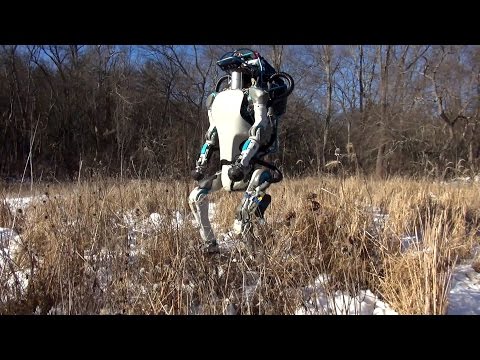
Ik heb ook een GIFje gezien dat ie gewoon een deur open maakt.quote:
Update van Boston Dynamics
Nu met loslopende 2-benige robots.
edit
Geen idee hoe ik een FB GIFje (blijkt toch weer filmpje) embed hier:
https://video-lhr3-1.xx.f(...)d1ca9894&oe=56CDA5D2
N/A
Disclaimer: ik ben geen expert maar shitposter, dit is geen advies en aan deze post zijn geen rechten te ontlenen
Disclaimer: ik ben geen expert maar shitposter, dit is geen advies en aan deze post zijn geen rechten te ontlenen
Sick!quote:
Update van Boston Dynamics
Nu met loslopende 2-benige robots.
|
|
