NWS Nieuws & Achtergronden
Discussieer hier diepgaander over de actualiteiten.



Melk is een belangrijke bron van jood, en na een ongeval dus van I-131. Concentratie in schape- en geitemelk ligt 10 keer hoger dan in koeiemelk.
http://www.atsdr.cdc.gov/csem/iodine/exposure_pathways.html
Blootstelling aan I-131 is vooral voor kinderen gevaarlijk omdat het later tot schildklierkanker kan leiden. Deze kankergevallen hebben een overlevingskans van 99% maar zullen de rest van hun leven hormonen moeten slikken omdat de behandeling bestaat uit het verwijderen van de schildklier. (en ironisch genoeg vaak een behandeling met zeer grote doses I-131)quote:The exposure pathway of greatest public health significance is the deposition of I-131 on pasture grasses, followed by the ingestion by cows or goats and the subsequent consumption of contaminated milk and fresh dairy products by humans.
Dietary intake of iodine before exposure is important because a relative iodine deficiency increases the thyroid uptake of I-131. After exposure, the most critical dietary information needed is the amount and type of milk and milk products consumed, their I-131 concentrations, and the time they were consumed relative to the time of the release.
Goat's milk and sheep's milk contain approximately 10 times the concentration of radioiodine found in cow's milk. Inhalation, especially near releases of I-131 in the absence of rain, is another route of internal exposure. However, doses to humans from inhalation and from ingestion of plants, animals, or water are usually small in comparison.
http://www.atsdr.cdc.gov/csem/iodine/exposure_pathways.html

En over spinazie:
Reheating Spinach Dangerous in Holland, Fine in Rest of World
Edit:
Heb de indruk dat het nitraat naar nitriet gebeuren een minder grote rol dan men dacht zou spelen: nitraten in het voedsel worden opgenomen en verschijnen terug in het speeksel, waarna ze door bacteriën in de mond tot nitrieten worden omgezet.
Niet alleen spinazie bevat veel nitraten, geldtg net zo goed voor wortelen, bieten, rode kool, bloemkool .
Belangrijkste bron van nitrosamines zijn trouwens bier en vlees, vooral spek omdat de hoge temperaturen nitrosamines doet ontstaan. (nitraat/nitriet wordt gebruikt als bewaarmiddel in vlees)
[ Bericht 72% gewijzigd door meth1745 op 20-03-2011 16:04:08 ]
Reheating Spinach Dangerous in Holland, Fine in Rest of World
Edit:
Heb de indruk dat het nitraat naar nitriet gebeuren een minder grote rol dan men dacht zou spelen: nitraten in het voedsel worden opgenomen en verschijnen terug in het speeksel, waarna ze door bacteriën in de mond tot nitrieten worden omgezet.
Ongekookte groenten verhinderen nitrosaminevorming in de maag omdat ze vit C bevatten. Nitrosamines worden enkel gevormd als het voedsel naast nitrieten of nitraten ook bepaalde aminozuren bevat.quote:Nitrate ingested in vegetable juice is resecreted in saliva, starting about 30 min after its ingestion and reaching a maximum after 1 to 2 hr (11, 25, 27). The resecreted nitrate is reduced to nitrite by the oral microflora.
Niet alleen spinazie bevat veel nitraten, geldtg net zo goed voor wortelen, bieten, rode kool, bloemkool .
Belangrijkste bron van nitrosamines zijn trouwens bier en vlees, vooral spek omdat de hoge temperaturen nitrosamines doet ontstaan. (nitraat/nitriet wordt gebruikt als bewaarmiddel in vlees)
[ Bericht 72% gewijzigd door meth1745 op 20-03-2011 16:04:08 ]

Als je dat leest word je niet vrolijk. 'Stilhouden voor het volk' en 'oei de verkiezingen staan op het spel, mijn baantje!' is het enige dat de ministeries bezig houdt, is het.quote:Op zondag 20 maart 2011 14:23 schreef deedeetee het volgende:
Hier een link die in een eerder topic is geplaats en waar ook zo'n spinazie en ander voedsel verhaal in staat destijds na Chernobyl.
Ik vind het vrij hilarisch geschreven
http://www.geschiedenis24(...)ederlandse-ramp.html
[..]
Ik heb geen bron maar ik weet dat de weerman in Belgie in die tijd wist van de enorme ellende in het land, maar vooral niets mocht zeggen op televies. Daar had hij enorme moeite mee, om het volk dom te houden, want hij wist dat je buitend staand best wel wat straling opliep...
Coffee. Gets you up and moving in the mornings.

Aardig opiniestukje van een Tokionaar (Tokionees?) over paniekzaaierij van media, buitenlandse organisaties die hun werknemers uit Tokio weghalen, enz enz.
quote:Why I stay in Tokyo (BraveNewClimate, zo 4:39)
Guest Post by Axel Lieber. Axel is a German national and has been a resident of Tokyo since 1998. He runs a small executive search firm and is married to a Japanese. [BNC editor's note: This is a personal perspective, not a professional scientific one, but I can verify Axel's facts]
Why I stay in Tokyo
[This commentary contains footnotes and links that allow you to verify what I am saying.]
Thousands have left Tokyo recently in a panic about the perceived radiation threat. If you ask any one of them to precisely articulate what the threat consists of, they will be unable to do so. This is because they actually dont know, and because in fact there is no threat justifying departure, at least not from radioactivity (*).They flee because they have somehow heard that there is a threat from the media, their embassies, their relatives overseas, friends, etc. These sources of information, too, have never supplied a credible explanation for their advisories.
But they have managed to create a mass panic, leading to thousands of people wasting their money on expensive air fares, disrupting their professional lives, their childrens education, and the many other productive activities they were going about. In some cases, foreign executives have abandoned their post in Tokyo, guaranteeing a total loss of respect among those who have stayed behind. Some service providers catering to the foreign community have lost almost their entire income over night. Other providers reversely will lose long-term clientele because they have fled, leaving their remaining customers and clients forced to find new providers. Domestic helpers (especially from the Philippines) have suddenly lost their livelihoods because their employers think its alright to run away without paying their helpers another penny. Another result of all the hysteria is that attention has been diverted away from the real disaster: the damage done in north-eastern Japan where thousands have died, and many tens of thousands live in dreadful conditions right now, waiting for help.
Contrast this with the fact that radioactivity levels in Tokyo are entirely safe and have been since the beginning of the Fukushima incident (*1a, and *1b for continuous updates). Modern instruments to measure radioactivity are extremely sensitive and precise, and report even the smallest deviations with impressive reliability. Nowhere in the Tokyo area have there been any measurements that would imply any sort ofhealth risk. There certainly have been increases in radioactivity but they are tiny and simply irrelevant to anyones health. There is also no fear that there could be some kind of cover-up. Instruments to measure radioactivity are available at many different research institutions that are not controlled by the Japanese government. The J-gov does also not control the media. They simply have no laws and no means to do so.
[Editor's Note: For a contrast, the background level in London is 0.035 to 0.05 µSv per hour, see the pie chart for an average breakdown by source. Also, see this great chart.]
But what about a worst-case scenario, one that is yet to come? For four days now, I have tried to find a serious source of information a nuclear safety engineer or a public health expert who would be able to articulate just what exactly the threat to residents of Tokyo is. It has been difficult because there arent many who bother to. I could quote several Japanese experts here but wont do so to avoid a debate over their credibility (which I personally do not have any particular reason to doubt). The most to-the-point assessment I have found from outside of Japan comes from the UK governments Chief Science Advisor, Sir John Beddington. In a phone call to the British embassy in Tokyo, he says about the worst-case scenario:
"In this reasonable worst case you get an explosion. You get some radioactive material going up to about 500m up into the air. Now, thats really serious, but its serious again for the local area.The problems are within 30 km of the reactor. And to give you a flavour for that, when Chernobyl had a massive fire at the graphite core, material was going up not just 500m but to 30,000 feet (9,144m) . It was lasting not for the odd hour or so but lasted months, and that was putting nuclear radioactive material up into the upper atmosphere for a very long period of time. But even in the case of Chernobyl, the exclusion zone that they had was about 30km. And in that exclusion zone, outside that, there is no evidence whatsoever to indicate people had problems from the radiation. The problems with Chernobyl were people were continuing to drink the water, continuing to eat vegetables and so on and that was where the problems came from. Thats not going to be the case here. So what I would really re-emphasise is that this is very problematic for the area and the immediate vicinity and one has to have concerns for the people working there. Beyond that 20-30km, its really not an issue for health.(*2)
It is important to note that Beddington, too, uses language such as really serious. Most nuclear safety engineers at this moment would describe the Fukushima incident as very serious and as having potentially catastrophic consequences. But the important point to note here is that these descriptions of the situation do not translate into public health concerns for Tokyo residents! They apply to the local situation at and around the Fukushima plant alone.
As of the time of writing this note (March 19, 2011, 13:00 JST), the status at Fukushima is still precarious but there are now signs that the situation is stabilizing and may be brought under control in the next few days. (*3)
Tokyo, even at this time of crisis, remains one of the best, safest and coolest large cities in the world to live in. All public services operate normally or almost normally. Many areas of central Tokyo have not had any power outages, and when such occur they are limited to a few hours and certain areas, and are announced well in advance. I have personally not experienced any power outages. Food is available in almost normal quantity and quality. The only food type I have personally seen to be lacking is milk and dairy products, and rice because of panic purchases. Gas (petrol) supply is indeed limited but just yesterday I was able to get a full tank of gas after only a fifteen minute wait. Public order and safety in Tokyo remains higher than in any other large city in the world, as it has always been over the past few decades.
To really rub this in: if you live in New York, Shanghai, Berlin, London or Sydney or any other metropolis, you are more exposed to public safety threats such as crime or road accidents than I am at this moment, and in most cases considerably so.
Active and passive smoking, driving a car or motorcycle, getting a chest x-ray, jay-walking, or snowboarding down a snowy mountain are all much more risky activities than simply sitting on a sunny roof terrace in Tokyo.
And sunny it is today, in the capital of the country whose name is literally Origin of the Sun.
To obtain level-headed information about the status at Fukushima, avoid CNN and read www.mitnse.com or www.bravenewclimate.com


Ik in een aantal worden omschreven: Ondernemend | Moedig | Stout | Lief | Positief | Intuïtief | Communicatief | Humor | Creatief | Spontaan | Open | Sociaal | Vrolijk | Organisator | Pro-actief | Meedenkend | Levensgenieter | Spiritueel
gaat niet om de hoeveelheid nitraat maar om de verbindingen die het vormt met ioniserende stoffen (metalen)zoals radioactivieviteit
There is only one religion


Ik vind dat paniekerige gedoe ook belachelijk en schadelijk. In plaats van zich druk te maken over hun eigen hachje en de spinazie kunnen ze beter hier hun aandacht op richten.quote:
Aardig opiniestukje van een Tokionaar (Tokionees?) over paniekzaaierij van media, buitenlandse organisaties die hun werknemers uit Tokio weghalen, enz enz.
[..]
Dit bericht vind ik veel zorgelijker dan het gedoe over stralingsgevaar :quote:Another result of all the hysteria is that attention has been diverted away from the real disaster: the damage done in north-eastern Japan where thousands have died, and many tens of thousands live in dreadful conditions right now, waiting for help.
Taboe op plundering sneuvelt
Ga fietsen jij !! ikke niet hoor..
quote:
Another result of all the hysteria is that attention has been diverted away from the real disaster: the damage done in north-eastern Japan where thousands have died, and many tens of thousands live in dreadful conditions right now, waiting for help.
daar was het andere topic voor
Another result of all the hysteria is that attention has been diverted away from the real disaster: the damage done in north-eastern Japan where thousands have died, and many tens of thousands live in dreadful conditions right now, waiting for help.
daar was het andere topic voor
There is only one religion
quote:
quote:
Another result of all the hysteria is that attention has been diverted away from the real disaster: the damage done in north-eastern Japan where thousands have died, and many tens of thousands live in dreadful conditions right now, waiting for help.
daar was het andere topic voor

Ga fietsen jij !! ikke niet hoor..
De amerikanen verlaten in ieder geval Japan:
SEATTLE, Wash. -- Thousands of U.S. military and Department of Defense personnel are being voluntarily evacuated from Japan to Seattle and Joint Base Lewis-McChord following last weeks earthquake and tsunami.
The USO confirmed Friday that 15,000 U.S. personnel and their dependents will be hosted at USO centers at SeaTac and JBLM in the coming days. The evacuation is part of the U.S. State Department's voluntary evacuation of U.S. personnel following growing concerns at nuclear plants in Japan.
The USO said about 200,000 U.S. personnel are being evacuated from Japan to U.S. West Coast cities including San Diego, San Francisco, Los Angeles and Seattle/JBLM.
SEATTLE, Wash. -- Thousands of U.S. military and Department of Defense personnel are being voluntarily evacuated from Japan to Seattle and Joint Base Lewis-McChord following last weeks earthquake and tsunami.
The USO confirmed Friday that 15,000 U.S. personnel and their dependents will be hosted at USO centers at SeaTac and JBLM in the coming days. The evacuation is part of the U.S. State Department's voluntary evacuation of U.S. personnel following growing concerns at nuclear plants in Japan.
The USO said about 200,000 U.S. personnel are being evacuated from Japan to U.S. West Coast cities including San Diego, San Francisco, Los Angeles and Seattle/JBLM.
Status of Fukushima nuclear power plants Sunday evening
TOKYO, March 20, Kyodo
The following is the known status as of Sunday evening of each of the six reactors at the Fukushima Daiichi nuclear power plant and the four reactors at the Fukushima Daini plant, both in Fukushima Prefecture, which were crippled by the magnitude 9.0 earthquake and ensuing tsunami on March 11.
Fukushima Daiichi plant
-- Reactor No. 1 (Operation suspended after quake)
Partial melting of core, cooling failure, vapor vented, building housing containment of reactor damaged by hydrogen explosion, roof blown off, seawater being pumped in.
-- Reactor No. 2 (Operation suspended after quake)
Damage to reactor containment structure feared, cooling failure, seawater being pumped in, fuel rods fully exposed temporarily, vapor vented, building housing containment of reactor damaged by blast at adjacent reactor No. 3, blast sound heard near suppression chamber of containment vessel, seawater pumped into pool holding spent-fuel rods on Sunday, access to external power restored Sunday.
-- Reactor No. 3 (Operation suspended after quake)
Partial melting of core feared, cooling failure, vapor vented, seawater being pumped in, building housing containment of reactor badly damaged by hydrogen explosion, seawater dumped over spent-fuel storage pool by helicopter Thursday, water sprayed at it from ground for four days in a row through Sunday.
-- Reactor No. 4 (Under maintenance when quake struck)
Renewed nuclear chain reaction feared at spent-fuel storage pool, fire at building housing containment of reactor Tuesday and Wednesday, only frame remains of reactor building roof, temperature in the pool reached 84 C on March 14, water sprayed at pool on Sunday.
-- Reactor No. 5 (Under maintenance when quake struck)
Some fuel rods left in reactor core, cooling in spent-fuel storage pool resumed Saturday, cold shutdown at reactor on Sunday.
-- Reactor No. 6 (Under maintenance when quake struck)
Some fuel rods left in reactor core, emergency power generator and cooling functions restored Saturday, cold shutdown at reactor on Sunday.
Fukushima Daini plant
-- Reactors No. 1, 2, 3, 4 (Operation suspended after quake)
Cold shutdown, not under emergency status.
==Kyodo
TOKYO, March 20, Kyodo
The following is the known status as of Sunday evening of each of the six reactors at the Fukushima Daiichi nuclear power plant and the four reactors at the Fukushima Daini plant, both in Fukushima Prefecture, which were crippled by the magnitude 9.0 earthquake and ensuing tsunami on March 11.
Fukushima Daiichi plant
-- Reactor No. 1 (Operation suspended after quake)
Partial melting of core, cooling failure, vapor vented, building housing containment of reactor damaged by hydrogen explosion, roof blown off, seawater being pumped in.
-- Reactor No. 2 (Operation suspended after quake)
Damage to reactor containment structure feared, cooling failure, seawater being pumped in, fuel rods fully exposed temporarily, vapor vented, building housing containment of reactor damaged by blast at adjacent reactor No. 3, blast sound heard near suppression chamber of containment vessel, seawater pumped into pool holding spent-fuel rods on Sunday, access to external power restored Sunday.
-- Reactor No. 3 (Operation suspended after quake)
Partial melting of core feared, cooling failure, vapor vented, seawater being pumped in, building housing containment of reactor badly damaged by hydrogen explosion, seawater dumped over spent-fuel storage pool by helicopter Thursday, water sprayed at it from ground for four days in a row through Sunday.
-- Reactor No. 4 (Under maintenance when quake struck)
Renewed nuclear chain reaction feared at spent-fuel storage pool, fire at building housing containment of reactor Tuesday and Wednesday, only frame remains of reactor building roof, temperature in the pool reached 84 C on March 14, water sprayed at pool on Sunday.
-- Reactor No. 5 (Under maintenance when quake struck)
Some fuel rods left in reactor core, cooling in spent-fuel storage pool resumed Saturday, cold shutdown at reactor on Sunday.
-- Reactor No. 6 (Under maintenance when quake struck)
Some fuel rods left in reactor core, emergency power generator and cooling functions restored Saturday, cold shutdown at reactor on Sunday.
Fukushima Daini plant
-- Reactors No. 1, 2, 3, 4 (Operation suspended after quake)
Cold shutdown, not under emergency status.
==Kyodo
There is only one religion

Reactorgebouwen 5 en 6 zijn succesvol aangesloten op netstroom en zijn nu in 'cold shutdown'. 
 Nu de andere (beschadigde) nog...
Maar dat waren de makkelijkequote:Japanese authorities have notified the IAEA of progress at the Fukushima Daiichi nuclear power plant. Workers today have successfully placed reactor Unit 5 (at 05:30 UTC) and 6 (at 10:27 UTC) into cold shutdown.
This means that the reactors are in a safe mode, with cooling systems stable and under control, and with low temperature and pressure within the reactor.
Bron: IAEA alert
Nu de andere (beschadigde) nog...
Ik in een aantal worden omschreven: Ondernemend | Moedig | Stout | Lief | Positief | Intuïtief | Communicatief | Humor | Creatief | Spontaan | Open | Sociaal | Vrolijk | Organisator | Pro-actief | Meedenkend | Levensgenieter | Spiritueel
Klopt, ik hoor ook wel erg veel positief nieuws maar over de lastige dingen wordt nogal gezwegen...quote:Op zondag 20 maart 2011 17:56 schreef eleusis het volgende:
Reactorgebouwen 5 en 6 zijn succesvol aangesloten op netstroom en zijn nu in 'cold shutdown'.
[..]
Maar dat waren de makkelijke
Ze hebben nog een hele lange weg te gaan, maar er wordt daar hard gewerkt en wie weet wat ze nog kunnen bereiken ? 
Dit succesje is toch al een waard !
Dit succesje is toch al een
waard !
Ga fietsen jij !! ikke niet hoor..
Precies. Zeker omdat units 5 en 6 net zo goed hadden kunnen gaan oververhitten... Over de spent fuel pools waren ook grote zorgen, want die waren al warm aan het worden. Nu is die zorg in ieder geval weg.
Het ligt voor de hand om eerst de 'gemakkelijke' reactors te pakken. Dan heb je je mensen vrij voor de echt lastige klussen.
Ik ben benieuwd welke ze nu als eerste weten te bedwingen. Ik gok nummer 2, die heeft zijn bovenkantje nog, en waarschijnlijk alleen maar een breuk in de suppression pool (expansievat). Maar dat vat wordt alleen gebruikt bij oververhitting, dus als de reactor eenmaal weer op de koeling aangesloten is, heb je daar geen last van. (Al weet ik even niet meer of het nou gebouw 2 was waar die pijpen van losgeslagen waren in de video..)
Het ligt voor de hand om eerst de 'gemakkelijke' reactors te pakken. Dan heb je je mensen vrij voor de echt lastige klussen.
Ik ben benieuwd welke ze nu als eerste weten te bedwingen. Ik gok nummer 2, die heeft zijn bovenkantje nog, en waarschijnlijk alleen maar een breuk in de suppression pool (expansievat). Maar dat vat wordt alleen gebruikt bij oververhitting, dus als de reactor eenmaal weer op de koeling aangesloten is, heb je daar geen last van. (Al weet ik even niet meer of het nou gebouw 2 was waar die pijpen van losgeslagen waren in de video..)
Ik in een aantal worden omschreven: Ondernemend | Moedig | Stout | Lief | Positief | Intuïtief | Communicatief | Humor | Creatief | Spontaan | Open | Sociaal | Vrolijk | Organisator | Pro-actief | Meedenkend | Levensgenieter | Spiritueel
Geen idee,quote:
[..]
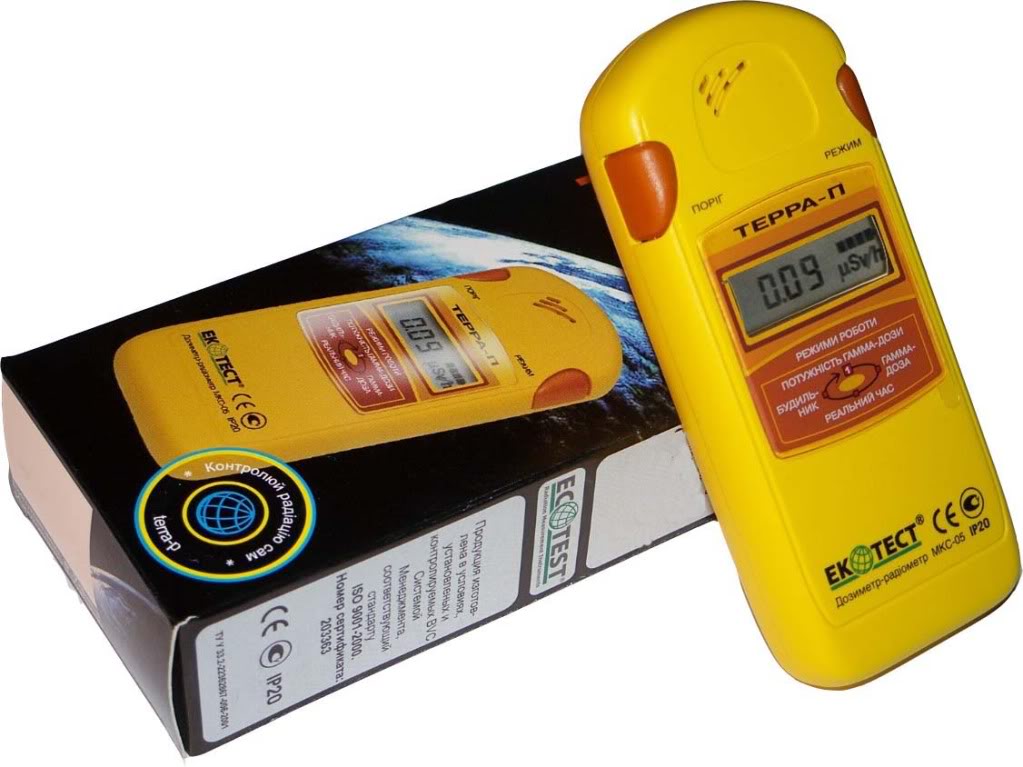
Lijkt mij ook wel een interessant hebbedingetje straks. Probleem is, die dosimeters moet je regelmatig laten kalibreren willen ze betrouwbaar blijven. Vraag mij af of dat met een tweede hands kan.
Ik bedoel overigens dit soort apparaatjes
niet die sleutelhanger achtige dingetjes.
 niet die sleutelhanger achtige dingetjes.
Die zijn wel leuk ja
Ik in een aantal worden omschreven: Ondernemend | Moedig | Stout | Lief | Positief | Intuïtief | Communicatief | Humor | Creatief | Spontaan | Open | Sociaal | Vrolijk | Organisator | Pro-actief | Meedenkend | Levensgenieter | Spiritueel
En normaal op ebay wel te vinden voor $200 ofzo (of eentje die ook alpha meet voor $400) maar nu zijn alle prijzen x2 gegaanquote:

Is dit filmpje al langs geweest ?
[ Bericht 0% gewijzigd door deedeetee op 20-03-2011 19:03:52 ]

[ Bericht 0% gewijzigd door deedeetee op 20-03-2011 19:03:52 ]
Ga fietsen jij !! ikke niet hoor..
Hier wat info over de lastige dingenquote:
Klopt, ik hoor ook wel erg veel positief nieuws maar over de lastige dingen wordt nogal gezwegen...
Deel onder het plaatje.quote:Stabilisation at Fukushima Daiichi (World Nuclear News, zo 20 mrt, 14:30)
Workers on site have succeeded in increasing the stability of the Fukushima Daiichi reactor units with units 5 and 6 now in cold shutdown. Pressure built up within unit 3 but a more significant venting does not seem necessary now.
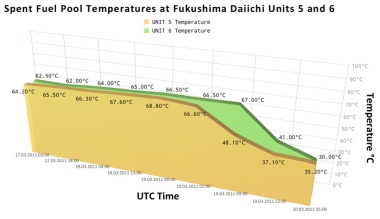
External power has now been connected to unit 5 and 6, allowing them to use their residual heat removal systems and transfer heat to the sea. This has been used to cool the fuel ponds and bring the units to cold shutdown status, meaning that water in the reactor system is at less than 100ºC.
This graph from the International Atomic Energy Agency illustrates how fuel pond temperatures have dropped at units 5 and 6 since the connection of external power and use of the residual heat removal system was restarted
An extended operation to refill the fuel pond took place at unit 3, with the Hyper Rescue crew spraying for over 13 hours. Radiation levels 500 metres north of the reactor showed a decrease from 3.44 millisieverts per hour to 2.75 millisieverts per hour, indicating a measure of success in refilling the pond. A similar operation is planned for later today at unit 4 and the surface temperatures of the buildings appear to be below 100ºC.
At units 1 and 2, external power has been restored. Tokyo Electric Power Company (Tepco) said it would restore functions in the central control room shared by the units so that accurate readings could again be taken from the reactor system. Next, workers will check the condition of the water supply systems to the reactor and the used fuel pond. With luck these will be able to go back into operation as they had been immediately after the earthquake on 11 March.
External power for units 3 and 4 should be in place 'in a few days time', said Tepco.
During the day, the company had noted a pressure increase within unit 3, warning that venting may be required. Preparations were underway to open the relief valve on the torus suppression chamber, or if that had proven full of water, another valve on the reactor containment. These operations had been expected to release a more significant amount of radioactivity than earlier venting, but Tepco has since said the higher pressure is stable and it does not need to vent.
Radiation monitors in the area near the plant have shown gradually decreasing readings since spikes on 15 March following the loud noises and apparent rupture of the torus of unit 2. While levels were above natural background radiation they have not posed a threat to public health. Most people within 20 kilometres were evacuated before that time and people in a further ten-kilometre radius has been warned to stay indoors. Evacuation centres have been supplied with potassium iodide tablets that would protect people's thyroid glands in the case of a serious release of radionuclides from the reactor cores.
Despite contradictory comments by the US Nuclear Regulatory Commission to US politicians and media, most observers in nuclear industry and regulation consider the measures taken by Japanese authorities to be prudent.
Ik in een aantal worden omschreven: Ondernemend | Moedig | Stout | Lief | Positief | Intuïtief | Communicatief | Humor | Creatief | Spontaan | Open | Sociaal | Vrolijk | Organisator | Pro-actief | Meedenkend | Levensgenieter | Spiritueel
Hoe dicht kunnen ze eigenlijk in de buurt komen ? De straling is daar toch veel te hoog ?quote:At units 1 and 2, external power has been restored. Tokyo Electric Power Company (Tepco) said it would restore functions in the central control room shared by the units so that accurate readings could again be taken from the reactor system. Next, workers will check the condition of the water supply systems to the reactor and the used fuel pond. With luck these will be able to go back into operation as they had been immediately after the earthquake on 11 March.
Ze lijken zelf wel te denken dat ze ( met wat geluk ) de boel weer aan 't functioneren krijgen
Ga fietsen jij !! ikke niet hoor..
Ik denk dat we over 2-3 dagen een goed beeld hebben.quote:
[..]
Hoe dicht kunnen ze eigenlijk in de buurt komen ? De straling is daar toch veel te hoog ?
Ze lijken zelf wel te denken dat ze ( met wat geluk ) de boel weer aan 't functioneren krijgen
Ben bang dat er toch meer stuk is en dat het optimisme afneemt.

Dat spul wat je koopt komt uit een fabriek hier in Nederlandquote:
Ik heb voor de zekerheid gisteren toch maar een paar liter kikkomansaus ingeslagen
Zouden er nu ook gevolgen zijn voor vis?
Klopt, wordt vooral geproduceerd bij "Borsele Foods".quote:
[..]
Dat spul wat je koopt komt uit een fabriek hier in Nederland
Van de BBC had ik toch een betere woordkeuze verwacht:
http://www.bbc.co.uk/news/world-asia-pacific-12798579quote:Meanwhile, at the stricken Fukushima nuclear plant, firefighters have continued to spray water at the dangerously overheated reactors and fuel rods, in a desperate attempt to avert a meltdown.
