SPT Sport Algemeen
Ben jij sportief? Volg je alles wat met sport te maken heeft? Of heb je gewoon iets te melden of te vragen over een sport? Dan is dit het forum waar je zijn moet.



In deze serie niet, want vind dat PHX het leukste en attractiefste speelt. Gun Nash wel een kampioenschap. Maar hoop vooral dat het een ploeg uit het westen wordt, want met de ploegen in het oosten heb ik helemaal niets.quote:
"En dan hebben ze nou de regel dat je handjes mot schudden voor het gevecht. Ik wil helemaal geen handjes schuden met m'n tegenstander. Ik wil de kop van z'n romp afslaan."
Eindelijk... Fok doet het weer ...
Mooie uitslag Spurs goed gespeeld en Suns hangin' in tough. Ze hadden totaal geen antwoord op Parker... en ze zullen Nash echt niet op Parker zetten om te "verdedigen"... Marr Shawn Marion was ook niet echt een succes... Tim Duncan overigens ook weer een erg goede wedstrijd.
Stoudemire slecht in de afwerking... en Barbosa? Tsja... tegen de Lakers is het heel wat makkelijker scoren hoor... die raken je gewoon niet aan
Mooie uitslag Spurs goed gespeeld en Suns hangin' in tough. Ze hadden totaal geen antwoord op Parker... en ze zullen Nash echt niet op Parker zetten om te "verdedigen"... Marr Shawn Marion was ook niet echt een succes... Tim Duncan overigens ook weer een erg goede wedstrijd.
 Spurs goed gespeeld en Suns hangin' in tough. Ze hadden totaal geen antwoord op Parker... en ze zullen Nash echt niet op Parker zetten om te "verdedigen"... Marr Shawn Marion was ook niet echt een succes... Tim Duncan overigens ook weer een erg goede wedstrijd.
 Stoudemire slecht in de afwerking... en Barbosa? Tsja... tegen de Lakers is het heel wat makkelijker scoren hoor... die raken je gewoon niet aan


Vanavond:
Old friends Ben Wallace and the Pistons met in Game 1, but Detroit put buddy ball on the back burner, pounding the Bulls 95-69 on Saturday.
Baron Davis made the Mavs disappear. What tricks does he have up his sleeve for the Jazz?
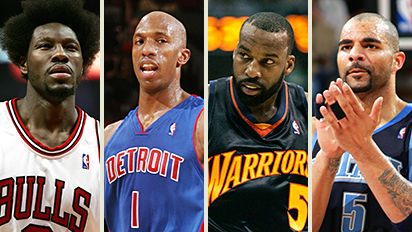
Old friends Ben Wallace and the Pistons met in Game 1, but Detroit put buddy ball on the back burner, pounding the Bulls 95-69 on Saturday.
Baron Davis made the Mavs disappear. What tricks does he have up his sleeve for the Jazz?
Patience is not one of my virtues, neither is memory. Or patience for that matter.
Bulls-Pistons vind ik zelf een erg intrigerende match-up... blij toe dat ze beide een east coast team zijn (is wat makkelijker volgen ivm met de uitzendingen)quote:Op maandag 7 mei 2007 20:02 schreef popolon het volgende:
Vanavond:
[afbeelding]
Old friends Ben Wallace and the Pistons met in Game 1, but Detroit put buddy ball on the back burner, pounding the Bulls 95-69 on Saturday.
Baron Davis made the Mavs disappear. What tricks does he have up his sleeve for the Jazz?
Echte rivalry die eind jaren '80 echt begon.
Eén ding is zeker, Chicago zal zich niet twee keer achter elkaar zo laten wegspelen door Detroit. Wat een pak slaag was de eerste game.
Eén ding is zeker, Chicago zal zich niet twee keer achter elkaar zo laten wegspelen door Detroit. Wat een pak slaag was de eerste game.
Patience is not one of my virtues, neither is memory. Or patience for that matter.

Ik denk dat chicago zal verliezen maar dat het deze keer erg close zal eindigen en verder zal utah gewoon winnen met minimaal 5 punten verschil.
Ik moet de Jazz nog zien winnen, maar Deron Williams zal het in elk geval wat beter doen tegen Baron Davis dan wat de Mavs PG's deden...quote:Op maandag 7 mei 2007 22:55 schreef jmac het volgende:
Ik denk dat chicago zal verliezen maar dat het deze keer erg close zal eindigen en verder zal utah gewoon winnen met minimaal 5 punten verschil.
Probeer Baron Davis te dwingen moeilijke schoten te nemen... Over het algemeen is de schotselectie van Davis nou niet echt de beste...
Ik denk overigens dat de Warriors liever de trage Rockets hadden gezien
ja verwacht ook een close game maar als ik moet kiezen ga ik iig in deze match voor utah.
Vind 't idd ook jammer dat 't niet houston is geworden. De chinees staat erbij en kijkt ernaar dan
Vind 't idd ook jammer dat 't niet houston is geworden. De chinees staat erbij en kijkt ernaar dan

Ik denk dat ik vannacht klein beetje mee ga krijgen van Bulls-Pistons wedstrijd.
Morgen weer 8 uur wakker
Ik ga er van uit dat de Pistons deze wedstrijd ook naar zich toetrekken. Zou ook best slecht zijn van ze als het niet lukt, want dan zou straks de Bulls het al naar een 3-1 kunnen gooien thuis (als alles goed gaat, de komende drie wedstrijden)
Ik vind het beide leuk voor Jazz en Warriors dat ze in de second round zitten, maakt mij persoonlijk niet uit wie er uiteindelijk doorgaat naar de conference finals. Al lijkt het me wel grappig om Warriors tegen de Suns/Spurs te zien
Morgen weer 8 uur wakker

Ik ga er van uit dat de Pistons deze wedstrijd ook naar zich toetrekken. Zou ook best slecht zijn van ze als het niet lukt, want dan zou straks de Bulls het al naar een 3-1 kunnen gooien thuis (als alles goed gaat, de komende drie wedstrijden)
Ik vind het beide leuk voor Jazz en Warriors dat ze in de second round zitten, maakt mij persoonlijk niet uit wie er uiteindelijk doorgaat naar de conference finals. Al lijkt het me wel grappig om Warriors tegen de Suns/Spurs te zien

Tot nu toe spelen de Pistons prima basketball, erg geconcentreerd, prima defense.
28-14. C'mon Deeeeetroit
28-14. C'mon Deeeeetroit
Patience is not one of my virtues, neither is memory. Or patience for that matter.
Oew.. nice play daarnet
Detroit lukt het wel als ze zo blijven spelen. Chicago schiet niet zuiver en Detroit is sterk in de verdediging.
Detroit lukt het wel als ze zo blijven spelen. Chicago schiet niet zuiver en Detroit is sterk in de verdediging.
Succes Popo
Ik noem een Tony van Heemschut,een Loeki Knol,een Brammetje Biesterveld en natuurlijk een Japie Stobbe !

34-18 end Q1.
Da's vrij veel voor Detroit.
Da's vrij veel voor Detroit.
Patience is not one of my virtues, neither is memory. Or patience for that matter.
Detroit getting sloppy, 't is nog lang niet over.
Patience is not one of my virtues, neither is memory. Or patience for that matter.

Maar wat vallen de Bulls dan ineens weer tegen zeg. Ik had wel redelijk goede hoop op een mooie serie tegen de Pistons, maar als dit zo doorgaat zal het snel over zijn.
4-1quote:Op dinsdag 8 mei 2007 02:57 schreef vivelafete het volgende:
Maar wat vallen de Bulls dan ineens weer tegen zeg. Ik had wel redelijk goede hoop op een mooie serie tegen de Pistons, maar als dit zo doorgaat zal het snel over zijn.
AFC Ajax, IJsselmeervogels & Indiana Pacers
Foutenlast en een wat minder geconcentreed Detroit laten de Bulls niet echt achter, hele tijd zo rond de 15 verschil.
Sheed 6 fouten nu, die had er al 4 heel snel te pakken.
Sheed 6 fouten nu, die had er al 4 heel snel te pakken.
Patience is not one of my virtues, neither is memory. Or patience for that matter.
Utah wint zonder Fisher van GSW.
"En dan hebben ze nou de regel dat je handjes mot schudden voor het gevecht. Ik wil helemaal geen handjes schuden met m'n tegenstander. Ik wil de kop van z'n romp afslaan."
Check het reboundverschil tussen Utah en GSquote:Op dinsdag 8 mei 2007 08:48 schreef Colplay het volgende:
Utah wint zonder Fisher van GSW.
Carlos Boozer met 10(!) offensive rebounds!!!!!
Ja daar kan een belangrijke factor zitten. Utah pakte vannacht 20 OR, GSW 22 DR. Hopelijk kunnen de Jazz hier van blijven profiteren.
"En dan hebben ze nou de regel dat je handjes mot schudden voor het gevecht. Ik wil helemaal geen handjes schuden met m'n tegenstander. Ik wil de kop van z'n romp afslaan."
Ik vind Charley Rosen de beste sports writer van de big media outlets. Altijd een erg goede analyse en hij weet absoluut waar hij over praat. Ben het niet altijd met hem eens, maar vind het altijd een erg intelligente schrijver Totaal anders dan de ESPN stijl in elk geval.quote:Beat the Bulls? For Pistons, no problem
Charley Rosen / Special to FOXSports.com
Detroit's 108-87 obliterating of the Bulls on Monday was easy. Almost as easy as its runaway win in Game1.
If anything, the Pistons' latest triumph might have been too easy.
How'd they do it? By not doing what Chicago expected them to do.
For example, in Game 1 the Pistons ran several clear-outs that allowed Chauncey Billups to score at will over the under-sized Ben Gordon. The home team's surprise opening gambit in Game 2, however, was to post Rasheed Wallace against P. J. Brown. The result was a pair of easy layups sandwiched around a block by Ben Wallace.
The Pistons also ran more curls off weak-side screens. All of them designed to exploit Luol Deng's inability to recognize what was happening, and his resulting failure to step out and show.
Early on, the Pistons also posted Chris Webber against Big Ben. With Wallace playing on his tippy-toes and aching to block C-Webb's shot, Webber simply took his time until he could let loose a jump-hook. COUNT IT! PLUS ONE!
The second time this tactic was attempted, however, Wallace stymied Webber and forced a turnover. Still, with Big Ben on the bench, Webber once again ventured into the low post — this time against the beefy Michael Sweetney. Webber's fadeaway jump hook tangled the net.
When was the last time Webber assumed a low-post position three times in the same half? Not since his glory days at Michigan.
Easy.
The Pistons waited until the second quarter to go at Gordon. That's when Tayshaun Prince posted BG for a baby hook. But when Billups went one-on-one against Gordon, he misfired on two mid-range jumpers.
The third time Billups attacked Gordon was a charm: A baseline dribble that drew the attention of Ben Wallace, then a pass out to a wide-open Webber, who sank a 15-footer.
A cinch.
Okay, so Scott Skiles then sent his high-flying rookie, Tyrus Thomas, into the fray. On the very first sequence, Thomas gave Rasheed too much room and watched a 3-ball split the net. Thomas then missed a 17-footer; was tooted for a moving screen; hesitated before shooting a 5-footer, and had it tipped.
A snap.
Andres Nocioni was even worse. A fumbled pass, a pair of traveling violations, a turned head that allowed Prince a dunk, a late rotation that allowed Prince to bury still another triple. The charge that Nocioni drew on Rasheed, and the block he created on Webber did little to mitigate his early difficulties.
A walk in the park.
Rip Hamilton had his way with whoever was trying to guard him. Prince shot the lights out. Webber made 10 of 11 shots. Billups moved the ball and shot only when he had to. Even Rasheed had his chops up.
Child's play.
On defense, the Pistons played lots of zone, and thereby succeeded in keeping the Bulls' guards out of the middle. Their zones were so focused on Deng and Gordon that they totally ignored Big Ben. It was the weak-side wing's responsibility to rotate to B. Wallace, but this was a stretch. As a result, Wallace wound up with several (meaningless) dunks and layups that added up to 13 points.
Gordon was thoroughly flummoxed by the attention (3-7 from the field), while Deng was also negated (4-12). With the focus on Gordon and Deng, Hinrich had several open shots, but was 0-7. That's 7-26 from the Bulls' top scorers.
Duck soup!
Clearly, the Pistons have superior talent, better execution on both offense and defense, a higher collective basketball IQ, and are more resourceful. Another surprise, though, was that Detroit also brought more energy to the game than did the Bulls.
This was supposed to be Chicago's biggest advantage.
Gravy!
Did the Bulls do anything right?
Absolutely.
Midway through the third quarter they unleashed a 1-2-2 trapping zone that temporarily set the Pistons back on their heels. For several possessions, Detroit was content to merely pass the ball around the perimeter and try to locate open looks. Only occasionally did someone try to drive the ball into the paint, but there was no cohesion in their attack.
Against the zone, the Pistons were 6-17 with four turnovers — and the Bulls managed to reduce their deficit to a dozen points. But Skiles went with the zone too long without changing up. Eventually the Pistons got comfortable and started finding open spaces in the middle of the foul line and also in the pivot. Once the Pistons made their adjustments, they were 3-3.
The Bulls also tried some backcourt traps designed to at least make Detroit eat up some shot clock. This strategy, though, was totally fruitless.
Even so, look for the Bulls to spring several varieties of traps and zones when they return home. Anything to momentarily confuse the Pistons. As long as they vary their approaches, the Bulls might indeed induce some hesitations in Detroit's precision offense.
Maybe.
Late in the game, when the Pistons just about had the game in the bag, young Thomas put on a show. Dunking, running, leaping and demonstrating his extraordinary athleticism. However, when Rasheed returned to action (he had been down with foul trouble), Thomas was immediately victimized by a post-up dunk, and then proceeded to fire up an air-ball.
Still, the experience has to be beneficial for the young man.
Because the Pistons commanded the boards, the Bulls couldn't get their fast break rolling. They did, though, find some open looks in their early offense.
For a while, the Bulls had some success playing small-ball. Thomas, Deng, Gordon, Chris Duhon and Thabo Sefolosha all combined to occasionally out-quick Detroit's zone defense. But then the Pistons followed suit — with Webber, Carlos Delfino, Prince, Billups and Hamilton — and Chicago's modest surge was history.
All in all, there was precious little for the Bulls to build on. Every tweak was eventually answered by a punch. Every streak cut short by a reactive flurry of big shots.
With the game safely in hand, the Pistons lost their concentration every so often. Making careless passes. Arriving late on defensive rotations. But these lapses only seemed to be functions of their basic disrespect for their opponents.
Easy as pie.
For the Bulls to steal a game, they'll need more frequent and more extended lapses by the Pistons. But anything short of collective amnesia will only provide brief respites for the hard-pressed Bulls.
Chicago's only real hope is that the Pistons will come to believe that closing out the series will also be too easy.
Het is een leuk stukje maar het doet lijken dat 't iets te makkelijk ging, de Pistons gingen natuurlijk als een gek van start en hebben die overwinning te danken voor een groot deel aan Q1.
Ik vond ze af en toe toch weer slordig. De Pistons lijken een wedstrijd maar niet te willen beslissen in een vroege fase.
En GSW, tja, zo jammer voor hun dat Houston niet door is. Dit wordt gewoon erg lastig.
Ik vond ze af en toe toch weer slordig. De Pistons lijken een wedstrijd maar niet te willen beslissen in een vroege fase.
En GSW, tja, zo jammer voor hun dat Houston niet door is. Dit wordt gewoon erg lastig.
Patience is not one of my virtues, neither is memory. Or patience for that matter.
Zegt-ie dit over:quote:Op dinsdag 8 mei 2007 13:38 schreef popolon het volgende:
Het is een leuk stukje maar het doet lijken dat 't iets te makkelijk ging, de Pistons gingen natuurlijk als een gek van start en hebben die overwinning te danken voor een groot deel aan Q1.
Ik vond ze af en toe toch weer slordig. De Pistons lijken een wedstrijd maar niet te willen beslissen in een vroege fase.
quote:With the game safely in hand, the Pistons lost their concentration every so often. Making careless passes. Arriving late on defensive rotations. But these lapses only seemed to be functions of their basic disrespect for their opponents.

Tja ik zou het geen 'disrespect' willen noemen. Zeker niet.
Meer gewoon concentratieverlies en misschien hier en daar wat gemakzuchtigheid. Da's toch net iets anders.
Ik zag ze dat trouwens vorig seizoen veel meer doen, dat onverschillige, de focus lijkt nu beter. Kijken hoe ver ze kunnen komen. Als de Pistons kampioen worden drink ik m'n zwembad leeg.
Meer gewoon concentratieverlies en misschien hier en daar wat gemakzuchtigheid. Da's toch net iets anders.
Ik zag ze dat trouwens vorig seizoen veel meer doen, dat onverschillige, de focus lijkt nu beter. Kijken hoe ver ze kunnen komen. Als de Pistons kampioen worden drink ik m'n zwembad leeg.
Patience is not one of my virtues, neither is memory. Or patience for that matter.
Ik zie de Pistons anders een erg goede kans hebben... Hoeveel liter gaat er in je zwembad?quote:Op dinsdag 8 mei 2007 21:41 schreef popolon het volgende:
Tja ik zou het geen 'disrespect' willen noemen. Zeker niet.
Meer gewoon concentratieverlies en misschien hier en daar wat gemakzuchtigheid. Da's toch net iets anders.
Ik zag ze dat trouwens vorig seizoen veel meer doen, dat onverschillige, de focus lijkt nu beter. Kijken hoe ver ze kunnen komen. Als de Pistons kampioen worden drink ik m'n zwembad leeg.

Verkapte kijk mij ownen omdat ik een zwembad heb post...quote:Op dinsdag 8 mei 2007 21:41 schreef popolon het volgende:
Tja ik zou het geen 'disrespect' willen noemen. Zeker niet.
Meer gewoon concentratieverlies en misschien hier en daar wat gemakzuchtigheid. Da's toch net iets anders.
Ik zag ze dat trouwens vorig seizoen veel meer doen, dat onverschillige, de focus lijkt nu beter. Kijken hoe ver ze kunnen komen. Als de Pistons kampioen worden drink ik m'n zwembad leeg.

Waarom ben jij bijna nooit meer in dit topic?quote:Op dinsdag 8 mei 2007 21:51 schreef Zwansen het volgende:
[..]
Verkapte kijk mij ownen omdat ik een zwembad heb post...
iets meer dan 60.000 liter waterquote:Op dinsdag 8 mei 2007 21:48 schreef ScienceFriction het volgende:
[..]
Ik zie de Pistons anders een erg goede kans hebben... Hoeveel liter gaat er in je zwembad?
Patience is not one of my virtues, neither is memory. Or patience for that matter.

klikquote:Op dinsdag 8 mei 2007 21:41 schreef popolon het volgende:
Tja ik zou het geen 'disrespect' willen noemen. Zeker niet.
Meer gewoon concentratieverlies en misschien hier en daar wat gemakzuchtigheid. Da's toch net iets anders.
Ik zag ze dat trouwens vorig seizoen veel meer doen, dat onverschillige, de focus lijkt nu beter. Kijken hoe ver ze kunnen komen. Als de Pistons kampioen worden drink ik m'n zwembad leeg.
[b]lauw[/b] (bn.)
[b]1[/b] Kieren terwijl je vrouw in het gebouw is.
[b]2[/b] Met je matties bellen terwijl je midden in die riet zit.
[b]1[/b] Kieren terwijl je vrouw in het gebouw is.
[b]2[/b] Met je matties bellen terwijl je midden in die riet zit.
Ben benieuwd hoe Phoenix vanavond met de druk omgaat.
vandaag verliezen betekent denk ik uitschakeling en misschien zelfs een 'sweep'.
word weer een close game denk ik en hopelijk voor Phoenix dan met Nash.
vandaag verliezen betekent denk ik uitschakeling en misschien zelfs een 'sweep'.
word weer een close game denk ik en hopelijk voor Phoenix dan met Nash.
Da's VBL, dat telt niet.quote:
Patience is not one of my virtues, neither is memory. Or patience for that matter.
Suns blijven moeite hebben met defensive teams, ook nu weer. En zelf kunnen ze geen runs stoppen.
't Ziet er nu al naar uit dat 't 2-0 wordt en dan zijn de series al snel over.
't Ziet er nu al naar uit dat 't 2-0 wordt en dan zijn de series al snel over.
Patience is not one of my virtues, neither is memory. Or patience for that matter.
Suns revival.
Nash met 7 punten en 6 assists in 6 (!) minuten. Zo moet dat Dirk.
[ Bericht 32% gewijzigd door popolon op 09-05-2007 05:53:38 ]
Nash met 7 punten en 6 assists in 6 (!) minuten. Zo moet dat Dirk.
[ Bericht 32% gewijzigd door popolon op 09-05-2007 05:53:38 ]
Patience is not one of my virtues, neither is memory. Or patience for that matter.
Ruime overwinning van de Suns op de Spurs. Als ze zo spelen moeten ze de Spurs zeker een keer in eigen huis kunnen verslaan. Gaat een mooie serie worden.
"En dan hebben ze nou de regel dat je handjes mot schudden voor het gevecht. Ik wil helemaal geen handjes schuden met m'n tegenstander. Ik wil de kop van z'n romp afslaan."
quote:

No one goes to Hooters for wings.
Well polish my nuts and serve me a milkshake.
A-one and a-two and a-chicka booma chick!
Well polish my nuts and serve me a milkshake.
A-one and a-two and a-chicka booma chick!
En nog met een aardige voorsprong geindigd zeg!quote:Op woensdag 9 mei 2007 05:48 schreef popolon het volgende:
Suns revival.
Volgens mij wordt Warriors-Jazz ook wel een leuke partij.
No one goes to Hooters for wings.
Well polish my nuts and serve me a milkshake.
A-one and a-two and a-chicka booma chick!
Well polish my nuts and serve me a milkshake.
A-one and a-two and a-chicka booma chick!
Amerikaanse verslaggevers waren erg positief over het eerste duel, dus als de ploegen zo blijven spelen kan het zeker nog een leuke serie worden. Het is wel tekenend dat het leukste en beste basketbal in het westen wordt gespeeld. Het krachtsverschil was natuurlijk tijdens het seizoen al duidelijk, maar het lijkt wel of er in het westen niet alleen veel beter gespeeld wordt dan in het oosten, maar dat het spel daar ook veel leuker is om naar te kijken.quote:Op woensdag 9 mei 2007 17:38 schreef Robertje het volgende:
Volgens mij wordt Warriors-Jazz ook wel een leuke partij.
"En dan hebben ze nou de regel dat je handjes mot schudden voor het gevecht. Ik wil helemaal geen handjes schuden met m'n tegenstander. Ik wil de kop van z'n romp afslaan."
Nou, Dirk heeft al eens de Finals gehaald. Kan Steve nog niet zeggen...quote:Op woensdag 9 mei 2007 05:48 schreef popolon het volgende:
Suns revival.
Nash met 7 punten en 6 assists in 6 (!) minuten. Zo moet dat Dirk.
Al hoop ik wel dat ie het dit jaar haalt. Hij is te goed om zonder ring te retiren.
Op dat moment stonden de Spurs er 10 voor. Nash staat op op belangrijke momenten, Dirk liet dat afweten. Zo bedoelde ik dat.
Patience is not one of my virtues, neither is memory. Or patience for that matter.
Spurs zullen hoe dan ook blij zijn met een 1-1 stand naar huis nemen. Spurs in eigen huis in de playoffs?
ik heb één game van Phoenix tegen LA gezien en wat Nash daar deed was echt genieten geblazen. Prachtige passjes maar zodra de Suns éven de weg kwijt waren, zelf 10 punten maken ofzo. Heerlijk

