NWS Nieuws & Achtergronden
Discussieer hier diepgaander over de actualiteiten.



Blue Origin / New Glenn is nog het meest waarschijnlijk.quote:Op woensdag 4 februari 2026 12:18 schreef -CRASH- het volgende:
[..]
Het staat in de planning... Maar of het ook idd echt gaat lukken.
Een tegenslag zit in een klein hoekje. Zoals het lek van de raket
De twee grootste problemen zijn, dat de SLS mee moet doen (die is niet krachtig genoeg) en dat je nu van NASA de hele lander weer moet laten opstijgen (geen afval op de maan), waardoor die veel groter moet zijn (hij heeft meer brandstof nodig om op te stijgen en daardoor ook om te landen, waardoor ook de draagraket meer brandstof nodig heeft).

En de Blue Origin Blue Moon MK1 Pathfinder Mission zou ook ergens begin 2026 van start gaan.quote:
[..]
Blue Origin / New Glenn is nog het meest waarschijnlijk.
De twee grootste problemen zijn, dat de SLS mee moet doen (die is niet krachtig genoeg) en dat je nu van NASA de hele lander weer moet laten opstijgen (geen afval op de maan), waardoor die veel groter moet zijn (hij heeft meer brandstof nodig om op te stijgen en daardoor ook om te landen, waardoor ook de draagraket meer brandstof nodig heeft).
[ Bericht 4% gewijzigd door -CRASH- op 04-02-2026 13:46:41 ]
<a href="http://www.vwkweb.nl/" rel="nofollow" target="_blank">[b]Vereniging voor weerkunde en klimatologie[/b]</a>
<a href="http://www.estofex.org/" rel="nofollow" target="_blank">[b]ESTOFEX[/b]</a>
<a href="http://www.estofex.org/" rel="nofollow" target="_blank">[b]ESTOFEX[/b]</a>
<a href="http://www.vwkweb.nl/" rel="nofollow" target="_blank">[b]Vereniging voor weerkunde en klimatologie[/b]</a>
<a href="http://www.estofex.org/" rel="nofollow" target="_blank">[b]ESTOFEX[/b]</a>
<a href="http://www.estofex.org/" rel="nofollow" target="_blank">[b]ESTOFEX[/b]</a>
Wil SpaceX geen Falcon Heavies meer doen? Of is die nog te klein?quote:
[..]
Blue Origin / New Glenn is nog het meest waarschijnlijk.
De twee grootste problemen zijn, dat de SLS mee moet doen (die is niet krachtig genoeg) en dat je nu van NASA de hele lander weer moet laten opstijgen (geen afval op de maan), waardoor die veel groter moet zijn (hij heeft meer brandstof nodig om op te stijgen en daardoor ook om te landen, waardoor ook de draagraket meer brandstof nodig heeft).
Die is niet vrijgegeven voor mensen. Dan moeten ze eerst nog een heleboel aanpassingen doen (en die testen) en daar willen ze Starship voor gebruiken. Of hij krachtig genoeg is hangt af van de capsule/lander die je er mee wilt lanceren.quote:
[..]
Wil SpaceX geen Falcon Heavies meer doen? Of is die nog te klein?
We hebben nu 2 grote raketten, SLS en Starship, die allebei niet op de Maan kunnen komen. Voor de SLS is het probleem ook weer, dat de capsule veel groter en zwaarder is dan vroeger een Apollo. Ze zitten wel allemaal ongeveer op het zelfde lanceervermogen (~40-45 ton), maar als je het gewicht van de capsule verdubbelt moet je raket al snel vier keer zo groot worden.
Als tussenweg zou je de laatste trap, de capsule en de lander nog apart kunnen lanceren en dan in de ruimte aan elkaar koppelen. Dat is al een flink huzarenstukje, maar natuurlijk wel veel praktischer dan ruim een dozijn Startships om er 1 vol te tanken.
Dan zit je nog met het stof. Zowel Mars als de Maan bestaan uit een dikke laag heel fijn stof over een heel ongelijkmatige rotsbodem. Ook bij de Apollovluchten zijn de landingen meerdere keren uitgesteld of afgebroken omdat de bemanning de ondergrond niet vertrouwde, en die waren nog heel laag en breed. Alle Marslandingen verpakken de lading in grote stuiterballen of gebruiken raketten om eerst de bodem schoon te blazen. Alhoewel je dat het uitzicht terugbrengt tot 0, natuurlijk. Maar dan heb je wat aan een radar.
En dat kunnen we ook zien aan alle onbemande landingen op de maan van de afgelopen tijd: ze zijn allemaal omgevallen of anderszins verkeerd terecht gekomen. Dus een toren zoals een Starship ga je daar ook met menselijk overzicht niet kunnen landen. Je zou dan eerst met vallen en opstaan robots moeten lanceren die dan op afstand bestuurd worden en een mooie, grote en dikke plaat beton op de grond storten. Met een zender in het midden.
Dus Blue Origin heeft de beste kaarten, maar die hadden natuurlijk ook gewoon veel liever het grootste deel van de lander op de Maan laten staan. Zoals het nu is komt de New Glenn eigenlijk ook wat vermogen te kort.


FB van Project Artemis
NASA is loading LH2 aboard the Space Launch System moon rocket
at the Kennedy Space Center for an unpublicized
but critical test of the repairs made to the TSMU.
NASA is loading LH2 aboard the Space Launch System moon rocket
at the Kennedy Space Center for an unpublicized
but critical test of the repairs made to the TSMU.
<a href="http://www.vwkweb.nl/" rel="nofollow" target="_blank">[b]Vereniging voor weerkunde en klimatologie[/b]</a>
<a href="http://www.estofex.org/" rel="nofollow" target="_blank">[b]ESTOFEX[/b]</a>
<a href="http://www.estofex.org/" rel="nofollow" target="_blank">[b]ESTOFEX[/b]</a>

Weer problemen met een booster.quote:
Free Assange! Hack the Planet
[b]Op dinsdag 6 januari 2009 19:59 schreef Papierversnipperaar het volgende:[/b]
De gevolgen van de argumenten van de anti-rook maffia
[b]Op dinsdag 6 januari 2009 19:59 schreef Papierversnipperaar het volgende:[/b]
De gevolgen van de argumenten van de anti-rook maffia
SpaceX Tests Pad 2's Deluge System For The First Time
Bekijk deze YouTube-video
Bekijk deze YouTube-video
My age is very
Inappropriate
for my behavior
Inappropriate
for my behavior

We Finally Know What Happened With Starliner
Bekijk deze YouTube-video
Bekijk deze YouTube-video
My age is very
Inappropriate
for my behavior
Inappropriate
for my behavior
NASA’s Artemis 2 rocket hit by new problem expected to bump moonshot into early April
February 21, 2026 William Harwood
February 21, 2026 William Harwood
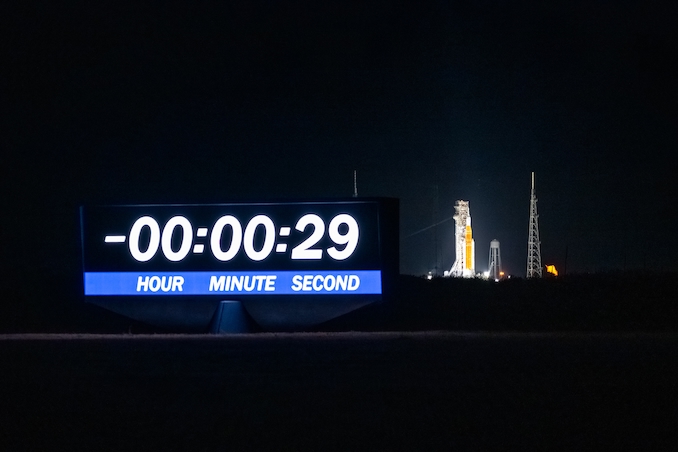
quote:Engineers ran into problems repressurizing the Artemis 2 moon rocket’s upper stage helium tanks overnight Friday, a problem that will require rolling the huge rocket off the launch pad and back to its processing hangar for troubleshooting. The work will push the already delayed mission from March to at least early April, officials said Saturday.
Pressurized helium is used to push propellants to rocket engines for ignition and to purge various fuel lines to clear them out before propellants flow. It’s not yet known what might be preventing helium to flow back into the SLS rocket’s upper stage following a successful countdown rehearsal test that ended Thursday.
“Regardless of the potential fault, accessing and remediating any of these issues can only be performed in the VAB (Vehicle Assembly Building),” NASA Administrator Jared Isaacman said in a post on the social media platform X. “We will begin preparations for rollback, and this will take the March launch window out of consideration.”
The Artemis 2 mission aims to send four astronauts – Reid Wiseman, Victor Glover, Christina Koch and Canadian astronaut Jeremy Hansen – on a flight around the far side of the moon and back to thoroughly test the agency’s Orion deep space capsule to help clear the way for a lunar landing mission, Artemis 3, in 2028.
Because of the ever-changing positions of the Earth and moon, and associated changes in lighting and other factors, only a handful of launch opportunities are available each month that meet the Artemis 2 mission requirements. The current launch period ends on March 11. The available launch dates next month are April 1, 3, 4, 5 and 6.
Wiseman, Glover, Koch and Hansen originally hoped to launch early this month, but hydrogen leaks detected during an initial “wet dress countdown” rehearsal ultimately pushed the flight to March.
NASA completed a second fueling test and countdown Thursday, loading the Space Launch System rocket with more than 750,000 gallons of liquid oxygen and hydrogen fuel while working through the steps that will be needed to actually launch the huge rocket on the long-awaited mission.
The test went well, there were no fuel leaks like the ones that derailed plans for a launch earlier this month. Managers said Friday the team would press ahead for a launch attempt on March 6 to send Wiseman and his crewmates to the moon.
Hoping for the best, the astronauts went into pre-flight medical quarantine at the Johnson Space Center Friday evening and planned to fly to the Kennedy Space Center on March 1 to prepare for launch. They now will leave quarantine to await developments.
“I understand people are disappointed by this development,” Isaacman said. “That disappointment is felt most by the team at NASA, who have been working tirelessly to prepare for this great endeavor. During the 1960s, when NASA achieved what most thought was impossible, and what has never been repeated since, there were many setbacks.
“There are many differences between the 1960s and today, and expectations should rightfully be high after the time and expense invested in this program.
“I will say again, the President created Artemis as a program that will far surpass what America achieved during Apollo. We will return in the years ahead, we will build a Moon base, and undertake what should be continuous missions to and from the lunar environment. Where we begin with this architecture and flight rate is not where it will end
<a href="http://www.vwkweb.nl/" rel="nofollow" target="_blank">[b]Vereniging voor weerkunde en klimatologie[/b]</a>
<a href="http://www.estofex.org/" rel="nofollow" target="_blank">[b]ESTOFEX[/b]</a>
<a href="http://www.estofex.org/" rel="nofollow" target="_blank">[b]ESTOFEX[/b]</a>
<a href="http://www.vwkweb.nl/" rel="nofollow" target="_blank">[b]Vereniging voor weerkunde en klimatologie[/b]</a>
<a href="http://www.estofex.org/" rel="nofollow" target="_blank">[b]ESTOFEX[/b]</a>
<a href="http://www.estofex.org/" rel="nofollow" target="_blank">[b]ESTOFEX[/b]</a>
<a href="http://www.vwkweb.nl/" rel="nofollow" target="_blank">[b]Vereniging voor weerkunde en klimatologie[/b]</a>
<a href="http://www.estofex.org/" rel="nofollow" target="_blank">[b]ESTOFEX[/b]</a>
<a href="http://www.estofex.org/" rel="nofollow" target="_blank">[b]ESTOFEX[/b]</a>
Nasa announces Artemis III mission no longer aims to send humans to moon
quote:Plans to return humans to the moon will come in later
mission as agency grapples with delays and glitches
Nasa announces Artemis III mission no longer aims to send humans to moon
Plans to return humans to the moon will come in later mission as agency grapples with delays and glitches
Ed Pilkington
Fri 27 Feb 2026 19.16 CET
Nasa announced on Friday radical changes to its delayed Artemis III mission to land humans back on the moon, as the US space agency grapples with technical glitches and criticism that it is trying to do too much too soon.
The abrupt shift in strategy was laid out by the space agency’s recently confirmed administrator, Jared Isaacman. Announcing the changes on Friday, he said that Nasa would introduce at least one new moon flight before attempting to put humans back on the lunar surface for the first time in more than half a century, in 2028.
The new, more incremental approach would give the Nasa team a chance to test flight and refine its technology. As part of the changes, the Artemis II mission to fly humans around the moon this year, without landing, would also be pushed back from its latest scheduled launch on 6 March to 1 April at the earliest.
“Everybody agrees this is the only way forward,” Isaacman told reporters at a news conference. “I know this is how Nasa changed the world, and this is how Nasa is going to do it again.”
The revised course came as Nasa has been wrestling with a number of delays and technical problems. Earlier this week, the independent body that reviews space safety issued a blunt report sharply criticising the space agency’s current plans as too risky.
The aerospace safety advisory panel recommended that Nasa rethink its objectives for Artemis III, which had been conceived as the first human landing on the moon since the final flight in the Apollo series in December 1972. The panel said that the call for a revision was urgent, “given the demanding mission goals”.
Isaacman said that under the new plan, the eventual moon landing would be achieved through evolutionary steps rather than big leaps in technological procedures. “We’re going to get there in steps, continue to take down risk as we learn more and we roll that information into subsequent designs,” he told CBS News.
He added: “We’ve got to get back to basics.”
Step one in the revised schedule is the launch of the Artemis II moon mission, which has been plagued by delays. The rocket was returned to its hangar at the Kennedy Space Center in Florida earlier this week.
Engineers had discovered a blockage in the rocket’s helium flow in the upper stage of the booster.
The latest delay followed disappointment in February, when Nasa was forced to put off the launch of Artemis II after hydrogen was found leaking from its Space Launch System rocket.
Artemis II will send four astronauts on a 10-day journey around the moon, designed to take people further into space than ever before, beyond the record set by Apollo 13 in 1970.
Isaacman said on Friday that additional missions would then be included in the schedule. He likened the extra steps to the approach taken in Nasa’s original moon landing in which Neil Armstrong and Buzz Aldrin first stepped on to the lunar surface in 20 July 1969.
That legendary event was hazarded only after three separate moon missions had been completed.
The Artemis III mission will no longer aim to land on the moon. Instead, under the revised plans, it will be launched by mid-2027 as a low-Earth orbit designed to test essential technologies.
That extra stage is intended to give Nasa extra flight experience with the massively complex advanced systems and the chance to test its space vehicles before it attempts a human moon landing. Should all that go to plan, then a new Artemis IV mission would set out in 2028 to land on the moon.
The eventual aspiration is to land astronauts near the moon’s south pole. A second moon landing, Artemis V, could be conducted in 2028, followed by a moonshot attempted each year thereafter, Nasa said.
<a href="http://www.vwkweb.nl/" rel="nofollow" target="_blank">[b]Vereniging voor weerkunde en klimatologie[/b]</a>
<a href="http://www.estofex.org/" rel="nofollow" target="_blank">[b]ESTOFEX[/b]</a>
<a href="http://www.estofex.org/" rel="nofollow" target="_blank">[b]ESTOFEX[/b]</a>
Ironisch. Dank zij SpaceX moet nu alles herbruikbaar zijn, waardoor de massa van een maanlander ruim verdubbelt, waardoor de raket al gauw vier keer zo groot moet worden, waardoor nu alleen Starship nog in de running is. Die nog een hele vloot tankers, een tankstation rond de Aarde en de Maan en een tweede trap die ook op de maan kan landen moeten bouwen. In het huidige tempo gaat ze dat niet binnen 10 jaar lukken.quote:
Nasa announces Artemis III mission no longer aims to send humans to moon
[..]
Blue Origin kan wel wat landen op de Maan, maar geen bemande lander die ook weer moet kunnen opstijgen. Of toch niet met hun huidige raket. Maar een nieuwe en grotere raket ontwerpen en bouwen is bijna zeker wel een stuk eenvoudiger dan wat SpaceX allemaal moet doen. En als Isaacman de eis laat vallen dat de hele lander weer op moet stijgen, wordt het ineens een heel stuk behapbaarder.
<a href="http://www.vwkweb.nl/" rel="nofollow" target="_blank">[b]Vereniging voor weerkunde en klimatologie[/b]</a>
<a href="http://www.estofex.org/" rel="nofollow" target="_blank">[b]ESTOFEX[/b]</a>
<a href="http://www.estofex.org/" rel="nofollow" target="_blank">[b]ESTOFEX[/b]</a>
Het hele programma mooi uitgelegd door iemand die graag wil dat we weer naar de Maan gaan:
Bekijk deze YouTube-video
Kortom, als we van SLS en Orion af zijn, en daarom ook die hyperbolische baan, wordt het een stuk eenvoudiger.
Ik dacht ook, dat NASA had bepaalt dat de hele lander weer op moest stijgen, maar dat is omdat ze weer terug naar de capsule moeten vliegen.
Bekijk deze YouTube-video
Kortom, als we van SLS en Orion af zijn, en daarom ook die hyperbolische baan, wordt het een stuk eenvoudiger.
Ik dacht ook, dat NASA had bepaalt dat de hele lander weer op moest stijgen, maar dat is omdat ze weer terug naar de capsule moeten vliegen.
<a href="http://www.vwkweb.nl/" rel="nofollow" target="_blank">[b]Vereniging voor weerkunde en klimatologie[/b]</a>
<a href="http://www.estofex.org/" rel="nofollow" target="_blank">[b]ESTOFEX[/b]</a>
<a href="http://www.estofex.org/" rel="nofollow" target="_blank">[b]ESTOFEX[/b]</a>

Als ik die thumbnail zie krijg ik om de een of andere reden plotseling zin in crème bruleequote:

[ Bericht 0% gewijzigd door StateOfMind op 09-03-2026 12:51:34 ]
Perhaps you've seen it, maybe in a dream.
A murky, forgotten land.
A murky, forgotten land.
Voor later 
Track NASA’s Artemis II Mission in Real Time
The NASA app (www.nasa.gov/nasa-app)
Track NASA’s Artemis II Mission in Real Time
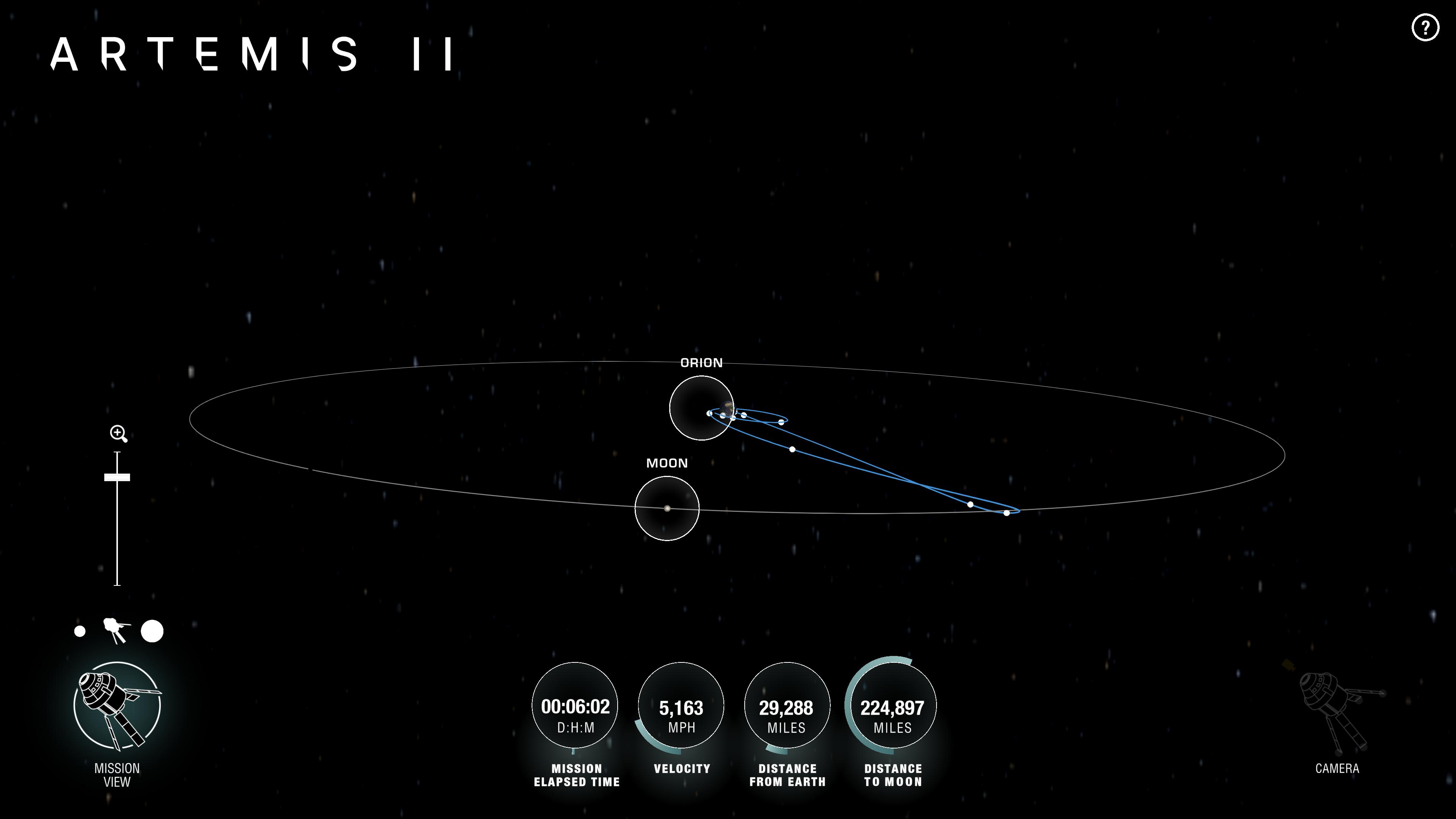
NASA’s website (www.nasa.gov/trackartemis)quote:As NASA invites the public to follow the Artemis II mission as a crew of four astronauts venture around the Moon inside the agency's Orion spacecraft, people around the world can pinpoint Orion during its journey using the Artemis Real-time Orbit Website (AROW).
During the approximately 10-day mission, NASA will test how the spacecraft's systems operate as designed with crew aboard in the deep space environment. Using AROW, anyone with internet access can track where Orion and the crew are, including their distance from Earth, distance from the Moon, mission duration, and more. Access to AROW is available on:
The NASA app (www.nasa.gov/nasa-app)
quote:Using AROW, the public can visualize data that is collected by sensors on Orion and then sent to the Mission Control Center at NASA's Johnson Space Center in Houston during its flight. It will provide constant information using this real-time data beginning about one minute after liftoff through Orion's atmospheric reentry to Earth at the end of the mission.
Online, users can follow AROW to see where Orion and the crew are in relation to the Earth and the Moon and follow Orion's path during the mission. Users can view key mission milestones and characteristics on the Moon, including information about landing sites from the Apollo program.
The mobile app includes similar features to the website, with the addition of augmented reality tracker. After a brief calibration sequence, on-screen indicators will direct users where to move their phone to see where Orion currently is relative to their position on Earth. Mobile app tracking will be available once Orion separates from the rocket's upper stage, approximately three hours into the mission.
State vectors, or data that describes precisely where Orion is located and how it moves, also will be provided by AROW, following a proximity operations demonstration to evaluate the manual handling qualities of Orion.
These vectors can be used for data lovers, artists, and creatives to make their own tracking app or data visualization. Also available for download will be trajectory data from the flight, called an ephemeris, found at the bottom of this page, after the mission begins. The ephemeris data can be used to track Orion with your own spaceflight software application or telescope, or to create projects such as a physics model, animation, visualization, or tracking application.
Artemis II, the agency's first crewed mission in the Artemis campaign, is a key step in NASA's path toward establishing a long-term presence at the Moon and confirming the systems needed to support future lunar surface exploration and paving the way for the first crewed mission to Mars.
<a href="http://www.vwkweb.nl/" rel="nofollow" target="_blank">[b]Vereniging voor weerkunde en klimatologie[/b]</a>
<a href="http://www.estofex.org/" rel="nofollow" target="_blank">[b]ESTOFEX[/b]</a>
<a href="http://www.estofex.org/" rel="nofollow" target="_blank">[b]ESTOFEX[/b]</a>
<a href="http://www.vwkweb.nl/" rel="nofollow" target="_blank">[b]Vereniging voor weerkunde en klimatologie[/b]</a>
<a href="http://www.estofex.org/" rel="nofollow" target="_blank">[b]ESTOFEX[/b]</a>
<a href="http://www.estofex.org/" rel="nofollow" target="_blank">[b]ESTOFEX[/b]</a>


<a href="http://www.vwkweb.nl/" rel="nofollow" target="_blank">[b]Vereniging voor weerkunde en klimatologie[/b]</a>
<a href="http://www.estofex.org/" rel="nofollow" target="_blank">[b]ESTOFEX[/b]</a>
<a href="http://www.estofex.org/" rel="nofollow" target="_blank">[b]ESTOFEX[/b]</a>
