NWS Nieuws & Achtergronden
Discussieer hier diepgaander over de actualiteiten.



De EU ladys and gentleman 
Ik heb Hem niet uit vrees voor de hel noch uit liefde voor het paradijs gediend, want dan zou ik als de slechte huurling zijn geweest; ik heb hem veeleer gediend in liefde tot Hem en in verlangen naar Hem.
-Rabia Al-Basri
-Rabia Al-Basri


https://nashaniva.by/?c=ar&i=259452&lang=ruquote:De namen van nog 2 ontslagen diplomaten bij het Ministerie van Buitenlandse Zaken werden bekend
De voormalig minister van cultuur en de Belarussische ambassadeur in Polen en Frankrijk publiceerde informatie op zijn telegram kanaal inzake hetgeen, dat de komende tijd meer dan 30 werknemers worden ontslagen uit de structuren van het Ministerie van Buitenlandse Zaken.
Dat zijn zowel werknemers van het centrale apparaat van het ministerie, als ook mensen die werkzaam waren in diplomatieke vertegenwoordigingen in het buitenland.
"Nasha Niva" kwam de namen van twee mensen uit de betreffende lijst van medewerkers van het Ministerie van Buitenlandse Zaken te weten. Het gaat om de werknemers van het centrale apparaat van de instelling: Pavel Korotkevich en Andrej Trusov.
Korotkevich was de tweede secretaris van het departement van buitenlandse economische activiteit. In een gesprek met een correspondent van "Nasha Niva" bevestigde Korotkevich, dat hij sinds 18 september geen werknemer meer is van het Ministerie van Buitenlandse Zaken, maar hij besliste om de details van zijn ontslag niet bekend te maken.
Ook Andrej Trusov, de tweede secretaris van de hoofd dienst Azië en Afrika, verloot zijn baan. Trusov was de enige medewerker van het Ministerie van Buitenlandse zaken, die de Indonesische taal beheerste.
Zowel Korotkevich als Trusov zijn afgestudeerden van het Russische Staatsinstituut voor Internationale Betrekkingen van Moskou, waar ze studeerden op een quota van het Belarussische Ministerie van Buitenlandse Zaken. Eerder werd Andrej Misjura, de derde secretaris van de Belarussische ambassade in India, ontslagen. Ook hij is een afgestudeerde van het Staatsinstituut voor Internationale Betrekkingen van Moskou.
Volgens inlichtingen van "Nasha Niva", gaan diplomaten, die momenteel werken in Letland, Polen en Belgie, hun baan verliezen. Velen worden tot 28 september teruggeroepen naar het Ministerie van Buitenlandse Zaken.
"De ontslagen vinden plaats omdat ofwel, de medewerkers zich op sociale media hebben uitgesproken tegen geweld, ofwel omdat ze weigerden deel te nemen aan het vervalsen van verkiezingen op stemlokalen in het buitenland. Er volstrekt zich bij ons een compleet fiasco op het gebied van buitenlandse politiek. Er volstrekt zich een zuivering van diplomaten, wat zal leiden tot het vernietigen van het systeem van het Ministerie van Buitenlandse Zaken. Er worden personele beslissingen genomen op basis van loyaliteit aan de autoriteiten en niet op basis van professionalisme. Ik zou worden van steun willen uitspreken aan de Belarussische diplomaten, die hun principiële positie hebben ingenomen", - zei Pavel Latushko als commentaar aan "Nasha Niva".
Nasha Niva
De ontslagen van mensen die niet loyaal zijn gaan door. Binnen een week kunnen we verwachten dat er diplomaten terug naar Belarus worden geroepen. De grote vraag is, gaan Europese landen, zoals bijvoorbeeld Letland, Polen of Belgie, nieuwe Belarussische diplomaten accepteren. Ondanks de grootse woorden van diverse Europese leiders zie ik nog niet iets wat in een dergelijke richting wijst. Ik denk eigenlijk dat een gebrek van mensen die onder de huidige omstandigheden bij het Ministerie van Buitenlandse Zaken wil werken een groter probleem is, dan de houding van Europese landen.
Ze proberen het nu donderdag, wanneer ook de problemen van Cyprus met Turkije worden besproken, nog een keer. Ik heb ergens het argument gehoord dat als het de EU niet lukt om consensus te bereiken, dat er dan de weg gebaand wordt voor individuele lidstaten om zelf sancties in te stellen. De Baltische staten voeren al reeds hun eigen sanctielijst. Met sancties door individuele lidstaten kunnen mogelijk meer mensen het subject van sancties worden. Al is het vooral symboolpolitiek. Mensen die het onderwerp van sancties kunnen worden zijn daar op berekend, het land heeft al eerder te maken gehad met sancties die weinig/niets hebben uitgehaald. Naar verwachting heeft niemand uit de sanctielijst bankrekeningen in de EU. Bovendien kunnen vele hoge functionarrisen binnen het veiligheidsapparaat al niet naar de EU reizen, omdat ze daar uit veiligheidsredenen toestemming voor moeten aanvragen.quote:Op dinsdag 22 september 2020 10:36 schreef Slayage het volgende:
De EU ladys and gentleman
[ twitter ]
https://news.tut.by/economics/701377.htmlquote:Venediktov: Lukashenko en Putin bespraken het lot van Babariko
De hoofdredacteur van het radiostation "Echo Moskou" Aleksej Venediktov is overtuigd, dat tijdens de onderhandelingen in Sochi op 14 september Aleksandr Lukashenko en Vladimir Putin het lot van de voormalige bestuurder van de Belgazprombank Viktor Babariko bespraken.
"Ik denk, dat het lot van Babariko en het lot van zijn kameraden een aparte gesprekspunt vormde in de onderhandelingen van Putin en Lukashenko. Dat betekent dat ik dat niet denk, maar dat ik het weet. Ik ken het resultaat niet. Maar we zullen het zien", zei Venediktov.
Dmitrij Peskov, de pers-secretaris van Putin, zei tegen TUT.BY, dat hij niet beschikt over informatie over de onderhandelingen tussen de presidenten inzake Babariko. Tegelijkertijd twijfelde hij er aan, dat "Echo Moskou" daar iets over weet, gezien de ontmoeting van Lukashenko en Putin plaats vond in een "een op een" formaat.
Het lukte niet om commentaar te krijgen van de persdienst van Aleksandr Lukashenko.
Eerder vergeleek Venediktov de handelingen van Lukashenko met betrekking tot de Belgazprombank met het gedrag van de Russisch autoriteiten in de situaties rond Yukos of NTV. Daarbij was de radiopresentator overtuigd, dat Putin geen vrede zal hebben met het feitelijke overnemen van het Russische actief, de Belgazprombank.
Na de onderhandelingen van Lukashenko en Putin in Sochi werd bekend, dat Belarus van het door Rusland gecontroleerde Euroaziatische fonds voor stablisatie en ontwikkeling 500 miljoen dollar ontvangt en daarna volledig de opgebouwde schuld met een hoogte van 330 miljoen dollar bij "Gazprom" voor het leveren van gas afbetaald.
Viktor Babriko bestuurde de Belgazprombank ongeveer 20 jaar, totdat hij in mei 2020 zijn presidentiële ambities uitsprak. 18 juni werd Babariko aangehouden samen met zijn zoon, die het hoofd was van de verkiezingsstaf van zijn vader. 14 juli weigerde de centrale kiescommissie de bankier te registreren als presidentskandidaat, ondanks de meer dan 400 duizend verzamelde handtekeningen.
Voor de verkiezingen werden er ongeveer 10 topmanagers van de Belgazprombank en ook meer dan 20 vrienden en partners van Viktor Babariko aangehouden. In augustus en september deelden wethandhavers de laatste slag uit aan de staf van Babariko: de sleutelrolspelers werden aangehouden of over de grens gezet en het hoofdkantoor werd verzegeld.
De Gazprombank en Gazprom zelf houden ieder 49,818% van de aandelen in de Belgazprombank, de volledige dochter van Gazprom JSC "Gazprom transgaz Belarus" 0,266% van de aandelen. Het Belarussische staatseigendom van de bank bestaat uit 0,097% van de aandelen.
In het jaar 2020 behoort 66% van de aandelen van "Echo Moskou" toe aan "Gazprom-Media Holding".
TUT.BY
Dat Putin en Lukashenko dit besproken hebben lijkt me eigenlijk vrij aannemelijk. Zelf denk ik niet dat Lukashenko ooit Babariko zal vrijlaten (in ieder geval niet voordat hij bereid is de macht neer te leggen). Het blijft natuurlijk wel de vraag wanneer de bankiers die niets met de politieke activiteiten van Babariko te maken hebben vrijgelaten worden.
https://spring96.org/en/news/99645quote:Over 250 criminal cases opened since launch of election
Since the announcement of the presidential election in early May, the authorities have opened over 250 criminal cases targeting presidential candidates, members of their campaign teams, and peaceful protesters.
Viasna knows the names of 200 persons affected by these cases. Sixty-eight persons on the list have been called political prisoners.
Eighty-seven people are facing charges of “mass riots” (Art. 293 of the Criminal Code). Others are accused of “organizing group actions that grossly breach public order” (Art. 342). This charge was used to arrest a dozen activists in what is now known as “Tsikhanouski case”, and also several protesters detained following a demonstration on July 14.
Some protesters were charged with resisting police (Art. 363) or using violence against law enforcement officers (Art. 364).
Art. 243 of the Criminal Code (tax evasion) was brought against activists of Viktar Babaryka’s campaign and several employees of businesses that helped the presidential nominee or provided assistance to victims of police-related violence.
Human rights defenders are also aware of several persons facing charges of libel (Art. 188) and hooliganism (Art. 339).
VIASNA
Op Wit-Russische staatstv een bericht dat Svetlana Tichanovskaja bij de EU voorgesteld heeft om Wit-Rusland te bombarderen.
https://top-center.org/en(...)-a-peaceful-solutionquote:Belarus: is there a peaceful solution?
There is currently an impasse in Belarus between Aliaksandr Lukashenka, the de facto president, and the opposition in the shape of the mass of the people who demonstrate every weekend in protest against falsified election results and the brutality of the regime. To date, though the European Parliament has condemned these actions and refuses to recognize the election results, no binding resolutions have been accepted. The United States, likewise, has not put serious pressure on the Belarusian government to negotiate with the protesters.
The one country that is paying close attention to the drama, mainly played out in Minsk but with cameos in other cities, is the Russian Federation. Given its economic and geo-strategic interests with this republic on its western borderland, Russia could hardly remain indifferent to the turmoil. The deep distrust with which the government of Russia and its president are held by some Western governments in Europe is well known; conversely, others are anxious to work with Russia to find a solution, if indeed that is what Russia is seeking.
Among Russian ruling circles, the most belligerent figure is Foreign Minister Sergey Lavrov, who regards the situation as a typical example of Western interference into the affairs of countries within Russia’s sphere of interest. The Russian Ministry of Foreign Affairs is noted for its provocative statements on social media, focusing in particular on Ukraine and more recently the two countries that have made strong stances in support of the Belarusian opposition, Poland and Lithuania. But Lavrov is only one voice in Moscow.
On September 14, President Vladimir Putin hosted Lukashenka in Sochi for several hours but the results of the meeting, or at least those reported, were inconclusive. Doubtless all options were discussed, including the possibility of Lukashenka stepping down, something he has vowed never to do while still living. He may also have been advised to meet with opposition leader Sviatlana Tsikhanouskaya and introduce a constitutional reform that would allow repeat elections within a year or so. Lukashenka came back with a loan of $1.5 billion, part of which will be used to pay off interest on existing loans. As any banker would advise: this is not the way to run an economy. Equally important is the symbolic role of Lukashenka as a weak and ineffectual supplicant before his benefactor and controller, Putin.
If Lukashenka persists in storing up his regime by using maximum force against protesters, he also needs to consider the possibility that the resistance could take on more violent forms, as happened in the Maidan in Kyiv in early 2014. Beatings, imprisonment, and torture at some point, given the sheer numbers of the protesters, are likely to elicit a response in kind. Already, some are ripping masks off the OMON troops, knowing that they do not wish to be identified.
Lukashenka has lost his former image of Batka or father of his people. Arguably, he has made more political errors over the past few months than at any time in his 26 years in power. For once, he failed to adapt to a novel situation in which former followers deserted him and the younger generation chose to take an active part in a presidential election. The violence used on earlier occasions, such as 2006 and 2010 was never sustained, but sudden and targeted. Once over, and chosen opponents imprisoned, it ended just as quickly, unlike the present repressions.
The notion that the former situation in Belarus could be restored—a benign Batka presiding over a contented and stable state—is far-fetched. And one cannot arrest or deport everyone. Thousands are languishing in prisons and detention centers, or being slowly released to tell horror stories about their experiences.
A rational leader like Putin will weigh his options: whether to continue to prop up an unpopular figure with whom he has never had a close relationship; or whether to consider other options. The ostensible winner of the 2020 elections, Tsikhanouskaya, has never wavered from her position that the movement is in no way directed against Russia. But it is clear that Russia does not control or influence it either.
On the other hand, should the former presidential candidates such as Viktar Babaryka, Siarhei Tsikhanouski, and Valery Tsapkalo be released, then the picture broadens. All three have ties with Russia, and Babaryka, the former branch manager of Gazprombank, attained the highest number of signatures in the initial period of the elections and was leading in several opinion polls. If he won a repeat election, one cannot imagine why there would be strong objections in Moscow.
The question then would be twofold: whether the protesters would accept Babaryka, the new leader as someone who could satisfy demands for a more tolerant and democratic society that allowed basic freedoms; and second, whether Belarus would have any freedom of maneuver vis-à-vis Moscow. Because one thing the demonstrations have shown is that Belarusians want to live in independent Belarus, not some distant outpost of Russkiy Mir. They show no disrespect or antagonism toward Putin and the Russian government, but the picture would change if Russia exerted more direct control over Belarus.
There remains the possibility of a peaceful end to the bitter standoff, but it requires moderation and careful approaches, and an equanimity and goodwill in Moscow that was not shown in its earlier intrusions into the affairs of its neighbors.
TOPCHUBASHOV CENTER
Marples is een Canadese historicus en een van de relatief weinige Westerse auteurs die over Belarus publiceerd. Hij is al vanaf het begin van de jaren 90 bij Belarus betrokken met soms pauzes van enkele jaren. Ik geloof dat hij een tijdje was gebanned na de verkiezingen van 2010 en daarna pas weer in 2017 Belarus bezocht. Daarnaast is hij ook in Rusland en Oekraine gespecialiseerd, wat hem in staat stelt om een vergelijkende analyse tussen de verschillende landen te maken. Ook was hij in het verleden betrokken bij vertegenwoordigers van de traditionele oppositie in eerdere verkiezingscampagnes.quote:About The Author
David Roger Marples
Expert
Prof. David Roger Marples is a Canadian historian and Distinguished University Professor at the Department of History & Classics, University of Alberta. He specializes in history and contemporary politics of Belarus, Russia and Ukraine.
Prof. Marples received his BA Honours from the University of London in 1975, his MA in History from the University of Alberta in 1980, and Ph.D. in Economic and Social History from the University of Sheffield in 1985. The title of his Ph.D. dissertation was Collectivization of agriculture in Western Ukraine 1944-1951.
Prof. Marples has authored several books.
Wat betreft zijn opiniestuk wil ik de volgende kanttekeningen plaatsen:
- Tichanovskij heeft welliswaar banden met Rusland (waar hij jaren gewoond heeft), maar dat betekent niet automatisch dat hij pro-Russisch is (in de zin van pro-Kremlin). Van de 3 kandidaten Babariko, Tsepkalo en Tichanovskij is hij toch wel degene die het meeste pro-Westers lijkt (hij zat als eerste in de gevangenis, dus zijn positie is minder bekend). Ik ga er voor het gemak vanuit dat Tichanovskaja dezelfde positie als die van haar man vertolkt. En dan zie ik bij Tichanovskaja steeds niet de bereidheid om uit te spreken dat ze voor het behoud van de huidige betrekkingen binnen de kaders van de Uniestaat en de Euroaziatische Economische Unie is. Terwijl Tsepalo en Babariko gewoon voorstanders zijn voor het bewaren van de economische betrekkingen. Je zou hoogstens kunnen stellen dat er weinig steun is voor militaire samenwerking met Rusland.;
- Hij houdt in zijn opinie geen rekening met de mogelijkheid dat voor Putin misschien het belang van de beeldvorming in Rusland laat prevaleren boven het geopolitieke belang uit angst voor herhaling van een gelijkwaardig scenario in Rusland. Zelf ga ik daar eigenlijk niet van uit, omdat ik niet zie hoe dit scenario zich in Rusland kan herhalen, maar het is mogelijk dat het Kremlin daar uit angst meer gewicht aan geeft. Voor de Russische beeldvorming is het in ieder geval beter als een nieuwe president gekozen gaat worden na nieuwe verkiezingen als gevolg van een constitutionele hervorming (die het volk pas wil doorvoeren nadat en niet voor er een nieuwe president is gekozen). Of dit voor Rusland een breekpunt is, daar kun je over twisten.;
- Ik denk eigenlijk niet dat het een vraag is of het Belarussische volk Babariko accepteert. De vraag hoeveel beweegruimte een nieuwe regering gaat hebben ten opzichte van Moskou in haar buitenlandse beleid is natuurlijk een terechte vraag.

Zijn er ook nog mensen "kwijt"/verdwenen?quote:Op dinsdag 22 september 2020 14:09 schreef nezalezhnost het volgende:
[..]
https://spring96.org/en/news/99645
VIASNA
Weet je daar wat van?
How do we turn this world-class fuck-up into a world-class learning experience?
Dat nieuws houdt ik niet dagelijks bij. Er zullen best nog een aantal mensen verdwenen zijn, maar geen groot aantal (minder dan 30). Dat soort dingen kost veel tijd om te onderzoeken. Tot die tijd kun je enkel speculeren, iets waar ik niet graag aan meedoe: de feiten die door mensenrechtenorganisaties bevestigd zijn, zijn reden genoeg voor het vertrek van Lukashenko, speculaties bespoedigen dat vertrek niet.quote:Op dinsdag 22 september 2020 16:29 schreef Hyperdude het volgende:
[..]
Zijn er ook nog mensen "kwijt"/verdwenen?
Weet je daar wat van?

Ook moeders van gezinnen met drie of meer kinderen spreken zich uit. Met Engelstalige ondertiteling. Het getal links bovenin is het aantal kinderen per moeder.
Thanx voor de info en je vertaalwerkquote:
[..]
Dat nieuws houdt ik niet dagelijks bij. Er zullen best nog een aantal mensen verdwenen zijn, maar geen groot aantal (minder dan 30). Dat soort dingen kost veel tijd om te onderzoeken. Tot die tijd kun je enkel speculeren, iets waar ik niet graag aan meedoe: de feiten die door mensenrechtenorganisaties bevestigd zijn, zijn reden genoeg voor het vertrek van Lukashenko, speculaties bespoedigen dat vertrek niet.

How do we turn this world-class fuck-up into a world-class learning experience?
Ik heb Hem niet uit vrees voor de hel noch uit liefde voor het paradijs gediend, want dan zou ik als de slechte huurling zijn geweest; ik heb hem veeleer gediend in liefde tot Hem en in verlangen naar Hem.
-Rabia Al-Basri
-Rabia Al-Basri
https://eng.belta.by/phot(...)arus-president-6581/quote:14:13 23 September 2020
Lukashenko sworn in as Belarus president
Aleksandr Lukashenko has been sworn-in as the President of Belarus in an inaugural ceremony in the Palace of Independence on 23 September.
BelTA
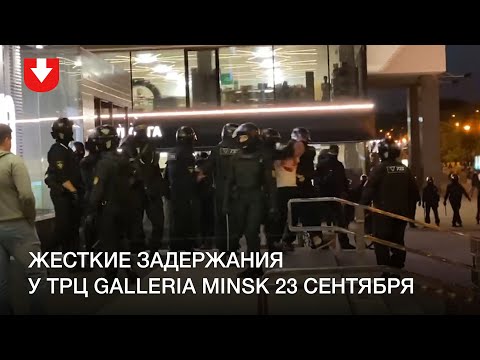
Telegram kanalen roepen op om 18:00 locale tijd de straat op te gaan om te demonstreren. Dit kan mogelijk leiden tot een geweldadige confrontatie.
Er komen nu uit Minsk berichten binnen van werknemers die vandaag eerder naar huis zijn gestuurd door hun werkgevers. Mogelijk vanuit zorgen om de veiligheid van hun werknemers of uit zorgen om mogelijke problemen op het gebied van transport later deze avond.
https://tass.com/world/1204197quote:Several countries refuse to recognize Lukashenko’s legitimacy following inauguration
The Baltic countries were the first to refuse to recognize Lukashenko’s legitimacy
MOSCOW, September 23. /TASS/. A number of European countries have refused to recognize Alexander Lukashenko as a legitimate president of Belarus following his inauguration on Wednesday.
Before the inauguration, he led the country based on the results of the 2015 presidential election that had been recognized by the international community.
The Baltic countries were the first to refuse to recognize Lukashenko’s legitimacy. They were followed by Slovakia and Germany.
The European Union's High Representative for Foreign Affairs and Security Policy Josep Borrell said earlier that the EU did not recognize the results of the August 9 presidential election in Belarus.
Former Belarusian presidential candidate Svetlana Tikhanovskaya said in a video address that she considered herself to be the leader elected by the country’s people.
Earlier, Russian President Vladimir Putin, as well as the leaders of many other countries, including Azerbaijan, Armenia, China, Kazakhstan, Tajikistan, Turkey and Vietnam, congratulated Lukashenko on winning the presidential election.
TASS
https://tass.com/society/1204047quote:TASS correspondent detained in Minsk near Independence Palace now released
The journalist had spent three hours at the central police precinct
MINSK, September 23. /TASS/. TASS correspondent Artyom Popov has been released after being detained by Belarusian law enforcement on Wednesday near Independence Palace in Minsk where the inauguration ceremony of Belarusian President Alexander Lukashenko was taking place. After three hours at the Minsk central police precinct he resumed contact and reported that the police officers apologized and delivered him by bus back to downtown Minsk.
When detained, the reporter had his official accreditation by the Belarusian Foreign Ministry visibly displayed. However, according to him, riot policemen took him to a minivan nearby to check his documents. Despite all the necessary permits the journalist was taken to the central police precinct where he was placed in a holding cell.
TASS
Zelfs correspondenten van het Russische TASS worden aangehouden. Ik weet niet of ik er vandaag aan toekom om veel te vertalen, maar vanochtend werd de hoofdredacteur van "Nasha Niva" Egor Matinovich al aangehouden binnen de kaders van een strafzaak. Hij zit nu 3 dagen in voorarrest en er is een huiszoeking doorgevoerd bij het appartement dat hij deelt met zijn vrouw TUT.BY journaliste Adarja Gushtyn.
https://www.dw.com/en/bel(...)a-reports/a-55023968quote:Belarus: Alexander Lukashenko sworn in as president, state media reports
After weeks of protest surrounding the disputed August election, the inauguration was unexpectedly brought forward. Belarus state media report that it took place in a secret ceremony.
Belarusian President Alexander Lukashenko has been sworn in for a sixth term, the official news agency Belta reported Wednesday.
The inauguration took place in secret and with no prior announcement. Hundreds of top government officials were reportedly present for the ceremony held in the capital, Minsk.
During the ceremony, state media reported that Lukashenko placed his right hand on the constitution and swore to "serve the people of the Republic of Belarus, respect and protect rights and freedoms of people and citizens."
German government spokesman Steffen Seibert said Wednesday that the ceremony in Minsk has "no legitimacy" and that Germany does not recognize Lukashenko as the president of Belarus.
Secrecy a sign of weakness?
The ceremony would normally have been publicized in advance as a major state occasion. However, Lukashenko's disputed election victory on August 9 has unleashed weeks of mass protest across Belarus.
"This wasn't an act by someone who is confident of own support. We thought it was dress rehearsal," said DW correspondent Nick Conolly in Minsk.
"There were soldiers around and streets were closed but it took everyone by surprise. It was a modest affair, not like the huge spectacle it usually is. It is a sign of a president feeling the pressure," he added.
"It's a sign of weakness from the government which will motivate the protesters."
Calls for protest
Following the clandestine inauguration ceremony, the Belarusian opposition called for an "immediate civil disobedience campaign."
Pavel Latushko, an opposition politician, said the ceremony was like a secret meeting of "thieves."
"Where are the jubilant citizens? Where is the diplomatic corps?" Latushko posted on social media.
Belarusian authorities have responded to the demonstrations with violent crackdowns and mass arrests. Many top opposition figures have been exiled or detained.
A rigged election?
Lukashenko has been in power for 26 years. The opposition says the recent election was rigged. Much of the international community also rejected Lukashenko's claim that he won the election with 80% of the vote.
Last month, the EU said the election was "neither free or fair."
Belarusian opposition leader, and Lukashenko's election opponent, Sviatlana Tsikhanouskaya, traveled to Brussels on Monday in a bid to convince the EU to follow through on sanctions the bloc threatened last month in response to the crackdown.
On Wednesday, German government spokesman Seibert said that Germany supported activating sanctions against Belarusian officials as soon as possible, adding Berlin regrets that the EU's foreign ministers have yet to agree on moving forward.
A proposed list of some 40 Belarusian officials to be hit with travel bans and asset freezes has yet to be approved by all member states, with Cyprus being the last holdout.
Deutsche Welle
https://interfax.by/news/policy/vnutrennyaya_politika/1283929/quote:De politie werkt in een versterkt regime in verband met oproepen tot niet gesanctioneerde acties
De Belarussische politie werkt in een versterkt regime in verband met oproepen tot niet gesanctioneerde acties op woensdag, zei de officiele vertegenwoordiger van de politie Olga Chemodanova aan persbureau "Interfax-ZAPAD".
"Werknemers van de politie dragen de dienst in een versterkt regime in verband met oproepen tot niet gesanctioneerde acties. Ze zullen handelen met inachtname van de veranderde omstandigheden", meldde Chemodanova.
Zoals eerder gemeld werd, werden er op woensdag op de dag van de inaguratie van de Belarussische president al enkele mensen aangehouden. In de Belarussische hoofdstad vinden er wild georganiseerde niet gesanctioneerde bijeenkomsten plaats.
In Belarus gaan al anderhalve maand protestacties door tegen de uitslagen van de presidents verkiezingen van 9 augustus. Het huidige staatshoofd Aleksandr Lukashenko, die de posts sinds 1994 bekleed, werd uitgeroepen tot winnaar.
Interfax-ZAPAD
Een geheime inauguratie is toch echt wel een moreel succes voor de oppositie.quote:
[..]
https://www.dw.com/en/bel(...)a-reports/a-55023968
Deutsche Welle
Sowieso ken ik geen voorbeelden van dictators die hun volk ontwijken en vervolgens nog lang blijven zitten...
https://rada.vision/en/fr(...)henko-s-inaugurationquote:From the members of the Board of the Coordination Council Pavel Latushka and Volga Kavalkova on account of A.Lukashenko’s inauguration
23.09.2020, 17:02
Dear citizens of Belarus!
This morning Aleksandr Lukashenko appointed himself the President of the Republic of Belarus. It happened under complete secrecy.
Guarded by riot police. In a close circle of all of his voters. He swore an oath on the Constitution. The one he wrote himself.
And which he himself could not care less about. He showed his inadequacy again.
The Belarusians did not vote for him in the election. Though this farce can hardly be called an election.
Aleksandr Lukashenko has yet another time shown that the opinion of the people means nothing to him.
But there is good news, though. As of today, Aleksandr Lukashenko is an ordinary citizen of the Republic of Belarus. He himself stripped himself of the last piece of legitimacy he had. There is a strong request for dialogue in the society. But we are talked to through the riot police batons and from a helicopter with a machine gun held in hand.
We support the infinite peaceful civil disobedience, ignoring any and all instructions from the illegal authorities, peaceful actions in the streets of cities and towns.
We deserve a better future. Together we will build Belarus we will be proud of. We support all the citizens of Belarus who disagree with Lukashenko’s inauguration and who will go to peaceful protests, start strikes. We support the government employees who do not recognize the result of the election. We support the decision of the Belarusian people to use all the legal means available to protest across the country.
We demand that all the investigators who have received statements on crimes committed against the peaceful citizens open criminal cases against the suspects thereof and start investigations. Should you encounter resistance of your superior officers at the Investigative Committee or at the Prosecutor’s office, submit resignation letters.
We support all the athletes stating they refuse to participate in sports events.
We support all the cultural figures who have decided not to take part in public events.
We call on all the honest journalists in the state-owned media to state their disagreement with the illegal inauguration live on TV or by other means.
We call on all the Belarusians to say a categorical NO to the lawlessness and lies.
We are ready to start immediate negotiations with the Prime-Minister of Belarus and with the Chairmen of commissions at the Chamber of Representatives about setting the date of a new election and about temporary governance during the transition period.
We call on the European Union, Great Britain, the USA, Canada, China, Russia to take a clear position on recognising Lukashenko illegitimate and to consider recalling your ambassadors for consultations.
We suggest creating an international group of mediators consisting of the high representatives from Austria, Germany, Great Britain, Lithuania, France, Poland, Russia, the USA and supported by the OSCE.
We ask to adopt the decision at the upcoming meeting of the EU Council on the imposition of sanctions against Lukashenko and the persons responsible for the election rigging, violence and financing of the regime.
The moment has come for each and everyone to answer the main question.
Who do you love?
I love Belarus.
That is mutual!

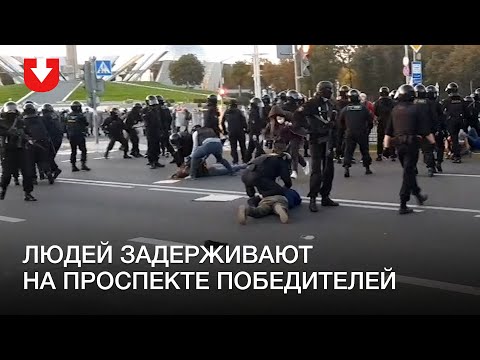
Ik hoor ondertussen ook berichten over aanhoudingen en enkele gewonden over het hele land verspreid.