NWS Nieuws & Achtergronden
Discussieer hier diepgaander over de actualiteiten.



bedreigen en aanslagen slaat nergens op en dient bestreden te worden. ik snap de emotie wel, dat je boos bent, maar geweld is geen oplossing in deze situatie. sterker nog het werkt averechts nu wordt de gulen beweiging hier in de nederlandse media en de politiek in de slachtoffer rol geplaatst. de gulen sekte is gewoon al een aantal jaar in open oorlog met turkse instellingen, dus wat dat betreft zie ik de sekte ook niet meer dan een clubje landverraders, die bestreden moeten worden. ik wil nooit meer zien wat ik die dag heb moeten meemaken. alleen besef ik me ook aan de andere kant dat al die verenigingen zo ingericht zijn dat een hele hoop mensen die in de organisaties zitten of er affiniteiten mee hebben niet eens beseffen met wat voor mensen ze te maken hebben.quote:Op donderdag 28 juli 2016 14:45 schreef Trommeldaris het volgende:
Oh ik begrijp zeker wel dat het relevant is hoor, kan me voorstellen dat veel Turken zowel hier als in Oostenrijk genoeg familie hebben die in Turkije woont.
Ik vind alleen dat de mate van interesse, door bijv. het bedreigen van Gulen aanhangers hier, bizar hoog.
Ik heb Hem niet uit vrees voor de hel noch uit liefde voor het paradijs gediend, want dan zou ik als de slechte huurling zijn geweest; ik heb hem veeleer gediend in liefde tot Hem en in verlangen naar Hem.
-Rabia Al-Basri
-Rabia Al-Basri
er zijn idd aardig wat vacatures open las ikquote:
[..]
Zijn er nog banen in Turkije of is inmiddels iedereen ontslagen of uit zijn functie gezet?

Ik heb Hem niet uit vrees voor de hel noch uit liefde voor het paradijs gediend, want dan zou ik als de slechte huurling zijn geweest; ik heb hem veeleer gediend in liefde tot Hem en in verlangen naar Hem.
-Rabia Al-Basri
-Rabia Al-Basri
Gulen:
overigens KirmiziBeyaz (onze enige echte trotse Gulenist van dit topic) je wilde graag weten hoe de Gulen beweging in oorlog is met de Turkse staat. ik vind dit een duidelijk verhaal.
[ Bericht 68% gewijzigd door Slayage op 28-07-2016 16:44:40 ]
mooie opsomming waarom in Turkije er consensus is dat de Gulen beweging ontmanteld dient te worden. tevens een tip voor de mensen die eigenlijk geen enkel idee hebben wat de Gulen beweging is en ze zien als "slachtoffer van erdos heksenjacht".quote:"You must move in the arteries of the system without anyone noticing your existence until you reach all the power centers... until the conditions are ripe, they [the followers] must continue like this... You must wait for the time when you are complete and conditions are ripe, until we can shoulder the entire world and carry it... You must wait until such time as you have gotten all the state power, until you have brought to your side all the power of the constitutional institutions in Turkey... Until that time, any step taken would be too early - like breaking an egg without waiting the full 40 days for it to hatch. It would be like killing the chick inside."
overigens KirmiziBeyaz (onze enige echte trotse Gulenist van dit topic) je wilde graag weten hoe de Gulen beweging in oorlog is met de Turkse staat. ik vind dit een duidelijk verhaal.
kennelijk zijn er mensen gevlucht naar duitsland. alsof arme merkel niet genoeg aan haar hoofd heeft.quote:Thinking Gülen is a peaceful scholar is a huge mischaracterization
Approximately two months ago, I was sitting across a table from two British academics who pin themselves as Turkey experts. The conversation became heated when I tried to point out the machinations of the Gülen movement in the high profile Ergenekon and Sledgehammer cases and its attempts to sabotage the latest Kurdish peace process.
Their knowledge regarding Gülen came from the intense lobbying of the movement in the U.S. and U.K. Not only did they reckon too little about the incidents that had shaken Turkey in the last five-six years, they were not willing to listen either. This was not an isolated incident. To the contrary, the same can unfortunately be said for many Western journalists, academics and politicians. The post-coup coverage of the Western media shows traces of that sentiment which attracted the attention and rightful criticism of many credible Turkish journalists.
One may criticize the government's human rights record or the ongoing purge in the country however this should not mask the Gülen movement's involvement in all types of unlawful activities, including the recent coup attempt. Turkey and the Turkish people faced a tremendous attack of a deep state created by the Gülen movement. Failure to report this part of the story may either be intentionally negligent journalism or a byproduct of deficient information. Hoping that the latter is the case, I want to provide a 11-point list of facts on Gülen:
1. The Gülen movement, led by Islamic scholar Fethullah Gülen, is embraced by the Western media and politicians as a promoter of peace and interfaith dialogue. However, this was hardly ever the case. He actually left Turkey subsequent to a trial that charged him with toppling the secular state in 1999. However, in the post 9/11 era he found support in the West, where he was seen as an antidote to rising radical Islamism. His first application to the U.S. for "a preference visa as an alien of extraordinary ability in the field of education" was denied due to the fact that he was "is not an educator, and is certainly not one of a small percentage of experts in the field of education who have risen to the very top of that field. Further, the record contains overwhelming evidence that [the] plaintiff [Gülen] is primarily the leader of a large and influential religious and political movement with immense commercial holdings." But then Gülen was nevertheless granted a green card with reference letters including ones from three U.S. officials: Former U.S. Ambassador to Turkey Morton Abromovotiz and former CIA officials George Fidas and Graham Fuller.
2. The Gülen movement has two layers. The first one consists of Fethullah Gülen's many disciples who more or less believe that he is the Mahdi, the Islamic version of a messiah. The second layer is the top echelon known to operate as a secret network, nested mainly in the security apparatus and the judiciary, to achieve their goals through Machiavellian methods, especially in Turkey. His followers in the state civil service, judiciary, police and - as we have understood recently - in the army are more loyal to Gülen than the institutions they work for. They take orders from the "brothers" of the movement rather than acting in the lawful chain of command of the state.
3. Fethullah Gülen believes in secretive and incremental take-over from within and that the change should come from the bottom up. One of his early sermons which was included in the indictment of 1999 epitomizes this belief: "You must move in the arteries of the system without anyone noticing your existence until you reach all the power centers... until the conditions are ripe, they [the followers] must continue like this... You must wait for the time when you are complete and conditions are ripe, until we can shoulder the entire world and carry it... You must wait until such time as you have gotten all the state power, until you have brought to your side all the power of the constitutional institutions in Turkey... Until that time, any step taken would be too early - like breaking an egg without waiting the full 40 days for it to hatch. It would be like killing the chick inside."
4. The Gülen movement had been working with the best PR agents in America and built a strong lobbying machine in the U.S., the U.K. and Turkey. According to the U.S. government, this movement's financial capacity was estimated to be between $25 billion and $50 billion with schools and charities in more than 150 countries.
5. The Gülen movement's infiltration into the Turkish state dates back to late 1980s. His disciples' presence were tacitly condoned by the Bülent Ecevit, Süleyman Demirel and Tansu Çiller administrations, even though he has always been considered as a threat by the Kemalist establishment and the army, which considers itself the guardian of the secular state. It appears that those who suspected their actions were very much right.
6. The Gülen movement lived its golden years during the first decade of the Justice and Development Party (AKP) government. The AKP initially formed an alliance with the group to eliminate the power of the army in politics. This alliance was most apparent in 2007, in the aftermath of the e-memorandum of the military opposing the presidency of Abdullah Gül. 46 days later a high profile case called Ergenekon started. Another case called Sledgehammer followed in 2010. In these cases, military officials, opposition MPs and journalists were accused of plotting a violent coup to oust the AKP government. It later turned out that these cases were based on fabricated evidence and that most such fabrications were done by the Gülenists in the police. All the defendants were acquitted of those crimes in 2015. President Recep Tayy?p Erdogan later admitted that he was misled by Gülen's followers in the state. July 15 showed that it was actually the followers of Gülen who had violent coup plans.
7. Daily Hürriyet Editor-in-Chief Sedat Ergin recently published an article affirming that the perpetrators of the coup were the military officers who had risen to critical positions which were vacated by the sham Sledgehammer trial. It is obvious that these cases served the purpose of undermining the power of Kemalists in the armed forces and replacing them with the Gülenists.
8. Journalists who had written about the Gülen machinations in these trials endured slander campaigns and threats of arrests. Fellow journalists Bar?s Terkoglu, Bar?s Pehlivan, Soner Yalç?n, Nedim Sener and Ahmet S?k served time because of their work that showed Gülen's infiltration into the state. S?k was writing a book on Gülen's presence in the police force while Sener was investigating the links of Gülen's disciples with the 2007 murder of Turkish-Armenian journalist Hrant Dink. Now Gülen-linked officers stand trial on the Dink murder case.
9. Fethullah Gülen in his recent op-ed for the New York Times makes a reference to the AKP's crackdown on Kurds. However, this sounds rather hypocritical. Many of us, including myself, criticized the AKP's handling of the peace process. However, the Gülen movement was one of the main forces that worked actively to undermine the process. Their first strike was a mass arresting campaign against almost 8000 Kurdish activists, elected mayors, academics and journalists after 2009 known as the KCK (Kurdistan Communities Union) arrests. Prominent Kurdish politician Hatip Dicle acknowledged that "the mind that started the KCK operations was the Gülen movement's elements in the police and judiciary... After we had won 100 mayorships from the 2009 local elections, they came up with the idea of these operations just to terrorize us." The idea of the Gülen movement being the mastermind behind the KCK operations not only belongs to Kurds, as it was also confirmed by the AKP government. "It was the Gülen movement who had staged the KCK trials," said Undersecretary of Public Security and Order Muhammed Dervisoglu. The second strike was the leaking of the records of the Oslo talks, where the chief of National Intelligence Agency (MIT), Hakan Fidan, was negotiating with the outlawed Kurdistan Workers' Party (PKK). Only the Gülenists within the security apparatus had the means to reach such confidential material and they were the ones who promoted them the most. The third strike was an attempt to detain Fidan and former directors of the organization on Feb. 7, 2012, because of those negotiations. This attempt was also backed by known Gülenists within the judiciary.
10. The accusation that the coup attempt was led by Gülenist generals is not based on simple force of assertion. It is rather based on hard evidence that had unfortunately been dismissed for years. Ahmet Zeki Üçok, a military prosecutor, carried out a comprehensive investigation into the Gülenists in the armed forces in 2009. He discovered a large secret network within the army. He identified many members of this unlawful organization by their names. However, he could not complete his investigation as he was detained on the grounds that he tortured certain witnesses by "hypnotizing" them and also as part of the Sledgehammer case. He spent almost five years in prison. When he gave an interview to Ahmet Hakan last April he stated that he knew the Gülenists in the army name-by-name. Immediately after the botched coup attempt, he declared that the leaders of the coup matched perfectly the list that he had. Referring to the F-16s that bombed the Turkish parliament he recalled the words of now-retired Col. Selçuk Basyigit in the court records: "We are now very strong. We have F-16s, F-4s that will take off with a single order of Fethullah Gülen." Üçok's findings were corroborated by many soldiers who fought against the coup attempt or by those soldiers who were the victims of the Sledgehammer case.
11. Finally, all political parties in the parliament, the AKP, the Republican People's Party (CHP), the Nationalist Movement Party (MHP) and the Peoples' Democratic Party (HDP) are in consensus in an unprecedented way that the coup attempt of July 15 was orchestrated by Gülenist soldiers. The testimonies of the perpetrators of the coup further prove this point. Chief of General Staff Gen. Hulusi Akar's aide-de-camp confessed to links to Gülen and described how he had wiretapped former Chief of Armed Forces Necdet Ozel.
Akar's testimony also revealed that one of the masterminds of the coup, Maj. Gen. Hakan Evrim, told him that he could arrange a phone call with Gülen, whom he called their "intellectual leader," on the night of the coup
In light of this information it would certainly be a huge mischaracterization to think of Gülen merely as a peaceful Islamic scholar and preacher. His followers in the armed forces waged a campaign of terror on the night of July 15 and Gülen's role in it deserves everyone's attention.
July/28/2016
http://www.hurriyetdailyn(...)102173&NewsCatID=548
quote:Turkije wil dat Duitsland gevluchte Gülen-gezinde aanklagers uitlevert
Een aantal aanklagers gelieerd aan Fetullah Gülen zijn van Turkije naar Duitsland gevlucht. De Turkse minister van Buitenlandse Zaken Mevlut Cavusoglu heeft Duitsland om uitlevering gevraagd. Dat meldt hij op CNN Türk.
Door: Redactie 28 juli 2016, 15:33 - Bron: Reuters
President Erdogan beschuldigt de naar Amerika uitgeweken oud-imam Fethullah Gülen ervan achter de militaire couppoging van vrijdagavond te zitten. Ooit waren de twee vrienden, nu zijn het aartsvijanden. Gülen ontkent in alle toonaarden dat hij er iets mee te maken heeft. Wie is hij precies? Lees hier het profiel terug (+) dat onze buitenlandverslaggever Rob Vreeken in 2014 schreef over Gülen.
De Duitse regering heeft nog niet in het openbaar gereageerd op het uitleveringsverzoek van Turkije. Bondskanselier Angela Merkel toonde donderdagmiddag tijdens een persconferentie wel begrip voor de bezorgdheid van de Turkse regering. Ze stelde dat 'er actie moet worden ondernomen tegen de rebellen met alle middelen die een rechtsstaat tot zijn beschikking heeft.' Ze benadrukte echter dat de reactie van de regering wel proportioneel moet blijven.
Tegen Gülen zelf, die op dit moment in zelfgekozen ballingschap in de Verenigde Staten leeft, loopt ook een uitleveringsverzoek. Cavusoglu stelt 'positieve verandering' te zien in de houding van de Amerikanen jegens het verzoek van de Turken.
Met dit uitleveringsverzoek is haast geboden. Volgens de Turkse minister van Justitie Bekir Bozdag zou Gülen plannen hebben de VS te ontvluchten. Hij noemde Australië, Mexico, Canada, Zuid Afrika en Egypte als mogelijke bestemmingen. Egypte heeft al laten weten dat het nog geen asielaanvraag van de geestelijke heeft ontvangen. Mocht het nog komen, dan zullen de Egyptische autoriteiten de aanvraag onderzoeken.
[ Bericht 68% gewijzigd door Slayage op 28-07-2016 16:44:40 ]
Ik heb Hem niet uit vrees voor de hel noch uit liefde voor het paradijs gediend, want dan zou ik als de slechte huurling zijn geweest; ik heb hem veeleer gediend in liefde tot Hem en in verlangen naar Hem.
-Rabia Al-Basri
-Rabia Al-Basri


met aangepaste tekst, met beelden van met Turkse vlaggen zwaaiende Nederturkieturkies:
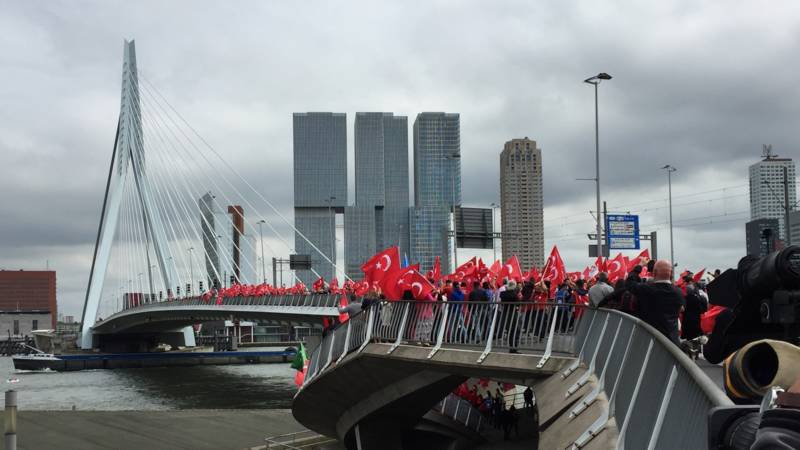
In Rotterdam, Rotterdam
is van alles aan de gang
want Erdogan, Erdogan
is de man die alles kan
De moraal zit in een crisis, niemand weet meer wat van wie is.
Mijn broer Tinus zeker niet; de minkukel neemt steeds ongevraagd bezit van mijn FOK!account. Beste vent wel verder, overigens: http://fotoboek.fok.nl/Tinus_O..
Mijn broer Tinus zeker niet; de minkukel neemt steeds ongevraagd bezit van mijn FOK!account. Beste vent wel verder, overigens: http://fotoboek.fok.nl/Tinus_O..
quote:
[ afbeelding ]
In Rotterdam, Rotterdam
is van alles aan de gang
want Erdogan, Erdogan
is de man die alles kan

Ik heb Hem niet uit vrees voor de hel noch uit liefde voor het paradijs gediend, want dan zou ik als de slechte huurling zijn geweest; ik heb hem veeleer gediend in liefde tot Hem en in verlangen naar Hem.
-Rabia Al-Basri
-Rabia Al-Basri
in turkije maakt op Google de zoek term "hoe stop je een tank" een piek tijdens de coup 
http://www.hurriyetdailyn(...)102122&NewsCatID=550
http://www.hurriyetdailyn(...)102122&NewsCatID=550
Ik heb Hem niet uit vrees voor de hel noch uit liefde voor het paradijs gediend, want dan zou ik als de slechte huurling zijn geweest; ik heb hem veeleer gediend in liefde tot Hem en in verlangen naar Hem.
-Rabia Al-Basri
-Rabia Al-Basri
Die hebben 1989 in China niet bewust meegekregen.....quote:Op donderdag 28 juli 2016 17:03 schreef Slayage het volgende:
in turkije maakt op Google de zoek term "hoe stop je een tank" een piek tijdens de coup
http://www.hurriyetdailyn(...)102122&NewsCatID=550
De moraal zit in een crisis, niemand weet meer wat van wie is.
Mijn broer Tinus zeker niet; de minkukel neemt steeds ongevraagd bezit van mijn FOK!account. Beste vent wel verder, overigens: http://fotoboek.fok.nl/Tinus_O..
Mijn broer Tinus zeker niet; de minkukel neemt steeds ongevraagd bezit van mijn FOK!account. Beste vent wel verder, overigens: http://fotoboek.fok.nl/Tinus_O..


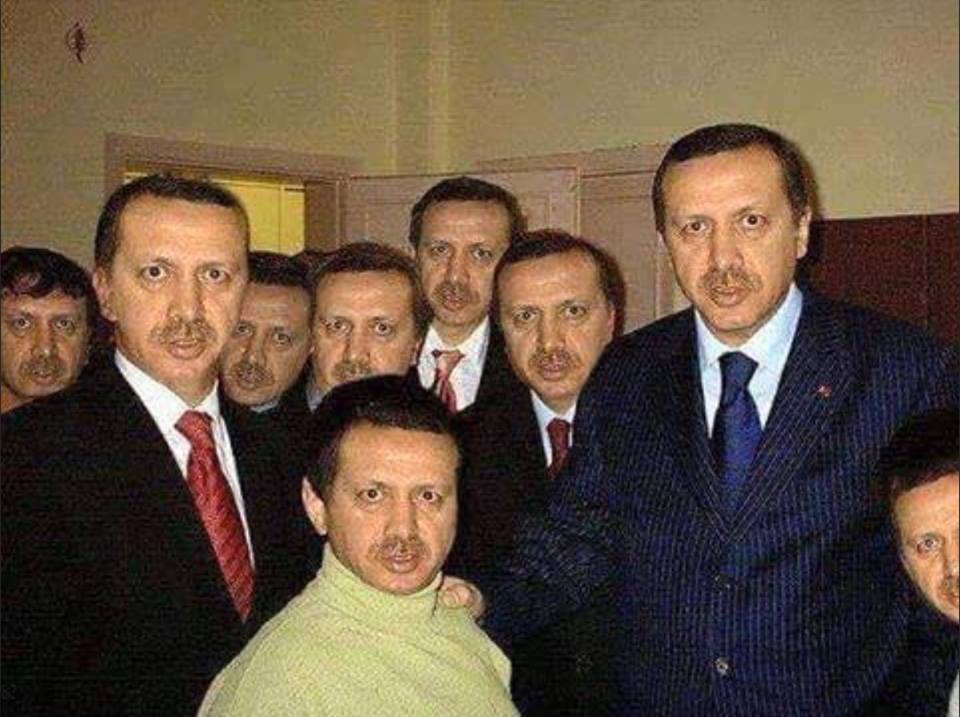
twitter:DarthErdogan twitterde op vrijdag 22-07-2016 om 17:27:14 My new Cabinet.#MakeTurkeyGreatAgain https://t.co/uknGjPIqJH reageer retweet
 My new Cabinet.
leider van de grootste turkse oppositie partij is hoopvol over de toekomst net als de meeste turken atm. 
quote:Continuation of Turkey’s ‘reconciliation atmosphere’ is key, says CHP leader
Main opposition Republican People’s Party (CHP) chair Kemal Kılıçdaroğlu has praised the environment of “reconciliation” and tolerance that has emerged out of the failed July 15 coup attempt in Turkey, adding that his party’s “biggest wish” is the continuation of this “atmosphere.”
“Today an atmosphere of reconciliation and mutual listening has emerged in politics. My biggest wish is for the maintenance of this atmosphere. My second biggest wish is for the enlargement of a common ground,” said Kılıçdaroğlu, making reference to the Turkish Republic’s founding values and principles of a democratic, secular, social law state.
The CHP head’s remarks came in a live interview with private broadcaster CNN Türk on July 28, three days after he joined the ruling Justice and Development Party (AKP) and the Nationalist Movement Party (MHP) leaders in a meeting with President Recep Tayyip Erdoğan at the presidential palace in Ankara.
Describing the situation in the aftermath of the coup attempt in Turkey, Kılıçdaroğlu said the coup attempt was “not the result of an intelligence failure, but of a governance failure.”
“If you do not give jobs to people who can do them, if the state is not structured healthily, if you hand over the state to groups that are against the state, and if you put them in the state’s key posts, this is called a failure of governance,” he added.
Regarding the discussion on the possible reinstatement of capital punishment, Kılıçdaroğlu said these demands have “created concern” in many environments, including the EU. He noted that the issue became particularly heated in the early aftermath of the coup attempt but is not being talked about so much today.
“I hope the government does not put its signature to such craziness,” said the CHP leader.
Touching upon the arrest and detention warrants issued for a number of journalists as part of the probe launched into the attempt, Kılıçdaroğlu said the hasty detention of journalist Bülent Mumay, despite him saying that he would go to testify the following morning, would overshadow the prosecution process.
The CHP leader also touched on the call his secretary received from soldiers during the coup attempt claiming that the chief of general staff was leading the coup.
“We responded ‘we are against the coup, whoever is carrying it out.’ It is obvious that an indirect inducement was coming to us and MHP there,” he said.
http://www.hurriyetdailyn(...)102209&NewsCatID=338
July/28/2016
Ik heb Hem niet uit vrees voor de hel noch uit liefde voor het paradijs gediend, want dan zou ik als de slechte huurling zijn geweest; ik heb hem veeleer gediend in liefde tot Hem en in verlangen naar Hem.
-Rabia Al-Basri
-Rabia Al-Basri

http://www.telegraaf.nl/b(...)n_commanderen__.html
zo dan is ie helemaal de baas over alle turken
zo dan is ie helemaal de baas over alle turken
quote:Erdogan wil soldaten en spionnen commanderen
50 min geleden
ANKARA - Recep Tayyip Erdogan wil de gewapende strijdkrachten en de inlichtingendienst MIT van Turkije onder zijn controle brengen.
AI-overzicht Volgens onderzoeken behoren autonome, gezonde westerse ouderen met een goed pensioen tot meest tevreden mensen ter wereld. Deze combinatie van factoren zorgt voor een hoog welzijn.
Als de Turkse meerderheid dat wil is het prima. Zo raar is het niet.quote:
http://www.telegraaf.nl/b(...)n_commanderen__.html
zo dan is ie helemaal de baas over alle turken
[..]
Hurriyet Opinie ( nee geen Erdofan's, integendeel)
Thinking Gülen is a peaceful scholar is a huge mischaracterization
Erdoğan to withdraw cases opened against Turkey’s opposition leaders
Thinking Gülen is a peaceful scholar is a huge mischaracterization
Erdogan trekt de aanklachten tegen de oppositieleiders in, gaat dit ook breed aandacht krijgen in het Westen denk je?quote:Approximately two months ago, I was sitting across a table from two British academics who pin themselves as Turkey experts. The conversation became heated when I tried to point out the machinations of the Gülen movement in the high profile Ergenekon and Sledgehammer cases and its attempts to sabotage the latest Kurdish peace process.
Their knowledge regarding Gülen came from the intense lobbying of the movement in the U.S. and U.K. Not only did they reckon too little about the incidents that had shaken Turkey in the last five-six years, they were not willing to listen either. This was not an isolated incident. To the contrary, the same can unfortunately be said for many Western journalists, academics and politicians. The post-coup coverage of the Western media shows traces of that sentiment which attracted the attention and rightful criticism of many credible Turkish journalists.
One may criticize the government’s human rights record or the ongoing purge in the country however this should not mask the Gülen movement’s involvement in all types of unlawful activities, including the recent coup attempt. Turkey and the Turkish people faced a tremendous attack of a deep state created by the Gülen movement. Failure to report this part of the story may either be intentionally negligent journalism or a byproduct of deficient information. Hoping that the latter is the case, I want to provide a 11-point list of facts on Gülen:
1. The Gülen movement, led by Islamic scholar Fethullah Gülen, is embraced by the Western media and politicians as a promoter of peace and interfaith dialogue. However, this was hardly ever the case. He actually left Turkey subsequent to a trial that charged him with toppling the secular state in 1999. However, in the post 9/11 era he found support in the West, where he was seen as an antidote to rising radical Islamism. His first application to the U.S. for “a preference visa as an alien of extraordinary ability in the field of education” was denied due to the fact that he was “is not an educator, and is certainly not one of a small percentage of experts in the field of education who have risen to the very top of that field. Further, the record contains overwhelming evidence that [the] plaintiff [Gülen] is primarily the leader of a large and influential religious and political movement with immense commercial holdings.” But then Gülen was nevertheless granted a green card with reference letters including ones from three U.S. officials: Former U.S. Ambassador to Turkey Morton Abromovotiz and former CIA officials George Fidas and Graham Fuller.
2. The Gülen movement has two layers. The first one consists of Fethullah Gülen’s many disciples who more or less believe that he is the Mahdi, the Islamic version of a messiah. The second layer is the top echelon known to operate as a secret network, nested mainly in the security apparatus and the judiciary, to achieve their goals through Machiavellian methods, especially in Turkey. His followers in the state civil service, judiciary, police and – as we have understood recently - in the army are more loyal to Gülen than the institutions they work for. They take orders from the “brothers” of the movement rather than acting in the lawful chain of command of the state.
3. Fethullah Gülen believes in secretive and incremental take-over from within and that the change should come from the bottom up. One of his early sermons which was included in the indictment of 1999 epitomizes this belief: “You must move in the arteries of the system without anyone noticing your existence until you reach all the power centers… until the conditions are ripe, they [the followers] must continue like this… You must wait for the time when you are complete and conditions are ripe, until we can shoulder the entire world and carry it… You must wait until such time as you have gotten all the state power, until you have brought to your side all the power of the constitutional institutions in Turkey… Until that time, any step taken would be too early - like breaking an egg without waiting the full 40 days for it to hatch. It would be like killing the chick inside.”
4. The Gülen movement had been working with the best PR agents in America and built a strong lobbying machine in the U.S., the U.K. and Turkey. According to the U.S. government, this movement’s financial capacity was estimated to be between $25 billion and $50 billion with schools and charities in more than 150 countries.
5. The Gülen movement’s infiltration into the Turkish state dates back to late 1980s. His disciples’ presence were tacitly condoned by the Bülent Ecevit, Süleyman Demirel and Tansu Çiller administrations, even though he has always been considered as a threat by the Kemalist establishment and the army, which considers itself the guardian of the secular state. It appears that those who suspected their actions were very much right.
6. The Gülen movement lived its golden years during the first decade of the Justice and Development Party (AKP) government. The AKP initially formed an alliance with the group to eliminate the power of the army in politics. This alliance was most apparent in 2007, in the aftermath of the e-memorandum of the military opposing the presidency of Abdullah Gül. 46 days later a high profile case called Ergenekon started. Another case called Sledgehammer followed in 2010. In these cases, military officials, opposition MPs and journalists were accused of plotting a violent coup to oust the AKP government. It later turned out that these cases were based on fabricated evidence and that most such fabrications were done by the Gülenists in the police. All the defendants were acquitted of those crimes in 2015. President Recep Tayyıp Erdoğan later admitted that he was misled by Gülen’s followers in the state. July 15 showed that it was actually the followers of Gülen who had violent coup plans.
7. Daily Hürriyet Editor-in-Chief Sedat Ergin recently published an article affirming that the perpetrators of the coup were the military officers who had risen to critical positions which were vacated by the sham Sledgehammer trial. It is obvious that these cases served the purpose of undermining the power of Kemalists in the armed forces and replacing them with the Gülenists.
8. Journalists who had written about the Gülen machinations in these trials endured slander campaigns and threats of arrests. Fellow journalists Barış Terkoğlu, Barış Pehlivan, Soner Yalçın, Nedim Şener and Ahmet Şık served time because of their work that showed Gülen’s infiltration into the state. Şık was writing a book on Gülen’s presence in the police force while Şener was investigating the links of Gülen’s disciples with the 2007 murder of Turkish-Armenian journalist Hrant Dink. Now Gülen-linked officers stand trial on the Dink murder case.
9. Fethullah Gülen in his recent op-ed for the New York Times makes a reference to the AKP’s crackdown on Kurds. However, this sounds rather hypocritical. Many of us, including myself, criticized the AKP’s handling of the peace process. However, the Gülen movement was one of the main forces that worked actively to undermine the process. Their first strike was a mass arresting campaign against almost 8000 Kurdish activists, elected mayors, academics and journalists after 2009 known as the KCK (Kurdistan Communities Union) arrests. Prominent Kurdish politician Hatip Dicle acknowledged that “the mind that started the KCK operations was the Gülen movement’s elements in the police and judiciary… After we had won 100 mayorships from the 2009 local elections, they came up with the idea of these operations just to terrorize us.” The idea of the Gülen movement being the mastermind behind the KCK operations not only belongs to Kurds, as it was also confirmed by the AKP government. “It was the Gülen movement who had staged the KCK trials,” said Undersecretary of Public Security and Order Muhammed Dervisoğlu. The second strike was the leaking of the records of the Oslo talks, where the chief of National Intelligence Agency (MİT), Hakan Fidan, was negotiating with the outlawed Kurdistan Workers’ Party (PKK). Only the Gülenists within the security apparatus had the means to reach such confidential material and they were the ones who promoted them the most. The third strike was an attempt to detain Fidan and former directors of the organization on Feb. 7, 2012, because of those negotiations. This attempt was also backed by known Gülenists within the judiciary.
10. The accusation that the coup attempt was led by Gülenist generals is not based on simple force of assertion. It is rather based on hard evidence that had unfortunately been dismissed for years. Ahmet Zeki Üçok, a military prosecutor, carried out a comprehensive investigation into the Gülenists in the armed forces in 2009. He discovered a large secret network within the army. He identified many members of this unlawful organization by their names. However, he could not complete his investigation as he was detained on the grounds that he tortured certain witnesses by “hypnotizing” them and also as part of the Sledgehammer case. He spent almost five years in prison. When he gave an interview to Ahmet Hakan last April he stated that he knew the Gülenists in the army name-by-name. Immediately after the botched coup attempt, he declared that the leaders of the coup matched perfectly the list that he had. Referring to the F-16s that bombed the Turkish parliament he recalled the words of now-retired Col. Selçuk Başyiğit in the court records: “We are now very strong. We have F-16s, F-4s that will take off with a single order of Fethullah Gülen.” Üçok’s findings were corroborated by many soldiers who fought against the coup attempt or by those soldiers who were the victims of the Sledgehammer case.
11. Finally, all political parties in the parliament, the AKP, the Republican People’s Party (CHP), the Nationalist Movement Party (MHP) and the Peoples’ Democratic Party (HDP) are in consensus in an unprecedented way that the coup attempt of July 15 was orchestrated by Gülenist soldiers. The testimonies of the perpetrators of the coup further prove this point. Chief of General Staff Gen. Hulusi Akar’s aide-de-camp confessed to links to Gülen and described how he had wiretapped former Chief of Armed Forces Necdet Ozel.
Akar’s testimony also revealed that one of the masterminds of the coup, Maj. Gen. Hakan Evrim, told him that he could arrange a phone call with Gülen, whom he called their “intellectual leader,” on the night of the coup
In light of this information it would certainly be a huge mischaracterization to think of Gülen merely as a peaceful Islamic scholar and preacher. His followers in the armed forces waged a campaign of terror on the night of July 15 and Gülen’s role in it deserves everyone’s attention.
Erdoğan to withdraw cases opened against Turkey’s opposition leaders
quote:Turkish President Recep Tayyip Erdoğan has decided to withdraw all court cases he previously opened against the chairs of opposition parties, as tentative signs of solidarity among rival political factions continue after the recent failed coup attempt.
Speaking to Reuters, presidential sources have said Erdoğan has moved to launch a new process after opposition parties quickly took a clear stance against the coup initiative by factions within the military on July 15.
“As a result, he is withdrawing all cases opened against opposition leaders in a show of solidarity between the political parties,” said the source, speaking on condition of anonymity.
Erdoğan’s move came after he hosted the leaders of three parties represented at parliament, excluding the Peoples’ Democratic Party (HDP) leaders, at the Presidential Palace on July 25.
Sources from the office of the president said before the meeting that Erdoğan would invite the three party leaders over their united stance against the coup attempt and also listen to their views on ongoing measures against supporters of U.S.-based Islamic scholar Fethullah Gülen within the state.
According to Article 299 of the Turkish Penal Code, it is a criminal offense to insult the president. The offense carries a jail sentence of between one and four years.
Since being elected president in Turkey’s first public presidential elections in 2014, many – including celebrities, journalists and high school students – have faced charges for “insulting” Erdoğan.
Criminal complaints regarding the offense have also been filed against main opposition Republican People’s Party (CHP) leader Kemal Kılıçdaroğlu and Peoples’ Democratic Party (HDP) co-chair Selahattin Demirtaş.
After he was elected as prime minister for his third term back in 2011, Erdoğan similarly withdrew insult cases he had earlier opened against Kılıçdaroğlu and Bahçeli for their alleged offenses against him during the election campaign period.
het eerste artikel is goed, daarom had ik em ook geplaatst hier. het tweede artikel laat maar weer eens zien hoe politiek en justitie dwars doorelkaar lopen in TR. iets wat altijd al is geweest helaas. maar als antwoord op je vraag nee daar zal de westerse media geen aandacht aan schenken, omdat het niet pas binnen de nu al jaren durende erdo hetze...quote:
Hurriyet Opinie ( nee geen Erdofan's, integendeel)
Thinking Gülen is a peaceful scholar is a huge mischaracterization
[..]
Erdogan trekt de aanklachten tegen de oppositieleiders in, gaat dit ook breed aandacht krijgen in het Westen denk je?
Erdoğan to withdraw cases opened against Turkey’s opposition leaders
[..]
Ik heb Hem niet uit vrees voor de hel noch uit liefde voor het paradijs gediend, want dan zou ik als de slechte huurling zijn geweest; ik heb hem veeleer gediend in liefde tot Hem en in verlangen naar Hem.
-Rabia Al-Basri
-Rabia Al-Basri
Het gaat hier niet om externe aanklachten waarvoor hij ze een pardon geeft he, het gaat om persoonlijke aanklachten van hemzelf richting de oppositieleiders. Dus de 'kendi actigi davalar'. Dat heeft vrij weinig te maken met dat de politiek en justitie dwars door elkaar loopt, hoewel je wel gelijk hebt, is het hier niet van toepassing.quote:
[..]
het eerste artikel is goed, daarom had ik em ook geplaatst hier. het tweede artikel laat maar weer eens zien hoe politiek en justitie dwars doorelkaar lopen in TR. iets wat altijd al is geweest helaas. maar als antwoord op je vraag nee daar zal de westerse media geen aandacht aan schenken, omdat het niet pas binnen de nu al jaren durende erdo hetze...
[ Bericht 0% gewijzigd door #ANONIEM op 28-07-2016 19:43:17 ]
ah okay, hij had kennelijk beledigingsklachten lopen.quote:
[..]
Het gaat hier niet om externe aanklachten waarvoor hij ze een pardon geeft he, het gaat om persoonlijke aanklachten van hemzelf richting de oppositieleiders. Dus de 'kendi actigi davalar'. Dat heeft vrij weinig te maken met dat de politiek en justitie dwars door elkaar loopt, hoewel je wel gelijk hebt, is het hier niet van toepassing.
Ik heb Hem niet uit vrees voor de hel noch uit liefde voor het paradijs gediend, want dan zou ik als de slechte huurling zijn geweest; ik heb hem veeleer gediend in liefde tot Hem en in verlangen naar Hem.
-Rabia Al-Basri
-Rabia Al-Basri
Meerderequote:
[..]
ah okay, hij had kennelijk beledigingsklachten lopen.

dictator uitlatingen zekerquote:
Ik heb Hem niet uit vrees voor de hel noch uit liefde voor het paradijs gediend, want dan zou ik als de slechte huurling zijn geweest; ik heb hem veeleer gediend in liefde tot Hem en in verlangen naar Hem.
-Rabia Al-Basri
-Rabia Al-Basri
en de meerderheid is erdoganquote:
[..]
Als de Turkse meerderheid dat wil is het prima. Zo raar is het niet.
AI-overzicht Volgens onderzoeken behoren autonome, gezonde westerse ouderen met een goed pensioen tot meest tevreden mensen ter wereld. Deze combinatie van factoren zorgt voor een hoog welzijn.
Ze zijn nu zo bang om opgepakt te worden dat de aanklachten niet meer nodig zijn omdat ze nu al doen wat hij zegt?quote:
Erdogan trekt de aanklachten tegen de oppositieleiders in, gaat dit ook breed aandacht krijgen in het Westen denk je?
een teken van goodwillquote:
[..]
Ze zijn nu zo bang om opgepakt te worden dat de aanklachten niet meer nodig zijn omdat ze nu al doen wat hij zegt?
Ik heb Hem niet uit vrees voor de hel noch uit liefde voor het paradijs gediend, want dan zou ik als de slechte huurling zijn geweest; ik heb hem veeleer gediend in liefde tot Hem en in verlangen naar Hem.
-Rabia Al-Basri
-Rabia Al-Basri
Zolang ze doen wat hij wil inderdaad goede wil, anders worden ze aangeklaagd en gaat hij weer over tot kwade wil. Blijkbaar voelt hij zich nu zo sterk dat hij nu dit kan doen.quote:
Nee, net op TV. Erdogan mag tijdens de noodtoestand functioneren als officieel leider en woordvoerder van alle oppositiepartijen binnen en buiten het parlement en de taken herverdelen als president.quote:
[..]
Ze zijn nu zo bang om opgepakt te worden dat de aanklachten niet meer nodig zijn omdat ze nu al doen wat hij zegt?
[ Bericht 0% gewijzigd door #ANONIEM op 28-07-2016 19:58:22 ]
