NWS Nieuws & Achtergronden
Discussieer hier diepgaander over de actualiteiten.



twitter:Hayder_alKhoei twitterde op zondag 19-04-2015 om 11:32:27 #Iraq's Shia Endowment to all its affiliated Mosques & Hussayniyas: open your doors for the displaced Anbaris http://t.co/nS4XVGXV8F (Ar) reageer retweet

twitter:MustafaNajafi twitterde op zondag 19-04-2015 om 12:58:56 Shia area Kadhimiya, north of Baghdad have welcomed about 72 displaced families from #Anbar & provided them homes http://t.co/ekYrQmazpS reageer retweet
 Shia area Kadhimiya, north of Baghdad have welcomed about 72 displaced families from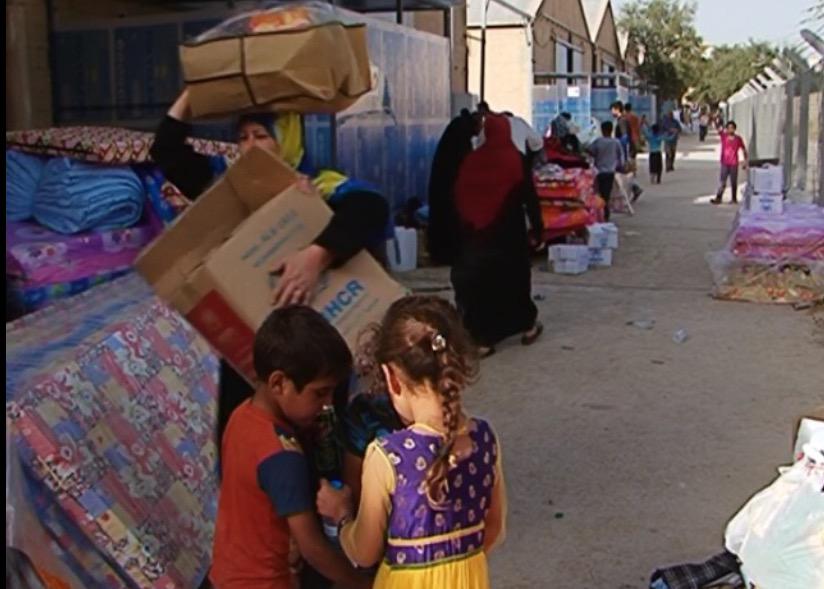
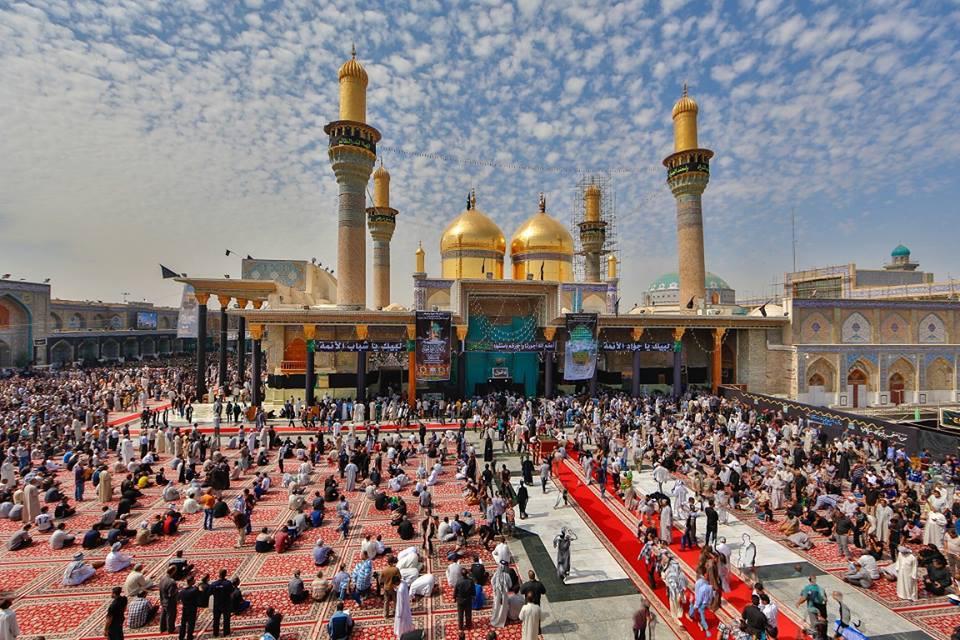
twitter:Iraqism twitterde op zondag 19-04-2015 om 14:07:36 Aid and shelter provided by Baghdad locals for the recently-displaced families of Anbar, fleeing #ISIS terror. #Iraq http://t.co/D2nUNLXUU6 reageer retweet
 Aid and shelter provided by Baghdad locals for the recently-displaced families of Anbar, fleeing


Soennitische dictators waren niks nieuws in Irak. Soennieten hebben bijna altijd daar de macht gehad.quote:Op zondag 19 april 2015 16:11 schreef reza1 het volgende:
[..]
Wil de VS dan een excuusbrief schrijven naar Irak en Iran voor het aan de macht helpen en steunen van de Ba'ath en Saddam?

#freefrederike
Maar de voorgangers van Saddam waren niet zo'n idioot als hem, die zouden geen oorlog tegen Iran zijn gestart. En die zonder die oorlog zou Irak er nu duizend keer beter hebben uitgezien, de invasie van Koeweit zou dan namelijk ook niet nodig zijn geweest en dus geen golfoorlog en sancties.quote:Op zondag 19 april 2015 16:21 schreef PizzaMizza het volgende:
[..]
Soennitische dictators waren niks nieuws in Irak. Soennieten hebben bijna altijd daar de macht gehad.
Iran was een gevaar voor Saddam aangezien zij de sjitische revolutie naar Irak zouden exporteren. Een land met meer sjieten dan soennieten. Saddam moest de Islamistische Republiek Iran dus wel aanvallen. En hij dacht met steun van het hele Westen kan ik winnen. Best begrijpelijk, zonder het goed te willen praten natuurlijk.quote:
Maar de voorgangers van Saddam waren niet zo'n idioot als hem, die zouden geen oorlog tegen Iran zijn gestart. En die zonder die oorlog zou Irak er nu duizend keer beter hebben uitgezien, de invasie van Koeweit zou dan namelijk ook niet nodig zijn geweest en dus geen golfoorlog en sancties.
Op woensdag 26 oktober 2022 07:33 schreef Lospedrosa:
“Kan gebeuren in een live uitzending dat je je een beetje laat meeslepen er bleert dat je kinderen maar moet verbranden.”
“Kan gebeuren in een live uitzending dat je je een beetje laat meeslepen er bleert dat je kinderen maar moet verbranden.”
Of hij zou gewoon een betere niet-sektarische politiek kunnen zijn gaan voeren, dan hoeft hij niet bang te zijn voor een revolutie.quote:
[..]
Iran was een gevaar voor Saddam aangezien zij de sjitische revolutie naar Irak zouden exporteren. Een land met meer sjieten dan soennieten. Saddam moest de Islamistische Republiek Iran dus wel aanvallen. En hij dacht met steun van het hele Westen kan ik winnen. Best begrijpelijk, zonder het goed te willen praten natuurlijk.
Veel sjieten vandaag de dag zijn pro Islamitische Republiek Iran. Als dat toendertijd ook was kan ik me voorstellen dat hij als soenniet in die tijd huiverig was voor de grotere groep sjieten in zijn land. Het gaat hem om macht en sjieten waren daarin een gevaar, zeker met een Khomeini als buurman die overduidelijk een Islamitische revolutie exporteerde en zeker naar mede-sjieten. Saddam was seculier en geen sjiet....dus tel uit je winst.quote:
Of hij zou gewoon een betere niet-sektarische politiek kunnen gaan voeren, dan hoeft hij niet bang te zijn voor een revolutie.
Ter vergelijking; Assad is als niet-soenniet ook huiverig voor een soennitische buurman die een soennitisch Islamitische revolutie naar Syrie wil exporteren. Assad staat zoals Saddam daar ook haaks op als seculier en niet soenniet. Zoals Saddam seculier en niet sjiet was tegenover de Islamitische revolutie vanuit Iran naar Irak.
Op woensdag 26 oktober 2022 07:33 schreef Lospedrosa:
“Kan gebeuren in een live uitzending dat je je een beetje laat meeslepen er bleert dat je kinderen maar moet verbranden.”
“Kan gebeuren in een live uitzending dat je je een beetje laat meeslepen er bleert dat je kinderen maar moet verbranden.”
Baathisme is geen seculiere ideologie?quote:
Assad is geen seculier dus?
Op woensdag 26 oktober 2022 07:33 schreef Lospedrosa:
“Kan gebeuren in een live uitzending dat je je een beetje laat meeslepen er bleert dat je kinderen maar moet verbranden.”
“Kan gebeuren in een live uitzending dat je je een beetje laat meeslepen er bleert dat je kinderen maar moet verbranden.”
Saddam was niet seculier. Ik heb dat al heel vaak moeten uitleggen en heb geen zin om dat nog eens te doen, maar er is genoeg over te vinden op het internet.quote:
[..]
Baathisme is geen seculiere ideologie?
Assad is geen seculier dus?
#freefrederike
http://en.wikipedia.org/wiki/Faith_campaignquote:
[..]
Saddam was niet seculier. Ik heb dat al heel vaak moeten uitleggen en heb geen zin om dat nog eens te doen, maar er is genoeg over te vinden op het internet.
Saddam was net zo seculier als Assad dat is. Hoe seculier is dat? Islam speelt geen voorname rol in de wetgeving. Sharia heeft geen dominante rol. Dat is wat men doorgaans onder "niet seculier" verstaat bij Arabische heersers. Daarom zijn Mubarak, Assad, Saddam en al die dictators beschouwd als seculieren jarenlang. Integenstelling tot de Moslimbroeders en salafisten die juist enkel en alleen vanuit sharia denken wat betreft nationale wetgeving en/of grondwet. Of de ayatollahs in Iran die een theocratie ervan hebben gemaakt waar homoseksuelen publiekelijk worden opgehangen en vrouwen verplicht wordt in de openbare ruimte hun haren te bedekken waar een religieuze politie het controleert op de straten of dat ook gebeurt.quote:
Saddam was niet seculier. Ik heb dat al heel vaak moeten uitleggen en heb geen zin om dat nog eens te doen, maar er is genoeg over te vinden op het internet.
NL is overigens ook niet seculier. Groot-Brittanie evenmin. Jouw redering volgend. Net zoals de Syrische president oftewel hoogste autoriteit Moslim moet zijn moet de Koning in NL christelijk-protestants zijn.
Op woensdag 26 oktober 2022 07:33 schreef Lospedrosa:
“Kan gebeuren in een live uitzending dat je je een beetje laat meeslepen er bleert dat je kinderen maar moet verbranden.”
“Kan gebeuren in een live uitzending dat je je een beetje laat meeslepen er bleert dat je kinderen maar moet verbranden.”
twitter:Abufellah twitterde op zondag 19-04-2015 om 18:12:56 Shia marginalization of Sunnis continues in Iraq. How dare they feed Anbar's Sunni IDPs out of plastic containers?! http://t.co/x4U4xG7Aky reageer retweet
 Shia marginalization of Sunnis continues in Iraq. How dare they feed Anbar's Sunni IDPs out of plastic containers?!
twitter:Abufellah twitterde op zondag 19-04-2015 om 15:13:09 Brilliant article. Speaks volumes about lack of press freedoms & rampant nepotism in KR-Iraq.http://t.co/TREPYHItg8 http://t.co/pBSTTdLXBP reageer retweet


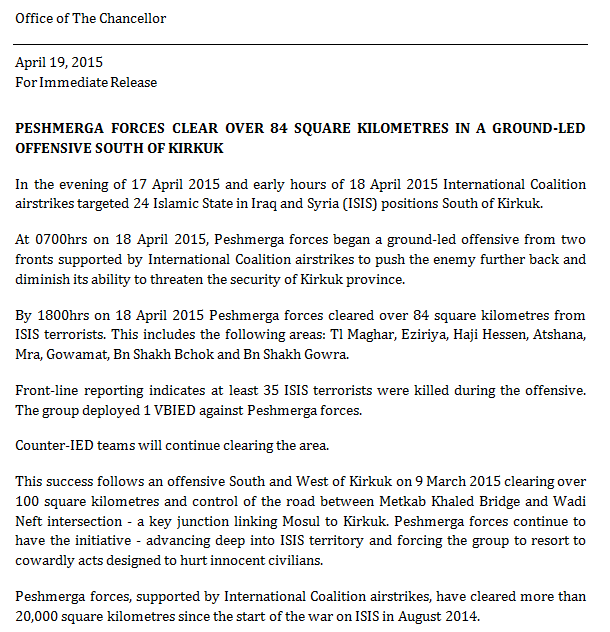
quote:Iraq's brain drain continues
Youths in Iraq dream of leaving the country. The successive wars since 1980 and in particular the violence that has been part of daily life in Iraq since 2003 have caused waves of emigration over the years.
Iraqis have lived through many conflicts over the last few decades: the Iran-Iraq war of 1980-88, the Iraqi invasion of Kuwait in 1990 and the subsequent embargo and war, followed by the war in 2003 to topple Iraqi President Saddam Hussein. The conflict between Iraqi forces and Islamic State (IS) militants, who occupied Mosul on June 10, 2014, have further escalated the violent situation Iraqis, young and old, live in today. Youths are again searching for a new place to live in, outside Iraq.
Social researcher Qassim Mohammad told Al-Monitor that the emigration issue has become a significant concern as “a lot of young people now believe that every war in Iraq gives birth to a new war, and that seeking a future in Europe or the United States is their best option.”
Luay Hamid graduated from the faculty of agriculture at the University of Baghdad in 2012. He told Al-Monitor, "Thinking about emigrating is not enough. One must have the money for it, [money] that a lot of young people don’t have. … I tried to emigrate to Europe in 2013 after I had saved $4,000. I traveled to Jordan and stayed there to find a way to be smuggled into Europe. … I met two smugglers who asked for $10,000 to get me to Germany or the Netherlands via Istanbul, Turkey. But I had to return to [Iraq] because I didn’t have that much money.”
According to a 2013 study by the International Organization for Migration in cooperation with the British Foreign Ministry, 99% of young people in southern Iraq and 79% of those in Iraqi Kurdistan wish to emigrate.
Many Iraqi youths have succeeded in emigrating to Europe. But some were not so lucky. Ahmed Saad told Al-Monitor, “[My] attempt to emigrate to the European paradise in December 2013 ended in Lebanon, where the smuggling intermediaries blackmailed me out of $6,000, which forced me to return to Iraq after spending a full year in [Lebanon].”
In regard to the reason he wanted to leave Iraq, Saad said, “Unemployment is what drove me to look for a future outside Iraq. Even though I graduated from the Institute of Technology in Baghdad in 2011, I could not find a job. … The other reason pushing young people like myself to emigrate is a feeling of instability in security and politics. My expectations that the security chaos in Iraq would continue were true. IS swept through the city of Mosul on June 10, 2014, months after I returned from Lebanon.”
Qasim Mozan, a writer and editor of the community section of the Iraqi newspaper Al Sabah, told Al-Monitor, “The dream of emigrating to Europe still flirts with the imagination of Iraqi youth. This feeling is shared by Arab youth, who are besieged by unemployment and a lack of freedom as they search for liberty and security.”
Mozan said, “The youth who emigrate believe that [foreign] countries would provide them with security and psychological comfort, and relieve them of their frustration, thus releasing their creative energies.”
He added, “The war in Iraq against IS is in fact pushing the young people to think about emigrating.”
Social researcher Ousama Alyaseri agrees. He told Al-Monitor, “The war factor is a temporary cause for emigrating from Iraq. But the long-term causes are poverty and unemployment. Young people think the situation is better abroad.”
According to field polls he conducted, Alyaseri said, “Iraqis prefer emigrating to countries such as Germany, Sweden, Norway, Finland, Belgium and the Netherlands. … My following up on the matter indicates that Iraqi authorities have no statistical data of the rate of emigration.”
The smuggling operations to Europe often happen through smuggling networks transporting illegal immigrants through the woods, between countries’ borders and across the sea in small boats.
But some disagree that the war against IS has encouraged emigration. Hassan al-Sayed Salman, a writer, political analyst and the former president of the board of trustees of the Iraqi Media Network, told Al-Monitor, “Emigration has subsided for the time being and it has diminished in intensity because the young people in Iraq are busy volunteering as fighters. … There are no precise statistics on emigration and counter-migration. … Talk about a high emigration rate for Iraqi youth is politically motivated and is intended to portray Iraq as a country that is unsafe or one that is going through an unnatural condition.”
In the same context, Jawad al-Shammari, the director of the information office of the High Commissioner for Human Rights in Iraq, told Al-Monitor, “The pace of emigration has dropped following the religious fatwa to conduct jihad against IS on June 10, 2014, because it made a lot of young people think about defending their country. So they joined the Popular Mobilization Units to fight [IS].”
Al-monitor.com

Op woensdag 26 oktober 2022 07:33 schreef Lospedrosa:
“Kan gebeuren in een live uitzending dat je je een beetje laat meeslepen er bleert dat je kinderen maar moet verbranden.”
“Kan gebeuren in een live uitzending dat je je een beetje laat meeslepen er bleert dat je kinderen maar moet verbranden.”
twitter:IraqiSecurity twitterde op maandag 20-04-2015 om 08:42:59 #Iraq; Hadi al-Amiri: There is cooperation between us & the Syrians. Da'ish threatens us all. http://t.co/PKzQ2yNz8t http://t.co/2Cf5mX4Dj9 reageer retweet

twitter:IraqiSecurity twitterde op maandag 20-04-2015 om 08:45:39 Hadi al-Amiri; #Iran's advisors in #Iraq number in the dozens, not hundreds or thousands. Weapons from Iran come via the Iraqi government. reageer retweet
twitter:IraqiSecurity twitterde op maandag 20-04-2015 om 08:38:40 Remember the analysts who said "Shia militias are outside the govt's control" Amiri says the Hashd asks for PM's consent before all battles. reageer retweet
Australia brokers intelligence-sharing deal with Irantwitter:IraqiSecurity twitterde op maandag 20-04-2015 om 07:20:02 Iraqi Shi'ite militia says DNA tests prove Saddam aide dead http://t.co/W6upvoWWWE #Iraq http://t.co/x1pd0mnGHM reageer retweet

quote:Australia and Iran will share intelligence to track foreign fighters working with the Islamic State group in Iraq, Foreign Minister Julie Bishop said Monday, as lawmakers urged caution.
In the first trip to Iran by an Australian minister in more than a decade, Bishop said it would be an informal arrangement.
Her comments came after a meeting with Iranian counterpart Mohammad Javad Zarif, President Hassan Rouhani and Ali Akbar Velayati, foreign affairs adviser to supreme leader Ayatollah Ali Khamenei.
"We have a common purpose with Iran in defeating Daesh and helping the Iraqi government," she told the Australian Broadcasting Corporation, using an Arabic acronym to refer to the militant IS organisation.
"During my discussions with the national leadership here, it was agreed that we could share intelligence, particularly on the foreign terrorist fighters from Australia who are taking part in this conflict in Iraq."
More than 100 Australians have travelled to Iraq and Syria to fight with the jihadists, raising concerns about the threat of "home-grown" extremists.
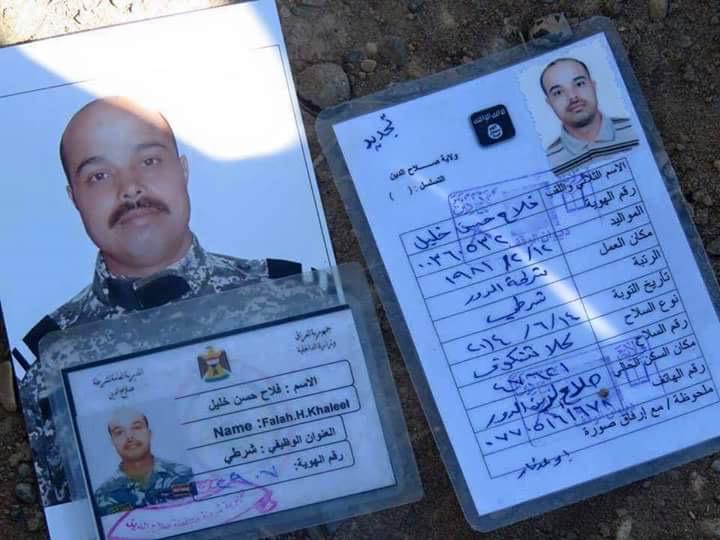
@IraqLiveUpdate: ISIS Police ID... ISIS traffic policeman from Tikrit who was an Iraqi gov police but 'repented' to ISIS on 14/06/2014 http://t.co/aqLWVm9vqo
Isis leader Abu Bakr al-Baghdadi 'seriously wounded in air strike'
http://www.theguardian.co(...)ike?CMP=share_btn_tw
http://www.theguardian.co(...)ike?CMP=share_btn_tw
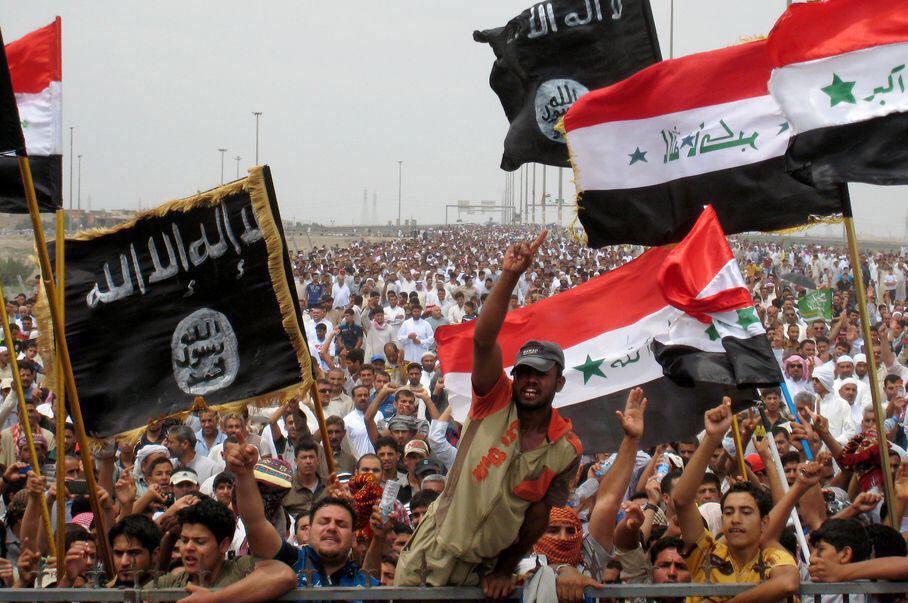
twitter:IraqiSecurity twitterde op maandag 20-04-2015 om 21:53:20 Biggest Sunni movement in #Iraq post-2003. Jihadist and Ba'athist flags. Look at this from a Shi'a perspective. http://t.co/Ffc8N05Qep reageer retweet

50 ISIS gedood ten zuiden van Kirkuk
twitter:RudawEnglish twitterde op dinsdag 21-04-2015 om 11:27:21 50 #ISIS fighters killed as #Peshmerga repulse attack on villages near #Kirkuk http://t.co/NgjYsNi66y reageer retweet
 50
50 twitter:sammyboy1977 twitterde op dinsdag 21-04-2015 om 16:55:42 Fruitful #ISIS hunting by #Peshmerga cheaper by dozen #kirkuk #mousil #TwitterKurds #نينوى http://t.co/Pdcs8smnDl reageer retweet
 Fruitful
 SPOILEROm spoilers te kunnen lezen moet je zijn ingelogd. Je moet je daarvoor eerst gratis Registreren. Ook kun je spoilers niet lezen als je een ban hebt.twitter:Say what?


Arabische verraders die samenwerkten met ISIS in Kirkuk provincie, zijn gevangen door de Peshmerga

#freefrederike
twitter:IraqiSecurity twitterde op woensdag 22-04-2015 om 14:41:35 #Iraq; Fursan al-Obaid (Sunni tribesmen) behead two Da'ish fighters in Barwana town (near Haditha), western #Anbar. http://t.co/r1PiW6Pmes reageer retweet
SPOILEROm spoilers te kunnen lezen moet je zijn ingelogd. Je moet je daarvoor eerst gratis Registreren. Ook kun je spoilers niet lezen als je een ban hebt.
Iraqi tribesmen fight their own after breaking with IS group
quote:When Islamic State militants swept across northern Iraq last summer, the Sunni al-Lehib tribe welcomed them as revolutionaries fighting the Shiite-led government in Baghdad. But less than a year later, the tribe is bitterly split between those who joined the extremist group and those resisting its brutal rule.
The tribe hails from a village just south of Mosul, Iraq's second largest city, which was captured by the IS last year. Like many Sunnis in northern Iraq, they initially welcomed the Islamic State group as liberators.
"We were happy when Daesh came," tribal leader Nazhan Sakhar said, using an acronym for the extremist group. "We thought they were going to Baghdad to establish a government. But then they started killing our own people. It turned out they were the same as al-Qaida."
Now he leads a group of around 300 fighters who have reluctantly allied with Iraqi troops and Kurdish forces to fight the IS group — and fellow tribesmen who still support the extremists.
Iraq's Sunnis have complained of discrimination and abuse since the U.S.-led invasion toppled Saddam Hussein's Sunni-led dictatorship and replaced it with an elected government dominated by the country's Shiite majority. That discontent fueled the rise of the Sunni IS group and paved the way for its takeover of much of northern and western Iraq last year.
The government is now trying to rally Sunni support, which will be key to defeating the IS group. But for many Sunnis that poses a dilemma, forcing them to choose between extremists who reserve their worst brutality for suspected traitors, and what many see as a sectarian government with a history of broken promises.
Sakhar once fought with the Sahwas, or Awakening Councils, which were made up of Sunni tribesmen and former insurgents who allied themselves with the U.S. military starting in 2006 to help roll back al-Qaida in Iraq, a precursor of the IS group. But the Shiite-led government never warmed to the Sahwas, and as U.S. troops withdrew support for the fighters dwindled.
Sakhar said this time around he is getting some help, with each fighter receiving his first monthly paycheck from Baghdad, of around $600.
But they have struggled to arm themselves. "We received weapons from (Kurdish) peshmerga forces, but it wasn't enough. Then we bought the rest of the weapons with our own personal money," he said. He said he has spent $150,000 on weapons, including a heavy machine gun, five lighter machine guns, a pickup truck and two rocket-propelled grenade launchers.
Sakhar says his men will need more arms to drive the IS group out of Mosul and surrounding areas. He also said that with more weapons he could triple the size of his fighting force to 1,000 men, but that many tribesmen are holding back for now for fear they won't be able to defend themselves.
His decision to ally with Iraqi troops brings grave risks. The Islamic State group has massacred the men, women and children of Sunni tribes who rise up against it. Sakhar says he is second on an Islamic State hit list and has survived numerous assassination attempts, including one last week. He points out the bullet-hole in his car.
He also laments the fact that he is now battling against his former neighbors and fellow tribesmen.
"We are sure that a lot of the people who are fighting with Daesh now come from our tribe," he said. "I am sad for this situation, but they chose the wrong path."
twitter:IraqiSecurity twitterde op woensdag 22-04-2015 om 11:19:45 #Iraq; Sunni tribal fighters in Ramadi with patriotic and pro-Shi'a/ISF chants/poetry/music http://t.co/KGdzwX19iw http://t.co/8qU7B7nbZs reageer retweet


quote:Video of Islamic State capabilities impresses military experts
“Without the coalition, the difference in training and discipline between Daash and the Iraqis is so extreme, this would turn into more of a nightmare,” he said. “Without those air assets up there, it’s possible we would have seen everything west and north of Baghdad under Daash control and Baghdad itself under direct siege.”
Read more here: http://www.mcclatchydc.co(...)s.html#storylink=cpy
Ik heb Hem niet uit vrees voor de hel noch uit liefde voor het paradijs gediend, want dan zou ik als de slechte huurling zijn geweest; ik heb hem veeleer gediend in liefde tot Hem en in verlangen naar Hem.
-Rabia Al-Basri
-Rabia Al-Basri
quote:twitter:IraqiSecurity twitterde op woensdag 22-04-2015 om 14:41:35 #Iraq; Fursan al-Obaid (Sunni tribesmen) behead two Da'ish fighters in Barwana town (near Haditha), western #Anbar. http://t.co/r1PiW6Pmes reageer retweetDeze foto bekenmerkt Soennietisch Arabisch barbarisme in woestijn-irak.SPOILEROm spoilers te kunnen lezen moet je zijn ingelogd. Je moet je daarvoor eerst gratis Registreren. Ook kun je spoilers niet lezen als je een ban hebt.
onthoofding hebben sunnis idd een patent opquote:
[..]
Deze foto bekenmerkt Soennietisch Arabisch barbarisme in woestijn-irak.

Ik heb Hem niet uit vrees voor de hel noch uit liefde voor het paradijs gediend, want dan zou ik als de slechte huurling zijn geweest; ik heb hem veeleer gediend in liefde tot Hem en in verlangen naar Hem.
-Rabia Al-Basri
-Rabia Al-Basri
Sinds Robespierre dood is...quote:Op donderdag 23 april 2015 01:31 schreef Slayage het volgende:
[..]
onthoofding hebben sunnis idd een patent op
"But the age of chivalry is gone; that of sophisters, economists, and calculators has succeeded, and the glory of Europe is extinguished forever."- Edmund Burke

| Forum Opties | |
|---|---|
| Forumhop: | |
| Hop naar: | |