WKN Weer, Klimaat en Natuurrampen
Lees alles over het onstuimige weer op onze planeet, volg orkanen en tornado's, zie hoe vulkanen uitbarsten en hoe Moeder Aarde beeft bij een aardbeving. Alles over de verwoestende kracht van onze planeet en tal van andere natuurverschijnselen.



Meeste modellen komen met een cat 1 / 2 bij landfall.quote:Op zaterdag 9 november 2013 18:02 schreef BlaZ het volgende:
[..]
TD bij landfall, probleem zal echter zijn dat hij blijft hangen en dus voor overstromingen zal zorgen.
Misschien dat het wat in kracht afneemt als het in de Golf van Tonkin terecht komt.
Komt nog eentje achteraan. Waarschijnlijk een stuk minder krachtig.quote:
Laten we trouwens hopen dat er niet binnen een week of twee nog zon kreng over dat land raast


Maar hoe waarschuw je de burgers daarvoor wanneer er geen elektriciteit is.quote:Op zaterdag 9 november 2013 18:34 schreef aloa het volgende:
[..]
Komt nog eentje achteraan. Waarschijnlijk een stuk minder krachtig.
I Ask for so Little. Just Fear Me, Love Me, Do as I Say, and I Will Be Your Slave.
User van NWS zei: Maak van internet een schoner riool! YES WE CAN!
User van NWS zei: Maak van internet een schoner riool! YES WE CAN!
Goeie vraag idd.quote:
[..]
Maar hoe waarschuw je de burgers daarvoor wanneer er geen elektriciteit is.
Hieronder kan je al zien dat de volgende draai ontstaat. (tussen de 140 en 150 onder in beeld).


mooi om te zien hoe al het warme water letterlijk wordt weggezogenquote:
[..]
Goeie vraag idd.
Hieronder kan je al zien dat de volgende draai ontstaat. (tussen de 140 en 150 onder in beeld).
[ afbeelding ]


Is regenval dan bij zulke systemen direct gerelateerd aan warm water?quote:
[..]
mooi om te zien hoe al het warme water letterlijk wordt weggezogen
orkanen voeden zich oa met warm zeewater en daardoor kunnen ze enorm aan kracht winnen. Dat water moet er vroeg of laat weer uit. Dit soort orkanen vind je dan ook met name in de zeegebieden met warme golfstromen of warm water.quote:
[..]
Is regenval dan bij zulke systemen direct gerelateerd aan warm water?
Die beelden van de plunderaars die de hele Mall in Tacloban leeghalen complete koelkasten en tv´s.
Weet niet wat ik ervan moet denken aan de ene kant is het natuurlijk fout, Maar aan de andere kant is er zo een vreselijke armoede en ik verwacht ook niet dat de regering heel veel noodhulp zal geven. Blijft moeilijk als je zelf in zo een situatie zit.
Weet niet wat ik ervan moet denken aan de ene kant is het natuurlijk fout, Maar aan de andere kant is er zo een vreselijke armoede en ik verwacht ook niet dat de regering heel veel noodhulp zal geven. Blijft moeilijk als je zelf in zo een situatie zit.
dat hoop. Ook niet want ik vlieg 4 dec naar manilla...quote:
Laten we trouwens hopen dat er niet binnen een week of twee nog zon kreng over dat land raast
Zou eigelijk vanavond de bus naar hanoi nemen maar weet niet of dat slim is... (Zit nu in t noordwesten van vietnam)
Op donderdag 22 mei 2008 10:28 schreef Spittie het volgende:
swarma spam hoer
Op maandag 4 mei 2009 16:09 schreef Broekpaling het volgende:
Swarmahoer, deleting your posts while users are still writing them.
Op maandag 4 mei 2009 16:09 schreef Broekpaling het volgende:
Swarmahoer, deleting your posts while users are still writing them.

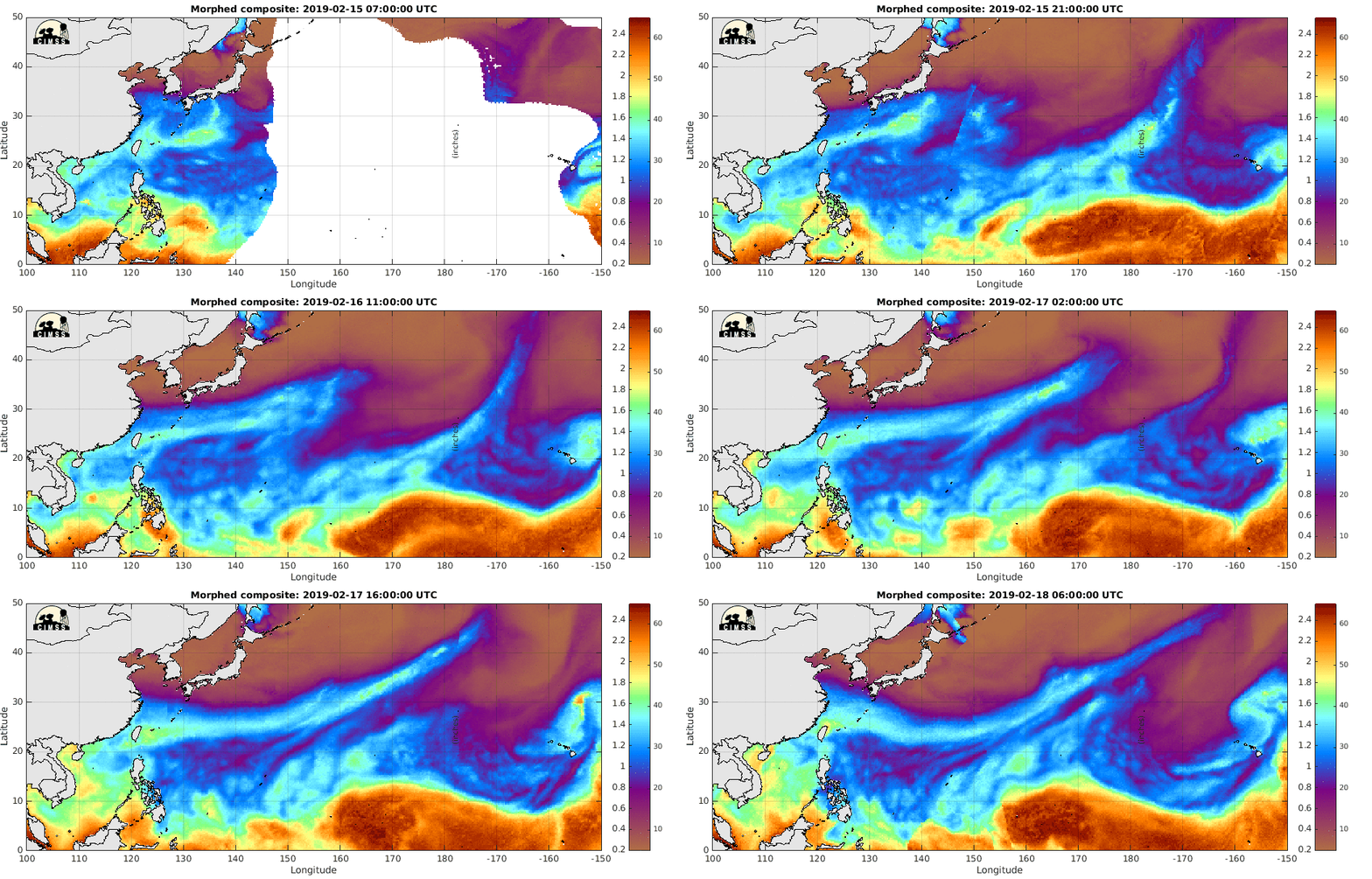
Dat kaartje heeft niks met watertemperatuur te maken, maar met het vochtgehalte van de atmosfeer. Daarom trekt het zich ook niks aan van eilanden, zoals in de animatie te zien is.quote:
[..]
mooi om te zien hoe al het warme water letterlijk wordt weggezogen
Meer op http://www.theguardian.co(...)nds-dead-philippinesquote:Typhoon Haiyan: at least 10,000 reportedly dead in Philippine province
Estimated death toll soars as path of destruction leaves many parts of Philippines inaccessible to government and aid officials
At least 10,000 people are thought to have died in the central Philippine province of Leyte after Typhoon Haiyan, one of the strongest storms ever to make landfall, lashed the area, swallowing coastal towns, a senior police official said early on Sunday morning.
About 70-80% of the buildings in the area in the path of Haiyan in Leyte province was destroyed, said chief superintendent Elmer Soria. "We had a meeting last night with the governor and the other officials. The governor said based on their estimate, 10,000 died," he said.
The super-typhoon made landfall on Samar and Leyte islands in the eastern Visayas at about 4.40am on Friday local time, with winds up to 315km/h (195mph) tearing roofs off buildings, turning roads into rivers full of debris and knocking out electricity pylons.
With many provinces left without power or telecommunications, and airports in the hardest-hit areas, such as Tacloban in Leyte province, in tatters, experts say it is impossible to know the extent of the storm's damage – or deliver badly needed aid. Roughly 12 hours after the 600km (370-mile)-wide Haiyan blew west towards Vietnam, where it is expected to make landfall early Sunday, officials and aid workers are only now beginning to piece together details on the number of dead and injured.
The Philippine Red Cross estimates that more than 1,000 people were killed in Tacloban alone, where bodies have been found "piled up around the roads" and in churches – with government figures showing that more than 4 million have been directly affected. The World Food Programme has mobilised some $2m (£1.25m) in aid and aims to deliver 40 tonnes of fortified biscuits to victims within the next few days.
Satellite images show normally green patches of vegetation ripped up into brown squares of debris in Tacloban, where local TV channel GMA broadcast images of huge storm surges, flattened buildings and families traipsing through flooded streets with their possessions held high above the water.
The head of the UN Disaster Assessment Co-ordination Team, Sebastian Rhodes Stampa, described "destruction on a massive scale" in the city of 220,000 and said: "The last time I saw something of this scale was in the aftermath of the Indian Ocean tsunami. There are cars thrown like tumbleweed and the streets are strewn with debris."
Al-Jazeera correspondent Jamela Alindogan was trapped in her hotel as the eye of the storm passed overhead and ripped the roof off the building. Evoking scenes of chaos as badly hurt victims wandered the streets without medicine, food or water, and doctors at the local hospital attended to the wounded in the dark without electricity or candlelight, she said: "There is no food, not even in the hotels, and there's no water. The situation is really very desperate."
Other sources told of victims trying to climb out from under rubble to find assistance, and mobs rampaging through the streets looking for food, water or medicine, and looting electrical goods and groceries from malls. "Almost all the houses were destroyed," said Major Rey Balido of the Philippines national disaster agency. "Only a few are left standing."
Relatives of those living in the typhoon's path have had no news from their loved ones and are nervously waiting until power is restored to the area. "I spoke to my mother just a few hours before the typhoon made landfall in my city, Tacloban," said taxi driver Sherwin Martinata, 32, in the capital, Manila. "She was saying she was all right but now I have no idea if my family is safe. There is no power, no phones. I can't get through at all. I'm worried, but I'm powerless."
Those living in the hardest-hit areas, such as the eastern Visayas, are among the poorest in the Philippines, say aid agencies, who warn that there will be little or no savings for many of the victims to fall back on – putting an already vulnerable population at even greater risk of future food and job insecurity.
On Bohol island – where a 7.3-magnitude earthquake toppled colonial-era churches and killed some 200 people last month – residents were successfully evacuated ahead of the storm and as a result many lives were probably saved, said Mathias Eick of the European commission's humanitarian aid department (Echo). However, because the island's main power supply comes from neighbouring Leyte, residents are still without electricity or water.
In Tacloban, where many residents live along the coast, the sheer force of the storm was just too much for the buildings to withstand, with evacuation centres such as stadiums and churches later collapsing. "The sheer magnitude and scale of the disaster sort of overpowered all the contingency measures, and we're fearing that we'll be finding more dead bodies in those evacuation centres themselves," said Alwynn Javier of Christian Aid.
Wat dus al werd gevreesd. Zal nog wel meer worden ook denk ik.
10.000 doden in de Provincie Leytequote:
[..]
Meer op http://www.theguardian.co(...)nds-dead-philippines
Wat dus al werd gevreesd. Zal nog wel meer worden ook denk ik.

Ceterum censeo Turciam delendam esse.
Meer als 10000 doden al nu, wat een vreselijk drama daar.
Radical islam is the snake in the grass.
Moderate islam is the grass that hides the snake.
Moderate islam is the grass that hides the snake.
Het is zo'n prachtig land, met zulke aardige mensen, maar alleen al de natuurrampen maken het onmogelijk dat het zich ooit zal ontwikkelen tot een welvarend land.
En dan zitten ze ook nog met corrupte politici en een té machtige katholieke kerk.
En dan zitten ze ook nog met corrupte politici en een té machtige katholieke kerk.
Damn heavy.
Ik werk zelf in Qatar en heb veel mensen bij me werken uit de Filipijnen. ,het is het gesprek van de dag.
Alleen een vraag is dit nu de zwaarste typhoon ooit of van het jaar ?
Ik werk zelf in Qatar en heb veel mensen bij me werken uit de Filipijnen. ,het is het gesprek van de dag.
Alleen een vraag is dit nu de zwaarste typhoon ooit of van het jaar ?
Als je van beren leren kan van slimme beren leren kan is dat iets wat je echt proberen moet !
Mijn moeder is op dit moment in Leyte waar we een huisje hebben staan. Heb na 3 dagen eindelijk vanochtend een smsje gekregen dat ze ok is. Ze hebben alleen geen elektriciteit. Maar ben blij dat het goed gaat.

mooi nieuwsquote:
Mijn moeder is op dit moment in Leyte waar we een huisje hebben staan. Heb na 3 dagen eindelijk vanochtend een smsje gekregen dat ze ok is. Ze hebben alleen geen elektriciteit. Maar ben blij dat het goed gaat.
 . wat zul je opgelucht zijn
“Loop niet voor me, want ik volg niet.
Loop niet achter me, want ik leid niet.
Loop gewoon naast me en wees mijn vriend.”
Loop niet achter me, want ik leid niet.
Loop gewoon naast me en wees mijn vriend.”
Nog een categorie 1 en zal vandaag landfall maken in Vietnam. Windveld is nu 157 km/u met windstoten tot 185 km/u.

"Zelfs in de bomen hangen lijken"
De orkaan Haiyan heeft vrijdag een spoor van vernieling getrokken over zes eilanden in het midden van de Filipijnen. Door de zware storm werden de golven opgestuwd tot zes meter hoog voordat ze op de kust sloegen. Huizen langs de kust werden weggevaagd en grotere gebouwen zijn ingestort. Er zijn windsnelheden tot 275 kilometer per uur gemeten.
Het beeld van de verwoestingen die zijn aangericht, wordt steeds duidelijker. De autoriteiten vrezen dat het dodental al is opgelopen tot boven de 10.000; ver boven de 1200 die gisteren nog werden gemeld.
Tacloban
Vooral de provincie Leyte is zwaar getroffen. Alleen al in de stad Tacloban, een plaats met 200.000 inwoners, wordt rekening gehouden met 10.000 doden. "Overal op straat en onder het puin van ingestorte huizen liggen lichamen", zei een politiewoordvoerder. "Zelfs in bomen hangen lijken."
In Tacloban is het vliegveld verwoest. De stroom in de stad is uitgevallen, telefooncontact is onmogelijk. In een groot gebied is de oogst vernietigd en is er geen drinkwater.
De politie in de regio is niet in staat plunderingen te voorkomen. In de chaos die overal heerst zijn winkelcentra leeggehaald. Militairen zijn ingezet om brandstofdepots te bewaken.
Op sommige eilanden is de situatie nog onduidelijk. Radio en televisie zijn uitgevallen en de Filipijnse hulporganisaties hebben veel te weinig mensen om het hele getroffen gebied te bezoeken.
Hulpoperatie
Internationale organisaties zoals het Rode Kruis zijn een grote hulpoperatie begonnen. De Amerikaanse marine heeft schepen en vliegtuigen naar het gebied gestuurd om te helpen bij het reddingswerk.
Ook voorzitter Barroso van de Europese Commissie heeft een team van hulpverleners naar de Filipijnen gestuurd.
President Aquino is vandaag naar het rampgebied gegaan om zich op de hoogte te stellen van de situatie.
De orkaan Haiyan heeft de Filipijnen inmiddels verlaten. De storm is in kracht afgenomen en koerst nu af op Vietnam.
http://nos.nl/artikel/573182-zelfs-in-de-bomen-hangen-lijken.html
De orkaan Haiyan heeft vrijdag een spoor van vernieling getrokken over zes eilanden in het midden van de Filipijnen. Door de zware storm werden de golven opgestuwd tot zes meter hoog voordat ze op de kust sloegen. Huizen langs de kust werden weggevaagd en grotere gebouwen zijn ingestort. Er zijn windsnelheden tot 275 kilometer per uur gemeten.
Het beeld van de verwoestingen die zijn aangericht, wordt steeds duidelijker. De autoriteiten vrezen dat het dodental al is opgelopen tot boven de 10.000; ver boven de 1200 die gisteren nog werden gemeld.
Tacloban
Vooral de provincie Leyte is zwaar getroffen. Alleen al in de stad Tacloban, een plaats met 200.000 inwoners, wordt rekening gehouden met 10.000 doden. "Overal op straat en onder het puin van ingestorte huizen liggen lichamen", zei een politiewoordvoerder. "Zelfs in bomen hangen lijken."
In Tacloban is het vliegveld verwoest. De stroom in de stad is uitgevallen, telefooncontact is onmogelijk. In een groot gebied is de oogst vernietigd en is er geen drinkwater.
De politie in de regio is niet in staat plunderingen te voorkomen. In de chaos die overal heerst zijn winkelcentra leeggehaald. Militairen zijn ingezet om brandstofdepots te bewaken.
Op sommige eilanden is de situatie nog onduidelijk. Radio en televisie zijn uitgevallen en de Filipijnse hulporganisaties hebben veel te weinig mensen om het hele getroffen gebied te bezoeken.
Hulpoperatie
Internationale organisaties zoals het Rode Kruis zijn een grote hulpoperatie begonnen. De Amerikaanse marine heeft schepen en vliegtuigen naar het gebied gestuurd om te helpen bij het reddingswerk.
Ook voorzitter Barroso van de Europese Commissie heeft een team van hulpverleners naar de Filipijnen gestuurd.
President Aquino is vandaag naar het rampgebied gegaan om zich op de hoogte te stellen van de situatie.
De orkaan Haiyan heeft de Filipijnen inmiddels verlaten. De storm is in kracht afgenomen en koerst nu af op Vietnam.
http://nos.nl/artikel/573182-zelfs-in-de-bomen-hangen-lijken.html

Dat is met al die landen zo, die vaak getroffen worden. Haiti, Honduras, Vietnam etc etc...quote:
Het is zo'n prachtig land, met zulke aardige mensen, maar alleen al de natuurrampen maken het onmogelijk dat het zich ooit zal ontwikkelen tot een welvarend land.
En dan zitten ze ook nog met corrupte politici en een té machtige katholieke kerk.
Ook 300 doden en 2.000 vermisten op eiland Samar
De tyfoon Haiyan heeft op het eiland Samar, centraal in de Filipijnse archipel, aan zeker 300 mensen het leven gekost. Er zijn ook 2.000 mensen vermist, melden de autoriteiten. Het gaat om voorlopige cijfers.
De 300 bevestigde doden vielen te betreuren in Basey, een kleine stad op Samar. Verspreid over het eiland werden ook 2.000 mensen als vermist opgegeven, zei Leo Dacaynos, een lid van de raad voor rampenbeheer, op de radiozender DZBB.
Op het buureiland Leyte wordt gevreesd voor 10.000 doden. De twee eilanden bevonden zich midden in het traject van Haiyan, de tyfoon die vrijdagochtend aan land kwam, wat gepaard ging met metershoge golven en windstoten van meer dan 300 kilometer per uur.
De balans kan oplopen, omdat verschillende gemeenschappen nog onbereikbaar zijn. Zo is er nog geen contact gelegd met de havenstad Guiuan, op Samar, waar de tyfoon vrijdagochtend aan zijn verwoestende tocht begon.
http://www.hln.be/hln/nl/(...)p-eiland-Samar.dhtml

De tyfoon Haiyan heeft op het eiland Samar, centraal in de Filipijnse archipel, aan zeker 300 mensen het leven gekost. Er zijn ook 2.000 mensen vermist, melden de autoriteiten. Het gaat om voorlopige cijfers.
De 300 bevestigde doden vielen te betreuren in Basey, een kleine stad op Samar. Verspreid over het eiland werden ook 2.000 mensen als vermist opgegeven, zei Leo Dacaynos, een lid van de raad voor rampenbeheer, op de radiozender DZBB.
Op het buureiland Leyte wordt gevreesd voor 10.000 doden. De twee eilanden bevonden zich midden in het traject van Haiyan, de tyfoon die vrijdagochtend aan land kwam, wat gepaard ging met metershoge golven en windstoten van meer dan 300 kilometer per uur.
De balans kan oplopen, omdat verschillende gemeenschappen nog onbereikbaar zijn. Zo is er nog geen contact gelegd met de havenstad Guiuan, op Samar, waar de tyfoon vrijdagochtend aan zijn verwoestende tocht begon.
http://www.hln.be/hln/nl/(...)p-eiland-Samar.dhtml
Fotoseries:
http://anc.yahoo.com/phot(...)o-1384078123971.html
http://www.bbc.co.uk/news/world-asia-24887718
http://anc.yahoo.com/phot(...)o-1384078123971.html
http://www.bbc.co.uk/news/world-asia-24887718
And what rough beast, its hour come round at last,
Slouches towards Bethlehem to be born?
Slouches towards Bethlehem to be born?
De berichtgeving is wel ontzettend slecht overigens. Eerst 10.000 doden in Tacloban dan 10.000 doden in Leyte. Terwijl Tacloban (210.000) een stad in de provincie Leyte (1,5 miljoen) is.
Ik vrees dat 10.000 doden slechts het topje van de ijsberg is.
Ik vrees dat 10.000 doden slechts het topje van de ijsberg is.
Ceterum censeo Turciam delendam esse.
Nu ook al doden in Vietnam.
http://nos.nl/tekst/573229-ook-in-vietnam-doden-door-haiyan.html
[ Bericht 0% gewijzigd door #ANONIEM op 10-11-2013 12:21:22 ]
http://nos.nl/tekst/573229-ook-in-vietnam-doden-door-haiyan.html
[ Bericht 0% gewijzigd door #ANONIEM op 10-11-2013 12:21:22 ]
Dat is altijd zo. Chaos en hele gebieden zijn nog niet bereikbaar. Het blijven ook schattingen.quote:
De berichtgeving is wel ontzettend slecht overigens. Eerst 10.000 doden in Tacloban dan 10.000 doden in Leyte. Terwijl Tacloban (210.000) een stad in de provincie Leyte (1,5 miljoen) is.
Ik vrees dat 10.000 doden slechts het topje van de ijsberg is.
