Misdaad
Een forum voor onopgeloste misdaden en macabere zaken uit het verleden.



lees jezelf ooit je onderschrift nog wel eens johan555 ???quote:
niet altijd zo happen, men heeft twee duimen , zes vingers en twee pinken.
 , samen zijn dat er ..
beetje respect voor andere die een andere mening opgedaan hebben kan ook geen kwaad. als iemand echt onzin uitkraamt is het juist de kunst om ze netjes af te schuiven
verder heeft hier niemand gelijk !!!! hoe overtuigd je ook van iets kan zijn, de waarheid kan anders zijn, deze zaak is namelijk niet zo snel te doorgronden, vandaar dat ik ook blijf puzzelen en telkens meega in elke theorie maar dan veel vragen heb en zolang deze niet beantwoord worden is ook de theorie onbetrouwbaar

Ze mogen kritiek hebben duikkie maar zodra je iets vraagt zijn ze ineens weg ha ha
Mr b gaat tenmiste nog inhoudelijk op de dingen in .
Mr b gaat tenmiste nog inhoudelijk op de dingen in .
Wanneer domme mensen domme dingen beweren, dan moet je ze niet corrigeren, maar glimlachend gelijk geven.

quote:Wanneer domme mensen domme dingen beweren, dan moet je ze niet corrigeren, maar glimlachend gelijk geven.

Een aardig stukje vanuit de Antillen over Joran, Natalee, de film van Renee Gielen en de lange tenen van Peterrrrrrr:
"Documentairemaakster Renee Gielen heeft een documentaire gemaakt onder de titel ‘Natalee. The unrevealed timelines’. Op 28 juni 2008 was ik bij de preview van deze documentaire aanwezig. Gielen beschrijft een aantal feiten die vragen oproepen. In deze documentaire gaat zij uitvoerig in op die feiten. Zij geeft ook aan tot welke relevante vragen die feiten leiden. Vragen waarop zij ondanks vele gesprekken, gedurende twee jaar van intensief onderzoek, geen antwoord heeft weten te krijgen. In het bijzonder de moeder van Natalee heeft iedere medewerking geweigerd.
Peter R. de Vries heeft op de documentaire van Renee Gielen gereageerd met de mededeling dat zij ‘geschift’ en ‘knettergek’ is en kennelijk last heeft van een ‘heel ernstige zonnesteek’. Volgens hem is het een ‘schande’ dat Renee Gielen bij de TV rubriek EenVandaag op de lijst van correspondenten staat. Hij suggereert dat Gielen zou betogen dat het eigenlijk de moeder van Natalee is die de hand heeft gehad in haar verdwijning. Peter R. de Vries geeft daarmee (bewust) een verkeerd beeld van de documentaire.
Waaraan heeft Renee Gielen deze behandeling door Peter R. de Vries te danken? De documentaire zelf is zakelijk en feitelijk van opzet. En uiteraard kun je over de inhoud daarvan discussiëren. Iedereen mag zijn eigen mening hebben. Peter R. de Vries beperkt zich tot een ordinaire scheldpartij. Hij laat zich daarmee van zijn slechtste kant zien. Vanwaar die frustratie? Een mogelijke verklaring is dat Peter R. de Vries steeds heeft geroepen dat hij de zaak definitief had opgelost. Helaas bleek die bewering niet juist te zijn. Maar degenen die daarover met hem willen praten worden door hem weggehoond. Het is evident dat hij niet of slecht tegen kritiek kan. En daarmee wordt een man die ook tot grote dingen in staat is, opeens heel klein. Maar dat is geen reden om je zo te misdragen. Wat mij betreft is Tsaar Peter definitief van zijn voetstuk gevallen."
http://www.curacao-law.com/nederlandse-antillen/
"Documentairemaakster Renee Gielen heeft een documentaire gemaakt onder de titel ‘Natalee. The unrevealed timelines’. Op 28 juni 2008 was ik bij de preview van deze documentaire aanwezig. Gielen beschrijft een aantal feiten die vragen oproepen. In deze documentaire gaat zij uitvoerig in op die feiten. Zij geeft ook aan tot welke relevante vragen die feiten leiden. Vragen waarop zij ondanks vele gesprekken, gedurende twee jaar van intensief onderzoek, geen antwoord heeft weten te krijgen. In het bijzonder de moeder van Natalee heeft iedere medewerking geweigerd.
Peter R. de Vries heeft op de documentaire van Renee Gielen gereageerd met de mededeling dat zij ‘geschift’ en ‘knettergek’ is en kennelijk last heeft van een ‘heel ernstige zonnesteek’. Volgens hem is het een ‘schande’ dat Renee Gielen bij de TV rubriek EenVandaag op de lijst van correspondenten staat. Hij suggereert dat Gielen zou betogen dat het eigenlijk de moeder van Natalee is die de hand heeft gehad in haar verdwijning. Peter R. de Vries geeft daarmee (bewust) een verkeerd beeld van de documentaire.
Waaraan heeft Renee Gielen deze behandeling door Peter R. de Vries te danken? De documentaire zelf is zakelijk en feitelijk van opzet. En uiteraard kun je over de inhoud daarvan discussiëren. Iedereen mag zijn eigen mening hebben. Peter R. de Vries beperkt zich tot een ordinaire scheldpartij. Hij laat zich daarmee van zijn slechtste kant zien. Vanwaar die frustratie? Een mogelijke verklaring is dat Peter R. de Vries steeds heeft geroepen dat hij de zaak definitief had opgelost. Helaas bleek die bewering niet juist te zijn. Maar degenen die daarover met hem willen praten worden door hem weggehoond. Het is evident dat hij niet of slecht tegen kritiek kan. En daarmee wordt een man die ook tot grote dingen in staat is, opeens heel klein. Maar dat is geen reden om je zo te misdragen. Wat mij betreft is Tsaar Peter definitief van zijn voetstuk gevallen."
http://www.curacao-law.com/nederlandse-antillen/
I stand with the happy Island.

oke genoeg gespeeld, merk alweer dat ik gisteren nacht weer niet zo wakker was als vanochtend 
er is op foto 30-12-2007 namelijk maar 1 duiker te zien en geen twee, de duiker heeft waarschijnlijk opname apparaten bij waar foto's mee gemaakt zijn.
nu weer een dotje vragen
wat betekenen al die leuk cijfers in beeld van de foto's ?? ik zal die aan de rechtkant even zelf doen , was moeilijk maar hier komen ze het is de datum format maand/dag/jaar met daaronder de tijd in 24 uur aanduiding, vreemd voor een americaan trouwens die zijn zo gek op dat am/pm gedoe.
nu hebben we bijvoorbeeld
163 met daar onder +0 naast 163 staat +36p daarnaast 81 7F
heeft het wat met diepte te maken of inzoemen ???
is de duiker 7F, de ROBOT 8f, maar wat is dan 6f ???
natuurlijk kijkt iedereen naar de foto maar de instellingen zijn ook belangrijk toch
er is op foto 30-12-2007 namelijk maar 1 duiker te zien en geen twee, de duiker heeft waarschijnlijk opname apparaten bij waar foto's mee gemaakt zijn.
nu weer een dotje vragen
wat betekenen al die leuk cijfers in beeld van de foto's ?? ik zal die aan de rechtkant even zelf doen , was moeilijk maar hier komen ze
het is de datum format maand/dag/jaar met daaronder de tijd in 24 uur aanduiding, vreemd voor een americaan trouwens die zijn zo gek op dat am/pm gedoe.nu hebben we bijvoorbeeld
163 met daar onder +0 naast 163 staat +36p daarnaast 81 7F
heeft het wat met diepte te maken of inzoemen ???
is de duiker 7F, de ROBOT 8f, maar wat is dan 6f ???
natuurlijk kijkt iedereen naar de foto maar de instellingen zijn ook belangrijk toch
Aardig stukje van de overbuurman van gielen 
Wanneer domme mensen domme dingen beweren, dan moet je ze niet corrigeren, maar glimlachend gelijk geven.
dacht even dat je met ik jezelf bedoelde, maar wat is er zo moeilijk aan te begrijpen dat de time lijn vanaf het begin niet klopt, beth kwam om 22:00 aan en niet om 18:45, door aruba politie gecheckd bij vliegveld. kortom de hele aanname klopt al niet, wordt het wel moeilijk de rest wel te geloven. maar persoonlijk wacht ik de docu wel helemaal af, maar het zegt wel iets als ze hem nergens anders kwijt kan voor geld.quote:Op donderdag 27 november 2008 11:18 schreef JoBuster het volgende:
Een aardig stukje vanuit de Antillen over Joran, Natalee, de film van Renee Gielen en de lange tenen van Peterrrrrrr:
"Documentairemaakster Renee Gielen heeft een documentaire gemaakt onder de titel ‘Natalee. The unrevealed timelines’. Op 28 juni 2008 was ik bij de preview van deze documentaire aanwezig. Gielen beschrijft een aantal feiten die vragen oproepen. In deze documentaire gaat zij uitvoerig in op die feiten. Zij geeft ook aan tot welke relevante vragen die feiten leiden. Vragen waarop zij ondanks vele gesprekken, gedurende twee jaar van intensief onderzoek, geen antwoord heeft weten te krijgen. In het bijzonder de moeder van Natalee heeft iedere medewerking geweigerd.
Peter R. de Vries heeft op de documentaire van Renee Gielen gereageerd met de mededeling dat zij ‘geschift’ en ‘knettergek’ is en kennelijk last heeft van een ‘heel ernstige zonnesteek’. Volgens hem is het een ‘schande’ dat Renee Gielen bij de TV rubriek EenVandaag op de lijst van correspondenten staat. Hij suggereert dat Gielen zou betogen dat het eigenlijk de moeder van Natalee is die de hand heeft gehad in haar verdwijning. Peter R. de Vries geeft daarmee (bewust) een verkeerd beeld van de documentaire.
Waaraan heeft Renee Gielen deze behandeling door Peter R. de Vries te danken? De documentaire zelf is zakelijk en feitelijk van opzet. En uiteraard kun je over de inhoud daarvan discussiëren. Iedereen mag zijn eigen mening hebben. Peter R. de Vries beperkt zich tot een ordinaire scheldpartij. Hij laat zich daarmee van zijn slechtste kant zien. Vanwaar die frustratie? Een mogelijke verklaring is dat Peter R. de Vries steeds heeft geroepen dat hij de zaak definitief had opgelost. Helaas bleek die bewering niet juist te zijn. Maar degenen die daarover met hem willen praten worden door hem weggehoond. Het is evident dat hij niet of slecht tegen kritiek kan. En daarmee wordt een man die ook tot grote dingen in staat is, opeens heel klein. Maar dat is geen reden om je zo te misdragen. Wat mij betreft is Tsaar Peter definitief van zijn voetstuk gevallen."
http://www.curacao-law.com/nederlandse-antillen/
verder heeft peter r de vries inderdaad lange tenen, en volgens mij zeer bang, maar dat doet niet af wat hij toont of achter komt. dat is een team
verder is niet bewezen dat joran in de geheime opnames loog ( zo we zullen het eens omdraaien
)
Zowel op PrdV en als op Gielen heb ik kritiek Duikkie, maar het valt me wel op nu er ook uit haar eigen hoek veel kritiek is op dat filmpje .Niemand wil het uitzenden zowat want het is Te Amerikaans , de bedoeling was ook aanvankelijk denk ik om er flink geld mee te verdienen.quote:Op donderdag 27 november 2008 11:44 schreef duikkie het volgende:
[..]
dacht even dat je met ik jezelf bedoelde, maar wat is er zo moeilijk aan te begrijpen dat de time lijn vanaf het begin niet klopt, beth kwam om 22:00 aan en niet om 18:45, door aruba politie gecheckd bij vliegveld. kortom de hele aanname klopt al niet, wordt het wel moeilijk de rest wel te geloven. maar persoonlijk wacht ik de docu wel helemaal af, maar het zegt wel iets als ze hem nergens anders kwijt kan voor geld.
verder heeft peter r de vries inderdaad lange tenen, en volgens mij zeer bang, maar dat doet niet af wat hij toont of achter komt. dat is een team
verder is niet bewezen dat joran in de geheime opnames loog ( zo we zullen het eens omdraaien
Nu moet je er voor betalen ,dat gaat toch zowat niemand doen .
Dit is een post van ene Marco die het volgende post over de aankomst tijd van Beth .
Die krijgt dus geen antwoord
 op zijn vragen
 Ik snap de uitleg niet. Het is 10 uur reizen naar Aruba vanaf de staatsgrens van Alabama en Mississippi waar Beth rijd als ze gebeld word door Jodi.
Telefoontje is aan het einde van de ochtend (12:00 want dan begint de middag?)
10 uur later is 22:00 uur. Met vervoer/mensen/vliegtuig/kerosine regelen misschien 23:00 uur.
Ze kan de telefoon dus niet hebben opgenomen want als ze eerder vertrokken was (om om 19:46 aan te komen op Aruba) dan zat ze al twee uur in een vliegtuig.
Wanneer domme mensen domme dingen beweren, dan moet je ze niet corrigeren, maar glimlachend gelijk geven.

dat vragen open blijven staan dat is voor mij al geen wonder meer, heb er zo'n 100 die nooit beantwoord zijn, en misschien kunnen ze niet beantwoord worden.
maar is er nou niemand die de getallen kan verklaren, is die 7f.8f,6f camera afhankelijk ???, natuurlijk is het niet zo belangrijk maar als je het wel weet kijk je toch weer anders tegen de foto's aan, waarom ze bijvoorbeeld zo vaag zijn, te veel ingezoomd. ik neem aan dat een duiker met camera scherpere foto's van de kooi kan maken dan een robot die moet uitkijken dat hij nergens vast aan komt te zitten. als een duiker dus vage foto's heeft, tewijl hij op 1 meter zwemt , roept dat weer vragen bij mij op
maar is er nou niemand die de getallen kan verklaren, is die 7f.8f,6f camera afhankelijk ???, natuurlijk is het niet zo belangrijk maar als je het wel weet kijk je toch weer anders tegen de foto's aan, waarom ze bijvoorbeeld zo vaag zijn, te veel ingezoomd. ik neem aan dat een duiker met camera scherpere foto's van de kooi kan maken dan een robot die moet uitkijken dat hij nergens vast aan komt te zitten. als een duiker dus vage foto's heeft, tewijl hij op 1 meter zwemt , roept dat weer vragen bij mij op
Dit zijn natuurlijk lage resolutie foto's de orginele zullen veel scherper zijn .
En ik heb begrepen dat die kooi vrij diep lag dus dan krijg je die blauwe waas van dat water .
En of het echt interessant is om hele mooie scherpe foto's van zo'n kooi te maken weet ik niet ,
Het gaat er meer om wat er in die kooi lag .
Dat f 8 zal het diafragma zijn denk ik de lensopening .
Er is een tijdje voordat NH verdween ok een meisje verdwenen (Amy,die was ook een avondje uit in C&C)) daar hebben we ook nooit meer iets van gehoord .
En ik heb begrepen dat die kooi vrij diep lag dus dan krijg je die blauwe waas van dat water .
En of het echt interessant is om hele mooie scherpe foto's van zo'n kooi te maken weet ik niet ,
Het gaat er meer om wat er in die kooi lag .
Dat f 8 zal het diafragma zijn denk ik de lensopening .
Er is een tijdje voordat NH verdween ok een meisje verdwenen (Amy,die was ook een avondje uit in C&C)) daar hebben we ook nooit meer iets van gehoord .
Wanneer domme mensen domme dingen beweren, dan moet je ze niet corrigeren, maar glimlachend gelijk geven.
Kletskoek johan, die Amy verdween van een cruiseschip voor de kust van Curacao.quote:Op donderdag 27 november 2008 12:37 schreef johan555 het volgende:Er is een tijdje voordat NH verdween ok een meisje verdwenen (Amy,die was ook een avondje uit in C&C)) daar hebben we ook nooit meer iets van gehoord .
Maar er zijn wel niet verzonnen overeenkomsten; zo dronken en rookten beiden als een ketter, waren bij beide de (stief)broer mee op vakantie en zijn ze beiden als laatste gesignaleerd met vreemde man(nen) die ze onlangs hadden ontmoet.
Oja en Joran, die was toen 10 want deze zaak uit de oude doos is van 1998
I stand with the happy Island.
gaat erom wat sommige wel en niet zien, je kan er van overtuigd zijn dat je op een foto en hoofd ziet wel of niet afgevlakt, maar van een andere hoek of scherpte kan je bijvoorbeeld zien dat het een stuk yzer/zeewier of zand is, denk hierbij aan berg toppen die van een afstand op gezichten lijken, draai je de hoek iets anders of zet je scherp dan valt het beeld weg. ook wolken in de lucht kunnen er wat vanquote:Op donderdag 27 november 2008 12:37 schreef johan555 het volgende:
Dit zijn natuurlijk lage resolutie foto's de orginele zullen veel scherper zijn .
En ik heb begrepen dat die kooi vrij diep lag dus dan krijg je die blauwe waas van dat water .
En of het echt interessant is om hele mooie scherpe foto's van zo'n kooi te maken weet ik niet ,
Het gaat er meer om wat er in die kooi lag .
Dat f 8 zal het diafragma zijn denk ik de lensopening .
Er is een tijdje voordat NH verdween ok een meisje verdwenen (Amy,die was ook een avondje uit in C&C)) daar hebben we ook nooit meer iets van gehoord .

met de foto's die we nu hebben kunnen we nog alle kanten op.
verder is natuurlijk de vraag mocht er wat aan inhoud zijn gevonden en dat blijkt uit de plastic zakjes, wat was dat dan en is dat normaal dat je dat vindt in een kooi ??
wat ik ook heel vreemd vindt , maar ik weet niet alles hebben ze ook een monster van het zand genomen ??
mocht een lijk op een of andere wijze verpulvert zijn ( denk aan woensdag gehakt dag) dan bevat misschien het zand menselijke sporen van bot.
een hele normale en simpele vraag nu .
wie heeft de foto van die mannen bij de vissershut die hun kooi kwijt waren, daar stonden ook kooien op ?
ik dacht Aruba duikkie maar zoek het op :
Lijkt op het verhaal van Amy Bradley; werd toevallig na een dagje Aruba uitgenodigd mee te gaan naar C&C’s. Ze verdween, zou drugged up zijn gezien en staat nog altijd op FBI missinglist.
Amy Bradley went missing on aruba in 1998, nobody seems to care about here.
In het geval van Amy Bradley zijn de ouders onderzocht (o.m. door de FBI), omdat zij tijdens haar vakantie MET haar ouders verdween. C&C’s is in deze zaak trouwens ook onderzocht.
Lijkt op het verhaal van Amy Bradley; werd toevallig na een dagje Aruba uitgenodigd mee te gaan naar C&C’s. Ze verdween, zou drugged up zijn gezien en staat nog altijd op FBI missinglist.
Amy Bradley went missing on aruba in 1998, nobody seems to care about here.
In het geval van Amy Bradley zijn de ouders onderzocht (o.m. door de FBI), omdat zij tijdens haar vakantie MET haar ouders verdween. C&C’s is in deze zaak trouwens ook onderzocht.
Wanneer domme mensen domme dingen beweren, dan moet je ze niet corrigeren, maar glimlachend gelijk geven.
Amy Bradley verdween van een cruiseschip voor de kust van Curacao.
Her father saw Amy - and her ever-present cigarettes and lighter - on the balcony of the family's cabin about 5:15 or 5:30 a.m. By that time, he said, the ship had entered the inland channel that leads to the harbor at Port Willemstad on Curacao.
linkie
Dat van die ouders onderzoeken is interessant trouwens, dat zouden ze bij Natalee ook eens moeten doen.
Her father saw Amy - and her ever-present cigarettes and lighter - on the balcony of the family's cabin about 5:15 or 5:30 a.m. By that time, he said, the ship had entered the inland channel that leads to the harbor at Port Willemstad on Curacao.
linkie
Dat van die ouders onderzoeken is interessant trouwens, dat zouden ze bij Natalee ook eens moeten doen.
I stand with the happy Island.
Er is wel een foto van de kooien dacht ik die daar lagen maar weet niet of die kooiquote:Op donderdag 27 november 2008 13:20 schreef duikkie het volgende:
[..]
gaat erom wat sommige wel en niet zien, je kan er van overtuigd zijn dat je op een foto en hoofd ziet wel of niet afgevlakt, maar van een andere hoek of scherpte kan je bijvoorbeeld zien dat het een stuk yzer/zeewier of zand is, denk hierbij aan berg toppen die van een afstand op gezichten lijken, draai je de hoek iets anders of zet je scherp dan valt het beeld weg. ook wolken in de lucht kunnen er wat van
met de foto's die we nu hebben kunnen we nog alle kanten op.
verder is natuurlijk de vraag mocht er wat aan inhoud zijn gevonden en dat blijkt uit de plastic zakjes, wat was dat dan en is dat normaal dat je dat vindt in een kooi ??
wat ik ook heel vreemd vindt , maar ik weet niet alles hebben ze ook een monster van het zand genomen ??
mocht een lijk op een of andere wijze verpulvert zijn ( denk aan woensdag gehakt dag) dan bevat misschien het zand menselijke sporen van bot.
een hele normale en simpele vraag nu .
wie heeft de foto van die mannen bij de vissershut die hun kooi kwijt waren, daar stonden ook kooien op ?
nou op het strand lag of op een boot
De boot van de broertjes sander en koen lag daar ook begreep ik
Wanneer domme mensen domme dingen beweren, dan moet je ze niet corrigeren, maar glimlachend gelijk geven.

Staat ook op de site vd FBI trouwens waar Natalee nog steeds missende isquote:Op donderdag 27 november 2008 14:04 schreef JoBuster het volgende:
Amy Bradley verdween van een cruiseschip voor de kust van Curacao.
Her father saw Amy - and her ever-present cigarettes and lighter - on the balcony of the family's cabin about 5:15 or 5:30 a.m. By that time, he said, the ship had entered the inland channel that leads to the harbor at Port Willemstad on Curacao.
linkie
Dat van die ouders onderzoeken is interessant trouwens, dat zouden ze bij Natalee ook eens moeten doen.
 (no pun intended)
Ik ben niet labiel. Ik ben emotioneel flexibel.
the Cage
Three small buildings collectively known as Fisherman's Huts sit next to each other on the beach separated by approximately 100 feet. They were built some time in the 1940s. (A fourth hut—the most distant one on the beach going north toward the lighthouse—was destroyed several years ago in a hurricane.) Each small building consists of four individual units very small in size approximately 9 feet by 15 feet. As I approached the first of the three tiny Fisherman's Huts buildings, I soon learned that this was the one in which the 2005 break-in occurred. There a lone fisherman was cleaning out his fishing boat on the beach next to the first of the three Fisherman's Huts. Uncertain as to his sympathies regarding the Holloway case, I engaged him in general conversation. He was pleasant, friendly and unfailingly polite.
Rather quickly it emerged that he was The Fisherman who had discovered the break-in to the units on the morning of May 30, 2005. He related the following story.
He had been at this hut at 6 am that Monday morning May 30, 2005. Before long, he noticed that someone had broken into the first three of the four units in this particular group, from north to south, prying off the padlocks with something like a tire iron or a crowbar. He showed me the still-visible marks of the break-in on each unit. He described in detail the contents of each unit and the nature of the break-in.
Facing the first of the Fisherman's Huts from left to right (north to south): unit 1 contained a valuable stove, cooler and other equipment but nothing went missing; unit 2 had the lock pried off but was seemingly unopened because the door was stuck (and nothing was later reported missing); unit 3 also had its lock pried off with the only missing item being a brand new, large fishing knife (no rope was taken as had originally been reported, he said); finally unit 4 remained untouched. Clearly it seemed the perpetrator(s) had broken into the units in an orderly fashion until they found the specific item they were seeking—the knife. Indeed it struck the fisherman as odd that nothing else of value was taken.
Of the three Fisherman's Hut buildings, only one was accessible to break-in. The units in the closest nearby building were going mostly unused with sand covering the entrance doors up to a couple of feet. The outermost building was seemingly abandoned and virtually in the water.
The Cage
The fisherman also noticed that a large fishing cage stored behind the first of the three Fisherman's Huts at the southern-most corner was missing. The cage had been there approximately a month since about Good Friday, March 25, 2005. The cage belonged to another fisherman who kept his boat next to these four huts. The boat was still there. But the cage was missing.
The fisherman described the cage as made of 3/8-inch iron (such as that used in concrete reinforcing—"rebar") with a frame size approximately 5 ½ feet by 4 feet by 17 inches. He described it as a large fishing cage with its frame wrapped in chicken wire with its familiar hexagonal openings but with an opening in one panel which allowed them to trap fish. He believed that, given its size and weight, it would take two men to manage the cage. Once aboard, it would lay low on the floor of the nearby fishing boat.
The day the cage went missing, the fisherman observed an iron stain in the grass on the south side of the huts. Only sometime the next day, Tuesday, May 31, did the fisherman learn of Natalee's disappearance. Slowly he began to consider possible connections between the case of the missing American girl and the missing knife and cage. His suspicions rose when a rumor made its way around the island that Natalee had been disposed of in a container. (In retrospect, the missing knife could be explained by the suspects' need to cut a larger flap in the cage in order to fit the body into it.)
All the suspects would have needed was a gas tank, the fishermen there had suggested as they discussed the case among themselves. The suspects could easily have "borrowed" one of several fishing boats anchored nearby. (Although I don't believe the suspects used one of these boats.) The fisherman and his friends always left their boats anchored a short distance off shore.
Activity around Fisherman's Huts
The fisherman pointed out the bushes immediately south of the huts. They were often associated with clandestine activity—possibly including illegal aliens, drug dealers and even peeping Toms. He noted how people could enter the beach surreptitiously from the road by using paths running through the bushes. The local beach boys would all be intimately familiar with the area which is also a likely location for furtive drug transactions.
Clearly the bushes next to Fisherman's Huts were the first secluded area on the beach north of the hotels. Because of all this potential activity on the beach and in the bushes, the three boys would have been even more anxious to get rid of the body in the ocean that night. The reported police theory that the boys hid the body by placing it in the bushes for disposal the following night was highly unlikely. Certainly rigor mortis would have set in at 24 hours and they would not have been able to manipulate the body into the cage at that point. And the knife and the fishing cage were stolen on the night of May 29-30, 2005, not on May 31.
At this point I called Tim Miller now at sea on The Persistence to pass along the new information about the cage. He put me on the phone with John Silvetti who was pleased with my findings. From the boat they emailed a new copy of the model cage to the person constructing an actual model of the cage, and picked it up the following morning upon returning to shore. By December 21, the search team had an accurate model cage and was able to drop it into the water and obtain a sonar signature of the cage.
The on-site visit to Aruba had been helpful in clarifying several matters. In his crucial June 4, 2005 email Deepak had repeatedly referenced the "lighthouse" when describing their last night with Natalee. Was he unconsciously pointing to the body being dumped from the boat in that area? The sea waters there coming around the tip of the island were way too rough, however, and it was far more logical that the boys would have gone straight out from Fisherman's Huts in the boat—as the profile had strongly suggested. Now Deepak's emphasis on "lighthouse" took on a new meaning. He was trying to tell us Natalee's body was in a "light house" or a cage which matched his other insistence that she was in a "crack house," that is, a cage—a house with cracks in it.
As the deliberate, time-consuming sonar search progressed, I came home to Alabama but returned to Aruba on December 29 when the ROV team began their work. Throughout this visit I maintained regular telephone contact with Tim Miller on the boat and Dave Holloway back in Mississippi as we monitored the search.
I revisited Fisherman's Huts for further discussion with the local fishermen. I specifically wanted to know how far out into the sea could a speedboat have taken Natalee's body in May 2005, and how deep would the water be there. While the seas were rougher now, the fishermen noted that the waters were often calm and on those occasions a boat could easily go out 10 miles or more. Dave Holloway recalled the ocean being noticeably quiet on his visit to Aruba immediately after Natalee disappeared, and, typically, the sea remains even calmer at night.
One afternoon as I stood at the Fisherman's Huts where the break-in occurred, a family in a small speedboat (approximately 14 feet) launched their craft into the water from right next to the huts. The family of two adults and four children easily made their way into the water, out 100 feet or more where you could see other bathers standing waist-deep in the water. One of the adults on the boat told me he had a larger, 20-foot craft which he often launched there. That simple observation confirmed for me that this key area was easily accessible for boats and the most convenient place to quickly and secretly load a dead girl's body into such a vessel. It seemed to be the first place along this section of the beach (north from the Holiday Inn) suitable for launching watercraft.
Early one morning Tim Miller went with me to Fisherman's Huts to go over the specifics of the break-in and location of the cage. We met with the fishermen there again. Tim agreed with me that these witnesses were very believable and that the three suspects would have disposed of Natalee's body that first night without taking the risk of hiding it nearby.
Later we saw several people windsurfing in the area directly in front of Fisherman's Huts and on down toward the lighthouse. It's likely that Joran himself windsurfed here and would surely have been familiar with this stretch of the beach. Rental shacks for windsurfing and other equipment were located shortly down the beach toward the lighthouse. Just past that, about 200 feet out in the water off Malmok Beach, was the famous Antillla Shipwreck, the remains of a scuttled 400-foot German cargo ship that was anchored off of Aruba during WW2. Many tourists simply walk down to the shipwreck site, as did several kids on the 2005 trip with Natalee.
bron :forensicthoughtprints
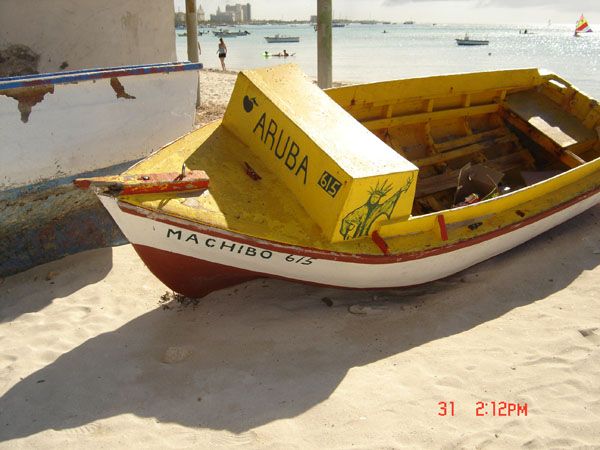
deze boot gebruikten ze voor de kooi
Three small buildings collectively known as Fisherman's Huts sit next to each other on the beach separated by approximately 100 feet. They were built some time in the 1940s. (A fourth hut—the most distant one on the beach going north toward the lighthouse—was destroyed several years ago in a hurricane.) Each small building consists of four individual units very small in size approximately 9 feet by 15 feet. As I approached the first of the three tiny Fisherman's Huts buildings, I soon learned that this was the one in which the 2005 break-in occurred. There a lone fisherman was cleaning out his fishing boat on the beach next to the first of the three Fisherman's Huts. Uncertain as to his sympathies regarding the Holloway case, I engaged him in general conversation. He was pleasant, friendly and unfailingly polite.
Rather quickly it emerged that he was The Fisherman who had discovered the break-in to the units on the morning of May 30, 2005. He related the following story.
He had been at this hut at 6 am that Monday morning May 30, 2005. Before long, he noticed that someone had broken into the first three of the four units in this particular group, from north to south, prying off the padlocks with something like a tire iron or a crowbar. He showed me the still-visible marks of the break-in on each unit. He described in detail the contents of each unit and the nature of the break-in.
Facing the first of the Fisherman's Huts from left to right (north to south): unit 1 contained a valuable stove, cooler and other equipment but nothing went missing; unit 2 had the lock pried off but was seemingly unopened because the door was stuck (and nothing was later reported missing); unit 3 also had its lock pried off with the only missing item being a brand new, large fishing knife (no rope was taken as had originally been reported, he said); finally unit 4 remained untouched. Clearly it seemed the perpetrator(s) had broken into the units in an orderly fashion until they found the specific item they were seeking—the knife. Indeed it struck the fisherman as odd that nothing else of value was taken.
Of the three Fisherman's Hut buildings, only one was accessible to break-in. The units in the closest nearby building were going mostly unused with sand covering the entrance doors up to a couple of feet. The outermost building was seemingly abandoned and virtually in the water.
The Cage
The fisherman also noticed that a large fishing cage stored behind the first of the three Fisherman's Huts at the southern-most corner was missing. The cage had been there approximately a month since about Good Friday, March 25, 2005. The cage belonged to another fisherman who kept his boat next to these four huts. The boat was still there. But the cage was missing.
The fisherman described the cage as made of 3/8-inch iron (such as that used in concrete reinforcing—"rebar") with a frame size approximately 5 ½ feet by 4 feet by 17 inches. He described it as a large fishing cage with its frame wrapped in chicken wire with its familiar hexagonal openings but with an opening in one panel which allowed them to trap fish. He believed that, given its size and weight, it would take two men to manage the cage. Once aboard, it would lay low on the floor of the nearby fishing boat.
The day the cage went missing, the fisherman observed an iron stain in the grass on the south side of the huts. Only sometime the next day, Tuesday, May 31, did the fisherman learn of Natalee's disappearance. Slowly he began to consider possible connections between the case of the missing American girl and the missing knife and cage. His suspicions rose when a rumor made its way around the island that Natalee had been disposed of in a container. (In retrospect, the missing knife could be explained by the suspects' need to cut a larger flap in the cage in order to fit the body into it.)
All the suspects would have needed was a gas tank, the fishermen there had suggested as they discussed the case among themselves. The suspects could easily have "borrowed" one of several fishing boats anchored nearby. (Although I don't believe the suspects used one of these boats.) The fisherman and his friends always left their boats anchored a short distance off shore.
Activity around Fisherman's Huts
The fisherman pointed out the bushes immediately south of the huts. They were often associated with clandestine activity—possibly including illegal aliens, drug dealers and even peeping Toms. He noted how people could enter the beach surreptitiously from the road by using paths running through the bushes. The local beach boys would all be intimately familiar with the area which is also a likely location for furtive drug transactions.
Clearly the bushes next to Fisherman's Huts were the first secluded area on the beach north of the hotels. Because of all this potential activity on the beach and in the bushes, the three boys would have been even more anxious to get rid of the body in the ocean that night. The reported police theory that the boys hid the body by placing it in the bushes for disposal the following night was highly unlikely. Certainly rigor mortis would have set in at 24 hours and they would not have been able to manipulate the body into the cage at that point. And the knife and the fishing cage were stolen on the night of May 29-30, 2005, not on May 31.
At this point I called Tim Miller now at sea on The Persistence to pass along the new information about the cage. He put me on the phone with John Silvetti who was pleased with my findings. From the boat they emailed a new copy of the model cage to the person constructing an actual model of the cage, and picked it up the following morning upon returning to shore. By December 21, the search team had an accurate model cage and was able to drop it into the water and obtain a sonar signature of the cage.
The on-site visit to Aruba had been helpful in clarifying several matters. In his crucial June 4, 2005 email Deepak had repeatedly referenced the "lighthouse" when describing their last night with Natalee. Was he unconsciously pointing to the body being dumped from the boat in that area? The sea waters there coming around the tip of the island were way too rough, however, and it was far more logical that the boys would have gone straight out from Fisherman's Huts in the boat—as the profile had strongly suggested. Now Deepak's emphasis on "lighthouse" took on a new meaning. He was trying to tell us Natalee's body was in a "light house" or a cage which matched his other insistence that she was in a "crack house," that is, a cage—a house with cracks in it.
As the deliberate, time-consuming sonar search progressed, I came home to Alabama but returned to Aruba on December 29 when the ROV team began their work. Throughout this visit I maintained regular telephone contact with Tim Miller on the boat and Dave Holloway back in Mississippi as we monitored the search.
I revisited Fisherman's Huts for further discussion with the local fishermen. I specifically wanted to know how far out into the sea could a speedboat have taken Natalee's body in May 2005, and how deep would the water be there. While the seas were rougher now, the fishermen noted that the waters were often calm and on those occasions a boat could easily go out 10 miles or more. Dave Holloway recalled the ocean being noticeably quiet on his visit to Aruba immediately after Natalee disappeared, and, typically, the sea remains even calmer at night.
One afternoon as I stood at the Fisherman's Huts where the break-in occurred, a family in a small speedboat (approximately 14 feet) launched their craft into the water from right next to the huts. The family of two adults and four children easily made their way into the water, out 100 feet or more where you could see other bathers standing waist-deep in the water. One of the adults on the boat told me he had a larger, 20-foot craft which he often launched there. That simple observation confirmed for me that this key area was easily accessible for boats and the most convenient place to quickly and secretly load a dead girl's body into such a vessel. It seemed to be the first place along this section of the beach (north from the Holiday Inn) suitable for launching watercraft.
Early one morning Tim Miller went with me to Fisherman's Huts to go over the specifics of the break-in and location of the cage. We met with the fishermen there again. Tim agreed with me that these witnesses were very believable and that the three suspects would have disposed of Natalee's body that first night without taking the risk of hiding it nearby.
Later we saw several people windsurfing in the area directly in front of Fisherman's Huts and on down toward the lighthouse. It's likely that Joran himself windsurfed here and would surely have been familiar with this stretch of the beach. Rental shacks for windsurfing and other equipment were located shortly down the beach toward the lighthouse. Just past that, about 200 feet out in the water off Malmok Beach, was the famous Antillla Shipwreck, the remains of a scuttled 400-foot German cargo ship that was anchored off of Aruba during WW2. Many tourists simply walk down to the shipwreck site, as did several kids on the 2005 trip with Natalee.
bron :forensicthoughtprints
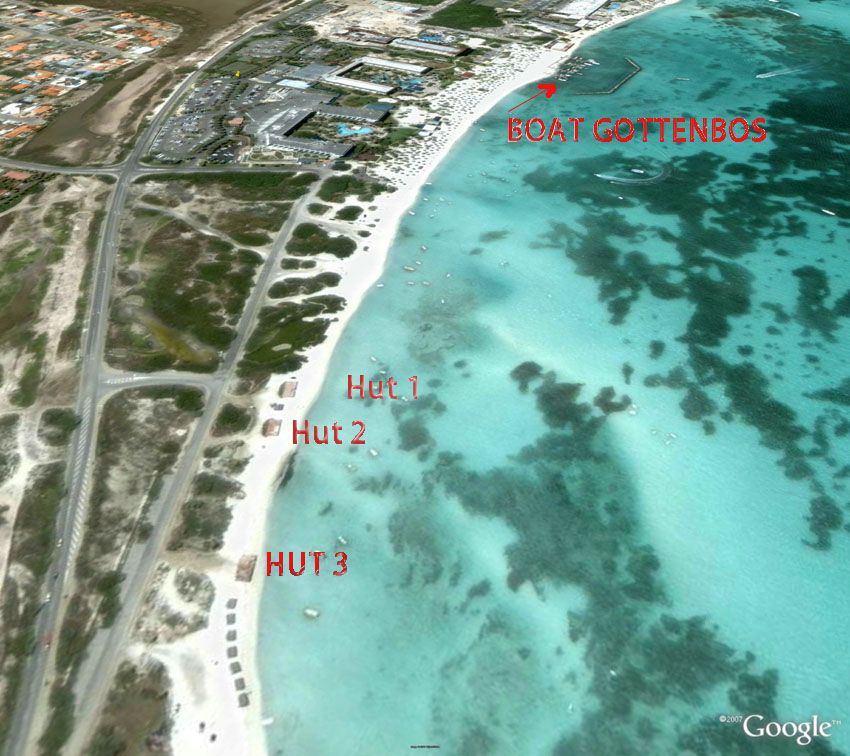
deze boot gebruikten ze voor de kooi
Wanneer domme mensen domme dingen beweren, dan moet je ze niet corrigeren, maar glimlachend gelijk geven.

helaas klopt de beschrijving niet met de foto's van de kooi hexagonal is honingraad toch . ik zal proberen de foto's hier te posten maar ben er geen ster in
gaat niet lukken , ik heb de phto's op mijn pc en je moet een http adres hebben
gaat niet lukken , ik heb de phto's op mijn pc en je moet een http adres hebben
We weten niet of ze het niet fijn had thuis en de aantijgingen over misbruik zijn nergens op gebaseerd.quote:En als laatste is het Natalee zelf. Het begint mij toch wel duidelijk te worden dat ze het niet al te fijn thuis had. Niet bij haar moeder die het een en ander tegen werkt en al helemaal niet bij haar ex-stiefvader die naar het schijnt haar sexueel misbruikt heeft en vooralsnog is dit niet bewezen maar waarom zou dat niet zo zijn. Moet men toch onderzoeken deze man die contacten heeft tot in het Witte Huis.
Smerige lasterpraatjes.
Het wegloopscenario slaat nergens op en is bedacht door mensen die Jorans ouders kennen.
1. Ze was 18 jaar: ze had kunnen weigeren terug te gaan naar Amerika.
2. Ze zou na de zomer op kamers gaan wonen in verband met haar studie.
3. Het niet logisch om weg te lopen en al je bezittingen inclusief paspoort op je kamer achter te laten.
Als jij ervaring hebt met weglopen, loop je dan vlak voor je vliegtuig terug naar Amerika gaat weg zodat iedereen meteen weet dat je weg bent? Of smeer je hem eerder?
Het Witte Huis:
Documentaire: Moeder Holloway in contact met Witte Huis
quote:Dompig
In haar documentaire, die 'te Amerikaans' was voor de VPRO en 'te duur' voor RTL, komt de voormalig Arubaanse onderzoeksleider Gerold Dompig uitvoerig aan het woord over de beperkingen in zijn onderzoek.
http://www.dag.nl/1045121(...)ie-Van-der-Sloot.htm
Sprak Joran over omgekochte politieagenten?quote:ORANJESTAD (ANP) - De Arubaanse oud-politiecommissaris Gerold Dompig, tot mei vorig jaar onderzoeksleider in de Holloway-zaak, vermoedt dat justitie de telefoons van de familie Van der Sloot de afgelopen maanden heeft afgetapt. ,,Het antwoord in deze zaak ligt dicht bij huis'', meent Dompig.
Wat hij evenmin uitsluit is infiltratie binnen de familie en bij hoofdverdachte Joran in Nederland, zodat justitie aan nieuwe bewijzen kon komen. ,,Ik denk dat er een vertrouwenspersoon in en uit liep bij de familieleden. Na een paar maanden begin je wel te praten.''
De voormalige politiechef constateert dat sinds Nederland het onderzoek van hem overnam naar de verdwijning van Natalee Holloway, er veel meer opsporingshandelingen mogelijk waren. ,,Bij ons werd een verzoek tot huiszoeking bij de familie op Aruba tweemaal geweigerd door de rechter, maar het Nederlandse team kreeg direct toestemming. Misschien dat er nu een DNA-vondst is gedaan.''
Oud en nieuw
De hoofdofficier van justitie op Aruba, Hans Mos, laat weten niet op de aanwijzingen te kunnen ingaan. ,,Het nieuwe bewijs is een variatie van oud en nieuw materiaal. Het is én én. Je mag niet opnieuw met bewijs aankomen dat al eerder gebruikt is, tenzij je niet wist dat je het bewijs al in bezit had. Het oude dossier alleen was niet voldoende, maar in relatie met nieuwe feiten wordt het interessant, en is dat een novum.''
Ook Dompig denkt dat voor de nieuwe bewijsvoering ook oude feiten aan elkaar gekoppeld zijn.


ander model dus, wie is er meer kooien kwijt ??
[ Bericht 27% gewijzigd door duikkie op 27-11-2008 19:09:21 ]
Waarom alleen maar stukjes van zijn verhaal posten johan, je bent trouwens ook de plaatjes van HET mes en DE deur vergeten :
Misschien dat een link naar dit hele verhaaltje van meneer Hodges wel zo handig is, dan kan iedereen voor zichzelf een beeld van en een oordeel over deze "Thoughtprint"-speurder vormen.
"Thoughtprint-profiling"
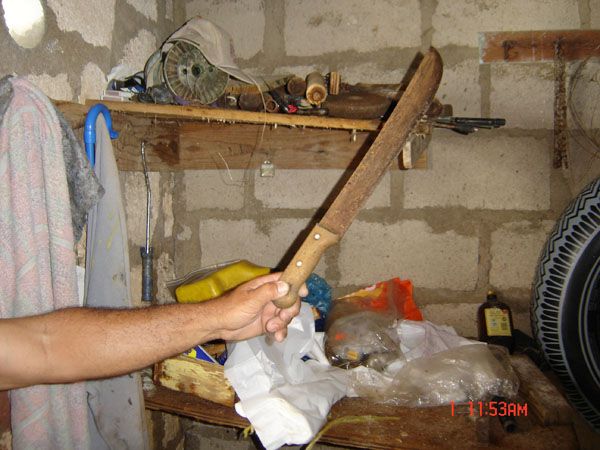
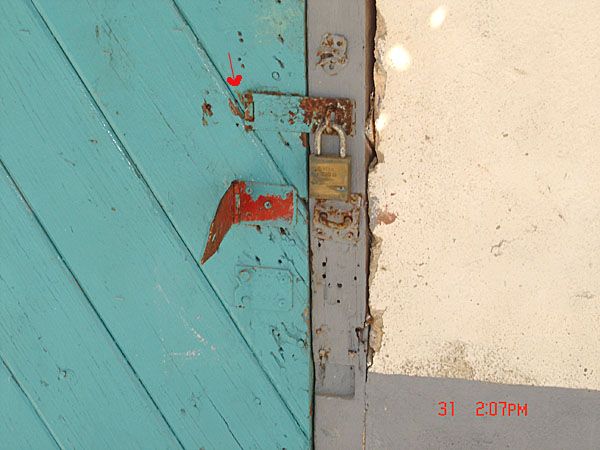
Misschien dat een link naar dit hele verhaaltje van meneer Hodges wel zo handig is, dan kan iedereen voor zichzelf een beeld van en een oordeel over deze "Thoughtprint"-speurder vormen.
"Thoughtprint-profiling"
I stand with the happy Island.
Ik meng me hier in de discussie, want iets ergert mij enorm. De ouders van Amy zijn onderzocht, omdat zij met hen op vakantie was. Natalee was dus niet met haar ouders op vakantie en zij waren ook niet in de buurt toen zij verdween. Joran wel. Dat is een heel verschil. Amy werd bovendien meegevraagd door bemanningsleden van het schip naar C&C's. Zij weigerde en verdween die nacht. Zij zou naar verluidt nog eenmaal zijn gezien in een bar op Curacao, waar zij aan een man kenbaar maakte wie ze was en tegen haar wil daar verbleef. Ze leek te zijn gedrogeerd en geexploiteerd. Dat is toch wel een ABC eiland gebruik. Op die eilanden geven ze geen snars om dieren, laat staan om mensen. Dat blijkt bovendien eens te meer uit het valse geruchtencircus die Renfro en Gielen (aldaar woonachtig) nu al jaren volhouden ten dienste van een dubieuze familie. Dus JoBuster, beperk je propaganda tot NWO of toon wat meer empathie voor slachtoffers.quote:Op donderdag 27 november 2008 14:04 schreef JoBuster het volgende:
Dat van die ouders onderzoeken is interessant trouwens, dat zouden ze bij Natalee ook eens moeten doen.
als je goed gekeken had stond de bron er bij , blijf je nou aan het zeuren jij ?quote:Op donderdag 27 november 2008 19:05 schreef JoBuster het volgende:
Waarom alleen maar stukjes van zijn verhaal posten johan, je bent trouwens ook de plaatjes van HET mes en DE deur vergeten :
[ afbeelding ]
[ afbeelding ]
Misschien dat een link naar dit hele verhaaltje van meneer Hodges wel zo handig is, dan kan iedereen voor zichzelf een beeld van en een oordeel over deze "Thoughtprint"-speurder vormen.
"Thoughtprint-profiling"
Wanneer domme mensen domme dingen beweren, dan moet je ze niet corrigeren, maar glimlachend gelijk geven.
Dat klopt niet. De boot van Koen lag niet op het strand op dat moment. In een van de stukken staat dat de boot van Koen zelfs niet kon varen omdat er problemen waren met de schroef. Die was in reparatie of er was een nieuwe besteld, zoiets was er in elk geval aan de hand.quote:Op donderdag 27 november 2008 14:11 schreef johan555 het volgende:
[..]
Er is wel een foto van de kooien dacht ik die daar lagen maar weet niet of die kooi
nou op het strand lag of op een boot
De boot van de broertjes sander en koen lag daar ook begreep ik
--
