OOR Oorlog en Defensie
Oorlogen en conflicten - zoals Rusland-Oekraïne - en andere internationale (militaire) conflicten kun je hier bespreken, evenals alles op het gebied van defensie, zoals materiaal, missies, selectieprocedures, collega's etc.



Dit topic is bedoeld om de militaire situatie in Oekraïne te analyseren op een wat overzichtelijkere manier dan in de huidige sneltreintopics. Ook een mooi topic voor kaartjes van het front en eventuele video's.
Paar vragen die hierin beantwoord worden:
1. Waar in Oekraïne bevinden zich momenteel Russische landtroepen?
2. Hoe staat het met de tegenaanval van Oekraïne in de Kherson oblast?
3. Welke troepenbewegingen, acties vinden er plaats?
Kaart van het front van Wikipedia, wordt automatisch geüpdate:
Vriendelijk verzoek het bij militaire/tactische analyses te houden en het geen uitbreiding van het sneltreintopic in NWS te laten worden.
Kaart van Finse analisten:
https://widgets.scribblemaps.com/sm/?d&z&l&mt&gc&mv&id=091194
Paar vragen die hierin beantwoord worden:
1. Waar in Oekraïne bevinden zich momenteel Russische landtroepen?
2. Hoe staat het met de tegenaanval van Oekraïne in de Kherson oblast?
3. Welke troepenbewegingen, acties vinden er plaats?
Kaart van het front van Wikipedia, wordt automatisch geüpdate:

Vriendelijk verzoek het bij militaire/tactische analyses te houden en het geen uitbreiding van het sneltreintopic in NWS te laten worden.
Kaart van Finse analisten:
https://widgets.scribblemaps.com/sm/?d&z&l&mt&gc&mv&id=091194
And what rough beast, its hour come round at last,
Slouches towards Bethlehem to be born?
Slouches towards Bethlehem to be born?
Interview met een drone-commandant:
And what rough beast, its hour come round at last,
Slouches towards Bethlehem to be born?
Slouches towards Bethlehem to be born?


https://www.nrc.nl/nieuws(...)iran-oorlog-a4924204quote:Het probleem van slinkende voorraden zou volgens de analisten kunnen verklaren waarom de Amerikaanse president Donald Trump suggereert om de oorlog tegen Iran af te schalen. „Het zou jaren kunnen duren om te vervangen wat in slechts 16 dagen is verbruikt”, stellen de onderzoekers.
Dat dit jaren kan duren, kan volgens de auteurs ook strategische gevolgen hebben voor de Verenigde Staten. „Het vermindert het vermogen van de VS om elders af te schrikken of te verdedigen, zoals het beschermen van Taiwan of het ondersteunen van Oekraïne.”
Dank je wel
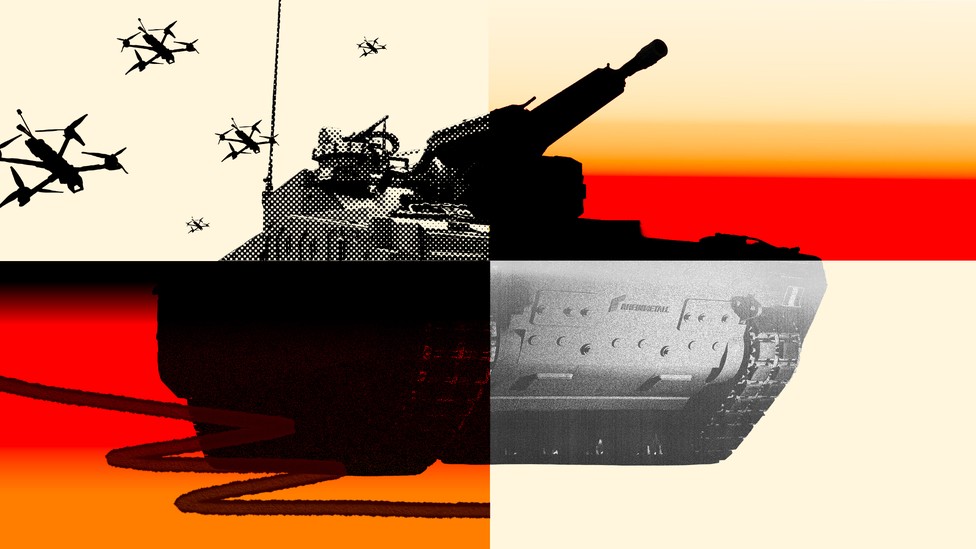
De Oekraïense oorlog heeft een harde realiteit blootgelegd: goedkope drones hebben tanks en artillerie grotendeels gedateerd gemaakt. Met een paar honderd dollar kunnen drones voertuigen vernietigen die miljoenen kosten. Toch blijven westerse defensiebedrijven zoals Rheinmetall massaal investeren in tanks en “exquise” wapensystemen.
De CEO van Rheinmetall wuift de drone-revolutie grotendeels weg en noemt Oekraïense innovaties “lego-achtig”, terwijl Oekraïne juist laat zien dat massaproductie van simpele, goedkope drones extreem effectief is. In het frontgebied is een 20–30 mijl brede “kill zone” ontstaan waar vrijwel alles wat beweegt wordt opgespoord en vernietigd door drones.
Ondanks dit verschuivende slagveld blijft Europa vasthouden aan oude militaire logica: dure platforms, trage bureaucratie en lange certificeringstijden. Daardoor kan innovatie nauwelijks worden doorgevoerd. Oekraïne daarentegen produceert miljoenen drones per jaar en verschuift zijn hele oorlogsstrategie richting goedkope, schaalbare systemen.
Conclusie: de westerse defensie-industrie loopt achter de feiten aan en blijft investeren in wapens die op het moderne slagveld steeds makkelijker uitgeschakeld worden, terwijl de echte militaire revolutie al is gebeurd — en die komt niet uit de traditionele wapenfabrieken.
De CEO van Rheinmetall wuift de drone-revolutie grotendeels weg en noemt Oekraïense innovaties “lego-achtig”, terwijl Oekraïne juist laat zien dat massaproductie van simpele, goedkope drones extreem effectief is. In het frontgebied is een 20–30 mijl brede “kill zone” ontstaan waar vrijwel alles wat beweegt wordt opgespoord en vernietigd door drones.
Ondanks dit verschuivende slagveld blijft Europa vasthouden aan oude militaire logica: dure platforms, trage bureaucratie en lange certificeringstijden. Daardoor kan innovatie nauwelijks worden doorgevoerd. Oekraïne daarentegen produceert miljoenen drones per jaar en verschuift zijn hele oorlogsstrategie richting goedkope, schaalbare systemen.
Conclusie: de westerse defensie-industrie loopt achter de feiten aan en blijft investeren in wapens die op het moderne slagveld steeds makkelijker uitgeschakeld worden, terwijl de echte militaire revolutie al is gebeurd — en die komt niet uit de traditionele wapenfabrieken.
quote:Building Tanks While the Ukrainians Master Drones
The war games served as proof of Ukraine’s potential, not only as a fighting force but also as a supplier of weapons to the rest of Europe. Eric Schmidt, a former Google CEO, has invested in Ukrainian drone manufacturers and believes that the Ukrainians could one day overtake their Western peers in the arms market. “They will be the primary arms supplier to all of Europe,” Schmidt told the audience at a security conference in Germany last month. Ukrainian drones, he said, “are so inexpensive; they are so battle-tested.”
Papperger, of course, sees it differently. The rise of cheap drones poses a direct threat to his business model. To continue winning multibillion-dollar contracts for tanks and artillery, he needs to convince his clients that these weapons will remain essential to wars of the future. Ukraine has made that a much greater challenge.
When I asked him whether Ukrainian companies would one day sell their drones to NATO, he sighed and shook his head. They would not make it through the alliance’s bureaucracy, he said: “They need a NATO qualification.” Western regulators could, in other words, keep them off the European market by requiring licenses that Ukrainian firms might find hard to get.
Even adopting Ukrainian know-how seems difficult in that environment. During our tour of the factory in Unterlüss, my guide explained the complexity of changing anything about the design of a German weapons system. “Any adjustment needs to be recertified by the procurement agency,” a department within the Ministry of Defense, Weisswange said. Any change to the material used to make the barrel of a tank, he said, would take at least a year to certify. “The quality controls are very strict, and the costs are very high.”
In the end, Rheinmetall has a strong incentive to continue making the expensive weapons it has made for much of its history, even if they can be blown apart by drones that cost less than the average smartphone.
And what rough beast, its hour come round at last,
Slouches towards Bethlehem to be born?
Slouches towards Bethlehem to be born?
Budanov heeft een verrassing in petto.
And what rough beast, its hour come round at last,
Slouches towards Bethlehem to be born?
Slouches towards Bethlehem to be born?

Terminatorsquote:Op vrijdag 24 april 2026 11:54 schreef Perrin het volgende:
Budanov heeft een verrassing in petto.
[ x ]

They'll be back


dit horen we al decenniaquote:
De Oekraïense oorlog heeft een harde realiteit blootgelegd: goedkope drones hebben tanks en artillerie grotendeels gedateerd gemaakt. Met een paar honderd dollar kunnen drones voertuigen vernietigen die miljoenen kosten. Toch blijven westerse defensiebedrijven zoals Rheinmetall massaal investeren in tanks en “exquise” wapensystemen.
De CEO van Rheinmetall wuift de drone-revolutie grotendeels weg en noemt Oekraïense innovaties “lego-achtig”, terwijl Oekraïne juist laat zien dat massaproductie van simpele, goedkope drones extreem effectief is. In het frontgebied is een 20–30 mijl brede “kill zone” ontstaan waar vrijwel alles wat beweegt wordt opgespoord en vernietigd door drones.
Ondanks dit verschuivende slagveld blijft Europa vasthouden aan oude militaire logica: dure platforms, trage bureaucratie en lange certificeringstijden. Daardoor kan innovatie nauwelijks worden doorgevoerd. Oekraïne daarentegen produceert miljoenen drones per jaar en verschuift zijn hele oorlogsstrategie richting goedkope, schaalbare systemen.
Conclusie: de westerse defensie-industrie loopt achter de feiten aan en blijft investeren in wapens die op het moderne slagveld steeds makkelijker uitgeschakeld worden, terwijl de echte militaire revolutie al is gebeurd — en die komt niet uit de traditionele wapenfabrieken.
[..]
eerst zou het antitankgeschut de tank overbodig maken
daarna de antitankraket
daarna de antitankhelikopters
nu de drone
toch zie je bij elke push van beide kampen in dit conflict tanks voorop gaan gevolgd door pantservoertuigen, en ondersteund door zware artillerie waarom zou dit zijn?
Op zondag 8 december 2013 00:01 schreef Karina het volgende:
Dat gaat me te diep sp3c, daar is het te laat voor.
Dat gaat me te diep sp3c, daar is het te laat voor.
Ik denk dat die geen juiste voorstelling van zaken is...quote:Op zaterdag 25 april 2026 13:26 schreef sp3c het volgende:
[..]
toch zie je bij elke push van beide kampen in dit conflict tanks voorop gaan gevolgd door pantservoertuigen, en ondersteund door zware artillerie waarom zou dit zijn?


Wat interessante gezichtspunten van Reisner:
• er gebeurt weinig
• vehicle loss verhouding Oekraine versus Rusland ligt op 1:2
• Oekraine heeft lichtelijk drone overwicht
• de Russen gaan in de zomer weer druk zetten
Bekijk deze YouTube-video
• er gebeurt weinig
• vehicle loss verhouding Oekraine versus Rusland ligt op 1:2
• Oekraine heeft lichtelijk drone overwicht
• de Russen gaan in de zomer weer druk zetten
Bekijk deze YouTube-video
"If the nation is not capable of preserving itself and reproducing, if it loses it vital bearings and ideals, then it doesn't need foreign enemies - it will fall apart on its own."
[Written by Vladimir Vladimirovich Putin]
[Written by Vladimir Vladimirovich Putin]
Ow ok, duidelijke argumenten ...quote:
[..]
Ik denk dat die geen juiste voorstelling van zaken is...
Op zondag 8 december 2013 00:01 schreef Karina het volgende:
Dat gaat me te diep sp3c, daar is het te laat voor.
Dat gaat me te diep sp3c, daar is het te laat voor.
Je ziet toch 1000 filmpjes van gasten op motoren en atvs? Tanks zie je weinig meer. Misschien ze er nog maar weinig van, dat zal ook meespelen.quote:

https://x.com/i/status/2047692586089898224
spannende confrontatie
spannende confrontatie
quote:A very productive meeting with the Crown Prince of Saudi Arabia, Mohammed bin Salman Al Saud.
We appreciate our constructive cooperation.
There is a strategic security arrangement that we are actively developing across three key areas.
The first is the export of Ukrainian security expertise and capabilities in air defense.
The second is energy cooperation, which makes Ukraine more resilient in this difficult time.
The third is the area of food security.
AI-overzicht Volgens onderzoeken behoren autonome, gezonde westerse ouderen met een goed pensioen tot meest tevreden mensen ter wereld. Deze combinatie van factoren zorgt voor een hoog welzijn.
Dan is het belangrijk te weten wat de verhouding qua productie is.quote:Op zaterdag 25 april 2026 14:17 schreef phpmystyle het volgende:
Wat interessante gezichtspunten van Reisner:
• er gebeurt weinig
[*]vehicle loss verhouding Oekraine versus Rusland ligt op 1:2
• Oekraine heeft lichtelijk drone overwicht
• de Russen gaan in de zomer weer druk zetten
Bekijk deze YouTube-video
Ceterum censeo Turciam delendam esse.
Die heeft hij niet genoemd. Maar rusland kan putten uit voorraden.quote:
[..]
Dan is het belangrijk te weten wat de verhouding qua productie is.
"If the nation is not capable of preserving itself and reproducing, if it loses it vital bearings and ideals, then it doesn't need foreign enemies - it will fall apart on its own."
[Written by Vladimir Vladimirovich Putin]
[Written by Vladimir Vladimirovich Putin]
Yup, ze hebben nog heel veel drones uit de Sovjettijd.quote:
[..]
Die heeft hij niet genoemd. Maar rusland kan putten uit voorraden.
Wantie is eigendom van de zittende macht en heeft dus geen eigen mening meer -- @Candymannetje
nu di zijn bijna op dacht ikquote:
[..]
Die heeft hij niet genoemd. Maar rusland kan putten uit voorraden.
hoe dan ook ze zullen geen mobiel internet hebben op het slagveld om met Palantir samen te werken
https://www.telegraaf.nl/(...)s-heen/64341339.html
Bekijk deze YouTube-video
[ Bericht 4% gewijzigd door michaelmoore op 25-04-2026 23:57:41 ]
AI-overzicht Volgens onderzoeken behoren autonome, gezonde westerse ouderen met een goed pensioen tot meest tevreden mensen ter wereld. Deze combinatie van factoren zorgt voor een hoog welzijn.
Je kan alles wel in twijfel trekken. Maar die Reisner lijkt het meest reele verhaal te hebben zonder allemaal pretenties. Heel veel bronnen zijn nogal partijdig, of zitten er aldoor naast.
"If the nation is not capable of preserving itself and reproducing, if it loses it vital bearings and ideals, then it doesn't need foreign enemies - it will fall apart on its own."
[Written by Vladimir Vladimirovich Putin]
[Written by Vladimir Vladimirovich Putin]
Je trekt nu zelf alles in twijfel, behalve je eigen bron...quote:
Je kan alles wel in twijfel trekken. Maar die Reisner lijkt het meest reele verhaal te hebben zonder allemaal pretenties. Heel veel bronnen zijn nogal partijdig, of zitten er aldoor naast.
Wantie is eigendom van de zittende macht en heeft dus geen eigen mening meer -- @Candymannetje
valt mee. Maar die Boekesteijn of de wit achtige analyses zijn volstrekt onbruikbaar.quote:Op zaterdag 25 april 2026 22:51 schreef Wantie het volgende:
[..]
Je trekt nu zelf alles in twijfel, behalve je eigen bron...
Ik sta open voor alles.
Overigens was die Reisner pessimistischer omtrent de Russische kansen in vergelijking met eerdere analyses.
"If the nation is not capable of preserving itself and reproducing, if it loses it vital bearings and ideals, then it doesn't need foreign enemies - it will fall apart on its own."
[Written by Vladimir Vladimirovich Putin]
[Written by Vladimir Vladimirovich Putin]
poetin gaat niet en volgende oorlog beginnen meer niet daar en niet hier, nooit meerquote:
Analyse van hoe Rusland aast op Kazachstan.
De volgende oorlog?
deze manier van oorlog voeren gaat hem boven de pet
AI-overzicht Volgens onderzoeken behoren autonome, gezonde westerse ouderen met een goed pensioen tot meest tevreden mensen ter wereld. Deze combinatie van factoren zorgt voor een hoog welzijn.
En de Oekraïense kansen?quote:
[..]
valt mee. Maar die Boekesteijn of de wit achtige analyses zijn volstrekt onbruikbaar.
Ik sta open voor alles.
Overigens was die Reisner pessimistischer omtrent de Russische kansen in vergelijking met eerdere analyses.
Of kijk je alleen naar de Russische kant.
Wantie is eigendom van de zittende macht en heeft dus geen eigen mening meer -- @Candymannetje
Wie weet.quote:
[..]
poetin gaat niet en volgende oorlog beginnen meer niet daar en niet hier, nooit meer
deze manier van oorlog voeren gaat hem boven de pet
Iedereen dacht ook dat Poetin ook niet zo stom zou zijn om Oekraïne aan te vallen.
En ziedaar...
Wantie is eigendom van de zittende macht en heeft dus geen eigen mening meer -- @Candymannetje
nee men dacht dat doet ie inderdaad in 3 dagenquote:
[..]
Wie weet.
Iedereen dacht ook dat Poetin ook niet zo stom zou zijn om Oekraïne aan te vallen.
En ziedaar...
nee Poetin is goed ziek van oorlog voeren met ouwe tanks , dronken soldaten en corrupte generaals die de roebel fondsen gebruiken voor hun nieuwe zwembad ipv nieuwe tanks
Poetin die schijt peuken voor de eigen bevolking
AI-overzicht Volgens onderzoeken behoren autonome, gezonde westerse ouderen met een goed pensioen tot meest tevreden mensen ter wereld. Deze combinatie van factoren zorgt voor een hoog welzijn.
Tot nu toe jaagt hij zijn eigen bevolking door de gehaktmolen in Oekraïne.quote:
[..]
nee men dacht dat doet ie inderdaad in 3 dagen
nee Poetin is goed ziek van oorlog voeren met ouwe tanks , dronken soldaten en corrupte generaals die de roebel fondsen gebruiken voor hun nieuwe zwembad ipv nieuwe tanks
Poetin die schijt peuken voor de eigen bevolking
Dus hoezo is hij bang voor ze.
Wantie is eigendom van de zittende macht en heeft dus geen eigen mening meer -- @Candymannetje
KIJK. Oekraïense gevechtsrobot redt oud vrouwtje uit oorlogszone: "Stap op, oma"
Een evacuatie op de grond was onmogelijk. Het gebied krioelde van vijandelijke drones. En dus ging een Oekraïense eenheid over tot een wel erg opvallende ingreep om een oude vrouw weg te krijgen uit gevaarlijk gebied in Lyman: ze stuurden een gevechtsrobot die haar ging oppikken. "Stap op, oma", hadden ze op een doek op de robot geschreven. En oma stapte op.
https://www.hln.be/buiten(...)tap-op-oma~a942719c/
Valt niets aan te analyseren, gewoon mooi!
Een evacuatie op de grond was onmogelijk. Het gebied krioelde van vijandelijke drones. En dus ging een Oekraïense eenheid over tot een wel erg opvallende ingreep om een oude vrouw weg te krijgen uit gevaarlijk gebied in Lyman: ze stuurden een gevechtsrobot die haar ging oppikken. "Stap op, oma", hadden ze op een doek op de robot geschreven. En oma stapte op.
https://www.hln.be/buiten(...)tap-op-oma~a942719c/
Valt niets aan te analyseren, gewoon mooi!
Rusland had nooit een echte persvrijheid, maar wat men nu aan het doen is met steeds meer sociale media zoals whatsapp, telegram aan banden proberen te leggen geeft wel degelijk aan dat de veiligheidsdiensten bezig zijn om alle mogelijke bedreigingen in de kiem te smoren.quote:
[..]
Tot nu toe jaagt hij zijn eigen bevolking door de gehaktmolen in Oekraïne.
Dus hoezo is hij bang voor ze.
En dat is niet omdat men zo tevreden is met de situatie in Rusland.
Het probleem voor het Kremlin is dat ze de manier hoe ze de Oekrainsche drones uitschakelen niet meer kunnen verberen.
En eerlijk is eerlijk, de succesrate is 100%, dat moet ik ze nageven, het is alleen zo vervelend dat ze dat doen met de opslagtanks en olie en gas productielocaties zelf. Het geeft ook nogal veel nevenschade en de brandweer is daarna toch bezig om de ontstande kleine systeembrandjes te blussen.
De grip op de bevolking wordt langzaam verloren, en waar het op het slagveld zelf nogal traag gaat, wordt nu ook de economie keihard geraakt, en dat is waar de schoen gaat wringen, de middenklasse en de belangrijke tycoons in bijvoorbeeld de gas en olie industrie verliezen steeds meer geld, en dat kan zeker het einde betekenen voor de huidige machthebbers.
De vraag is of er wat beters voor in de plaats komt, maar het zou zomaar kunnen dat Oekraine belangrijk wisselgeld heeft omdat ze nogal succesvol de olie en gas infrastructuur aan het uitschakelen zijn.
RTFM
Zo niet? Dan toch!
Nawie, just Nawie!
TWENTE KAMPIOEN.
Zo niet? Dan toch!
Nawie, just Nawie!
TWENTE KAMPIOEN.
Stukje analyse van de oorlog.
And what rough beast, its hour come round at last,
Slouches towards Bethlehem to be born?
Slouches towards Bethlehem to be born?
En gelijk hadden ze.quote:
[..]
dit horen we al decennia
eerst zou het antitankgeschut de tank overbodig maken
daarna de antitankraket
daarna de antitankhelikopters
nu de drone
toch zie je bij elke push van beide kampen in dit conflict tanks voorop gaan gevolgd door pantservoertuigen, en ondersteund door zware artillerie waarom zou dit zijn?
Enne, obsolete is niet hetzelfde als overbodig.
Antwoord op je vraag;
"You go to war with the army you have, not the army you might want" [Rumsfeld]
quote:
[..]
Wat denk je over de berichten in Kupiansk? De Russen beweren een deel van de industriële zone te hebben ingenomen, de Oekraïners ontkennen.
Deze berichten zijn terug te lezen op de eerste pagina van het vorige deel (#30), nu bijna anderhalve jaar geleden.quote:
[..]
Onduidelijk daar. Gistermorgen schenen de Russen een (voetbal?)stadion in het noorden van Koepjansk bereikt te hebben. Maar gisteravond berichtten de meeste mappers weer, dat de Russen weer waren teruggedrongen met veel verliezen.
Noord-Koepjansk ligt tegen de bossen aan, waardoor de situatie daar zo onduidelijk is om te zien wie waar is.
+++++++++++++++++++++++++
....knip.....
Vooral de westelijke deel van de stad Koepjansk van de oever van de Oskil rivier is nu (nog) grotendeels in Oekraïense handen. Hoewel ik de laatste maanden wel steeds beelden zie van Russen die daar uit de bunkers van flatgebouwen komen na hun 'winterslaap'.
Aan de oostkant van de Oskil rivier bij Koepjansk hebben de Russen de laatste maanden wel kleine vooruitgang geboekt. Dat kwam vorige week tot uiting met de beelden van uitgemergelde Oekraïense soldaten, die daar te lang vastzaten en verstoken waren van toevoer van voedsel, drinken en medicijnen in een steeds kleiner gebied, volgens de berichten bij die beelden.
De plaats Petropavlivka (2.490 inwoners) ten oosten van Koepjansk is nu inmiddels in Russische handen gekomen.
En de gevechten zijn nu verschoven naar de plaatsen Podoly (2.380 inw.), Koerilovka ( 3.620 inw.), Koepjansk-Voezlovyi (ten zuiden van de stad Koepjansk met 9.790 inw.) Kivsjarivka (17.960 inw.), Novoosynove (1.960 inw.) en Hlushkivka (880 inw.). Al deze plaatsen aan de rechteroever van de Oskil rivier.kant waren vorig jaar in Oekraïense handen, maar daar wordt nu hevig om gevochten. De Russen zitten al in bepaalde delen van enkele van deze plaatsen.
Het aantal inwoners tussen haakjes zijn de vooroorlogse inwoneraantallen volgens Mapcarta.
+++++++++++++++++++++++++++++++++++++
Verder zit het front de laatste maanden muurvast in de belangrijke oblast Donetsk.
Vooral bij de stad Lyman worden de Russen de laatste anderhalve maand weer iets teruggedrongen. Dat is een knap staaltje van de Oekraïense verdediging, omdat deze laaggelegen stad van drie kanten wordt benaderd en is ingesloten, en aan de zuidkant moeilijk bereikbaar is door de Severski Donets rivier.
Ook bij de stad Kostjantynivka is de situatie al maandenlang praktisch bevroren.
Op 22-12-2025 hadden de Russen 12,4% van de stad in handen, dat was het zuidoostelijke deel. Twee maanden later op 20-02-2026 was dat 24,5%, en weer twee maanden later op 22-04-2026 was dat 29,9%. Deze cijfers van Youtuber Roy (of Royy).
In dit tempo duurt het tot augustus 2027 totdat de hele stad door de Russen zou zijn veroverd. Dat zou dan vier jaar na de val van het vlakbij gelegen Bachmoet zijn, en vijf jaar nadat de Russen in het oosten van Bachmoet de plaatselijke wijn- en champagnefabriek hadden ingenomen.
Ook bij de stad Pokrovsk lukt het de Russen maar niet echt om een beetje behoorlijke bufferzone te maken. Waardoor de al zwaar beschadigde stad nu nog verder in puin wordt geschoten door Oekraïense tegenaanvallen.
De laatste weken is echter wel de plaats Hryshyne (2260 inw.) ten noordwesten van Pokrovsk volledig in handen van de Russen gekomen.
++++++++++++++++++++++++++++++++++++++++++++
De grootste terreinwinst van Oekraïne is dit jaar behaald in het zuiden van de oblast Dnipropetrovsk. Op 27 maart 2026 meldde Balkan Mapper dat Oekraïne hier ongeveer 250 km² had heroverd, plus nog 25 km² in de aangrenzende oblast Zaporidzja (ten noorden van de stad Goeljajpole).
Inmiddels is dit heroverde gebied weer wat kleiner geworden, omdat de aanvoerlijnen van de Oekraïense stormtroepen te lang waren geworden. Dit is hetzelfde scenario als vorig jaar (10 tot 12) augustus gebeurde met de Russische doorbraak ten oosten van de stad Dobropillia.
Maar persoonlijk vind ik het terugdringen van de Russen uit Prymorske en bij Stepnohirsk (ten noorden van Kamjanske en ten zuiden van de stad Zaporidzja) een groter succes. Qua vierkante kilometers niet, maar dit gebied is veel belangrijker en dichtbevolkter dan dat plattelandsgebied in het zuiden van de obblast Dnipropetrovsk.
+++++++++++++++++++++++++++++++++++++++++++++++
Omdat het front aan de echte frontlijn in de Donbass en in Zaporidzja zo vastloopt, zijn volgens mij de Russen aan het proberen om de Oekraïeners naar de frontlijn in het noorden te lokken.
De laatste maanden worden in het noorden van de oblast Kharkiv en in de oblast Soemy allerlei Russische aanvallen en gebiedsveroveringen gemeld.
Tot eind april stelde deze gebiedsveroveringen niet zoveel voor, bosgebiedjes en kleine dorpjes, maar gisteren is dan toch een grotere plaats veroverd door de Russen. Dat is Myropillia (2.870 inw.) ten noordoosten van de stad Soemy, en vlak ten zuiden van de stad Soedzja. De laatste plaats was de hoofdplaats van de veroveringen van het Koerskgebied door Oekraïne in augustus 2024.
Bron: ADquote:‘Het voelt als kantelmoment’: Oekraïne dringt Russische troepen 113 km² terug aan het front
Oekraïne heeft de Russische troepen de afgelopen dertig dagen met 113 vierkante kilometer teruggedrongen op het slagveld. Dat blijkt uit een analyse van het Britse magazine The Economist. Het is voor het eerst in bijna drie jaar dat de Oekraïense troepen opnieuw het initiatief hadden in de oorlog.
Buitenlandredactie
11 mei 2026, 15:11
Laatste update: 15:57
De winter was nog erg zwaar voor Oekraïne, met voortdurende Russische aanvallen op steden en energie-infrastructuur. Het aangekondigde lenteoffensief van Moskou draaide echter uit op een mislukking. In april verloren de Russische troepen zelfs netto grondgebied. Dat was voor het eerst sinds augustus 2024, toen Oekraïne de Russische regio Koersk binnenviel.
.......knip.....
Ik zie ook andere Nederlandse nieuwssites langskomen met een zelfde soort bericht.
Maar klopt het wel?
Ik kom de afgelopen 30 dagen met een andere conclusie. Niet dat de Russen echt aan de winnende hand zijn, en het zogenaamde lente-offensief is volgens mij ook nog niet begonnen.
Maar dat de Russen zijn teruggedrongen, klopt volgens mij niet.
Vanaf 8 april tot 9 mei (daarna is een paar dagen wapenstilstand) komen de meeste mappers tot een per saldo Russische gebiedsuitbreiding. Ik pak Balkan Mapper hier als bron over deze 32 dagen.
Oblast Donetsk:
Lyman en omgeving: + 3,5 km²
Ten westen van Siversk richting Slovjansk: + 20,7 km²
Ten oosten van Kramatorsk: + 8,4 km²
Kostjantynivka en omgeving: + 15,7 km²
Richting Druzhkivka: 4 km²
Richting Dobropillia: 11,1 km²
Ten noorden en westen van Pokrovsk: 27,5 km²
Oleksandrohrad (= ten westen van Komar): 7 km²
Totaal oblast Donetsk: + 97,9 km²
Oblast Soemy:
In Shostka raion (in het uiterste noorden): 5,4 km²
Ten noorden van de stad Soemy: 37,5 km²
Ten oosten van de stad Soemy: 64,7 km²
Totaal oblast Soemy: + 107,6 km²
PS: de hoofdstad Soemy wordt zelf niet bedreigd. En ik denk dat het hoofdmotief van de Russen voor de veroveringen in Soemy voornamelijk is het lokken van meer Oekraïense soldaten naar dit front vanaf de andere fronten.
Oblast Kharkiv:
Omgeving Vovchansk: 42,2 km²
Omgeving Dvorechna: - 6,4 km² = in Oekraïens voordeel
De oostoever van de Oskilrivier bij Koepjansk: 29,4 km²
Omgeving Borova: - 1,6 km² = in Oekraïens voordeel
Totaal oblast Kharkiv: + 63,5 km²
Oblast Dnipropetrovsk
Novopavlivka: 3,1 km²
Omgeving Berezova: 13,6 km²
Totaal oblast Dnipropetrovsk: + 16,7 km²
Oblast Zaporidzja:
Ten westen van Goeljajpole: + 6 km²
Omgeving Orikhiv: -0,5 km² = in Oekraïens voordeel
Ten noorden van Kamjanske: -39,5 km² = in Oekraïens voordeel
Totaal oblast Zaporidzja: -34 km² = in Oekraïens voordeel
Wat gunstig voor Oekraïne uitpakt in deze periode is een grotere bufferzone ten zuiden van de hoofdstad Zaporidzja. Maar in het overige zie ik nog geen terugdringing van Russische troepen.
Berichtgeving in Nederland is bedoeld voor interne consumptie: beeld schetsen dat wij aan het winnen zijn.quote:
[..]
Bron: AD
Ik zie ook andere Nederlandse nieuwssites langskomen met een zelfde soort bericht.
Maar klopt het wel?
Ik kom de afgelopen 30 dagen met een andere conclusie. Niet dat de Russen echt aan de winnende hand zijn, en het zogenaamde lente-offensief is volgens mij ook nog niet begonnen.
Maar dat de Russen zijn teruggedrongen, klopt volgens mij niet.
Vanaf 8 april tot 9 mei (daarna is een paar dagen wapenstilstand) komen de meeste mappers tot een per saldo Russische gebiedsuitbreiding. Ik pak Balkan Mapper hier als bron over deze 32 dagen.
Oblast Donetsk:
Lyman en omgeving: + 3,5 km²
Ten westen van Siversk richting Slovjansk: + 20,7 km²
Ten oosten van Kramatorsk: + 8,4 km²
Kostjantynivka en omgeving: + 15,7 km²
Richting Druzhkivka: 4 km²
Richting Dobropillia: 11,1 km²
Ten noorden en westen van Pokrovsk: 27,5 km²
Oleksandrohrad (= ten westen van Komar): 7 km²
Totaal oblast Donetsk: + 97,9 km²
Oblast Soemy:
In Shostka raion (in het uiterste noorden): 5,4 km²
Ten noorden van de stad Soemy: 37,5 km²
Ten oosten van de stad Soemy: 64,7 km²
Totaal oblast Soemy: + 107,6 km²
PS: de hoofdstad Soemy wordt zelf niet bedreigd. En ik denk dat het hoofdmotief van de Russen voor de veroveringen in Soemy voornamelijk is het lokken van meer Oekraïense soldaten naar dit front vanaf de andere fronten.
Oblast Kharkiv:
Omgeving Vovchansk: 42,2 km²
Omgeving Dvorechna: - 6,4 km² = in Oekraïens voordeel
De oostoever van de Oskilrivier bij Koepjansk: 29,4 km²
Omgeving Borova: - 1,6 km² = in Oekraïens voordeel
Totaal oblast Kharkiv: + 63,5 km²
Oblast Dnipropetrovsk
Novopavlivka: 3,1 km²
Omgeving Berezova: 13,6 km²
Totaal oblast Dnipropetrovsk: + 16,7 km²
Oblast Zaporidzja:
Ten westen van Goeljajpole: + 6 km²
Omgeving Orikhiv: -0,5 km² = in Oekraïens voordeel
Ten noorden van Kamjanske: -39,5 km² = in Oekraïens voordeel
Totaal oblast Zaporidzja: -34 km² = in Oekraïens voordeel
Wat gunstig voor Oekraïne uitpakt in deze periode is een grotere bufferzone ten zuiden van de hoofdstad Zaporidzja. Maar in het overige zie ik nog geen terugdringing van Russische troepen.
Geen idee of de Russen nu inleveren, zijn er mutaties waar te nemen op ISW?
"If the nation is not capable of preserving itself and reproducing, if it loses it vital bearings and ideals, then it doesn't need foreign enemies - it will fall apart on its own."
[Written by Vladimir Vladimirovich Putin]
[Written by Vladimir Vladimirovich Putin]
meer een beetje het derde gevecht om hetzelfde aardappelveld met 4 krotten erop en twee ouwe koeienquote:
[..]
Berichtgeving in Nederland is bedoeld voor interne consumptie: beeld schetsen dat wij aan het winnen zijn.
Geen idee of de Russen nu inleveren, zijn er mutaties waar te nemen op ISW?
goede trainingsvelden voor Nederland, dan vliegt er ook niet zoveel in de fik hier
kunne ze hier die aardappels wel poten
AI-overzicht Volgens onderzoeken behoren autonome, gezonde westerse ouderen met een goed pensioen tot meest tevreden mensen ter wereld. Deze combinatie van factoren zorgt voor een hoog welzijn.
Nee, op basis van de gegevens van Suriyakmaps:quote:
Ik zie ook andere Nederlandse nieuwssites langskomen met een zelfde soort bericht.
Maar klopt het wel?

Deepstatemap laat ook heel wat anders zien.
Onder aan de streep is het natuurlijk klein bier, 365km2 is zeg tweemaal Texel...
Deze berichten zie je de laatste dagen vaker. Lijkt alsof het om dezelfde berichten gaat als die over februari of maart, toen ze de fscto wel gebied wonnen, vermengd met wat nieuwe situaties zoals nog meer drones en aanvallen op de olieinstallaties.
Ik vind het apart.
Ik vind het apart.
Dat het klein bier is, ben ik met je eens. In dit tempo duurt het nog meer dan vier jaar voordat het laatste stukje Donnyland (= nu nog 17,5% van de oblast Donetsk, wat in handen is van Oekraïne) in handen van de Russen zal gaan komen.
Ook daar hangt het af van de bron. Dit is bijvoorbeeld de data van deepstate, een bron gelieerd met de Oekraïnse strijdkrachten:quote:
Deze berichten zie je de laatste dagen vaker. Lijkt alsof het om dezelfde berichten gaat als die over februari of maart, toen ze de fscto wel gebied wonnen, vermengd met wat nieuwe situaties zoals nog meer drones en aanvallen op de olieinstallaties.
Ik vind het apart.
januari 116.165- 116.410 +245
februari 116.410-116.536 +126
maart 116.536 - 116.696 +160
april 116.696-116.837 +141
Ceterum censeo Turciam delendam esse.
Russische aanvoerlijnen onder vuur.
Oekraïne pakt het initiatief.
[ Bericht 32% gewijzigd door Perrin op 12-05-2026 08:56:45 ]
Oekraïne pakt het initiatief.
[ Bericht 32% gewijzigd door Perrin op 12-05-2026 08:56:45 ]
And what rough beast, its hour come round at last,
Slouches towards Bethlehem to be born?
Slouches towards Bethlehem to be born?
Hornet drones maken het verschil.
And what rough beast, its hour come round at last,
Slouches towards Bethlehem to be born?
Slouches towards Bethlehem to be born?
Het strijdtoneel aan het front is momenteel een gelijkspel. De laatste negen dagen is volgens de optelsommen van de dagelijkse mutaties bij Balkan Mapper het saldo vooruitgang precies 0,0 (afgerond op één cijfer achter de komma).
De Oekraïners boeken de vooruitgang ten noorden van Kamjanske (ten zuiden van de stad Zaporidzja) met 29,9 km², bij Orikhiv met 1,5 km² en in het noorden in de oblast Kharkiv met 7,8 m² in deze periode. De Russen boeken in diezelfde periode een vooruitgang van 17,5 km² ten westen van Goeljajpole, en per saldo 21,7 km² terreinwinst over de diverse fronten in de oblast Donetsk. → Het evenwicht is precies 0,0.
++++++++++++++++++++++++++++++++++++++++++++++++++
Wat er momenteel eventueel in het zuiden van de oblast Dnipropetrovsk gebeurt, wacht ik eerst nog maar even af. De gisteren plotselinge gemelde doorbraak van de Russen naar praktisch de stad Pokrovske lijkt mij wat aan de onwaarschijnlijke kant.
Al helemaal toen de Russen op 16 mei een grote doorbraak richting Borova meldden, terwijl dat achteraf gezien opnames bleken te zijn van een plaats 20 kilometer verderop, dat al lange tijd onder Russisch bewind staat.
++++++++++++++++++++++++++++++++++++++++++++++++++
Wat inmiddels wel duidelijk is, dat de drones steeds verder en nauwkeuriger in hun bereik komen. De in 2024 door de Russen veroverde steden Selydove en Ukrainske (ten zuiden van Pokrovsk), welke inmiddels al meer dan 20 kilometer van het front afliggen, worden momenteel bestookt met Oekraïense drones. Deze drones zijn op zoek naar Russische logistieke verzamelpunten.
Ook op de grote snelwegen in het zuiden zie je nu uitgebrande legervoertuigen en vrachtwagens, welke bestookt waren met Oekraïense drones. Dan gaat het om de grote verbindingsweg M14 van Melitopol via Berdjansk naar Marioepol, en de snelweg H20 van Marioepol naar de hoofdstad Donetsk.
De komende maand ga ik het nieuws in dit theater, zoals de Britten dat zo noemen, even niet meer volgen.
De Oekraïners boeken de vooruitgang ten noorden van Kamjanske (ten zuiden van de stad Zaporidzja) met 29,9 km², bij Orikhiv met 1,5 km² en in het noorden in de oblast Kharkiv met 7,8 m² in deze periode. De Russen boeken in diezelfde periode een vooruitgang van 17,5 km² ten westen van Goeljajpole, en per saldo 21,7 km² terreinwinst over de diverse fronten in de oblast Donetsk. → Het evenwicht is precies 0,0.
++++++++++++++++++++++++++++++++++++++++++++++++++
Wat er momenteel eventueel in het zuiden van de oblast Dnipropetrovsk gebeurt, wacht ik eerst nog maar even af. De gisteren plotselinge gemelde doorbraak van de Russen naar praktisch de stad Pokrovske lijkt mij wat aan de onwaarschijnlijke kant.
Al helemaal toen de Russen op 16 mei een grote doorbraak richting Borova meldden, terwijl dat achteraf gezien opnames bleken te zijn van een plaats 20 kilometer verderop, dat al lange tijd onder Russisch bewind staat.
++++++++++++++++++++++++++++++++++++++++++++++++++
Wat inmiddels wel duidelijk is, dat de drones steeds verder en nauwkeuriger in hun bereik komen. De in 2024 door de Russen veroverde steden Selydove en Ukrainske (ten zuiden van Pokrovsk), welke inmiddels al meer dan 20 kilometer van het front afliggen, worden momenteel bestookt met Oekraïense drones. Deze drones zijn op zoek naar Russische logistieke verzamelpunten.
Ook op de grote snelwegen in het zuiden zie je nu uitgebrande legervoertuigen en vrachtwagens, welke bestookt waren met Oekraïense drones. Dan gaat het om de grote verbindingsweg M14 van Melitopol via Berdjansk naar Marioepol, en de snelweg H20 van Marioepol naar de hoofdstad Donetsk.
De komende maand ga ik het nieuws in dit theater, zoals de Britten dat zo noemen, even niet meer volgen.
Terwilj er nu best wat interessante ontwikkelingen zijn, de zware aanval op Kyiv, nadat Oekraine in bezet Oekranisch gebied wel een heel belangrijke groep 'studenten' heeft uitgeschakeld geeft al aan dat Rusland de controle aan het verliezen is. Het verlies van deze FSB groep die daar gehuisvest was is een blammage voor het Russische leger die dit niet heeft kunnen voorkomen.quote:
De komende maand ga ik het nieuws in dit theater, zoals de Britten dat zo noemen, even niet meer volgen.
Daarbij de aankondigingen dat men systematische aanvallen op militaire en commando centra in Kyiv gaan uitvoeren de komende tijd is een nog belangrijker signaal dat men controle of militair overwicht wil uitstralen terwijl men dat niet heeft, iets wat men namelijk al deed aanvallen op Kyiv, maar nu extra wil benoemen.
Als er hele belangrijke militaire doelen zijn of beslissings en commando centra die men al had kunnen raken, dan was dat allang gebeurd, men is al in 2022 gestart met de oorlog, men heeft niet de juiste informatie of de doelen zijn te goed beveiligd,
Niet voor niets is de zware raket die Rusland heeft gelanceerd niet op Kyiv zelf gericht, want als deze niet te onderscheppen raket door de luchtverdediging boven Kyiv wel wordt neergehaald dan is de reputatie schade voor Rusland niet te overzien, dus gebruik je het op doelen in minder goed beschermd gebied.
Je ziet dat Oekraine door de ontwikkeling in drone oorlogsvoering, ook tijdens trainingen met Navo troepen echt hele grote stappen maakt, Rusland heeft nu geen veilige wegen meer om de Krim te bevoorraden, alle ferry boten zijn uitgeschakeld, de Krimbrug moet vaak om veiligheidsredenen dicht, en de landcorridor is in range van Oekrainsche drones.
Dit betekent dat Rusland op de Krim wat men verliest niet meer gemakkelijk kan vervangen, waardoor de vrijheid om doelen te bestoken steeds groter wordt, en waar op dit moment de Russische marine niet meer uitvaart omdat de veiligheid door de aanwezigheid van lucht en zeedrones niet meer kan worden gegarandeerd, dit betekent dat Oekraine steeds meer vrij spel krijgt, Rusland steeds meer aanvallen krijgt te verwerken waar geen Kremlin retoriek tegenop kan.
RTFM
Zo niet? Dan toch!
Nawie, just Nawie!
TWENTE KAMPIOEN.
Zo niet? Dan toch!
Nawie, just Nawie!
TWENTE KAMPIOEN.
Leuk, maar als het straks weer winter is schuift het momentum weer richting Rusland.quote:
[..]
Terwilj er nu best wat interessante ontwikkelingen zijn, de zware aanval op Kyiv, nadat Oekraine in bezet Oekranisch gebied wel een heel belangrijke groep 'studenten' heeft uitgeschakeld geeft al aan dat Rusland de controle aan het verliezen is. Het verlies van deze FSB groep die daar gehuisvest was is een blammage voor het Russische leger die dit niet heeft kunnen voorkomen.
Daarbij de aankondigingen dat men systematische aanvallen op militaire en commando centra in Kyiv gaan uitvoeren de komende tijd is een nog belangrijker signaal dat men controle of militair overwicht wil uitstralen terwijl men dat niet heeft, iets wat men namelijk al deed aanvallen op Kyiv, maar nu extra wil benoemen.
Als er hele belangrijke militaire doelen zijn of beslissings en commando centra die men al had kunnen raken, dan was dat allang gebeurd, men is al in 2022 gestart met de oorlog, men heeft niet de juiste informatie of de doelen zijn te goed beveiligd,
Niet voor niets is de zware raket die Rusland heeft gelanceerd niet op Kyiv zelf gericht, want als deze niet te onderscheppen raket door de luchtverdediging boven Kyiv wel wordt neergehaald dan is de reputatie schade voor Rusland niet te overzien, dus gebruik je het op doelen in minder goed beschermd gebied.
Je ziet dat Oekraine door de ontwikkeling in drone oorlogsvoering, ook tijdens trainingen met Navo troepen echt hele grote stappen maakt, Rusland heeft nu geen veilige wegen meer om de Krim te bevoorraden, alle ferry boten zijn uitgeschakeld, de Krimbrug moet vaak om veiligheidsredenen dicht, en de landcorridor is in range van Oekrainsche drones.
Dit betekent dat Rusland op de Krim wat men verliest niet meer gemakkelijk kan vervangen, waardoor de vrijheid om doelen te bestoken steeds groter wordt, en waar op dit moment de Russische marine niet meer uitvaart omdat de veiligheid door de aanwezigheid van lucht en zeedrones niet meer kan worden gegarandeerd, dit betekent dat Oekraine steeds meer vrij spel krijgt, Rusland steeds meer aanvallen krijgt te verwerken waar geen Kremlin retoriek tegenop kan.
[b]Op vrijdag 15 januari 2016 23:58 schreef Ajacied422 het volgende:[/b]
Feitelijk heeft Shreyas gewoon gelijk.
Feitelijk heeft Shreyas gewoon gelijk.

ik snap die hele oorlog nog steeds niet, het is paar kleuters aan de hoge top die met mensenlevens spelen over een stukje grond wat niks waard is.
Do what you love, love what you do!
Het betreft maar één kleuter die een bepaalde grootheidswaanzin had en had ingeschat een snelle 'regime change' te kunnen bewerkstelligen.quote:
ik snap die hele oorlog nog steeds niet, het is paar kleuters aan de hoge top die met mensenlevens spelen over een stukje grond wat niks waard is.
Waar het mis ging is in de eerste dagen dat het luchtafweer van Oekraine niet was waar Rusland dacht dat het was, waardoor van de 2 groepen luchtlandingstroepen er een vliegtuig kon worden neergeschoten waardoor maar één vliegveld nabij Kyiv heeft kunnen innemen.
Daardoor heeft Oekraine de verdediging wel kunnen organiseren en heeft men de Russische troepen kunnen terugdringen en voorkomen dat men de gewenste airlift voor het zwaardere materieel niet kunnen uitvoeren.
Toen de blitzkrieg mislukt was krijg je de situatie die het nu is, waar Rusland zich hopeloos vastloopt in de door Oekraine opgeworpen verdediginglinies, ja men kon stukje bij stukje gebied veroveren, maar het hele verassingseffect is eraf en door de ontwikkelingen in de drone technologie waar de logistiek van Rusland nu echt effectie kan worden aangepakt zorgt ervoor dat het voor Rusland wel een hele dure exercitie aan het worden is om te blijven doorgaan.
Dat is natuurlijk de vraag, afgelopen winter was het aan het front ook niet echt veel wat Rusland heeft laten zien, het lente offensief was eigenlijk er eentje die Rusland gebied heeft gekost, en zelfs de meest positieve Z-bloggers uit Rusland snappen ook wel dat het zomeroffensief geen enkele kans van slagen heeft.quote:
Leuk, maar als het straks weer winter is schuift het momentum weer richting Rusland.
RTFM
Zo niet? Dan toch!
Nawie, just Nawie!
TWENTE KAMPIOEN.
Zo niet? Dan toch!
Nawie, just Nawie!
TWENTE KAMPIOEN.
eens en kun je je afvragen wat het nut nog is. ,maar oke. Rusland zal niet terug deinzen omdat dat gezichtsverlies is (wel de beste optie)quote:
[..]
Het betreft maar één kleuter die een bepaalde grootheidswaanzin had en had ingeschat een snelle 'regime change' te kunnen bewerkstelligen.
Waar het mis ging is in de eerste dagen dat het luchtafweer van Oekraine niet was waar Rusland dacht dat het was, waardoor van de 2 groepen luchtlandingstroepen er een vliegtuig kon worden neergeschoten waardoor maar één vliegveld nabij Kyiv heeft kunnen innemen.
Daardoor heeft Oekraine de verdediging wel kunnen organiseren en heeft men de Russische troepen kunnen terugdringen en voorkomen dat men de gewenste airlift voor het zwaardere materieel niet kunnen uitvoeren.
Toen de blitzkrieg mislukt was krijg je de situatie die het nu is, waar Rusland zich hopeloos vastloopt in de door Oekraine opgeworpen verdediginglinies, ja men kon stukje bij stukje gebied veroveren, maar het hele verassingseffect is eraf en door de ontwikkelingen in de drone technologie waar de logistiek van Rusland nu echt effectie kan worden aangepakt zorgt ervoor dat het voor Rusland wel een hele dure exercitie aan het worden is om te blijven doorgaan.
[..]
Dat is natuurlijk de vraag, afgelopen winter was het aan het front ook niet echt veel wat Rusland heeft laten zien, het lente offensief was eigenlijk er eentje die Rusland gebied heeft gekost, en zelfs de meest positieve Z-bloggers uit Rusland snappen ook wel dat het zomeroffensief geen enkele kans van slagen heeft.
Uiteindelijk lijkt het mij vrij zinloos, laat staan trump die =l helemaal niet voor vrede is, maar zijn eigen slaatje eruit wil slaan.
Do what you love, love what you do!

Flinke aanval in kiev
Zonder het woord van God is er alleen duisternis.
Als je niet kan relativeren, heb je weinig aan kennis.
Als je niet kan relativeren, heb je weinig aan kennis.
Die Russen blijven militair gezien ongekend machtig. Is dit nu allemaal met Chinees geld en Chinese makelij? Want zelf zijn ze toch wel door hun voorraden en financiën heen zou je denken.quote:
[b]Op vrijdag 15 januari 2016 23:58 schreef Ajacied422 het volgende:[/b]
Feitelijk heeft Shreyas gewoon gelijk.
Feitelijk heeft Shreyas gewoon gelijk.
Het meest wrange is dat je nog gelijk hebt ook, Rusland gebruikt namelijk raketten van Noord Korea. Rusland gebruikt ook mandschappen vanuit Noord Korea.quote:
[..]
Die Russen blijven militair gezien ongekend machtig. Is dit nu allemaal met Chinees geld en Chinese makelij? Want zelf zijn ze toch wel door hun voorraden en financiën heen zou je denken.
Maar dat was natuurlijk helemaal niet het doel van je post.
De inschatting vanuit de VS en het westen is echt wel juist, of denk je echt dat het de bedoeling is om na 5 jaar oorlogsvoeren op ongeveer dezelfde grens te staan als in het begin van de oorlog, was dat het meesterplan van Rusland?
RTFM
Zo niet? Dan toch!
Nawie, just Nawie!
TWENTE KAMPIOEN.
Zo niet? Dan toch!
Nawie, just Nawie!
TWENTE KAMPIOEN.
JIj en Perren hebben beiden niet gelijk. Jullie zitten beiden in een uiterste. Spec doet alsof drones niks zijn en Perren doet alsof tanks achterhaald zijn. Enigszins gechargeerd natuurlijk.quote:
[..]
dit horen we al decennia
eerst zou het antitankgeschut de tank overbodig maken
daarna de antitankraket
daarna de antitankhelikopters
nu de drone
toch zie je bij elke push van beide kampen in dit conflict tanks voorop gaan gevolgd door pantservoertuigen, en ondersteund door zware artillerie waarom zou dit zijn?
De waarheid is dat in een moderne oorlog zowel drone's als tanks nodig zijn. Wil je echt (grote) stukken grond veroveren dan wil je drones hebben om de verdediging al wat te vermoeien, liefst in combinatie met artilleriebeschietingen en an beschietingen door gevechtsvliegtuigen. Uiteindelijk stuur je de infanterie die kant op maar die wil je wel beschermen met zware voertuigen en dan komen de tanks.
Als er iets is dat Rusland vs Oekraïne en Iran vs USA laten zien dan is het dat we niet meer om drones heen kunnen maar ook dat we nog steeds behoefte hebben aan tanks, vliegtuigen, oorlogsschepen etc.
Waar doe ik alsof drones niks zijn?quote:
[..]
JIj en Perren hebben beiden niet gelijk. Jullie zitten beiden in een uiterste. Spec doet alsof drones niks zijn en Perren doet alsof tanks achterhaald zijn. Enigszins gechargeerd natuurlijk.
De waarheid is dat in een moderne oorlog zowel drone's als tanks nodig zijn. Wil je echt (grote) stukken grond veroveren dan wil je drones hebben om de verdediging al wat te vermoeien, liefst in combinatie met artilleriebeschietingen en an beschietingen door gevechtsvliegtuigen. Uiteindelijk stuur je de infanterie die kant op maar die wil je wel beschermen met zware voertuigen en dan komen de tanks.
Als er iets is dat Rusland vs Oekraïne en Iran vs USA laten zien dan is het dat we niet meer om drones heen kunnen maar ook dat we nog steeds behoefte hebben aan tanks, vliegtuigen, oorlogsschepen etc.
Op zondag 8 december 2013 00:01 schreef Karina het volgende:
Dat gaat me te diep sp3c, daar is het te laat voor.
Dat gaat me te diep sp3c, daar is het te laat voor.
|
|
- Preview van een nieuw bericht
Dit bericht wordt pas geplaatst als je op invoeren hebt gedrukt
Dit bericht wordt pas geplaatst als je op invoeren hebt gedrukt

