COR Corona COVID-19 forum
Alles over het corona / COVID-19 virus.



quote:Transmission of SARS-CoV-2 LineageB.1.1.7 in England: Insights from linkingepidemiological and genetic data
The SARS-CoV-2 lineage B.1.1.7, now designated Variant of Concern 202012/01 (VOC) byPublic Health England, originated in the UK in late Summer to early Autumn 2020. We examineepidemiological evidence for this VOC having a transmission advantage from severalperspectives. First, whole genome sequence data collected from community-based diagnostictesting provides an indication of changing prevalence of different genetic variants through time.Phylodynamic modelling additionally indicates that genetic diversity of this lineage has changedin a manner consistent with exponential growth. Second, we find that changes in VOCfrequency inferred from genetic data correspond closely to changes inferred by S-gene targetfailures (SGTF) in community-based diagnostic PCR testing. Third, we examine growth trends inSGTF and non-SGTF case numbers at local area level across England, and show that the VOC
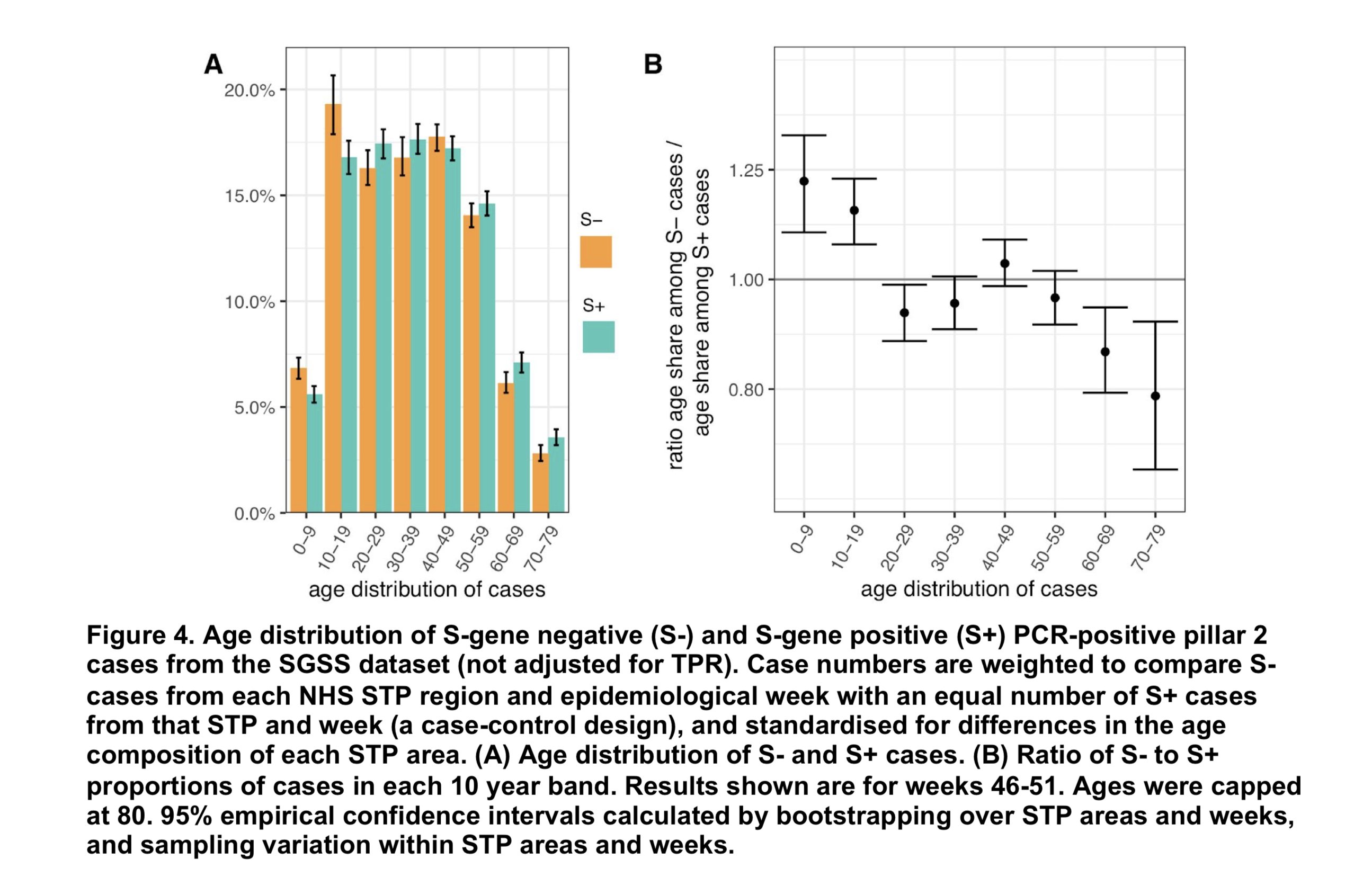
has higher transmissibility than non-VOC lineages, even if the VOC has a different latent periodor generation time. Available SGTF data indicate a shift in the age composition of reportedcases, with a larger share of under 20 year olds among reported VOC than non-VOC cases.Fourth, we assess the association of VOC frequency with independent estimates of the overallSARS-CoV-2 reproduction number through time. Finally, we fit a semi-mechanistic modeldirectly to local VOC and non-VOC case incidence to estimate the reproduction numbers overtime for each. There is a consensus among all analyses that the VOC has a substantialtransmission advantage, with the estimated difference in reproduction numbers between VOCand non-VOC ranging between 0.4 and 0.7, and the ratio of reproduction numbers varyingbetween 1.4 and 1.8. We note that these estimates of transmission advantage apply to a periodwhere high levels of social distancing were in place in England; extrapolation to othertransmission contexts therefore requires caution
Interessant verband tussen comorbidity en viral load op de PCR testquote:Association between upper respiratory tract viral load, comorbidities, disease severity and outcome of patients with SARS-CoV-2 infection
Abstract
Background
There is limited information on the association between upper respiratory tract (URT) viral loads, host factors, and disease severity in SARS-CoV-2 infected patients.
Methods
We studied 1,122 patients (mean age: 46 years) diagnosed by PCR. URT viral load, measured by PCR cycle threshold, was categorized as high, moderate or low.
Results
There were 336 (29.9%) patients with comorbidities; 309 patients (27.5%) had high, 316 (28.2%) moderate, and 497 (44.3%) low viral load. In univariate analyses, compared to patients with moderate or low viral load, patients with high viral load were older, had more often comorbidities, developed symptomatic disease, were intubated and died; in addition, patients with high viral load had longer stay in intensive care unit and longer intubation compared to patients with low viral load (p-values <0.05 for all). Patients with chronic cardiovascular disease, hypertension, chronic pulmonary disease, immunosuppression, obesity and chronic neurological disease had more often high viral load (p-value<0.05 for all). Multivariate analysis found that a high viral load was associated with COVID-19. The level of viral load was not associated with any other outcome.
Conclusions
URT viral load could be used to identify patients at higher risk for morbidity or severe outcome.
Over "Long covid" patienten die langdurig klachten heeft.quote:6-month consequences of COVID-19 in patients discharged from hospital: a cohort study
Background
The long-term health consequences of COVID-19 remain largely unclear. The aim of this study was to describe the long-term health consequences of patients with COVID-19 who have been discharged from hospital and investigate the associated risk factors, in particular disease severity.
Methods
We did an ambidirectional cohort study of patients with confirmed COVID-19 who had been discharged from Jin Yin-tan Hospital (Wuhan, China) between Jan 7, 2020, and May 29, 2020. Patients who died before follow-up, patients for whom follow-up would be difficult because of psychotic disorders, dementia, or re-admission to hospital, those who were unable to move freely due to concomitant osteoarthropathy or immobile before or after discharge due to diseases such as stroke or pulmonary embolism, those who declined to participate, those who could not be contacted, and those living outside of Wuhan or in nursing or welfare homes were all excluded. All patients were interviewed with a series of questionnaires for evaluation of symptoms and health-related quality of life, underwent physical examinations and a 6-min walking test, and received blood tests. A stratified sampling procedure was used to sample patients according to their highest seven-category scale during their hospital stay as 3, 4, and 5–6, to receive pulmonary function test, high resolution CT of the chest, and ultrasonography. Enrolled patients who had participated in the Lopinavir Trial for Suppression of SARS-CoV-2 in China received severe acute respiratory syndrome coronavirus 2 antibody tests. Multivariable adjusted linear or logistic regression models were used to evaluate the association between disease severity and long-term health consequences.
Findings
In total, 1733 of 2469 discharged patients with COVID-19 were enrolled after 736 were excluded. Patients had a median age of 57·0 (IQR 47·0–65·0) years and 897 (52%) were men. The follow-up study was done from June 16, to Sept 3, 2020, and the median follow-up time after symptom onset was 186·0 (175·0–199·0) days. Fatigue or muscle weakness (63%, 1038 of 1655) and sleep difficulties (26%, 437 of 1655) were the most common symptoms. Anxiety or depression was reported among 23% (367 of 1617) of patients. The proportions of median 6-min walking distance less than the lower limit of the normal range were 24% for those at severity scale 3, 22% for severity scale 4, and 29% for severity scale 5–6. The corresponding proportions of patients with diffusion impairment were 22% for severity scale 3, 29% for scale 4, and 56% for scale 5–6, and median CT scores were 3·0 (IQR 2·0–5·0) for severity scale 3, 4·0 (3·0–5·0) for scale 4, and 5·0 (4·0–6·0) for scale 5–6. After multivariable adjustment, patients showed an odds ratio (OR) 1·61 (95% CI 0·80–3·25) for scale 4 versus scale 3 and 4·60 (1·85–11·48) for scale 5–6 versus scale 3 for diffusion impairment; OR 0·88 (0·66–1·17) for scale 4 versus scale 3 and OR 1·77 (1·05–2·97) for scale 5–6 versus scale 3 for anxiety or depression, and OR 0·74 (0·58–0·96) for scale 4 versus scale 3 and 2·69 (1·46–4·96) for scale 5–6 versus scale 3 for fatigue or muscle weakness. Of 94 patients with blood antibodies tested at follow-up, the seropositivity (96·2% vs 58·5%) and median titres (19·0 vs 10·0) of the neutralising antibodies were significantly lower compared with at the acute phase. 107 of 822 participants without acute kidney injury and with estimated glomerular filtration rate (eGFR) 90 mL/min per 1·73 m2 or more at acute phase had eGFR less than 90 mL/min per 1·73 m2 at follow-up.
Interpretation
At 6 months after acute infection, COVID-19 survivors were mainly troubled with fatigue or muscle weakness, sleep difficulties, and anxiety or depression. Patients who were more severely ill during their hospital stay had more severe impaired pulmonary diffusion capacities and abnormal chest imaging manifestations, and are the main target population for intervention of long-term recovery.

Over het effect van verplichte maatregelen in 10 landen waaronder Nederland.quote:Assessing Mandatory Stay‐at‐Home and Business Closure Effects on the Spread of COVID‐19
Background and Aims
The most restrictive non‐pharmaceutical interventions (NPIs) for controlling the spread of COVID‐19 are mandatory stay‐at‐home and business closures. Given the consequences of these policies, it is important to assess their effects. We evaluate the effects on epidemic case growth of more restrictive NPIs (mrNPIs), above and beyond those of less restrictive NPIs (lrNPIs).
Methods
We first estimate COVID‐19 case growth in relation to any NPI implementation in subnational regions of 10 countries: England, France, Germany, Iran, Italy, Netherlands, Spain, South Korea, Sweden, and the US. Using first‐difference models with fixed effects, we isolate the effects of mrNPIs by subtracting the combined effects of lrNPIs and epidemic dynamics from all NPIs. We use case growth in Sweden and South Korea, two countries that did not implement mandatory stay‐at‐home and business closures, as comparison countries for the other 8 countries (16 total comparisons).
Results
Implementing any NPIs was associated with significant reductions in case growth in 9 out of 10 study countries, including South Korea and Sweden that implemented only lrNPIs (Spain had a non‐significant effect). After subtracting the epidemic and lrNPI effects, we find no clear, significant beneficial effect of mrNPIs on case growth in any country. In France, e.g., the effect of mrNPIs was +7% (95CI ‐5%‐19%) when compared with Sweden, and +13% (‐12%‐38%) when compared with South Korea (positive means pro‐contagion). The 95% confidence intervals excluded 30% declines in all 16 comparisons and 15% declines in 11/16 comparisons.
Conclusions
While small benefits cannot be excluded, we do not find significant benefits on case growth of more restrictive NPIs. Similar reductions in case growth may be achievable with less restrictive interventions.

quote:Op zondag 17 januari 2021 02:20 schreef Wegenbouwer het volgende:
[..]
Over het effect van verplichte maatregelen in 10 landen waaronder Nederland.

Jammer dat Ioannidis door velen als niet (meer) salonfähig is verklaard door zijn "dwarse" denkbeelden en artikelen.
quote:Increased infections, but not viral burden, with a new SARS-CoV-2 variant
Background A new variant of SARS-CoV-2, B.1.1.7/VOC202012/01, was identified in the UK in December-2020. Direct estimates of its potential to enhance transmission are limited.
Methods Nose and throat swabs from 28-September-2020 to 2-January-2021 in the UK’s nationally representative surveillance study were tested by RT-PCR for three genes (N, S and ORF1ab). Those positive only on ORF1ab+N, S-gene target failures (SGTF), are compatible with B.1.1.7/VOC202012/01. We investigated cycle threshold (Ct) values (a proxy for viral load), percentage of positives, population positivity and growth rates in SGTF vs non-SGTF positives.
Results 15,166(0.98%) of 1,553,687 swabs were PCR-positive, 8,545(56%) with three genes detected and 3,531(23%) SGTF. SGTF comprised an increasing, and triple-gene positives a decreasing, percentage of infections from late-November in most UK regions/countries, e.g. from 15% to 38% to 81% over 1.5 months in London. SGTF Ct values correspondingly declined substantially to similar levels to triple-gene positives. Population-level SGTF positivity remained low (<0.25%) in all regions/countries until late-November, when marked increases with and without self-reported symptoms occurred in southern England (to 1.5-3%), despite stable rates of non-SGTF cases. SGTF positivity rates increased on average 6% more rapidly than rates of non-SGTF positives (95% CI 4-9%) supporting addition rather than replacement with B.1.1.7/VOC202012/01. Excess growth rates for SGTF vs non-SGTF positives were similar in those up to high school age (5% (1-8%)) and older individuals (6% (4-9%)).
Conclusions Direct population-representative estimates show that the B.1.1.7/VOC202012/01 SARS-CoV-2 variant leads to higher infection rates, but does not seem particularly adapted to any age group.
Epidemiology of post-COVID syndromefollowing hospitalisationwith coronavirus: a retrospective cohort study
Bijna 1/3 van patienten in Engeland ontslagen uit het ziekenhuis na Covid moesten binnen 5 maanden weer opgenomen worden, bijna 1/8ste overleed alsnog.
Bijna 1/3 van patienten in Engeland ontslagen uit het ziekenhuis na Covid moesten binnen 5 maanden weer opgenomen worden, bijna 1/8ste overleed alsnog.
quote:Individuals discharged from hospital following COVID-19 face elevated rates of multi-organdysfunction compared with background levels, and the increase in risk is neitherconfined to the elderly nor uniform across ethnicities.The diagnosis, treatment and preventionof PCSrequire integrated rather than organ-or disease-specific approaches. Urgent research is required to establish risk factors for PCS
Omdat we nu natuurlijk druk bezig zijn over de avondklok die eraan komt
Efficacy of Nationwide Curfew to Encounter Spread of COVID-19: A Case From Jordan
Efficacy of Nationwide Curfew to Encounter Spread of COVID-19: A Case From Jordan
quote:An Early Assessment of Curfew and SecondCOVID-19 Lock-down on Virus Propagationin France∗
This note provides an early assessment of the reinforced measures to curb the COVID-19pandemic in France, which include a curfew of selected areas and culminate in a second COVID-19-relatedlock-down that started on October 30, 2020 and is still ongoing. We analyse the change in virus propagationacross age groups and across départements using an acceleration index introduced in Baunez et al. (2020).We find that while the pandemic is still in the acceleration regime, acceleration decreased notably withcurfew measures and this more rapidly so for the more vulnerable population group, that is, for peopleolder than 60. Acceleration continued to decline under lock-down, but more so for the active populationunder 60 than for those above 60. For the youngest population aged 0 to 19, curfew measures did not reduce acceleration but lock-down does. This suggests that if health policies aim at protecting the elderly population generally more at risk to suffer severe consequences from COVID-19, curfew measures may be effective enough. However, looking at the departmental map of France, we find that curfews have notnecessarily been imposed in départements where acceleration was the largest.
quote:The Effect of Curfew Enforcement on Health Care Provision in COVID-19 Pandemic
The COVID-19 disease occurred in the final weeks of 2019. As part of the fight against COVID-19, countries have taken actions such as travel restrictions, suspension of border crossings and international flights, voluntary home isolation, public activities restriction, and curfews. The objective of this study is to identify the effect of curfew enforcement during the COVID-19 pandemic to determine and identify whether curfew has a positive effect on the health care workload. The number of patients admitted to Sakarya University Training and Research Hospital, their means of arrival, hospitalization-discharge, demographic characteristics were examined retrospectively for the period of curfew in April and May 2020 and the corresponding days in 2019. The significant statistical differences between the two periods were analyzed. The results of this research reveal that 24.488 patients were admitted to our emergency department. Of these patients, 12813 (52.3%) were male, 11675 (47.7%) were female. The number of emergency department admissions of the pediatric age group decreased from 1822 (8.9%) to 33 patients (0.8%). Moreover, the number of patients admitted to the emergency service in the related period of 2019 was 20548 (83.9%), while this figure decreased to 3940 individuals (16.1%) during the curfew period. It was implied that curfew could reduce the unnecessary admissions to hospitals, the number of ambulance usage, and provide a positive contribution to the reduction in traumas, car accidents, work accidents, and forensic cases during pandemic.
Evolution of antibody immunity to SARS-CoV-2
Besproken door Derek Lowe in zijn science blog hier.quote:Abstract
Severe acute respiratory syndrome coronavirus-2 (SARS-CoV-2) has infected 78 million individuals and is responsible for over 1.7 million deaths to date. Infection is associated with development of variable levels of antibodies with neutralizing activity that can protect against infection in animal models1,2. Antibody levels decrease with time, but the nature and quality of the memory B cells that would be called upon to produce antibodies upon re-infection has not been examined. Here we report on the humoral memory response in a cohort of 87 individuals assessed at 1.3 and 6.2 months after infection. We find that IgM, and IgG anti-SARS-CoV-2 spike protein receptor binding domain (RBD) antibody titres decrease significantly with IgA being less affected. Concurrently, neutralizing activity in plasma decreases by fivefold in pseudotype virus assays. In contrast, the number of RBD-specific memory B cells is unchanged. Memory B cells display clonal turnover after 6.2 months, and the antibodies they express have greater somatic hypermutation, increased potency and resistance to RBD mutations, indicative of continued evolution of the humoral response. Analysis of intestinal biopsies obtained from asymptomatic individuals 4 months after the onset of coronavirus disease-2019 (COVID-19), using immunofluorescence, or polymerase chain reaction, revealed persistence of SARS-CoV-2 nucleic acids and immunoreactivity in the small bowel of 7 out of 14 volunteers. We conclude that the memory B cell response to SARS-CoV-2 evolves between 1.3 and 6.2 months after infection in a manner that is consistent with antigen persistence.
Identifying COVID-19 Risk Through Observational Studies to Inform Control Measures
A year into the coronavirus disease 2019 (COVID-19) pandemic there remains an urgent need to limit severe acute respiratory syndrome coronavirus 2 (SARS-CoV-2) spread and to curb the pandemic in the US through nonpharmaceutical interventions. Clear evidence supports the effectiveness of simple strategies in identifying risks and mitigating the spread of infection, with much of this evidence coming from observational studies. Community risk factors for infection can be identified by comparing recent behaviors and exposures among people who have been infected with those who are not infected using a traditional case-control approach. High-risk environments identified from these investigations need to be clearly communicated to the public to support public health measures and motivate individual behavior change to reduce the risk of infection.
A year into the coronavirus disease 2019 (COVID-19) pandemic there remains an urgent need to limit severe acute respiratory syndrome coronavirus 2 (SARS-CoV-2) spread and to curb the pandemic in the US through nonpharmaceutical interventions. Clear evidence supports the effectiveness of simple strategies in identifying risks and mitigating the spread of infection, with much of this evidence coming from observational studies. Community risk factors for infection can be identified by comparing recent behaviors and exposures among people who have been infected with those who are not infected using a traditional case-control approach. High-risk environments identified from these investigations need to be clearly communicated to the public to support public health measures and motivate individual behavior change to reduce the risk of infection.

Op basis daarvan zou je kunnen zeggen dat de kans op besmetting eigenlijk alleen in restaurants echt hoger is, en mogelijk ook in cafes. OR = odds ratio
Winkelen, salons, thuisbezoek, public transport heeft allemaal niet of nauwelijks invloed. Mogelijk is er een verhoogde kans in gyms en kerken, maar dat is niet overtuigend.
Winkelen, salons, thuisbezoek, public transport heeft allemaal niet of nauwelijks invloed. Mogelijk is er een verhoogde kans in gyms en kerken, maar dat is niet overtuigend.

volgens mij kun je dat nog lang niet uit dat onderzoek halen...quote:
Op basis daarvan zou je kunnen zeggen dat de kans op besmetting eigenlijk alleen in restaurants echt hoger is, en mogelijk ook in cafes. OR = odds ratio
Winkelen, salons, thuisbezoek, public transport heeft allemaal niet of nauwelijks invloed. Mogelijk is er een verhoogde kans in gyms en kerken, maar dat is niet overtuigend.
het betreft een specifiek naar beweegpatronen, waarbij men het beweegpatroon en activiteiten van personen die covid-positief waren vastgelegd heeft (359 personen uit 10 verschillende staten, telefonisch ondervraagt, daarnaast ook een controlegroep van 160 personen, die niet covid-positief waren )
de eerste groep van 154 personen had aangegeven een directe contactpersoon te hebben die al eerder als covid-positief gemeld was (en dus een mogelijke bron van de besmetting was)
en een andere groep van 205 personen kon niet aangeven of ze een andere contactpersoon hadden die als mogelijke bron kon gelden.
Ze vergelijken nu het beweegpatroon van de besmette mensen met de controlegroep van niet besmette, waarbij er onderscheid gemaakt wordt tussen mensn die een direkte contactpersoon hadden die ook besmet was of die dat niet konden aangeven.
Het enige wat mij heel duidelijk opvalt is de ontzettend hoge score van mensen die geen bekend covid-positieve contactpersoon hebben, maar wel zelfs positief getest zijn, en die kennelijk zeer regelmatig nog een bar bezocht hebben.
(de band loopt overigens verder naar rechts en valt buiten de grafiek tot een maximale breedte van boven de 10, de afbeelding was niet breed genoeg om dat weer te geven).
verder lijken overall besmette personen vaker cafe's, restaurants, fitness studios en/of kerken te bezoeken dan de controlegroep, maar dat bewijst an sich nog niet dat dat de plek is waar ze besmet zijn...
hooguit wijst hun beweegpatroon wel op dat ze sociaal actiever zijn dan anderen.
Dat bv zaken als winkelen of gebruik van OV, en het hebben van thuisbezoek niet opvallend er uitsteekt, kan goed komen doordat het ook geen substantiele verschillen zijn tussen mensn die wél bemet raken en die die dat niet doen... wat echter ok niet veel bewijst over het risico, hooguit dat weinig mensen er geheel mee kunnen of willen ophouden, het vavak gewoon essentiele activiteiten zijn die iedereen moet doen
"Whatever you feel like: Life’s not one color, nor are you my only reader" - Ausonius, Epigrammata 25
Thanks voor de correctie, ik was duidelijk nog niet wakker! Ga het nog eens goed lezen dan.quote:
[..]
volgens mij kun je dat nog lang niet uit dat onderzoek halen...
het betreft een specifiek naar beweegpatronen, waarbij men het beweegpatroon en activiteiten van personen die covid-positief waren vastgelegd heeft (359 personen uit 10 verschillende staten, telefonisch ondervraagt, daarnaast ook een controlegroep van 160 personen, die niet covid-positief waren )
de eerste groep van 154 personen had aangegeven een directe contactpersoon te hebben die al eerder als covid-positief gemeld was (en dus een mogelijke bron van de besmetting was)
en een andere groep van 205 personen kon niet aangeven of ze een andere contactpersoon hadden die als mogelijke bron kon gelden.
Ze vergelijken nu het beweegpatroon van de besmette mensen met de controlegroep van niet besmette, waarbij er onderscheid gemaakt wordt tussen mensn die een direkte contactpersoon hadden die ook besmet was of die dat niet konden aangeven.
Het enige wat mij heel duidelijk opvalt is de ontzettend hoge score van mensen die geen bekend covid-positieve contactpersoon hebben, maar wel zelfs positief getest zijn, en die kennelijk zeer regelmatig nog een bar bezocht hebben.
(de band loopt overigens verder naar rechts en valt buiten de grafiek tot een maximale breedte van boven de 10, de afbeelding was niet breed genoeg om dat weer te geven).
verder lijken overall besmette personen vaker cafe's, restaurants, fitness studios en/of kerken te bezoeken dan de controlegroep, maar dat bewijst an sich nog niet dat dat de plek is waar ze besmet zijn...
hooguit wijst hun beweegpatroon wel op dat ze sociaal actiever zijn dan anderen.
Dat bv zaken als winkelen of gebruik van OV, en het hebben van thuisbezoek niet opvallend er uitsteekt, kan goed komen doordat het ook geen substantiele verschillen zijn tussen mensn die wél bemet raken en die die dat niet doen... wat echter ok niet veel bewijst over het risico, hooguit dat weinig mensen er geheel mee kunnen of willen ophouden, het vavak gewoon essentiele activiteiten zijn die iedereen moet doen
via twitter om gelijk een samevatting te hebben:
https://twitter.com/Roxytonin/status/1372801396039249923
https://twitter.com/Roxytonin/status/1372801396039249923
Is dat figuur in een resolutie uit het jaar 0 geupload of laadt mijn laptop het niet?quote:
via twitter om gelijk een samevatting te hebben:
https://twitter.com/Roxytonin/status/1372801396039249923
Ze hebben ook een blog erover geschreven: https://blogs.bmj.com/bmj/2021/03/19/a-birds-eye-view-of-the-risk-of-covid-19-infection-from-children/
|
|
