WGR Werk, Geldzaken, Recht en de Beurs
Hier kun je alles kwijt over sollicitaties, werksituaties, belastingen, (handelen op) de beurs, hypotheken, beleggingen en salarissen, arbeidscontracten of geschillen met je (huis)baas. Alles over werk, geldzaken en recht dus.



Hij heeft een doctoraat in de economie, is gespecialiseerd in de Grote Depressie en heeft een politieke topfunctie. Zonder briljant te zijn en mentaal héél sterk haal je zoiets gewoon niet.quote:Op donderdag 15 april 2010 10:33 schreef Dirk-Kuijt het volgende:
[..]
Bernanke is de grootste leugenaar die ik ken
Dan qua liegen, hij doet volgens mij gewoon zijn werk volgens de agenda van de regering en niet eens zo slecht zo blijkt. Oftewel, hij liegt zeker niet meer dan de gemiddelde politicus. En volgens mij zou hij 't net zo doen moest hij onafhankelijk zijn...
Bernanke heeft mede de bubble veroorzaakt en zag de catastrofe bovendien niet aankomen. Dat kun je hem aanrekenen. Maar hoewel ik het niet eens ben met bank bailouts en dergelijke (er waren betere oplossingen mogelijk imo) heeft Bernanke wel een belangrijke rol gespeelt in het met succes stabiliseren van de crisis op korte termijn met originele nog nooit eerder geprobeerde noodmaatregelen. Inmiddels zijn afgezien van de MBS aankopen de noodvoorzieningen grotendeels weer teruggedraaid. Al met al kan ik dus alleen maar concluderen dat hij dat deel van z'n werk gewoon heel goed heeft gedaan.
De lange termijn effecten van een aantal acties (MBS aankopen, rente betalen op reserves, rente=0, ...) moeten we afwachten. Hier liggen nog significante risico's, maar niemand weet hoe dit gaat lopen. Ik hoor de laatste tijd echter steeds meer verstandige woorden van Bernanke, o.a. over het unsustainable zijn van de overheidstekorten en de expliciete uitspraak dat er geen sprake zal zijn van het monetariseren van die tekorten. Dit wekt enig vertrouwen dat het misschien toch niet z'n geld print cowboy is.
Ik maak me er wel zorgen over dat hij toch de bubble weer te ver opblaast. Van tevoren aankondigen dat de rente voor een "extended period" op nul blijft is imo vragen om een nieuwe catastrofe, want het is een uitnodiging om onrendabele investeringen te doen. (0,1% rendement is nog steeds meer dan 0%, maar je moet niet willen dat er investeringen worden gedaan die slechts 0,1% rendement genereren).
De lange termijn effecten van een aantal acties (MBS aankopen, rente betalen op reserves, rente=0, ...) moeten we afwachten. Hier liggen nog significante risico's, maar niemand weet hoe dit gaat lopen. Ik hoor de laatste tijd echter steeds meer verstandige woorden van Bernanke, o.a. over het unsustainable zijn van de overheidstekorten en de expliciete uitspraak dat er geen sprake zal zijn van het monetariseren van die tekorten. Dit wekt enig vertrouwen dat het misschien toch niet z'n geld print cowboy is.
Ik maak me er wel zorgen over dat hij toch de bubble weer te ver opblaast. Van tevoren aankondigen dat de rente voor een "extended period" op nul blijft is imo vragen om een nieuwe catastrofe, want het is een uitnodiging om onrendabele investeringen te doen. (0,1% rendement is nog steeds meer dan 0%, maar je moet niet willen dat er investeringen worden gedaan die slechts 0,1% rendement genereren).
"If you want to make God laugh, tell him about your plans"
Mijn reisverslagen
Mijn reisverslagen
Is het niet zo dat als (Bernanke) de bubble niet steeds verder opblaast, zelfs als de bubble stabiliseerd op hoge niveaus, dat een verslechterende economie en zelfs deflatie meteen de overhand krijgt met de nodige problemen die men juist probeerd te voorkomen?
Dat zou wel een verdomd goede reden zijn in ieder geval voor een centraal bankier.
Dat zou wel een verdomd goede reden zijn in ieder geval voor een centraal bankier.
toch weer aardig rood nu. Ik zit op mijn mobiel te internetten. Ik kan niet zo snel vinden wat nou de reden is.
Super lage rente verhoogt de leverage in het systeem en maakt het daardoor gevoeliger voor shocks. Maar men hoopt natuurlijk dat met "extend and pretent" de economie er uiteindelijk vanzelf uitgroeit. Tot nu toe lijkt dat nog niet echt te werken, maar misschien komt dat nog. Wait and pray...quote:Op donderdag 15 april 2010 11:22 schreef piepeloi55 het volgende:
Is het niet zo dat als (Bernanke) de bubble niet steeds verder opblaast, zelfs als de bubble stabiliseerd op hoge niveaus, dat een verslechterende economie en zelfs deflatie meteen de overhand krijgt met de nodige problemen die men juist probeerd te voorkomen?
Dat zou wel een verdomd goede reden zijn in ieder geval voor een centraal bankier.
De marktrisico's zijn momenteel enorm imo, omdat de "Greenspan Put" er niet meer is (de rente is al nul, dus wat kan de FED nog doen bij de volgende crash?). De markt lijkt daarentegen erop te rekenen dat de overheid bij de minste geringste crisis wel weer zal ingrijpen. De vraag is: wat kan zij dan nog? Dit is een groot verschil met 2008/2009 maar niemand lijkt zich dat te realiseren.
Dus het is wachten op de volgende shock. Een hernieuwde bankencrisis? (absoluut record in foreclosures afgelopen maart). Een grote souvereign default? (Japan=failliet als de rente daar 1% stijgt), Crash in China? (hoeft geen toelichting), Oliecrisis (Israel vs Iran)? Failed Treasury auction? En dan zien wat de FED nog voor vangnet heeft met een rente die al op nul staat.
"If you want to make God laugh, tell him about your plans"
Mijn reisverslagen
Mijn reisverslagen
Veel van de programma's hebben quasi-permanente effecten of lopen nog, zoals de uitgebreide dekking van hypotheken, de staatsgarantie op FDIC, de door de FED opgekochte waardeloze obligaties, etcetera. Een deel van de steun was illegaal. Moral hazard is door TBTF alleen maar gestegen; banken nemen meer risico en keren schaamteloos meer onverdiend bonusgeld uit dan ooit, en ondanks de zeer grootschalige fraudes en malversaties is er nog niemand vervolgd. De kapitalisatie van banken is nauwelijks verbeterd (nog steeds grote off-balance posten en 40% overwaardering van assets) en het toezicht op de banken en de markten is nog even incompetent en corrupt. De woningvoorraad verpaupert snel. De werkloosheid en het aantal daklozen zijn verdubbeld, grote groepen mensen leven in wanhoop zonder enig zicht op verbetering.quote:Op donderdag 15 april 2010 10:58 schreef SeLang het volgende:
Inmiddels zijn afgezien van de MBS aankopen de noodvoorzieningen grotendeels weer teruggedraaid. Al met al kan ik dus alleen maar concluderen dat hij dat deel van z'n werk gewoon heel goed heeft gedaan.
De lange termijn effecten van een aantal acties (MBS aankopen, rente betalen op reserves, rente=0, ...) moeten we afwachten. Hier liggen nog significante risico's, maar niemand weet hoe dit gaat lopen.
Maar het ergste van alles, de staatsschuld is sterk opgelopen en het tekort verveelvoudigd tot een niveau dat, zeker als de rente verder stijgt, als een molensteen om de economische groei zal hangen of die groei zelfs onmogelijk zal maken. De waarde en status van de dollar, en daarmee die van de hele VS, zijn in gevaar gebracht.
Veel hiervan is het gevolg van de politiek van Bernanke's en Obama's voorgangers, maar het eindoordeel over hun optreden zal naar mijn idee niet positief gaan uitvallen.
Waar ikzelf wel bewondering voor heb, is hoe gecontroleerd een en ander lijkt te verlopen - er zijn geen grote banken omgevallen, beurzen gecrashed, munten geherwaardeerd, oorlogen gestaakt of uitgebroken, etc. De grip die de FED op de economie ontwikkeld heeft lijkt ijzersterk. Het is koorddansen in een three ring circus en vooralsnog staat Bernanke recht overeind.
Ik ben het eens met bijna alles wat hier staat, maar je oordeelt imo iets te hard over de FED.quote:Op donderdag 15 april 2010 11:51 schreef dvr het volgende:
[..]
Veel van de programma's hebben quasi-permanente effecten of lopen nog, zoals de uitgebreide dekking van hypotheken, de staatsgarantie op FDIC, de door de FED opgekochte waardeloze obligaties, etcetera. Een deel van de steun was illegaal. Moral hazard is door TBTF alleen maar gestegen; banken nemen meer risico en keren schaamteloos meer onverdiend bonusgeld uit dan ooit, en ondanks de zeer grootschalige fraudes en malversaties is er nog niemand vervolgd. De kapitalisatie van banken is nauwelijks verbeterd (nog steeds grote off-balance posten en 40% overwaardering van assets) en het toezicht op de banken en de markten is nog even incompetent en corrupt. De woningvoorraad verpaupert snel. De werkloosheid en het aantal daklozen zijn verdubbeld, grote groepen mensen leven in wanhoop zonder enig zicht op verbetering.
Maar het ergste van alles, de staatsschuld is sterk opgelopen en het tekort verveelvoudigd tot een niveau dat, zeker als de rente verder stijgt, als een molensteen om de economische groei zal hangen of die groei zelfs onmogelijk zal maken. De waarde en status van de dollar, en daarmee die van de hele VS, zijn in gevaar gebracht.
Veel hiervan is het gevolg van de politiek van Bernanke's en Obama's voorgangers, maar het eindoordeel over hun optreden zal naar mijn idee niet positief gaan uitvallen.
Waar ikzelf wel bewondering voor heb, is hoe gecontroleerd een en ander lijkt te verlopen - er zijn geen grote banken omgevallen, beurzen gecrashed, munten geherwaardeerd, oorlogen gestaakt of uitgebroken, etc. De grip die de FED op de economie ontwikkeld heeft lijkt ijzersterk. Het is koorddansen in een three ring circus en vooralsnog staat Bernanke recht overeind.
De dekking van hypotheken is een actie van de Treasury, niet de FED. De "waardeloze" hypotheken die de FED heeft opgekocht zijn niet waardeloos vanuit het perspectief van de FED. Zij worden immers door de Treasury gedekt! Eventuele verliezen zijn voor rekening van de Treasury (=belastingbetaler), of die MBS nu in de boeken van de FED staat of bij een of andere bank. Staatsgarantie FDIC is wederom niet de FED. Staatsschuld en overheidstekorten zijn ook niet de schuld van de FED. Bernanke waarschuwt daar tegenwoordig voor tijdens elke hearing.
Begrijp me niet verkeerd, de FED heeft natuurlijk meegedaan in het hele bailoutcircus, is niet transparant en heeft in het heetst van de strijd mogelijk illegale dingen gedaan. Ook heeft zij natuurlijk totaal gefaald in het voorkomen van deze crisis. Maar de hoofdschuldige is hier (imo) de Treasury. Dat is degene die de belastinggelden heeft verkwanseld en het begrip "moral hazard" heeft afgeschaft en de schandalige bankbailouts heeft geregeld.
"If you want to make God laugh, tell him about your plans"
Mijn reisverslagen
Mijn reisverslagen
Dat klopt, ik had het ook meer over het geheel van FED + Regering dan over de FED alleen. De FED wordt dan wel bestuurd door het grootkapitaal van Wall Street, hij verzorgt een publieke taak en Bernanke is door de president benoemd. In die zin zie ik de FED als verlengstuk van de politiek en vind ik dat je er vanuit mag gaan dat hij geen acties onderneemt die de publieke zaak zullen schaden, zelfs als de bankiers daarbij gebaat zijn.
SeLang, weet jij trouwens meer over de hoeveelheid trash-papieren die de ECB inmiddels op zijn balans heeft staan? Ik kan die gegevens zelf niet vinden op de site van de ECB. Buitenlandse kranten publiceren erover, dus het moet toch ergens staan. We hebben het altijd over de FED omdat daarover op het web zoveel naar buiten komt, maar ondertussen zit de ECB natuurlijk ook niet stil en die gaat over onze eigen euro.
Dit overigens vanwege alarmerende beweringen van mijn favoriete econo-crackpot Lyndon Larouche, van eind maart toen bekend werd dat het IMF Griekenland te hulp zou schieten, waarin hij een kentering zag in de behoedzame anti-inflatiepolitiek van de Bundesbank en ECB:
Dit overigens vanwege alarmerende beweringen van mijn favoriete econo-crackpot Lyndon Larouche, van eind maart toen bekend werd dat het IMF Griekenland te hulp zou schieten, waarin hij een kentering zag in de behoedzame anti-inflatiepolitiek van de Bundesbank en ECB:
quote:With a view to the coming elections in North Rhine-Westphalia, Berlin has abandoned the position it has defended for decades - that the central banks should not plug budget deficits - and, via the IMF, the central banks of several countries, including the Bundesbank, are supplying Greece with fresh euros, which is the "disguised bailout" that the EU Treaty explicitly forbids. In any case, the IMF is not a separate institution - the Eurozone countries constitute 22% of it, so it is not an "either/or" matter. And since Greece represents only the tip of the iceberg, beneath which you can find the really big chunks - Spain, Italy, and Portugal - this IMF-EU model for Greece represents only the test case.
Of even more far-reaching importance, however, is the ECB's U-turn on this question - nobody is talking any more about the previously discussed "exit strategy" from money pumping. On March 26, ECB chief Jean-Claude Trichet, speaking at the European Parliament, announced the extension of the "exception rule," introduced when the financial crisis began, which allows low collateral requirements for banks to finance their transactions. Thus, banks will now be permitted, beyond the year 2010, to offer lower-quality government bonds as collateral to borrow money from the ECB.
Until 2008, a rating agency grade of at least A-, or A3, was required as collateral for government bonds; since 2008, the ECB has also accepted government bonds with only a BBB- grade. The Spanish banks particularly benefited from this rule, since they could deposit such large amounts of toxic waste with the ECB, and have the pleasure of receiving fresh loans in return. With the current extension of the ruling, the ECB opens the door to deposits of enormous amounts of other financial paper, only one notch above junk-rating, according to the Frankfurter Allgemeine Zeitung, which writes that we are talking about commercial paper valued at about EU11 trillion, whose security then comes into question.
The Italian business daily Il Sole 24 Ore describes the volume of such securities that are turning up in the accounts of the ECB: EU200 billion in sovereign debt, non-bank guaranteed bonds worth EU500 billion, and EU750 billion in asset-backed securities. So every time the (private) rating agencies downgrade a bond, the pile of waste on which the ECB is sitting increases, and the rating agencies can also determine in this way what is still accepted as collateral, and what is not.
Both measures have an inflationary effect: the IMF’s involvement in future rescue packages, and the extended acceptance of lower-grade government bonds. Behind both is the intention to leave the casino economy and high-risk gambling essentially intact. Since the medicine that the IMF and EU are prescribing for Greece—namely, the most brutal budget cuts, which threaten to kill patients, and to set off a bottomless spiral, such that further state bankruptcies will occur this year—creates an instrumentarium that can lead to hyperinflation in the relatively short term.
Bron
Nee dat weet ik niet. En dat is inderdaad een interessante vraag. Sowieso staan Europese banken er waarschijnlijk slechter voor dan Amerikaanse, met hogere leverage en veel leningen in Oost Europa en PIIGS.quote:Op donderdag 15 april 2010 13:09 schreef dvr het volgende:
SeLang, weet jij trouwens meer over de hoeveelheid trash-papieren die de ECB inmiddels op zijn balans heeft staan?
"If you want to make God laugh, tell him about your plans"
Mijn reisverslagen
Mijn reisverslagen
Ik ben inmiddels een klein stapje verder:
http://www.ecb.int/press/key/date/2009/html/sp090713.en.html
In deze toespraak van juli 2008 aan een academisch publiek beschrijft Trichet de 5 maatregelen die de ECB genomen heeft om het krediet aan het Europese bankenstelsel te verruimen. Er worden ook wat getallen in genoemd, maar geen recente. Daarover is meer te vinden op deze pagina:
http://www.ecb.int/mopo/implement/omo/html/index.en.html
maar daar moet ik later nog eens induiken.
http://www.ecb.int/press/key/date/2009/html/sp090713.en.html
In deze toespraak van juli 2008 aan een academisch publiek beschrijft Trichet de 5 maatregelen die de ECB genomen heeft om het krediet aan het Europese bankenstelsel te verruimen. Er worden ook wat getallen in genoemd, maar geen recente. Daarover is meer te vinden op deze pagina:
http://www.ecb.int/mopo/implement/omo/html/index.en.html
maar daar moet ik later nog eens induiken.
En de ASR obligaties zitten vrijwel op all-time high. Op dit moment haal ik hiermee gemiddeld 1% per *maand* binnen, gekkenwerk!
Ik heb er niet in detail naar gekeken maar die lijst met open market operations zijn dingen met hele korte maturity (paar maanden) dus niks om je zorgen over te maken want dat heft zichzelf dus binnen een paar maanden op.quote:Op donderdag 15 april 2010 13:40 schreef dvr het volgende:
Ik ben inmiddels een klein stapje verder:
http://www.ecb.int/press/key/date/2009/html/sp090713.en.html
In deze toespraak van juli 2008 aan een academisch publiek beschrijft Trichet de 5 maatregelen die de ECB genomen heeft om het krediet aan het Europese bankenstelsel te verruimen. Er worden ook wat getallen in genoemd, maar geen recente. Daarover is meer te vinden op deze pagina:
http://www.ecb.int/mopo/implement/omo/html/index.en.html
maar daar moet ik later nog eens induiken.
"If you want to make God laugh, tell him about your plans"
Mijn reisverslagen
Mijn reisverslagen
Klinkt als risicoloos 1% per maand vangen. Hoe zit dat precies?quote:Op donderdag 15 april 2010 13:43 schreef Lemans24 het volgende:
En de ASR obligaties zitten vrijwel op all-time high. Op dit moment haal ik hiermee gemiddeld 1% per *maand* binnen, gekkenwerk!

Never in the entire history of calming down did anyone ever calm down after being told to calm down.
Misschien moet ik toch maar een Blackberry kopen voor ik op vakantie gaquote:I can assure you of two things. Israel is definitely planning a strike on Iran, which I’m told may happen this Summer. The country has been having large simulated chemical attack drills, and even my small town has had its own drills (which I’m sure were ordered from above). Number 2 is that I am also hearing that Israel will not attacko the OK of the US. Israel needs to fly over Iraq to reach Iran, and it can’t do this
Regards,
BJG
Chashmonaim, Israel (West Bank)

Ain't nothing to it but to do it.
Greece
Greece
Voor de liefhebbers, hier staat een 114 pagina lange studie over de mogelijkheden en onmogelijkheden van een Israelische aanval op Iran: http://csis.org/files/med(...)sraelistrikeiran.pdf
Laag instappen
Laag instappen
"If you want to make God laugh, tell him about your plans"
Mijn reisverslagen
Mijn reisverslagen

Het is natuurlijk niet risicoloos. Want als het zonder risico zou zijn was die premie niet zo hoog! Het is riskanter dan Griekse staatsleningen bijvoorbeeld.quote:Op donderdag 15 april 2010 15:17 schreef Arcee het volgende:
[..]
Klinkt als risicoloos 1% per maand vangen. Hoe zit dat precies?
The End Times are wild
Wil ik ook wel weten.quote:Op donderdag 15 april 2010 15:17 schreef Arcee het volgende:
[..]
Klinkt als risicoloos 1% per maand vangen. Hoe zit dat precies?
Verder gaan mijn Shell en Aegon nog steeds lekker

Shaderon: i say boom boom boom now let me hear you say weehooo
SpankmasterC: Tut mir leit Herr AQuila, es soll nicht wieder passieren!
RickoKun: Hey hoi! Ik kom bij dit topiqueje checken weetjuh!
SpankmasterC: Tut mir leit Herr AQuila, es soll nicht wieder passieren!
RickoKun: Hey hoi! Ik kom bij dit topiqueje checken weetjuh!
quote:WASHINGTON (MNI) - Dallas Federal Reserve Bank President Richard Fisher said Thursday the central bank will not monetize the U.S. deficits, so it will be up to fiscal authorities to make the hard decisions to restore balance to the accounts.
During the worst of the global financial crisis the Fed did it's job and acted as a lender of last resort, Fisher said, and "Now we're done ... . It's time for the fiscal authorities to act."
Speaking on a panel at the Trans-Atlantic Economic Dialogue, Fisher said the key issue now is the fiscal problems facing the U.S. economy, in particular the huge unfunded liabilities of entitlement programs, which Fisher said the Fed calculates at $90 trillion.
The "fiscal incontinence" in the U.S. has become a flow that must be dealt with, he said.
He said there is "good news in Greece" -- clearly not referring to the announcement Athens has asked for talks on a financial aid package from the International Monetary Fund -- because the crisis there shows the government can no longer print money to resolve its fiscal problems.
"There is a lesson there for the United States," Fisher said, stressing that the Fed "will not monetize the deficit" which would only make the problem worse and drive interest rates up.
While the financial crisis is not over, he said the economy has got through a "significant phase."
Fisher noted that the Fed balance sheet remains "way too large," but said the central bank is working on an exit strategy.
Ik begin de FED steeds liever te vinden 
"If you want to make God laugh, tell him about your plans"
Mijn reisverslagen
Mijn reisverslagen

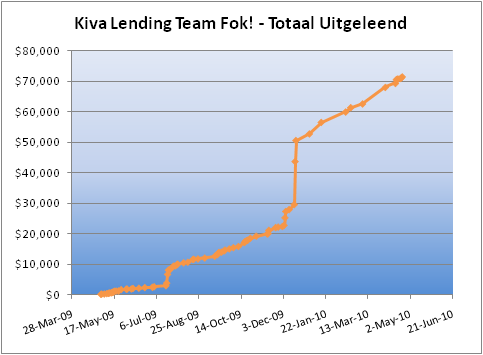
Fok! creëert trouwens een creditbubble in emerging economies
"If you want to make God laugh, tell him about your plans"
Mijn reisverslagen
Mijn reisverslagen
