F&L Filosofie & Levensbeschouwing
Een plek om te discussiëren over filosofische vragen, filosofen, religieuze vraagstukken of religie en levensbeschouwing in het algemeen.



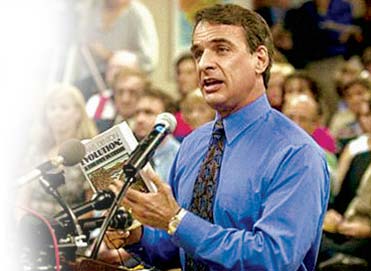
Aangezien Dawkins e.a. ook een topic hebben, leek het mij dat William Lane Craig er ook wel een verdiende. Des te meer omdat hij momenteel in een reeks van spraakmakende debatten zit die ook wel de atheïstische WFL-ers zal interesseren.
Eerst wat meer info over Craig:
Craig is een begenadigd debater. Hij heeft in het verleden o.a. de degens gekruisigd met Antony Flew, Gerd Ludemann, Bart Ehrman en John Crossan. Verleden week heeft hij Richard Carrier gedebatteerd en begin april staat Christopher Hitchens op het programma.
Ik heb aardig wat van Craig's werk gelezen en hij heeft mij dan ook zeer beïnvloed in mijn visie op het christelijk geloof. Een minpunt van Craig is m.i. dat hij onderdeel is van de Intelligent Design beweging.
Al met al, een interessante man met interessante denkbeelden.
Eerst wat meer info over Craig:
Bron: Wikipediaquote:William Lane Craig (born August 23, 1949) is an American philosopher, theologian, New Testament historian, and Christian apologist. He is an author and lecturer on issues related to the philosophy of religion, the historical Jesus, the coherence of the Christian worldview, and natural theology.
In 1977 Craig earned a doctorate in philosophy under John Hick at the University of Birmingham, England, and in 1984 a doctorate in theology under Wolfhart Pannenberg at the University of Munich. During his doctoral studies, he was a Fellow of the Alexander von Humboldt Stiftung.
As a philosopher, Craig has defended Christian theism, both at the popular level and in academic publications. He is often credited with reviving the Kalam cosmological argument for the existence of God, which argues for a first cause from the finitude of past events and the origin of the cosmos. His work on the compatibility of divine foreknowledge and human freedom has made him one of the most important contemporary defenders of Molinism, with its doctrine of middle knowledge. In the philosophy of time, he has vigorously defended the tensed or A-Theory of time and a Neo-Lorentzian interpretation of the Theory of Relativity, involving a privileged frame of reference and relations of absolute simultaneity.
As a New Testament scholar, Craig has published widely on the historicity of the resurrection accounts of Jesus. Like N.T. Wright and Gary Habermas, Craig has argued that the bodily resurrection of Jesus best explains what can be gleaned from the historical Jesus’ self-understanding, his death and burial, the posthumous apparitions of Jesus, and the origin of the early Christian movement.
Craig has edited, authored, or co-authored over thirty books and over a hundred articles in professional journals. He is a frequent public speaker and debater on university campuses and he occasionally appears in the national news media. He has engaged many prominent academic atheists and liberal theologians in public dialogue.
Craig is een begenadigd debater. Hij heeft in het verleden o.a. de degens gekruisigd met Antony Flew, Gerd Ludemann, Bart Ehrman en John Crossan. Verleden week heeft hij Richard Carrier gedebatteerd en begin april staat Christopher Hitchens op het programma.
Ik heb aardig wat van Craig's werk gelezen en hij heeft mij dan ook zeer beïnvloed in mijn visie op het christelijk geloof. Een minpunt van Craig is m.i. dat hij onderdeel is van de Intelligent Design beweging.
Al met al, een interessante man met interessante denkbeelden.
"A little philosophy inclineth man's mind to atheism, but depth in philosophy bringeth man's minds about to religion." - Sir Francis Bacon
"Heb je vijanden lief, wees goed voor wie jullie haten." - Jezus
"Heb je vijanden lief, wees goed voor wie jullie haten." - Jezus
Het debat met Dr. Richard Carrier over de vraag 'Did Jesus Rise From The Dead?':
Audio: .mp3
Review van het debat van de weblog van Richard Carrier:

Audio: .mp3
Review van het debat van de weblog van Richard Carrier:
quote:Craig Debate Wrap
The Carrier-Craig resurrection debate went down the night before last. I'm finally home and rested. Here's just a quick report on what went down.
As I had predicted, I didn't win the debate. As I said before the debate in comments to the previous post on this, "it always takes twice as much time to rebut an assertion as to make one, so the fact that both parties have equal time all but entails the affirmative position will always win on any technical measure," by thus having twice as many unanswered arguments by the end. Which is why I said (and this is my view of all oral debates, though I was speaking particularly of this one):
My aim is not to win. That's impossible, as I just noted above the dissenting position can never win a debate. My aim is only to communicate to the public why I don't find his arguments persuasive and why they shouldn't either. If the effect is to sow seeds of doubt among fence-sitters and believers, arm nonbelievers with better information, and dispel myths clung to by both sides, it will be worth my time regardless of any technical score.
By that measure, I think I modestly accomplished my goal. And my prediction came true, of course: I'd estimate he had more than twice as many arguments (mainly in rebuttals) left unanswered as I could respond to. But even with that in mind, I wasn't happy with my performance. My rebuttals were disorganized, I stumbled over sentences too often, and my time management was poor (I didn't hit all the points I wanted to). On all three points I learned a great deal, which will improve my proficiency in future debates considerably. I fully acknowledge Craig's skills as a debater are far more polished than mine (or anyone's), but I knew that going in.
I also made at least one serious mistake in the debate. Dr. Craig quoted my old online work, which I had completely forgotten about, and I accused him of misattributing a "Casper the Ghost" analogy to me, that in fact I had used way back in 1998. When I responded I was thinking of my work in The Empty Tomb (where I don't use that analogy) and subsequent material (like the O'Connell debate and my Spiritual Body FAQ), which I thought he was responding to. I apologized to Craig the next morning. He was quite alright with it. In fact, we got along well. Having lunch with him the day before, then driving to the airport with him for more than an hour the day after, I found Dr. Craig quite friendly and understanding. I can say I understand him better now than I did before. Another big side benefit for me was that thinking over Craig's position against my key argument regarding the Gospels inspired a "eureka!" moment on the plane ride home. I landed with a rock solid Bayesian proof of my position, scribbled out on the hotel writing pad I'd been using for notes the whole trip. I'll be able to include that in my book, which will make it a great deal stronger than even I had expected.
To summarize my end of the debate, my tack was that Craig only has two sources of evidence: the Gospels and the Epistles. But the Gospels can't be trusted (because they exhibit a different authorial intent than recording fact) and the Epistles don't tell us anything sufficient to make the case (since they never mention anyone finding an empty grave, and only confirm that a group of fanatics who hallucinated regularly saw Jesus after he died, which hardly requires a miracle to explain). Craig barely rebutted the latter argument. He focused almost entirely on protecting the Gospels as historical sources, and it was there that his shotgun of arguments got well ahead of my ability to catch up. There were a few side issues we sparred on as well, such as the relevance of the evidence in Acts (he defended the street sermons, I defended the silence of Acts on any accusations or inquests by the authorities concerning any missing body), and whether his theory predicts anything differently than naturalistic theories do (e.g. whether Jesus would have appeared more widely to communicate his message).
If anyone agreed with my first fact (the Gospels can't be trusted on historical details), many of Craig's arguments automatically became irrelevant (since they depended, overtly or covertly, on the Gospels as sources of information). And my second argument he pretty much left intact. But he still made many relevant arguments I failed to get to. Although I fully expected that would be the case. Afterward, Q&A offered some good chances to shore up my argument. I would say Q&A was rather important this time--usually I find it doesn't advance matters much, but I think it did in this case.
There were close to a thousand in attendance (certainly no fewer than eight hundred), almost all Christians, mainly from the MSU campus and the Northwest Missouri area, plus near a hundred or so from farther off or out of state. Despite the hostile audience (who took delight in Craig calling me a krank, for example, or belittling my ability to interpret texts), the questioners were all polite and mostly asked really good questions, and many Christians came up to me in polite conversation afterward. Overall it was a good experience for me, but not my best debate. There are too many things I would have done differently in my rebuttals, if I had time to rethink what points to hit and when (though my opening I still wouldn't change).
"A little philosophy inclineth man's mind to atheism, but depth in philosophy bringeth man's minds about to religion." - Sir Francis Bacon
"Heb je vijanden lief, wees goed voor wie jullie haten." - Jezus
"Heb je vijanden lief, wees goed voor wie jullie haten." - Jezus


Het is inderdaad een debater waar je met plezier naar kunt luisteren. Heerlijk duidelijk allemaal! Soms is het echt lachen als z'n tegenstanders met een mond vol tanden staan. Dit debat met reductionist-tot-en-met Peter Atkins heeft zulke momenten. Zeker als ze het gaan hebben over de opstanding van Jezus.
Ik zie dit niet als een minpunt voor hem. Laatst las ik een stukje uit zijn Q&A archief waarin hij wel duidelijk maakt dat de ID-beweging geen wetenschappelijke uitspraken doet als ze uitgaat van het methodologisch naturalisme:quote:Op maandag 23 maart 2009 12:27 schreef koningdavid het volgende:
Een minpunt van Craig is m.i. dat hij onderdeel is van de Intelligent Design beweging.
Bronquote:As for your philosophical claim, it is an assertion of methodological naturalism, the claim that in order to qualify as a scientific explanation, a hypothesis must be naturalistic. Non-naturalistic hypotheses cannot even be assessed because they are excluded from the pool of live explanatory options.
But if science is thus restricted, then the claim that neo-Darwinism is the best scientific explanation becomes a hollow victory. Remember Philip Johnson’s point: he’s quite willing to agree that the best naturalistic explanation of biological complexity is the neo-Darwinian synthesis. But he wants to know if that explanation is true. How do we know that we have not excluded the true explanation by means of a mere methodological constraint? Oughtn’t we to feel very uneasy, especially if we are theists, about presupposing that the true explanation must be found among the naturalistic explanations? Why think that God conforms to our methodological constraints?
...men begint immers altijd te moraliseren als de zaken mislopen en men ergert zich over de moraal zolang men haar comfortabel tegenover het recht van meningsuiting en op pluralisme kan stellen. (Benedictus XVI)
Het debat met Ehrman zou ik weleens willen zien. Staat het op YouTube?
Winnaar van de POL Ton Elias Trofee - Beste nieuwkomer in '08
Atheïst - Conservatief - Republikeins - Realist. Duidelijk?
Atheïst - Conservatief - Republikeins - Realist. Duidelijk?
quote:Op maandag 23 maart 2009 13:38 schreef Scaurus het volgende:
Het debat met Ehrman zou ik weleens willen zien. Staat het op YouTube?

"A little philosophy inclineth man's mind to atheism, but depth in philosophy bringeth man's minds about to religion." - Sir Francis Bacon
"Heb je vijanden lief, wees goed voor wie jullie haten." - Jezus
"Heb je vijanden lief, wees goed voor wie jullie haten." - Jezus
Dat is allemaal leuk en aardig, maar het methodologisch naturalisme is noodzakelijk om wetenschap niet volstrekt willekeurig, subjectief en absurd te maken.quote:Op maandag 23 maart 2009 13:05 schreef Dwerfion het volgende:Ik zie dit niet als een minpunt voor hem. Laatst las ik een stukje uit zijn Q&A archief waarin hij wel duidelijk maakt dat de ID-beweging geen wetenschappelijke uitspraken doet als ze uitgaat van het methodologisch naturalisme:
[..]
Bron
Volkorenbrood: "Geen quotes meer in jullie sigs gaarne."

Is daar niet een betere geluid/video kwaliteit versie van?quote:Op maandag 23 maart 2009 12:32 schreef koningdavid het volgende:
Het debat met Dr. Richard Carrier over de vraag 'Did Jesus Rise From The Dead?':
Audio: .mp3
Review van het debat van de weblog van Richard Carrier:
[..]
Health In Harmony is een non-profitorganisatie die regenwoudgemeenschappen helpt met gezondheidszorg en duurzame inkomens in ruil voor bosbescherming, en zo tegelijk klimaatverandering en armoede aanpakt. - https://www.healthinharmony.org/
Na het een en ander op youtube gezien te hebben, krijg ik de indruk dat hij inderaad aardig kan debatteren. Ik krijg echter ook de indruk dat hij zich vooral staande weet te houden dankzij z'n debat techniek, niet dankzij z'n gelijk.
Nog niet gevonden helaas...quote:Op maandag 23 maart 2009 21:35 schreef SpecialK het volgende:
[..]
Is daar niet een betere geluid/video kwaliteit versie van?
"A little philosophy inclineth man's mind to atheism, but depth in philosophy bringeth man's minds about to religion." - Sir Francis Bacon
"Heb je vijanden lief, wees goed voor wie jullie haten." - Jezus
"Heb je vijanden lief, wees goed voor wie jullie haten." - Jezus
http://www.tangle.com/view_video.php?viewkey=41178da2dab2e1e83d93
Een paneldiscussie met o.a. William Lane Craig en Christopher Hitchens. 't Is wel vooral christelijk omdat het vier christenen zijn en maar één atheïst (Hitchens dus).
Een paneldiscussie met o.a. William Lane Craig en Christopher Hitchens. 't Is wel vooral christelijk omdat het vier christenen zijn en maar één atheïst (Hitchens dus).
"A little philosophy inclineth man's mind to atheism, but depth in philosophy bringeth man's minds about to religion." - Sir Francis Bacon
"Heb je vijanden lief, wees goed voor wie jullie haten." - Jezus
"Heb je vijanden lief, wees goed voor wie jullie haten." - Jezus
tvp
I've known for many years that I would turn to rust
I find a reason for another breath
Before my return to dust
I become one with science and mathematic and the rising of the sun
I find a reason for another breath
Before my return to dust
I become one with science and mathematic and the rising of the sun
Eergisteren was het debat tussen Craig en Hitchens.
Hier een recensie van commonsenseatheism.com:
Ik heb nog geen videomateriaal gezien.
Hier een recensie van commonsenseatheism.com:
quote:The Craig-Hitchens Debate
I just returned from the debate between William Lane Craig and Christopher Hitchens at Biola University. It was a bigger deal than I realized. Over 3,000 people were there, and groups from dozens of countries - including Sri Lanka, apparently - had purchased a live feed. I did record audio of the debate, but the quality is too poor to post.
Of three recent Craig debates, I was most looking forward to his matchup with Morriston, which has yet to be posted online. I was somewhat excited for his debate with Carrier, which was disappointing. I was least excited for this debate with Hitchens, but it was the only one in my area, so I went.
The debate went exactly as I expected. Craig was flawless and unstoppable. Hitchens was rambling and incoherent, with the occasional rhetorical jab. Frankly, Craig spanked Hitchens like a foolish child. Perhaps Hitchens realized how bad things were for him after Craig’s opening speech, as even Hitchens’ rhetorical flourishes were not as confident as usual. Hitchens wasted his cross-examination time with questions like, “If a baby was born in Palestine, would you rather it be a Muslim baby or an atheist baby?” He did not even bother to give his concluding remarks, ceding the time instead to Q&A.
This always seemed like a pointless matchup to me. One is a loudmouthed journalist and the other is a major analytic philosopher. You might as well put on a debate between Michael Martin and Bill O’Reilly.
For some reason it occurred to me that it’s too bad the contenders were not more physically appealing. Hitchens is a sweating, unkempt, bulbous louch. Craig has better presentation, but he is withering away to nothing. I swear at one point I could see through the flesh between the thumb and pointer finger of his right hand.
Craig’s physical deterioration makes me especially sad. He is absolute perfection in debate performance. It’s a good thing we have him on video because debaters on any topic should study him like actors study Brando. Anyway, we could use some sexier debaters. Let’s see Austin Dacey vs. Kevin Harris!
I had come prepared with a question to ask, but unfortunately only Christians were allowed to ask questions. (And I was wearing my Flying Spaghetti Monster belt buckle.) But here’s the question I wanted to ask Craig:
Dr. Craig,
Tonight you’ve argued that objective moral values cannot exist apart from grounding them in the traits and opinions of a particular person. Your choice is Yahweh. That seems like an odd way to get objective moral values, but nevertheless, you’ve elsewhere argued just the opposite: that objective moral values do exist apart from Yahweh.
For example, in your answer to question #61 on your website, you write that abortion is wrong because life has intrinsic moral value - that is, moral value within itself, apart from anything outside it, including the opinions of Yahweh. Is this a discrepancy, or have I misunderstood you?
There were very few atheists in the crowd. Being at Biola reminded me that there are dozens of universities with entire programs devoted to teaching students how to argue for the existence of God. Hundreds of bright young students are being trained like Craig. Many will probably become pastors or theologians, but many of them will be writing books and getting professorships in philosophy and the sciences. In contrast, I don’t know of any programs that teach arguments against the existence of God (except philosophy of religion programs, which teach both sides). And there is certainly nobody who believes it is their divine and cosmic purpose to devote their life to defending the truth of atheism. It’s a wonder atheism is so vastly over-represented in American academies.
I have little to say about the points of the debate itself because Craig gave the same case he always gives, and Hitchens never managed to put up a coherent rebuttal or argument. I will bring up one point that I liked, though. After Hitchens finished elaborating a list of religious atrocities, moderator Hugh Hewitt jumped in and asked Craig to explain how atheists had committed atrocities in the 20th century, too. Craig responded admirably:
Well, this is a debate, Hugh, that I don’t want to get into because I think it’s irrelevant… I’m interested in the truth of these worldviews more than I’m interested in their social impact, and you cannot judge the truth of a worldview by its social impact - it’s irrelevant.
Hitchens jumped in and said, “I completely concur,” and explained that he mentioned religious atrocities as an example of how bad people use God to justify any and all wicked actions.
So that was good. Otherwise, it was what I expected. One person was conducting an academic debate, the other thought he was hosting a polemical talk show, and there was little connecting the two performances.
Ik heb nog geen videomateriaal gezien.
"A little philosophy inclineth man's mind to atheism, but depth in philosophy bringeth man's minds about to religion." - Sir Francis Bacon
"Heb je vijanden lief, wees goed voor wie jullie haten." - Jezus
"Heb je vijanden lief, wees goed voor wie jullie haten." - Jezus


quote:Op maandag 6 april 2009 08:52 schreef koningdavid het volgende:
Eergisteren was het debat tussen Craig en Hitchens.
Hier een recensie van commonsenseatheism.com:
[..]
Ik heb nog geen videomateriaal gezien.
Ik mag toch hopen dat elk fatsoenlijk filosofiecurriculum wel dergelijke argumenten c.q. kritieken bevat.quote:In contrast, I don’t know of any programs that teach arguments against the existence of God (except philosophy of religion programs, which teach both sides).
Volkorenbrood: "Geen quotes meer in jullie sigs gaarne."
Volgens mij bedoelt de schrijver van dat artikel dat er niet opleidingen en universiteiten zijn die er op gericht zijn 'atheïstische apologeten' (om het maar even zo te noemen) op te leiden.quote:Op maandag 6 april 2009 09:51 schreef Monolith het volgende:
[..]
[..]
Ik mag toch hopen dat elk fatsoenlijk filosofiecurriculum wel dergelijke argumenten c.q. kritieken bevat.
De Biola University (waar het debat was) is er vooral om christelijke apologeten op te leiden. Een atheïstische equivalent daarvan is er niet.
"A little philosophy inclineth man's mind to atheism, but depth in philosophy bringeth man's minds about to religion." - Sir Francis Bacon
"Heb je vijanden lief, wees goed voor wie jullie haten." - Jezus
"Heb je vijanden lief, wees goed voor wie jullie haten." - Jezus
Er is nu ook een online petitie met als doel een debate voor elkaar te krijgen tussen William Lane Craig en Richard Dawkins: http://www.ipetitions.com/petition/dawkinscraigdebate/
"A little philosophy inclineth man's mind to atheism, but depth in philosophy bringeth man's minds about to religion." - Sir Francis Bacon
"Heb je vijanden lief, wees goed voor wie jullie haten." - Jezus
"Heb je vijanden lief, wees goed voor wie jullie haten." - Jezus
Had ik hierboven ook al gepost ja.quote:Op vrijdag 10 april 2009 12:20 schreef Triggershot het volgende:
<a href="http://vids.myspace.com/index.cfm?fuseaction=vids.individual&videoid=55091329">Christian Book Expo 2009 </a><br/><object width="425px" height="360px" ><param name="allowFullScreen" value="true"/><param name="wmode" value="transparent"/><param name="movie" value="http://mediaservices.myspace.com/services/media/embed.aspx/m=55091329,t=1,mt=video,searchID=31b7cc2e-a59c-4878-8313-6bccac0832f7,primarycolor=,secondarycolor="/><embed src="http://mediaservices.myspace.com/services/media/embed.aspx/m=55091329,t=1,mt=video,searchID=31b7cc2e-a59c-4878-8313-6bccac0832f7,primarycolor=,secondarycolor=" width="425" height="360" allowFullScreen="true" type="application/x-shockwave-flash" wmode="transparent"/></object>
Hitchens vs. 4 christelijke apologeten. Hitchens weet zich hier goed staande te houden. I.i.g. een stuk beter dan 1 op 1 tegen Craig.
"A little philosophy inclineth man's mind to atheism, but depth in philosophy bringeth man's minds about to religion." - Sir Francis Bacon
"Heb je vijanden lief, wees goed voor wie jullie haten." - Jezus
"Heb je vijanden lief, wees goed voor wie jullie haten." - Jezus
koningdavid. Vind jij nou ook niet dat craigs zogenaamd wetenschappelijke argumenten (vanuit, cosmologie, biologie, etc...) ontiegelijk zwak zijn. Ik bedoel... echt teleurstellend om te horen dat een zogenaamd gerespecteerd debater zo'n collectie aan infantiele ongefundeerde one-liners er tegen aan gooit. Wellicht nog teleurstellender om dan te realiseren dat jij daar blijkbaar je vingers bij aflikt.
Health In Harmony is een non-profitorganisatie die regenwoudgemeenschappen helpt met gezondheidszorg en duurzame inkomens in ruil voor bosbescherming, en zo tegelijk klimaatverandering en armoede aanpakt. - https://www.healthinharmony.org/
Infantiele, ongefundeerde one-liners? Heb je voorbeelden?quote:Op vrijdag 10 april 2009 13:07 schreef SpecialK het volgende:
koningdavid. Vind jij nou ook niet dat craigs zogenaamd wetenschappelijke argumenten (vanuit, cosmologie, biologie, etc...) ontiegelijk zwak zijn. Ik bedoel... echt teleurstellend om te horen dat een zogenaamd gerespecteerd debater zo'n collectie aan infantiele ongefundeerde one-liners er tegen aan gooit.
Je kan van Craig zeggen wat je wilt, maar de argumenten die hij heeft kan hij ijzersterk onderbouwen. Hij weet er echt veschrikkelijk veel vanaf. Zo ook van cosmologie wat een belangrijk onderdeel is van zijn debatten, zijn promotieonderzoek in Birmingham ging daarover. Biologische argumenten gebruikt hij volgens mij niet hoor?
"A little philosophy inclineth man's mind to atheism, but depth in philosophy bringeth man's minds about to religion." - Sir Francis Bacon
"Heb je vijanden lief, wees goed voor wie jullie haten." - Jezus
"Heb je vijanden lief, wees goed voor wie jullie haten." - Jezus
zijn er ook van die debatten in txt versie? Op een of andere manier krijg ik het nooit voor elkaar om er langer dan 5 minuten naar te kijken, en vaak duurt het wel een uur. (dit ligt niet aan de positie van een van de deelnemers, maar gewoon het format trekt me totaal niet, bij tekst kan je er snel doorheen gaan en de interessante stukjes oppikken
Weg met de riooljournalistiek. Klik er niet op. Ze vergiftigen de maatschappij.
Die Craig is een begenadigd debateur met veel kennis, dat lijkt me duidelijk, maar hoe hij van ID naar een specifiek geloof komt ik mij een raadsel. Stel er is een designer die ethiek, natuurwetten, big bang, etc. heeft gemaakt, hoe weet hij dan dat het Christelijk geloof de ware is?
[ Bericht 0% gewijzigd door Foque op 10-04-2009 20:25:57 ]
[ Bericht 0% gewijzigd door Foque op 10-04-2009 20:25:57 ]
Alice came to a fork in the road. "Which road do I take?" she asked.
"Where do you want to go?" responded the Cheshire cat.
"I don't know," Alice answered.
"Then," said the cat, "it doesn't matter."
"Where do you want to go?" responded the Cheshire cat.
"I don't know," Alice answered.
"Then," said the cat, "it doesn't matter."
Het lijkt mij erg moeilijk om degens te kruizigen, je krijgt er nooit een spijker door, ook niet met de hulp van vier man.quote:Op maandag 23 maart 2009 12:27 schreef koningdavid het volgende:
Craig is een begenadigd debater. Hij heeft in het verleden o.a. de degens gekruisigd met Antony Flew, Gerd Ludemann, Bart Ehrman en John Crossan. .
Blijkbaar was Lee de eerste die sprak, ik verwarde hem met Craig. Maar. Na craig beluisterd te hebben (die overigens lee's argumenten loopt te prijzen) kom ik dingen tegen als:quote:Op vrijdag 10 april 2009 13:25 schreef koningdavid het volgende:
[..]
Infantiele, ongefundeerde one-liners? Heb je voorbeelden?
quote:if the universe has an explanation of its existence that explanation is obviously god. The universe exists therefor god exists.

quote:we have moral values and duties and they are objective therefor god exists
quote:A maximally great being would be god, if that being exists that would be god, if it's even possible that that being exists then it follows that he already exists
mijn GOD basisschool fouten in z'n logica.
Ijzersterke argumenten... ochquote:Je kan van Craig zeggen wat je wilt, maar de argumenten die hij heeft kan hij ijzersterk onderbouwen. Hij weet er echt veschrikkelijk veel vanaf. Zo ook van cosmologie wat een belangrijk onderdeel is van zijn debatten, zijn promotieonderzoek in Birmingham ging daarover. Biologische argumenten gebruikt hij volgens mij niet hoor?
'Hij pakt de slechte one-liners van alle creationisten op, en gebruikt wat moeilijkere woorden. De fouten blijven er in zitten maar zijn minder makkelijk aan te wijzen.
Health In Harmony is een non-profitorganisatie die regenwoudgemeenschappen helpt met gezondheidszorg en duurzame inkomens in ruil voor bosbescherming, en zo tegelijk klimaatverandering en armoede aanpakt. - https://www.healthinharmony.org/
|
|
