GC General Chat
Hier kun je praten over van alles en nog wat. Eigenlijk alles wat niet in een van de andere rubrieken thuishoort.



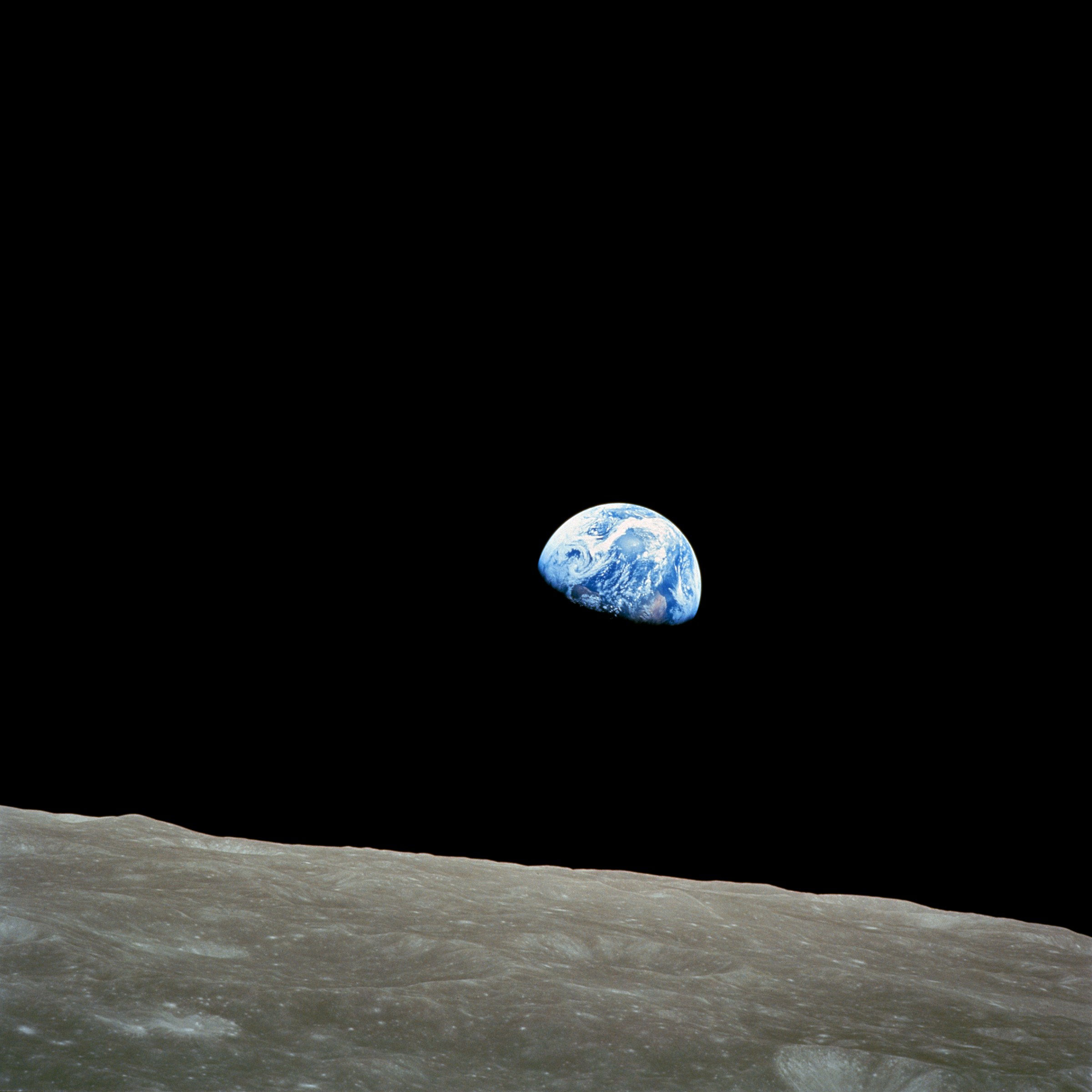
"Earthrise".
Genomen door astronaut William Anders tijdens de Apollo 8 missie op kerstavond 1968; op moment van posten van dit bericht exact 55 jaar en 5 uur geleden.
Anders: Oh my God! Look at that picture over there! There's the Earth coming up. Wow, that's pretty.
Genomen door astronaut William Anders tijdens de Apollo 8 missie op kerstavond 1968; op moment van posten van dit bericht exact 55 jaar en 5 uur geleden.
Anders: Oh my God! Look at that picture over there! There's the Earth coming up. Wow, that's pretty.


Aan de hemel van het Japanse Kurobe verscheen dinsdag een bijzondere wolk. Het gaat om een lenswolk.
https://www.nu.nl/305501/(...)wekt-verwarring.html
When the student is ready, the teacher will appear.
When the student is truly ready, the teacher will disappear.
When the student is truly ready, the teacher will disappear.

When the student is ready, the teacher will appear.
When the student is truly ready, the teacher will disappear.
When the student is truly ready, the teacher will disappear.

Dat been is er gewoon. Vergroot de foto dan kun je nog een heel klein stukje van haar voet zien.quote:
The Moon's shadow covers portions of Canada and the U.S. by NASA Johnson, on Flickrquote:The Moon's shadow covers portions of Canada and the U.S.
(April 8, 2024) --- The Moon's shadow, or umbra, is pictured covering portions of the Canadian provinces of Quebec and New Brunswick and the American state of Maine in this photograph from the International Space Station as it soared into the solar eclipse from 261 miles above.

De SS United States zit op dit moment op sleeptouw vanuit Philadelphia op weg naar Alabama.
Foto is genomen voor de kust van North Carolina.
De SS United States is de grootste Amerikaanse oceaanliner ooit én en de snelste oceaanliner ooit, toen ze op haar eerste Atlantische oversteek in 1952 het record van RMS Queen Mary verbrak.
Een record dat ze nog steeds draagt en ze is dan ook nog steeds de officiële drager van de Blauwe wimpel.
Sinds 1996 lag ze in de haven van Philadelphia. Restauratiepogingen vonden geen doorgang en op 14 juni kon na een rechterlijke uitspraak de huur worden opgezegd en moest ze de haven verlaten.
In Alabama zal het schip van schadelijke stoffen worden ontdaan en ze zal uiteindelijk voor de kust van Florda worden gezonken om zo het grootste kunstmatige rif ter wereld te vormen.
Bron: https://x.com/OceanlinerLedge/status/1893092997065052160
Foto is genomen voor de kust van North Carolina.
De SS United States is de grootste Amerikaanse oceaanliner ooit én en de snelste oceaanliner ooit, toen ze op haar eerste Atlantische oversteek in 1952 het record van RMS Queen Mary verbrak.
Een record dat ze nog steeds draagt en ze is dan ook nog steeds de officiële drager van de Blauwe wimpel.
Sinds 1996 lag ze in de haven van Philadelphia. Restauratiepogingen vonden geen doorgang en op 14 juni kon na een rechterlijke uitspraak de huur worden opgezegd en moest ze de haven verlaten.
In Alabama zal het schip van schadelijke stoffen worden ontdaan en ze zal uiteindelijk voor de kust van Florda worden gezonken om zo het grootste kunstmatige rif ter wereld te vormen.

Bron: https://x.com/OceanlinerLedge/status/1893092997065052160
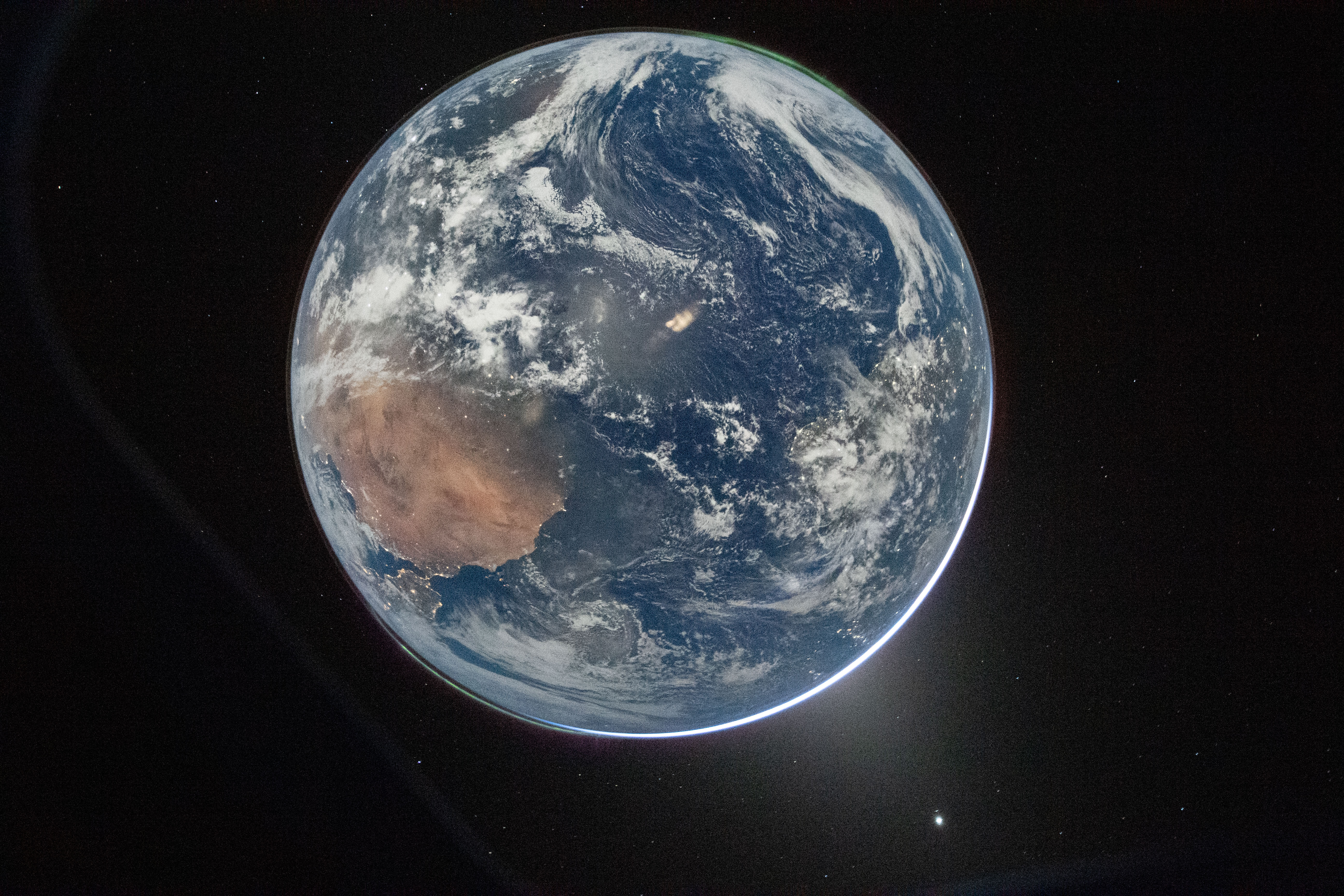
quote:NASA astronaut and Artemis II Commander Reid Wiseman took this picture of Earth from the Orion spacecraft’s window after completing the translunar injection burn. There are two auroras (top right and bottom left) and zodiacal light (bottom right) is visible as the Earth eclipses the Sun.
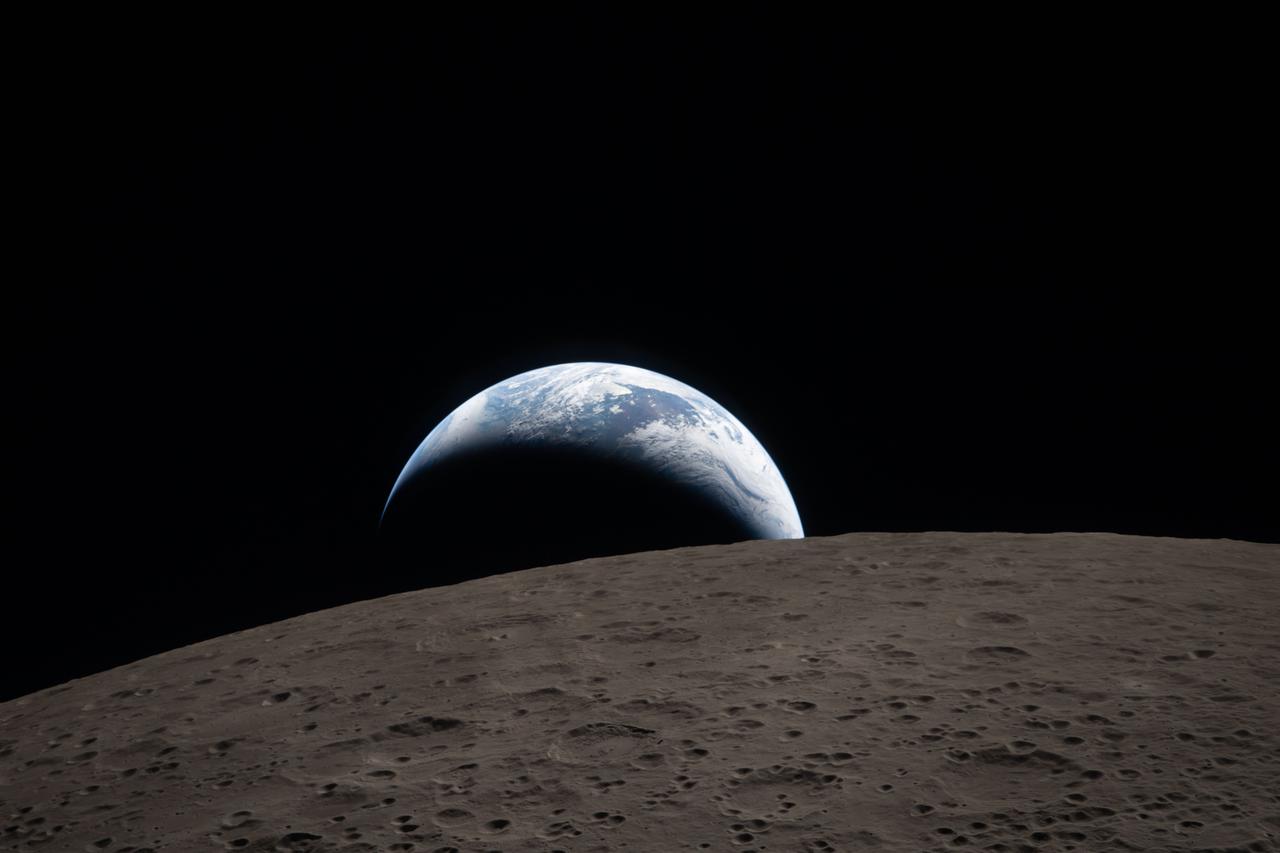
quote:Earthset captured through the Orion spacecraft window at 6:41 p.m. EDT, April 6, 2026, during the Artemis II crew’s flyby of the Moon. A muted blue Earth with bright white clouds sets behind the cratered lunar surface.
The dark portion of Earth is experiencing nighttime. On Earth’s day side, swirling clouds are visible over the Australia and Oceania region.
In the foreground, Ohm crater has terraced edges and a flat floor interrupted by central peaks. Central peaks form in complex craters when the lunar surface, liquefied on impact, splashes upwards during the crater’s formation.
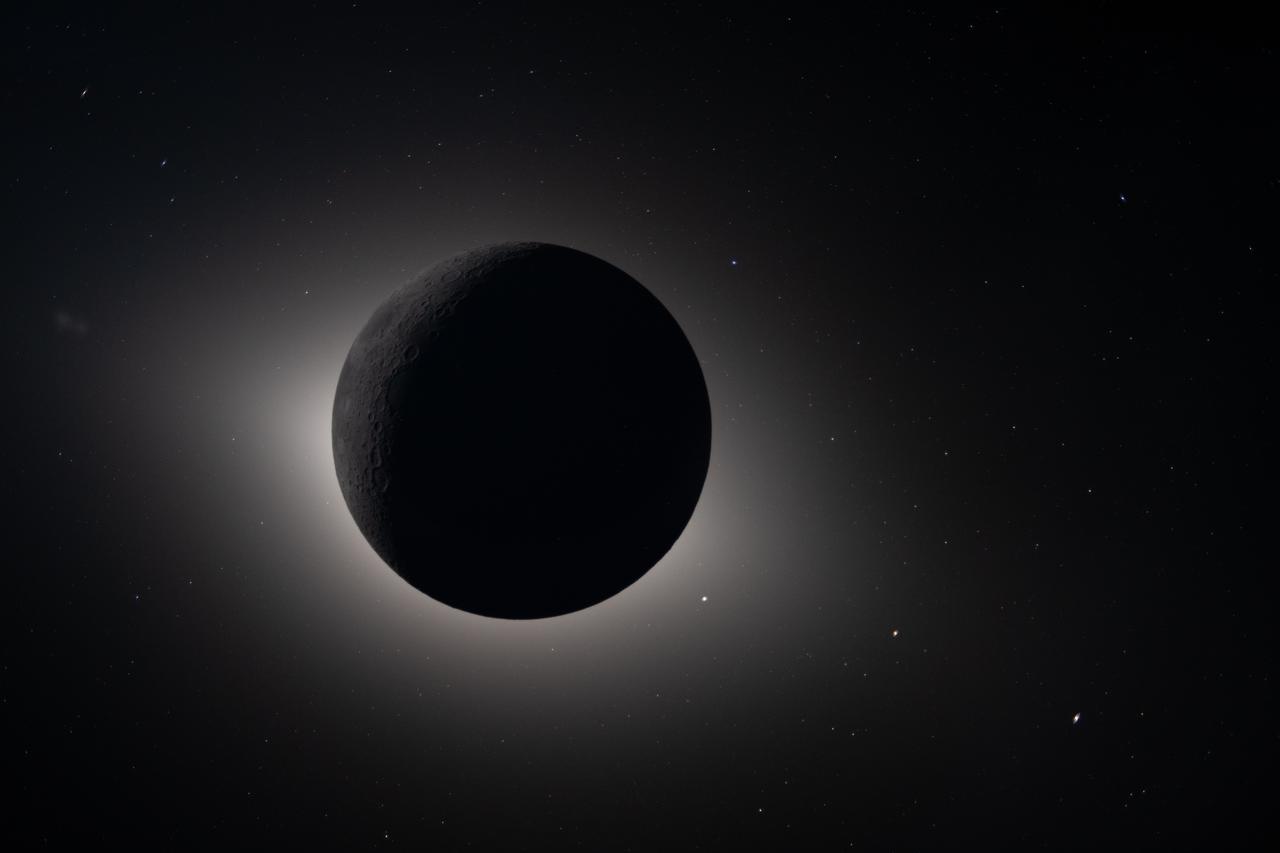
quote:Captured by the Artemis II crew during their lunar flyby on April 6, 2026, this image shows the Moon fully eclipsing the Sun. From the crew’s perspective, the Moon appears large enough to completely block the Sun, creating nearly 54 minutes of totality and extending the view far beyond what is possible from Earth. The corona forms a glowing halo around the dark lunar disk, revealing details of the Sun’s outer atmosphere typically hidden by its brightness. Also visible are stars, typically too faint to see when imaging the Moon, but with the Moon in darkness stars are readily imaged. This unique vantage point provides both a striking visual and a valuable opportunity for astronauts to document and describe the corona during humanity’s return to deep space. The faint glow of the nearside of the Moon is visible in this image, having been illuminated by light reflected off the Earth.
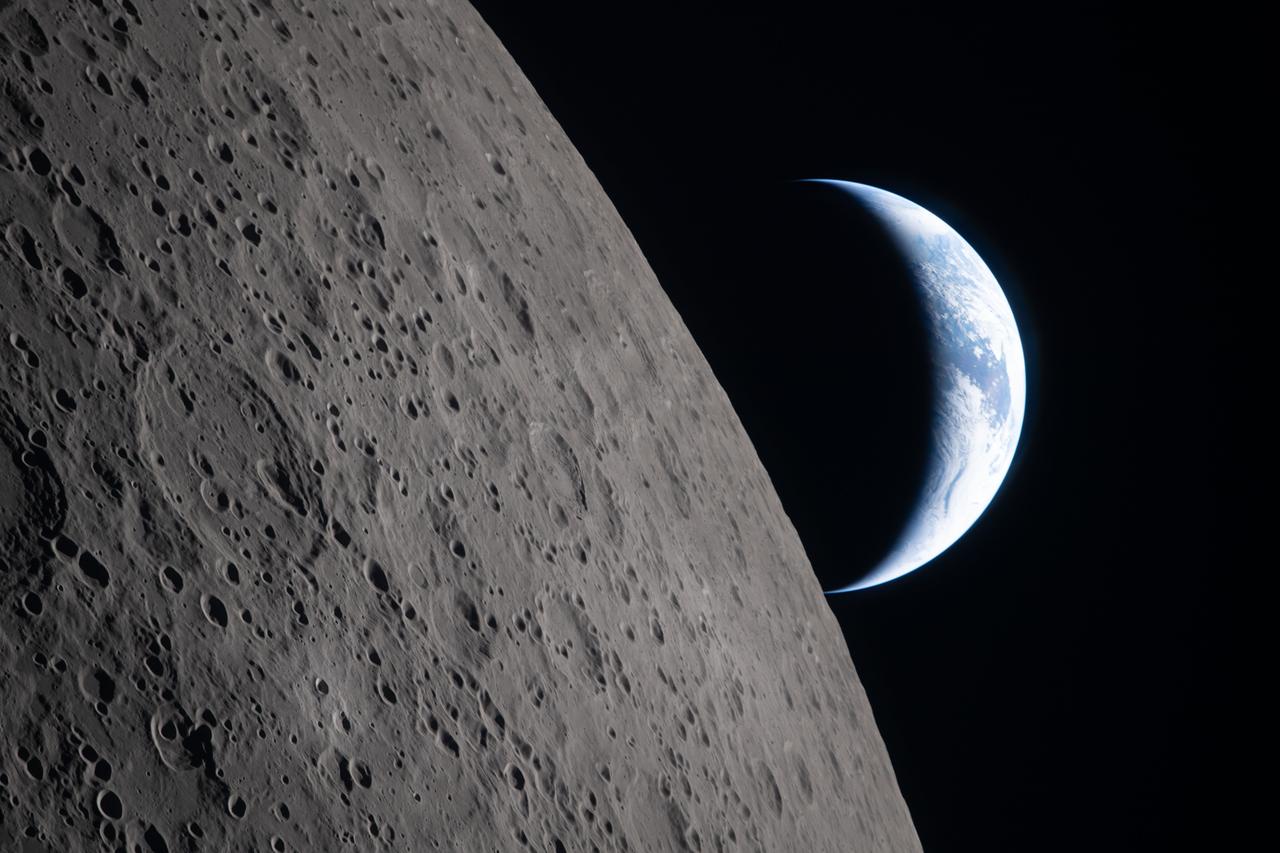
quote:As the Artemis II crew came close to passing behind the Moon and experiencing a planned loss of signal, they captured this image of a crescent Earth setting on the Moon’s limb.
The edge of the visible surface of the Moon is called the “lunar limb.” Seen from afar, it almost looks like a circular arc – except when backlit, as in other images captured by the Artemis II crew.
In this photo, the dark portion of Earth is experiencing nighttime, while Australia and Oceania are in the daylight. In the foreground, the Ohm crater is visible, with terraced edges and a flat floor interrupted by central peaks. Peaks such as these form in complex craters when the lunar surface is liquified on impact, and the liquefied surface splashes upward during the crater’s formation.
[ Bericht 10% gewijzigd door Iemand91 op 07-04-2026 19:03:51 ]


When the student is ready, the teacher will appear.
When the student is truly ready, the teacher will disappear.
When the student is truly ready, the teacher will disappear.
Nederlandse lichtinstallatie brengt Twin Towers voor even terug in New York
quote:Een enorme lichtinstallatie heeft de Twin Towers 25 jaar na de aanslagen in New York even laten terugkeren in het hart van de stad. Bijna 3000 drones vormden gisteravond de lijnen van de twee wolkenkrabbers die op 11 september 2001 het doelwit waren van de terreuraanslagen van Al-Qaida. Het aantal gebruikte drones, precies 2977, verwijst naar het aantal slachtoffers.


Op moment van posten exact 25 jaar geleden.
American Airlines vlucht 11, een fractie van een seconde voor de impact in de noordelijke toren van het World Trade Center
in New York.
De foto komt van een kunstinstallatie van Wolfgang Staehle.
Hij had 2 webcams geplaatst met uitzicht op Manhattan. Deze werden gecombineerd in een panoramabeeld.
De webcams namen elke 4 seconden een foto. Dit begon op 6 september 2001 en ging door tot begin oktober.
De bedoeling was om dit dan later real-time af te spelen; dus een real-time voorstelling dat enkele weken duurde en dat overgang van late zomer naar herfst zou afbeelden.
Het is een van de 3 (tot nu toe bekende) beelden van de impact van vlucht 11 (naast de videos van Jules Naudet en Pavel Hlava) en omdat het feitelijk een reeks foto's zijn en geen video, is het de enige foto van vlucht 11.
[ Bericht 0% gewijzigd door Iemand91 op 11-09-2026 19:32:02 ]

American Airlines vlucht 11, een fractie van een seconde voor de impact in de noordelijke toren van het World Trade Center
in New York.
De foto komt van een kunstinstallatie van Wolfgang Staehle.
Hij had 2 webcams geplaatst met uitzicht op Manhattan. Deze werden gecombineerd in een panoramabeeld.
De webcams namen elke 4 seconden een foto. Dit begon op 6 september 2001 en ging door tot begin oktober.
De bedoeling was om dit dan later real-time af te spelen; dus een real-time voorstelling dat enkele weken duurde en dat overgang van late zomer naar herfst zou afbeelden.
Het is een van de 3 (tot nu toe bekende) beelden van de impact van vlucht 11 (naast de videos van Jules Naudet en Pavel Hlava) en omdat het feitelijk een reeks foto's zijn en geen video, is het de enige foto van vlucht 11.
[ Bericht 0% gewijzigd door Iemand91 op 11-09-2026 19:32:02 ]
Indrukwekkend, ik had dit nog nooit gezien.quote:Op vrijdag 11 september 2026 14:47 schreef Iemand91 het volgende:
Op moment van posten exact 25 jaar geleden.
[ afbeelding ]
American Airlines vlucht 11, een fractie van een seconde voor de impact in de noordelijke toren van het World Trade Center
in New York.
De foto komt van een kunstinstallatie van Wolfgang Staehle.
Hij had 2 webcams geplaatst met uitzicht op Manhattan. Deze werden gecombineerd in een panoramabeeld.
De webcams namen elke 4 seconden een foto. Dit begon op 6 september 2001 en ging door tot begin oktober.
De bedoeling was om dit dan later real-time af te spelen; dus een real-time voorstelling dat enkele weken duurde en dat overgang van late zomer naar herfst zou afbeelden.
Het is een van de 3 (tot nu toe bekende) beelden van de impact van vlucht 11 (naast de videos van Jules Naudet en Pavel Hlava) en omdat het feitelijk een reeks foto's zijn en geen video, is het de enige foto van vlucht 11.
Hier een soort van video van die foto's:
Bekijk deze YouTube-video
Never in the entire history of calming down did anyone ever calm down after being told to calm down.
|
|
